

FS-2025-0772 | January 2026
Maryland 4-H Requirements and Tools for Exhibiting Rabbits
By Becky Ridgeway, 4-H Extension Educator, and Anna Glenn, 4-H Extension Educator
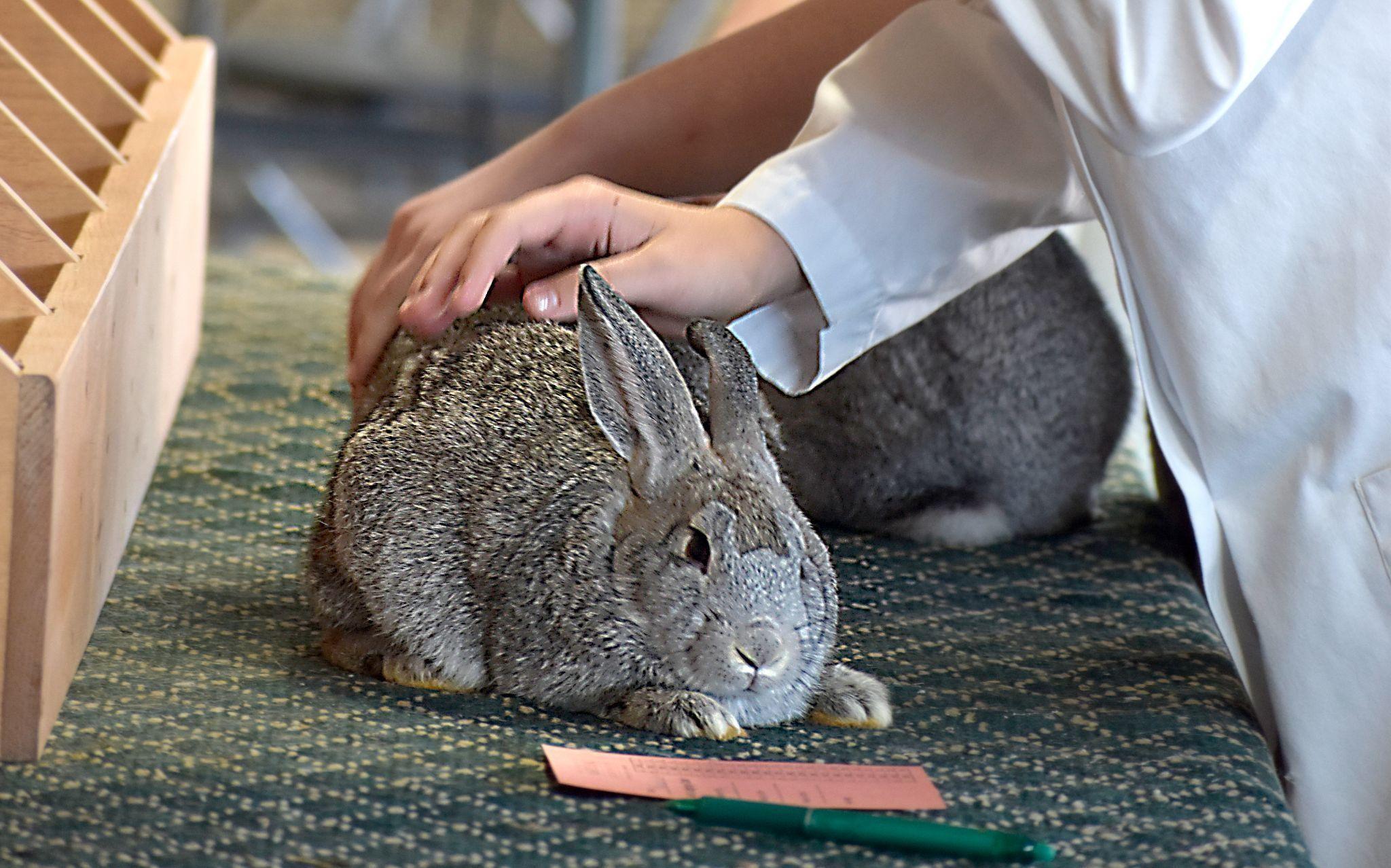
When preparing to show small animal projects in 4-H, the Maryland 4-H program rules and guidelines, and those of your county, can seem overwhelming at times. If you carefully read all of the rules and guidelines and have open communication with your 4-H Extension educator, fair superintendents and your club leader, it becomes an easier process to ensure a positive experience.
Each County 4-H Rabbit Program is Unique
It’s important to ensure that you are meeting all the program requirements to show and/or sell (in the case of meat rabbits) your animals.
Animal Ownership Deadlines
For your rabbits to be eligible for the show for the current year, they must fit within the ownership deadline of the Maryland 4-H program.
Maryland 4-H has a state deadline to own rabbits:
- Breeding Rabbits - June 1st
- Market Rabbits - Determined by local county or event rules
Check with your local county program to know the dates for animal ownership, as some counties may have set earlier deadlines.
Maryland 4-H Poultry, Rabbit, and Cavy Registration Form
The Maryland 4-H Program requires that the owners of each 4-H rabbit or cavy project complete a Maryland 4-H Poultry, Rabbit, and Cavy Registration Form for all 4-H shows you plan to enter (Figure 2). It is OK to list animals that you are unsure of. If an animal is listed on the form and not brought to the show, it is not an issue. However, if an animal is not listed on the form, it cannot be shown. The form will ask for your contact information, local 4-H club, and your 4-H age. If you are keeping your animals at a location other than your home, you need to include the address of the location where your 4-H rabbit project is housed.
Note: Some counties and community shows have variations of this form, so please check with your county educator for clarification.
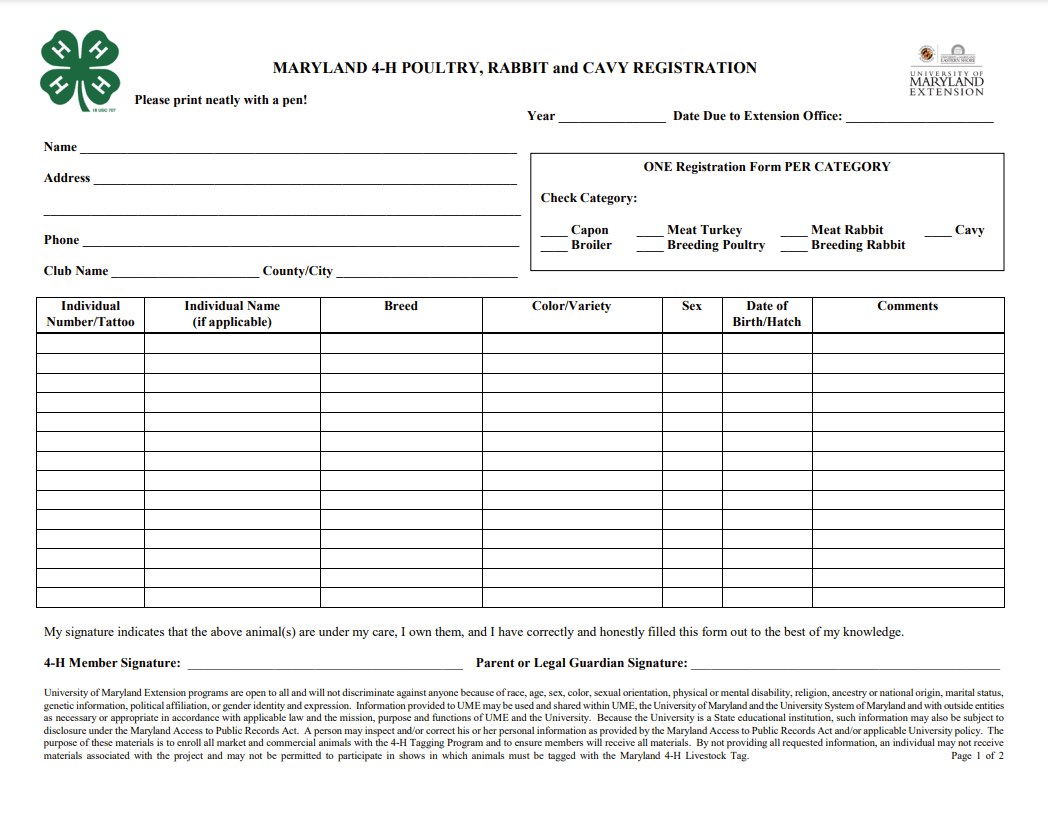
In the box at the top of the form, check off what type of animal you are exhibiting. You will complete one registration form per category. For example, if you have cavies and rabbits that you are showing, you will complete one form with your cavy entries and another form with your rabbit entries.
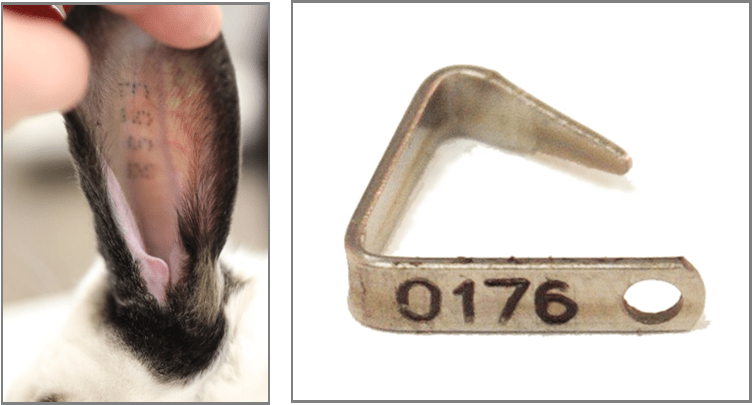
You will need to complete as much information as possible, including:
Individual Number/Tattoo:
- Rabbits: this number/letter combo can be found in the rabbit’s left ear
- Cavies: this is the number located on a stainless-steel ear tag.
**If you do not have a tattoo/ID in your animal’s ear, please reach out to your club leader or the show superintendent, as they will likely have a tattoo/tagging set and can help you get your rabbit properly identified before the show. These IDs help to ensure that the animals get back to their proper owners at the end of the show.
- Individual Name (if applicable). This is not required, but if you have a name for your rabbit or cavy, feel free to write it here. 4-H rabbits must be registered to only one 4-H member. Siblings of the 4-Her entering the show cannot be listed on the same form for ownership.
- Breed:
- Rabbits: You must select from one of the American Rabbit Breeders Association (ARBA) recognized breeds, which can be found on their website here: https://arba.net/ recognized-breeds/.
- Cavies: You must select from one of the American Cavy Breeders Association (ACBA) recognized breeds, which can be found on their website here: https://www. acbaonline.com/.
- Color/Variety: You must list a recognized color/ variety for your animal. Those recognized colors and varieties can be found on the ARBA and ACBA websites above.
- Sex: Male/Female
- Date of Birth: When was your rabbit born?
- Comments: Any other comments (such as unique markings that might distinguish this animal from other similar animals) can be written here.
- Signature Required: The 4-H member and parent/ legal guardian must sign on the front of the form to confirm the information.
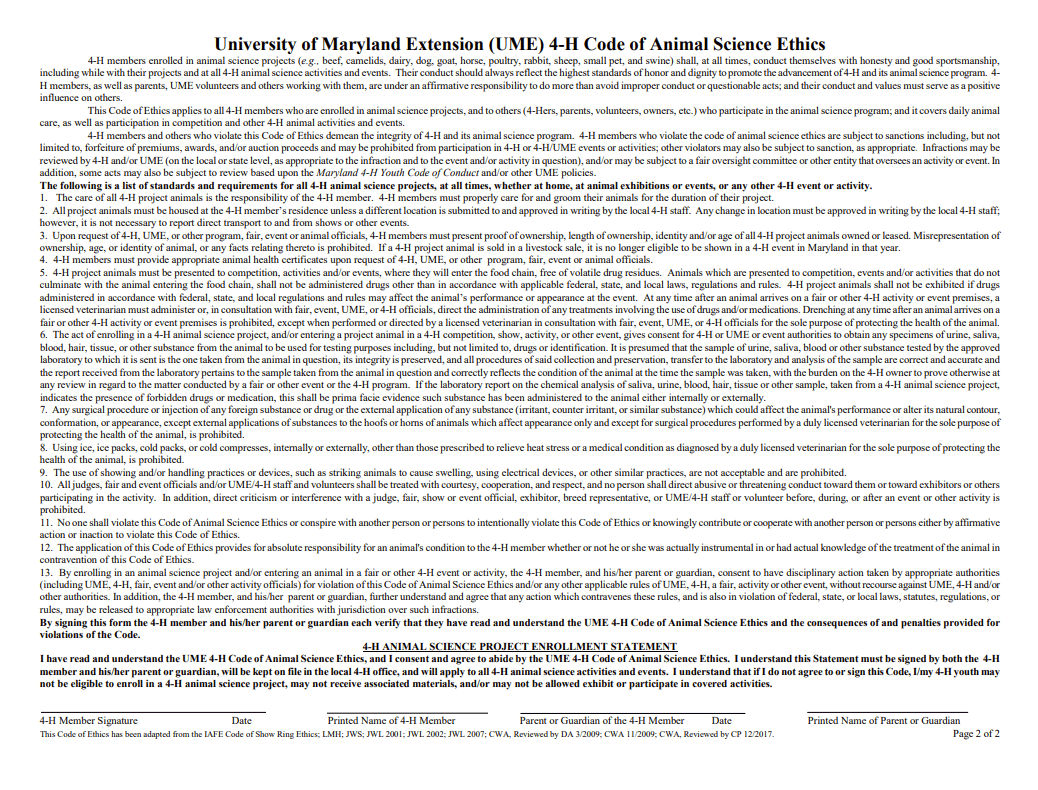
Animal Science Code of Ethics
The 4-H member and parent/ legal guardian must sign to acknowledge that they have read and agree to abide by the Animal Science Code of Ethics (Figure 4). This form helps to ensure that everyone showing animals knows and reflects the highest standards of honor and dignity when it comes to animal competitions. Animal exhibitors are under an affirmative responsibility to do more than avoid improper conduct or questionable acts, and their conduct and values must serve as a positive influence on others.
- The Animal Science Code of Ethics is also signed electronically when you enroll in Maryland 4-H and select Rabbit (or any other animal) as a 4-H project.
- Some counties have their own versions of this form; check with your county 4-H Educator if you have questions.
the “Animal Science” page on the University of Maryland Extension Maryland 4-H website: https://
extension.umd.edu/programs/4-h-youth-development/program-areas/animal-sciences/)
Animal Husbandry Quality Assurance (AHQA) Program
Maryland 4-H members are required to participate in the AHQA online program to ensure they use best management practices in caring, grooming, and showing safely and ethically. The program is designed to be completed once per 4-H age division (junior, intermediate, and senior) and/or as new species are added.
- Junior members (8-10 years old as of January 1st) must complete one AHQA program, which will cover them in all livestock species they plan on showing.
- Intermediates (11-13 years old as of January 1st) and Seniors (14-18 years old as of January 1st) are required to participate in the AHQA program when they age up into a new division. The program for intermediates and seniors will consist of a general program, which then becomes species-specific. Therefore, these individuals will have to take a rabbit-related AHQA when moving into older age divisions.
- The AHQA program typically opens in the spring of each year. Keep an eye out for communication from your local county/city extension office for the opening. Make sure to also follow your county/city 4-H deadline, as this will be different based on when your county fair takes place during the year.
Preparing for your Show/Event
Read the Fair Requirements
While many fairs leave their department rules from the previous year posted online, the new rules for your fair should be available by spring of the current year. If you are showing for the first time, talk with your club leader, rabbit superintendent, or Extension educator about the rules and guidelines you need to follow.
Fair Entry System
To be eligible to exhibit at fairs, you must pre-enter your rabbits/cavies. Most fairs use an online entry system, and your county Extension office and local fair board will release the information when the entry system is open and the closing date for entries. When making your entries, you will need to complete the following steps
- Register as a 4-H member exhibitor. The 4-H project must be registered in the member’s name.
- Enter the correct classes with your rabbit/cavy projects, especially if you are exhibiting several animals. Make sure that your animals are entered into the correct divisions and breed classes because some shows won’t let you change that information on the day of the show.
- Enter extra classes such as showmanship, posters, or demonstrations.
- Enter the correct ID#s for all animals and double-check because it’s easy to get mixed up when entering multiple animals.
- When you have finished entering all classes for your rabbit/cavy project, and you are ready to check out, make sure to pay any costs associated with the entry and confirm that you have entered them. You should print out a confirmation number for your entry, along with receiving a confirmation email. Keep these in your records just in case there are problems with the fair entry system.
Health Paperwork
- Rabbit Exhibitor’s Self-Certification of Animal Health must be completed before exhibiting at a Maryland Rabbit Show. This form verifies that you have looked over the health of the rabbits and assert that they are in good health.
- Self-Certification Form can be found here: https://mda.maryland.gov/animalhealth/pages/fairsshows.aspx
- See Rabbit Waiver: Rabbits are not required to have a Certificate of Veterinary Inspection as per MDA requirements
Animal ID
Tattoos must be at least one month old and have healed by the time of the fair.
Min/Max weights (for breed & market classes)
- Each fair has a set date for the weigh-in of market animals (check your local fair website to find the date/time)
- Check the ARBA and ACBA show standards books for min/max weights for your breed classes
Official Show Attire
- Each county/show has its own requirements as it relates to official show attire when exhibiting rabbits. This information will be found in the fair’s general rules or in the rabbit department rules for each show.
Project Records
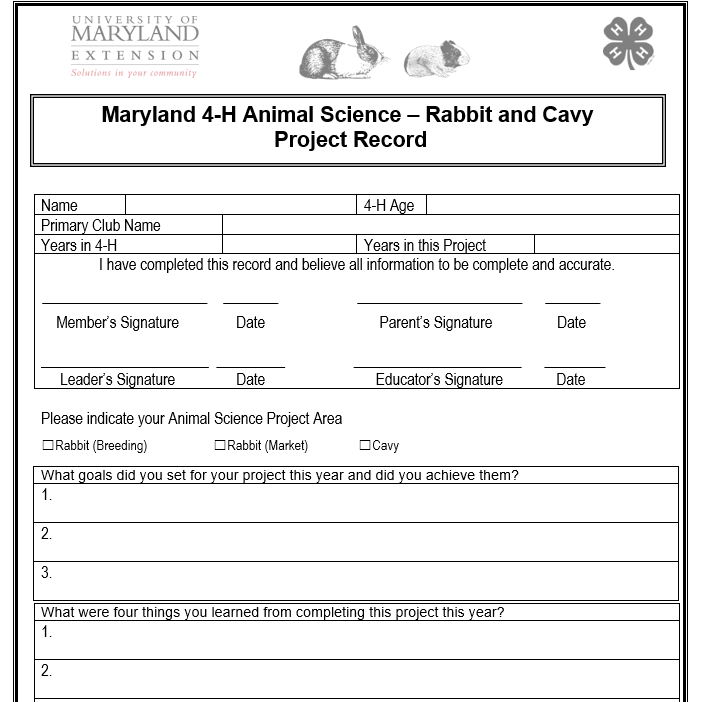
Accurate record keeping is an important part of raising your 4-H rabbit project. Using the Maryland 4-H Animal Science - Rabbit and Cavy Project Record (Figure 5), will help you keep appropriate records and give thought to what you are learning throughout the year. You will be asked to complete the following areas for your rabbit project:
- Goals – At the beginning of raising your rabbits/ cavies, what goals did you set for yourself for the year, and did you achieve them?
- Learning – What did you learn throughout the year about your rabbit/cavy project?
- Improve or do differently? What is something you would like to improve upon next year, or something you learned you need to do differently for your project in the future?
- Life skills – Using the life skill wheel provided on the project record, what skills did you learn, and how did you learn that skill?
- Project activities – What activities did you attend that relate to your rabbit project, such as rabbit workshops, rabbit judging, spring 4-H show, county fair, etc.?
- Project communication – Most counties require 4-H members to have some sort of communication about their project. This could be a speech about “Why I chose to show Angora rabbits” or a demonstration on “What equipment do I need to raise meat rabbits?” Most of the time, you can give your speech or demonstration at a club meeting, a county demonstration, or a public speaking event. You might also be asked to give a presentation in school or at a local library or community event, and these would also count.
- Exhibits – Where did you exhibit your animals? Write down all the shows you attended, each class you entered, and the awards you won.
- Information on project animals – Keeping records on each animal you raise is important, so you know when you started and when you will end the project.
- Expenses
- Feed – A daily expense during your project year.
- Other expenses – There are many other expenses to think about with your rabbit project, from equipment to supplements to entry fees for shows.
- Health records – You should keep records of every veterinarian visit and exactly what was needed.
- Income –
- Sale income – From either a county fair or a private sale of your animal.
- Other – This includes the premium money you received from exhibiting at fairs.
Science” page on the University of Maryland Extension Maryland 4-H website: https://extension.umd.
edu/programs/4-h-youth-development/program-areas/animal-sciences/)
Enhancing your 4-H Educational Rabbit Experience
Workshops
Your 4-H county Extension office or the fair may hold animal workshops or field day opportunities. These events typically cover a wide variety of educational topics, including grooming, showing, animal health, and nutrition.
Spring Shows
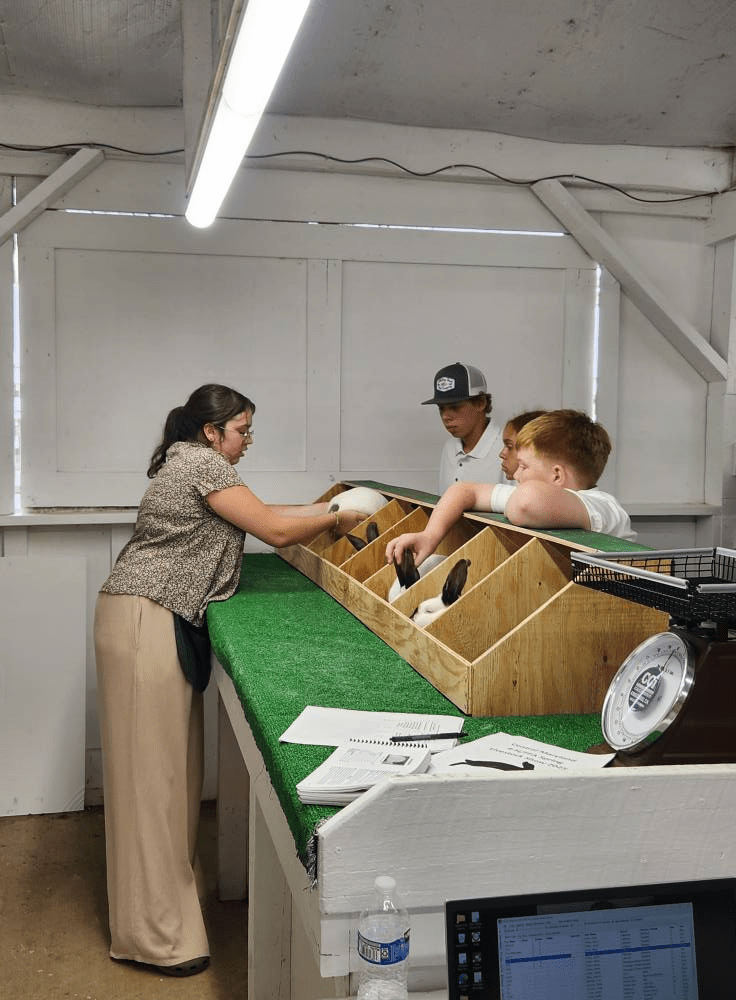
Throughout the state, regional shows are held for 4-H members. These shows offer 4-H members of all ages and experience levels a chance to bring their animals (Figure 6). By participating in regional shows, 4-H members learn how to prepare their rabbits and equipment for their county and state fairs, which are typically held later in the year.
Judging Competitions/Skillathons
Participating in rabbit judging helps you learn more about the qualities that make good rabbits, different types of breeds, nutrition, reproduction, equipment, etc. By participating in these competitions, you will gain practice in learning how to place classes of rabbits, but you will also gain important life skills like teamwork, problem-solving, and public speaking, as youth are required to orally present their reasoning to a judge. The Maryland State Fair offers a Rabbit Judging & Skillathon competition, and some county fairs also offer variations on this contest. Visit the Maryland State Fair website to learn more.
Showmanship
While most shows judge the size, shape, and performance of the animal being exhibited against the breed standards, showmanship classes are different in that they judge the human showing the animal, rather than the animal itself. Showmanship classes are all about how well the exhibitor works with their animal and how well they prepare, control, and present the animal to the judge at the show table. Showmanship helps teach kids important life skills such as teamwork, communication, confidence, and self-responsibility. For more information on how to prepare for showmanship with rabbits, go to: https://www.canr.msu.edu/manistee/4-h/4-H%20Rabbit%20Showmanship.pdf
Demonstrations
Demonstrations are a required part of being a 4-Her as they help youth to develop important communication and other social skills, but they are also a great opportunity to learn more about the animal species that you are showing. Teaching others about our animal projects helps us to grow in our knowledge, too. Look for ways that you might be able to do a demonstration about your animal. Many 4-Hers are often invited to give talks about their animals at libraries, schools, fairs, community events, club meetings, etc.
Service
Take your rabbits to a nursing home or school, help out with setting up for the rabbit show, etc. By engaging in service activities with your rabbits, you can practice handling your animals, deepen your knowledge of your animals as people ask you questions, and grow in your project area.
Field Trips
Either individually or with your club, consider taking a field trip to learn more about your rabbit project. Tour a rabbit breeder or a rabbit processing facility, visit a vet with rabbits, visit an equipment or feed manufacturer, etc.
Print/Online Resources
- Local rabbit social media pages – Oftentimes, local breeders share great tips and resources for raising rabbits.
- ARBA Standard of Perfection – This book has the standards written out for each recognized breed so that you can study and learn what to look for in selecting quality rabbits for your herd.
- Project Books: Project materials to assist youth in learning may be available through your county 4-H office, or you can order directly. The following materials are available at National 4-H at www.4-hmall.org: “Rabbits Level 1: What’s Hoppening”; “Level 2: Making Tracks”; and “Level 3: All Ears.”
Conclusion
Exhibiting rabbits through Maryland 4-H is an exciting and rewarding
opportunity that helps youth build knowledge, confidence, and lifelong
skills. While the requirements may feel extensive at first, following each
step carefully — and staying organized with your records, deadlines, and
animal identification — ensures a smooth and successful show experience.
Remember that you are never expected to navigate these expectations alone. If
you have questions at any point, reach out to your county fair superintendent,
your 4-H club leader, or your local Maryland 4-H Extension educator. They
are there to support you, clarify requirements, and help you make the most of
your 4-H rabbit project journey.
BECKY RIDGEWAY
bridgewa@umd.edu
ANNA GLENN
amglenn@umd.edu
This publication, Maryland 4-H Requirements and Tools for Exhibiting Rabbits (FS-2025-0772), is a part of a collection produced by the University of Maryland Extension within the College of Agriculture and Natural Resources.
The information presented has met UME peer-review standards, including internal and external technical review. For help accessing this or any UME publication contact: itaccessibility@umd.edu
For more information on this and other topics, visit the University of Maryland Extension website at extension.umd.edu
University programs, activities, and facilities are available to all without regard to race, color, sex, gender identity or expression, sexual orientation, marital status, age, national origin, political affiliation, physical or mental disability, religion, protected veteran status, genetic information, personal appearance, or any other legally protected class.
When citing this publication, please use the suggested format:
Ridgeway, B., Glenn, A. (2026). Maryland 4-H Requirements and Tools for Exhibiting Rabbits (FS-2025-0772). University of Maryland Extension. go.umd.edu/FS-2025-0772