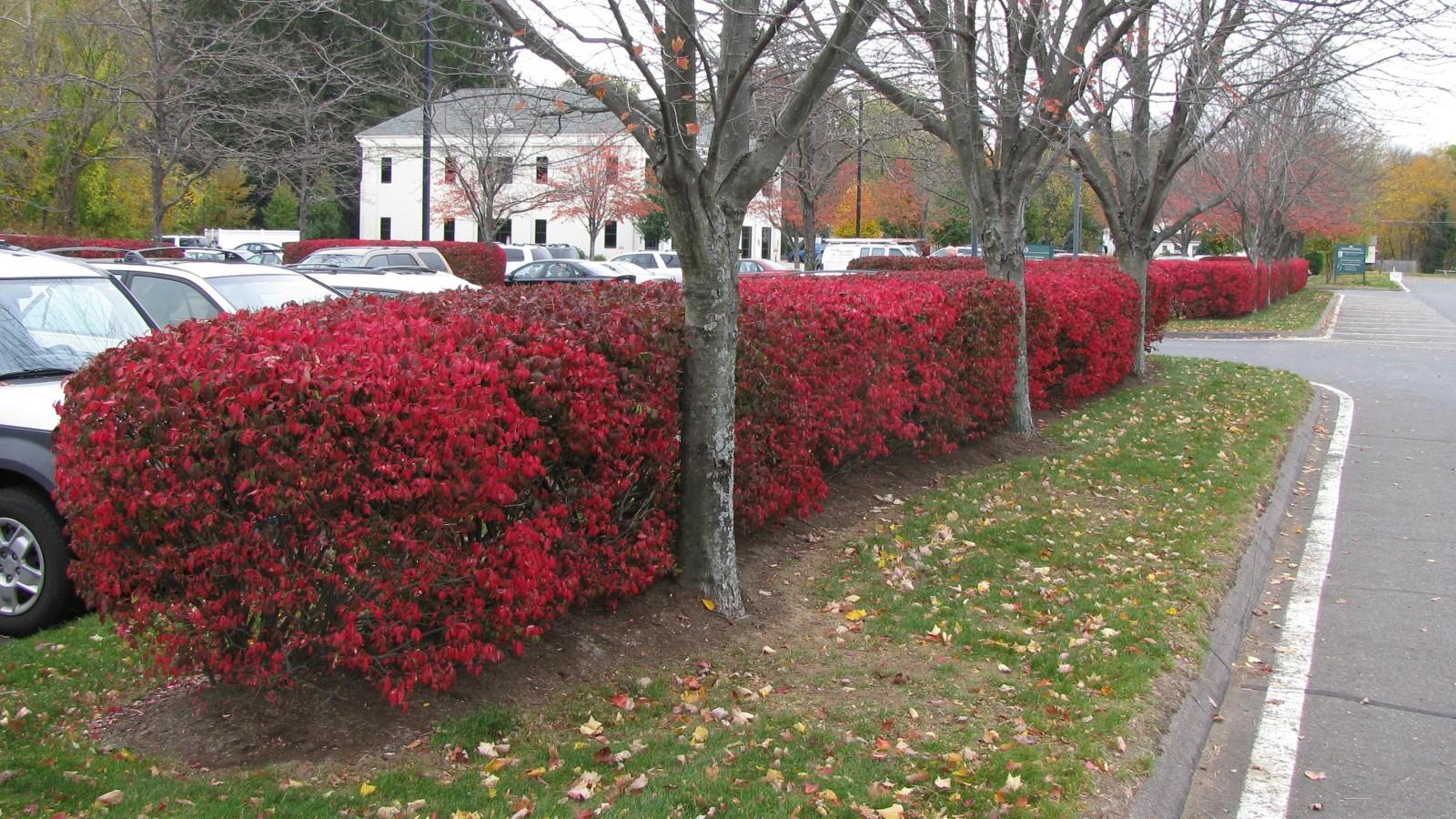
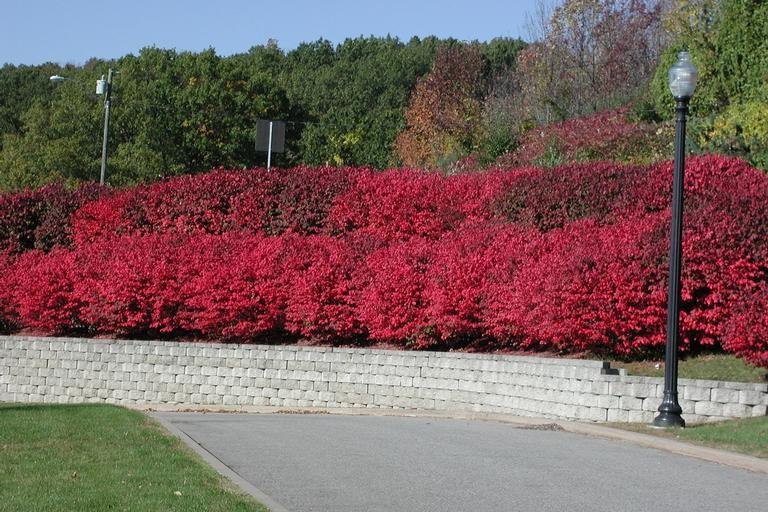
Cultivated hedge of burning bush (Euonymus alatus, also called winged euonymus).
Photo: Leslie J. Mehrhoff, University of Connecticut, Bugwood.org
Updated: April 28, 2026
Burning bush, also called winged euonymus (Euonymus alatus), is a deciduous shrub native to Eastern Asia. It was introduced to the U.S. around 1860 for use in ornamental landscaping due to its fiery red fall foliage and general adaptability.
Physical features of burning bush
Burning bush is a medium- to large-sized shrub that sheds its leaves in autumn. Its winged euonymus alternate name refers to the corky, thin "wings" that protrude from the bark of young stems. The fluorescent red color of the fall foliage is somewhat unique, though leaf color can vary from pastel peach to muted red when the plant is growing in shade.
Growth habit: typically rounded in shape, with a similar height and width; cultivated plants are often pruned into denser, shorter hedges
Typical mature size: 5 to 10 feet tall and wide, especially for the commonly-cultivated variety 'Compactus'; occasionally may reach 20 feet tall
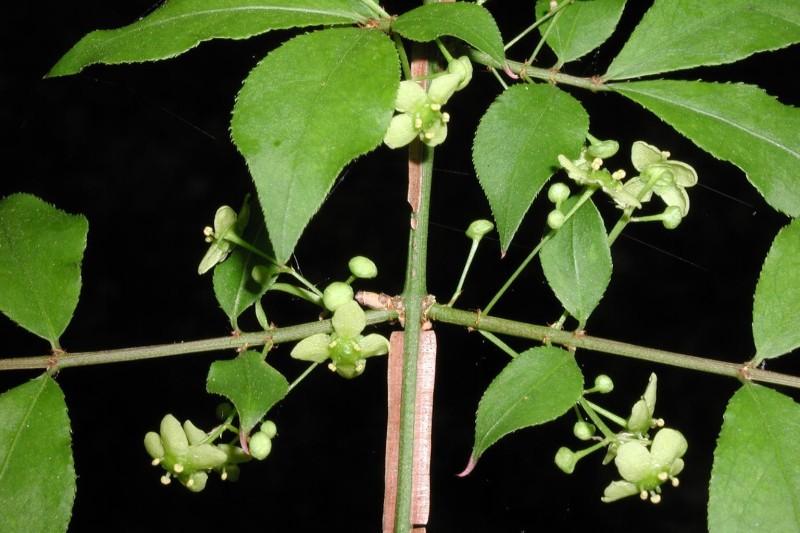
Blooms: 4-petaled pale green flowers on long stalks
Leaves: simple (not divided into leaflets) with finely serrated margins; elliptical in shape; opposite arrangement on the stems
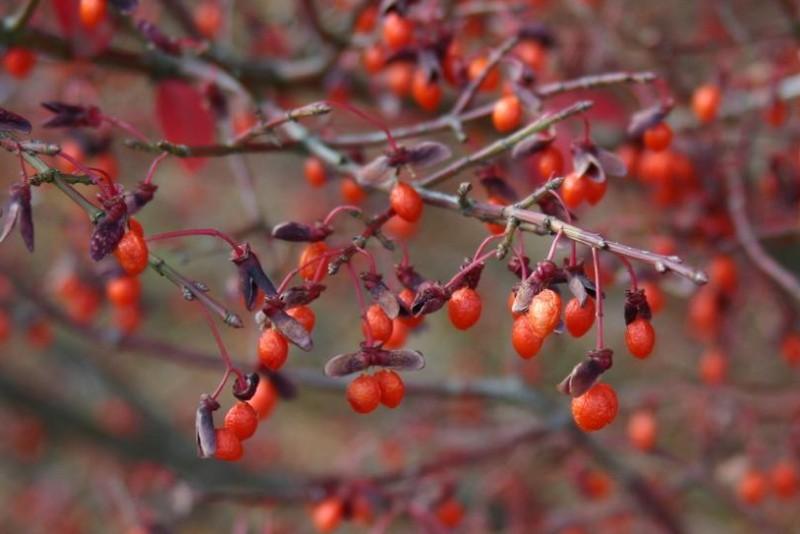
Fruit: long-stalked reddish-orange berries that ripen in autumn
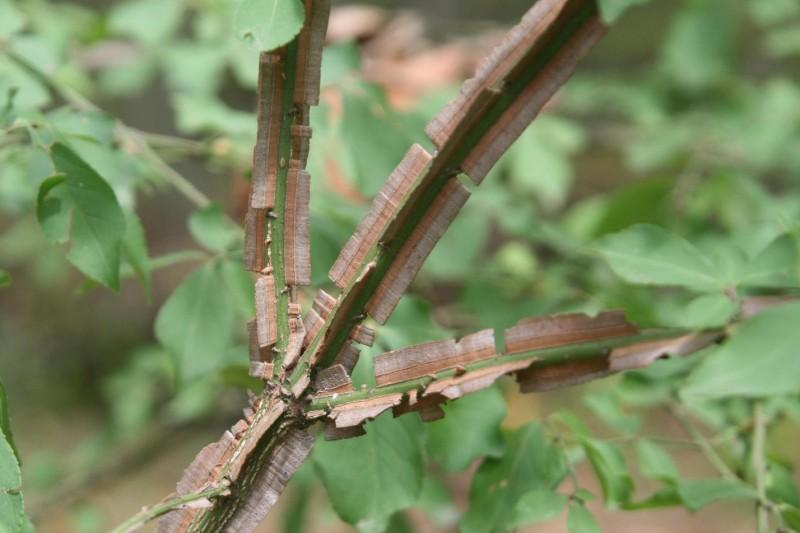
Twigs: pale brown, prominent corky wings are usually present on young branches with green bark
Pale green flowers and corky bark wings on a young branch. Note the opposite arrangement of the leaves. Photo: Leslie J. Mehrhoff, University of Connecticut, Bugwood.org
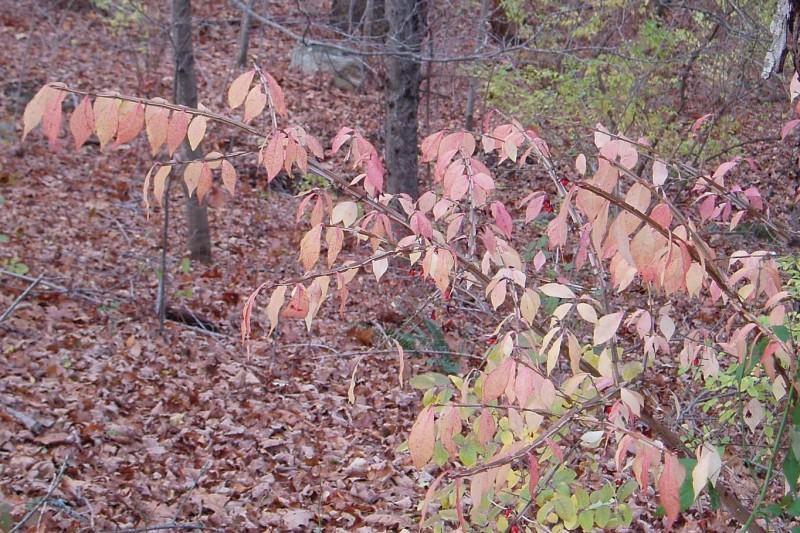
Burning bush growing in the woods may be less colorful, potentially a pale pinkish-orange. Photo: Leslie J. Mehrhoff, University of Connecticut, Bugwood.org
Light brown corky wings emerging from the green bark of a young burning bush stem. Photo: Chris Evans, University of Illinois, Bugwood.org
A cultivated hedge of burning bush growing in full sun displaying intense red autumn foliage. Photo: Leslie J. Mehrhoff, University of Connecticut, Bugwood.org
Orange berries dangle from the branches after the leaves fall in autumn. Photo: Leslie J. Mehrhoff, University of Connecticut, Bugwood.org
Environmental impacts of burning bush
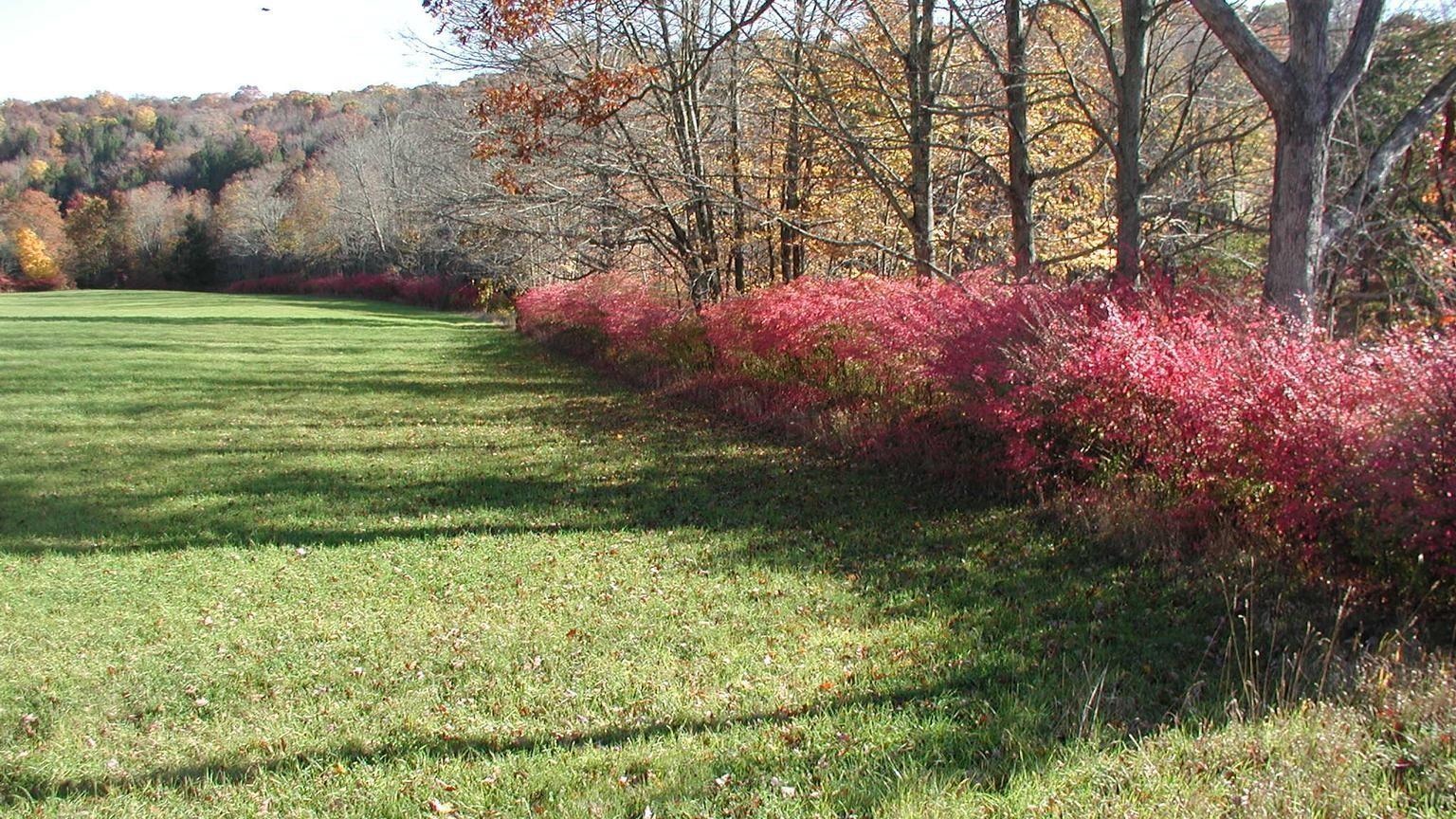
Burning bush is an invasive species and spreads into natural areas by seed. Birds eat the fruits and disperse the seeds as they travel. This shrub can form dense thickets and compete with native vegetation in forests (in the understory and along the edge of the woods), fields, and coastal habitats.
Red autumn color emphasizes extensive thickets of burning bush growing along the edge of a forest. Photo: Leslie J. Mehrhoff, University of Connecticut, Bugwood.org
Conditions that favor growth
Burning bush tolerates full sun and shade, and is highly adaptable to a variety of habitats. Hundreds of seeds may germinate near the parent plant, and the shrub can also sucker (produce new stems from spreading roots).
Alternatives to burning bush
Do not plant burning bush, and replace existing specimens when possible. The Maryland Department of Agriculture (MDA) regulates the sale of invasive plants, and burning bush is a prohibited species under Maryland law. Refer to the MDA's Maryland Prohibited Invasive Plant Law and Regulations resource page for more information and a list of all other regulated species.
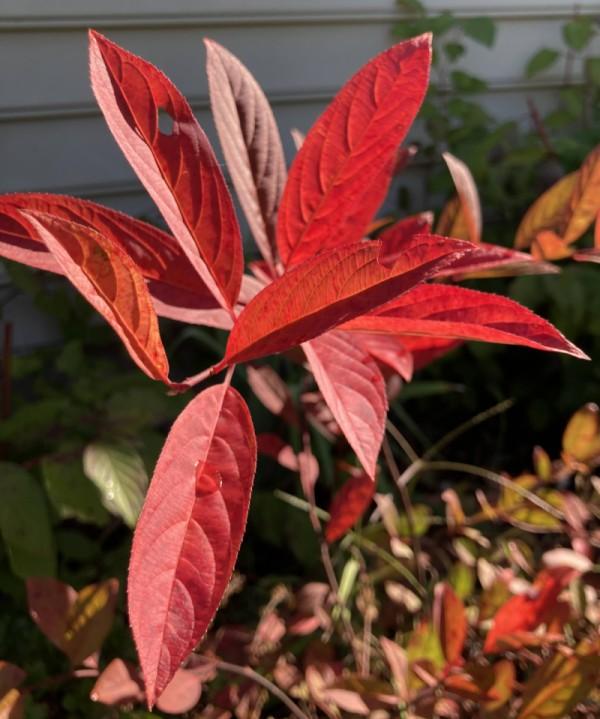
Glowing red autumn foliage on Virginia sweetspire (Itea virginica). Photo: Rachel Rhodes, University of Maryland Extension
Several native or non-invasive shrub species have showy fall foliage color. Candidates include Virginia sweetspire (Itea virginica), fothergilla (Fothergilla species), blueberries (Vaccinium species), fragrant sumac (Rhus aromatica), and oakleaf hydrangea (Hydrangea quercifolia). Invasive Plants to Avoid Buying for your Yard and Garden in Maryland
Burrell, C. Colston. 2007. Native Alternatives to Invasive Plants. Brooklyn Botanic Garden.
Kaufman, Sylvan Ramsey & Wallace Kaufman. 2007. Invasive Plants: Guide to Identification and the Impacts and Control of Common North American Species
Swearingen J., K. Reshetiloff, B. Slattery, and S. Zwicker. 2002. Plant Invaders of Mid-Atlantic Natural Areas. National Park Service and U.S. Fish & Wildlife Service, Washington, DC.