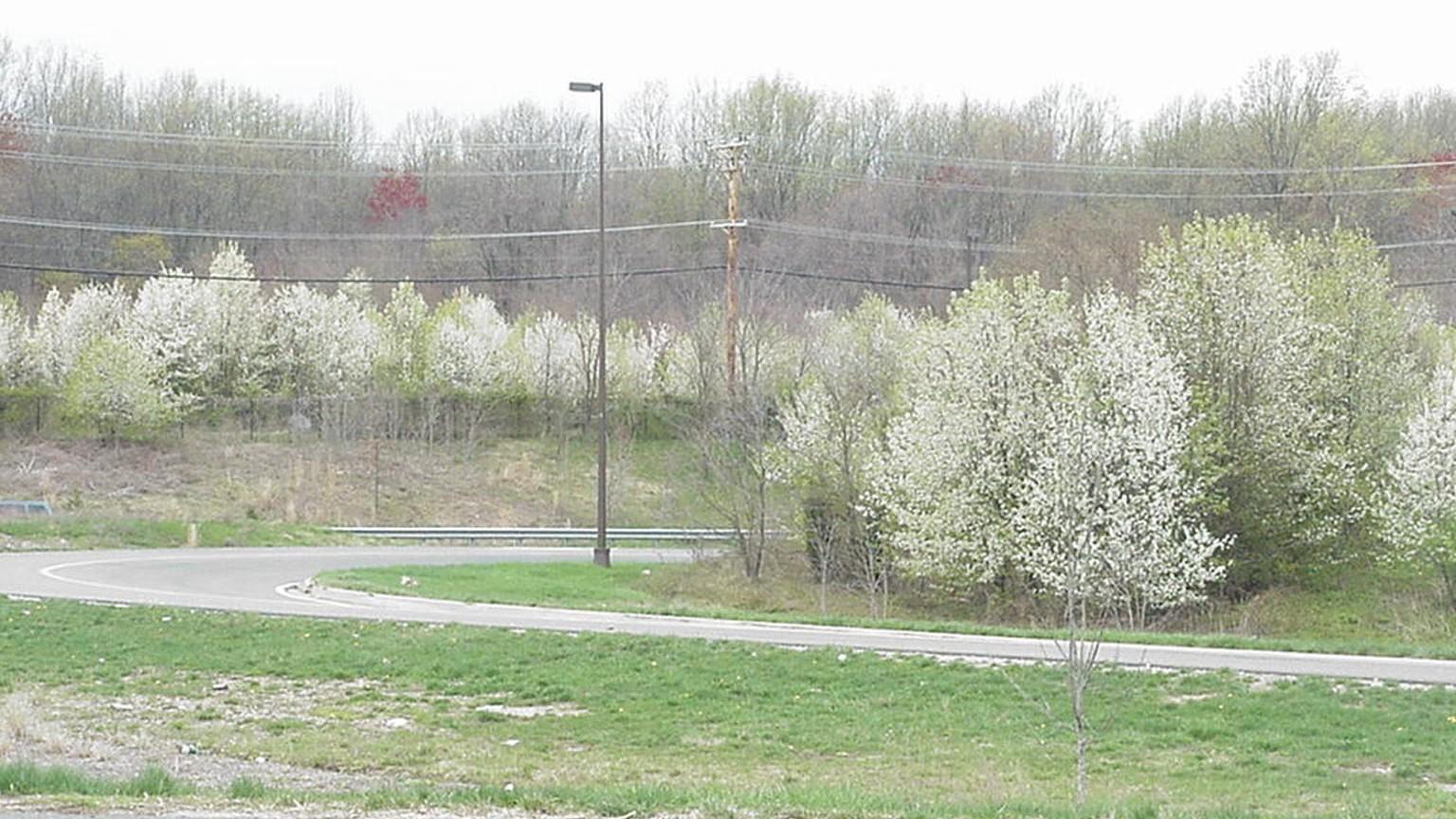
Callery pear (Pyrus calleryana) is an ornamental species of pear tree native to Eastern Asia. Introduced to the U.S. in 1908, it was later cultivated as a decorative flowering tree (not grown for fruit production like Asian pear, Pyrus pyrifolia).
Several cultivars exist, including 'Bradford' (the first named selection, developed in Maryland), 'Chanticleer,' and 'Cleveland Select.' As gardeners became familiar with the 'Bradford' variety name while the trees were widely planted, "Bradford pear" has since become synonymous with "callery pear" as a common name for the species.
Physical features of callery pear
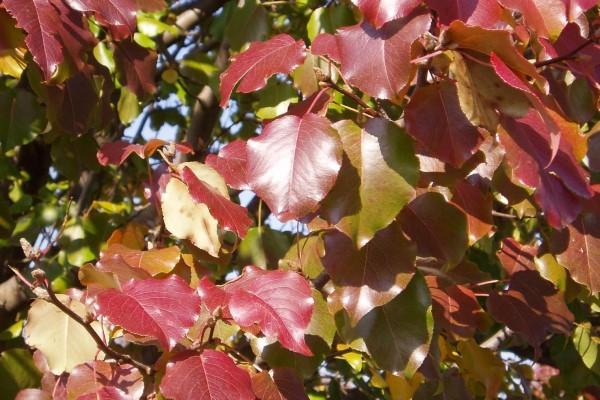
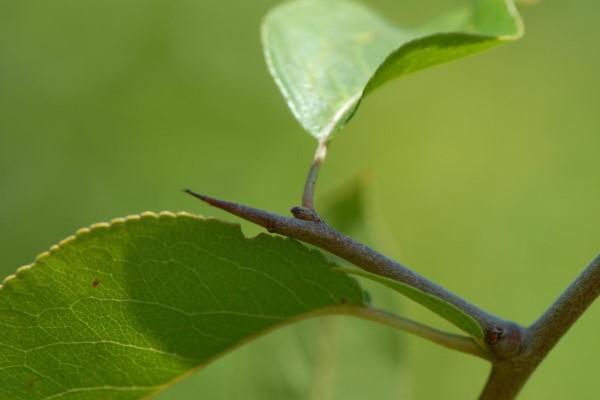
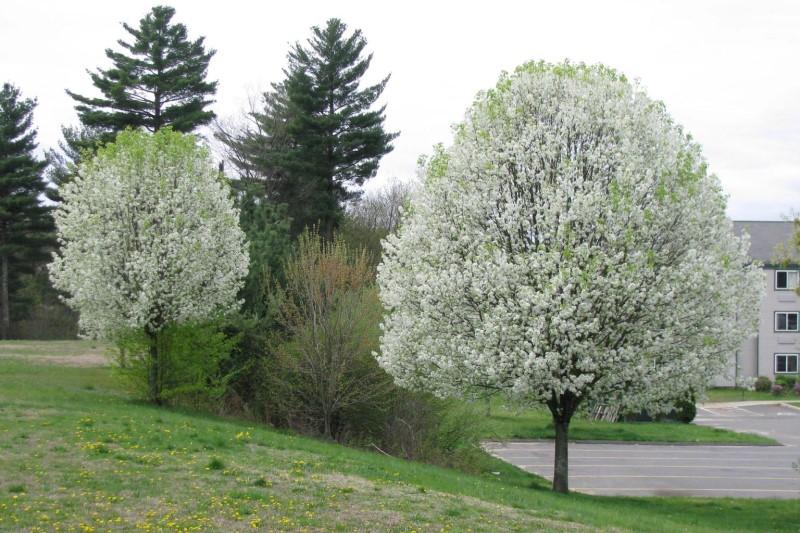
Callery pear is a medium-sized deciduous tree (sheds its leaves in autumn). It is often one of the first trees to bloom in Maryland. Leaves turn a range of colors in autumn, typically burgundy-red or orange. The stems are thorny, and uncultivated trees may have multiple trunks.
From a distance, flowering callery pears might be confused for native spring-blooming, white-flowered small trees like serviceberry (Amelanchier) and dogwood (Cornus florida). There are enough differences between these species to tell them apart, and callery pear will finish flowering before dogwood blooms open.
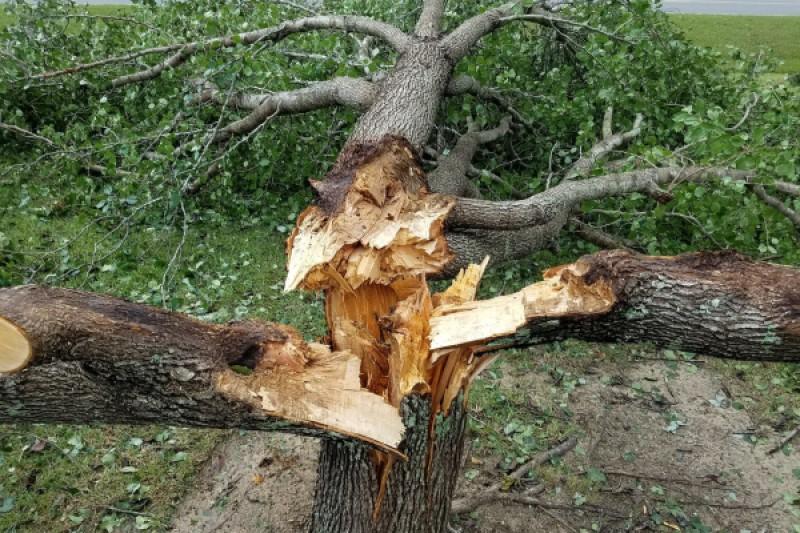
Growth rate and habit: rapid, with dense branching; branch connections to the trunk can have narrow angles that predispose the wood to storm breakage; canopy shape is usually taller than wide
Typical mature size: 30 to 50 feet tall and 20 to 30 feet wide
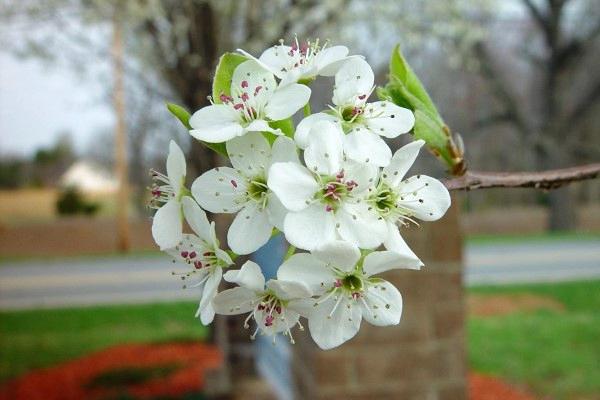
Blooms: 5-petaled white flowers arranged in clusters; malodorous; emerge in early spring
Leaves: simple (not divided into leaflets) with small rounded teeth along the margins; oval to heart-shaped; alternate arrangement on the stems; glossy and leathery-textured
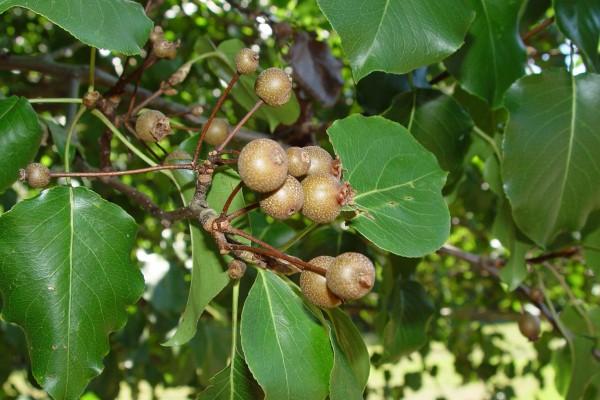
Fruit: in clusters with long stalks; hard/firm; greenish- or golden-brown
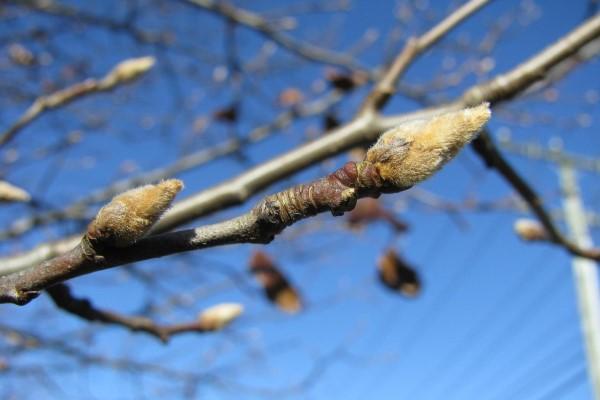
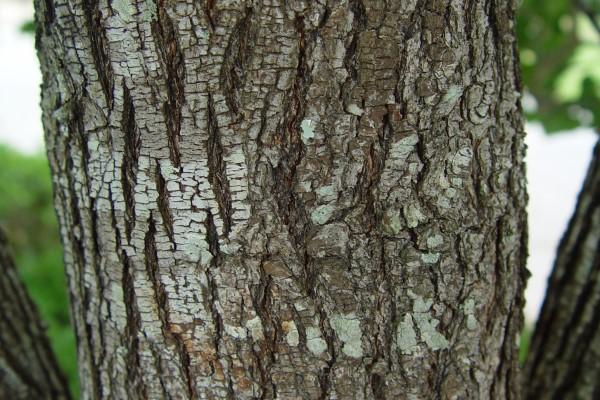
Bark: gray-brown with shallow furrows (on mature trees); smooth-textured and reddish-brown on young stems