
English ivy (Hedera helix) is an evergreen perennial vine native to Europe, Western Asia, and Northern Africa. It was introduced to the U.S. in the 1700s as an ornamental groundcover. Several cultivars exist, including variegated forms with pastel yellow or creamy white leaf margins.
Physical features of English ivy
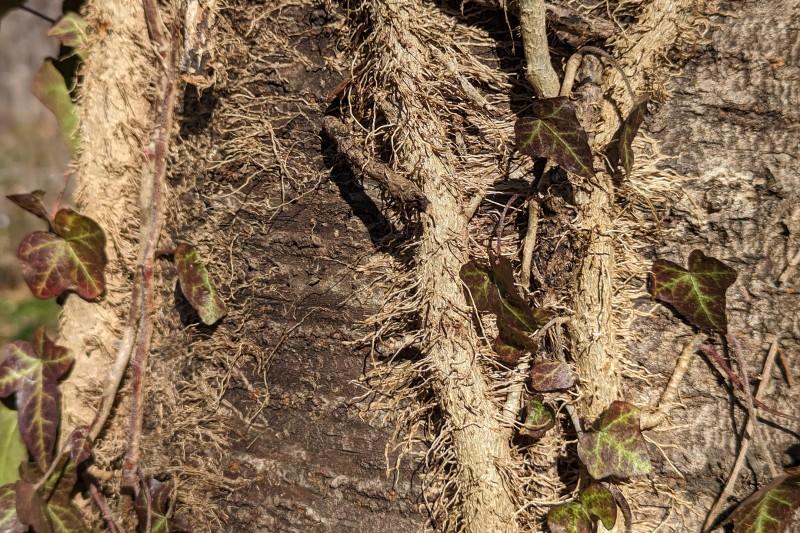
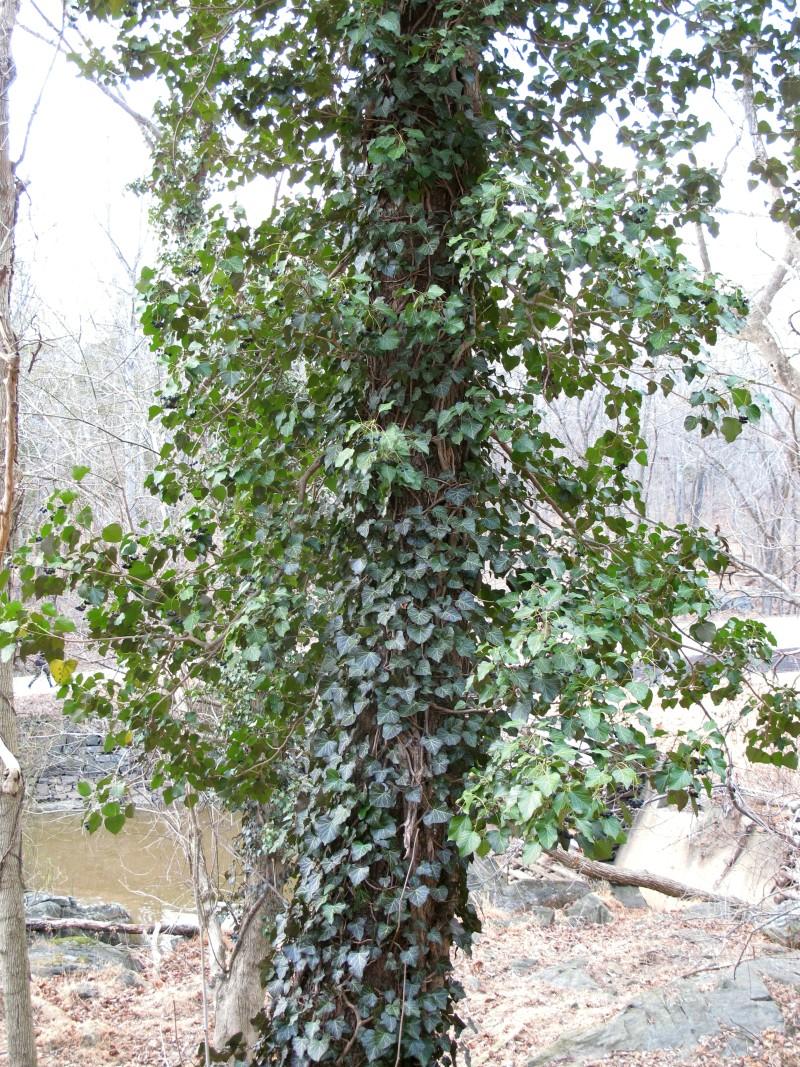
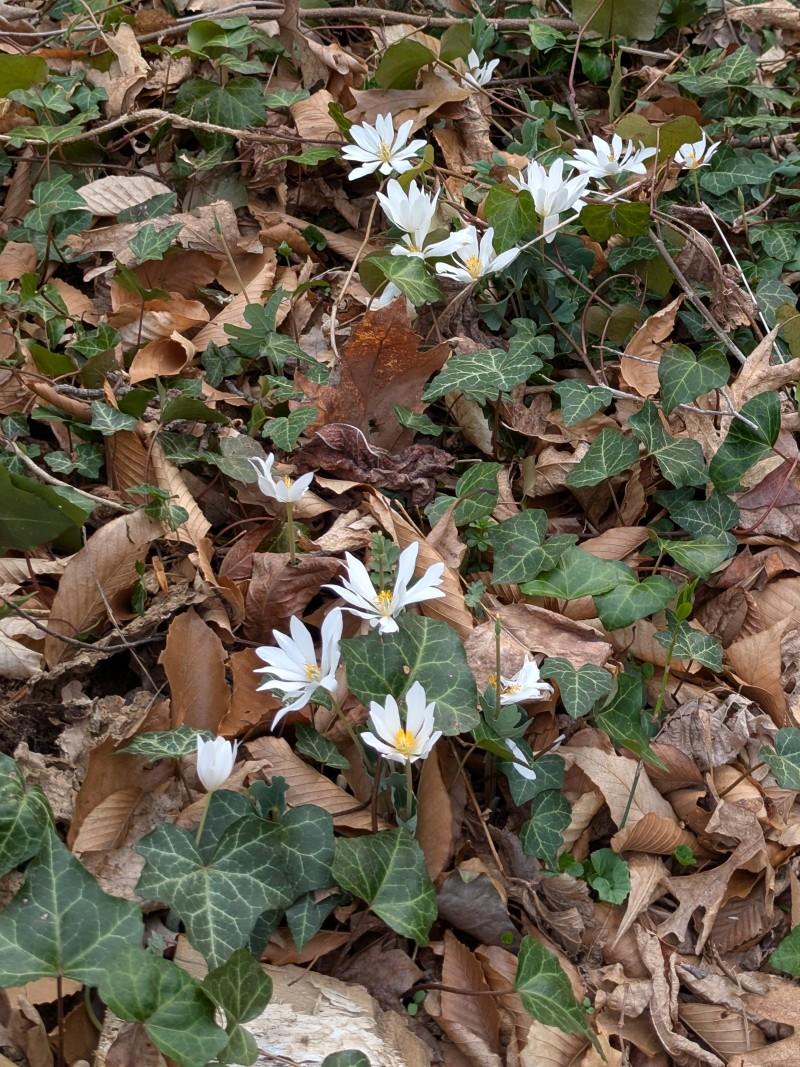
English ivy is a clinging vine: when it doesn't have a support to climb, it grows as a groundcover. Instead of wrapping stems or tendrils around a support, the plant adheres to its support with root-like holdfasts (aerial rootlets) on the stems. English ivy can cling to tree bark, brick, stone, and other textured surfaces.
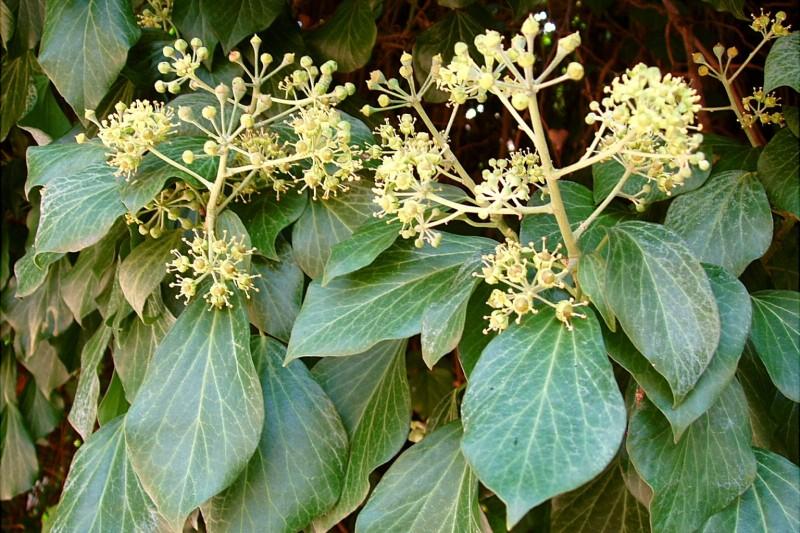
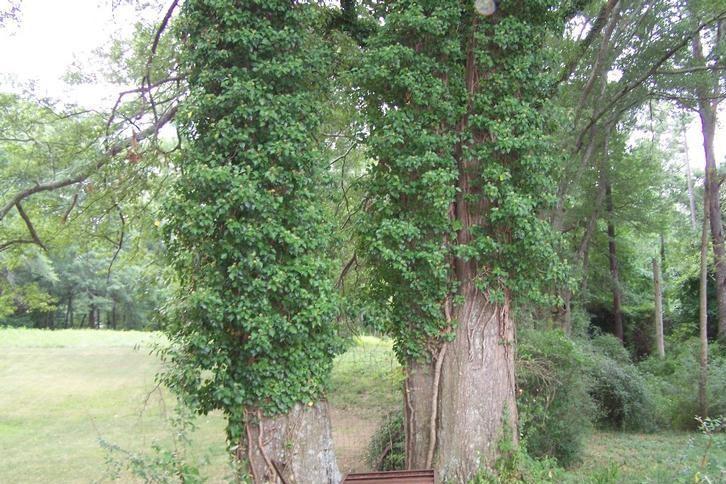
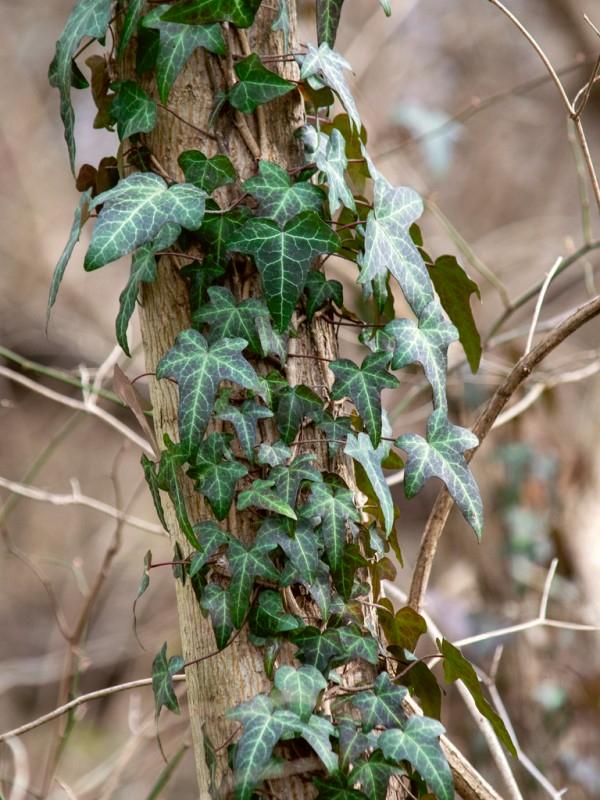
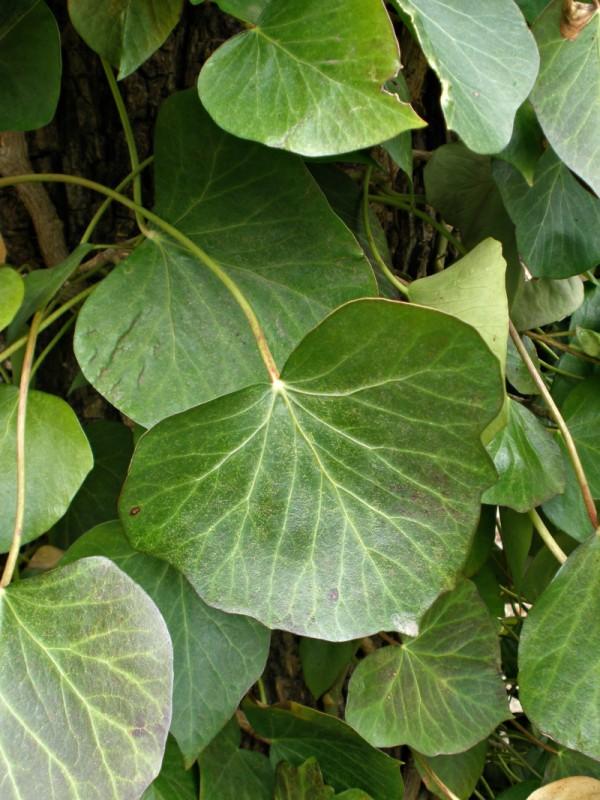
As the plant matures, the foliage shape and growth habit changes. Foliage on young growth has the familiar star-like lobes; on older growth, the leaves have a less distinct, unlobed shape. As stems start to climb, they cling tightly to the support, but as the vine matures, additional growth branches outwards several feet from the support. This gives trees covered in mature English ivy a bushy appearance. At this point, the vine is mature enough to flower and fruit, features not observed when immature stems are creeping over the ground.
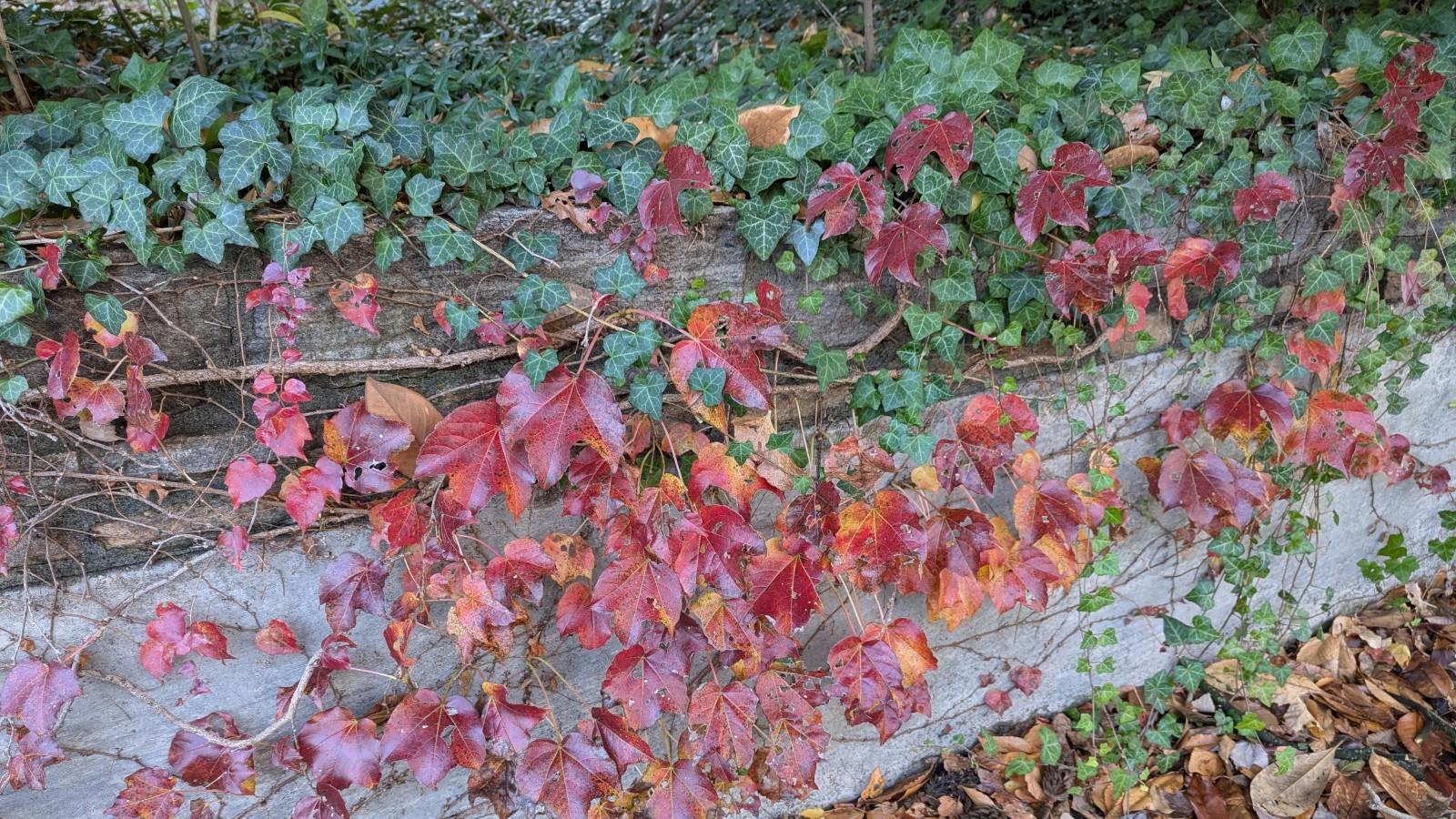
Several vine species have "ivy" in their common name that should not be confused with English ivy. Poison ivy (Toxicodendron radicans) is native, with compound leaves; Boston ivy (Parthenocissus tricuspidata) is non-native; both are deciduous, with colorful fall foliage and leafless stems in winter.
Growth rate and habit: rapid growth rate (several feet per year); clinging vine that smothers ground-level plants and tree trunks as the stems grow upwards
Typical mature size: greatly dependent on the height and width of its support, though climbing stems can easily reach 60 feet or more if scaling a tall tree; while growing as a groundcover, the plant typically stays under 1 foot tall
Blooms: yellow-green flowers in branched, rounded clusters
Leaves: simple (not divided into leaflets); 3 to 5 lobes on young growth; unlobed and spade-shaped on older growth (side branches without rootlets); medium to dark green color with paler veins; alternate arrangement on the stems; glossy/waxy and leathery-textured
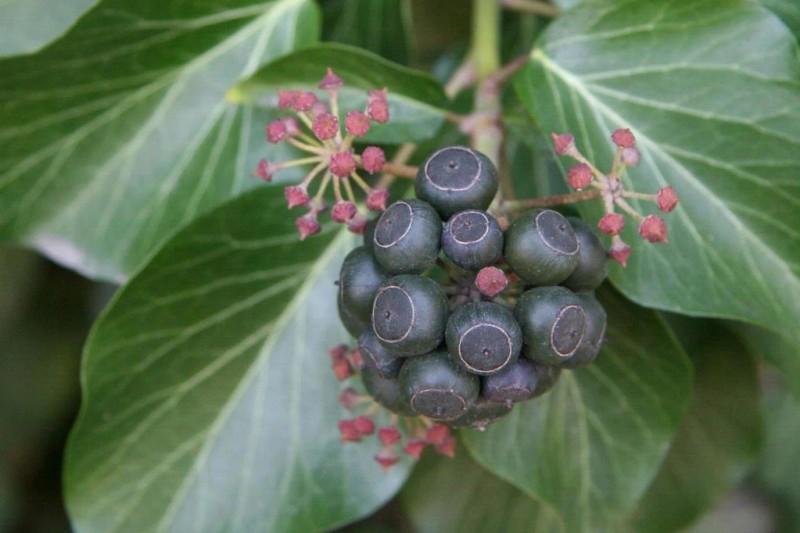
Fruit: clusters of blue-black berries
Stems: dense aerial rootlet growth gives the thicker, mature stems a shaggy appearance