
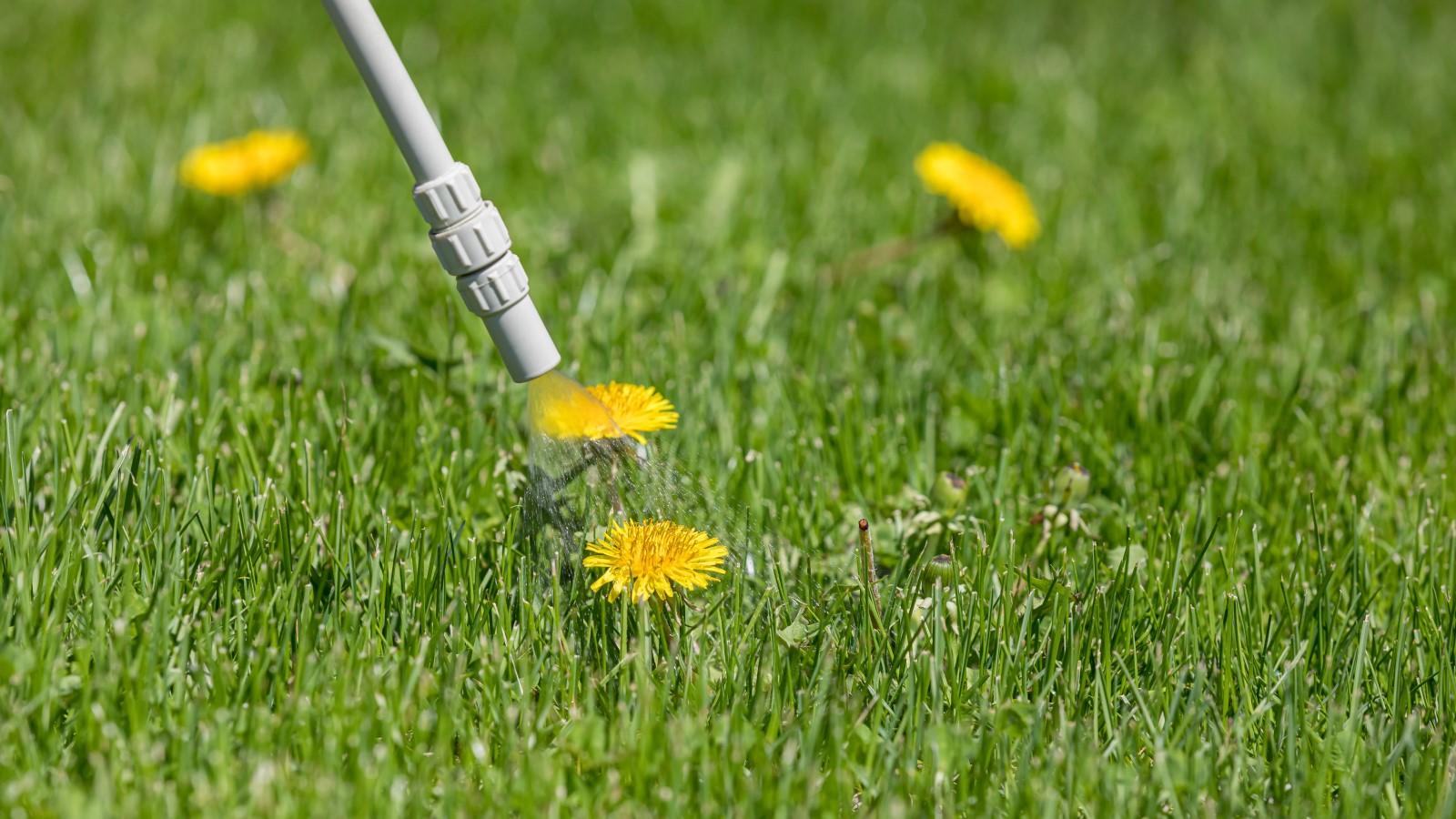
Herbicides are a type of pesticide used to control unwanted plants (weeds), and they have been used to control lawn weeds since the 1950s. The potential risks to people, pets, wildlife, and the environment should cause people to reconsider their use as part of routine lawn care. Reduce the need to rely on herbicides by concentrating on proper lawn care practices that help the lawn resist weed invasion. As with all pesticides, herbicide use should be a last resort and is not a substitute for good lawn care.
Critical herbicide information and precautions
Any pest, including weeds, should be identified before choosing a pesticide to control it. Identification helps you determine what herbicide is appropriate and effective on that weed, and what the weed's life cycle is (and when it may be most vulnerable to a herbicide application).
- Look for a match in our Weed Identification Photos
- The pesticide label is the law. Read and follow the label directions. The label information is for the safest and most effective use of that product. Learn more about herbicides for weed control from the National Pesticide Information Center.
- Select ready-to-use (RTU) products to spot-treat weeds, eliminating the need for mixing a product to the right dilution rate and using a sprayer. If you choose to use a concentrate product, dedicate a sprayer for herbicide use only and do not use it for any fungicide or insecticide sprays.
- Keep leftover herbicide in its original container. Try to purchase only the amount needed for only one season.
- Herbicides work best on young weeds and when the weeds are actively growing. Do not treat drought-stressed lawns.
- Late summer into autumn is a good time to treat difficult-to-control perennial weeds like creeping Charlie. Perennial plants move resources that were stored in their leaves, along with any chemical absorbed into those leaves, down to their root system as they prepare to go dormant for the winter.
Weed-and-feed products are not recommended because they are formulated to treat the entire yard (not individual weeds only), they are applied in spring (most lawn fertilizers should be applied in autumn), and their use can contribute to overfertilizing the lawn.
Problems with herbicide use
- During certain weather conditions, volatility (the chemical is made airborne through evaporation) or drift (movement by air or water flow) can occur and cause damage to desirable plants.
- Some herbicide active incredients may damage trees and shrubs when the ingredient is absorbed by roots growing in a treated lawn. Dicamba is a common example which is a component of several lawn herbicide products.
- Herbicides, especially dry formulations like granules, can flow off of treated areas in irrigation or stormwater and injure plants downhill of those areas.
- Herbicide can be accidentally tracked into homes by people and pets. Outdoors, synthetic herbicides are broken down by exposure to the sun, moisture, high temperature, and/or soil microbes. Indoors, the active ingredient can persist, increasing exposure to people and pets.
- The relative effectiveness of herbicides is subject to many factors outside our control: temperature, rainfall, soil conditions, etc. Even when label directions are followed carefully, the resulting level of weed control may be disappointing.
- Weeds can develop resistance to herbicides, making the applications less effective over time. The risk is greatest when the same active ingredients are used repeatedly on multiple generations of the same weed species over time.
