Updated: April 14, 2026
By Drew Schiavone
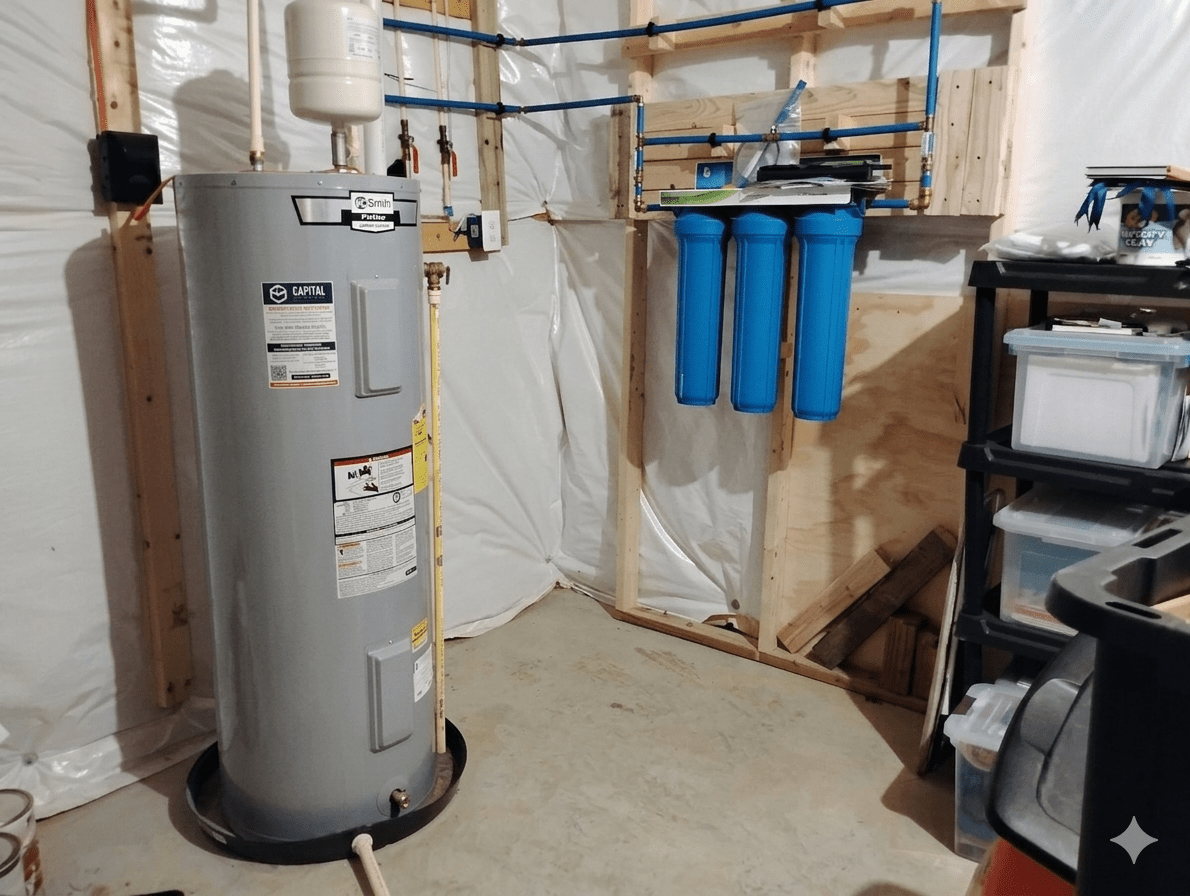
a basement utility area featuring a tall, gray water heater storage tank on the left and a three-stage blue whole-house water filtration system mounted on the wall to the right

A water heater is like a hardworking utility player; quiet, reliable, and often ignored until something goes wrong. With a little attention, however, your water heater can last longer, operate more efficiently, and significantly reduce energy costs. Water heating typically accounts for up to 20 percent of a home’s total energy use, making it one of the largest opportunities for household energy savings; second only to space heating and cooling.

Whether you’re maintaining an existing system or planning ahead for a future replacement, understanding how water heaters work and how efficiency has evolved can help you save money and energy year‑round. When shopping for equipment, it’s important to consider both upfront cost and long‑term operating costs. Lower‑priced units often cost more to operate over time. Look for the ENERGY STAR® label to identify high‑efficiency models, and compare the EnergyGuide label, which estimates annual energy use and operating cost.
How water heaters work

Most homes use storage (tank‑type) water heaters, either gas or electric. When you turn on a hot water tap, heated water flows from the top of the tank to your pipes, while cold water enters at the bottom to replace it. This incoming cold water triggers the heating system.

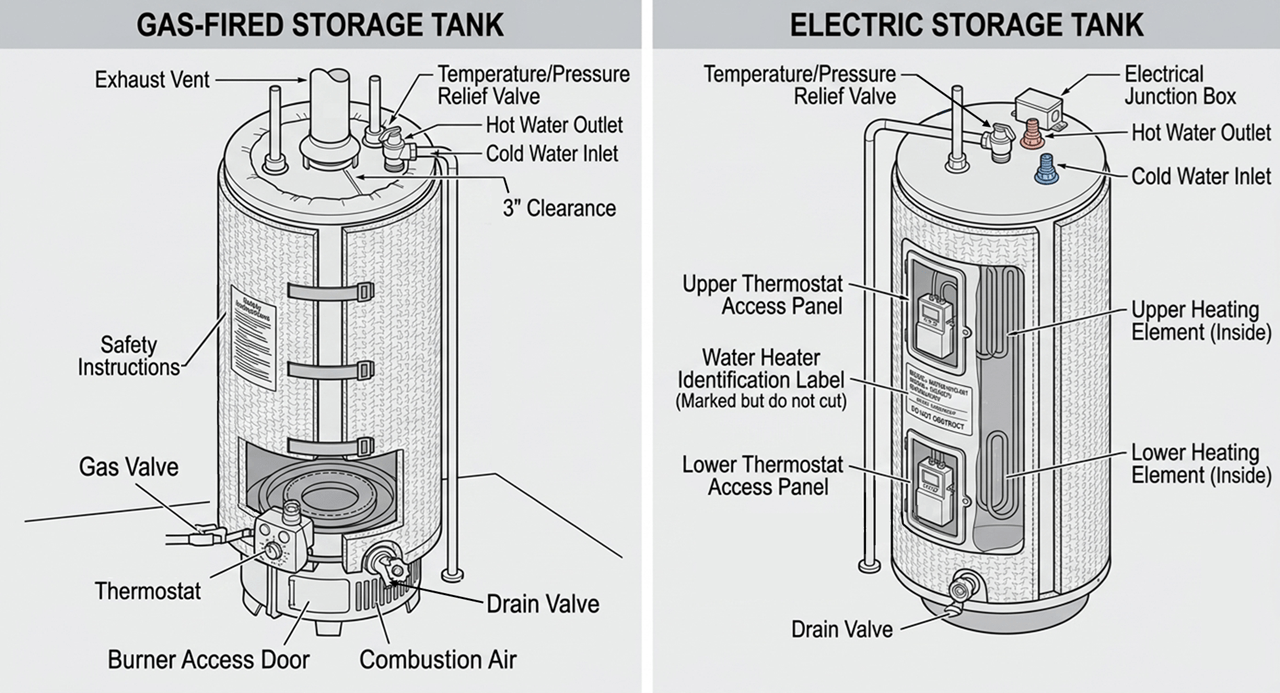
Gas storage water heaters use a burner (and often a sealed combustion system in newer models) to heat water, while electric heaters typically rely on upper and lower heating elements inside the tank. Both systems maintain stored water at a set temperature so it’s available when needed.

All storage water heaters are equipped with a temperature and pressure relief (TPR) valve, a critical safety feature that releases hot water or steam if pressure or temperature builds up excessively. The valve should be tested annually according to the manufacturer’s instructions.

a side-by-side schematic comparing a gas-fired and an electric water heater storage tank

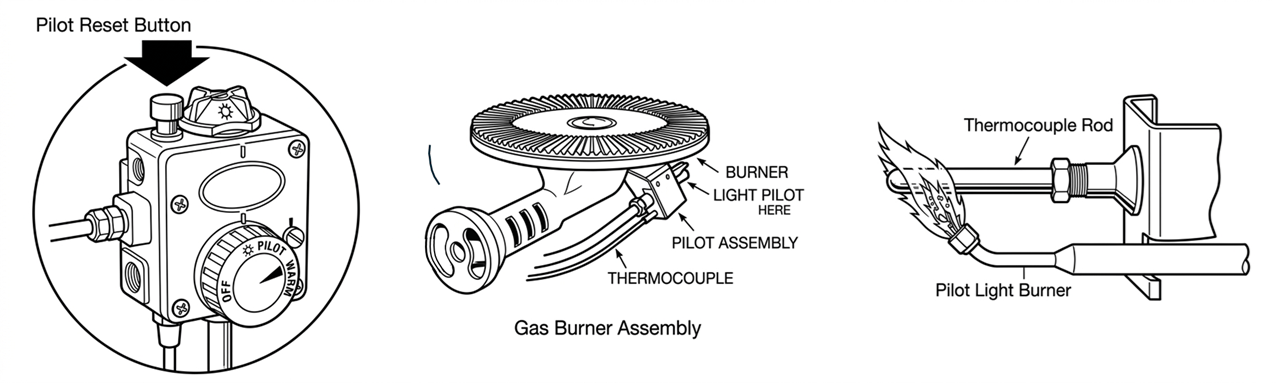
Safety note: Modern gas water heaters often use electronic ignition and sealed combustion. Homeowners should follow manufacturer instructions for maintenance and contact a licensed professional for gas controls, venting, or ignition issues.

line drawings of gas water heater components: (left) gas control valve with a pilot reset button, (center) gas burner assembly, and (right) pilot flame heating a thermocouple rod

Energy‑Saving Steps

You don’t need a new water heater to start saving energy. These five proven strategies can improve efficiency and extend equipment life:
1. Lower the Temperature: Many water heaters are set hotter than necessary. A setting of 120°F is sufficient for most households and can reduce water‑heating energy use by 6–10 percent, while also slowing mineral buildup and reducing scalding risk.
2. Insulate the Tank: If your storage water heater is located in an unconditioned space (garage, basement, utility room), an insulation blanket can reduce standby heat losses. Modern high‑efficiency tanks may already be well insulated—check the manufacturer’s guidance before adding insulation.
3. Insulate Hot Water Pipes: Insulating the first 3–6 feet of hot water piping reduces heat loss and delivers hot water to taps faster, saving both energy and water.
4. Flush the Tank Periodically: Sediment buildup reduces efficiency and tank capacity. Draining a small amount of water from the bottom of the tank once or twice per year helps remove mineral deposits, especially in areas with hard water.
5. Use Heat Traps: Heat traps prevent warm water from rising out of the tank when not in use. Most newer water heaters include built‑in heat traps, but older systems may benefit from a simple retrofit installed by a plumber.

Choosing a new water heater

Today’s water heater market offers more efficient—and cleaner—options than ever before:

  • High‑Efficiency Gas Storage Water Heaters: These units improve on conventional designs with better insulation, advanced burners, and stronger heat recovery. Look for higher tank R‑values and ENERGY STAR certification.
  • Gas Condensing Water Heaters: Condensing models capture additional heat from combustion gases, achieving much higher efficiencies than standard gas tanks.
  • Heat Pump Water Heaters (HPWHs): Heat pump water heaters use electricity to move heat from the surrounding air into the tank rather than generating heat directly. They are among the most efficient options available, using up to 60–70 percent less energy than standard electric resistance heaters. Federal, state, and utility incentives often make these systems more affordable.
  • Tankless (On‑Demand) Water Heaters: Tankless systems heat water only when needed, eliminating standby losses. They can offer unlimited hot water but must be properly sized to meet household demand and often require electrical or gas upgrades.
  • Solar Water Heating: Solar thermal systems use rooftop collectors to preheat water, reducing conventional energy use. These systems typically require a backup heater and work best for households with good solar access.

Explore other HOME ENERGY topics:

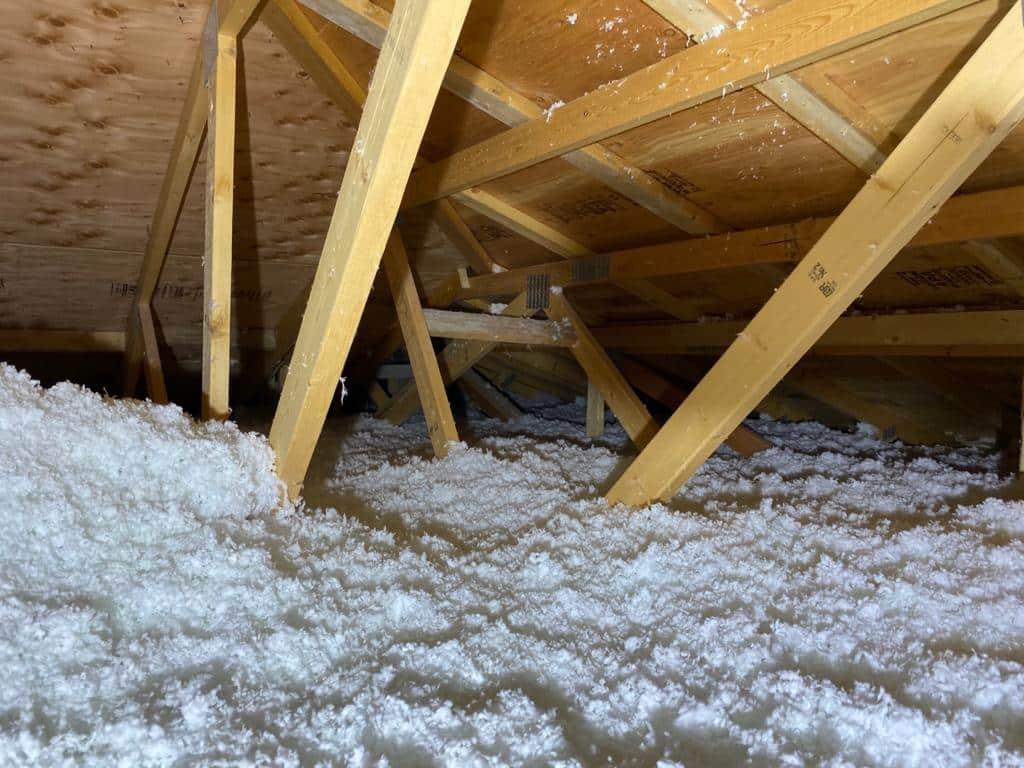
  • Blown-in insulation in attic

    Insulation

    Insulation

    Explore insulation options and strategies for your home.

  • light bulbs laying on yellow surface

    Lighting

    Lighting

    Explore energy-efficient lighting for your home.

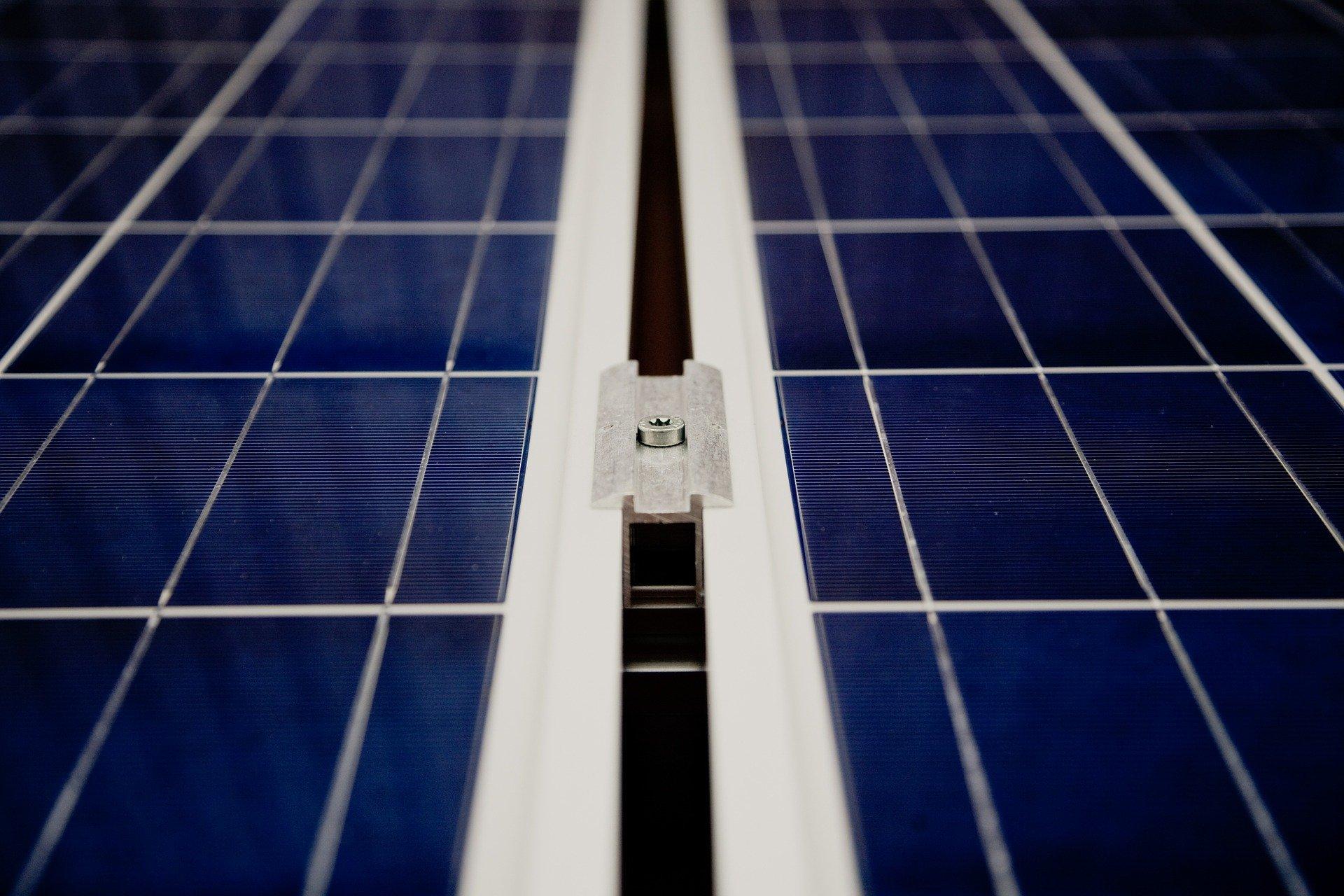
  • Solar energy PV cells and panel held with mounting bracket

    Simplifying Solar

    Simplifying Solar

    Basic understanding of residential solar installation.

  • window film application

    Storm Windows

    Storm Windows

    Explore storm window options for your home.

  • Sustainable home graphic with green electrical plug

    Understand Home Energy

    Understand Home Energy

    Explore the whole-house (or systems) approach to energy efficiency.

  • a basement utility area featuring a tall, gray water heater storage tank on the left and a three-stage blue whole-house water filtration system mounted on the wall to the right

    -- Water Heating --

    Explore water heating efficiency for your home.