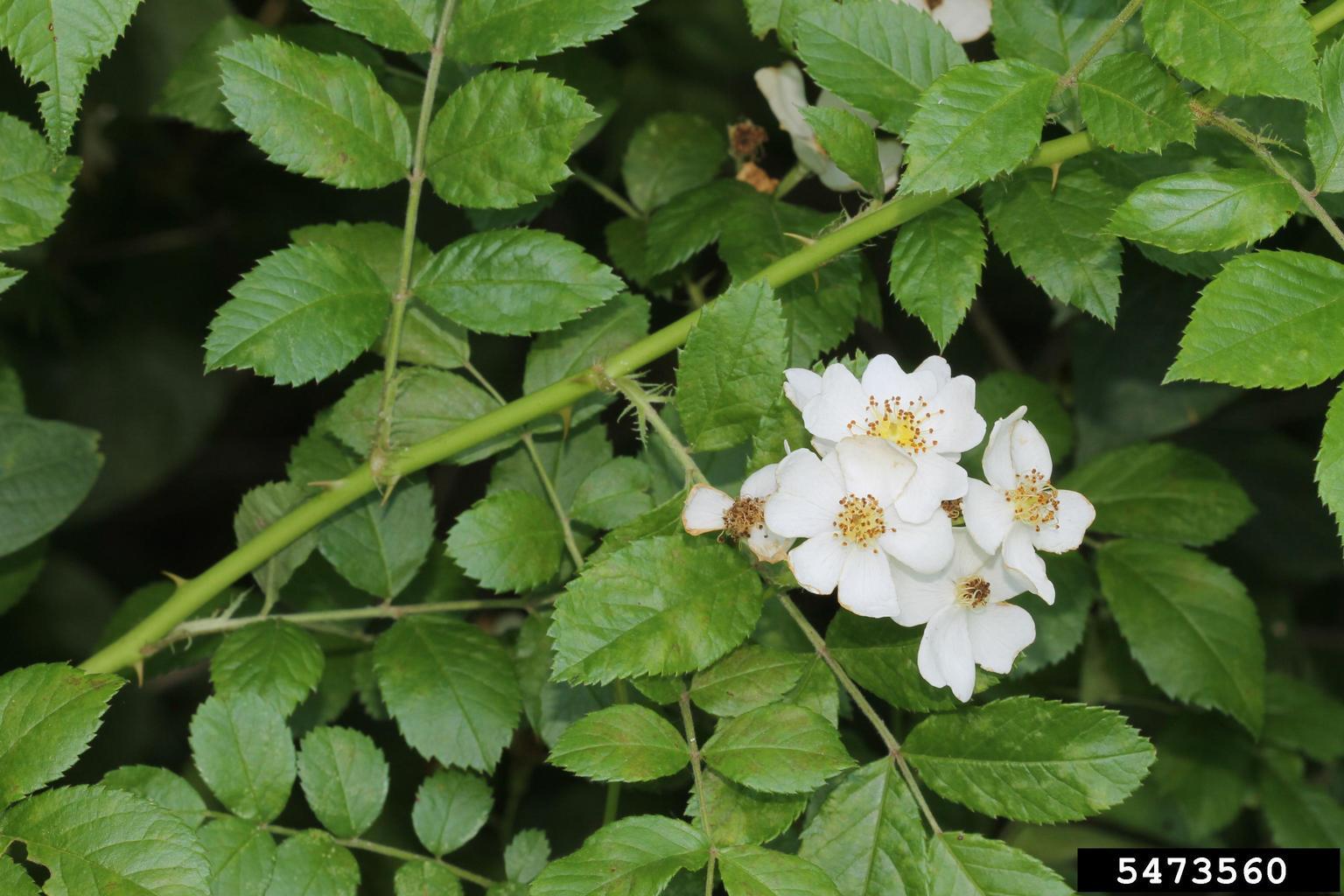
Multiflora rose (Rosa multiflora) flowers and foliage. Photo: Rob Routledge, Sault College, Bugwood.org
Updated: April 28, 2026
Multiflora rose (Rosa multiflora) is a flowering shrub or scrambling vine native to Eastern Asia. It was introduced to the U.S. in the mid-1800s as a rootstock for cultivated rose varieties. In the 1930s it was promoted for erosion control and as a living fence for livestock. It has since become invasive.
Physical features of multiflora rose
Multiflora rose is a deciduous shrub that can act like a vine by producing long branches that scramble over shrubs and into small trees. Unlike other vines like Oriental bittersweet or English ivy, multiflora rose does not wrap stems or tendrils snugly around a support, or attach to a support using aerial roots.
Lightly fragrant blooms open in late spring or early summer, and fruits (rose hips) ripen in late summer and can persist into winter. Birds and mammals eat the berries and disperse the seeds. Leaves may be disfigured by rose rosette disease, a viral infection transmitted by tiny mites.
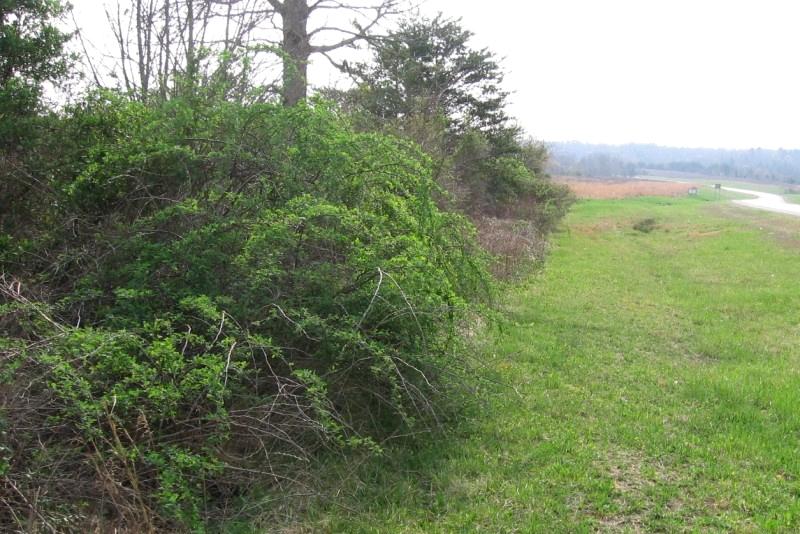
Growth rate and habit: rapid growth rate (over 1 foot per year); broadly mounding habit with arching stems that can root when the tip touches ground or which can scramble into trees
Typical mature size: 6 to 15 feet tall; width more variable depending on how far branches arch or scramble vertically
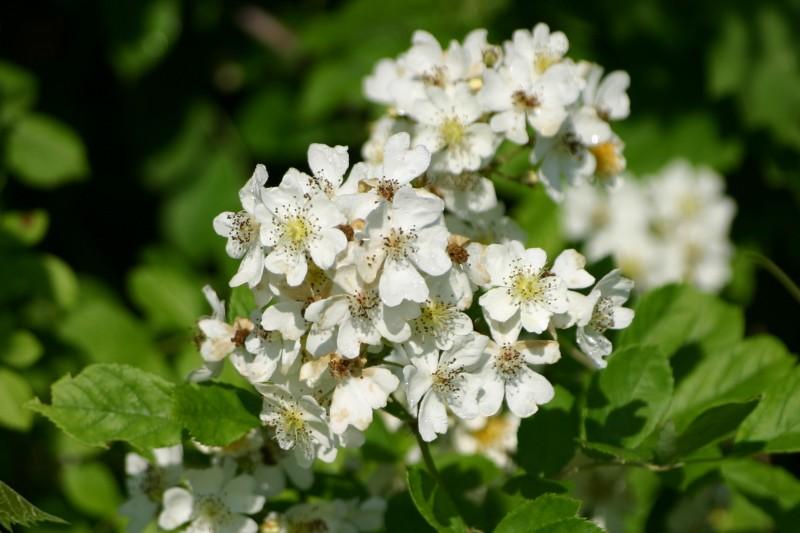
Blooms: clusters of white (occasionally pale pink) 5-petaled flowers with yellow centers
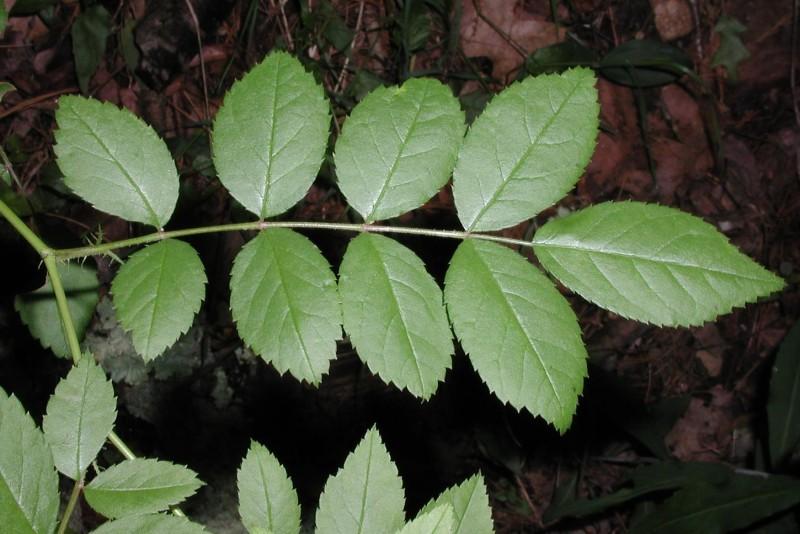
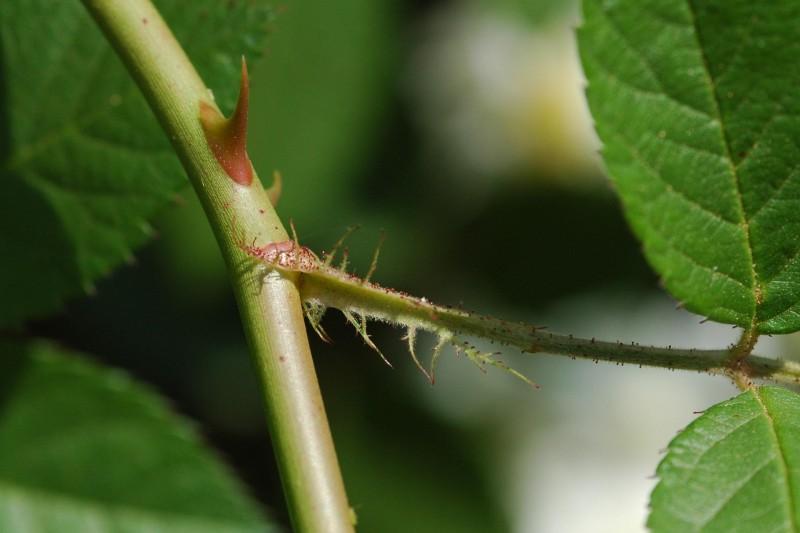
Leaves: compound (divided into leaflets); 5 to 11 leaflets variable in shape, with fine teeth on the margins; base of the petiole (leaf stalk) has a pair of fringed stipules; alternate arrangement on the stems
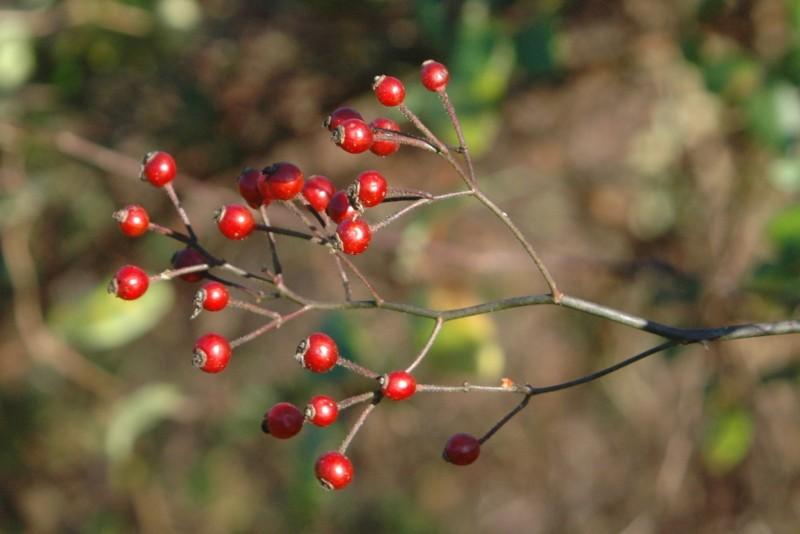
Fruits: long-stalked clusters of red or brownish-red berry-like hips
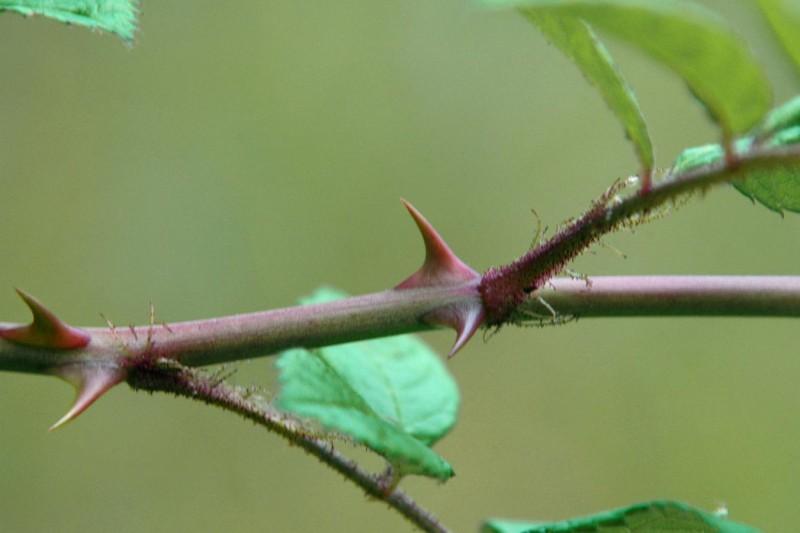
Stems: smooth except for sharp, curved thorns that are often paired and positioned below the leaf stalk
Clusters of five-petaled white multiflora rose flowers. Photo: Denise Ellsworth, The Ohio State University, Bugwood.org
Small red berries (hips) in branched clusters on multiflora rose. Photo: Chris Evans, University of Illinois, Bugwood.org
Compound multiflora rose leaf with nine leaflets. Leaflets have serrated edges. Photo: Leslie J. Mehrhoff, University of Connecticut, Bugwood.org
Fringed stipules on the base of a multiflora rose petiole (leaf stalk). Photo: Karan A. Rawlins, University of Georgia, Bugwood.org
Multiflora rose thorns are often in pairs at the base of leaves. Photo: Chris Evans, University of Illinois, Bugwood.org
Arching branches form a prickly thicket when multiflora rose has nothing to climb. Photo: Nancy Dagley, USDI National Park Service, Bugwood.org
Comparison with native roses
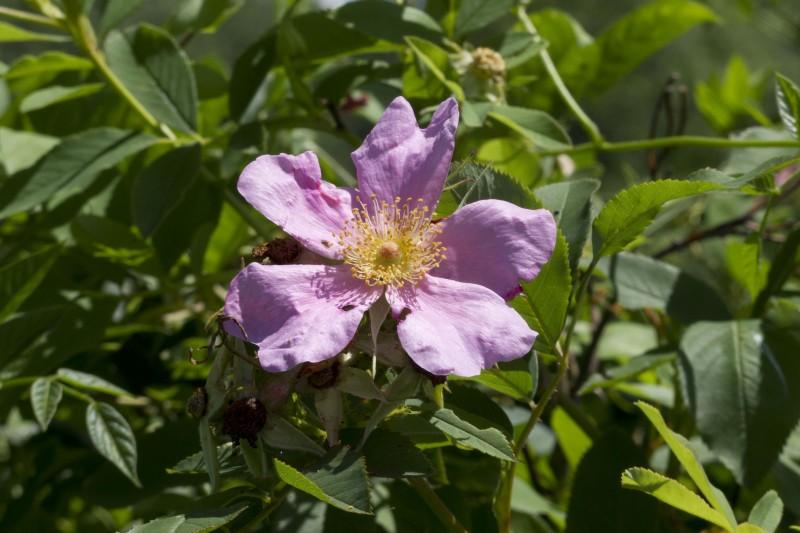
About a dozen species of roses occur in Maryland -- some native, some non-native or invasive. Fringed leaf petiole stipules are the primary trait separating multiflora rose from most other species. Although less reliable of an identifying trait, most of the roses in Maryland have pink flowers that are larger than the white blooms of multiflora rose. One native species, climbing rose (Rosa setigera), can scramble into taller plants like multiflora rose, but its pink petals, larger flowers, and other structural differences separate them.
The most widespread of the Maryland native rose species are Swamp rose (Rosa palustris), Carolina rose (Rosa carolina), and Virginia rose (Rosa virginiana), all of which are non-climbing shrubs.
Swamp rose (Rosa palustris) flowers are usually pink and larger than those of multiflora rose. Photo: Miri Talabac, University of Maryland Extension
Conditions that favor growth
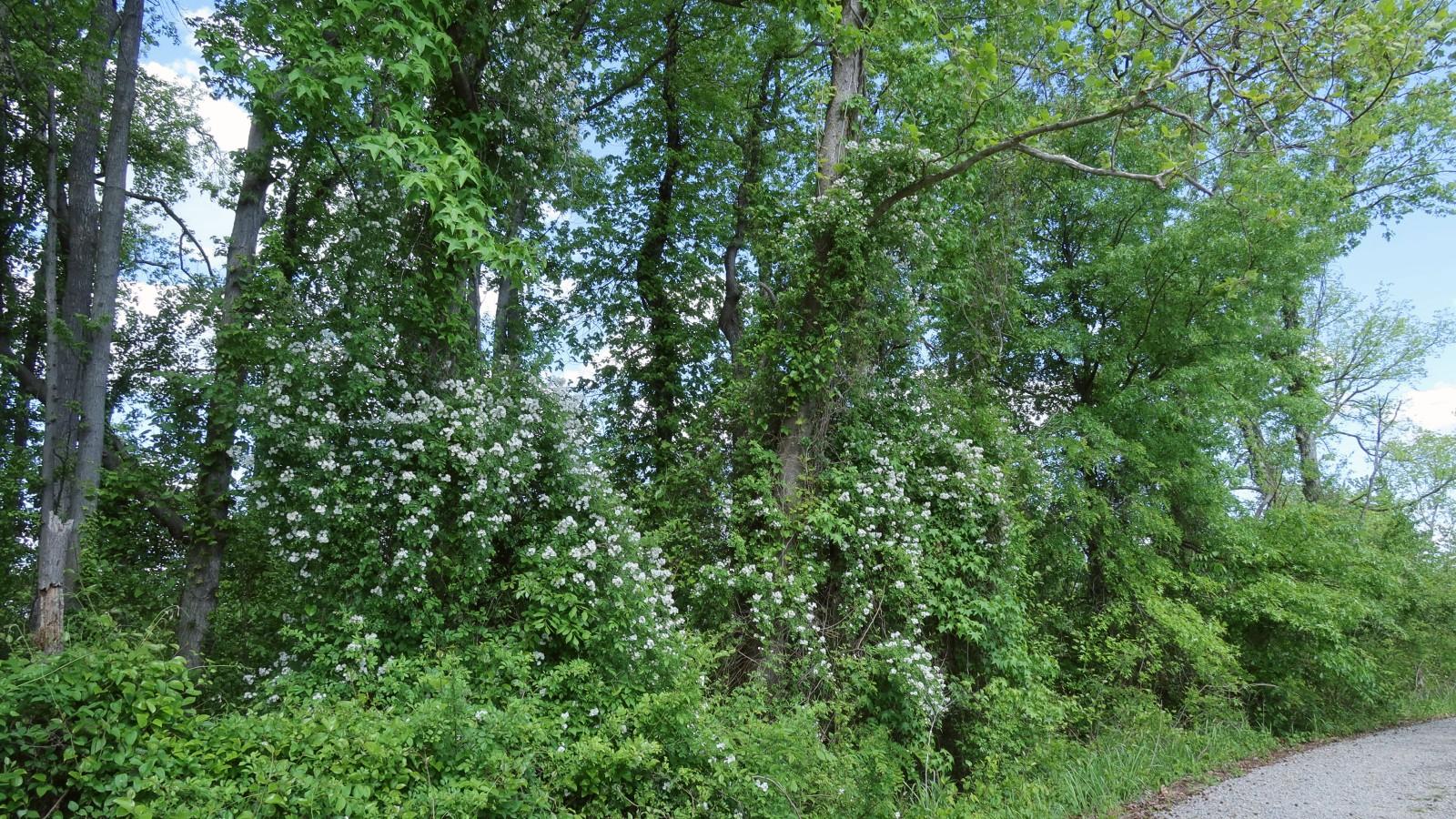
Multiflora rose thrives in full sun to light shade, but is tolerant of a range of site conditions. As such, it is a common weed of fields, forest clearings and edges, and roadsides.
Blooming multiflora rose stems scrambling into trees at the edge of a forest. Photo: Miri Talabac, University of Maryland Extension
Removing multiflora rose
Cutting the shrub down will not eradicate multiflora rose unless additional or follow-up measures are taken. Cut plants can easily regrow from the stump or pieces of the root system (or rooted branch tips) that are not removed. The most efficient and effective removal method is to use systemic herbicide to kill the roots.
Mechanical control
Multiflora rose can be managed without the use of herbicide, but the process takes more effort and time. After a shrub is cut down, any new sprouts must be removed promptly so they do not have time to make and store energy reserves for regrowth. Be vigilant for suckers or seedlings to remove as soon as they appear. Repeat the process until the roots are exhausted of energy and cannot generate any more sprouts. Successful removal of established multiflora rose thickets may take several years of cutting off all top growth a half-dozen times per year.
Chemical control
A systemic herbicide applied to the leaves, the bark on the main stem, or the fresh-cut stump will be absorbed and kill the roots. This process takes time and may require repeat attempts to achieve full control. Commonly-used systemic ingredients include glyphosate and triclopyr. Follow all product label directions for use.
Applications of systemic herbicide are usually most effective when applied from midsummer to early fall. This period of time is when deciduous perennial plants move carbohydrates down into their roots for winter; applied herbicide will more easily be transported by sap flow.