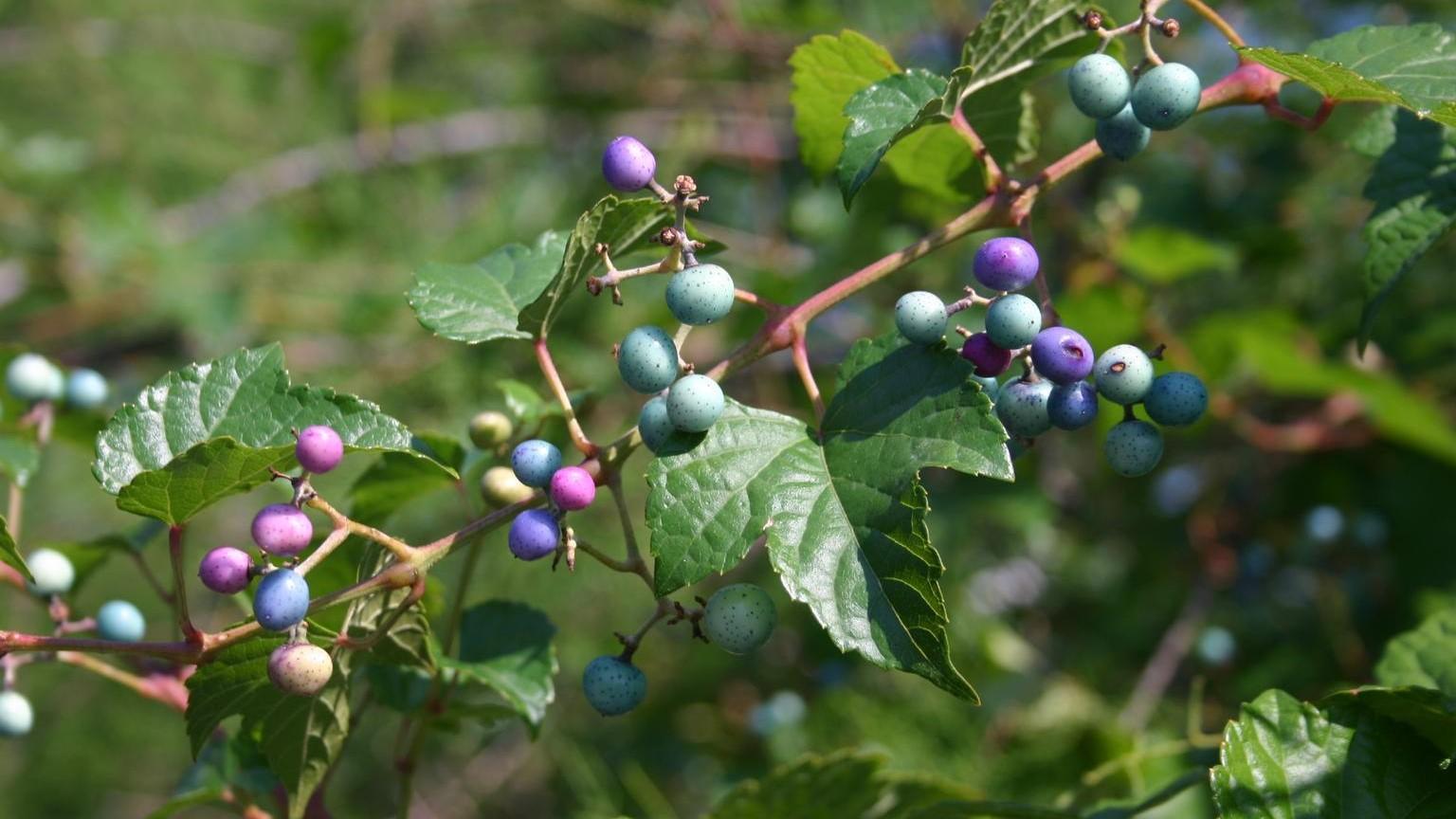
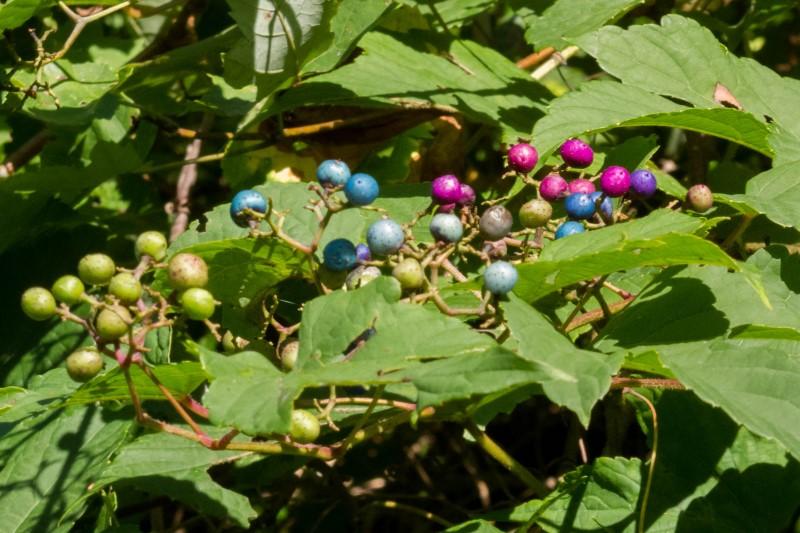
Teal, blue, and violet-colored berries on a porcelainberry vine stem.

Porcelainberry (Ampelopsis glandulosa var. brevipedunculata) with ripening berries. Photo: Leslie J. Mehrhoff, University of Connecticut, Bugwood.org

Updated: February 4, 2026

Porcelainberry (Ampelopsis glandulosa, formerly A. brevipedunculata) is a woody perennial vine (liana) native to Eastern Asia. It was introduced to the U.S. in the late 1800s for ornamental use (particularly the variegated cultivar 'Elegans'), and has since become invasive.

Physical features of porcelainberry
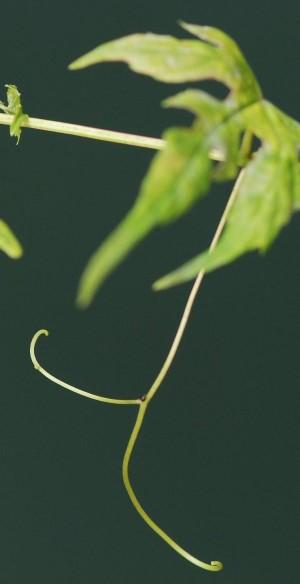
Long, forked tendril of a porcelainberry vine, growing on the side of the stem opposite a leaf.
Porcelainberry vine tendril.
Photo: James H. Miller, USDA Forest Service, Bugwood.org

Porcelainberry is a deciduous vine in the grape family that climbs over shrubs and small trees using tendrils. Porcelainberry blooms in mid- to late summer, and fruits (berries) ripen in autumn. Birds and other small animals eat the berries and disperse the seeds.

The foliage shape and growth habit of porcelainberry can be quite similar to that of wild grapes (Vitis species); all wild grape species in Maryland are native. The flowers and fruits of these two genera are easier to distinguish from one another than leaves alone, though with close inspection, foliage and stem traits (like bark and pith, the spongy tissue in the center of a split stem) are also distinctive for each species.

Growth rate and habit: rapid growth rate (several feet per year); vine climbing with tendrils

Typical mature size: greatly dependent on the height and width of its support, though climbing stems can easily reach 20 feet if scaling a tree

Blooms: upright, flat-topped, branched clusters of pale greenish-yellow, 5-petaled flowers

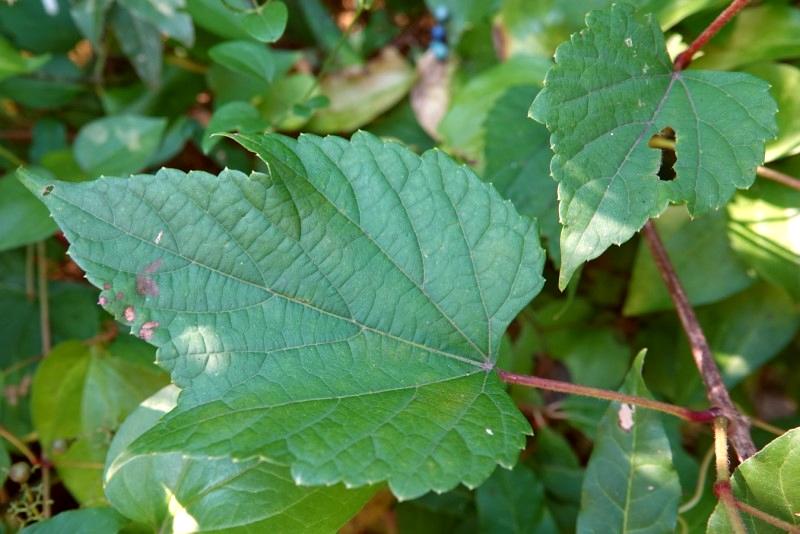
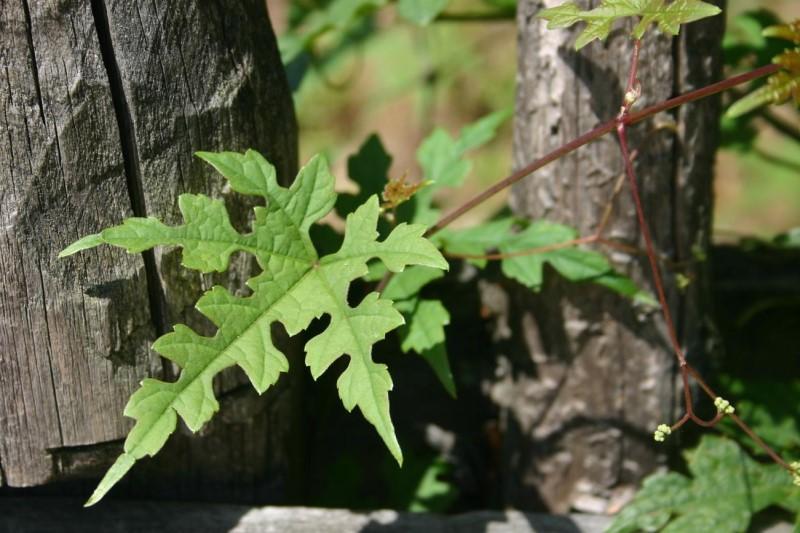
Leaves: simple (not divided into leaflets) with coarsely toothed margins; 3- to 5-lobed overall, but variable in shape, from shallow and somewhat maple-shaped to more deeply-cut intricate lobes

Fruit: upright clusters of berries that ripen in a range of hues (often teal-blue, violet, greenish-white, and rosy-lavender)

Stems: tendrils arise from the node, opposite a leaf; white pith; alternate arrangement on the stems
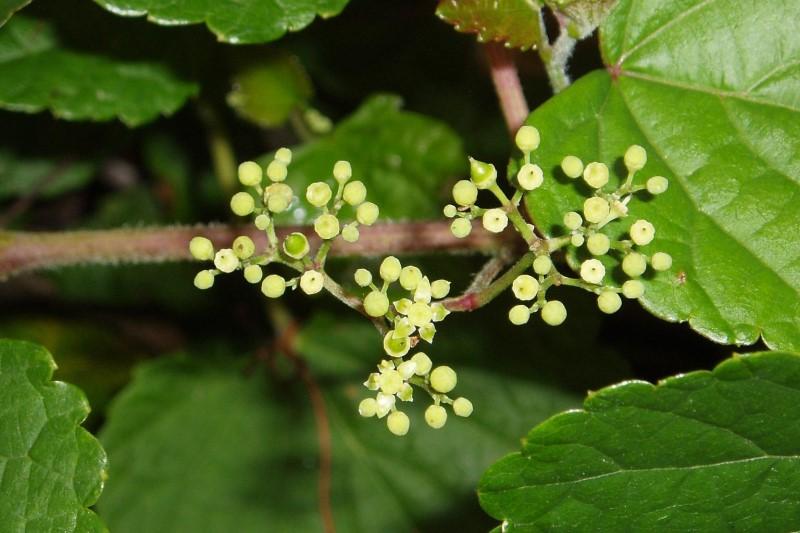
Clusters of small, pale yellow-green porcelainberry flowers.
Pale yellow-green porcelainberry flowers in upright clusters.
Photo: Leslie J. Mehrhoff, University of Connecticut, Bugwood.org
Clusters of porcelainberry fruits in multiple colors.
Porcelainberry fruits ripen in multiple colors, often teal-blue and violet.
Photo: Miri Talabac, University of Maryland Extension
Porcelainberry leaf with a maple-like shape of three main lobes.
Porcelainberry foliage can have 3 to 5 main lobes that resemble the shape of a red maple leaf.
Photo: Rebekah D. Wallace, University of Georgia, Bugwood.org
Porcelainberry leaf with five main lobes and many secondary lobes that give the leaf a lacier appearance.
Some porcelainberry leaves have five main lobes with multiple secondary lobes that give it a lacier appearance.
Photo: Leslie J. Mehrhoff, University of Connecticut, Bugwood.org
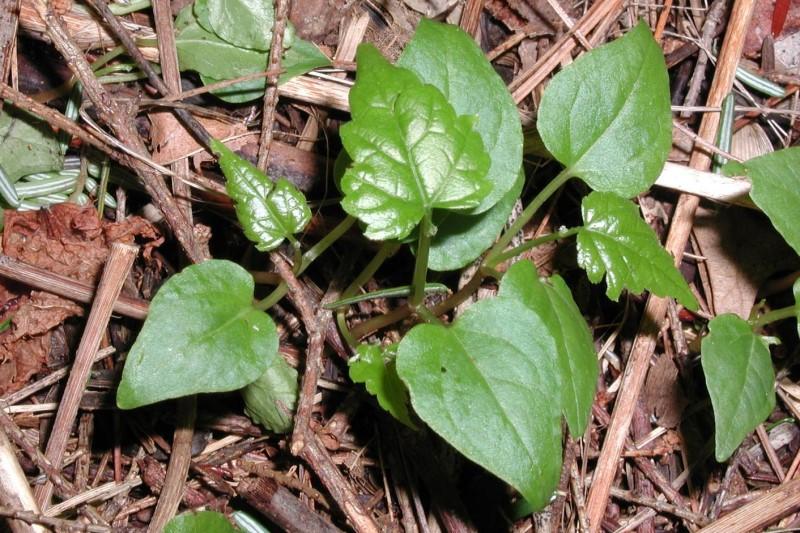
Porcelainberry seedling leaves are somewhat heart-shaped but not very distinctive.
Seedling porcelainberry leaves are heart-shaped or ovate, but not distinctively lobed.
Photo: Leslie J. Mehrhoff, University of Connecticut, Bugwood.org
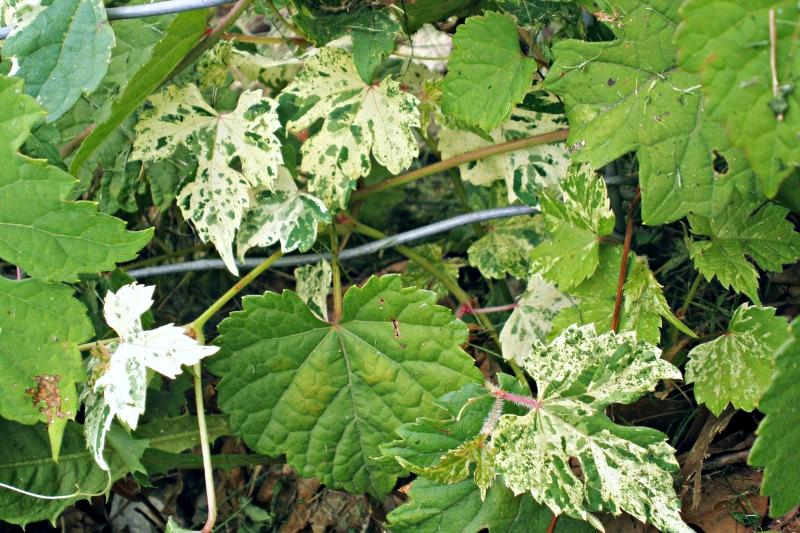
Variegated porcelainberry cultivar with cream-marbled leaves.
Porcelainberry cultivar 'Elegans' has cream-marbled leaves and was grown as an ornamental vine.
Photo: Ansel Oommen, Bugwood.org

Conditions that favor growth

Porcelainberry thrives in full sun to part shade, and can be common in moist soils like roadside ditches, pond edges, and stream banks.

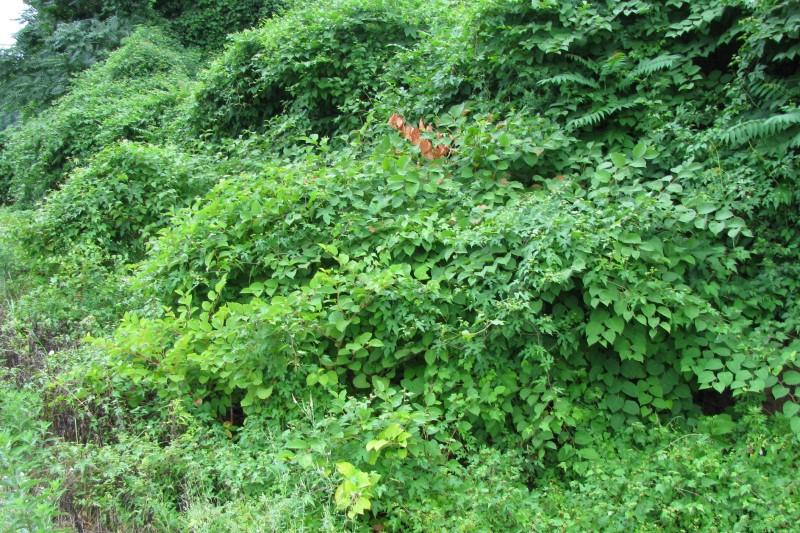
Prolific porcelainberry growth smothering shrubs and trees at the edge of a forest.
Porcelainberry often grows rampantly enough to smother vegetation along roadsides and forest edges.
Photo: Leslie J. Mehrhoff, University of Connecticut, Bugwood.org

Removing porcelainberry

Cutting the vine down will not eradicate porcelainberry unless additional or follow-up measures are taken. Cut vines can easily regrow from the stump or pieces of the taproot that are not removed. The most efficient and effective removal method is to use systemic herbicide to kill the roots.

Mechanical control

Vines cut down before the application of (or in lieu of) herbicide that then regrow can be managed without the use of chemicals, but the process takes more effort and time. Any new sprouts must be removed promptly so they do not have time to make and store energy reserves for regrowth. Be vigilant for sucker or seedling growth to remove down as soon as it appears. Repeat the process until the roots are exhausted of energy and cannot generate any more sprouts.

Chemical control

A systemic herbicide applied to the leaves, the bark on the main stem, or the fresh-cut stump will be absorbed and kill the roots. This process takes time and may require repeat attempts to achieve full control. Commonly-used systemic ingredients include glyphosate and triclopyr. Follow all product label directions for use.

Applications of systemic herbicide are most effective when applied from midsummer to early fall. This period of time is when deciduous perennial plants move carbohydrates down into their roots for winter; applied herbicide will more easily be transported by sap flow.