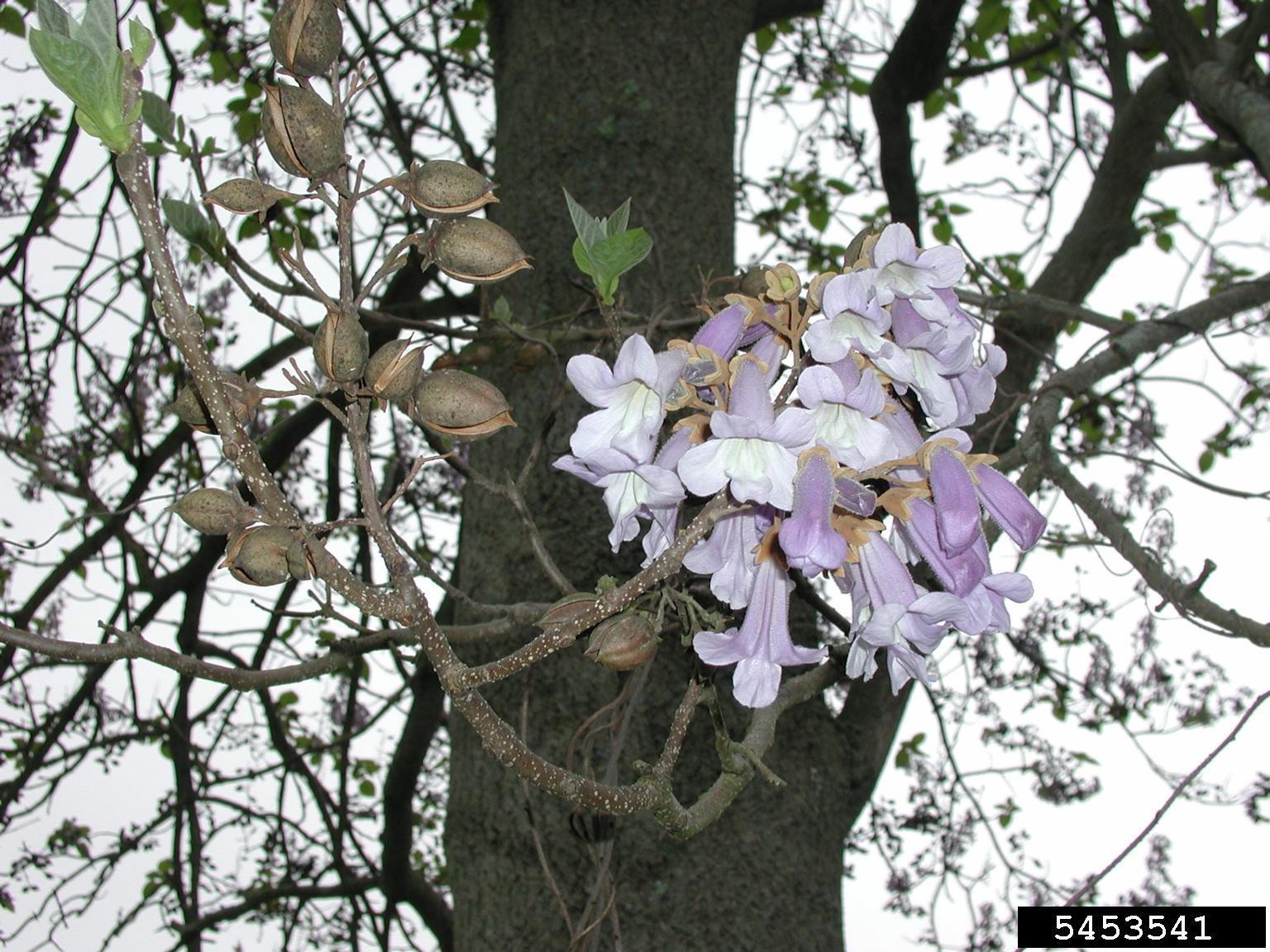
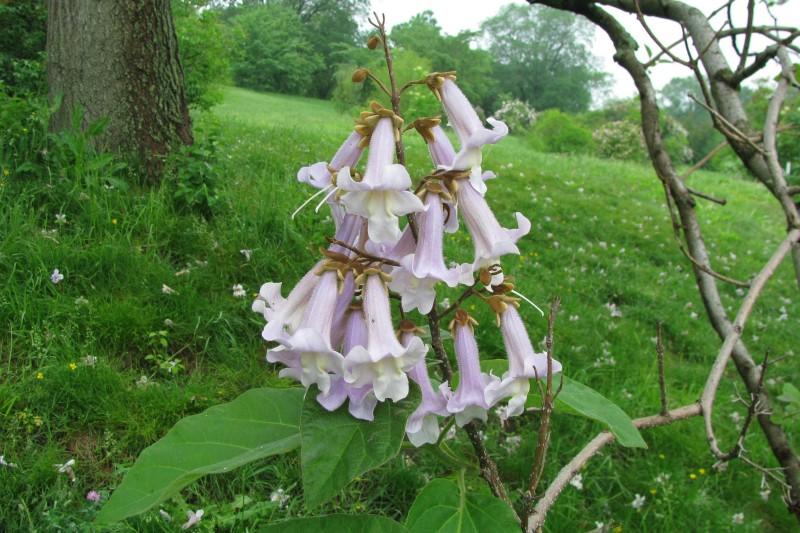
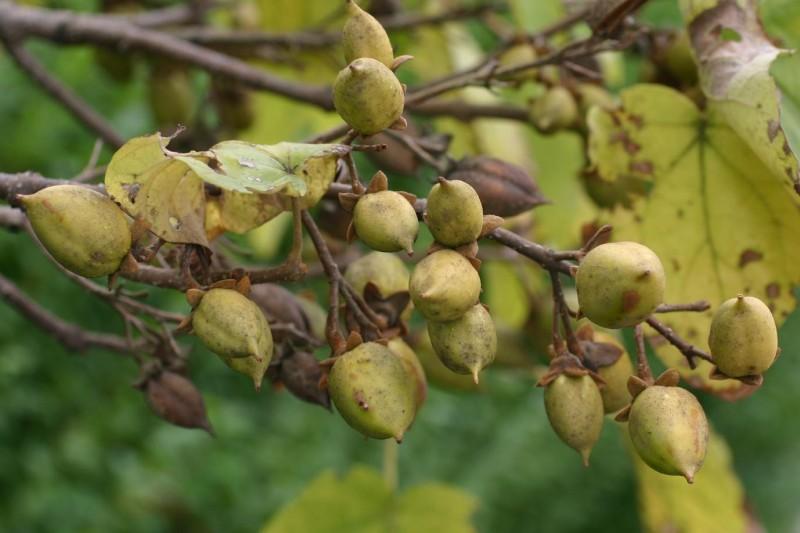
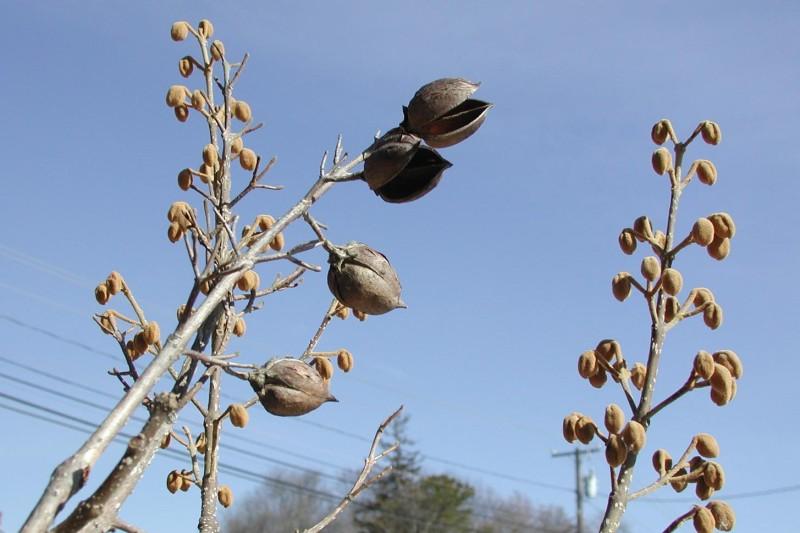
Flowers and old seed pods on a mature princess tree (Paulownia tomentosa).
Photo: Leslie J. Mehrhoff, University of Connecticut, Bugwood.org
Princess tree, also called empress tree and royal paulownia (Paulownia tomentosa), is a flowering tree native to China. It was introduced to the U.S. in the 1800s for ornamental and timber use.
Physical features of princess tree
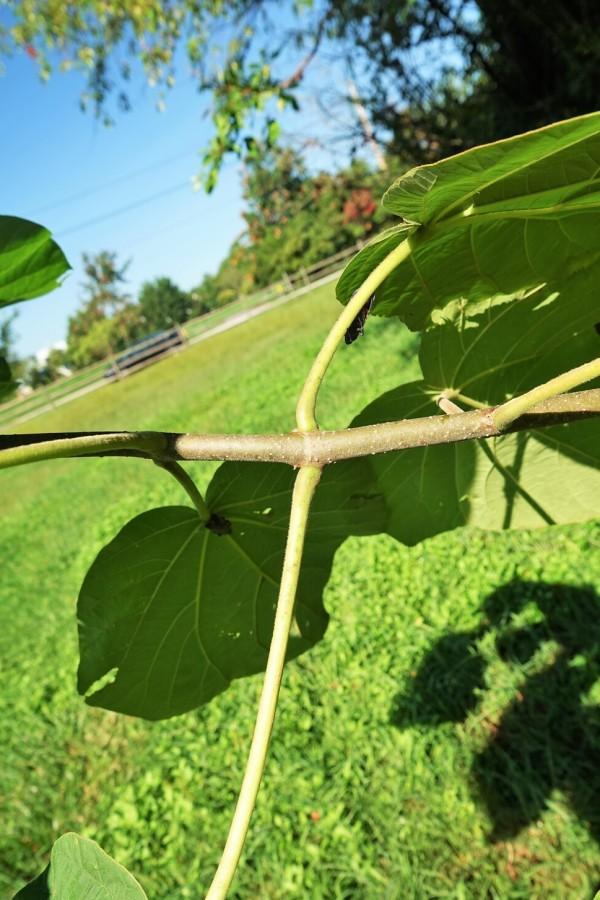
Princess tree is a large-statured deciduous tree (sheds its leaves in autumn). Fragrant flowers open around mid-spring and are prominent since they appear before the leaves emerge. One notable feature of this tree is the very large leaves on saplings. The dry seed capsules ripen and split open in autumn. Both old, dry seed capsules and felted-looking, cinnamon-colored flower buds for the upcoming spring are present on the bare branch tips in winter.
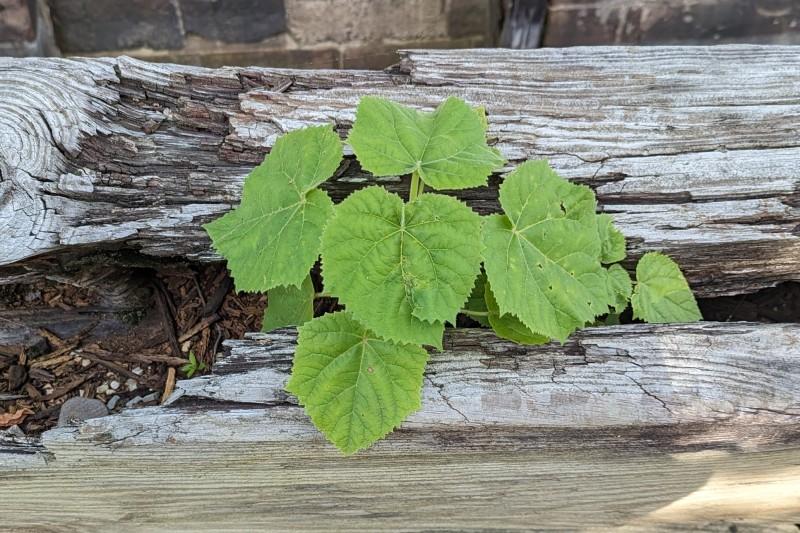
While no local tree species resembles princess tree while it's in bloom, the general size and shape of its foliage might be confused with other species. Without flowers or seeds for comparison, princess tree leaves are similar to those of catalpa trees (Northern, Catalpa speciosa and Southern, C. bignonioides). Young princess tree seedlings and saplings may resemble velvetleaf (Abutilon theophrasti), a non-native widespread weed.
Growth rate and habit: rapid (several feet per year); canopy shape is usually taller than wide
Typical mature size: 30 to 60 feet tall and 20 to 30 feet wide
Blooms: clusters of trumpet-shaped flowers with pastel purple exteriors and near-white interiors; fragrant
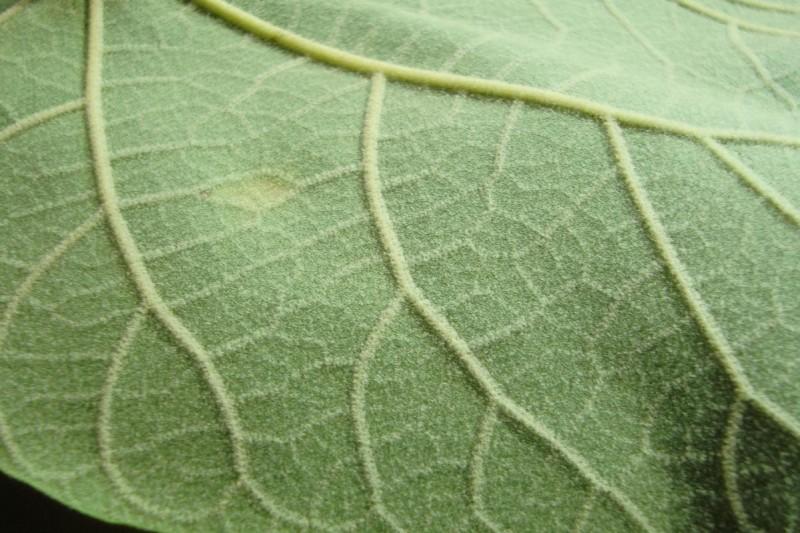
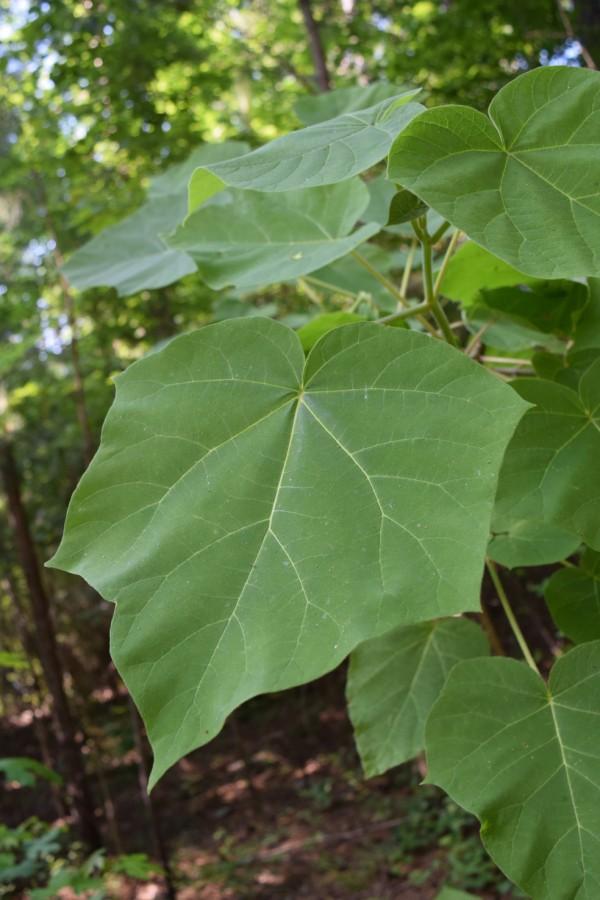
Leaves: simple (not divided into leaflets) with pointed, minimal lobes and serrations possible (especially on the leaves of seedlings); individual leaves are commonly 5 to 12 inches in diameter, but can reach over 2 feet across; roughly heart-shaped; velvety in texture; opposite arrangement on the stems
Fruit/seeds: capsules initially green and sticky-textured, ripening to brown and splitting open with four interior compartments; empty capsules remain on the tree in winter
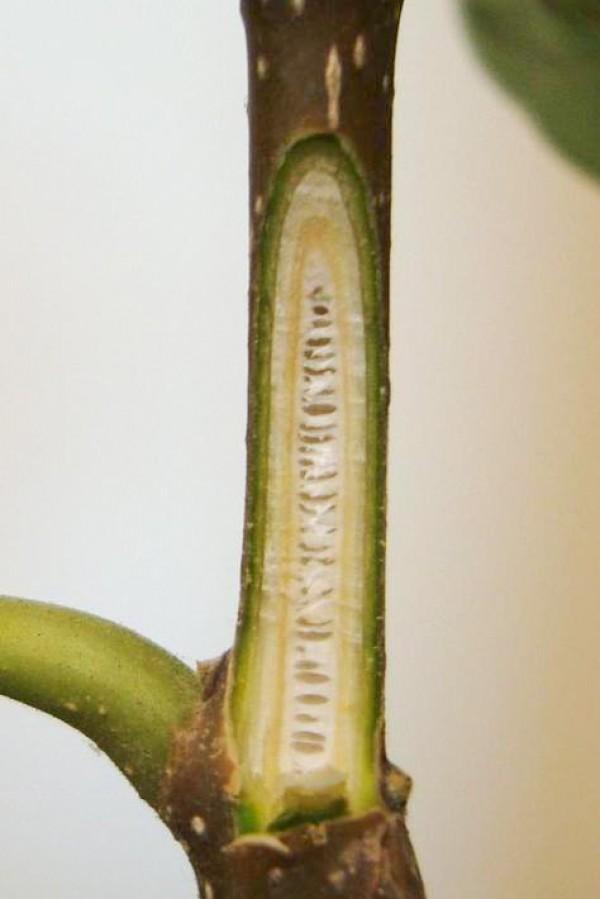
Stems: young wood is speckled with prominent white lenticels (pores in the bark); the pith (spongy tissue in the center of a split stem) becomes chambered (having hollow divisions) or entirely hollow as the branch wood matures
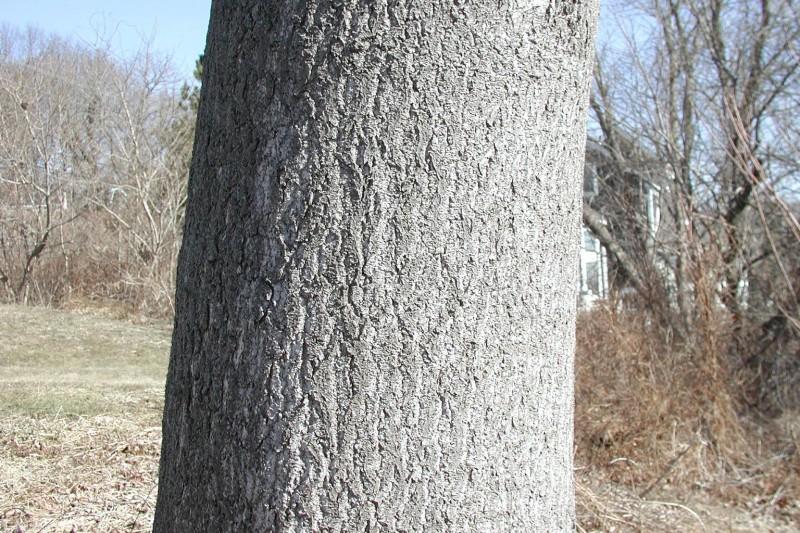
Bark: brownish-gray with very shallow fissures
Environmental impacts of princess tree
Winged seeds disperse readily on the wind or are moved about in water. Princess tree easily colonizes compacted soil and urban sites that would be too stressful for most trees, such as cracks in the pavement or gaps between pavement and building walls, and rooftops that collect organic matter (for example, in partially blocked gutters). As with other invasive species, this tree can also spread into disturbed natural areas, such as forest clearings and edges, streambanks, and steep rocky slopes.
Conditions that favor growth
Princess tree is adaptable to a variety of growing conditions, but prefers full sun and good drainage.
Alternatives to princess tree
Do not plant princess tree, and replace existing specimens when possible. The Maryland Department of Agriculture (MDA) regulates the sale of invasive plants and conducts invasive plant species status assessments. Princess tree is on a list of species prioritized for assessment. Refer to the MDA's Maryland Prohibited Invasive Plant Law and Regulations resource page for more information and a list of regulated species.
While no cold-hardy and non-invasive species has the same combination of features as princess tree, several native or non-invasive trees have decorative or fragrant spring flowers, large summer leaves, or a rapid growth rate. Candidates include: Eastern redbud (Cercis canadensis) for early-season flowers; various magnolia cultivars for fragrant spring flowers; pawpaw (Asimina triloba) and bigleaf magnolia (Magnolia macrophylla and its relatives) for large leaves; and tulip poplar (Liriodendron tulipifera) and river birch (Betula nigra) for rapid growth.
Removing princess tree
Pull out small seedlings and dig up saplings, removing the entire root system, which is easiest when the soil is moist. Prevent seed formation (if a young tree can't easily be removed) by cutting the tree down to the ground.
Princess tree can sucker from roots or a stump left behind after removal, and those sprouts can grow exceptionally fast (reaching over 10 feet tall in a single season is possible). Be vigilant about removing any new growth promptly and repeatedly to starve the plant.
Invasive Tree Control