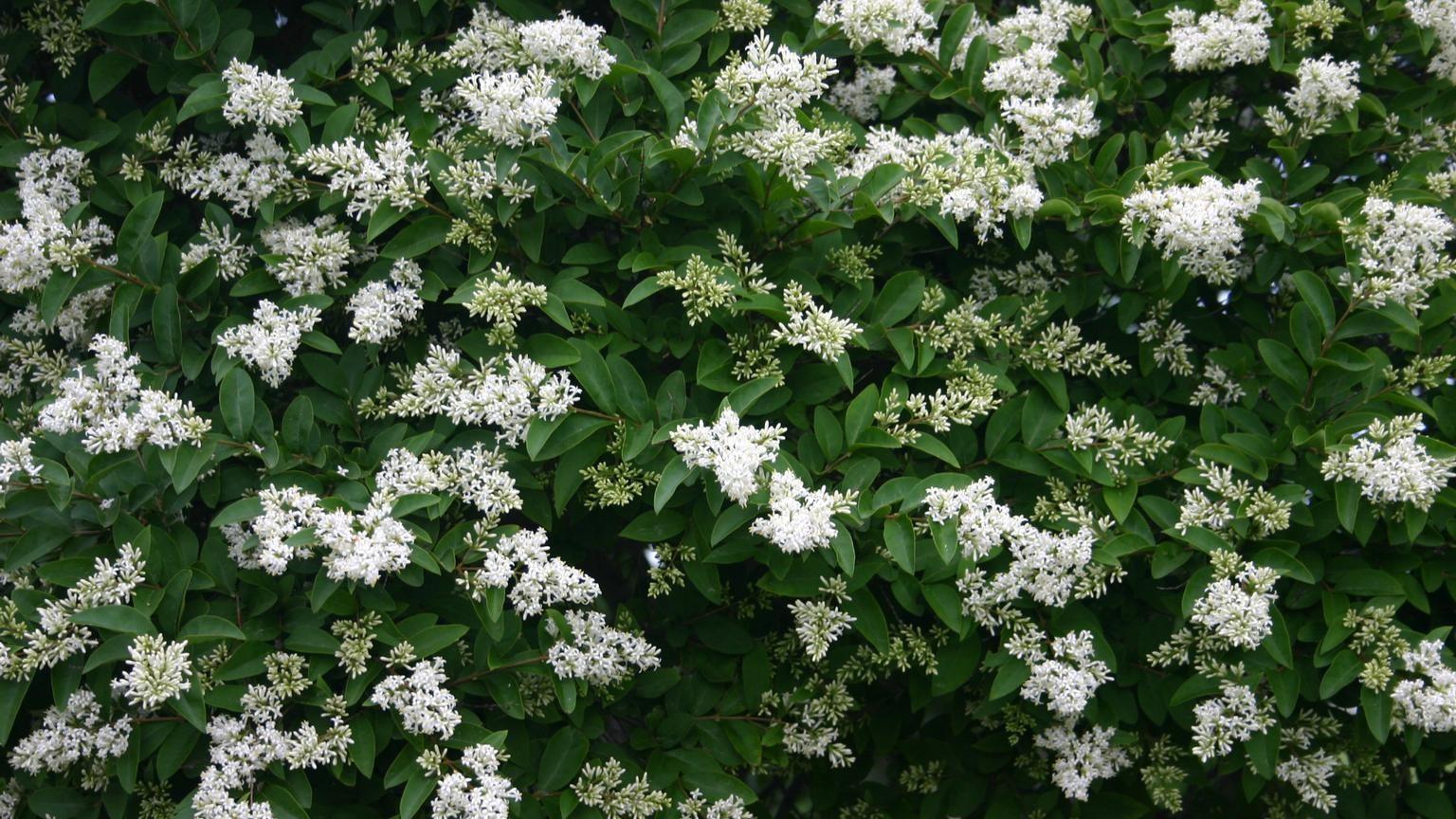
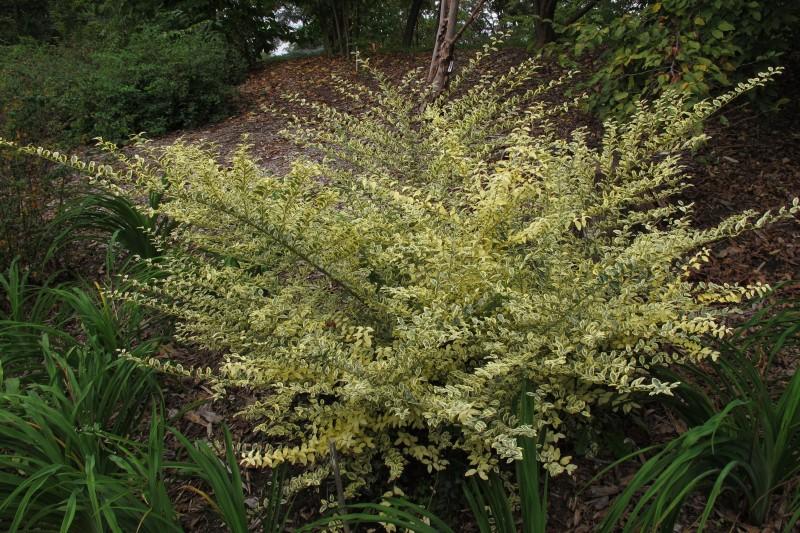
Privet (Ligustrum species) in full bloom. Photo: Leslie J. Mehrhoff, University of Connecticut, Bugwood.org
Updated: April 29, 2026
Privets (species in the genus Ligustrum) are deciduous or evergreen flowering shrubs native to Europe, Asia, and northern Africa. They were introduced to the U.S. for ornamental use. Seven species of privet have been documented growing in Maryland, all of which are invasive. The most widespread are:
Border privet (Ligustrum obtusifolium)
European privet (Ligustrum vulgare)
California privet (Ligustrum ovalifolium)
Chinese privet (Ligustrum sinense)
Privet species can be difficult to tell apart because their features are very similar.
Physical features of privet
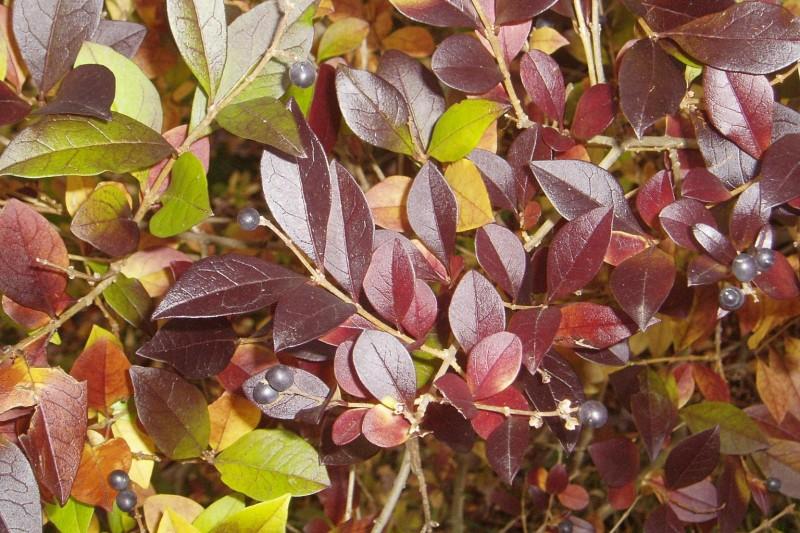
Privet is a medium- to large-sized shrub. Most species are deciduous and shed their leaves in autumn (with some color change to plum-purple or yellow-orange), but a few retain their leaves as evergreens. Strongly scented flowers (usually considered malodorous) are produced in late spring or early summer, and berries ripen in autumn. A few species have cultivars with colorful foliage, where the leaves have cream-colored margins or are entirely greenish-yellow.
Growth habit: rounded in shape, with similar height and width; cultivated plants are often pruned into denser, shorter hedges
Typical mature size: 10 to 15 feet tall and 12 to 15 feet wide, if unpruned; cultivars tend to be more compact
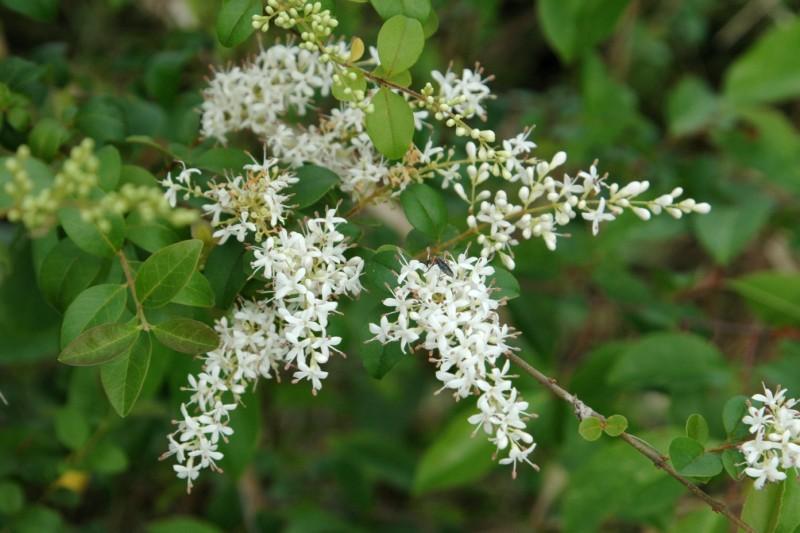
Blooms: 4-petaled white flowers in tapering clusters along the branches or at branch tips; fragrant
Leaves: simple (not divided into leaflets) with smooth margins; oval or elliptical in shape; opposite arrangement on the stems; evergreen foliage has a leathery, waxy texture
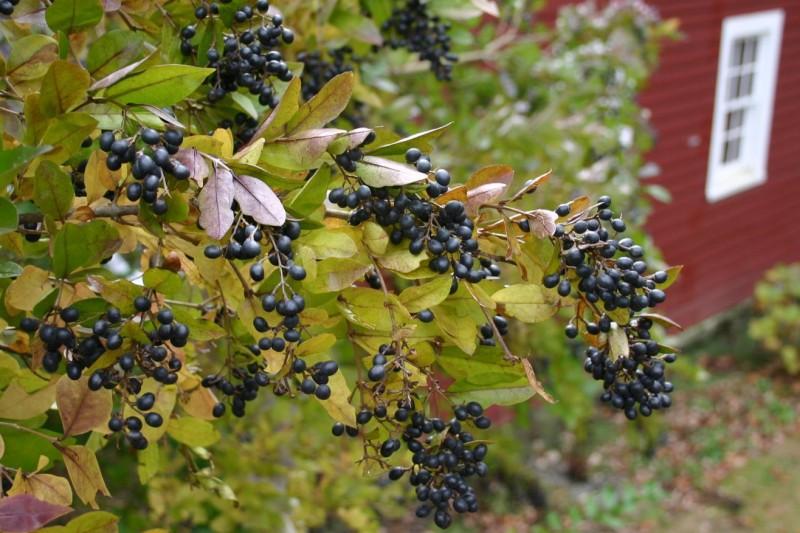
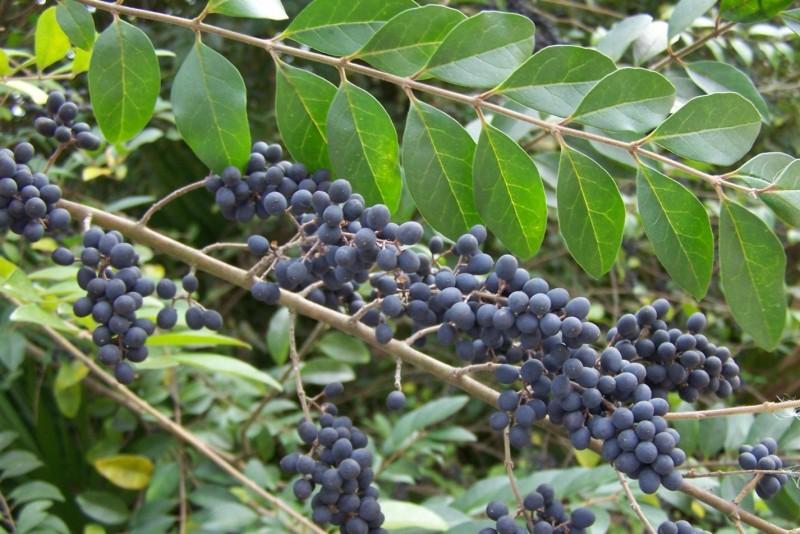
Fruit: clusters of blue-black berries; a prominent wax layer on the berry surface makes them look more matte dark blue, while less wax (or worn-off wax) makes them look closer to black (and somewhat glossy)
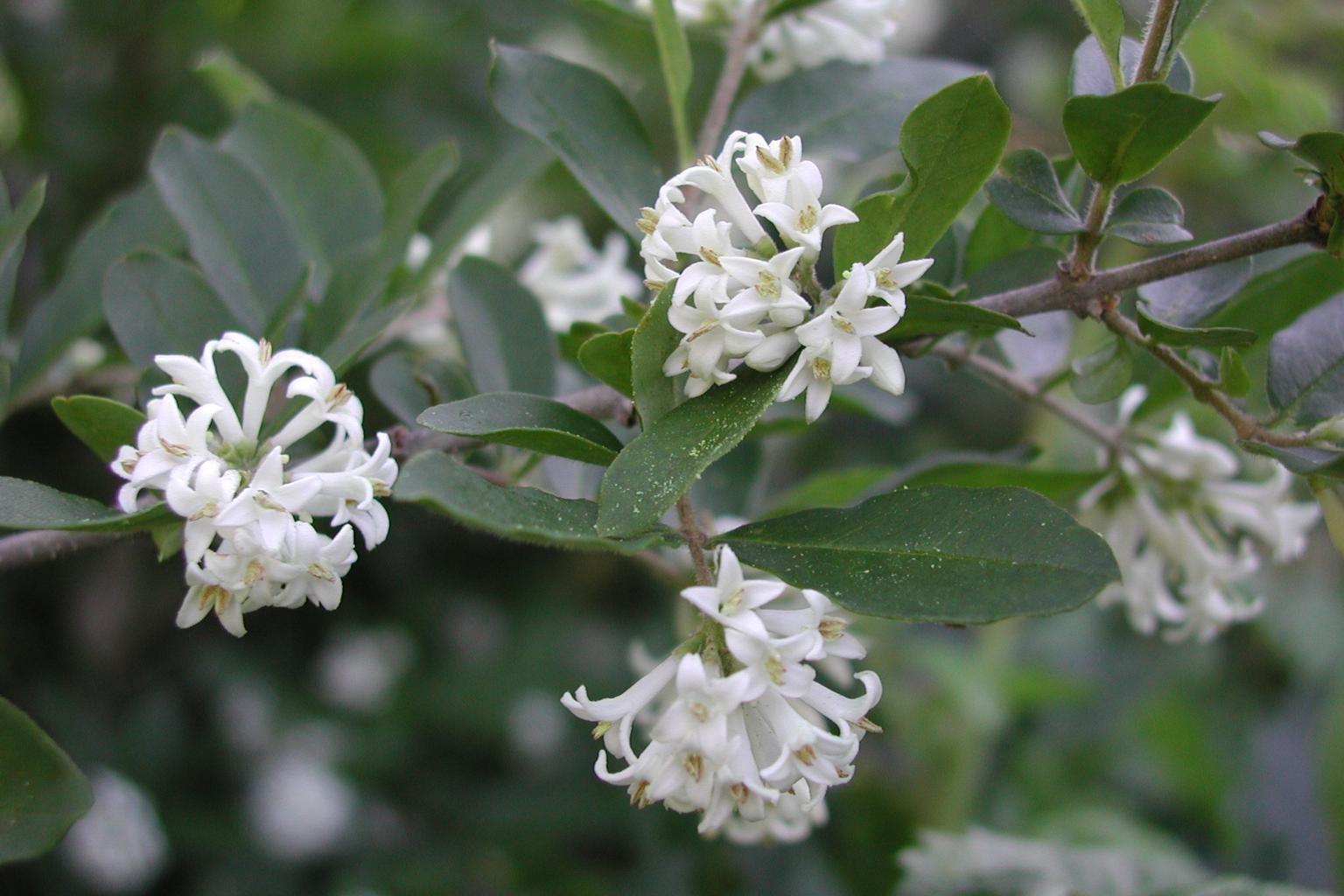
Small clusters of white, 4-petaled flowers on a border privet branch. Photo: Leslie J. Mehrhoff, University of Connecticut, Bugwood.org
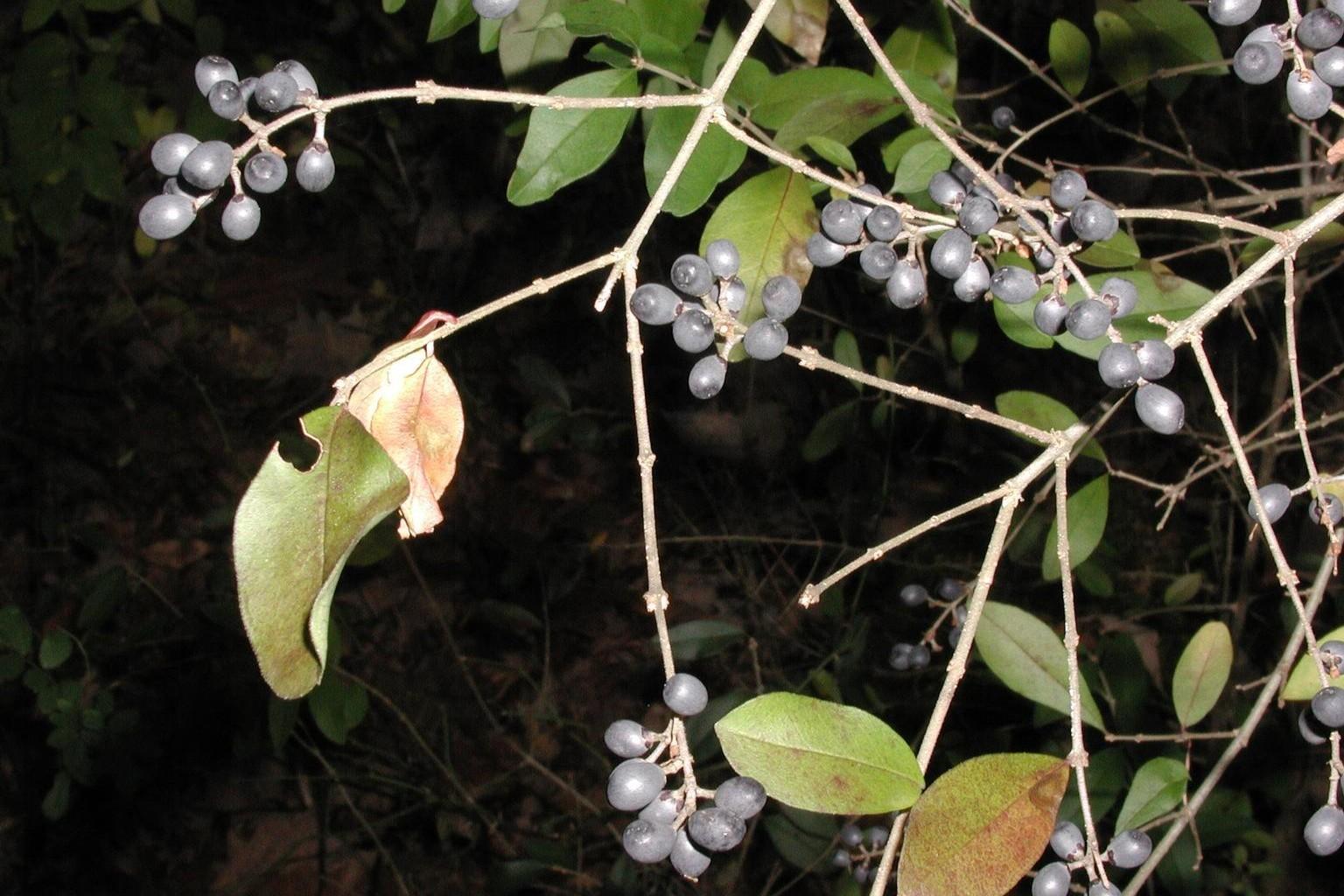
Clusters of waxy bluish-black berries on border privet. Leaves are starting to shed for autumn. Photo: Leslie J. Mehrhoff, University of Connecticut, Bugwood.org
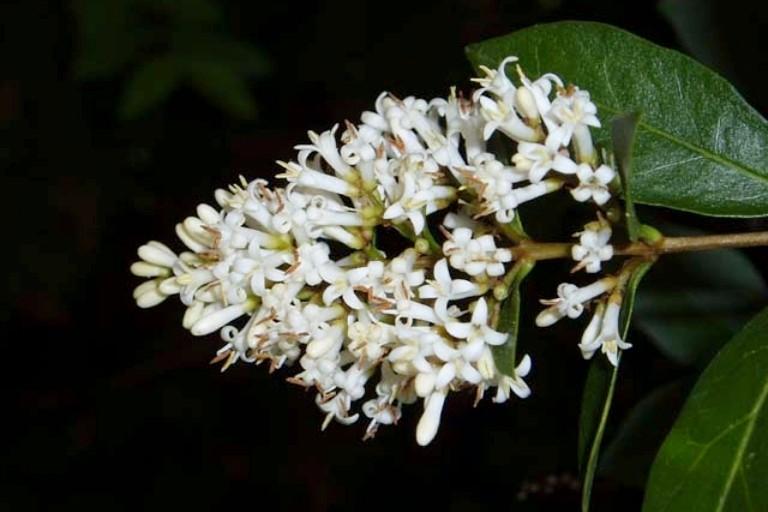
Dense, cone-shaped cluster of white flowers on a California privet branch tip. Photo: Leslie J. Mehrhoff, University of Connecticut, Bugwood.org
Blue-black ripe berry clusters weighing-down the branch tips of California privet in autumn. Photo: Leslie J. Mehrhoff, University of Connecticut, Bugwood.org
Slender, tapering clusters of white floweres on the branch tips of Chinese privet. Photo: Chris Evans, University of Illinois, Bugwood.org
Numerous clusters of dark blue berries along a Chinese privet branch. Photo: Karan A. Rawlins, University of Georgia, Bugwood.org
Deciduous privet foliage can turn plum-red, russet-orange, and yellow in autumn. Photo: Leslie J. Mehrhoff, University of Connecticut, Bugwood.org
Cultivated specimen of a variegated Chinese privet with cream-edged leaves. Photo: Miri Talabac, University of Maryland Extension
Environmental impacts of privet
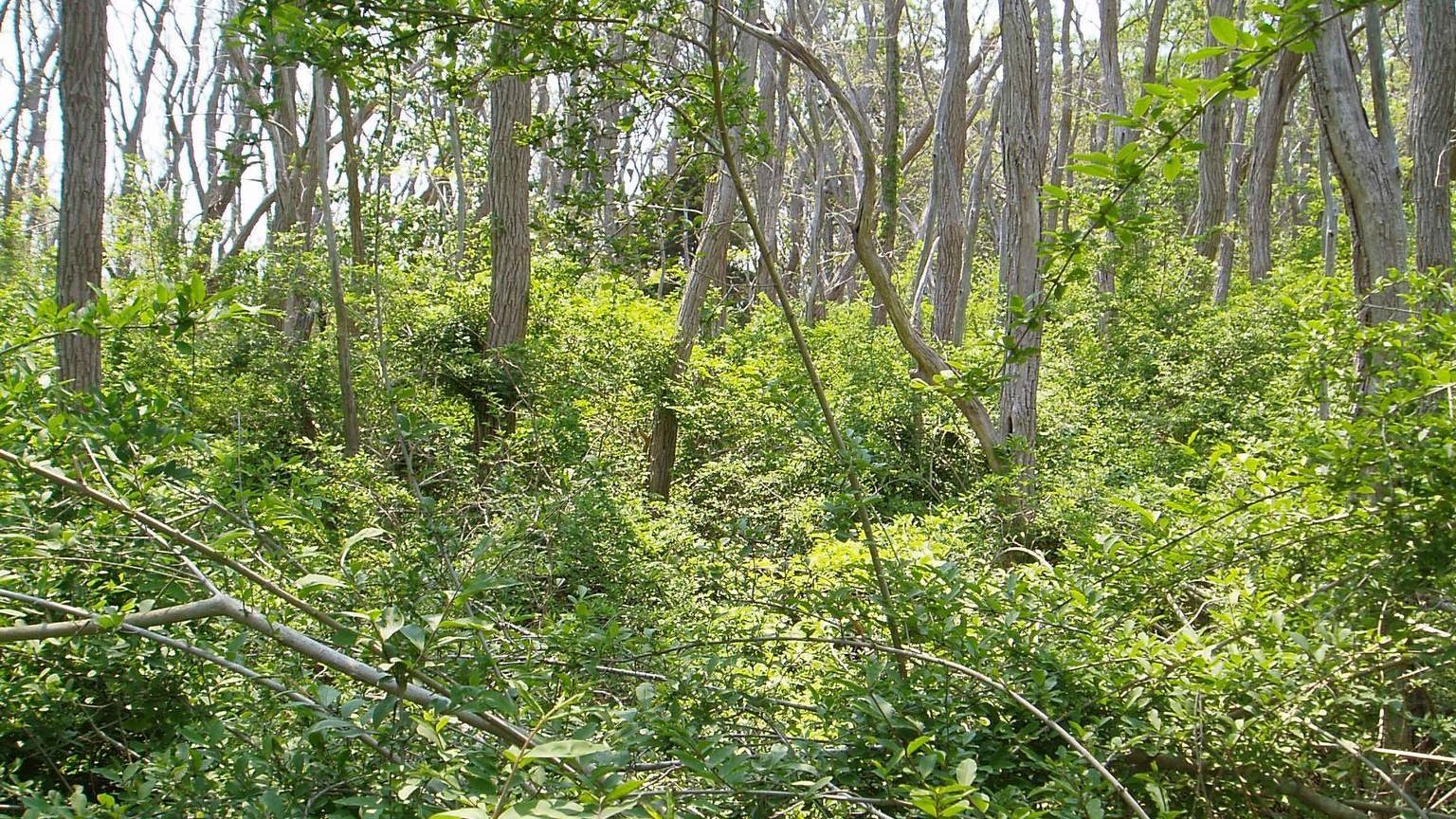
All species of privet present in Maryland are invasive and spread into natural areas by seed. Birds eat the berries and aid in seed dispersal. Border privet and European privet in particular can form dense thickets in natural areas and impede the growth of native plants, such as spicebush in the forest understory.
Forest infested with border privet taking over the understory. Photo: Leslie J. Mehrhoff, University of Connecticut, Bugwood.org
Conditions that favor growth
Privet grows best in full sun, but tolerates some shade and occasional drought. It grows well along woodland edges and in fields and floodplains.
Alternatives to privet
Do not plant any species of privet, and replace existing specimens when possible. The Maryland Department of Agriculture (MDA) regulates the sale of invasive plants, and border privet is a prohibited species under Maryland law. California privet, Chinese privet, and European privet are on a list of species prioritized for assessment. Refer to the MDA's Maryland Prohibited Invasive Plant Law and Regulations resource page for more information and a list of all other regulated species.
Some cultivars of privet are marketed as sterile. Once a species is listed as prohibited, MDA regulations apply to all cultivars of that species unless individual cultivars are later granted an exemption.
Several native or non-invasive shrubs have evergreen foliage, a tolerance to regular pruning, low deer palatability, and/or ease of care. Candidates include various species of holly (Ilex), cotoneaster (Cotoneaster), boxwood (Buxus), bayberry/waxmyrtle (Morella), and glossy abelia (Abelia x grandiflora).
Invasive Plant Atlas of the United States, Border Privet.
Kaufman, Sylvan Ramsey & Wallace Kaufman. 2007. Invasive Plants: Guide to Identification and the Impacts and Control of Common North American Species.
Swearingen J., K. Reshetiloff, B. Slattery, and S. Zwicker. 2002. Plant Invaders of Mid-Atlantic Natural Areas. National Park Service and U.S. Fish & Wildlife Service, Washington, DC.