Roots in Research CMREC Headquarters - Clarksville Facility - Yield Year 2025
Cover of Roots in Research / Clarksville Yield of 2025
Updated: October 28, 2026
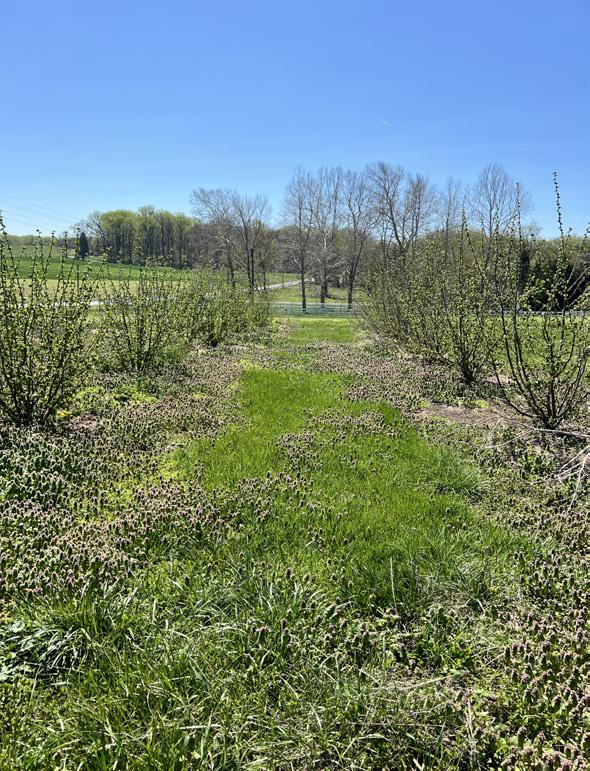
For the first time since 2021, the Clarksville Facility is now fully staffed as Jacob Mead (Ag. Tech.) joined the crew in July. Overall, the 2025 growing season had a higher-than-average level of excitement for the facility. We had new multi-year projects installed in the field, studying nutrients in biosolids, native shrub seed production, and alternative fertilizers for orchardgrass. Native grasses and pollinator mixes were installed in several areas as teaching tools for alternative lawns and pollinator habitats. In the “organic” field, we saw Swiss chard, cut flowers, and basil, among other crops, and the fall saw the main driveway filled with silage bags for an upcoming feeding experiment with short-stature corn. New faculty bring with them new energy and unique project ideas and it’s inspiring to see their ideas come to life in the field. In addition to new research directions, the new classroom space at the Clarksville facility means that we are hosting many new classes and meetings each year, exposing more people to the work we do at the facility. This year we hosted the FFA state land judging competition, a specialty mushroom production workshop, and two high school recruitment events among dozens of other programs. We look forward to new ideas, projects, and educational opportunities in 2026.
Alan Leslie MAES Center Director WMREC | CMREC | LESREC
New Statewide Vegetable Production Specialist at UMD Extension
Dr. Veronica Yurchak
Dr. Veronica Yurchak recently wrapped up her first field season as University of Maryland Extension’s new Vegetable Production Specialist. Based at the Wye Research and Education Center in Queenstown, Dr. Yurchak leads a statewide program with research located at several UMD research farms. After earning her PhD in Entomology from UMD, she is focusing on advancing integrated pest management (IPM) strategies while expanding her research into broader vegetable production methods.
Growers can look forward to her regular insect scouting tips and timely updates in UMD Extension’s Fruit and Vegetable News. Dr. Yurchak is available to assist with production challenges and crop diagnostics—don’t hesitate to reach out! Email: vjohnso4@umd.edu Phone: (443) 446-4266
Exploring Majors & Careers in Agriculture and Natural Resources: High School Field Trips Bring Learning to Life at CMREC-Clarksville
Kimberly Monahan, AGNR Recruitment Coordinator Becky Tetter, IAA Student Services Manager Alan Leslie, CMREC Director
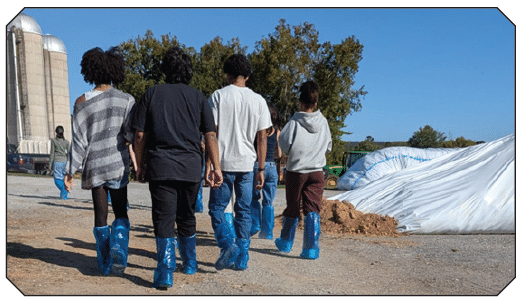
Back of students walking
This fall the Academic Programs Office and the Institute of Applied Agriculture co-hosted two high school field trips at the Clarksville Central Maryland Research and Education Center. Students from the Howard County Agricultural Sciences Academy and Green Street Academy's Agriculture Pathway joined CMREC and AGNR faculty and staff to learn about 4-year and 2-year academic programs in AGNR. Additionally, students learned about the CMREC-Clarksville operations and acquired a close look at some example research! Across both trips, highlights included: learning about a working dairy, seeing the manure separator at work, biodigesters, observing a drone demonstration, and taking soil samples on a chilly and windy day - underscoring the variable conditions fieldwork in agriculture and natural resources careers entails!
RnR Editor / co-Editor
Processing of leaves in streams: Does an invasive plant affect aquatic macroinvertebrates?
Katherine Siniuk & Bill Lamp University of Maryland, Department of Entomology
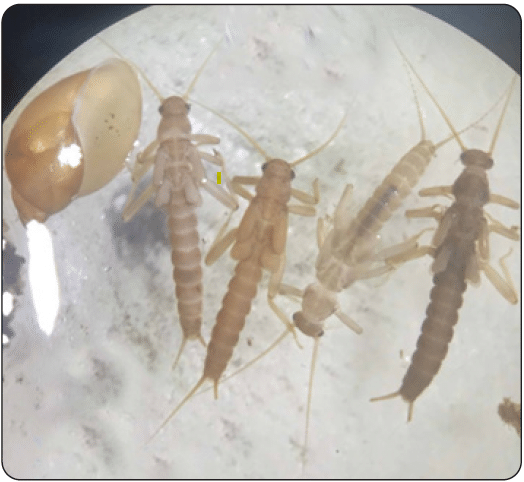
When trees shed their leaves for the winter, where do they really go? It seems obvious: they land on the ground and eventually become food for worms and slugs. However, a lot of plant matter gets washed into rivers and streams, becoming the main food source for animals you have likely never seen or heard of - aquatic macroinvertebrate shredders, which “shred” decomposing leaves with their chewing mouthparts. These animals are small but still visible to the naked eye, some examples being stoneflies, caddisflies, and snails (Figure 1). Their feeding drives vital ecosystem functions such as nutrient cycling and carbon capture and storage, and macroinvertebrate shredders themselves are important food sources for animals such as fish, frogs, bats, lizards, and snakes.
New anthropogenic threats are targeting organisms, including shredders, all the time. Invasive species are plants or animals from another geographic area that cause harm to local ecosystems, humans, animals, and/or economies. The tree of heaven is a very common invasive plant in Maryland known for both its toxicity to plants and animals, as well as its ability to colonize disturbed areas such as stream banks, meaning their leaves can directly enter the water and contact the macroinvertebrates within. This could potentially impact said macroinvertebrates and have cascading effects on the surrounding environment.
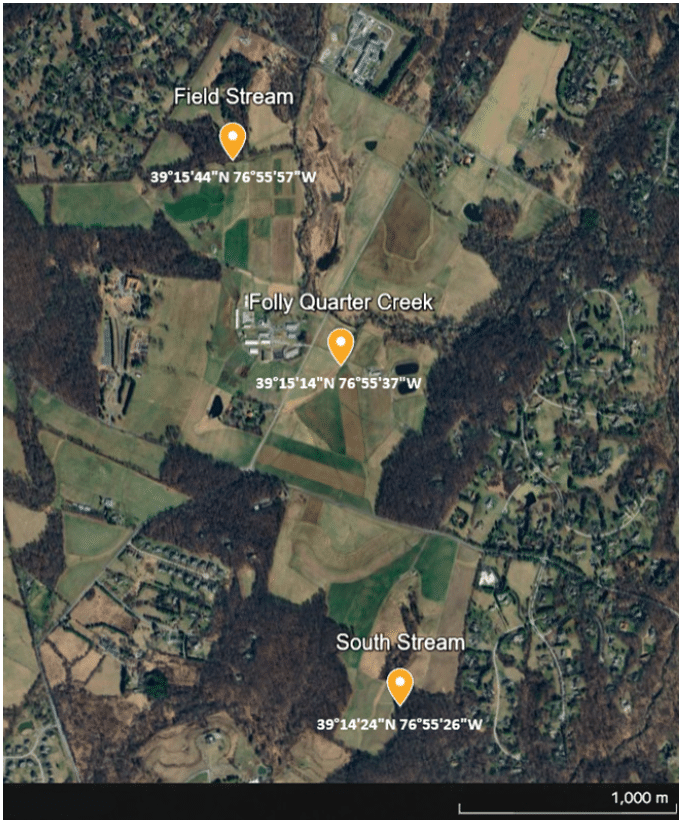
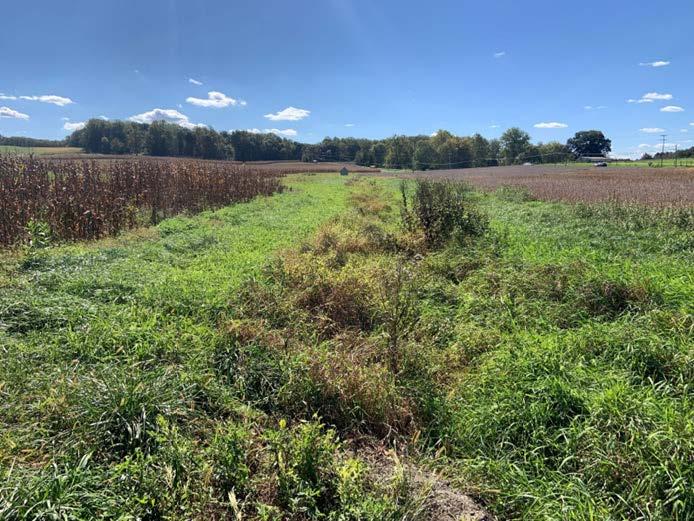
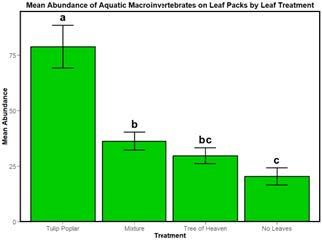
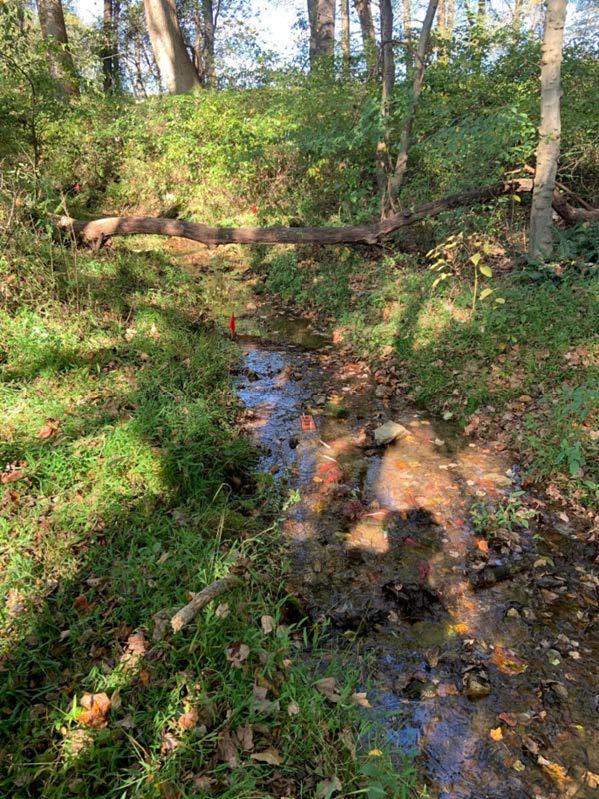
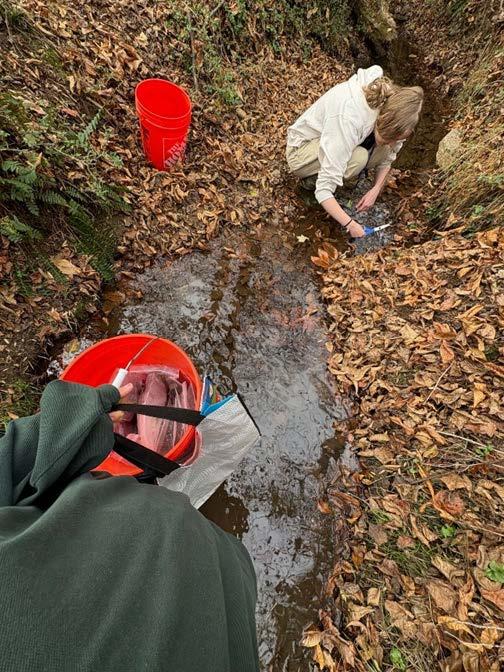
To test how the tree of heaven affects shredders, we deployed leaf packs containing four treatments: leaves from the native tulip poplar (Liriodendron tulipifera), the invasive tree of heaven (Ailanthus altissima), a mixture of both, and control packs with no leaves, into three agricultural streams at Clarksville CMREC (Figures 2-5). There were significantly more macroinvertebrates in the tulip poplar leafpacks than any other leaf treatment, while the abundance in the tree of heaven and no-leaf treatments was quite similar (Figure 6). This implies that in our study system, macroinvertebrates seem to avoid the tree of heaven in favor of the native tulip poplar. We also conducted laboratory feeding experiments with aquatic isopods (Caecidotea communis) to determine feeding behavior, and essentially 100% of the isopods in the tree of heaven and mixed treatments died, compared to a mere mortality rate of 33% in the tulip poplar treatment. While these results show that the tree of heaven seems very unpalatable and even toxic to macroinvertebrate shredders, they do not tell us the reasons why, so more research on the tree of heaven’s chemical qualities and impact on aquatic ecosystems is necessary.
Figure 1. Sample under a microscope, showing one snail (left) and our stonefly nymphs (right) (taken by Katherine Siniuk)
Figure 2. Map showing the location of the three streams at Clarksville CMREC used in the study (Credit: Google Earth)
Figure 4. Folly Quarter Creek at the start of the experiment in September 2024 (Photo taken by Bill Lamp)
Figure 6. Mean abundance of macroinvertebrates for each leaf pack treatment. Statistical significance was assessed through Kruskal Wallis and pairwise Dunn tests due to data being non-normally distributed. Letters indicate statistically significant differences. Groups that share a letter are not significantly different from each other, while groups sharing no letters are significantly different.
Figure 3. South Stream at the start of the experiment in September 2024 (Photo taken by Bill Lamp)
Figure 5. Leaf pack collection by the author at the Field Stream in November 2024 (Photo taken by Maya Hensley)
Using Novel Near-Surface Geophysics Methods to Image Subsurface Structure in the Clarksville Facility
Neha Narayan, Undergraduate Student, Department of Physics & Department of Geological, Environmental, and Planetary Sciences, University of Maryland, College Park Dr. Kat Dapré, Postdoctoral Researcher, Department of Geological, Environmental, and Planetary Sciences, University of Maryland, College Park Dr. Mong-Han Huang, Associate Professor, Department of Geological, Environmental, and Planetary Sciences, University of Maryland, College Park
Near-surface geophysical methods can probe shallow subsurface structure in the Critical Zone (CZ) - defined as the vertical region between tree canopy and bedrock - giving resolution at depths of tens of meters. Studying the CZ provides insights into near-surface processes crucial to human infrastructure and ecosystems. The CMREC Clarksville Facility contains both farmland and several groundwater wells, so imaging the subsurface can reveal concerns in soil and groundwater systems. Using active-source refraction seismology at Clarksville, we are able to measure seismic wave velocities, which are related to subsurface properties such as mineral composition, porosity, and water saturation. Clarksville is located in the Piedmont, where bedrock can be composed of schist, gneiss, and gabbro. Groundwater in the Piedmont can originate from precipitation that reaches the groundwater table, a layer where sediments are saturated with water, or fractures in the rock that eventually enter aquifers or groundwater wells. Below the CMREC Clarksville Facility, there are known to be marble, schist, gabbro, granite, and some pegmatite formations.
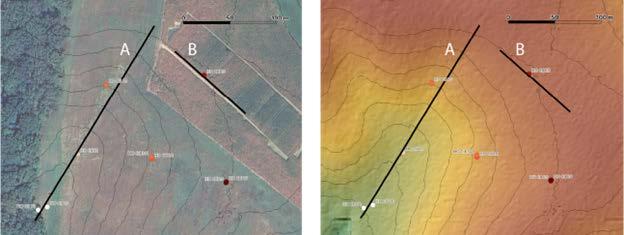
Figure 1. Google satellite map (left) and LIDAR elevation image (right) of Clarksville survey site, with seismic lines shown in black (A, Feb 2024, and B, October 2025), and USGS groundwater wells in red. The contour interval is 2 meters.
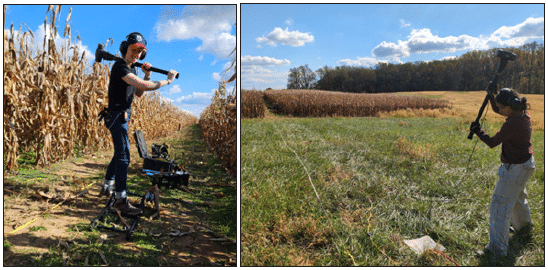
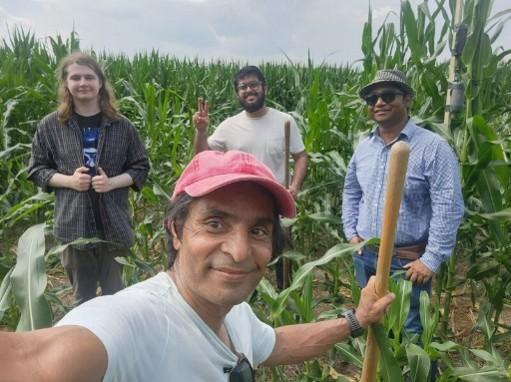
We performed two active-source seismic surveys, one in February 2024 and the other in October 2025, along the survey lines shown in Figure 1. Performing these surveys at different times can reveal seasonal changes or trends in the subsurface. Both studies were conducted using an ES-3000 and Geode seismic recording system, manufactured by Geometrics, with seismic sources generated by hitting a sledgehammer against a metal plate on the ground at varying locations along the seismic survey lines (Figure 2). The survey line from February 2024 was 250 m long with 48 geophones placed every 5 m, giving a maximum depth sensitivity of ~50 m. The survey line from October 2025 was 92 m long with 24 geophones placed every 4 m. Shots were taken for 132 m along the direction of the line, giving a maximum depth sensitivity of ~40-50 m.
Figure 2. Field team performing active source seismic survey in October 2025.
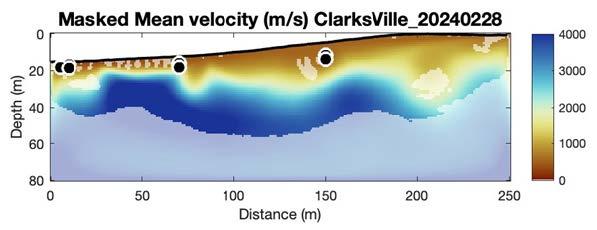
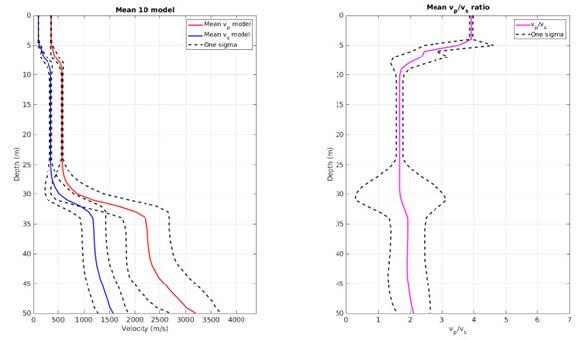
The results of the 2024 seismic survey are shown in Figure 3. A higher seismic velocity indicates higher material strength, as we expect from the underlying unweathered bedrock at the base of the cross-section. Seismic velocity lower than 1300 m/s is likely regolith (a layer of unconsolidated or weathered rock sitting above the bedrock), and velocity lower than 400 m/s is likely soil. The model retrieved from the seismic measurements shows a gradual increase in regolith thickness from the bottom of the watershed towards the hill, ranging from about 5 m to 20 m thick, while the bedrock stays relatively flat over the length of the survey. We performed a one-dimensional inversion for the average velocity profile along the 2025 seismic survey line (Figure 4), perpendicular to and close to the end of seismic line A at 250 m (Figure 1). This survey line was conducted in a corridor through a cornfield (Figure 2). Our results for this survey line include both Vp and Vs, and are calculated using a one-dimensional inversion that shows the mean Vp and Vs as a function of depth. Additionally, we calculated the Vp/Vs ratio to infer layer porosities and how consolidated the sediments are (Figure 4).
Figure 3. Cross-sectional P-wave velocity model from February 2024 using 2D seismic inversion. The region with low resolving power (below the maximum depth sensitivity of the survey) is masked out in light blue at the bottom. The black circles are water level measurements taken at the USGS groundwater wells on the same day.
There is a very clear increase in velocity at ~30 m depth in both Vp and Vs, consistent with the depth to bedrock estimated in the 2024 survey in the same area (Figure 3). Meanwhile, the high Vp/Vs ratio in the shallow subsurface (< 5 meters deep) suggests poorly consolidated soil with high porosity and water content. We also confirm the thick low-velocity regolith layer observed in 2024 at 250 m along the transect, recording p-wave velocities of just 590 m/s.
Figure 4. One-dimensional P and S-wave velocity inversion from October 2025 (left). Ratio of P- and S-wave velocities (right). The black dash lines are the 1σ standard deviation of all model ensembles.
The seismic survey data were supplemented with groundwater well measurements taken at the nine USGS wells in the study region on the days of the experiments. We project the measured water levels to the P-wave velocity model (Figure 3) and discover that most of the water levels fall in the depth range where Vp is between 500 and 700 m/s. Once we process the groundwater well data for 2025, we will be able to compare this to the 2025 seismic survey and assess whether there have been any significant changes in the subsurface water conditions at the site. In the future, the team will also focus on using passive seismic data to observe changes of seismic velocity through time as an indication of moisture variation in the near surface.
Acknowledgements We would like to thank Dr. Alan Leslie (Director of Maryland Research and Education Center) and Brian Spielman (Assistant Director of the Clarksville Facility) for granting access to the Clarksville Facility for conducting the research. We are grateful for the help from Maryland Department of Natural Resources, particularly to Dr. Andy Staley and staff members who contributed to fieldwork and groundwater level surveys. Kathrine Udell-Lopez, Saffat Shahid, and Claire Fagan contributed to the seismic surveys. This research was supported by the Grand Challenges Program to Mong-Han Huang.
AI-Powered Invisible Fencing for Animal Deterrence and Crop Protection
Bipendra Basnyat, P.E., PhD (AI SENSE/UMBC) Snehalraj Chugh (AI SENSE) | Dr. Nirmalya Roy (UMBC) Dr. Travis Gallo (UMD) Alan Leslie, Ph.D. (CMREC) | Dr. Nirupam Roy (UMD)
“One thing we can provide at this site is deer feeding pressure.” — Alan Leslie, MAES Center Director, May 2025
That promise proved accurate. During the 2025 growing season, a cross-institutional team from UMD, UMBC, and AI SENSE LLC deployed an experimental edge-AI wildlife detection system in the corn fields at CMREC Clarksville. What followed was a summer of technical problem-solving, unexpected discoveries about deer behavior, and a rethinking of how technology and ecology must work together. The collaboration came together in spring 2025 through connections across UMD, UMBC, and AI SENSE LLC. Dr. Travis Gallo (UMD Environmental Science & Technology) identified CMREC Clarksville as an ideal field site for testing wildlife deterrence technology, and Alan Leslie, Ph.D. (MAES Center Director) offered facility access and operational support.
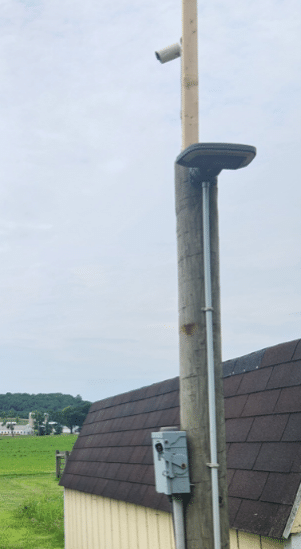
Figure 1: Pole Camera
Figure 2: In Field Deterrence Deployment
By May, the team, including Dr. Nirmalya Roy and Dr. Nirupam Roy from UMBC and UMD respectively, along with Dr. Bipendra Basnyat of AI SENSE LLC completed site reconnaissance and began planning deployment. This is an industry-university collaborative research effort: UMD provides the field site and wildlife ecology expertise, UMBC contributes IoT and sensor computing research, and AI SENSE deploys and maintains the edge-AI detection hardware, supported in part by NSF SBIR Phase I (Award #2507344).
System Architecture for Large Scale Farm
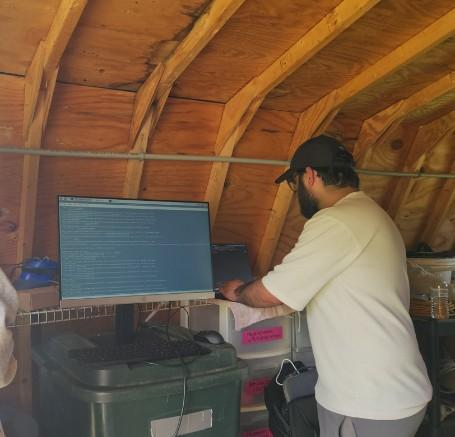
The scale of CMREC's fields demanded more than a wildlife camera, it demanded bringing real computing infrastructure to the farm. The team had to build every layer of a connected farm system from scratch, transforming a tool shed into a field-edge computing station where monitors, laptops, and networking equipment sit alongside other farm tools. This makeshift operations center is where models are configured, camera feeds are monitored, and system diagnostics run in real time, a working example of what it takes to bring AI from a lab environment into an active agricultural setting.
Figure 3: Edge AI Deployment
The result is a farm that is now genuinely connected. Edge-AI camera units running custom computer vision models operate autonomously in the field. Cellular modems and long-range Wi-Fi extenders bridge 70 acres of crop land to the internet. A cloud pipeline collects detection images, retrains models, and pushes updates back to the edge. While deer deterrence was the immediate use case, the underlying infrastructure, solar-powered edge compute, field-wide connectivity, real-time data pipelines—is crop- and species-agnostic. The same connected farm backbone could support pest monitoring, irrigation management, pollinator tracking, or any application where real-time sensing in open agricultural land is needed.
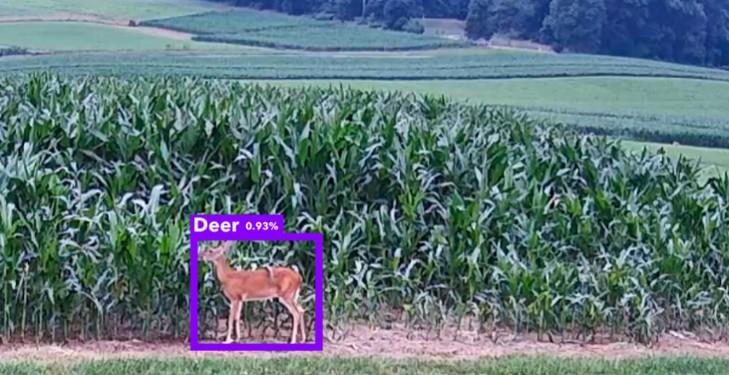
Figure 4: Deer Detection by our Model
Custom Detection Model. General-purpose animal detection models trained on standard datasets failed in dense corn canopy—partial occlusion by leaves and stalks, extreme lighting variation between midday sun and midnight, and thermal signatures that shift with ambient temperature made off-the-shelf solutions unreliable. The team collected and annotated field-specific training data directly from the CMREC deployment, then trained optimized models to run on Raspberry Pi hardware. All inference runs on-device at the edge with no cloud dependency for real-time detection—critical when cellular connectivity is intermittent, which in a corn field, it often is.
Power & Network. An existing electrical hookup at a barn at the end of the farm road served as the base station, but field sites deep inside the corn were hundreds of feet from any outlet. Solar panel and battery station configurations power camera units and cellular modems around the clock. Making 70 acres 'internet-ready' requires long-range Wi-Fi extenders, cellular modems, and 4G/5G network setup. Tall corn canopy attenuated signals significantly; maintaining persistent connections required continuous adjustment throughout the growing season.
Drone Assessment. The CMREC experience proved that drone aerial survey must be standard practice before deploying any edge-AI system at agricultural scale. Ground-level scouting alone produces a misleading picture of field conditions. Drone imagery is the only reliable way to map damage distribution, identify animal movement patterns, and position sensing infrastructure where it matters most.
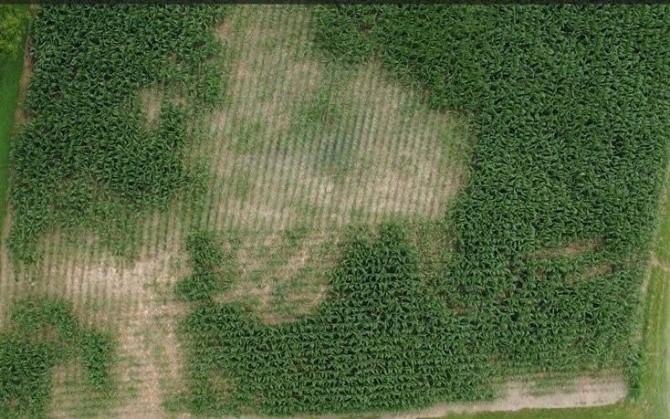
Figure 5: Deer Hangout Zone- “High Damage Area”
The Deer Were Not Where We Expected
Installation began mid-July. The team deployed security cameras on a tall pole at the tool shed, long-range Wi-Fi extenders, trail cameras within the corn on poles, and AI CoExist deterrence units—all running on solar/battery power with cellular connectivity. Ground-level observations suggested deer damage was concentrated on the field edges. But drone imagery told a different story.
The worst damage was in the center, where deer were completely concealed by tall corn—hidden from roads, equipment, and people. The interior functions as a haven; the edges are the most exposed. Perimeter-only deterrence would miss the worst damage entirely. Anecdotally, CMREC staff observed somewhat lower deer pressure near our equipment this year. However, we cannot quantify the true impact: the system was installed partway through the season and experienced intermittent downtime from power failures, connectivity drops, and hardware issues. This was a proof-of-concept, not a controlled efficacy trial.
From Deterrence to Coexistence
The corn was harvested for silage in early September; all in-field devices were removed before harvest. Camera and connectivity units on the barn remain for continued monitoring. CMREC has offered to share 2026 crop rotation plans—the fields will likely transition to triticale, then soybeans—opening the door for multi-season, multi-crop data collection. The team is now shifting from simple deterrence toward a deeper behavioral study of deer-agriculture interaction. Key questions: What specific ingress paths do deer use to enter fields? Where are the weak points—gaps in fencing, hedgerow breaks, terrain features that deer exploit? How do feeding patterns shift as crop canopies develop through the season? Drone-based aerial mapping combined with continuous edge-AI camera data will be the foundational tool for this next phase.
Critically, the team’s long-term vision is not simply to push deer away from crops. True coexistence means understanding the ecology holistically: protecting high-value production while recognizing that deer are a native species with habitat needs. The goal is to develop systems and land management strategies that save crops and create viable habitat corridors—so deterrence is not displacement, but part of an integrated landscape approach that works for farmers and wildlife. This philosophy aligns with Dr. Gallo’s research into evidence-based conservation solutions and with CMREC’s mission serving Maryland’s agricultural community.
NEAR-TERM FOCUS — High-Value Specialty Crops
The CMREC experience clarified where AI Coexists economics are strongest. On large-acreage row crops, per-acre value of prevented damage is modest relative to infrastructure costs. For berries, melons, and culturally important specialty produce, the calculus is dramatically different—a single night of deer damage to a 5-acre blueberry or cantaloupe plot can mean thousands in lost revenue. Building on the CMREC partnership as its research foundation, the team is diversifying into specialty crop operations in the 5-acre range where the return on investment is most compelling. This includes actively exploring pilot opportunities with growers on Maryland's Eastern Shore, working with University of Maryland Eastern Shore (UMES) Extension to connect with farms that could benefit from AI-driven wildlife management—expanding both the agricultural contexts and the communities the technology serves.
During a recent visit to CMREC Clarksville for 2026 deployment planning, the team was pleasantly surprised to hear from facility staff that deer damage to the corn fields this past season had been minimal. "This year, my staff thinks the damage was minimal," Alan Leslie noted.
Whether that outcome is attributable to the AI CoExist system, seasonal variation, or some combination of factors, the team cannot say with certainty—and that honesty is the point. But it is an encouraging signal, and the next phase of this research is designed to answer exactly that question with the controlled, multi-season rigor that a collaboration between UMD, UMBC, and CMREC makes possible.
Partner With Us. We seek partnerships—university research groups, Extension programs, specialty crop growers, and ag-tech collaborators—to pilot AI CoExist on high-value operations across Maryland and the Mid-Atlantic. If you manage a berry, melon, or specialty crop operation and want to explore a pilot, or if you research human-wildlife coexistence in agriculture, contact us.
Acknowledgements: Initiated through Dr. Puneet Srivastava (Assoc. Dean for Research, MAES). The authors thank Alan Leslie, Ph.D. (MAES Center Director) and Brian Spielman (CMREC Asst. Director) for facility access. Research team: Dr. Travis Gallo (UMD EST), Dr. Nirmalya Roy (UMBC IS, MPSC Lab), Dr. Nirupam Roy (UMD CS), and student researchers. Supported in part by NSF SBIR Phase I (2507344). Photos: AI SENSE LLC.
Clarksville Field Trials
David L. Clement, Ph.D. Extension Specialist, Plant Pathology Hemendra Kumar, Ph.D. Precision Agriculture Specialist Sheena O'Donnell, Agricultural Worker II
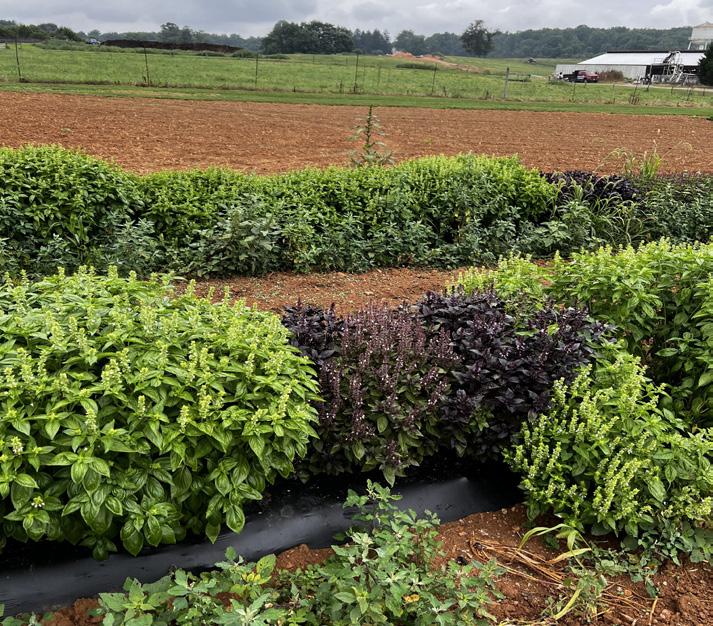
Basil Downy Mildew Resistance Evaluation In 2025, the commercial horticulture & IPM team at CMREC planted 9 different basil cultivars to evaluate Downy Mildew resistance. Downy Mildew is a key disease of basil in Maryland, and the development of new cultivars strives to incorporate resistance to this disease. Cultivar groups (Thai, red, and green Italian) included both a control/check (non-DMR) cultivar and new cultivars within each group. The cultivars grown were Aroma, Prospera, Noga, Mia, and Prospera compact for green Italians; Thai basil & ‘ThaiThai’ for Thais and Dark Opal & Prospera Red for reds. Our team monitored these basil plants for Downy Mildew occurrence and noted strong differences between the checks and the new cultivars within each group. Within the Italian Green group, Noga and Mia performed the best with almost no DM symptoms throughout the entire trial which lasted into October. We also took yield data and the highest yielding cultivars were Aroma 2 and Noga.
Basil field
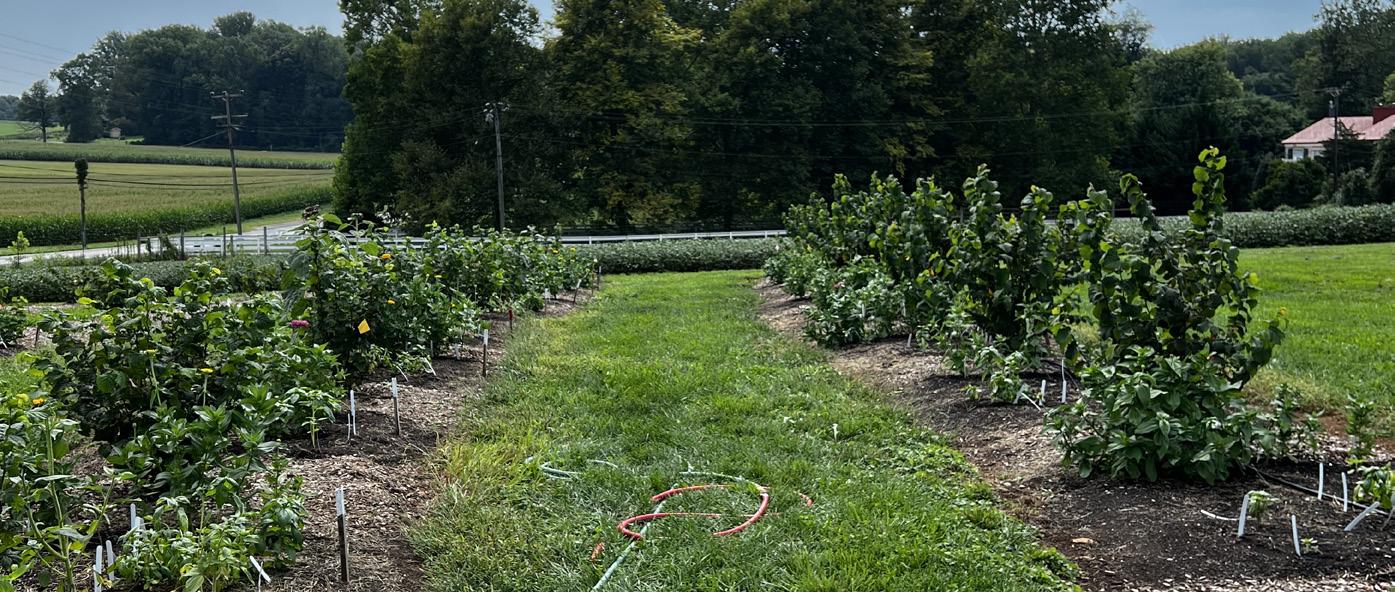
CMREC Disease-resistant Filbert Trials In 2023, 4 rows of disease-resistant hazelnuts (40 saplings) were planted at CMREC to evaluate as a potential Maryland grown crop. Eastern Filbert Blight is a serious problem on American hazelnuts and prevents growers in Maryland from achieving success with this crop; the new varieties, hybrid selections from Rutgers’ breeding program, are all bred for resistance to this disease. The varieties are the Beast, Somerset, Raritan, Grand Traverse, Hunterdon, and Northern Blaise. To date all of the filbert cultivars have been disease free. In addition, in an effort to explore dual-cropping systems involving Hazelnuts, we inoculated half of the trees with Appalachian White truffle spores prior to planting. Truffle-inoculated trees do not produce truffles for at least three years, and hazelnuts also do not produce fruit for the same amount of time so in 2025 these plants were still getting established. We will continue to monitor for disease and pest pressure as the system approaches maturity.
Hazelnuts - year 2
Hazelnuts - year 4
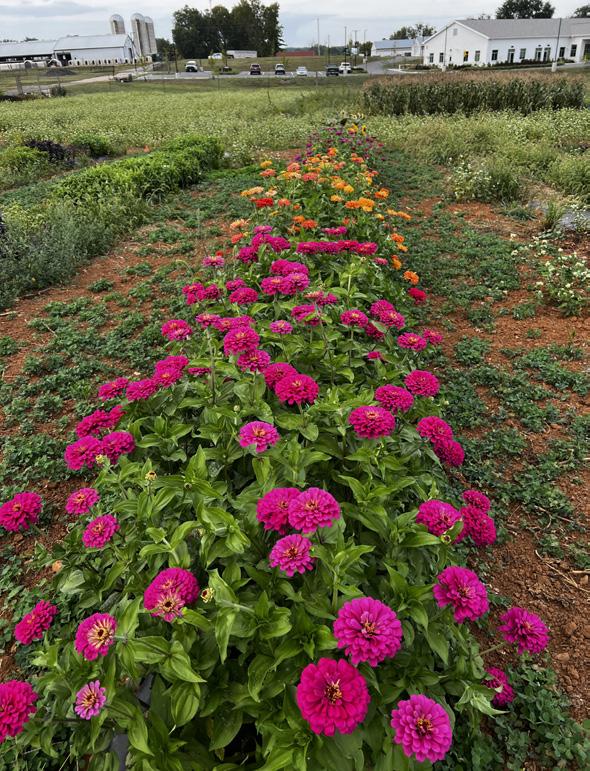
Cut Flower Variety Trials In 2025, CMREC’s Commercial Horticulture & IPM team planted new varieties of popular cut flower species to evaluate their performance in central Maryland. Four varieties of zinnias (Aurora, Agave, Benary’s Giant, and Uproar Rose) and two varieties of sunflowers (Procut Plum & Sunrich) were planted. Growing characteristics such as bloom count, uniformity & quality, stem length, disease occurrence, and overall appeal were noted and recorded. These new cultivars gave satisfactory results for and additional choices for Maryland cut flower growers to sell. Additional articles will be published in our monthly Greenhouse & Cut flower IPM Alert newsletter.
Rudbeckia Cultivar Evaluation - The Home and Garden Information Center is evaluating 7 Rudbeckia cultivars for home gardens patterned after the trials at Mt Cuba. These plants were planted in the fall of 2024 and were getting established in 2025. In 2026, the HGIC team will note observations pertaining to Powdery mildew, Downy mildew, Septoria leaf spot, pollinator visits, and plant persistence. Observations will include disease and pest pressure, overall performance, phenology, and pollinator activity. These results will be published on HGIC’s information pages and posted in social media content to reach homeowners and Master Gardeners.
Zinnias at CMREC
Turfgrass Maintenance Trials A new tall fescue plot was established for researching turfgrass maintenance following the Montgomery county government’s new guidelines restricting conventional pesticide use.We used this area to test Fiesta, an iron-based OMRI- approved herbicide, for efficacy with weed control in young turf. Fiesta was used at the rate of 5oz in 5 gallons of water per 1,000 square feet. Visual efficacy ratings ranged from 20-40% weed control of numerous weeds. Aerial drone mapping was also incorporated with PIX4D programming to assess control efficacy. This App is still being evaluated for use as an evaluation tool for turfgrass weed management. In addition to herbicide efficacy assessment, Pix4D was utilized to generate high-resolution aerial maps for detecting spatial variability in turf health. The platform enabled identification of water and nutrient stress patterns across plots through vegetation indices and canopy reflectance analysis. Furthermore, drone-based mapping supported early detection and spatial delineation of weed infestations, improving precision in turfgrass management decisions.
Tall Fescue Turf Seeding Trials At CMREC we have a large well-established (15 years) plot of tall fescue grass. We used this existing area to test Fiesta, an iron-based OMRI- approved herbicide, for efficacy with weed control in young turf. In the spring we aerated the entire area and seeded with Vitality’s double coverage mixture (Moondance GLX Tall Fescue 29.95%, Talladega II Tall Fescue 29.92%, Temple Tall Fescue 29.91%, Wild Horse Kentucky Bluegrass 9.82%). We split the plot into 25 - 3x3ft areas, to which we applied the 5 oz labeled rate of Fiesta but at different timings and plots were evaluated for weed control and seedling viability. Treatments included application before seeding, after seeding, before *and* after seeding, and an untreated control. Results were recorded as the percentage of surviving weeds in intervals of 10%, and turf seedling viability was checked. In addition, we sowed seed in containers under lights and applied the 5oz label rate of Fiesta to very young turfgrass seedlings. Fiesta did not harm young grass seedlings and was effective at controlling weeds in all treatment groups compared to higher weed populations in the untreated control. The weed control ranged from 20 - 90 percent with the best rating resulting from two treatments (pre and post) seedling emergence.
Monarda Powdery Mildew Trials Monarda plots were established in early summer of Monarda ‘Jacob Cline’for the purpose of recording powdery mildew progression over time to generate an artificial intelligence model for aerial drone disease diagnosis in the field. Over the course of the season over 4,000 photographs were recorded and are now being used as a reference for predictive AI-driven modeling and early disease detection. Building on this effort, we are developing an AI-enabled Diagnostic Disease Support System (DDSS) to facilitate early prediction and timely management of powdery mildew in field conditions.
AgFS logo with soybeans
2025 Maryland Soybean Fungicide Efficacy Trials
Andrew Kness, Senior Agriculture Extension Agent University of Maryland Extension akness@umd.edu
Justification Fungicides are becoming increasingly popular in full season soybean production. These trials provide data that soybean producers can benefit from, such as: fungicide efficacy for managing common fungal diseases of soybean, monitor fungicide resistant pest populations, and track the economic impact of foliar fungicide applications over multiple years and environments unique to Maryland.
Research Objectives 1. Evaluate the efficacy of select foliar fungicides on full season soybeans grown on three research farms in Maryland by measuring foliar disease incidence and severity. 2. Determine any greening or green stem effects of the fungicides. 3. Monitor fungicide active ingredient efficacy over time and identify any fungicide insensitive foliar fungal pathogens. 4. Determine the yield and economic impact of foliar fungicides applications to soybean.
Methods Plot Design
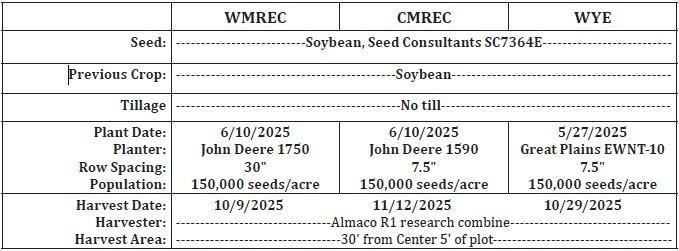
Field trials were established at three University of Maryland Research farms: Western Maryland Research & Education Center in Keedysville, MD (WMREC), Wye Research and Education Center in Queenstown, MD (WYE), and Central Maryland Research & Education Center (CMREC). Plots were 11’x30’ arranged in a randomized complete block design with five replicates. Planting details are outlined in Table 1. Plots were established in fields with a previous crop of soybeans to maximize conditions for soybean disease development. Fertility, insect, and weed management were consistent with University of Maryland Extension recommendations for full-season soybean production.
Project supported by the Maryland Soybean Board
Planting and harvest specifications
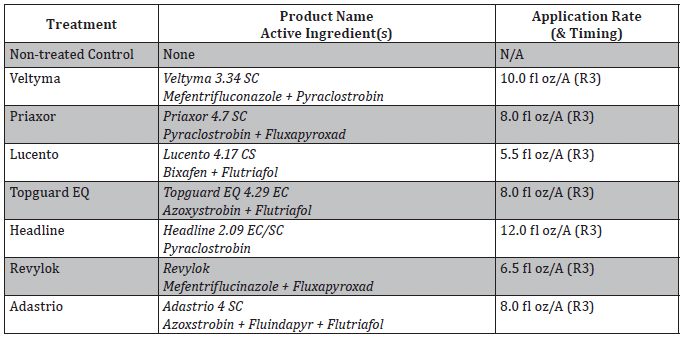
Fungicide Applications Fungicides (Table 2) were applied at the R3 growth stage (August 1 at WYE and August 14 at WMREC and CMREC) using a CO2 powered backpack sprayer equipped with TeeJet 8003 nozzles calibrated to deliver 20 GPA at 35 psi to the center 80 inches of each plot.
Table 2. Fungicide treatments
Disease Rating Foliar diseases were rated prior to fungicide application at R3 and approximately every two weeks until approximately R6. Disease severity from frogeye leaf spot (FLS; Cercospora sojina) was visually rated as the percent leaf area infected in the upper canopy from the center rows of each plot (four rows for 15-inch row spacing plots and two rows of the 30-inch row spacing plots). Frogeye leaf spot is typically the most prevalent foliar fungal disease in Maryland soybean production. In 2025, Phyllosticta leaf spot (Phyllosticta sojicola) was also rated at the CMREC location due to increased presence of the disease.
Harvest and Statistics Yield data were collected by harvesting the center 5 feet of each plot using an Almaco R1 research combine. All yields reported are adjusted to 13% moisture. Harvest dates are shown in Table 1. Statistics related to profitability and economics were calculated using the December local cash market price for soybean of $10.51 per bushel at the time of analysis. Data were analyzed using ANOVA and significant differences between treatments were separated using Fisher’s Least Significant Difference (LSD; α=0.10).
RESULTS & DISCUSSION
Disease Rating Growing conditions were generally not favorable for disease development and we did not observe any ratable fungal diseases at any of the three trial locations except for Phyllosticta leaf spot at CMREC.
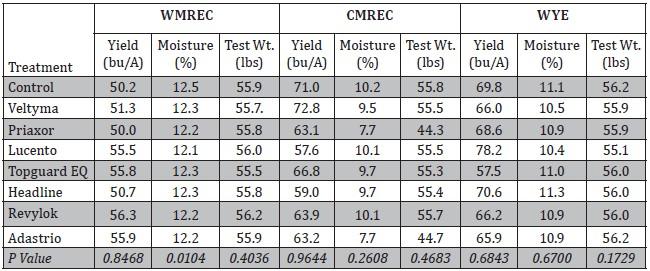
Yield Yield data were collected by harvesting the center 5 feet of each plot using an Almaco R1 research combine. All yields reported are adjusted to 13% moisture. Harvest dates are shown in Table 1. Statistics related to profitability and economics were calculated using the December local cash market price for soybean of $10.51 per bushel at the time of analysis. Data were analyzed using ANOVA and significant differences between treatments were separated using Fisher’s Least Significant Difference (LSD; α=0.10).
Table 3. 2025 Harvest Data
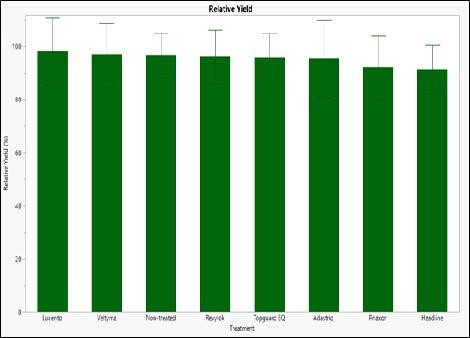
Since there was a significant difference in yield between locations (p<0.0001), relative yield was calculated and used to compare yields across locations. Relative yield was calculated by dividing the plot yield by the non-treated control plot yield and reported as a percentage. Values greater than 100 represent a yield greater than the control and values less than 100 represent a yield less than the control. When data were combined this way, no significant differences were observed between treatments (p=0.9939, Figure 1).
Figure 1. Relative grain yield of all 2025 site locations combined. Each error bar is constructed using a 90% confidence interval. No significant differences between treatments (α=0.10).
Conclusions, Implications, and Future Work
In previous years of this study, foliar fungicide applications with the selected products tested provided some benefit related to improved seed quality and yield in situations where FLS disease pressure was present at measurable levels (2018-2019). Fungicides also significantly increased plant greenness and delayed senescence in all years tested.
During the 2025 growing season, none of the treatments tested yielded significantly different than the non-treated control. This is likely due to the fact that foliar fungal diseases were not present at high enough levels to be a yield-limiting factor. Without the presence of a pathogen, fungicides have reduced odds of improving yields over non-treated plots.
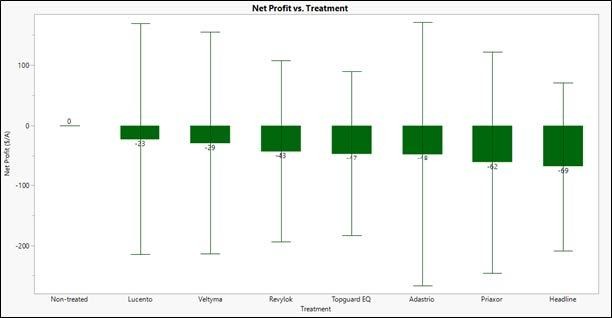
Relative net profit was calculated by multiplying the bushel increase over the non-treated control by the cash market price for soybean at the time of analysis ($10.51/bu for December 2025) and subtracting the cost of application. A flat rate of $25.00 per acre was used for 2025 data; for plots with two applications, $50.00 was used. This metric, net profit, was used to compare the economics of the fungicides while accounting for yield, market prices, and the cost of application. Figure 3 shows net profit for each treatment in 2025; there are no significant differences due to a high degree of variability in the data (p=0.9555) and no clear yield advantage to fungicide application.
Figure 3. Net profit of 2025 fungicide treatments. Each error bar is constructed using 1 standard deviation from the mean. No significant differences between treatments (α=0.10).
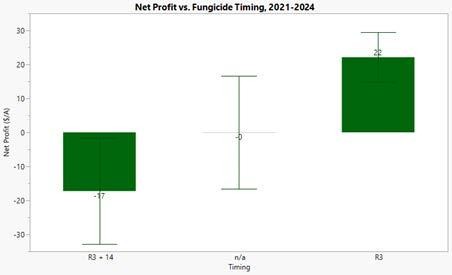
When net profit was analyzed by treatment timing (R3, R3 + 14, and none) across all years (2021-2025), the single R3 application provided a significantly greater profit margin ($17/acre) than two treatment program (-$22/acre), but similar to the non-treated control (p=0.0981; Figure 4). These data indicate no fungicide application or a single fungicide application at R3 provides the greatest profit margin compared to a two-pass program.
Figure 4. Net profit by fungicide timing of 2021-2024. Each error bar is constructed using 1 standard error from the mean. Treatment timings connected by the same letter are not significantly different (α=0.10).
Future work will be focused on replicating similar experiments over more site-years to gather more data for Maryland’s unique growing conditions and to track pathogen resistance and fungicide profitability over time. Work will also focus on testing new and emerging fungicide products from various chemical companies to evaluate their performance.
ACKNOWLEDGEMENTS
This work is supported by grant funding through the Maryland Soybean Board and in-kind support from BASF, Bayer, Corteva, FMC, and Syngenta. Special thanks to the Maryland Agriculture Experiment Station and research farm crew at the Western Maryland Research & Education Center, Central Maryland Research & Education Center, and the Wye Research and Education Center for making this research possible.
APPENDIX
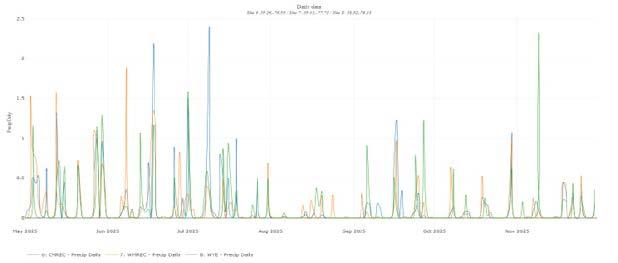
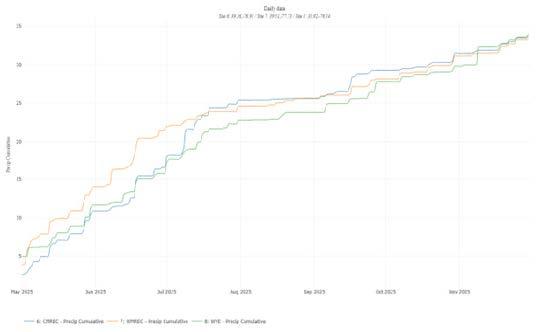
Daily Precipitation Data (May 1-November 30, 2025)
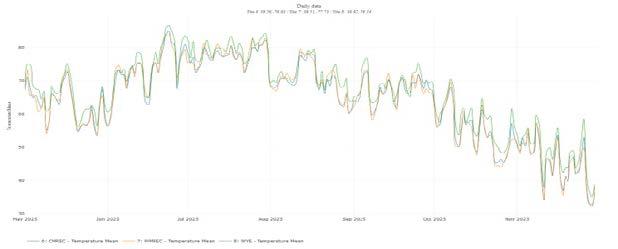
Daily Precipitation Data (May 1-November 30, 2025)
Enhancing Community Resilience and Well-being Through Family and Consumer Sciences Programs: A Collaborative Approach with Central Maryland Research and Education Center
Troy Anthony Anderson, Financial Wellness: Extension Agent, College of Agriculture & Natural Resources, Department of Family & Consumer Sciences, Calvert County
Lynn Matava, Nutrition, Health and Wellness: Extension Agent, College of Agriculture & Natural Resources, Department of Family & Consumer Sciences, Wicomico County
Family and Consumer Sciences (FCS) programs have long been dedicated to enhancing the quality of life for individuals and communities through diverse educational initiatives. This abstract presents a synthesis of recent activities and findings in areas including food safety, financial wellness, mental health, health insurance literacy, and nutrition, health and wellness. It also explores the alignment between FCS programs and the research conducted at the Central Maryland Research and Education Center (CMREC), particularly in dairy and chestnut orchard management.
Food Safety. FCS programs have made significant strides in promoting food safety education. Workshops and community outreach initiatives have empowered families with knowledge on safe food handling practices, reducing foodborne illnesses. Nutritional education has focused on balanced diets, fostering healthier eating habits among diverse populations.
Nutrition, Health and Wellness. Nutrition, health and wellness programs within FCS have been pivotal in addressing physical and mental health issues. Initiatives have included fitness workshops, mental health awareness campaigns, and stress management seminars. These programs aim to enhance overall well-being, encouraging individuals to adopt healthier lifestyles.
Financial Wellness and Health Insurance Literacy. FCS has also prioritized financial wellness and health insurance literacy. Financial education workshops have equipped individuals with skills in budgeting, saving, and investing, contributing to economic stability. Simultaneously, health insurance literacy programs have demystified complex insurance policies, enabling informed decision-making about healthcare options.
FCS event
The strategic collaborations and comprehensive educational offerings at CMREC have yielded the following results: • Enhanced Educational Programs: FCS professionals have successfully incorporated sustainable practices into their teaching, reaching broader audiences and fostering a culture of sustainability within educational institutions. • Improved Family Well-being: By applying the principles learned at CMREC, educators have developed programs that enhance family health, nutrition, and financial literacy, contributing to the overall wellbeing of families. • Strengthened Community Resilience: The initiatives have led to increased community engagement in sustainable practices, resulting in more resilient communities that are better equipped to face environmental and economic challenges.
Alignment with CMREC Research The alignment between FCS programs and CMREC's dairy and chestnut orchard research underscores a collaborative approach to sustainable agriculture and consumer education. By integrating CMREC's research findings, FCS programs have enriched their curricula with practical insights into sustainable farming practices, fostering a deeper understanding of food systems and environmental stewardship. A unique feature at CMREC is the educational wagon ride, offering FCS professionals an immersive experience across the center. This ride led by Alan Leslie and Brian Spielman provided the educators with a firsthand look at the integration of agricultural research and consumer sciences, enhancing appreciation for the interconnectedness of these fields. FCS professionals gained valuable insights into the sustainable practices implemented at the dairy and chestnut orchards. In conclusion, FCS programs continue to advance through strategic collaborations and comprehensive educational offerings. These initiatives not only improve individual and family well-being but also contribute to broader community resilience and sustainability.
Exploring Climate-Resilient Lawn Alternatives for a Healthy Chesapeake Bay Watershed
University of Maryland’s Residential Landscape Ecology program promotes climate-resilient landscape practices for a healthy Chesapeake Bay and Maryland waterways. Part of that work entails exploring lawn alternatives that promote water quality, biodiversity, and climate resilience through our Bay-Wise Living Landscapes Program and teaching events like “Becoming Bay-Wise” and “Shrink Your Lawn Footprint” that educate residents about sustainable landscaping practices. These workshops are offered to the general public, community, and professional groups, upon request. With climate change bringing periods of intense heat and drought, punctuated by increasingly heavy precipitation events, drought-resilient lawn alternatives that absorb more precipitation, retain soil moisture, filter stormwater, and facilitate groundwater recharge are essential components of a climate-resilient future for Maryland.
In an effort to explore and demonstrate native plant alternatives to turfgrass, I’ve developed two pilot field studies for evaluating native sedge and meadow options at CMREC Clarksville. I’m interested in eventually exploring a number of different treatments and outcomes pertaining to habitat, weed suppression, and climate resilience – in particular, soil moisture, water infiltration rate, and carbon sequestration. I’m particularly interested in the additional ecosystem services that these lawn alternatives can provide, including stormwater absorption, carbon storage, groundwater recharge, soil moisture retention, temperature regulation, erosion control, pollination, pest control, native seed sources, and habitat for vertebrates. I’m talking to potential collaborators now, so if some part of this project interests you, please reach out!
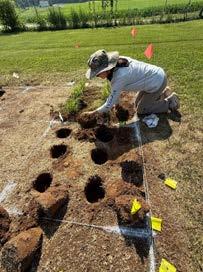
With help from Extension colleagues and Master Gardener volunteers, we planted the sedge plots in 2025 with 96 Pretty Sedge plants (Carex woodii), a native sedge that performed well in Mt. Cuba trials. I selected this species because their field trials indicated that it showed a wide range of moisture tolerance, could withstand direct sun, and was deer-resistant, making it an ideal species to test as a residential landscaping option, for example, as a lawn border, for interplanting among other native plants, or as an element of “green mulching” practices.
Master Gardeners and Extension colleagues helped to plant 96 native sedges for our lawn alternative trial plots. We applied different organic soil amendments in randomized blocks to test how it affected plant growth and soil moisture.
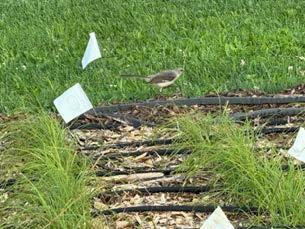
A Northern Mockingbird visits the native sedge plots at CMREC Clarksville.
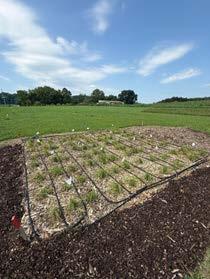
Ninety-six Carex woodii planted and freshly mulched with a thin layer of wood chips. Soaker hose was connected to a water tanker to irrigate the plants in the first summer, to protect against drought while the plants established.
While native plants don’t typically require fertilizers, I wanted to evaluate whether adding a small amount of organic amendment in the planting hole could boost plant growth and improve water retention to enhance drought resilience, as organic matter is known to retain soil moisture and could be beneficial in disturbed suburban or urban soils that are high in mineral content and low in organic matter. We created several different amendment mixes of commercial worm compost and/or biochar in a matrix of commercial leaf compost and applied them in the planting holes, in a randomized design. We may even find that it doesn’t make a difference, and that would be an interesting result, as well!
In the planting year, we irrigated with a soaker hose attached to a water tanker, and all plants survived the very hot summer in the direct sun. Our farm operations staff and faculty were extraordinarily helpful and resourceful in finding solutions to provide water to the sedges. In a home landscape, the water source would typically be more accessible. I’m hoping not to have to irrigate the sedges this year, now that the plants are more established and have survived a harsh summer and winter so far.
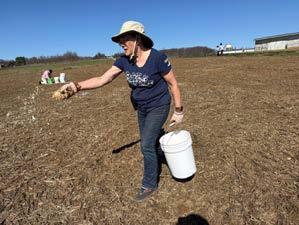
In winter, we began prepping a half-acre of meadow plots with light discing, thanks to our stellar farm operations team. I worked with Ernst Seeds to create two custom seed mixes over the winter, one with an equal proportion (50:50) of native grasses and wildflowers known to support butterflies and moths. The other mix had a higher proportion of native grasses to wildflowers (80:20). We had a great showing of Bay-Wise Master Gardeners who came out to learn about establishing meadows.
Dedicated Bay-Wise volunteers came out to learn about creating meadows and help hand-sow native meadow seed mixes.
We hand-sowed the two seed mixes in randomized plots on a warm, early spring morning, after subjecting the seed mixes to a period of cold stratification in the lab refrigerator in wet sand to simulate winter conditions. We could have tracked down a specialized seed drill suitable to sow very fine native seed, but most residents wouldn’t typically have access to such equipment, so we went with more easily accessible options. For sowing smaller areas, bare soil can be lightly raked after turf removal, in preparation for sowing.
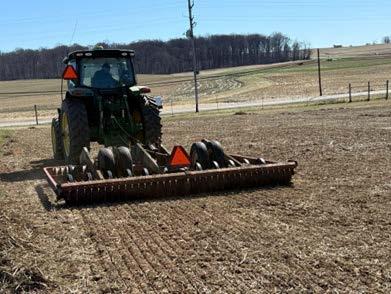
At the end of our sowing event, farm manager Brian Spielman gave a great demonstration of the cultipacker, a tractor implement designed to improve seed-to-soil contact, which is key to meadow seed germination. In a residential landscape, this can be achieved with a hand-pushed lawn roller.
We used a cultipacker to ensure good seed-to-soil contact after hand-sowing the custom seed mixes.
I also purchased double the amount of seed mix needed for a single sowing, so that we can do a second round of sowing, using a “fall dormant seeding” strategy in late fall or early winter 2026. As a finishing touch, we incorporated a nitrogen-fixing native legume that is attractive to pollinators, Partridge Pea (Chamaecrista fasciculata), after scarifying the hard seed coat with a light sanding to simulate animal digestion. We’ll follow up by planting milkweed plugs around the plot edges in the fall.
We’re excited to watch the meadow grow, to see what germinates this year and which insects and birds use the meadow plots in the first year and subsequent seasons. We’ll evaluate some of the same outcomes we’ll be exploring in the nearby native sedge and sustainable turfgrass reference plots. I’m thrilled about the possibility of working with our Extension integrated pest management (IPM) team and local butterfly experts to see what beneficial insects make use of the meadow plots and document how native meadows can complement sustainable farming and gardening. I’d be extremely interested in replicating this project at Extension sites across Maryland, so please reach out to me if you’re interested in collaborating.
Fortunately, our wildly variable spring weather cooperated again, as two days later, the seeds were covered by a fresh blanket of snow, extending their cold stratification period a bit longer. Weed suppression will be the next challenge, so strategic mowing or hand-pulling weeds may be necessary, as native meadow plants may establish gradually in the first year. Strip mowing will be part of the ongoing maintenance effort to set back succession and encroachment by woody plants, so that the meadow doesn’t quickly become a forest. We’re working on purchasing an electric riding mower to “walk the walk,” as we promote switching to electric lawn equipment in the Bay-Wise Program to reduce fossil fuel use and related carbon emissions.
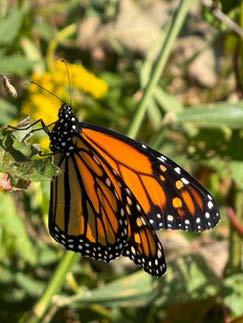
A monarch butterfly visits CMREC Clarksville in Fall
The meadow and sedges, alongside the long-term sustainable turfgrass plots, will hopefully expand our many teaching and field demonstration opportunities at CMREC Clarksville for the public, Master Gardeners, and industry professionals, as well as provide ample opportunities for creating original teaching materials.
Native Seed Amplification Plots
Lisa Kuder, Native Plants & Landscapes Specialist
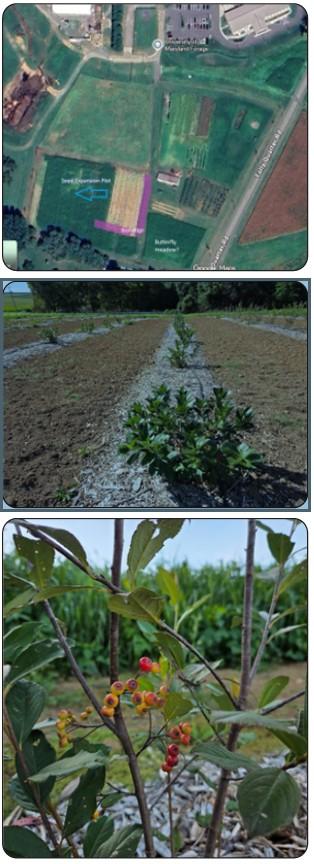
At the Central Maryland Research and Education Center (CMREC), University of Maryland Extension (UME) is laying the groundwork for a more resilient native plant supply through new seed expansion plots that support the recently launched Maryland Native Seed & Plants Program. This pilot initiative aims to improve access to regionally appropriate native plant materials for restoration, habitat enhancement, and public education across the state and throughout the Mid-Atlantic region.
As part of this effort, the Ayton State Tree Nursery provided 150 shrub tubelings for installation at CMREC. The plantings include black chokeberry (Aronia melanocarpa), red chokeberry (Aronia arbutifolia), and Canadian serviceberry (Amelanchier canadensis)—native shrubs with high value for pollinators, birds, and other wildlife. These plots will serve as both a demonstration site and a future source of local ecotype seed and plant material. The partnership with the Ayton is a win-win: in addition to helping establish the plots, the nursery will receive a portion of the seed collected to support its own native plant production efforts.
The CMREC plots are part of a broader UME strategy to build a statewide network of founder and seed increase plots at Extension offices across Maryland beginning in fall 2026. In addition to expanding the availability of regionally appropriate native plant materials, the program will support field days, propagation workshops, and educational materials for growers, land managers, and community members interested in using regionally appropriate native plants in their landscapes and operations.
By combining research, demonstration, and partnership, the seed expansion plots at CMREC show how research centers can directly support the public. This work helps strengthen Maryland’s native seed and plant infrastructure while increasing opportunities for education, conservation, and biodiversity-focused landscaping at both local and regional scales.