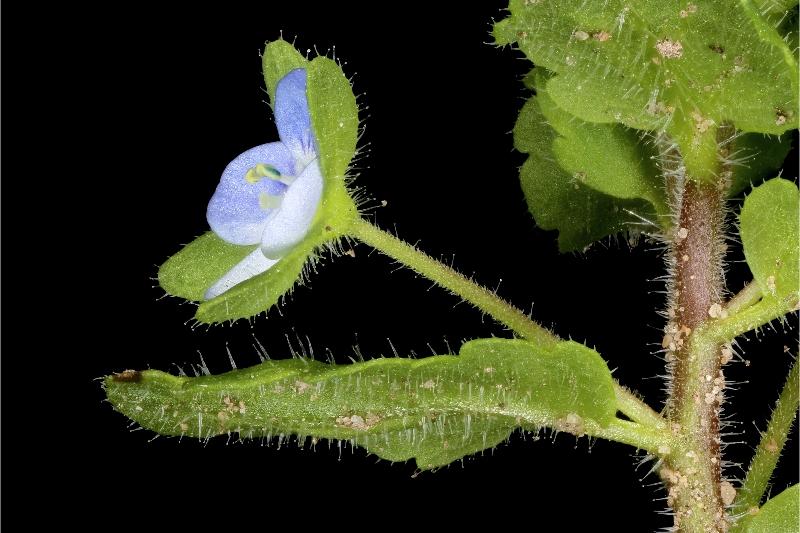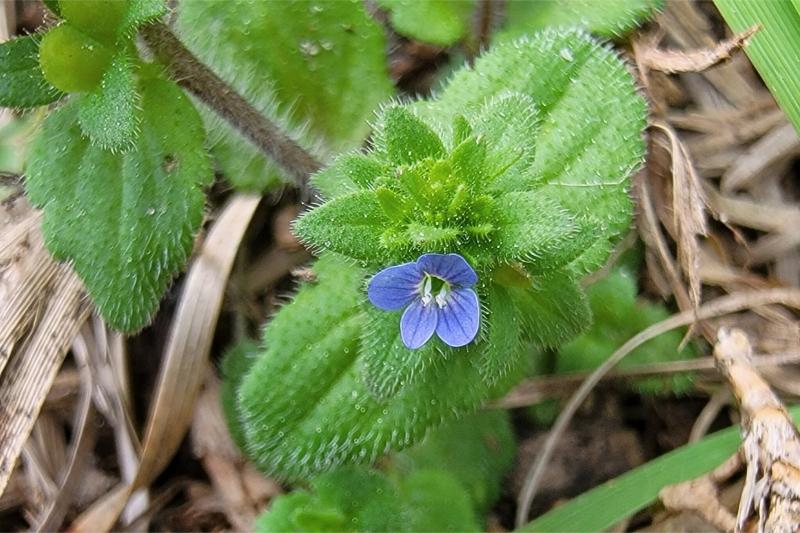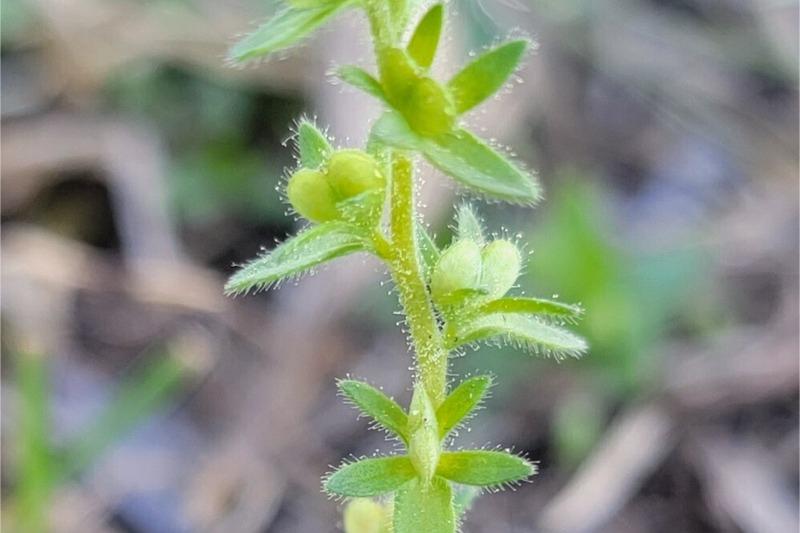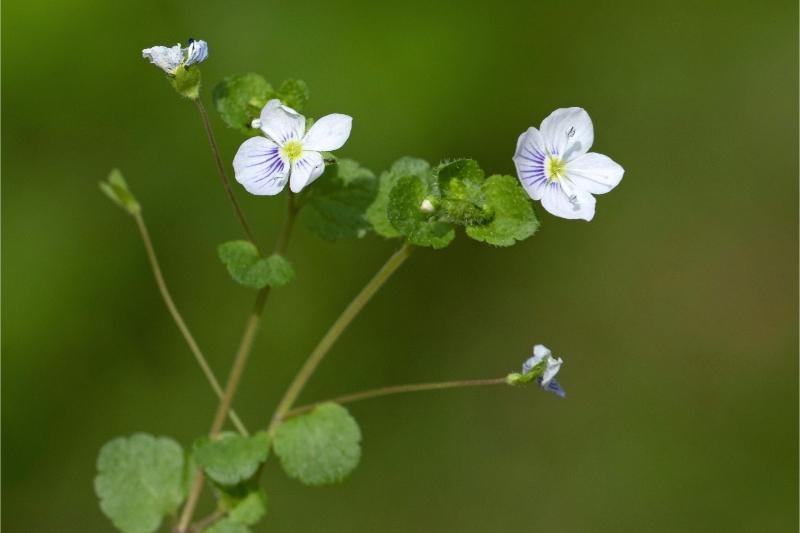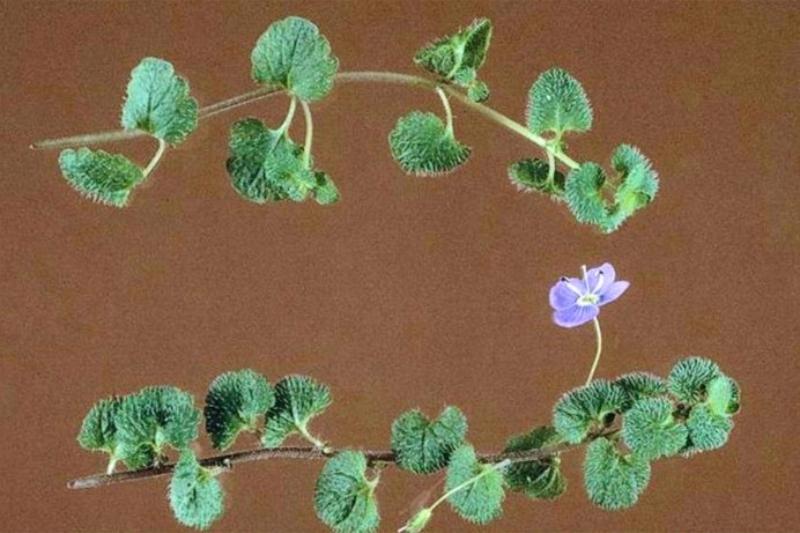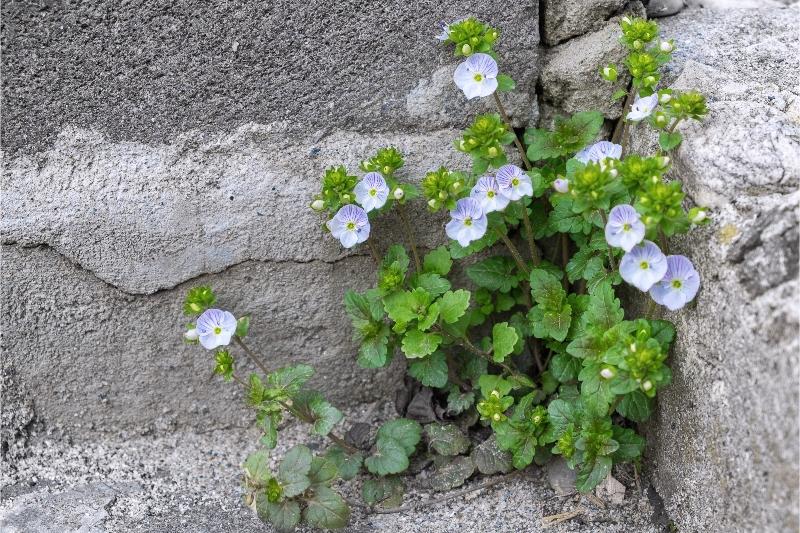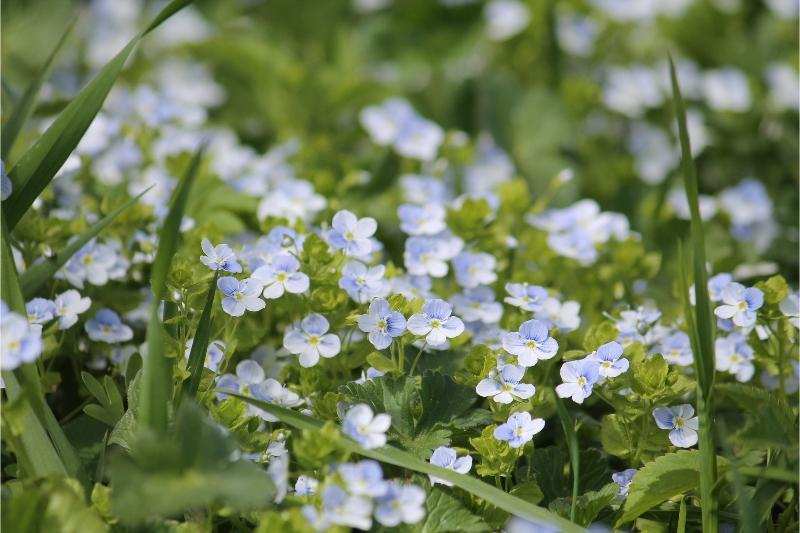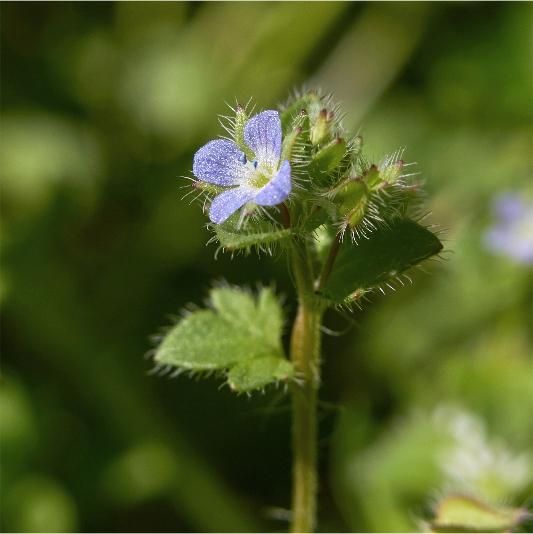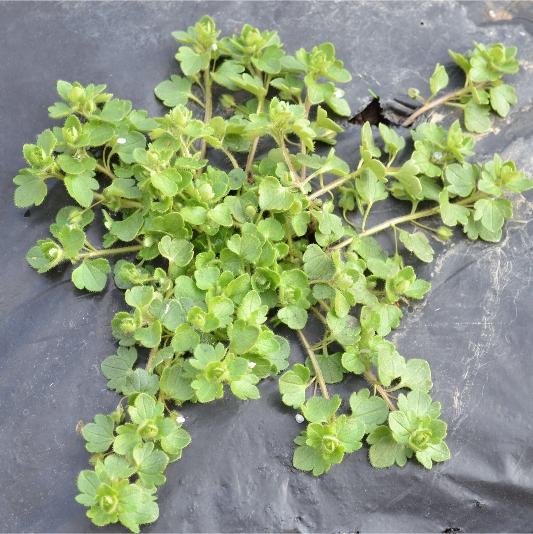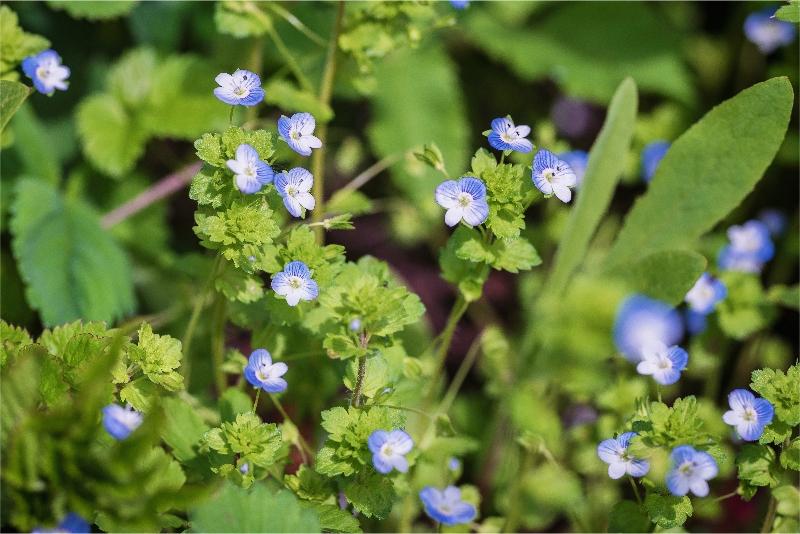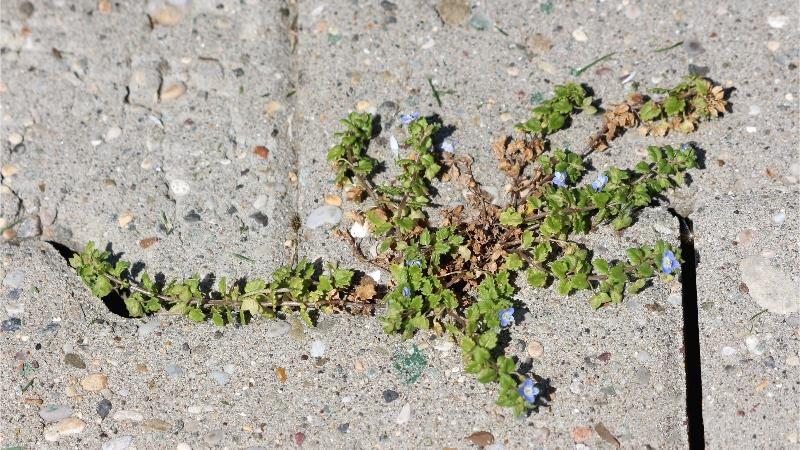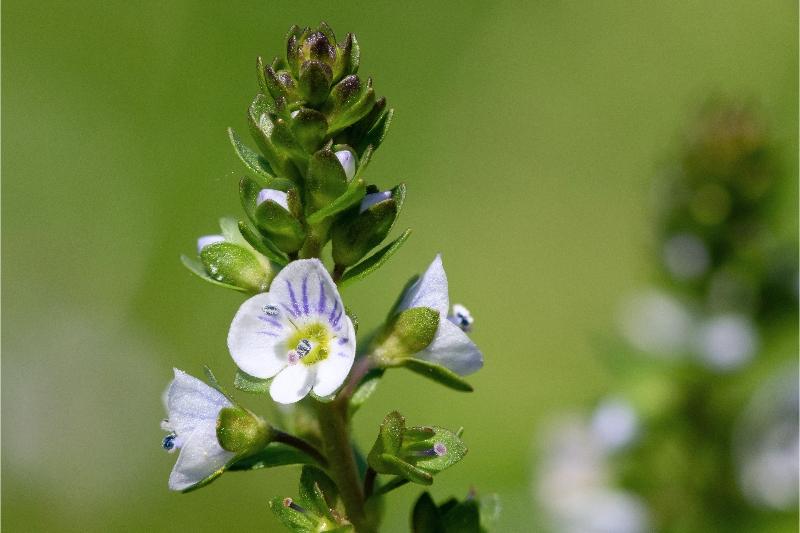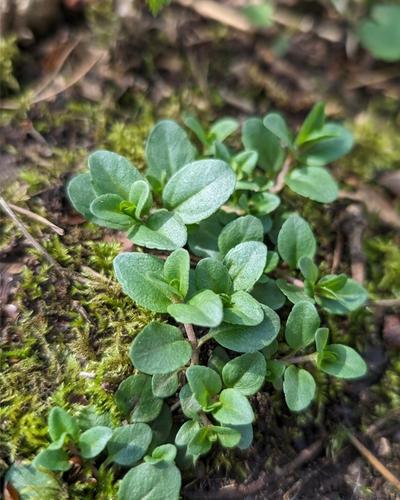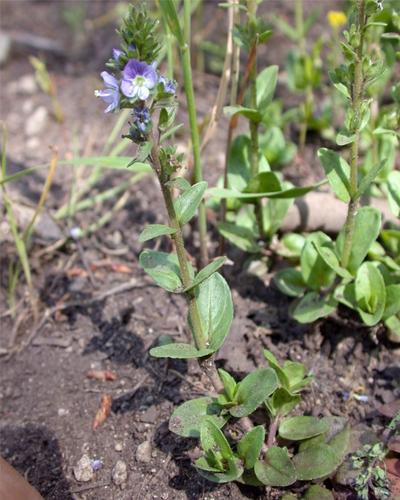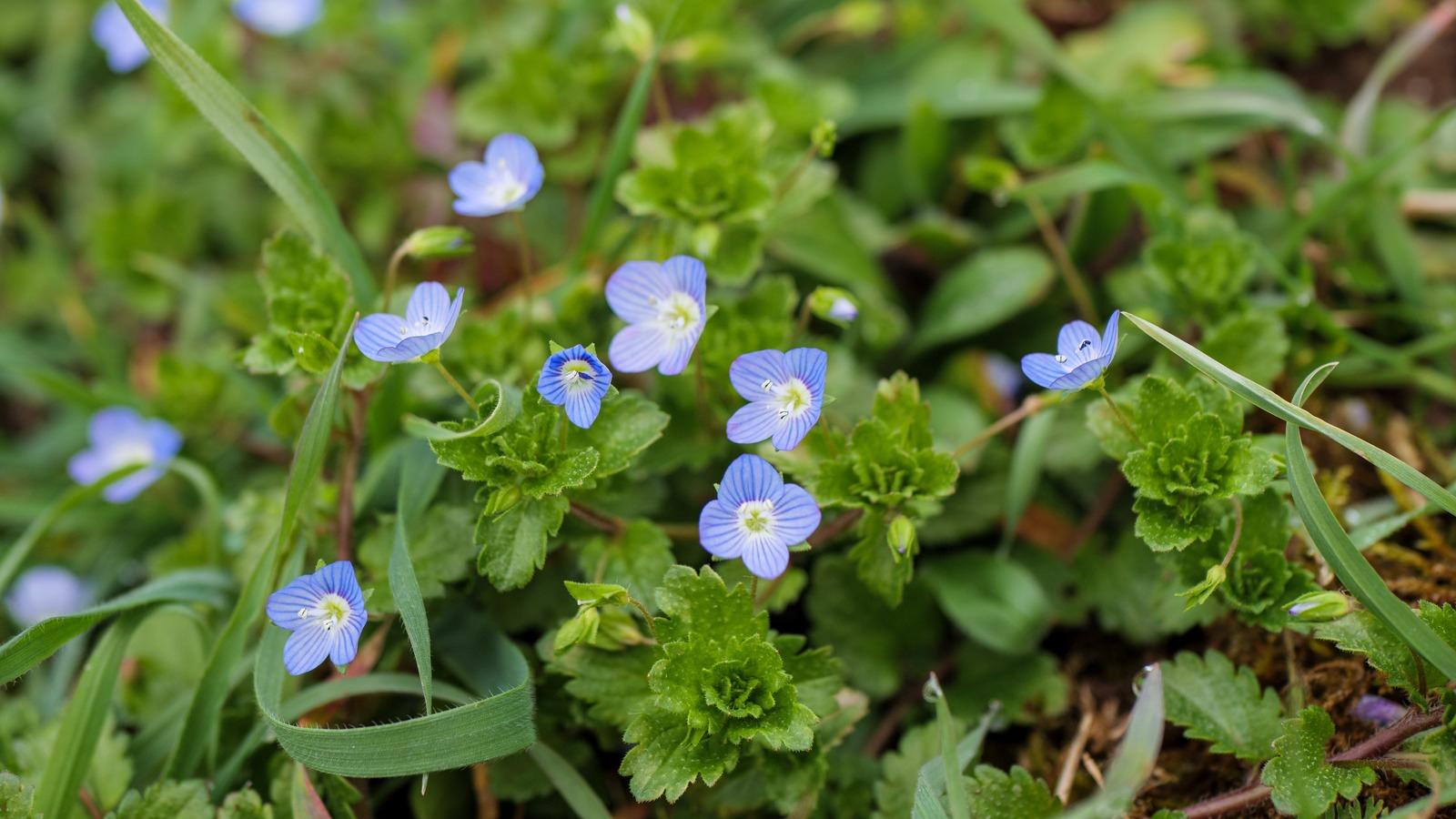
Close-up of small, 4-petaled blue flowers with white centers on small-leaved plants creeping through turfgrass.

Persian speedwell blooming in a lawn. Photo via Adobe Stock.

Updated: November 3, 2026

Over a dozen species of speedwell (Veronica) grow in Maryland; nearly all of them are non-native. (Our few native Veronica species are uncommon to rare in the state and would not be confused for the creeping, small-leaved weedy species that commonly seed into home landscapes.) Members of the plantain plant family (Plantaginaceae), speedwells can grow in lawns and garden beds. The species most often encountered growing as weeds in those settings include:

  • field speedwell (Veronica agrestis), also called green field speedwell
  • corn speedwell (Veronica arvensis)
  • slender speedwell (Veronica filiformis), also called thread-stalked speedwell
  • ivy-leaved speedwell (Veronica hederifolia)
  • Persian speedwell (Veronica persica)
  • thyme-leaved speedwell (Veronica serpyllifolia variety serpyllifolia)

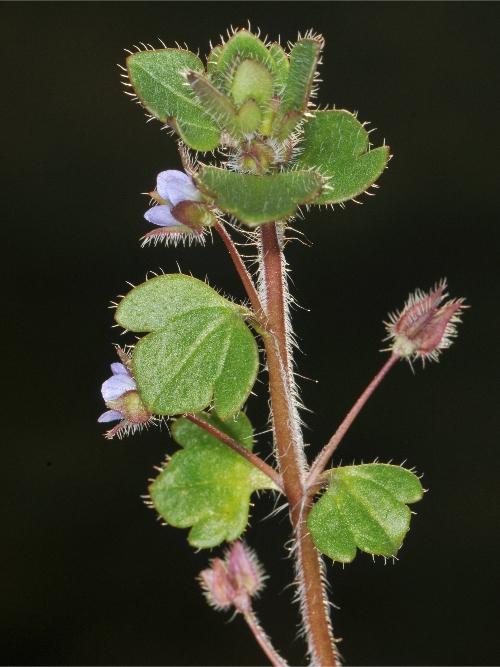
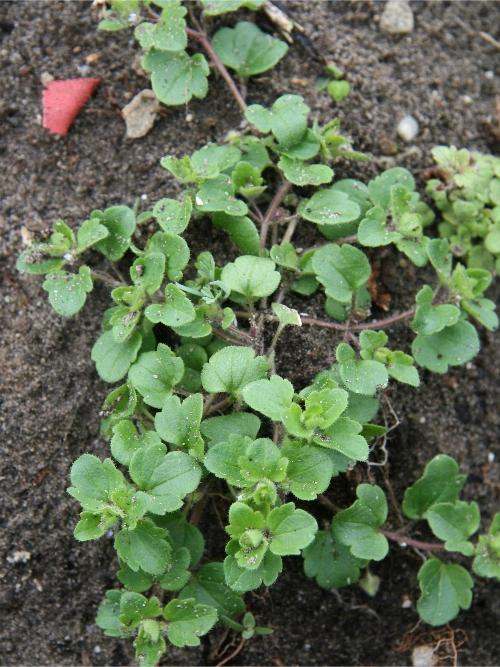
Several of those species look very similar to each other: a creeping or low-growing plant with small leaves. They have small, rounded flowers with 4 petals, which are blue and often have a white center (or "eye") and dark stripes radiating outwards from the center of the flower. Occasionally, the blooms may be almost white instead of blue.

Speedwells generally spread by seed, which can remain viable in the soil for years. The exception is slender speedwell, which does not appear to produce fertile seed in North American populations (it does spread by seed in Europe where it is native). Instead, new slender speedwell plants arise from stem fragments that root after being accidentally spread in materials like lawn mower debris and unfinished compost.
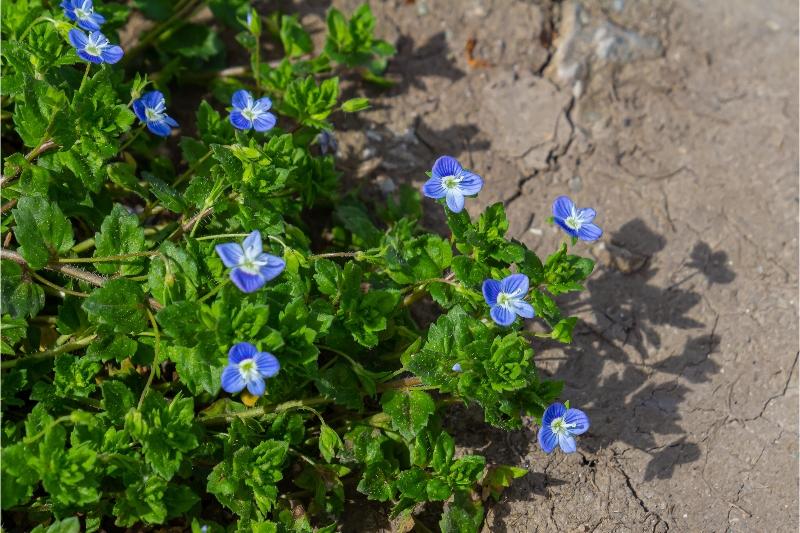
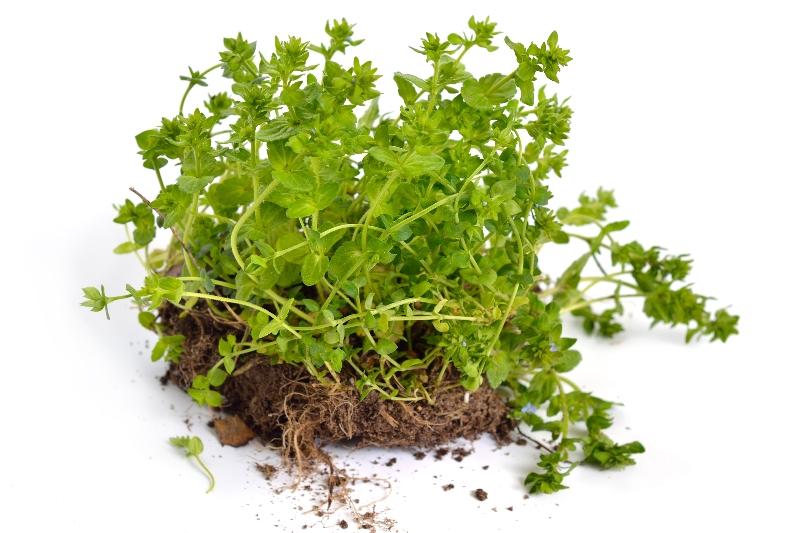
How do these speedwells differ?

Physical features: leaf and flower traits

One trait to examine for species identification is the leaf shape and margin (the leaf edges). Another distinguishing trait is how the flowers and leaves are arranged on and attached to the stem.

  • Are the leaves opposite (pairs of leaves attach to the stem directly across from each other) or alternate (leaves attach in an alternating pattern along the stem)?
  • The flowers arise from leaf axils (where a leaf attaches to the main stem), but are the flowers on stalks or do they look nearly stalkless and nestled close to the main stem?
  • Do the leaves have a stalk (petiole, which in these Veronica species is only a few millimeters long) connecting them to the stem, or are they sessile (stalkless)?

For all of the following species in the comparison chart, the leaf arrangement is opposite near the base of the plant (on foliage-only stems) and alternate on the upper (flower-bearing) stems. For some speedwell species that are not included here (due to their more distinctive appearance and not being common lawn or garden bed weeds), all of the leaves would be opposite in arrangement.

Life cycles

Some speedwell species are annuals while others are perennials. Annual plants have a one-year life cycle; perennial plants live for several years.

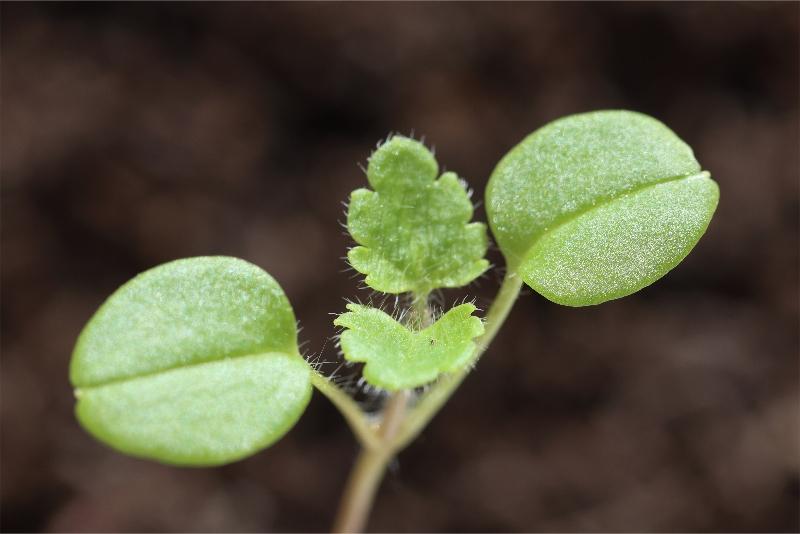
  • Winter annual seeds germinate starting in autumn; the young plants overwinter, and they mature and flower in spring. Seeds ripen before the plant dies by summer. Sometimes winter annual seeds germinate in early spring instead of the prior autumn, or even later into the growing season if temperatures stay cool.
  • Summer annual seeds germinate in spring; the plants grow and bloom in summer, and ripen seeds prior to dying by autumn or early winter.
Distinguishing features of six speedwell species
TraitField SpeedwellCorn SpeedwellSlender SpeedwellIvy-leaved SpeedwellPersian SpeedwellThyme-leaved Speedwell
Flower stalklongvery short or not visiblelonglonglongvery short or not visible
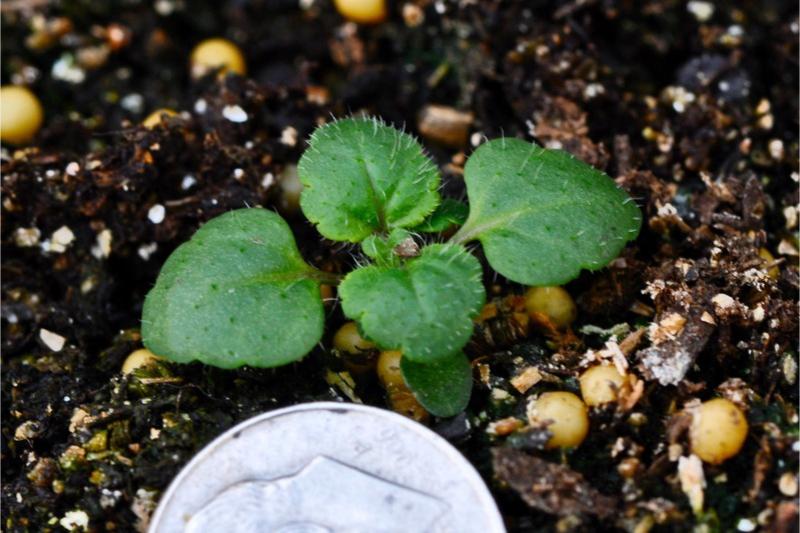
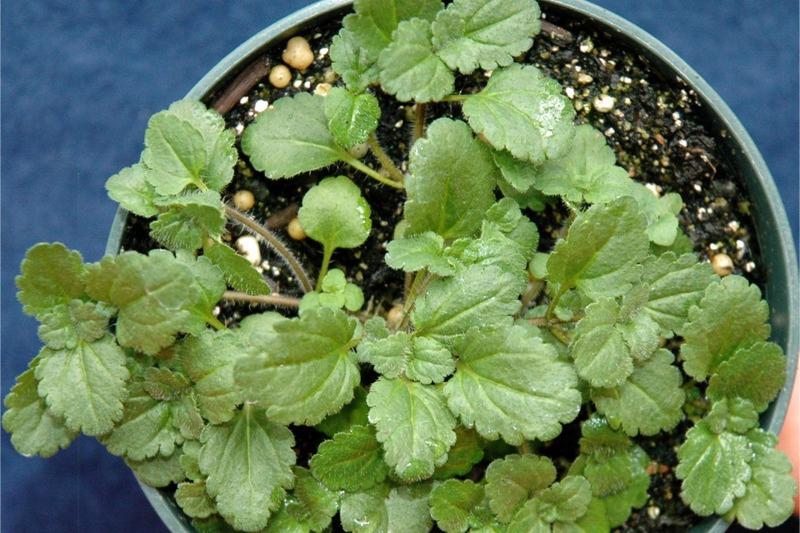
Leaf shapelarger than corn speedwell; ovate shape with coarse marginal teeth (serrate); hairyegg-shaped (longer than wide) or rounded, with rounded marginal teeth; leaves on upper flowering stems are smaller and narrower, with two short basal lobes; sparsely hairyrounded or kidney-shaped, with scalloped margins (rounded teeth); leaves are more consistent in size between lower and upper (flowering) stems; sparsely hairyovate or kidney-shaped, with 3 or 5 main lobes; hairylarger than corn speedwell, with fewer hairs and deeper marginal lobes; broadly ovate, with pointed or rounded marginal teeth; leaves are more consistent in size between lower and upper (flowering) stems; hairyoval or egg-shaped with subtle marginal teeth; leaves on upper flowering stems are smaller and narrower, with minimal marginal teeth; not usually visibly hairy
Leaf attachmentall leaves have a petioleopposite leaves have a petiole, alternate leaves are sessileall leaves have a petioleall leaves have a petioleopposite leaves have a petiole, alternate leaves are sessileopposite leaves have a petiole, alternate leaves are sessile
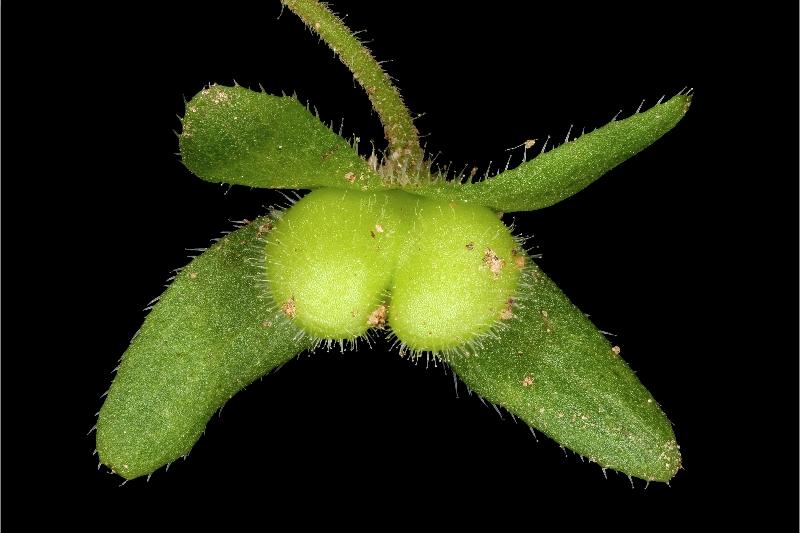
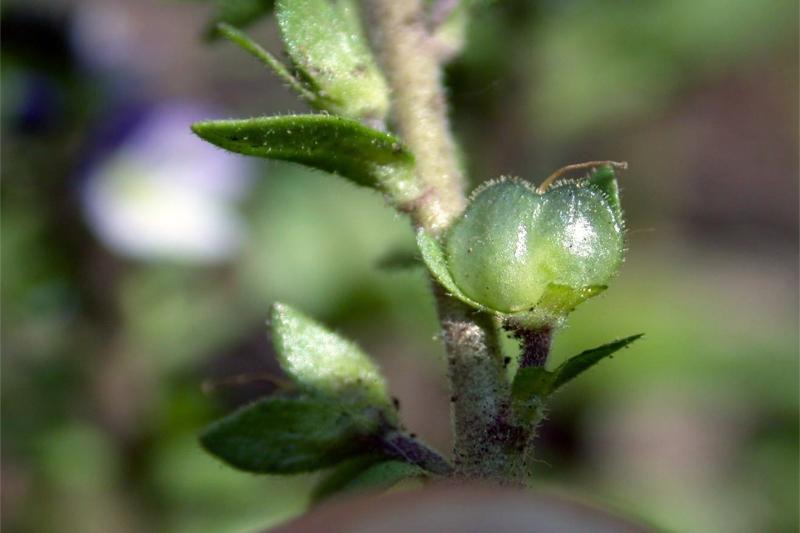
Seed podheart-shaped (two-lobed) with a deep, narrow notch on the top; sparsely hairyheart-shaped (two-lobed) with a deep notch on the top; hairymay be absent or empty; heart-shaped (two-lobed) with a deep notch on the top; hairyfour-lobed; sparsely hairyheart-shaped (two-lobed) with a shallow notch on the top; minimally to moderately hairyheart-shaped (two-lobed) with a deep notch on the top; subtly pubescent
Life cyclesummer annualwinter annualperennialwinter annualwinter annualperennial

Field speedwell

Field speedwell stems are hairy and tend to stay prostrate (low-growing and creeping/sprawling), without becoming upright in bloom the way Persian, ivy-leaved, and thyme-leaved speedwells can.

Corn speedwell

Corn speedwell grows in full sun or semi-shade, in soils that skew dry, with a sandy or rocky texture. It may also grow in shaded lawn areas. Stems can root at the nodes (where leaves join the main stem) when laying on the ground, and plants branch at the base.

In Maryland, it blooms throughout spring, primarily in April and May. Its flowers are about 2 to 4 millimeters wide, and may be white or the typical blue color.

Slender speedwell

Slender speedwell branches at the base, and the intermingled stems can root at the nodes. The leaves can be evergreen, but they may also shed for the winter (and some stems might also die back). Heat waves and drought can prompt leaf shed, and the plants regrow when the weather moderates. Although adaptable to dry sites in full sun, slender speedwell grows well in semi-shaded areas with rich, moist soil.

Ivy-leaved speedwell

Ivy-leaved speedwell plants branch at the base, and the peak of bloom is in spring (although, as with other speedwell species, flowering can continue later into the year). The stems are hairy.

Persian speedwell

Persian speedwell plants branch at the base, and the peak of bloom is in spring (although, as with other speedwell species, flowering can continue later into the year).

Thyme-leaved speedwell

Most vegetative growth occurs in the autumn and flowering peaks in the spring, although blooms can also appear further into the growing season. The plant branches at the base and the slightly-hairy stems can root at the nodes.

Conditions that favor speedwell growth

Speedwells more easily compete with turfgrass in low-fertility soils (when lawns are under-fertilized), as well as in somewhat-dry, rocky or sandy-textured soils; they can even grow in pavement cracks. They prefer full sun, but grow well enough in part shade to compete with sun-deprived turfgrass. The delicate stems are not very tolerant of heavy foot traffic or cultivation (tilling).

Speedwell stems that may grow upright in undisturbed areas can become more prostrate in areas that are regularly mown.

Speedwell management in lawns

General lawn care practices that discourage weeds

Maintain healthy, dense turf that can compete with weeds and prevent weed germination and establishment. Fertilize the lawn as recommended (based on season and turf type), mow high, and overseed cool-season lawns each autumn to keep the lawn dense and better able to crowd-out seedling weeds. Core-aerate to reduce soil compaction. Learn about fertilizing, mowing, overseeding, and aeration in the resource: Maintaining an Established Lawn.

Lawn care and maintenance

Mechanical management

Remove speedwell plants (including the root system) by hand or with a manual weeding tool. Doing this when the soil is moist makes the task easier. Pulling up or digging out individual plants is a viable option for scattered plants in a garden bed or a small area of lawn (when the plants are not yet abundant), but would not be practical for heavier infestations.

Manage Weeds Without Chemicals

Chemical management

Herbicide use should always be a last resort when managing weeds. Check for any local pesticide restrictions before buying and applying a product. For example, the Montgomery County pesticide law does not allow most synthetic pesticides (which includes herbicides) to be used on lawns. The active ingredient glyphosate is also prohibited on lawns in Baltimore City.

Learn about herbicide classifications and terminology:

Herbicide Options for Managing Common Lawn Weeds

Pre-emergent herbicide

A pre-emergent applied in late summer or early autumn can prevent the winter annual species of speedwell from sprouting during their main season for germination. However, when applied to a lawn, you may not be able to sow cool-season grass seed like fescue around the same time. A pre-emergent would need to be applied in spring to target the main germination period for field speedwell.

Post-emergent herbicide

Spot-treat individual, actively-growing speedwell plants or infested areas with a liquid broadleaf herbicide in early spring. Look for a product with one or more of the following active ingredients: 2,4-D, MCPP (mecoprop), dicamba, or triclopyr. An application of non-selective herbicide may work, but would also damage any turfgrass exposed to the herbicide.

CAUTION: Do not spray herbicides containing dicamba over the root zone of desirable trees and shrubs. Roots or leaves may absorb this ingredient and be substantially damaged. Refer to the product label for other precautions.

References

Neal, J.C., Uva, R.H., et. al. (2023). Weeds of the Northeast. (Second edition.) Comstock Publishing Associates.

Royer, F., and Dickinson, R. (1999). Weeds of the Northern U.S. and Canada. The University of Alberta Press.

Still have a question? Contact us at Ask Extension.