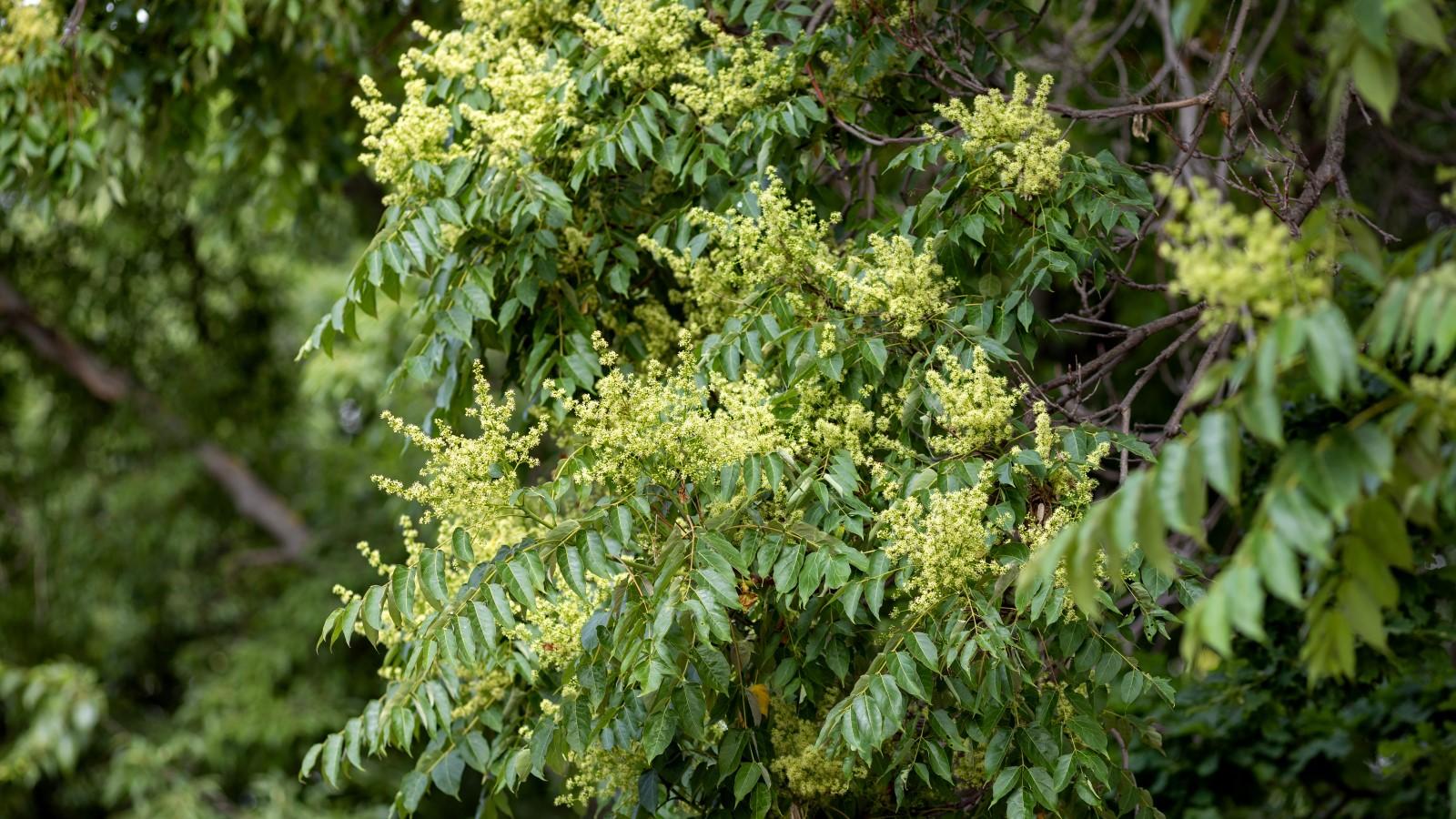
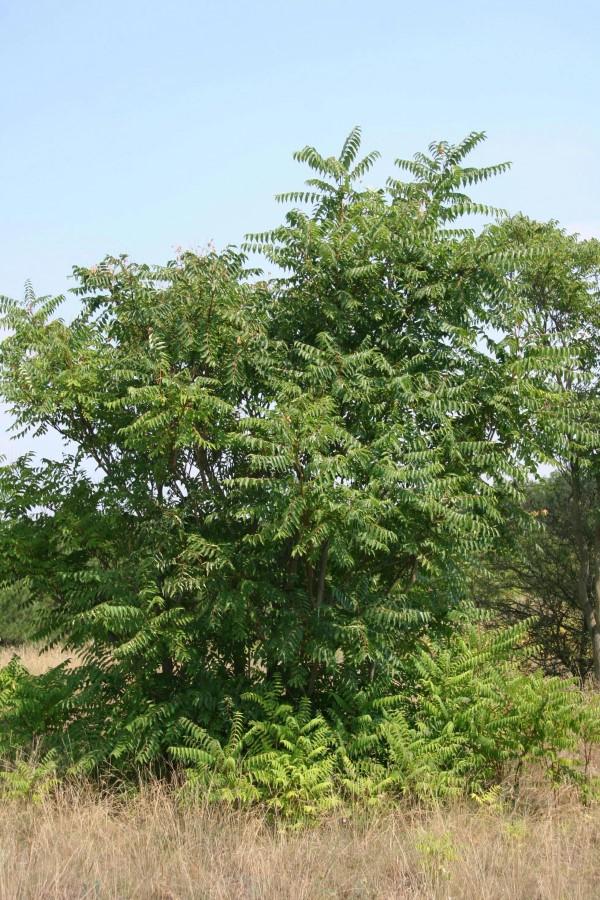
Flowering tree-of-heaven (Ailanthus altissima). Photo licensed by Adobe Stock.
Updated: April 28, 2026
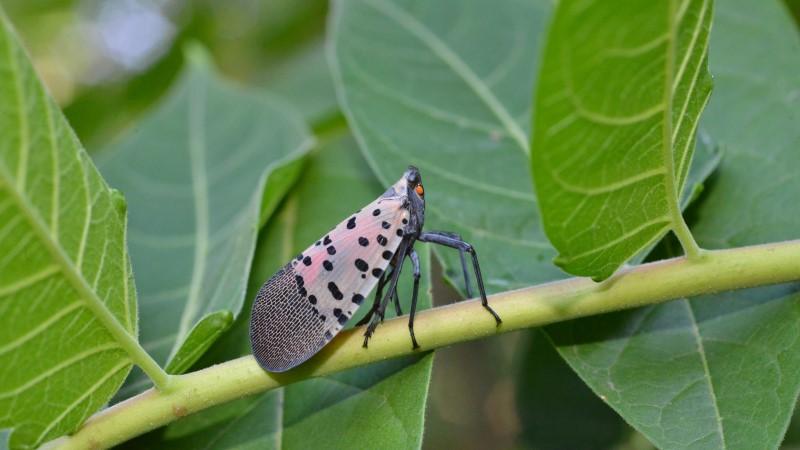
Tree-of-heaven (Ailanthus altissima) is a flowering tree native to Eastern Asia. It was introduced to the U.S. in the mid-1700s and has since become invasive. This species is the preferred host plant for the invasive insect spotted lanternfly.
An adult spotted lanternfly perched on the leaf stem (petiole) of tree-of-heaven, its preferred host plant. Photo licensed by Adobe Stock.
Physical features of tree-of-heaven
Tree-of-heaven is a large-sized deciduous tree (sheds its leaves in autumn). It blooms from late spring into early summer, pollinated by insects. Seeds ripen by autumn and remain on the stems into winter. This species is dioecious: it bears male and female flowers on separate plants. Only female trees produce seeds, which are dispersed by the wind and by water. All plant parts, especially leaves, have an unpleasant odor when rubbed or crushed.
Growth rate and habit: rapid growth rate (several feet per year); canopy typically taller than wide or rounded in shape
Typical mature size: up to 80 feet tall; width variable
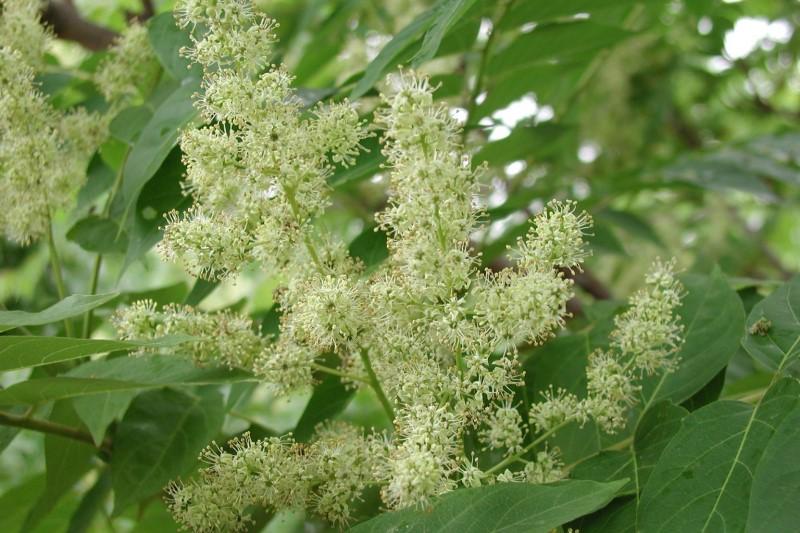
Blooms: clusters at the ends of branches of small, pale green, 5-petaled flowers; flowers tend to be more prominent on male-flowered trees
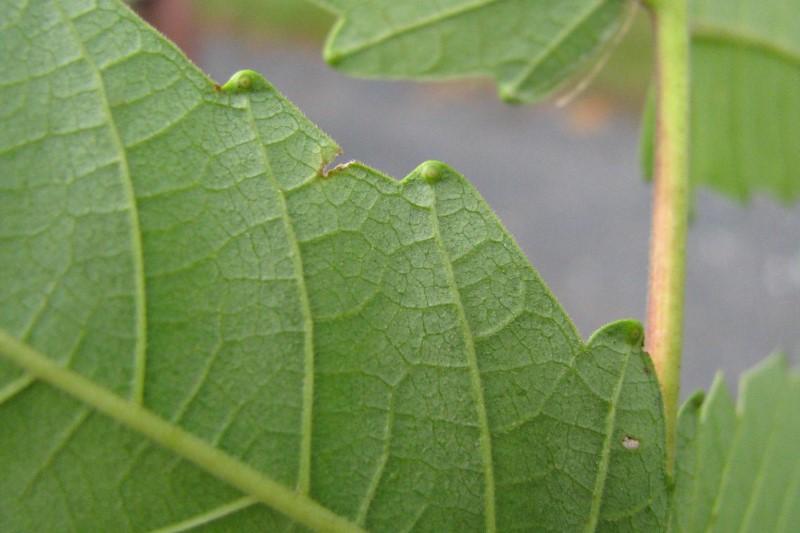
Leaves: compound, with 11 to 25 leaflets; smooth margins except for 1 to 2 short projections (teeth) near the leaf base that contain small glands; large size, with the entire leaf ranging from 1 to 4 feet long; alternate arrangement on the stems
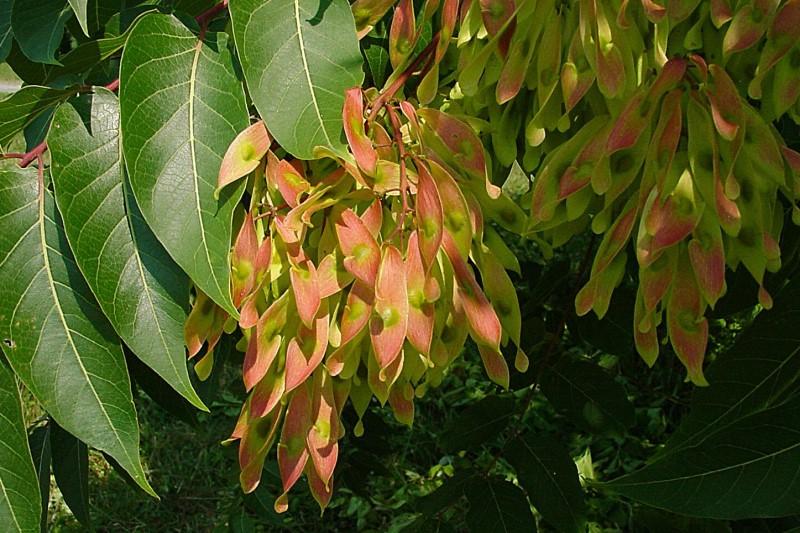
Seeds: drooping clusters of winged seeds (samaras); each seed is surrounded by one slightly twisted wing; initially pale green in color, developing a red-orange blush before turning brown when dry and papery
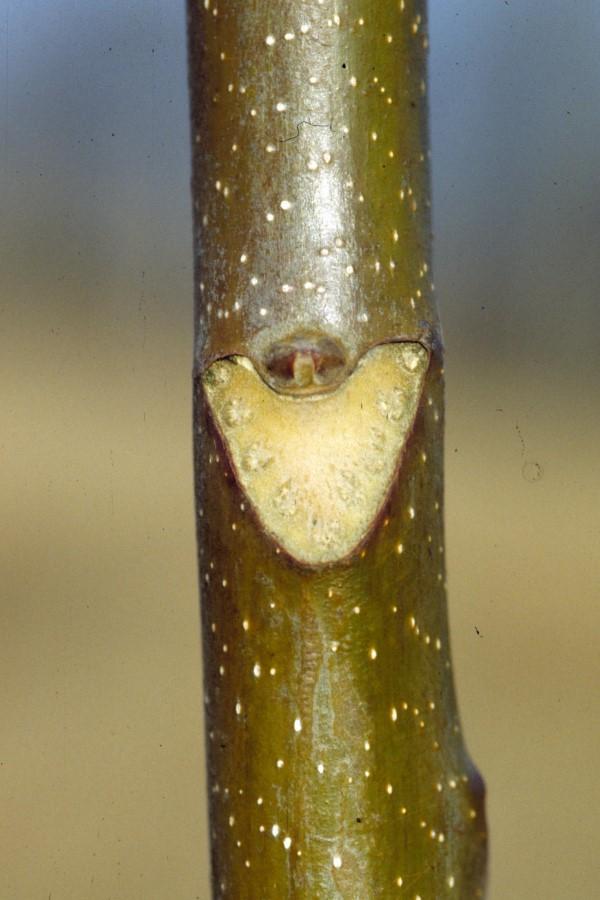
Stems: large, narrow heart-shaped leaf scars on the twigs (the location the petiole, or leaf stem, attached to the twig); prominent pale-colored lenticels (pores in the bark that look like coarse speckles)
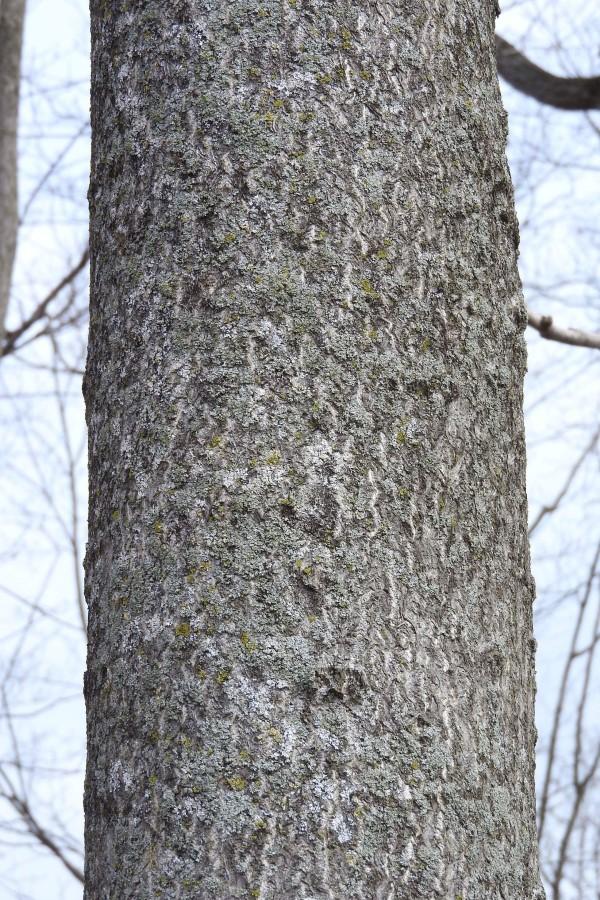
Bark: pale gray bark with a relatively even surface (no deep fissures)
Greenish-white flower clusters on the branch tips of tree-of-heaven. Photo: Leslie J. Mehrhoff, University of Connecticut, Bugwood.org
Hanging clusters of winged tree-of-heaven seeds blushing orange as they mature. Photo: Chuck Bargeron, University of Georgia, Bugwood.org
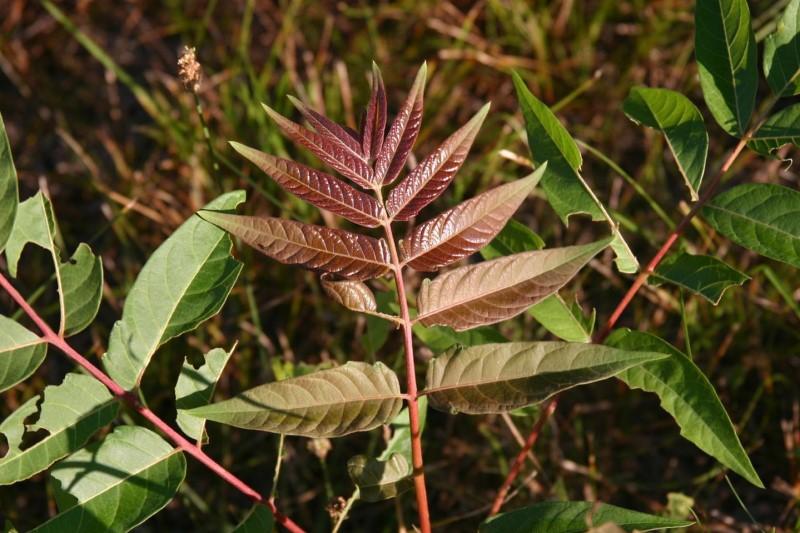
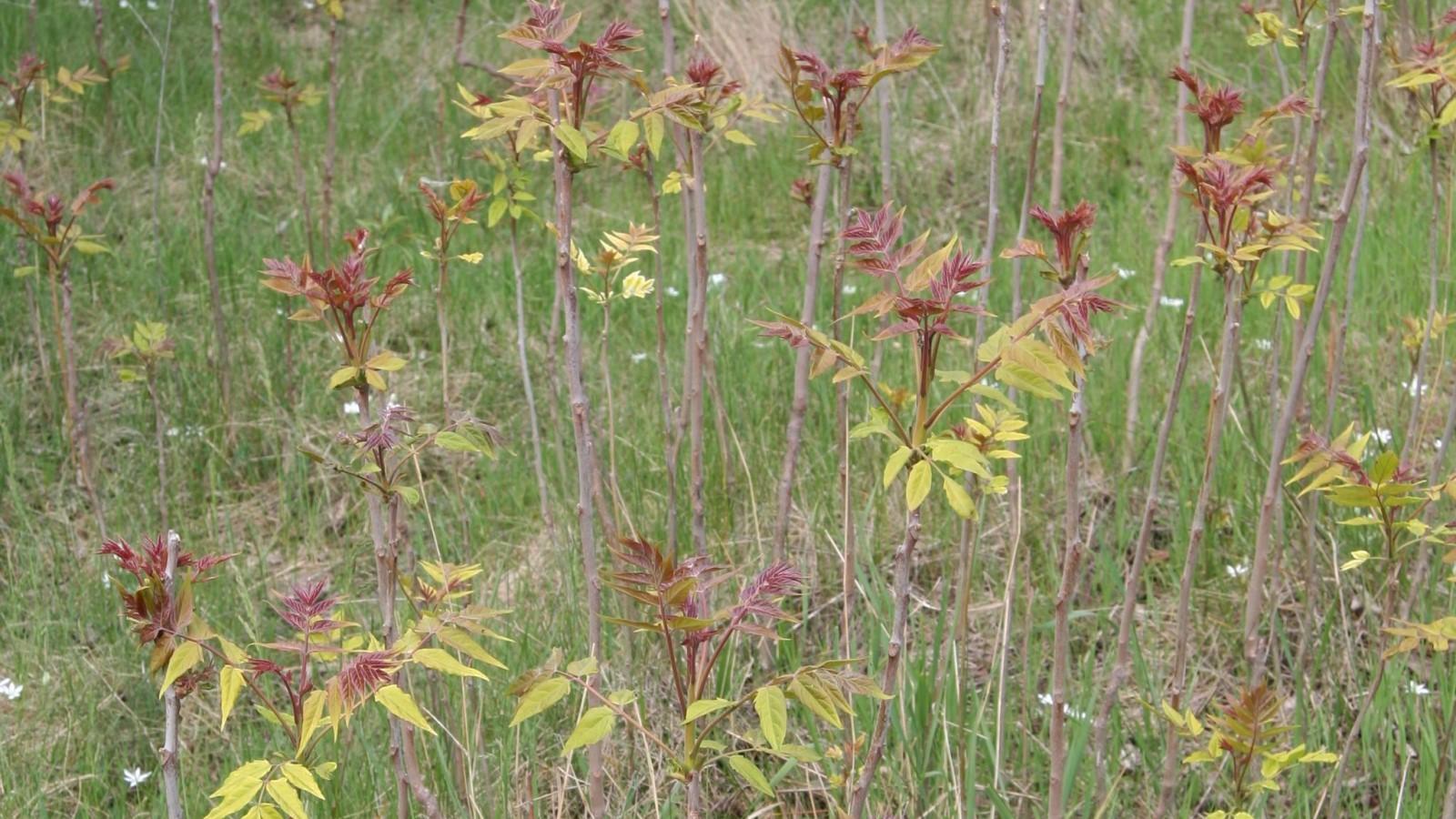
Young tree-of-heaven leaves often have a reddish-plum or bronze blush. Photo: Leslie J. Mehrhoff, University of Connecticut, Bugwood.org
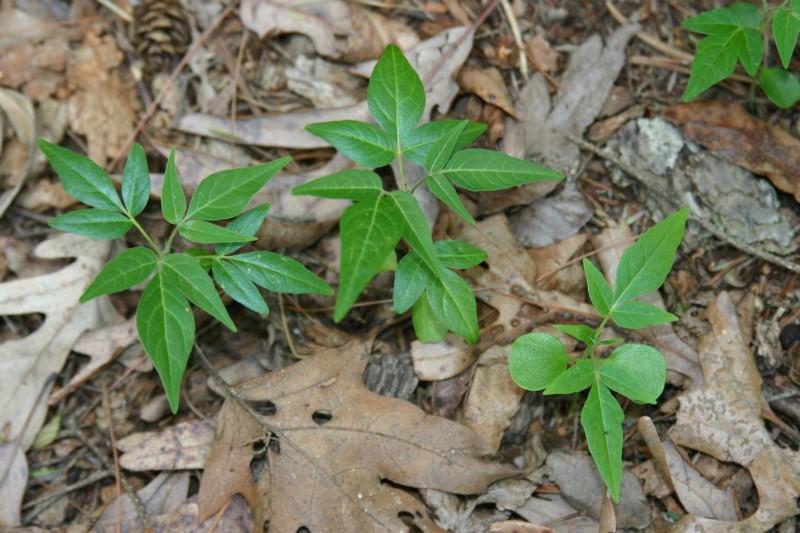
Tree-of-heaven seedlings have few leaflets and may be hard to distinguish from other species. When crushed, they will still possess the characteristic unpleasant scent. Photo: Leslie J. Mehrhoff, University of Connecticut, Bugwood.org
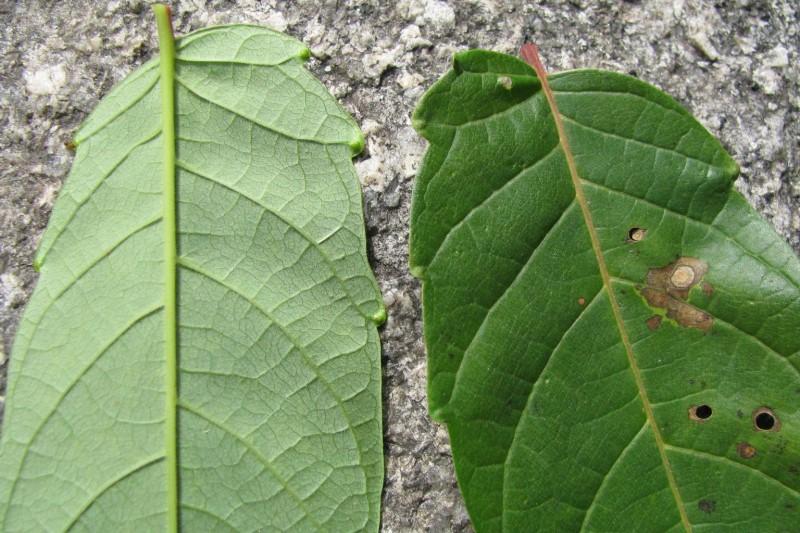
Short, blunt-tipped, glandular teeth at the base of tree-of-heaven leaflets are a characteristic trait. Photo: Leslie J. Mehrhoff, University of Connecticut, Bugwood.org
Small, bump-like glands on the teeth at the base of tree-of-heaven leaflets. Photo: Leslie J. Mehrhoff, University of Connecticut, Bugwood.org
Tree-of-heaven leaf scars are roughly shaped like a narrow heart. The white speckles on the bark are lenticels. Photo: Daniel Herms, The Ohio State University, Bugwood.org
Tree-of-heaven bark is gray and relatively flat, lacking deep furrows. Photo: Richard Gardner, Bugwood.org
Native plant look-alikes
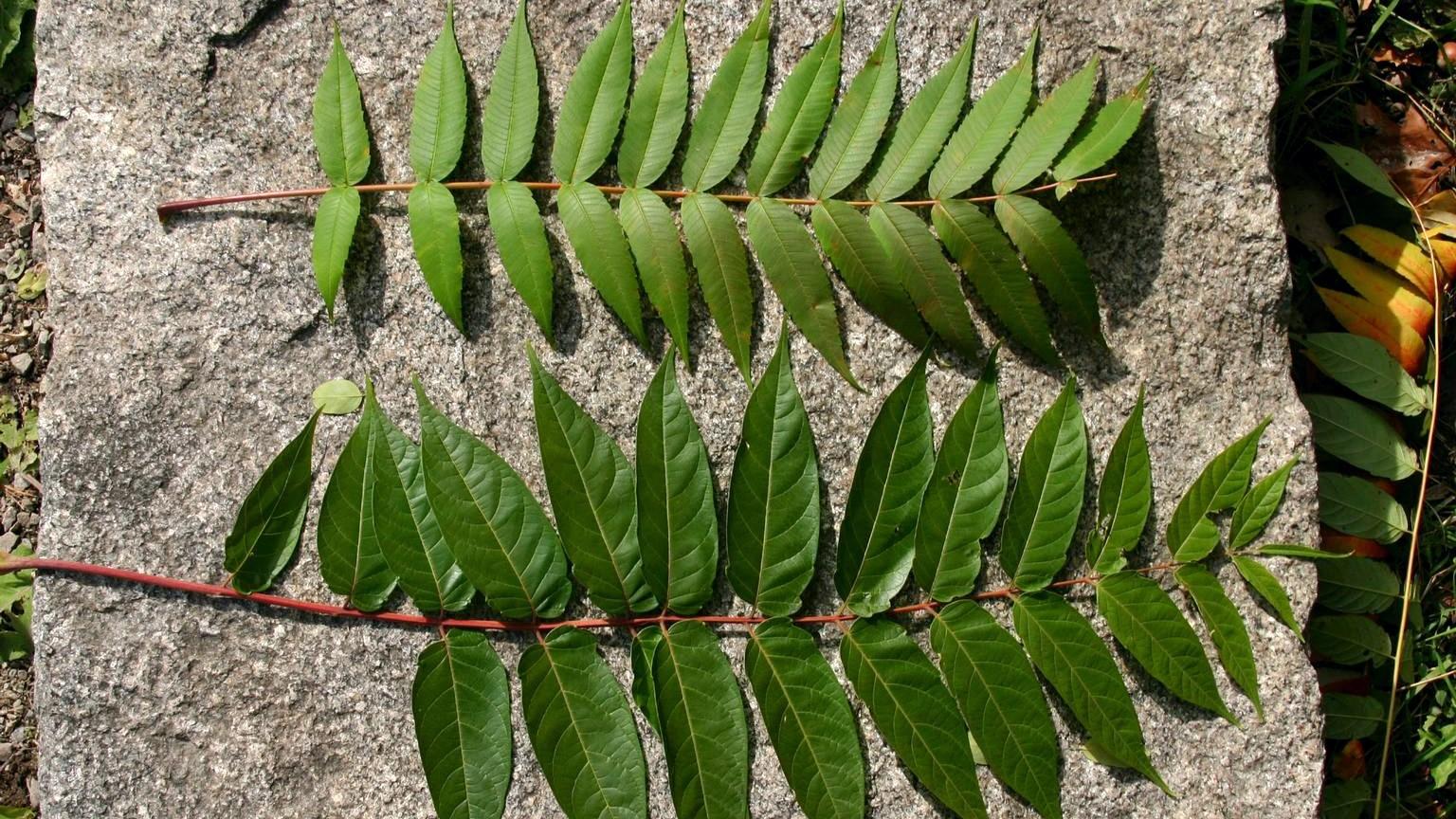
The large compound leaves and numerous, pointed leaflets of tree-of-heaven look similar to several sumac species (Rhus) and to black walnut (Juglans nigra), both of which are native in Maryland. The flowers and seeds of these three genera are easier to distinguish from one another than leaves alone, though with close inspection, the foliage is also distinctive for each species. Toothed basal leaf glands are only present in tree-of-heaven, and although black walnut leaves have a pungent smell when crushed, it is a different odor than that of tree-of-heaven.
Comparison of the compound leaves of sumac (top) and tree-of-heaven (bottom). The short teeth at the base of tree-of-heaven leaflets gives them an irregular shape. Photo: Leslie J. Mehrhoff, University of Connecticut, Bugwood.org
Conditions that favor growth
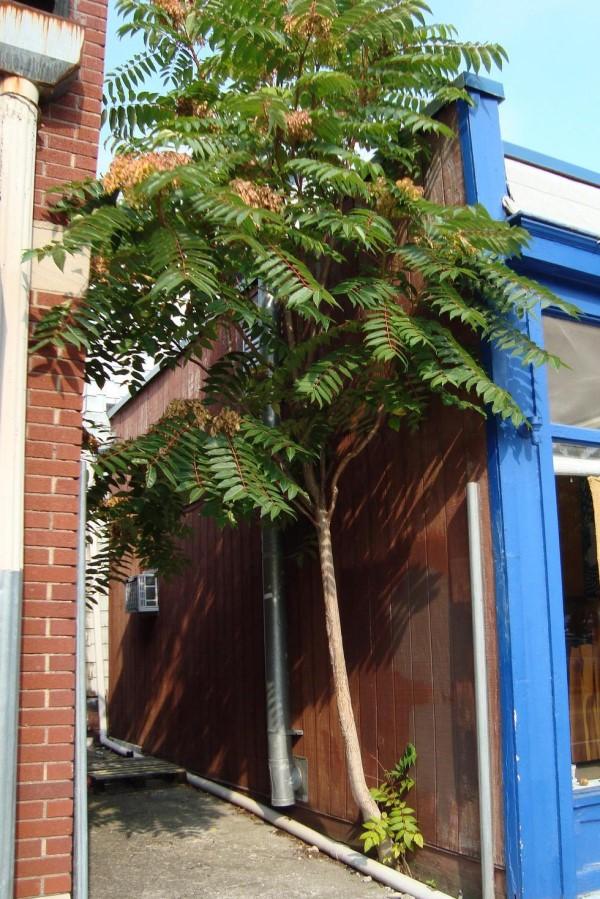
Tree-of-heaven is very adaptable and tolerant of harsh soil conditions, including urban sites with little root room and compacted or polluted soil. Its growth is best in full sun, since it has less tolerance for shade.
Tree-of-heaven is very tolerant of stressful urban conditions. They can grow in pavement cracks and narrow strips of soil next to building walls. Photo: Annemarie Smith, ODNR Division of Forestry, Bugwood.org
Seedlings and root suckers can expand a colony of tree-of-heaven. Photo: Robert Vidéki, Doronicum Kft., Bugwood.org
Removing tree-of-heaven
Cutting the tree down will not eradicate tree-of-heaven unless additional or follow-up measures are taken. Cut trees can easily regrow from any roots that are left alive, producing prolific suckers (stems arising from the root system). The most efficient and effective removal method is to use systemic herbicide to kill the roots.
Mechanical control
Trees felled by a storm or which are cut down before the application of (or in lieu of) herbicide that then regrow can be managed without the use of chemicals, but the process takes more effort and time. Any new sprouts must be removed promptly so they do not have time to make and store energy reserves for regrowth. Be vigilant for sucker growth to cut down as soon as it appears. Repeat the process until the roots are exhausted of energy and cannot generate any more sprouts.
Prolific tree-of-heaven suckers with wine-red and yellowish young leaves that will mature to green. Photo: Robert Vidéki, Doronicum Kft., Bugwood.org
Chemical control
A systemic herbicide applied to the leaves, trunk, or bark will be absorbed and kill the roots. This process takes time, and may require about a month of waiting period between herbicide application and the opportunity to cut down a treated tree without risking regrowth. Commonly-used systemic ingredients include glyphosate and triclopyr. Follow all product label directions for use.
Applications of systemic herbicide are most effective when applied in late summer or early fall (about July until the onset of autumn leaf color). This period of time is when trees move carbohydrates down into their roots for winter; applied herbicide will more easily be transported by sap flow.
Follow the Tree-of-Heaven Control Methods and Calendar from Penn State Extension for procedures and timing. For residential gardeners, the "hack and squirt" and "foliar" treatments are the easiest options that are recommended.
Tree of Heaven: Identification and Removal
Tree-of-Heaven Control Strategies | Penn State Extension
Additional resources
Tree-of-Heaven | USDA National Invasive Species Information Center