

June 2026 | Volume 17, Issue 3
Inside this Issue:
- PULA Tips Every Farmer Should Know
- Using Summer Annual Forages as an Alternative to Double-Crop Soybean
- Deere & Company Repair Services Antitrust Litigation – Understanding the Preliminary Settlement Approval and Your Rights
- Soybean Replant Decisions: Weighing the Economics Before Turning the Planter Around
- A slip-n-slime slug soiree or is it a bean leaf beetle bash? Identifying pest activity in seedling soybeans
- Corn Fungicide ROI Calculator
- May 2026 Grain Market Report
- Fundamentals of Nutrient Management Training – June 24–25, 2026
-
Regional Crop Reports
Regional Crop Reports -
Weather Outlook
Weather Outlook -
University of Maryland Agriculture & Food Systems Faculty Directory
University of Maryland Agriculture & Food Systems Faculty Directory
PULA Tips Every Farmer Should Know
By Kurt Vollmer, Ph.D., Extension Specialist Weed Management.
Farmers across the country may be hearing a new term tied to pesticide applications: PULA.
PULA stands for Pesticide Use Limitation Area. The U.S. Environmental Protection Agency, Fish and Wildlife Service, and National Marine Fisheries Service created these areas to help protect endangered and threatened species and their critical habitats from possible pesticide exposure.
PULAs are based on scientific data, including known species locations, habitat areas and critical habitat maps. One PULA may include protections for several species.
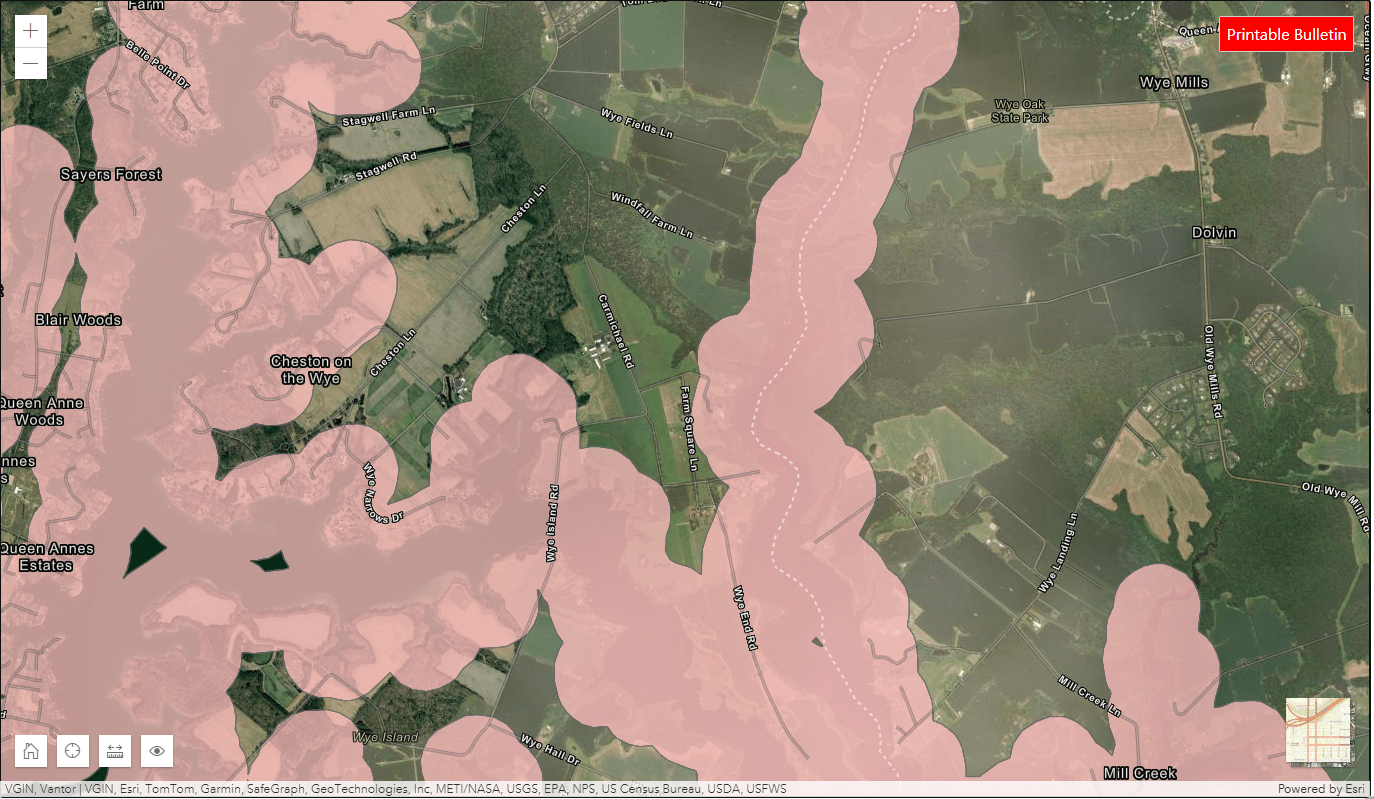
The EPA uses an online system called Bulletins Live! Two to identify where PULAs are located. Farmers and pesticide applicators can search their farm location and print a bulletin showing whether special rules are required before spraying.
To use the system, applicators can enter a farm address or zoom in on the map. Users also must choose the month they plan to spray because restrictions can vary throughout the year. Fields marked in pink are considered PULAs. Clicking on a highlighted area provides more information and allows users to print a bulletin for their records.
Farmers whose fields fall inside a PULA can still use many pesticide products. In most cases, the bulletin requires additional steps beyond the pesticide label instructions rather than a complete ban on spraying. Those measures may include buffer zones, conservation practices, or changes in application methods to reduce risk to listed species.
PULAs may change over time as pesticides are registered or re-registered, species maps are improved, and new information becomes available. However, a bulletin printed from Bulletins Live! Two remains legally valid for six months before a planned application date, even if requirements are later updated.
Farmers and applicators are advised to check Bulletins Live! Two before spraying to stay compliant and avoid unexpected restrictions during the growing season.
Fundamentals of Nutrient Management Training – June 24–25, 2026
Build your knowledge and prepare for the Maryland Nutrient Management Certification Exam at this two-day training hosted by the Maryland Department of Agriculture. Learn key topics including nutrient management regulations, soil science, fertility, nutrient cycles, and plan development taught by university and government experts.
Ideal for certification candidates, farmers, consultants, and natural resource professionals looking to sharpen their skills.
The $65 registration fee (non-refundable) includes training materials, reference manuals, and breakfast and lunch both days. Space is limited, and pre-paid registrations are accepted on a first come, first served basis. Register by June 12, 2026.
For registration and more details about Fundamentals of Nutrient Management Training

Maryland Crop Scouting School
Join us for a hands-on Crop Scouting School focused on building practical skills for identifying and managing pests, diseases, and crop issues in the field. Participants will learn how to scout effectively, recognize key problems, and make informed management decisions using Integrated Pest Management (IPM) principles. This program is designed for farmers, crop consultants, and ag service providers looking to improve their field diagnostics and decision-making. This event covers common pests in row crop and vegetable production systems.
WYE Research and education center
Date: June 25, 2026 | Thursday
Time: 9:00 am to 2:45 pm | Cost: $10
Location: Wye Research and Education Center, 124 Wye Narrows Drive, Queenstown, MD 21658
Registration: https://www.eventbrite.com/e/maryland-crop-scouting-school-at-wye-tickets-1988090629591?aff=oddtdtcreator
Central Maryland Research and Education Center (Clarksville location)
Date: September 24, 2026 | Thursday
Time: 9:00 am to 2:45 pm | Cost: $10
Location: Central Maryland Research and Education Center, 4240 Folly Quarter Road, Ellicott City, MD 21042
Registration: https://www.eventbrite.com/e/maryland-crop-scouting-school-at-wye-tickets-1988090629591?aff=oddtdtcreator
Agronomy News is a statewide newsletter for farmers, consultants, researchers, and educators interested in grain and row crop forage production systems. This newsletter is published by the University of Maryland Extension, Agriculture & Food Systems Agronomy Team every month during the growing season and will include topics pertinent to agronomic crop production. The subscription is free.