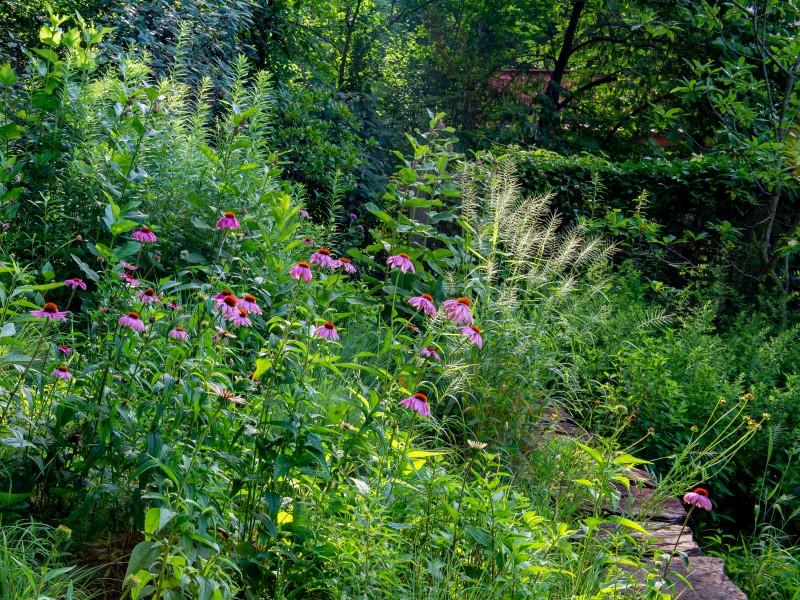
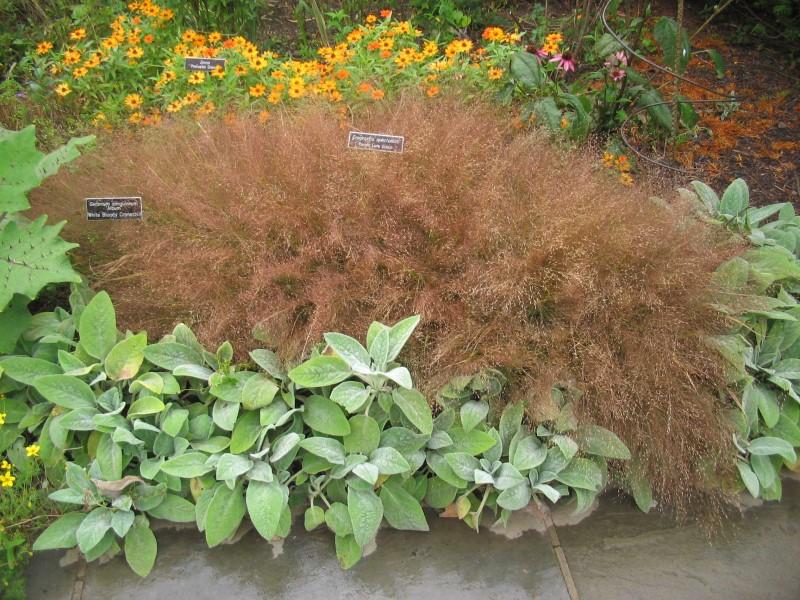
native grasses and other native plants in an urban garden setting

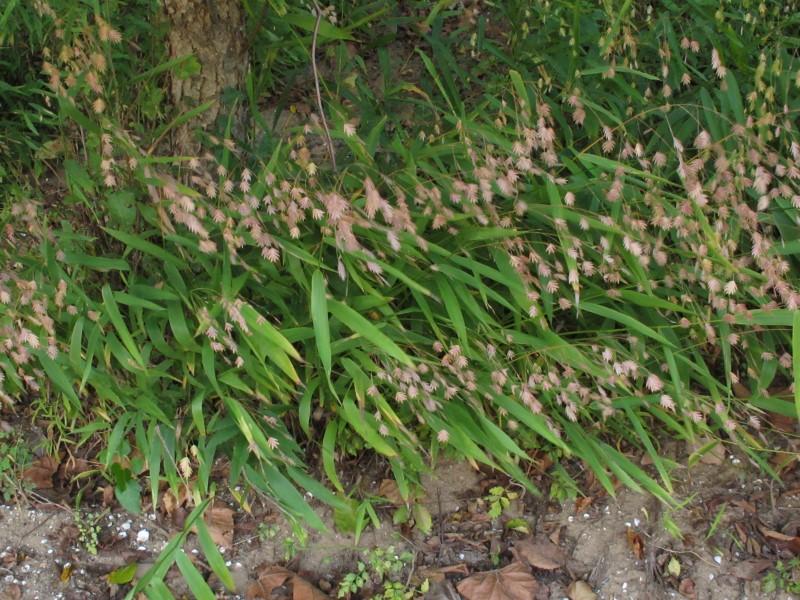
Bottlebrush grass (left) used in an urban native plant garden. Photo: Sara Tangren

Updated: July 16, 2026

Native and ornamental grasses

The term native refers to a plant species that occurs naturally in an ecoregion and habitat over the course of evolutionary time. Because they originated in a particular ecoregion, these species are adapted to local growing conditions and have co-evolved with other native species. To learn more about native plants, refer to What is a Native Plant?

Ornamental is a term used to describe plants that are propagated and grown primarily for aesthetic, rather than ecologically functional qualities. For grasses, ornamental can also help distinguish between turfgrass and grasses used for non-lawn areas, such as decorative plantings or privacy screens. The term is typically often used to describe plants that do not occur naturally in an ecoregion, although native plants can be used ornamentally as well as non-natives.

For many grass species, there are many cultivars (cultivated varieties) available in the nursery industry.
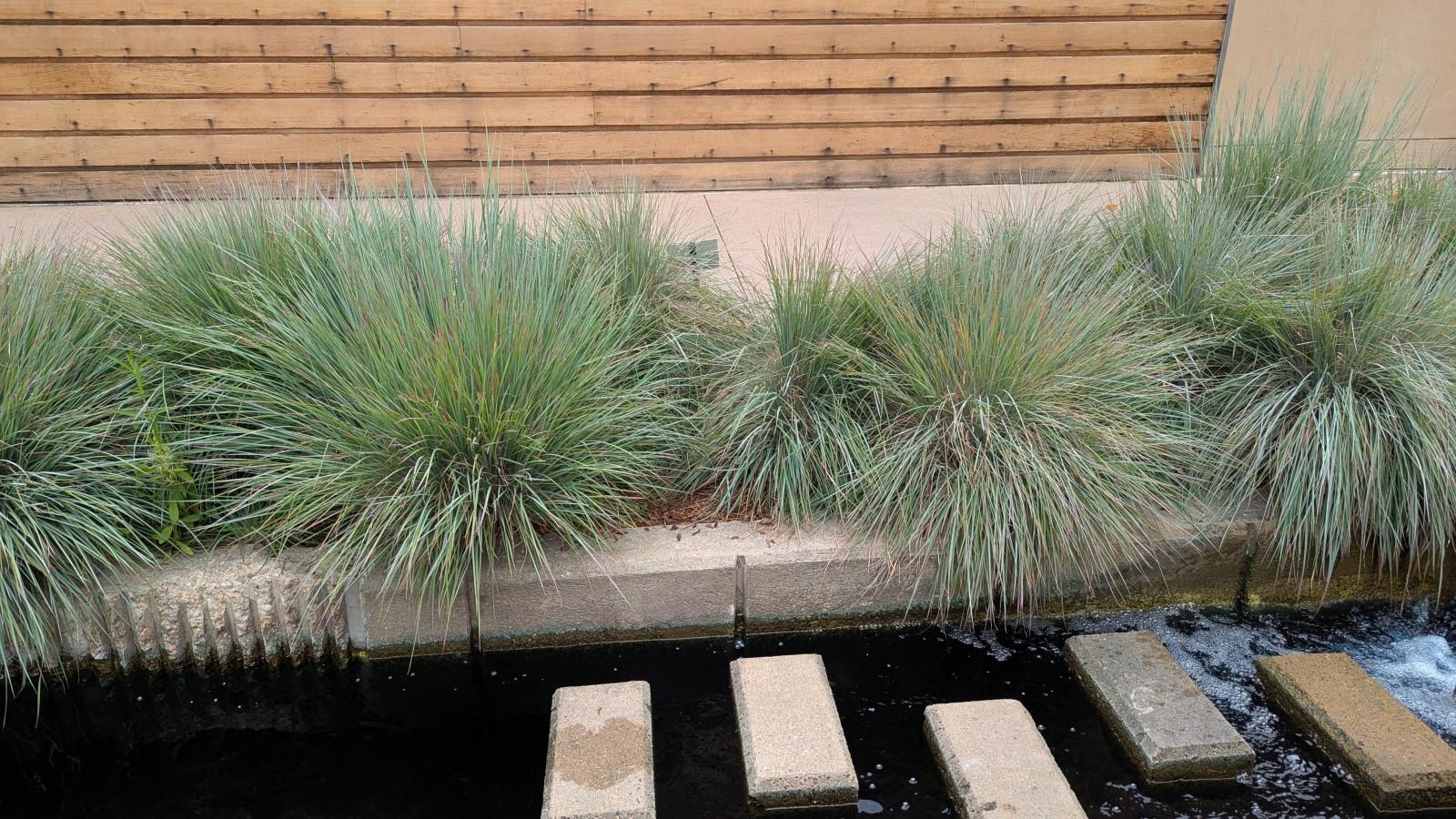
Tufted clumps of blue-green grass about two feet high, growing in a narrow garden bed between a sidewalk and a decorative pond with stepping stones.
Native bluestem (Schizachyrium species) used as an ornamental grass alongside a water feature in a public garden.
Photo: Miri Talabac, University of Maryland Extension
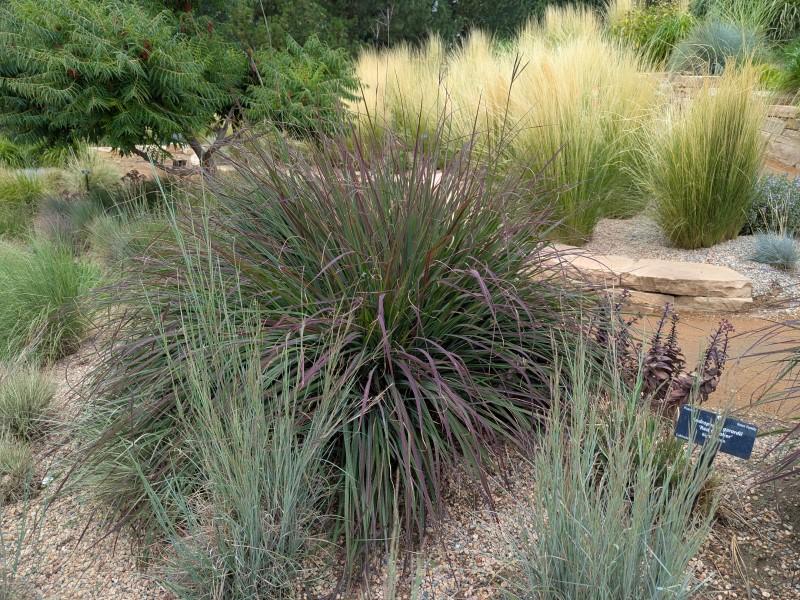
Ornamental grass species for Maryland landscapes

Big bluestem

Botanical name: Andropogon gerardii

One of the tallest native grasses in Maryland at 5 to 8 feet high, this species has a wide native range across the U.S. Its leaves are green to blue-green in summer, and turn orange to copper-red in autumn. The inflorescence (flowering stem) looks similar to a turkey’s foot. Big bluestem is adaptable to a variety of soils, and best used as habitat or conservation restoration if they are too tall for a home landscape.

Blue fescue

Botanical name: Festuca glauca

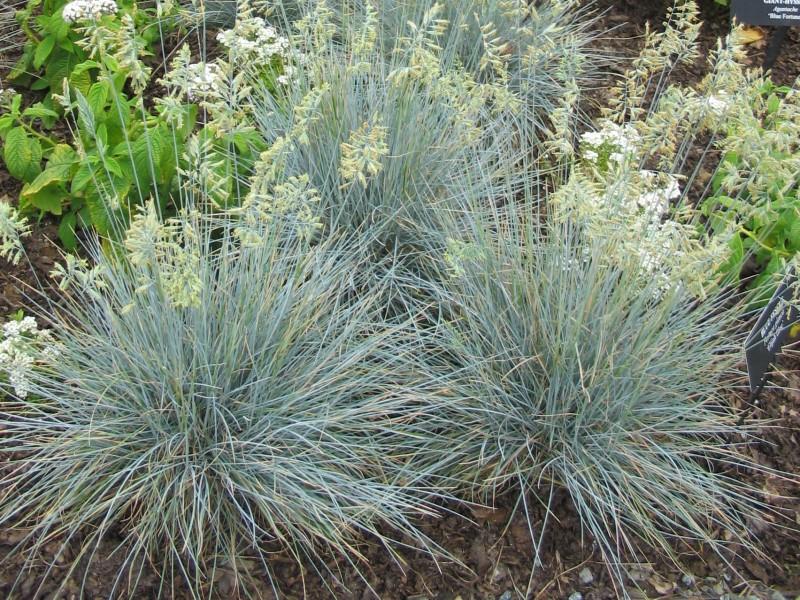
This non-native grass is short and clump-forming with showy, fine-textured blue foliage. It is drought-tolerant, requires excellent soil drainage, and does best in cooler areas; Maryland is near the southern end of its heat tolerance. Common cultivars on the market include ‘Elijah Blue’, ‘Blue Whiskers’, and ‘Beyond Blue’.

Feather reed grass

Botanical name: Calamogrostis x acutiflora

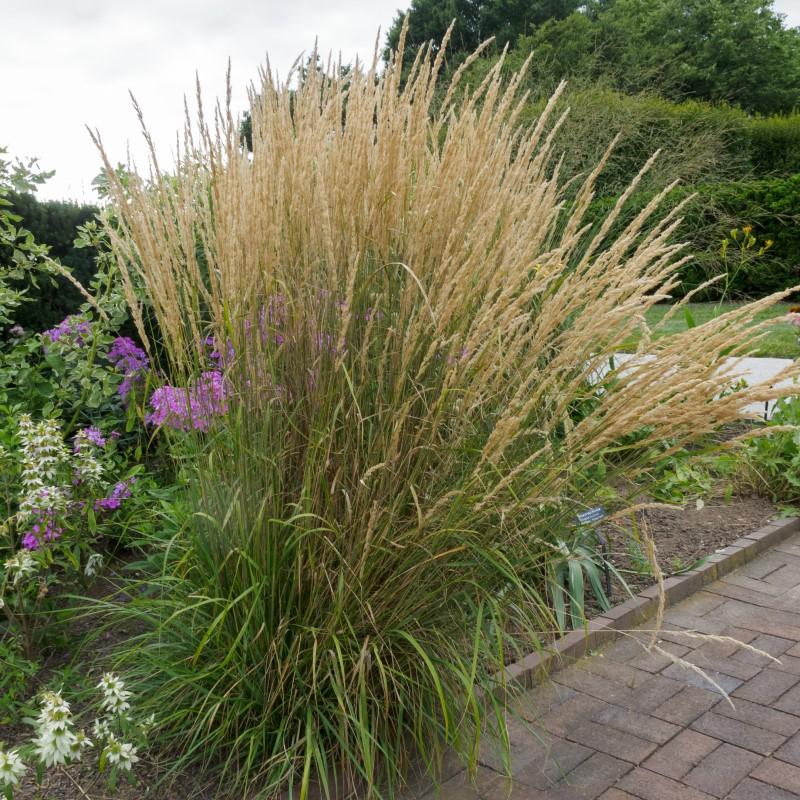
A widely-used non-native species with a tall (3 to 5 feet), upright, slender growth habit. Showy golden seed heads have a feathery appearance. It will grow in a variety of soil conditions. The most commonly planted cultivar is ‘Karl Foerster’.

Switchgrass

Botanical name: Panicum virgatum

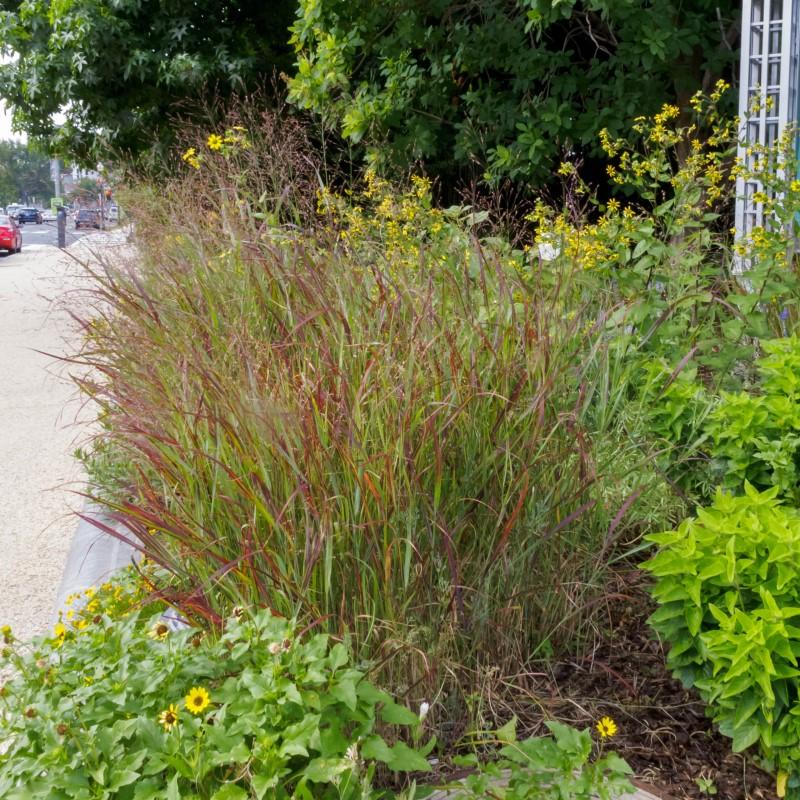
This large native grass reaches 3 to 6 feet tall with bluish-green foliage. Mature height and autumn foliage color depend on cultivar. It is adaptable and has a wide tolerance for dry, moist, sandy, or clay soils. Switchgrass also has some salt tolerance, which makes it useful for the coastal plain. Good for erosion control, it does not tolerate much shade and grows best in full sun. It may readily self-seed. Numerous cultivars are on the market, with older varieties including ‘Northwind’, ‘Shenandoah’, and ‘Heavy Metal’.

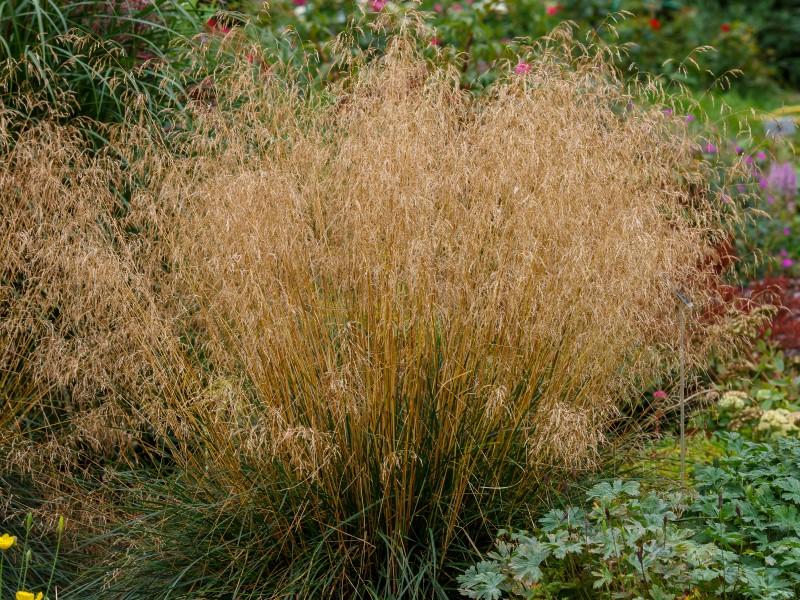
Prairie dropseed

Botanical name: Sporobolus heterolepis

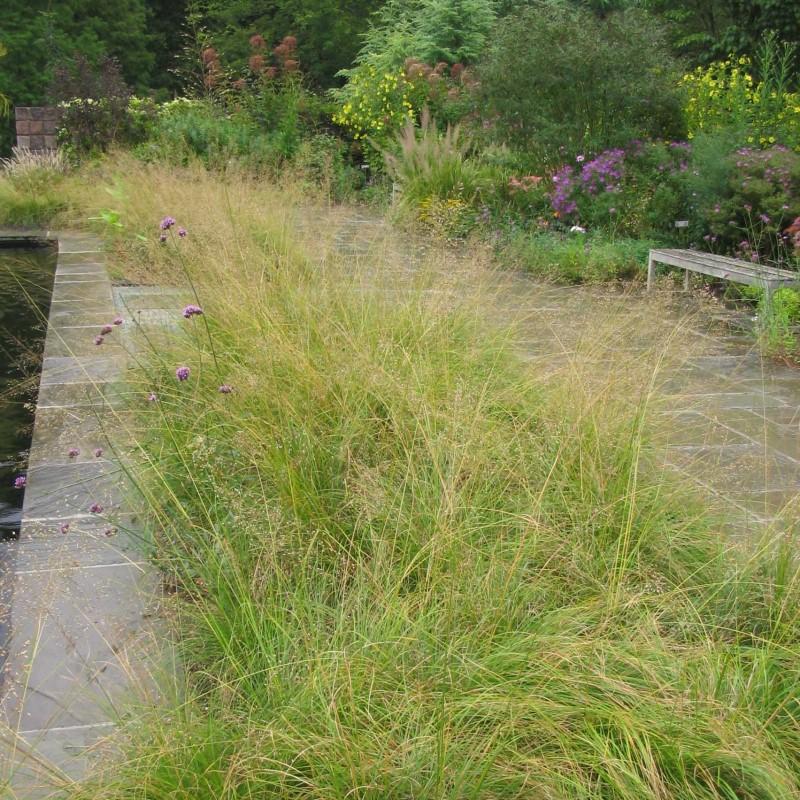
A compact-growing native species, prairie dropseed matures 2 to 3 feet tall. It tolerates a variety of soil types, from heavy clay to dry, rocky sites. Airy panicles of golden-colored seed heads rise above the foliage to add a showy haze over the plants in late summer. It is an effective groundcover when planted in masses or along garden borders.

Little bluestem

Botanical name: Schizachyrium scoparium

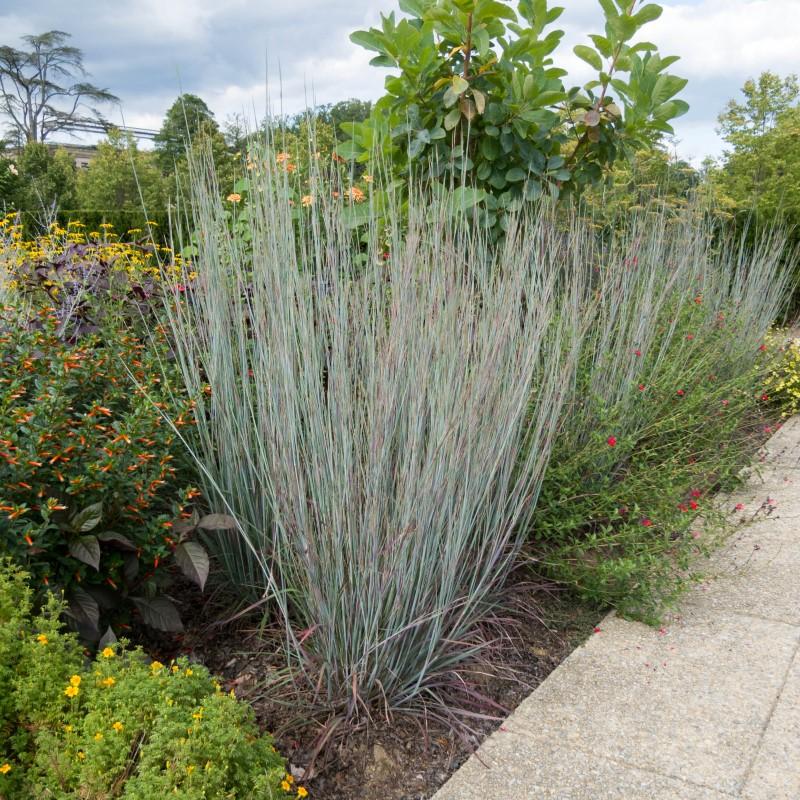
This native species has increased in popularity for home garden use, and many cultivars have been introduced in recent years. The slender foliage is blue-green and turns rosy or orange in the autumn. Maturing 1½ to 3 feet tall, it prefers dry soils in full sun. Like other native grasses, little bluestem provides good wildlife value for birds and insects. Cultivars include ‘Standing Ovation’, ‘Cimmaron’, and ‘Smoke Signal’.

Purple lovegrass

Botanical name: Eragrostis spectabilis

This is a very short (1 to 2 feet tall) native grass with airy clouds of purple seed heads. It prefers average to dry soil moisture, and is tolerant of low-fertility soils and drought. Purple lovegrass is very showy in bloom when used along borders or in mass plantings.

Northern sea oats

Botanical name: Chasmanthium latifolium

Also called inland sea oats and river oats, this native species grows in average to wet soils and is one of the more shade-tolerant grasses. Growing 2 to 5 feet tall, it produces decorative seed heads that ripen from green to bronze in the autumn. This grass self-seeds readily and can spread aggressively, so is best used as a groundcover to out-compete invasive plants or grown among other aggressive native spreaders that can mutually restrain each other's growth.

Tufted hairgrass

Botanical name: Deschampsia cespitosa

One of the more shade-tolerant grass species, it prefers part shade over full sun. The foliage remains semi-evergreen and forms a dense tussock of slender green leaf blades. Its mature height is 2 to 3 feet, and the plant is more showy when massed in woodland gardens or naturalized areas. The subspecies glauca is native in Maryland, but rare and endangered in the wild.

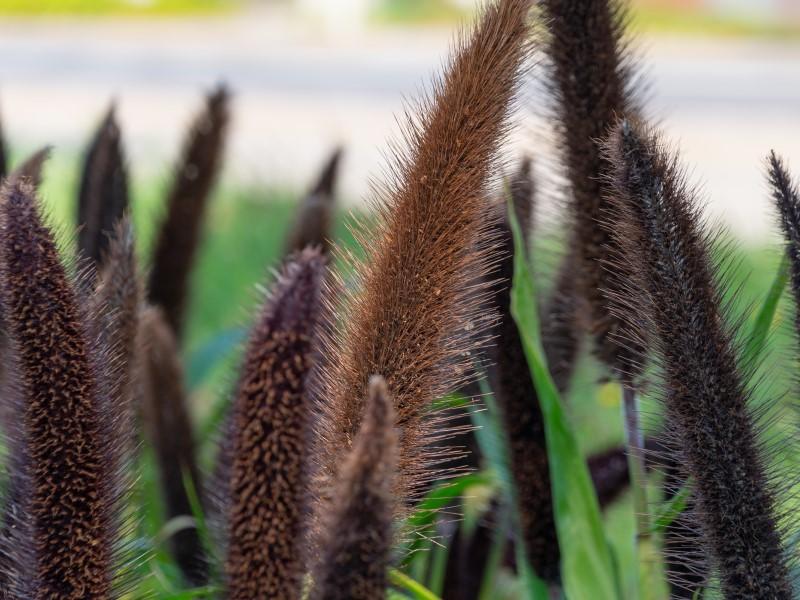
Pearl millet

Botanical name: Cenchrus americanus (formerly Pennisetum glaucum)

Despite the americanus species name, this annual grass is native to Africa, although it rarely escapes cultivation in Maryland. It is most commonly used in the fall for container gardening or temporary harvest décor. The large seed heads may be dried and used in arrangements. Common cultivars include ‘Purple Majesty’ and ‘Purple Baron’ that have purple foliage and/or flowers.

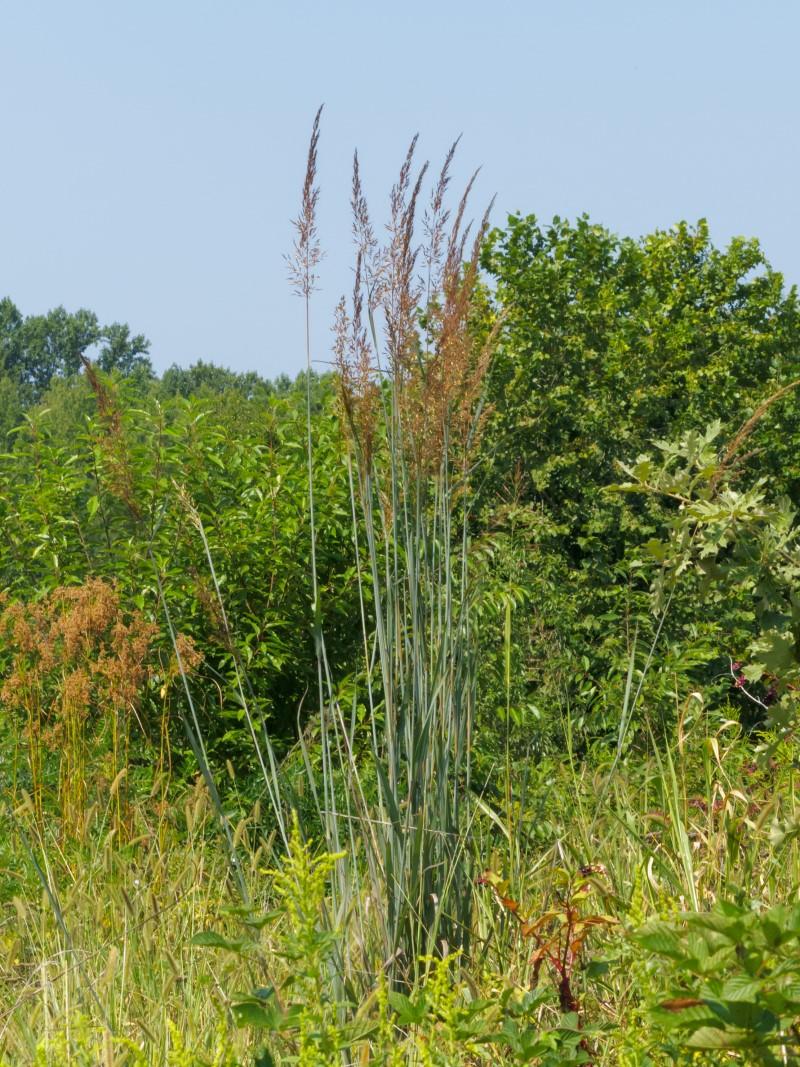
Indiangrass

Botanical name: Sorghastrum nutans

This tall native grass has a clumping and fairly slender growth habit, gradually reaching a mature height of 6 to 8 feet. It is often planted as part of a seed mix in conservation or right-of-way landscapes. Indiangrass requires full sun. Its foliage can have a grayish blue-green color, and flowers and seed stalks have with a feathery texture and yellow-orange color. This species may self-sow and be too tall for some home landscapes; in a planted or natural meadow, it may dominate and out-competing neighboring species. Common cultivars include ‘Indian Steel’ and ‘Sioux Blue’.

Bottlebrush grass

Botanical name: Elymus hystrix

As a cool-season grass, this species is in active growth in spring, producing their decorative seed heads long before warm-season grasses. Clump-forming, it matures 2½ to 3 feet tall. Bottlebrush grass has a good tolerance for part shade and prefers well-drained soils, but is adaptable to clay soil and dry sites. Decorative bristly seed heads are 9 to 10 inches long.

Ornamental grass comparison chart

Explore Maryland's three basic ecoregions -- mountain, piedmont, and coastal plain -- in the Alliance for the Chesapeake Bay's Native Plant Center online resource.

Basic characteristics of selected native and non-invasive ornamental grass species
Common NameBotanical NameHeightSun ExposureMaryland NativeAttributes

Big bluestem

Andropogon gerardii

5 to 8 feet

Full sun to part shade

Yes (mountain and piedmont regions)

Tall stature; "turkey foot" shaped seed head

Blue fescue

Festuca glauca

6 to 10 inches

Full sun

No

Short stature; blue-gray leaf color

Foerster's Feather Reed Grass

Calamogrostis x acutiflora

3 to 5 feet

Full sun

No

Upright growth habit; feathery flower/seed plumes produced earlier than most warm-season grasses

Switchgrass

Panicum virgatum

3 to 6 feet

Full sun to part shade

Yes (state-wide)

Large-statured for erosion control

Prairie dropseed

Sporobolus heterolopsis

2 to 3 feet

Full sun

Yes

Airy clouds of seed heads

Little bluestem

Schizachyrium scoparium

1½ to 3 feet

Full sun

Yes (state-wide)

Steely blue leaf color in summer, red-orange color in autumn

Purple love grass

Eragrostis spectabilis

1 to 2 feet

Full sun

Yes

Low growth habit with airy clouds of purple seeds

Northern sea oats

Chasmanthium latifolium

2 to 5 feet

Full sun to part shade

Yes (state-wide)

Large ornamental seed heads; spreads aggressively

Pink muhly grass

Muhlenbergia capillaris

2 to 3 feet

Full sun to part shade

Yes (rare)

Clouds of pink seed heads

Tufted hair grass

Deschampsia cespitosa

2 to 3 feet

Part shade

Yes

Shade and drought tolerant; woodland gardens

Pearl millet

Pennisetum glaucum

4 to 5 feet

Full sun to part shade

No

Attractive purple foliage and large seed head

Indiangrass

Sorghastrum nutans

6 to 8 feet

Full sun

Yes (state-wide)

Tall, upright habit; yellow-orange plumes in autumn

Bottlebrush grass

Elymus hystrix

2½ to 3 feet

Full sun, part sun, or shade

Yes (state-wide)

Bottle-brush shaped seed heads

Avoid invasive grass species

While some native grass species self-seed freely, non-native grass species that spread too easily and take over habitat are considered invasive to our ecosystem. It is recommended that you do not plant any invasive ornamental grass, even though local or mail-order nurseries may still stock them.

The Maryland Department of Agriculture (MDA) regulates the sale of invasive plants, and several non-native grasses are prohibited species under Maryland law. These include:

  • Chinese fountain grass (Cenchrus alopecuroides; may also be labeled as Cenchrus purpurascens or Pennisetum alopecuroides); common cultivars in the nursery trade include 'Cassian', 'Hamleln', 'Little Bunny', 'Foxtrot', and 'Red Head'
  • Maiden grass, also called Chinese/Japanese silvergrass (Miscanthus sinensis); numerous cultivars are on the market, including ‘Zebrinus’, 'Adagio', 'Gracillimus', 'Strictus', and 'Zebrinus'
  • Golden bamboo (Phyllostachys aurea)
  • Yellow groove bamboo (Phyllostachys aureosulcata)

Cogongrass (Imperata cylindrica) is designated a Federal noxious weed by the USDA. Red-leaved selections like variety rubra and cultivar 'Red Baron' often go by the common name of Japanese bloodgrass. Plants on the noxious weed list are regulated, and this species is prohibited in Maryland.

Refer to the MDA's Maryland Prohibited Invasive Plant Law and Regulations resource page for more information and a list of all other regulated species.

Additional invasive grasses to avoid planting include:

  • Hardy pampas grass (also called ravenna grass or plume grass, Tripidium ravennae, formerly named Saccharum ravennae)
  • Giant reed (Arundo donax)
  • Black bamboo (Phyllostachys nigra)
  • Arrow bamboo (Pseudosasa japonica)

Giant reed

Arundo donax

Very tall-growing, with dense, fluffy seed plumes. Wide leaves vaguely resemble those of corn.

Photo: Miri Talabac, University of Maryland Extension
Giant reed (variegated form)

Arundo donax 'Variegata'

At least one variegated cultivar is on the market, which has prominent off-white leaf stripes.

Photo: Miri Talabac, University of Maryland Extension
Japanese bloodgrass

Imperata cylindrica 'Red Baron'

The leaf tips of Japanese bloodgrass look like they are painted deep red. Some cultivars of switchgrass (Panicum) also have burgundy-tipped leaves in late summer and autumn, so other ID traits are important for distinguishing the two species.

Photo: Miri Talabac, University of Maryland Extension
Maiden grass (variegated form)

Miscanthus sinensis 'Morning Light'

One common cultivar is this variegated form that has creamy-white stripes on the slender leaves.

Photo: Miri Talabac, University of Maryland Extension
Maiden grass (seed heads)

Miscanthus sinensis

As seed heads ripen and become fluffy-looking, the individual "fingers" in the cluster fan out into a V shape, eventually curling as they dry.

Photo: Miri Talabac, University of Maryland Extension
Hardy pampas grass

Tripidium (Saccharum) ravennae

Looks somewhat similar to pampas grass (Cortaderia selloana) when seed heads are mature.

Photo via Adobe Stock.

Fountain grass

Pennisetum

A fountain grass that seeded into a park, representative of the stature and growth habit of cultivated varieties.

Photo: Miri Talabac, University of Maryland Extension
Additional resources

Chamberlain, S. (2018). Penguin Books. Field Guide to Grasses of the Mid-Atlantic. Penn State University Press.

Cullina, W. (2008). Native Ferns, Moss & Grasses. Houghton Mifflin.

Darke, R. (1999). The Color Encyclopedia of Ornamental Grasses: Sedges, Rushes, Restios, Cat-Tails, and Selected Bamboos. Timber Press.

The Cultivar Question | Maryland Department of Natural Resources

Author: Mikaela Boley, Senior Agent Associate in Home Horticulture, University of Maryland Extension, February 2020.

Revised by Miri Talabac, Lead Horticulture Coordinator, July 2026.

Still have a question? Contact us at Ask Extension.