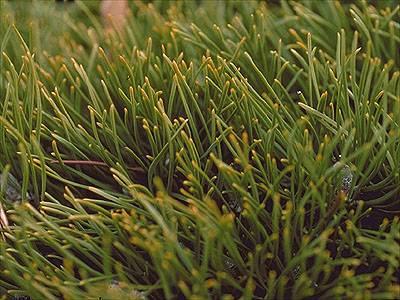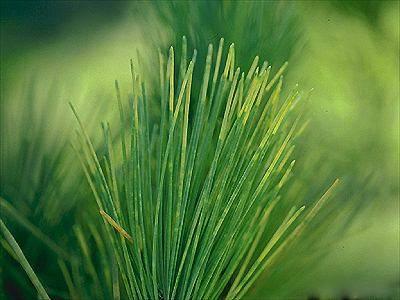
Air pollution damage often appears as yellowing or flecking of the leaves and foliage may be thin or stunted. Symptoms associated with air pollution damage will vary according to the season, environmental conditions, and amount and length of exposure.
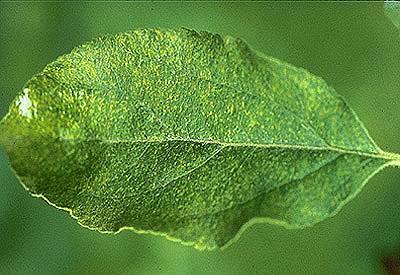
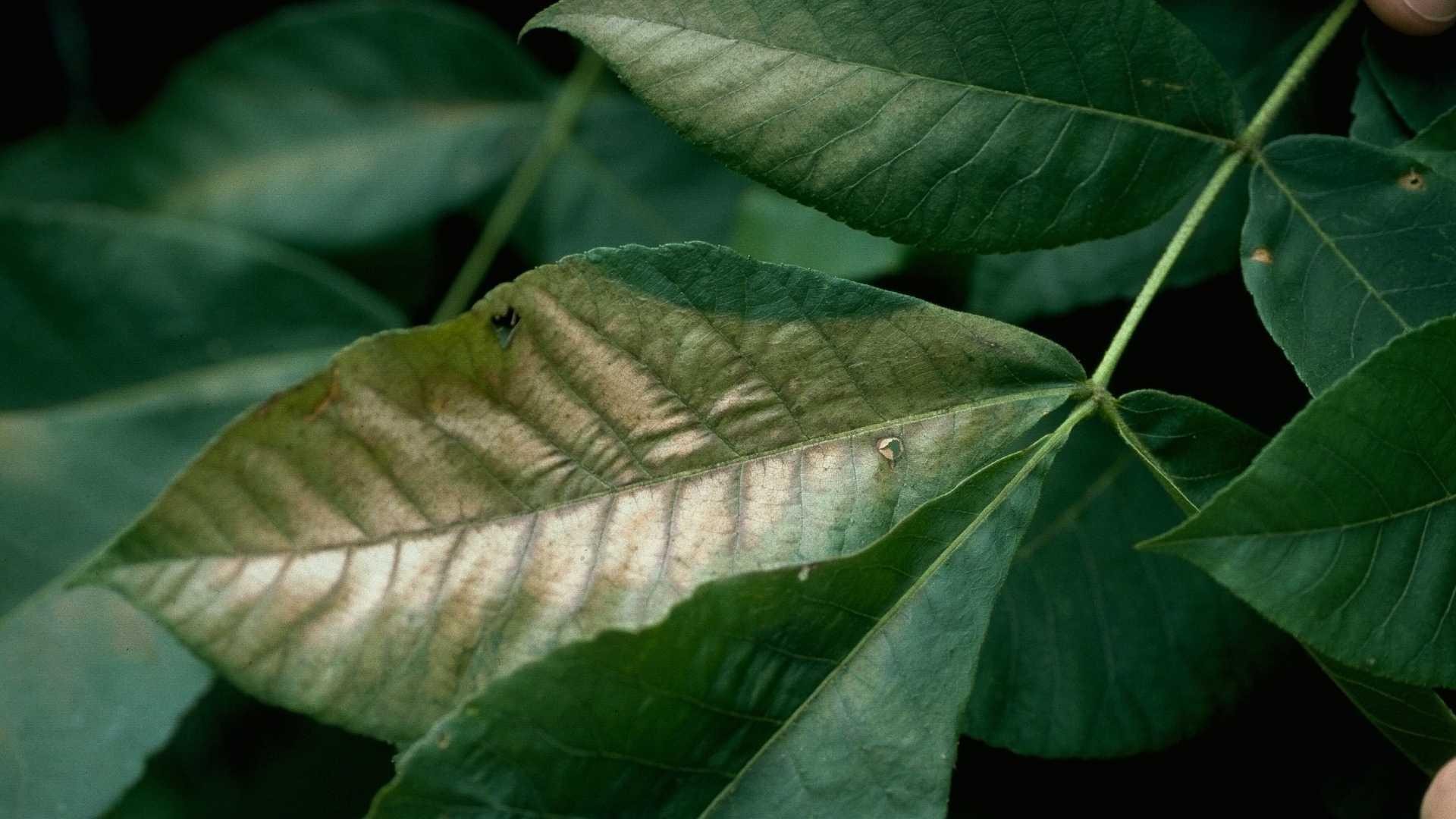
Air pollution damage on broadleaf plants
Ozone is the most widely spread air pollutant in the US. Acute symptoms vary from stippling (numerous tiny, yellow spots), flecking, bleaching, or dead areas. Chronic injury develops more slowly over days or weeks. Upper surfaces of broadleaf plants may have tan, red, brown, purple, or black coloration. Symptoms are often more severe on leaves exposed to direct sunlight. Newly-expanded leaves are the most sensitive. Damage symptoms may fade after several weeks.
Sulfur dioxide symptoms appear as ivory to brown interveinal necrosis (dead tissue between leaf veins). Uninjured tissue next to the veins remains green.
Peroxyacetyl nitrate (PAN) exposure symptoms include patchy silvering or light tan glazing of lower leaf surfaces. The affected leaf may exhibit spots or patches of papery thin almost transparent tissues.
Nitrous oxide causes yellowing of leaf margins and interveinal chlorosis.
Air pollution damage on needled evergreens
Ozone is the most damaging air pollutant in Maryland, and manifests as mottled yellowing or tip browning on needles. Yellowing usually occurs when plants are exposed to low doses of ozone, and tip burn appears from exposure to high doses. Tip burn or browning results from necrotic banding of medium-aged tissue along the middle of needles, which is the most sensitive. Tip burn symptoms affect all of the needles equally on a branch. These dead needle tips may also break off over time, giving the appearance of shorter-than-normal needles.