
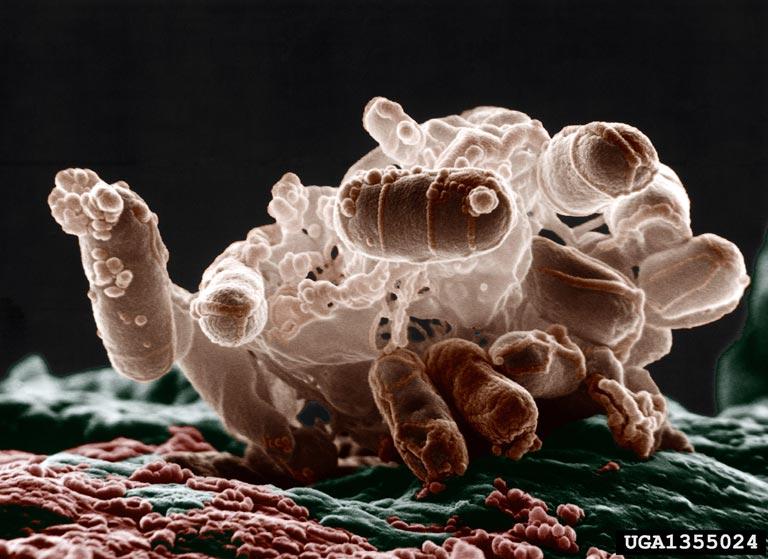
E coli, photo by Eric Erbe, USDA Agricultural Research Service, Bugwood.org
Research Summary: Efficacy of sodium hypochlorite and peracetic acid in reducing cross-contamination during washing of baby spinach at different water quality levels
By Dr. Rohan Tikekar, Associate Professor/Extension Specialist, University of Maryland, and Zhujun Gao, Research Assistant, University of Maryland
The quality of produce wash water is of concern as it requires a balance between effective food safety outcomes while meeting regulations, resource availability, and cost. Single-use water may not be cost-efficient, but the recirculation and/or reuse of water may lead to higher microbiological risk and organic load build-up. The level of organic load, as measured by its chemical oxygen demand (COD). Leafy vegetables (including spinach) are minimally processed, and contaminated produce can cause foodborne illnesses. Sodium hypochlorite (NaOCl) and peracetic acid (C₂H₄O₃; PAA) are two commercially available products widely used in produce washing.
The antimicrobial performance of NaOCl and PAA were evaluated by washing of baby spinach in a broad range of scenarios including various sanitizer concentrations (0 ppm, 20 ppm, 40 ppm, and 80 ppm), and wash water with low (300 COD) and high (2500 COD) organic load that is common when recirculating wash water. To test the effectiveness of the NaOCl and PAA, an unwashed spinach leaf was spot inoculated with Escherichia coli TVS 353, and then washed with nine uninoculated leaves, in simulated spinach wash water with various levels of sanitizers and post-harvest wash organic load. All leaves were removed and tested for the bacterial population levels.
Study Results:
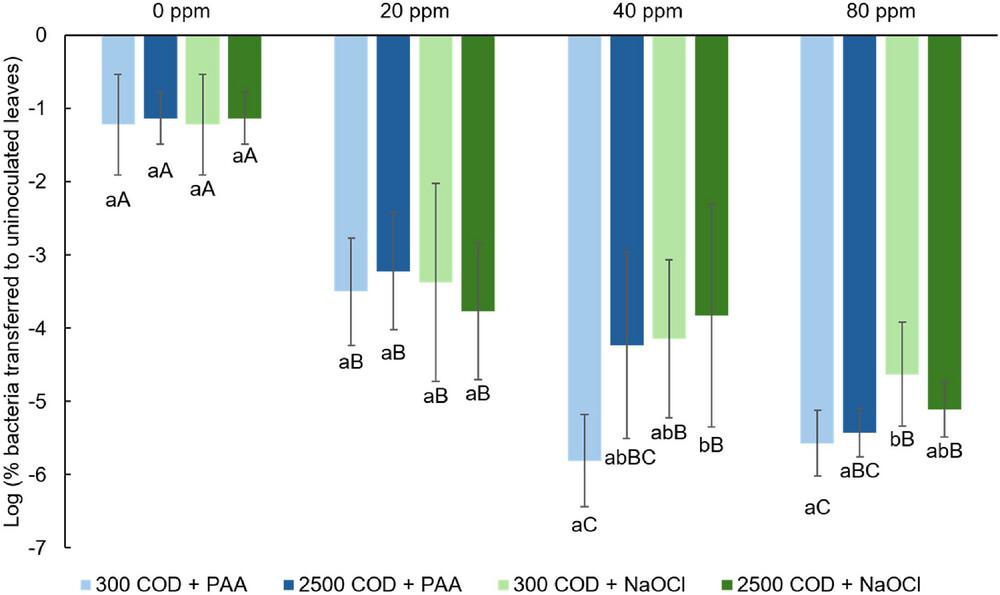
- Peracetic acid (PAA) was more effective in reducing bacterial load from the inoculated leaf than sodium hypochlorite (NaOCl) at high chemical oxygen demand (COD) (Figure 1).
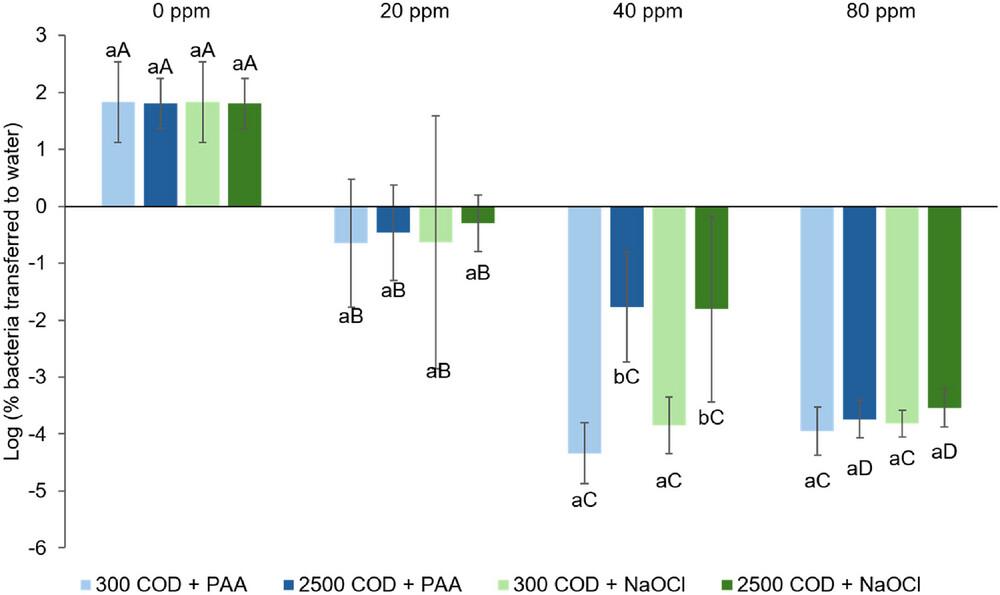
- At 80 ppm sanitizer levels, the bacteria was not detected in wash water at any condition but at 20 and 40 ppm at high CODs.
- The lowest levels of bacteria transferred to uninoculated leaves were observed at 80 ppm sanitizer.
- Both PAA and NaOCl showed increased bacterial inactivation in wash water and prevention of cross-contamination to uninoculated leaves as sanitizer concentration increased (Figure 2).
- Higher COD levels generally reduced sanitizer effectiveness.
The full article and resources about this research are available online: https://contactproducesafety.ifas.ufl.edu/resources/
This article is featured in the Vegetable and Fruit News, Vol. 16, Issue 2.
Vegetable and Fruit News is a statewide publication for the commercial vegetable and fruit industries and is published monthly during the growing season (April through October). Subscribers will receive an email with the latest edition.
Subscribe