
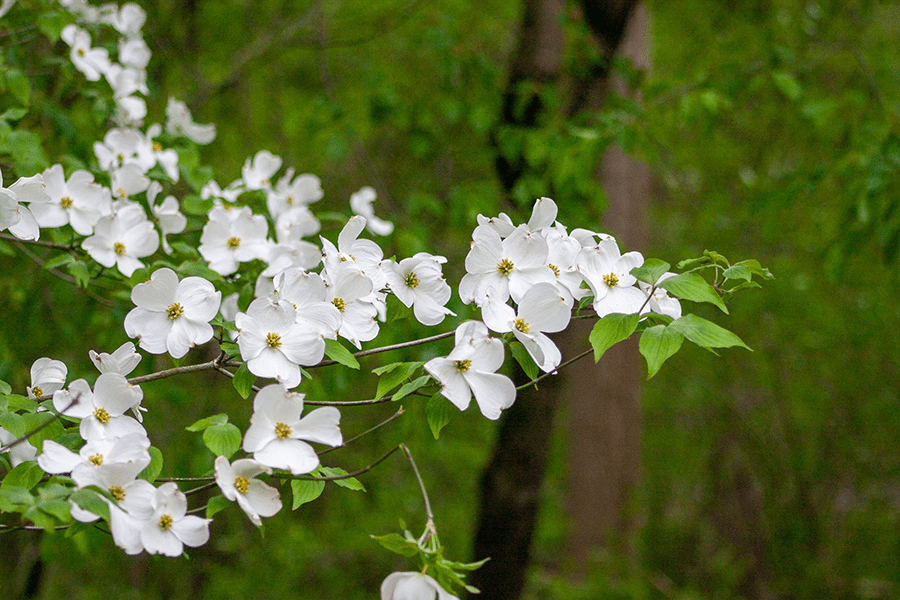
Except for a few late-blooming dogwood trees, the trees here in western Maryland are now fully leafed out. And with summer right around the corner, it’s a great time to get outside and enjoy your favorite woodlands. Take a walk in a local park or preserve. Take a day trip or longer to visit a new ecosystem. But at the same time, continue to recognize that the abundant greenery of our environment continues to be stressed by plants, insects, and diseases—some of which are native to these shores, but also by many that are not.
I was reminded of this recently by two separate events One was the observation of a few first instars of spotted lanternfly as I worked in my yard. The other took the form of a pair of emails at work related to two other invaders: Japanese honeysuckle and beech leaf disease. The writers — both with the University of Maryland Extension — shared information that Japanese honeysuckle has now been observed statewide, and that beech leaf disease has now been confirmed in as many as twelve Maryland counties.
The challenge for woodland managers and enthusiasts alike is detecting and responding to these threats when we encounter them. Fortunately, the start of that process is often as simple as taking a picture with your phone and sharing it — with the park’s managers, the state department of natural resources, or even with a social media outlet or citizen science app. While we may not be able to combat every invasive threat we may encounter, staying informed about their existence and staying vigilant as we wander and explore is essential for our woodlands.