

FS-819 ❘ 2008
Horse Shopping? Better Ask Some Questions!
By Elaine Long-Bailey
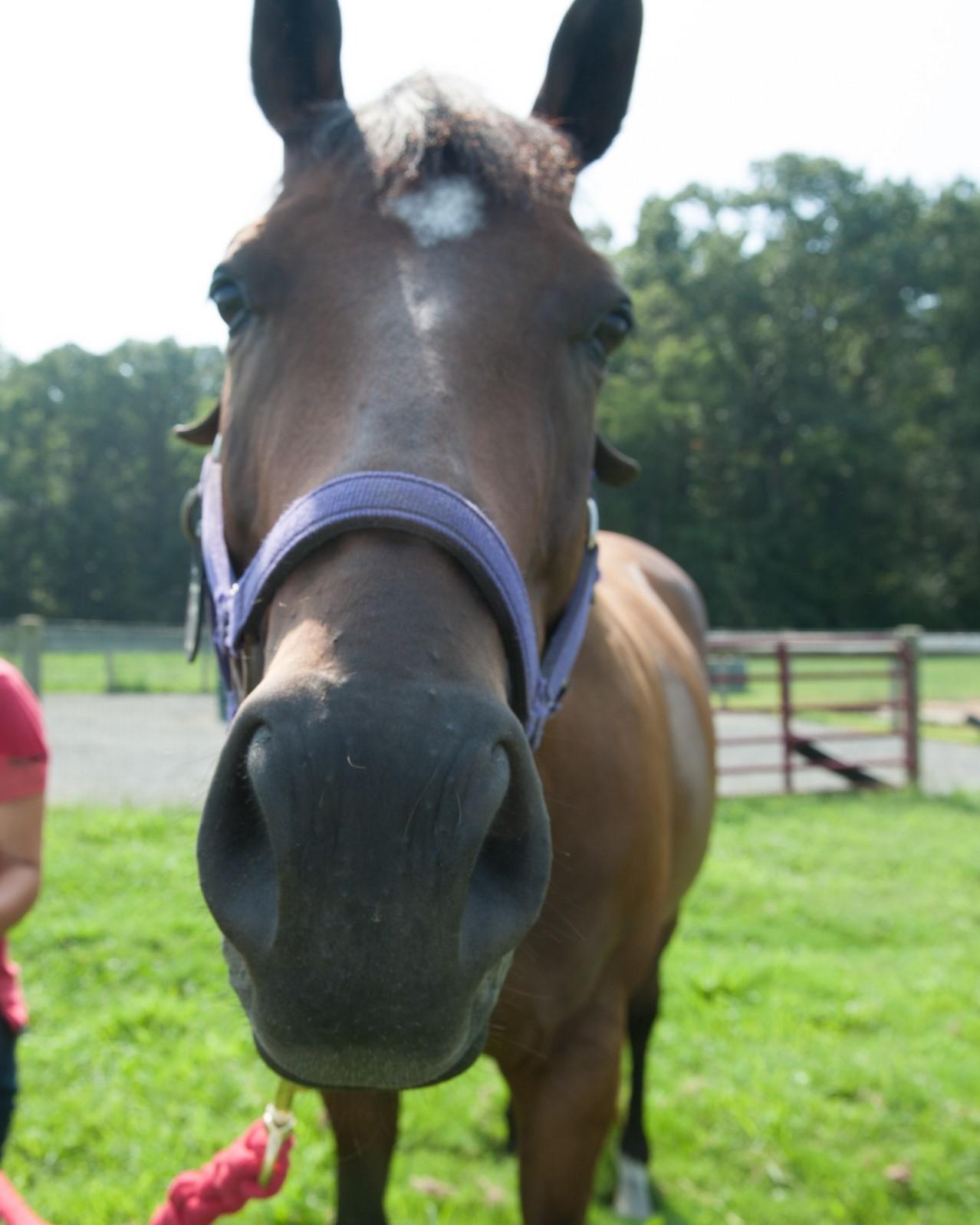
So you’re in the market for a horse. There are many horses out there, so it’s sometimes easy to get mesmerized into thinking that each one you encounter is the “perfect match” for you. But remember: take your time and do your homework to get the best match for the best price. It’s expensive to own and care for a horse, so you want to get it right when you buy. First, determine your goals for both you and your horse. Before setting out to find your ideal horse, develop a prioritized list of requirements for your horse. The list may include breed, gender, height, disposition, conformation, movement, previous use, or breeding potential. It helps to write this information down, to review it from time to time, to discuss it with your instructor or trainer, and to update it as your needs change. Before looking at a given horse, review that list carefully. It can be difficult to resist sales pitches of people who are looking to sell, sell, and sell. So make sure that you know what you want and need before beginning your quest. Fill in the list of goals and priorities below, and consider taking it with you when you look at horses for sale.
Goals/Priorities for My Horse and Me
List your goals and priorities for choosing a horse (up to five):
- Must be safe trail riding (for example)
- _____________________________
- _____________________________
- _____________________________
- _____________________________
Second, survey the market fully. It always helps to know what is available, and at what prices. Knowledge is power, especially in the horse market. Don’t limit yourself to “the horse next door.” Purchasing the first horse you look at is not always the best option. When you find a horse that you like, you should make several visits to evaluate the horse before making the decision to buy. Third, enlist the help of an experienced horse person (especially if you are not), because they can help you make an informed decision. Working with a trainer who knows your riding ability and your goals can be very beneficial. Meanwhile, it’s important to get answers to the following questions. Some may be answered from carefully reading the advertisement for the horse. Others are easily assessed when you watch the horse and see the setting where the horse is kept. But some should be asked outright on the phone or in person. It helps to see that the information in ads matches the information that someone offers about a horse. And remember: better safe than sorry, so do your homework. And good luck horse shopping!
Questions to answer— either from the ad, from observation, or from interviewing the seller:
- How long have you owned the horse?
- Why are you selling the horse?
- How old is the horse?
- What breed is the horse? (some are rather obvious; others are not, so be sure to ask) Is it registered? With what registry?
- How big is the horse, and how much does it weigh?
- What vet services has the horse required in the last 2 years?
- For what diseases has the horse been vaccinated? What are the vaccination dates?
- Does the horse crib?
- Does the horse have any other vices— kicking, biting, weaving, etc.?
- Does the horse stand quietly to be clipped and bathed?
- When were the horse’s teeth last floated? By whom? Was it manually done or done with power tools?
- Has the horse had any injuries? What kind, when did the incident(s) occur, and what is the prognosis?
- What health records are available for the horse?
- What kind of hay and grain is the horse being fed? How much? How often?
- Horse on any supplements or medications? Get a list of the products and amounts used.
- Are there any issues with the horse’s ground manners?
- Is the horse cooperative for the farrier?
- How often does the horse get trimmed? Is the horse shod? Is there any therapeutic reason the horse is shod?
- Does the horse tie and cross tie quietly?
- When turned out in a group, where is the horse in the pecking order? Does the horse get along with both mares and geldings?
- Does the horse trail ride? Alone? In a group?
- Does the horse load and trailer well?
- Has the horse been shown? In what sort of shows and what sorts of venues? How did the horse perform?
- What jumping experience does the horse have?
- What kind of bit is used on the horse?
- Has the horse been in regular work? Who has been riding the horse? How often is the horse ridden?
- What experience level rider does this horse require?
- Does the horse cross water? Bridges?
- Has the horse been ridden in an arena? Indoor? Outdoor How does the horse handle each?
- Do you work with a trainer? Who? What discipline(s), and how often?
- How does the horse deal with being tied to a trailer at a show?
Notes and other observations to keep in mind:
- Start your evaluation of a prospective horse in the field/stall first. Is the horse cooperative to catch, groom, and tack up?
- Watch the owner or somebody else ride the horse first.
- How difficult is the horse for someone to handle when mounting?
- What temperament does the horse have when the rider climbs aboard? Ears pinned, teeth bared, other reactions, etc.?
- Does the horse move freely with a rider? Any stiffness? Does the horse track up correctly?
- Is each gait technically correct? (e.g., no 4-beat canter, no uneven walk) Check their walk, trot, canter, and other breed-associated gaits (e.g., slow gait, running walk, paso largo, etc.)
- Note color of horse’s coat: white/gray horses will likely have melanomas. Some can be serious problems, so be aware of the potential.
- Strongly consider getting a pre-purchase exam with your own veterinarian. Note that there is a lot of variation in the exam and cost, depending upon the purpose for your horse. Reproductive soundness exams are critical for purchase of breeding stock, radiographs may be needed for some performance horses, etc. Prices can range from $200 to $2000 up, depending upon the detail of the exam.
- Depending upon the situation, you may want to request references on the seller. Good luck finding just the right horse!
Elaine Long Bailey
elbailey@umd.edu
This publication, Horse Shopping? Better Ask Some Questions! (FS-819), is a part of a collection produced by the University of Maryland Extension within the College of Agriculture and Natural Resources.
The information presented has met UME peer-review standards, including internal and external technical review. For help accessing this or any UME publication contact: itaccessibility@umd.edu
For more information on this and other topics, visit the University of Maryland Extension website at extension.umd.edu
University programs, activities, and facilities are available to all without regard to race, color, sex, gender identity or expression, sexual orientation, marital status, age, national origin, political affiliation, physical or mental disability, religion, protected veteran status, genetic information, personal appearance, or any other legally protected class.
When citing this publication, please use the suggested format:
Long-Bailey, E. (2008). Horse Shopping? Better Ask Some Questions! (FS-819). University of Maryland. go.umd.edu/FS-819