
From Summer 2025 issue of Branching Out. Subscribe to Branching Out here. Read more Invasives in Your Woodland articles here. This article contains information current as of date of publication.
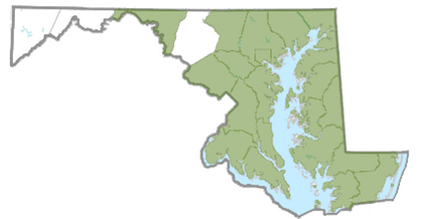
In the Fall 2023 issue of Branching Out, we profiled the white mulberry, which was introduced to the United States with the intention of creating a silkworm industry. In this issue, we take a look at the paper mulberry. Although the names are similar, the paper mulberry arrived under different circumstances. Originally native to eastern Asia, including Japan and Taiwan, its bark has long been valued for making paper and cloth. But it was valued for its rapid growth and aesthetic qualities and was introduced to the U.S. in the early 1900s as a fast-growing ornamental shade tree. Over time, it was planted widely in urban and suburban landscapes; its robust nature made it attractive for planting in city parks and streets, as well as in yards and rural homesteads. Its resistance to air pollution, drought, and variable soil types further contributed to its widespread use in landscaping. However, it escaped cultivation and began to colonize natural areas. In the succeeding century, paper mulberry spread across much of the east coast and as far west as Texas and Oklahoma. It is considered invasive in nearly three dozen states as well as a dozen countries worldwide. It is reported across Maryland except for Garrett, Allegany, and Frederick counties. See the map below.
What is it?
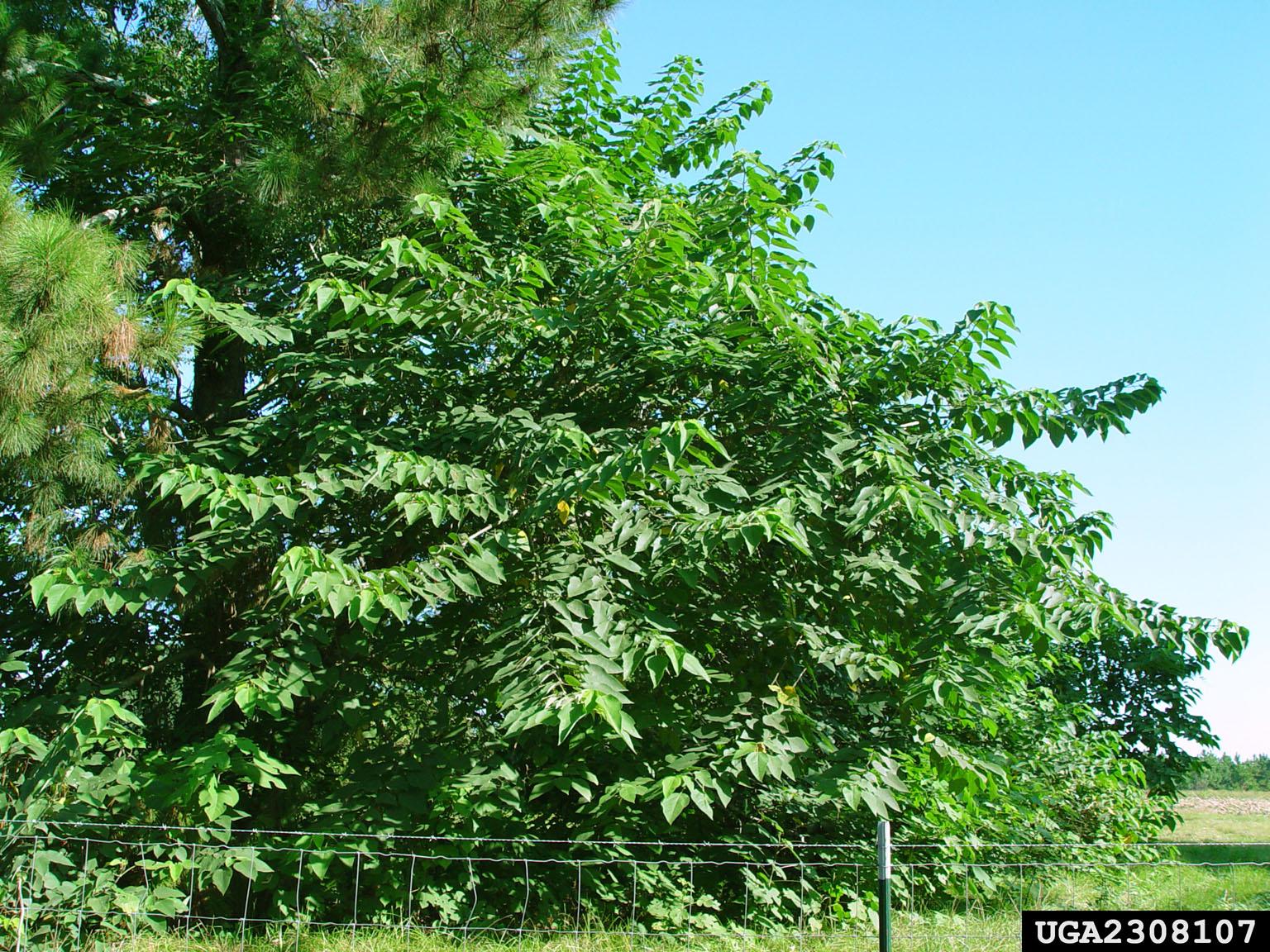
Paper mulberry (Broussonetia papyrifera) is a small to medium-sized deciduous tree, reaching up to 45 feet in height. Paper mulberry prefers full sun and thrives in disturbed environments, such as forest and field edges, roadside verges, floodplain forests, and areas where the soil has been disturbed or native plants have been removed. The roots are quite shallow, which can lead to wind-throw and uprooting. Toppled trees can lead to soil erosion and further infestation of the newly-disturbed area.
How does it spread?
Paper mulberry spreads both via seed dispersal and vegetatively. Root suckers can emerge up to 75 feet from the main tree. Wildlife consume the fruit, and birds can disperse the seeds over great distances via their droppings.
How can I identify it?
Paper mulberry trees have tan, smooth, moderately furrowed bark, milky sap, soft and brittle wood, and twigs that are hairy and reddish brown. The species is dioecious, producing male and female flowers on separate trees. Male flowers form long clusters in spring, and female flowers yield bright reddish-purple fruit in summer. See the photo gallery below.
Identifying paper mulberry solely on the basis of leaves can be challenging. Leaf shape is highly variable. They are often lobed or mitten-shaped, with pointed tips and serrated edges; the upper leaf surface is rough, and the underside is densely hairy and grayish. Leaf arrangement can be alternate, opposite, or whorled. Paper mulberry may be confused with the exotic white mulberry and native trees such as red mulberry, sassafras, basswood, and white poplar.
How can I control it?
Due to the shallow root system, young paper mulberries can be removed from moist soil by hand polling. Young plants can be cut to the ground, followed by repeated monitoring to ensure re-sprouting does not occur. Mature trees can be controlled via herbicides such as glyphosate or triclopyr applied by basal bark, cut-stem, hack-and-squirt, or injection methods.
For more information:
Learn more about paper mulberry:
Invasive Plants in Pennsylvania: Paper mulberry (PA DCNR)
Fact Sheet: Paper Mulberry (Plant Conservation Alliance’s Alien Plant Working Group)
Paper mulberry (Plant Invaders of Mid-Atlantic Natural Areas Field Guide, p. 115)