
Plectosporium Blight on Pumpkins
By Emily Zobel, AgFS Agent, University of Maryland Extension - Dorchester County, and Veronica Yurchak, University of Maryland Extension, Vegetable Specialist
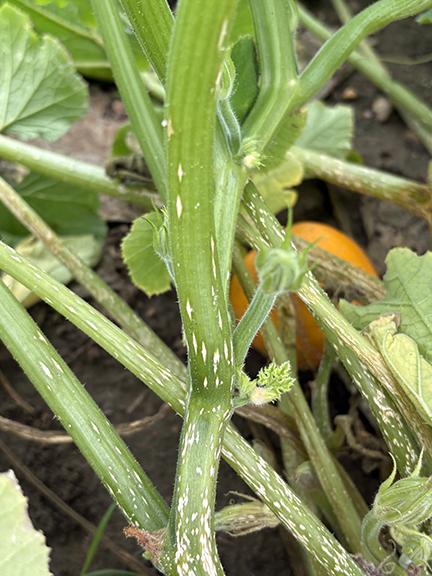
Plectosporium blight has recently been reported in pumpkins. This fungal disease of pumpkin, zucchini, and squash can cause yield loss if left uncontrolled. Plectosporium blight prefers warm, humid, or rainy weather conditions. It overwinters on crop residue and can persist in the soil for several years.
Plectosporium blight can be recognized from the small white to light tan spots on leaves and elongated lesions on stems and leaf petioles. When stem and foliar lesions occur in large numbers, they create a light gray or white appearance to the foliage, vines, and leaf petioles.
On green fruit, the lesions are very small white to tan flecks. On more mature fruit, lesions are round to irregular shaped pimples on the surface of the pumpkin, often making the fruit unmarketable. These fruit lesions also make the fruit susceptible to other rots. Severely infected pumpkin stems or petioles will become brittle and can split or shatter if disturbed.
When Plectosporium blight occurs, rotate away from summer squash and pumpkins for 2 years. Scout for disease and apply fungicides when disease first occurs. Thorough coverage of foliage, vines, and fruit is necessary for good control. Chlorothalonil can be used as a protectant fungicide, and more targeted fungicides can be used if the disease continues to develop and rain is in the forecast. Group 11 fungicides such as Quadris Top (3+11), Cabrio (11), and Flint Extra (11) are labeled for Plectosphaeria management and can be tank-mixed with chlorothalonil. Other control options that can be rotated with Group 11 include Inspire Super (3+9) and Aprovia Top (3+7).
Refer to the Pumpkin chapter of the Mid-Atlantic Commercial Vegetable Production Guide for more recommendations. Always follow the pesticide label directions for the product you have on hand.