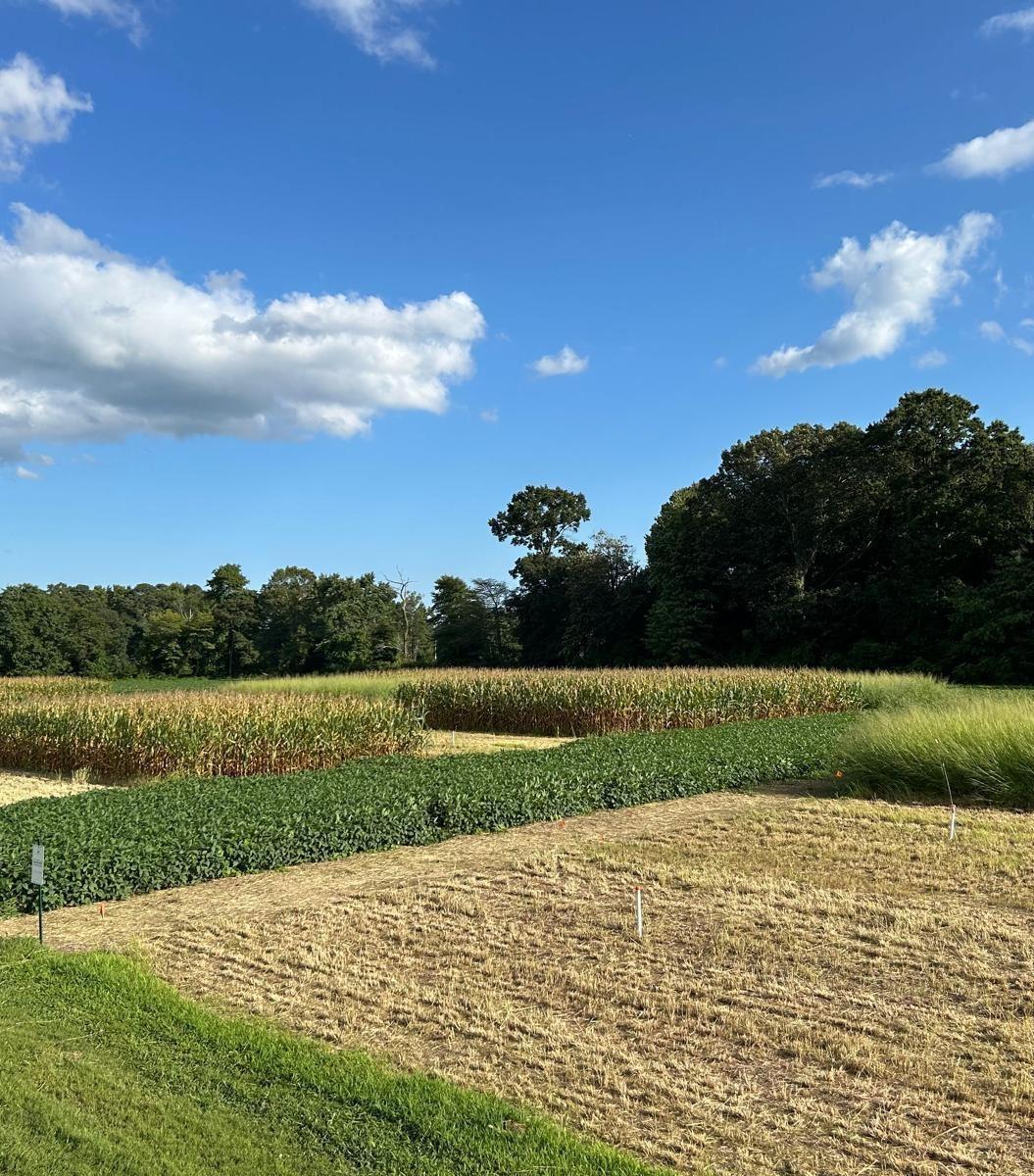
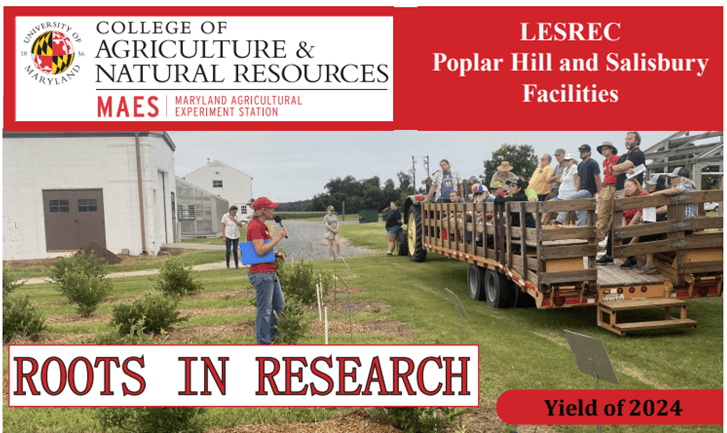
Cover picture of twighlight tour at LESREC
Updated: June 12, 2025

'Roots in Research' Newsletter

LESREC - Poplar Hill and Salisbury Facilities - Yield Year 2024

 Download PDF           

2024 was an interesting year for the LESREC facilities. Construction of the Poplar Hill pole building destroyed by the 2023 tornado marked the final step in making that facility whole again after the damaging storm. Poplar Hill also welcomed and bid farewell to Cody Hall in the span of a year. Cody was immensely helpful during the season he spent at Popla Hill, and we wish him well on his journey working in the family business. The Salisbury farm had an evening in the spotlight with the first twilight wagon tour being held on the facility in years.

The evening was marked by beautiful weather and provided an excellent opportunity to showcase current research projects by UMD Extension and the IR4 project as well as the work being done in collaboration with our neighbors at the University of Delaware. We are looking forward to future opportunities to share the important work being done at the LESREC facilities with Maryland farmers.

Alan Leslie                                                                                     
MAES Center Director
WMREC | CMREC | LESREC

LESREC Res n Roots QR

To view this newsletter electronically, scan the QR code!    


____________________________________________________________________________________________________________________________________________________________

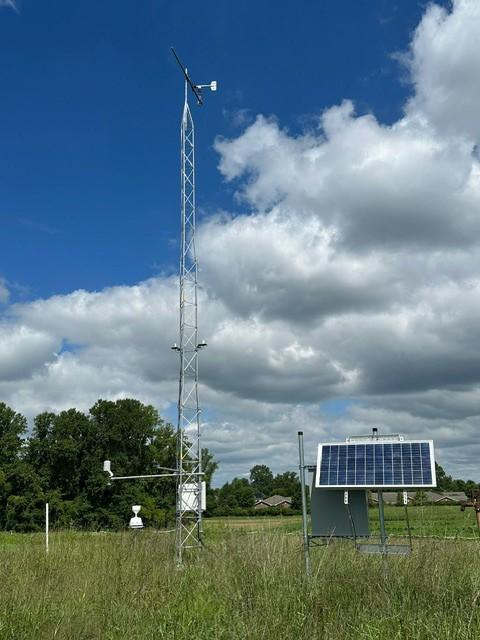
New Mesonet Weather Station at Poplar Hill 

In fact, we have had them installed at each MAES station, except Salisbury and Beltsville. Gone are the days of manually checking the weather!

Weather data for Poplar Hill and Salisbury are displayed on our website. The information can be displayed by month, or by the year in a printable format. To compare weather data averages by the month or year, check out our websiteIf your research requires this data in a different format, please contact Sheila Oscar and she will help to get the information you are requesting.

____________________________________________________________________________________________________________________________________________

______________________________________________________________________________________________________________________________________________

Lower Shore Twilight Tour

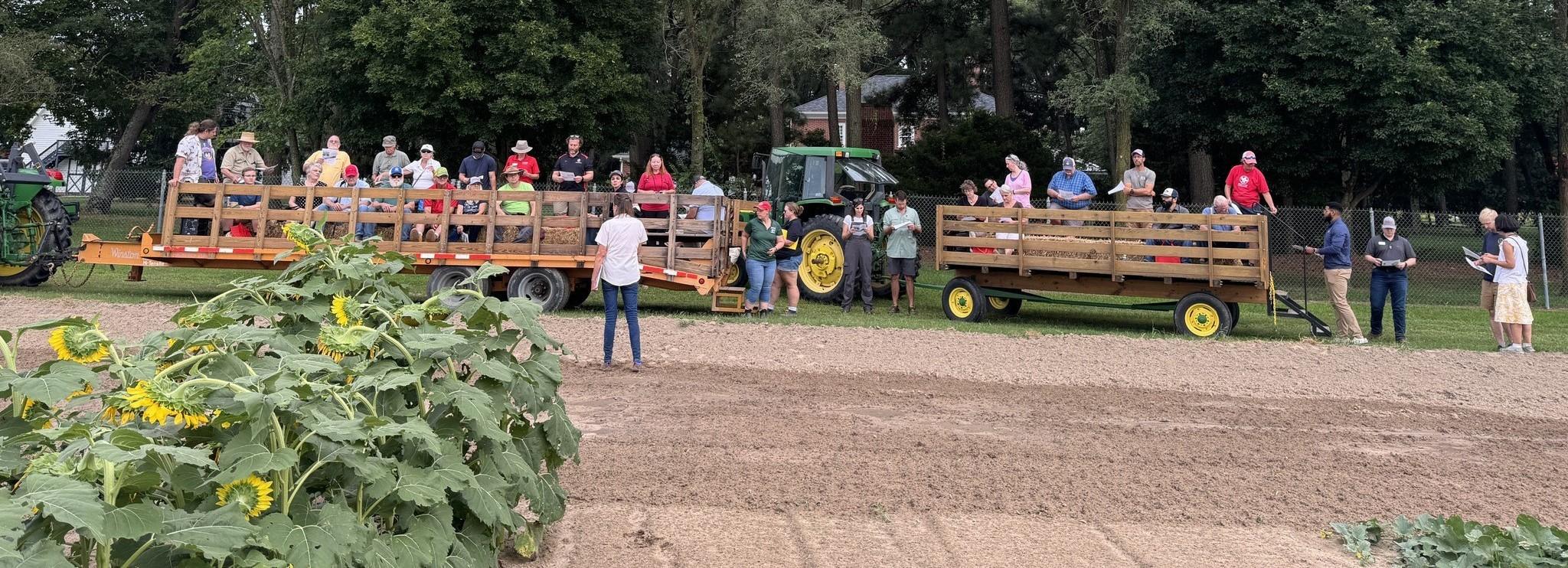
Our lower eastern shore Twilight Tour on August 6th was a success. It was a beautiful evening with about 45 people in attendance. After we enjoyed a hot meal together, we boarded the wagons and made the 6 stops below, led by Extension Educators and specialists.

Stop 1 - Organic pesticide trials on summer squash and collards, Presented by Emily Zobel, Ag & Food Systems Agent, University of Maryland Extension

Stop 2 –Watermelon Disease Trials, Presented by Dr. Alyssa Koehler Betts, Assistant Professor and Extension Specialist, Plant Pathology, University of Delaware

Stop 3 – Cover cropping for weed control in melons. Presented by Dr. Kurt Vollmer, Extension Specialist-Weed Management, University of Maryland

Stop 4 – IR-4 Pest Management Updates. Presented by Dr. Marylee Ross and Megan Hickman, IR4 NE Region Coordinator and Field Research Director

Stop 5 – Blueberry variety, pest control, and nutrient updates. Presented by Dr. Haley Sater, Agriculture Agent, University of Maryland Extension

Stop 6 – Corn earworm monitoring network. Present by David Owens, Extension Entomology, University of Delaware.

Marylee Ross talking to guests

  Marylee Ross speaking. Phone taken by Haley Sater  _________________________________________________________________________________________________________________________________________________________

Findings from 2024 at UMD-LESREC

By David Armentrout, Facility Manager

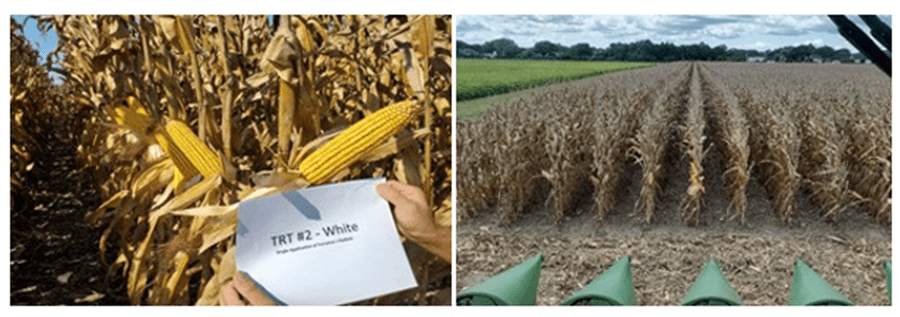
Research pictures from LESREC

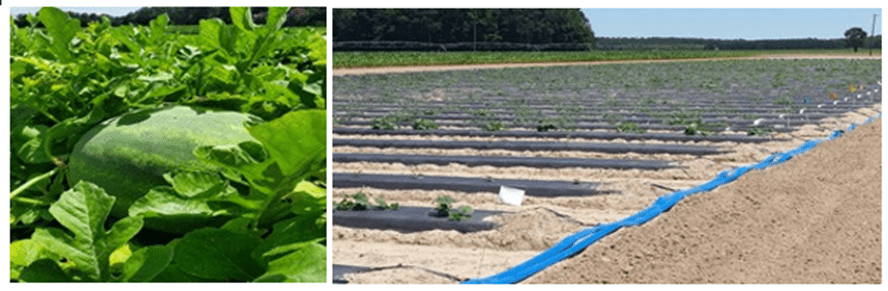
Annually, at the UMD Lower Eastern Shore Research and Education Center located in Salisbury, MD, and in Quantico, MD, I believe it is important to implement trials to better the practice of producing popularly grown crops of the region. In doing so, I as the Facility Manager, can increase my team’s knowledge and experience in successfully perfecting the cultural practices needed for crop production. In 2024, I teamed up with Nutrien Ag Solutions to evaluate two fertility/growth enhancement products on both soybean and corn (‘BlackMax WSG and Terrama Efficacy on Soybean and Corn Yield’). In 2024, I also looked at demonstrating Pumpkins (‘Pumpkin and Gourd Variety Trial’), Sweetcorn (‘Sweetcorn Comparison and Insecticide Timing Trial’) and Cantaloupe/Watermelon (‘Cantaloupe and Watermelon on Biodegradable Plastic Mulch’). In addition, I continued working with Dr. Jeff Pettis looking at ‘Strategies and Evaluation of Honeybee Survival at LESREC’.

Like most years there were some challenges in crop production in 2024. However, our demonstration trials performed exceptionally well producing very respectful yields of sweetcorn, pumpkin, cantaloupe and watermelon. Our Nutrien Ag Solution trials provided very useful soybean and corn data for 2024. Dr. Pettis’s honeybee evaluations also went well in 2024. The practical knowledge gained in implementing such demo-trials allows myself to better suit the needs of researchers in growing similar or related crops in future trials. In addition, such demo-trials are an added bonus during Facility tours.

Corn Research pics at LESREC

___________________________________________________________________________________________________________________________________________________________________________

Northeast Region IR4 Project  logo

Update from IR-4 Field Research Center (LESREC)

Contributors: Marylee Ross & Megan James Hickman

2024 Trial Summary

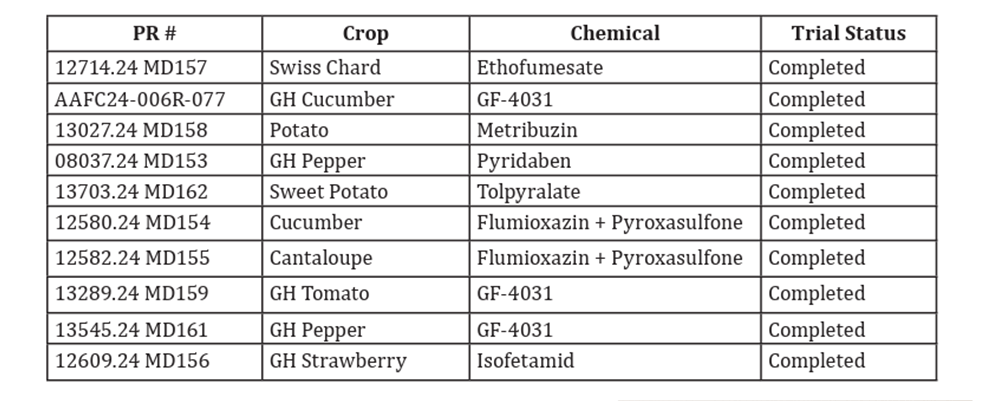
In 2024, there were 10 Magnitude of Residue (MOR) trials placed at the University of Maryland’s LESREC in Salisbury, MD. There were 5 greenhouse trials and 5 field trials.

IR4 Field Research Summary Chart
Data system
ir4 new data collection system.png
An image of our new data collection system. A folder for an essential paper raw data and an iPad. It was previously a 1" binder for each trial of approximately 80-100 pages each. Photo by Megan Hickman

We had another successful field season! A larger change that we navigated was how we documented our field raw data. IR-4 has migrated to a digital data collection system hosted by iAdvantage, called the electronic Field Data Book (eFDB). This was our first season of documenting into the eFDB. This migration required the purchase of a couple of new iPads to be used in the field and a reconfiguring or our current data storage methods. Due to these changes, we are now relying more heavily on the UMD provided cloud-based storage available through google drive and will continue to utilize this service available to us moving forward.

While the learning curve felt steep at times we were able to complete 9 trials with the eFDB this year and have gained many new skills to complete many more in the future.

The one trial that did not require digital data collection this year was a trial done in collaboration with Agriculture and Agri-Foods Canada. Their partnership with IR-4 helps to harmonize registrations on specialty crops in both countries. The greenhouse Cucumber trial conducted at our site will help support this effort and hopefully result in a new fungicide registration for greenhouse growers.

A highlight of the summer was having the opportunity to speak to a group of people in attendance at the LESREC Twilight Tour that occurred in August. It was a night with nearly perfect weather and the crowd engagement was excellent. We used this opportunity to educate the attendees on the mission of the IR-4 Project and the trials (and their objectives) taking place at LESREC this year.

The fall lent us the opportunity to meet the new AGNR Communications Specialist for the experiment stations, Haley Moore, and  learn more about how we can work with her to spread awareness of our program and the great work occurring at LESREC. She spent a few hours with us learning about our program and potential areas of collaboration with IR-4 in the future. We look forward to working with her!

Individual research pictures

We remain appreciative of the UMD supported work that went into reglazing the greenhouse three years ago. It continues to provide us with a safer working environment and lessened pest control needs. We keep it occupied year-round and find it to be an invaluable tool in supporting Northeast Grower’s needs.

____________________________________________________________________________________________________________________________________________________________________________________

Organic Pest Control on Summer Squash

   By Emily Zobel and Dr Haley Sater

Summer squash is a typical warm-season crop grown by small farmers to sell at local markets or as part of Community Supported Agriculture (CSA) programs. Summer 

squash is an easy-to-grow crop. However, many insect pests feed on it, which can lead to a reduction in the quality and quantity of fruit yields. The squash bug (Anasa tristis) is a common pest that is often difficult for organic growers to control.  Squash bugs feed on leaves and stems of plants by sucking the sap out of a plant with their piercing-sucking mouthparts.  This causes yellow spots that eventually turn brown on leaves. Feeding on young seedlings can cause the plants to wilt and die. Spotted cucumber beetles (Diabrotica undecimpunctata) and the striped cucumber beetle (Acalymma vittatum) are also common insect pests of summer squash. They have chewing mouths and create small holes when feeding on leaves, stems, and fruits. The striped cucumber beetle is also known to spread diseases like bacterial wilt. 

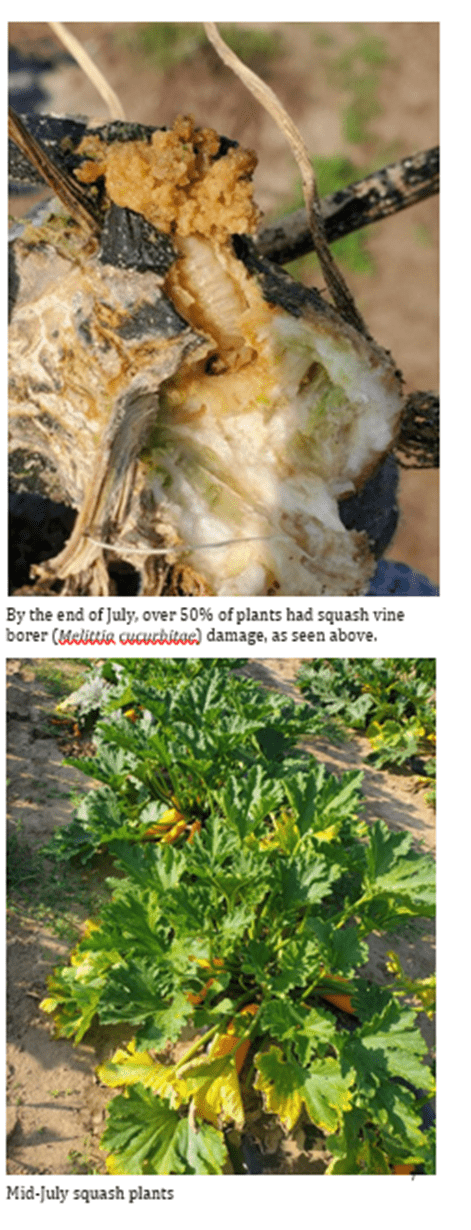
This experiment examined several common organic insecticides' ability to control squash bugs and cucumber beetles on yellow straight neck squash. Plants were direct seeded into black plastic mulch on May 20, 2024. Plots comprised 12 squash plants with a 10-foot gap between plots.  Treatments include a control with no spray, Neem oil, Insecticide soap, and PyGanic.  Plants were checked for insect pests weekly starting on June 3, 2024. Insect counts were low for all of June, so treatment sprays were not applied until July 11, 2024.  Plots were sprayed weekly, followed by scouting taking place 3-4 days after.  Treatments were applied 3 times.  By early August, 50% of squash plants were damaged or dead due to squash vine borer (Melittia cucurbitae).  Based on insect counts, there was no treatment effect by any of the pesticides on the squash bug or the striped cucumber beetle population. Spotted cucumber beetles (N=39) were significantly lower in the neem and pyogenic-treated plots.  Squash fruits were harvested, rated, and weighed. No difference was found among the treatments concerning fruit number or quality.

______________________________________________________________________________________________________________________________________________________________________________________________________________

Alternative Crops & Renewable Energy (ACRE) at Poplar Hill 

Kate Tully1, Jonathan Cumming2, Andrew Moss3,  Stephanie Lansing4, Alison Schulenburg5, Shaylan Kolodney5, and Adrianna Celtruda6 
1Associate Professor, Department of Plant Science and Landscape Architecture, University of Maryland
2Chair and Professor, Department of Natural Sciences, University of Maryland Eastern Shore
3Technical Director, Planet Found Energy Development, LLC
Professor, Environmental Science and Technology, University of Maryland
5PhD Student, University of Maryland
6Agroecology Research Assistant, University of Maryland

As individuals on the Delmarva Peninsula face growing economic uncertainty, researchers at the University of Maryland College Park and the University of Maryland Eastern Shore explore     solutions to diversify the region's agro-economic production through the Alternative Crops and Renewable Energy (ACRE) Project.

By investigating the environmental and socio-economic benefits of incorporating cover crop (e.g., ryegrass [Lolium multiflorum], cereal rye [Secale cereale], wheat [Triticum aestivum]) and switchgrass (Panicum virgatum) within the traditional cash crop system to serve as an additional cellulosic feedstock for anaerobic digestion. To evaluate the effectiveness of this potential  commodity, it is essential to understand how switchgrass and cover crop can sequester carbon, reduce leaching/runoff, and provide a profitable harvest for co-digestion with poultry litter to generate a renewable energy source and ElementSoil™.

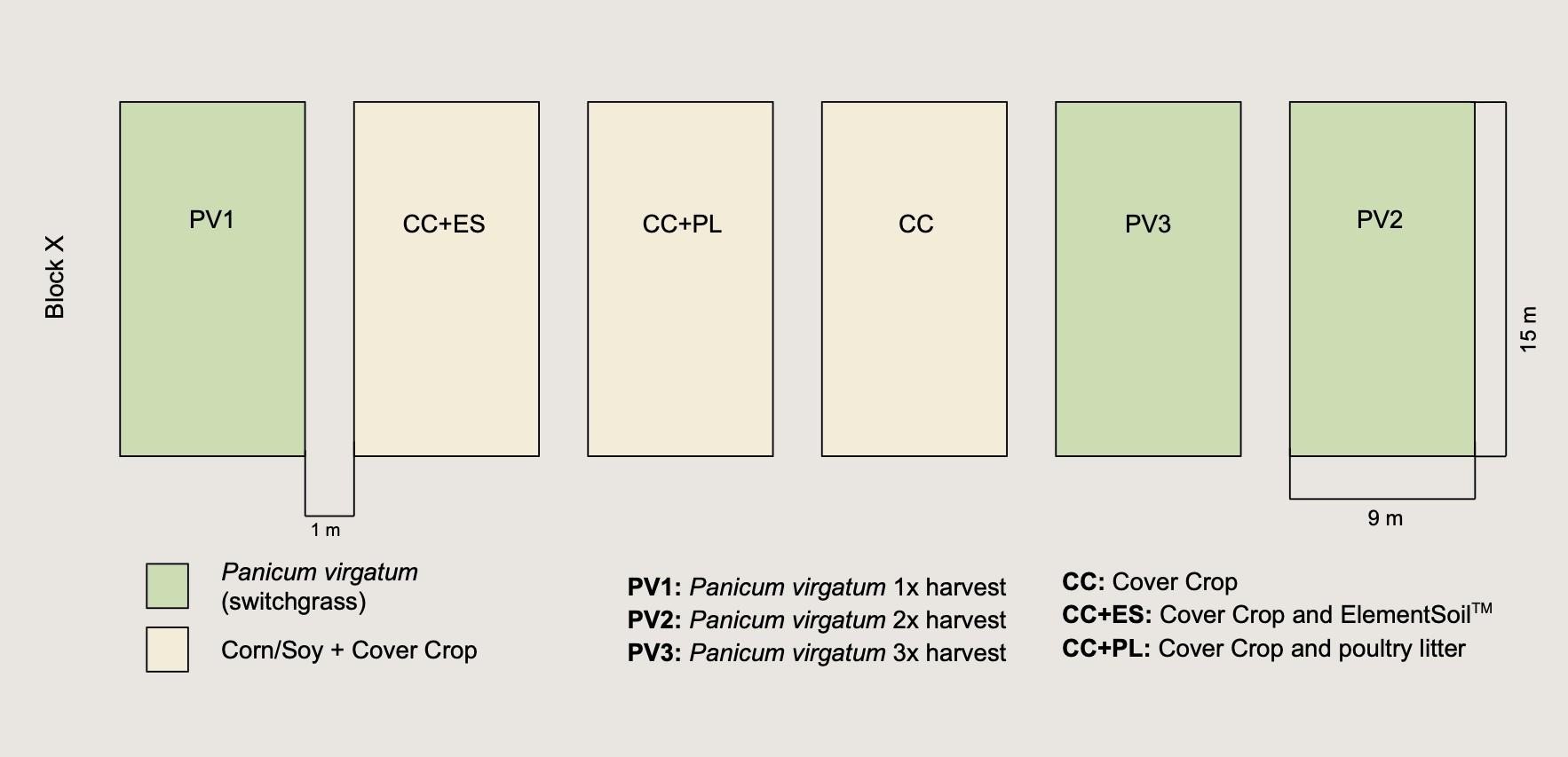
At the Lower Eastern Shore Research and Education Center (LESREC) in Quantico, MD, a five-year experimental study began in the spring of 2024, serving as a key location for addressing many of the study’s central research questions. The site consists of 24 plots, organized into four randomized blocks, with each block containing six subplots corresponding to one of the six treatments (Figure 1). Half of the plots are planted with switchgrass, while the other half rotate between corn and soybean as cash crops, with a cover crop planted during the off-season.

Researchers collect data on soil physical and chemical properties, root growth, biomass production, greenhouse gas emissions, and porewater. In the first year of the study, soil samples were collected to establish a baseline of nutrient levels at the farm, followed by additional samples after the first growing season.  These samples will be analyzed to determine concentrations of   ammonium [NH4-N], nitrate [NO3-N], ortho-phosphate [PO4-P], total inorganic nitrogen (TIN), percent carbon (%C), and percent nitrogen (%N).

An ingrowth core method is used at each plot to track the growth of the plant's roots. Aboveground, switchgrass biomass samples are collected according to their treatment type to evaluate the optimal management strategy for digestion and harvest size. Biomass from the cash crop/cover crop plots are also collected to compare differences in amendments (ElementSoilTM vs. poultry litter vs. no amendment).

Quadrat sampling is used across all plots to standardize biomass collection. Aerial imagery is taken throughout the growing season to track plant greenness using a Normalized Difference Vegetation Index (NDVI) complementing biomass data and helping to assess patterns across treatments.

Additionally, greenhouse gas (GHG) fluxes (methane, carbon dioxide, nitrous oxide, and ammonia) are measured at regular intervals following farm activities and rain events. Tension lysimeters are used to study groundwater  movement  through soil and the transport of solutes.  These ongoing measurements provide a comprehensive assessment of soil health, biomass potential, GHG emissions, and nutrient cycling — ensuring that the project actively develops a closed-loop system.

Fig. 1 of Alternative Crop data
Figure 1. This is an example of one of the randomized plots at LESREC. Each plot is 9 m wide and 15 m long with a 1 m buffer between plots and a 15 m buffer between each block.  Each pot has one of the six treatment methods: (1) PV1, (2) PV2, (3) PV3, (4) CC, (5) CC+ES,(6) CC+PL.
Image of field study at LESREC
Figure 2. An image of the field study at LESREC. Switchgrass plots can be seen on the right side of the photo (harvested and growing). Soybean was planted in the buffer zone between blocks. Corn can be seen growing in plots behind the soybean.

Beyond the work done a LESREC, the ACRE team collaborates with eleven partner farms, including Millennium Farms in Pocomoke City, MD, where the anaerobic digester is located. Farm partners are financially compensated to grow switchgrass and/or a variety of cover crops alongside their cash crops. The project also seeks to address critical economic and environmental justice issues, particularly supporting small-scale farmers on the peninsula.

Researchers will continue monitoring and measuring the partner farms, the LESREC field trial, and begin interviewing participating farmers in the summer of 2025.


_______________________________________________________________________________________________________________________________________________________________________

2024 Maryland State Soybean Variety Trials

Agronomy Facts No. 32 is prepared by Dr. Nicole Fiorellino, Mr. Louis Thorne,
Mr. Gene Hahn, and Ms. Audrey Sultenfuss
Test Procedures

The University of Maryland offers a fee-based, soybean variety performance testing program to local and national seed companies. The results from these replicated trials provide agronomic performance information about soybean varieties tested at four locations in Maryland considered representative of the state's geography and weather conditions. Table 1 summarizes the agronomic and production information for each test site.

Varieties tested in 2024 were entered by participating seed companies, listed in Table 3, that were solicited for submission of varieties. These varieties represented those currently available for purchase to experimental lines still under evaluation. Select Pioneer, Agrigold, and Revere varieties were identified for use as checks in the test. The inclusion of the performance data for check or reference varieties that are proven performers in the Mid-Atlantic region allows comparisons of newer varieties to proven varieties.

During 2024, 56 varieties were tested using three maturity groups: MG 3 (9 varieties, Table 6), early MG 4 (4.0-4.3, 24 varieties, Table 7), and late MG 4 (>4.4, 22 varieties, Table 8). Check varieties were included in each of the maturity groupings. All genetic traits and seed treatments are listed in Tables 6-8.

Each variety was replicated three times per location. In 2021, we modified a John Deere Maxemerge-2 four-row, 30” spacing, no-till planter, with coulters and trash wheels for use in the variety trials. The modifications included the addition of a single cone planting unit that delivered seed to a spinner powered by a 12v motor to evenly distribute seed to the four planter units. Planting, harvest, and in-season management information is presented in Tables 1 and 2. We aimed for a seeding rate of 6-7 seeds/foot and plot harvest length was approximately 20 feet. Center two rows (~5 ft. swath) were harvested with an Almaco R1 research combine (Almaco Co., Nevada, IA). Grain yield, harvest moisture, and test weight were measured for each plot. These data were collected with a Seed Spector LRX system (Almaco Co., Nevada, IA) and recorded on Microsoft xTablet T1600.

Test Results

The overall performance across the locations for the full season varieties in each maturity group is reported in Tables 12-14 and double crop varieties in Tables 27-29. Variety performance at individual locations can be found in Tables 15-26. The agronomic characteristics reported are yield, in bushels/acre at 13% moisture content and test weight (lb/bu) at 13% moisture. Plot damage at some locations necessitated the removal of outliers, which was performed by location and maturity group. Outliers were determined as two standard deviations above and below the mean for that maturity group. If outlier removal eliminated two of three replicates for any entry, then the entire entry was removal from data analysis. Lodging was estimated by plot at the time of harvest. A least significant difference (LSD) value is reported for each test where statistically significant differences (P ≤ 0.1) for yield was observed among varieties. The mean separation value has been calculated at the 10% probability level (LSD0.1). The LSD can be used to compare two varieties within the same test. For example, when the yield difference between two varieties is greater than the LSD value, there is a 90% certainty that the difference in yield is due to variety performance rather than due to random variability.    Click here to view tables 1- 29

Relative Yield

The selection of a variety based solely on performance at one location is not recommended. It is better to select variety based upon performance over a number of locations and years, if possible. To compare the performance of each variety across the five locations, relative yield tables (Tables 9-11) are included. Relative yield is the ratio of the yield of a variety at a location to the mean yield of all the varieties at that location expressed in percentage. A variety that has a relative yield consistently greater than 100 across all testing locations is considered to have excellent stability.

Acknowledgments

The University of Maryland Agronomy Program research would not be possible without the assistance and oversight of equipment maintenance, seed packaging, planting, data collection, and plot harvest by faculty research assistant, Louis Thorne. This work could not be accomplished without the assistance of Gene Hahn and Audrey Sultenfuss. Thank you to the crew at Wye Research and Education Center for sharing your experience, tools, and space in your shop with our team as they continue to keep our equipment running.

Tables 1 and 2 outlines the crews at each test location who assisted with land preparation, flagging, plot management, and harvest. I personally would like to acknowledge each farm manager, David Armentrout, John Draper, Ryan McDonald, and Douglas Price for their continued support of the Variety Trials.

Additional Information

The inclusion of varieties in these tests is not an endorsement by the University of Maryland. Advertising statements about a company’s varieties can be made as long as they are accurate statements about the data as published. Statements similar to “See the Maryland Soybean Tests Agronomy Facts No. 32” or “Endorsement or recommendation by the University of Maryland is not implied” must accompany any reproduced information.

Funding for purchase of check varieties provided by Maryland Soybean Board

(Project # 24063120). This work is supported by the Crop Protection and Pest Management program [grant no. 2024-70006-43556/project accession no. 1032889], from the U.S. Department of Agriculture’s National Institute of Food and Agriculture.

________________________________________________________________________________________________________________________________________________________________________________



 

Logos

  NOTICE TO BENEFICIARIES AND PROSPECTIVE BENEFICIARIES

Name of Organization: University of Maryland MAES

Name of Program: Entire entity

Contact Information for Program Staff: Alan Leslie, MAES Center Director (CMREC, LESREC & WMREC), 301-276-1241, aleslie@umd.edu

Because this program is supported in whole or in part by financial assistance from the Federal Government, we are required to let you know that:

  1.  We may not discriminate against you on the basis of religion, a religious belief, a refusal to hold a religious belief, or a refusal to attend or participate in a religious practice;
  2. We may not require you to attend or participate in any explicitly religious activities (including activities that involve overt religious content such as worship, religious instruction, or proselytization) that are offered by our organization, and any participation by you in such activities must be purely voluntary;
  3. We must separate in time or location any privately funded explicitly religious activities (including activities that involve overt religious content such as worship, religious instruction, or proselytization) from activities supported with direct Federal financial assistance; and
  4. You may report violations of these protections, including any denials of services or benefits by an organization, by contacting or filing a written complaint with the Office of the Assistant Secretary for Civil Rights, Center for Civil Rights Enforcement, Program Complaint Division by mail, fax, or e-mail at:

Mail:
United States Department of Agriculture
Director, Center for Civil Rights Enforcement 1400 Independence Avenue, SW Washington, DC 20250-9410

Fax: (202) 690-7442
Email: program.intake@usda.gov

  1.  If you would like to seek information about whether there are any other federally funded organizations that provide these kinds of services in your area, please contact Latoya Hicks at lhicks12@umd.edu.

This written notice must be provided to you before you enroll in the program or receive services from the program, unless the nature of the service provided, or exigent circumstances make it impracticable to provide such notice before we provide the actual service. In such an instance, this notice must be provided to you at the earliest available opportunity.

University programs, activities, and facilities are available to all without regard to race, color, sex, 
gender identity or expression, sexual orientation, marital status, age, national origin, political affiliation, physical or mental disability, religion, protected veteran status, genetic information, personal appearance, or any other legally protected class.

LESREC list of Facility Personnel