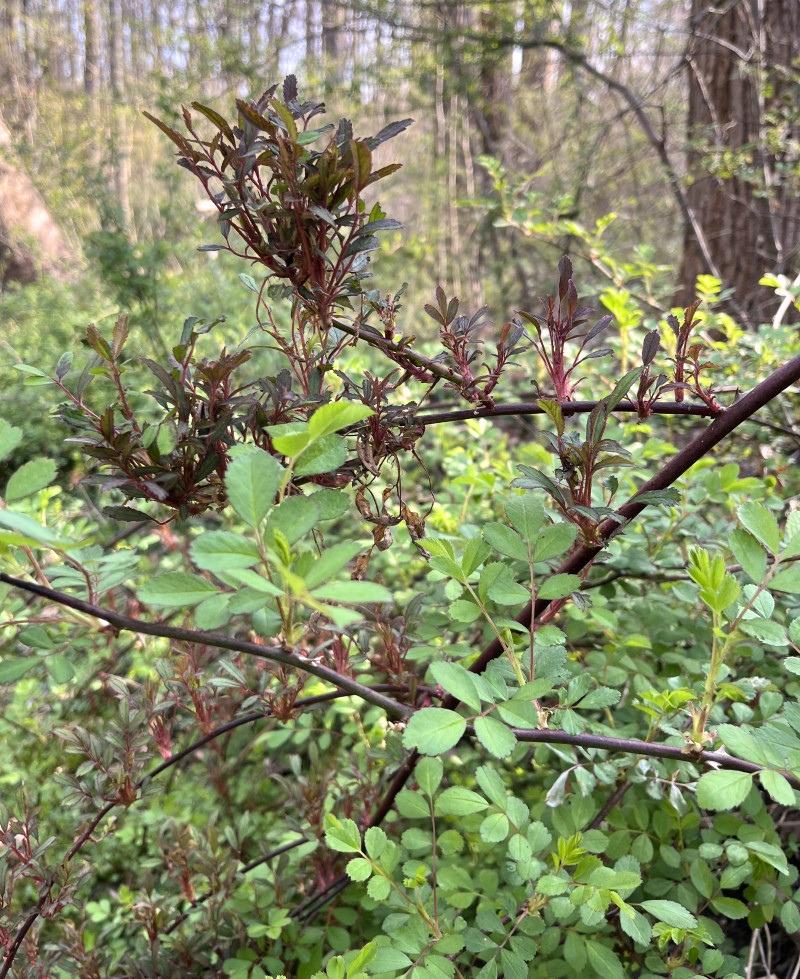
Rose rosette disease (RRD) is a viral infection that can affect roses. It is fairly common, and occurs in both cultivated roses as well as invasive rose species that grow in natural areas, such as multiflora rose.
Rose rosette disease symptoms
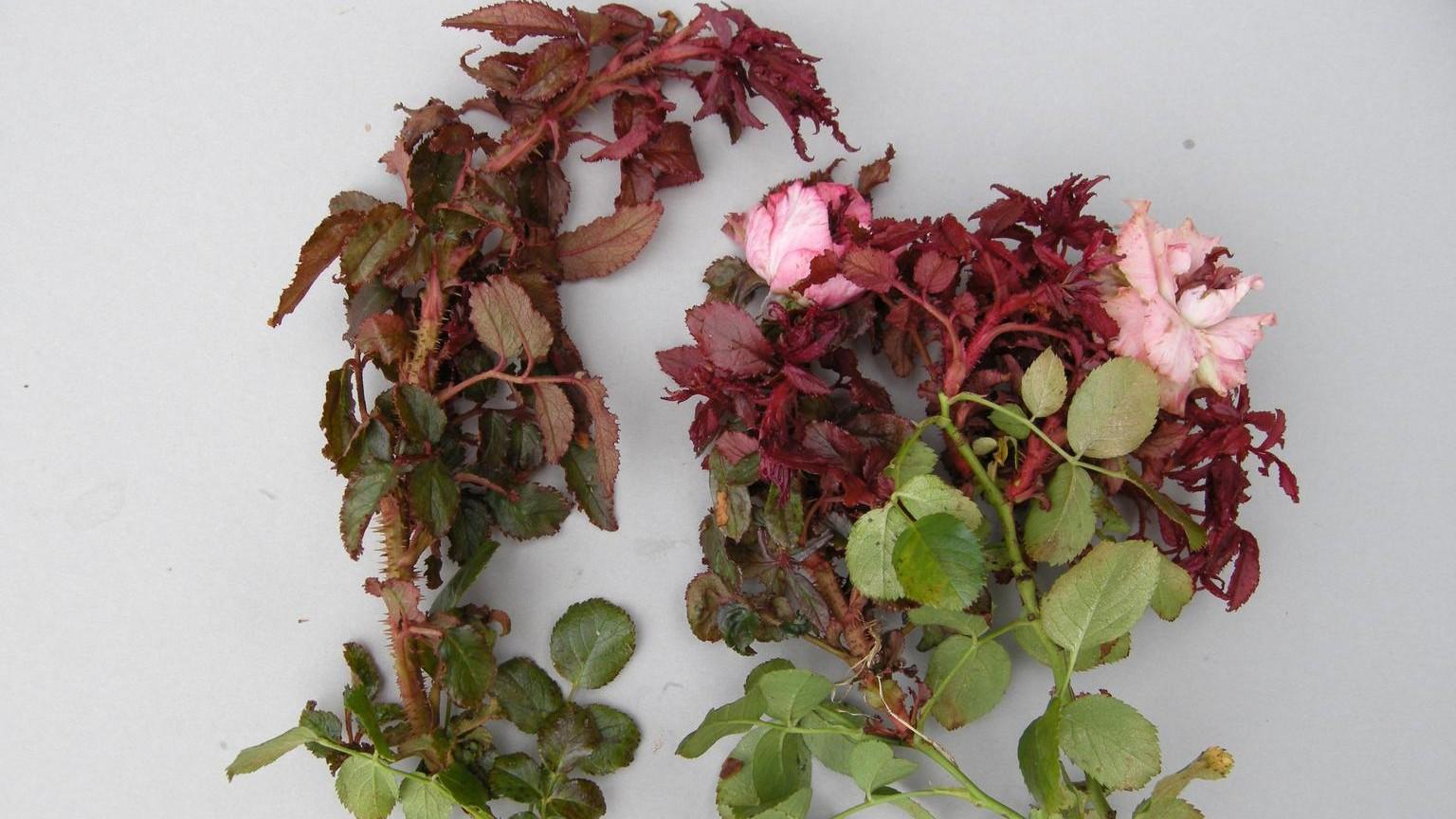
- Reddening of the stems and stunted growth; note that, by itself, a reddish coloration to new growth is not a reliable symptom of RRD
- Disfigured leaves, often looking stringier (more slender) and smaller than normal
- Congested or unusually clustered new growth (called proliferation)
- More numerous and pliable thorns than those found on asymptomatic stems
- Aborted flowers -- they don't form properly, or fall off prematurely
Infected roses may die within two years.
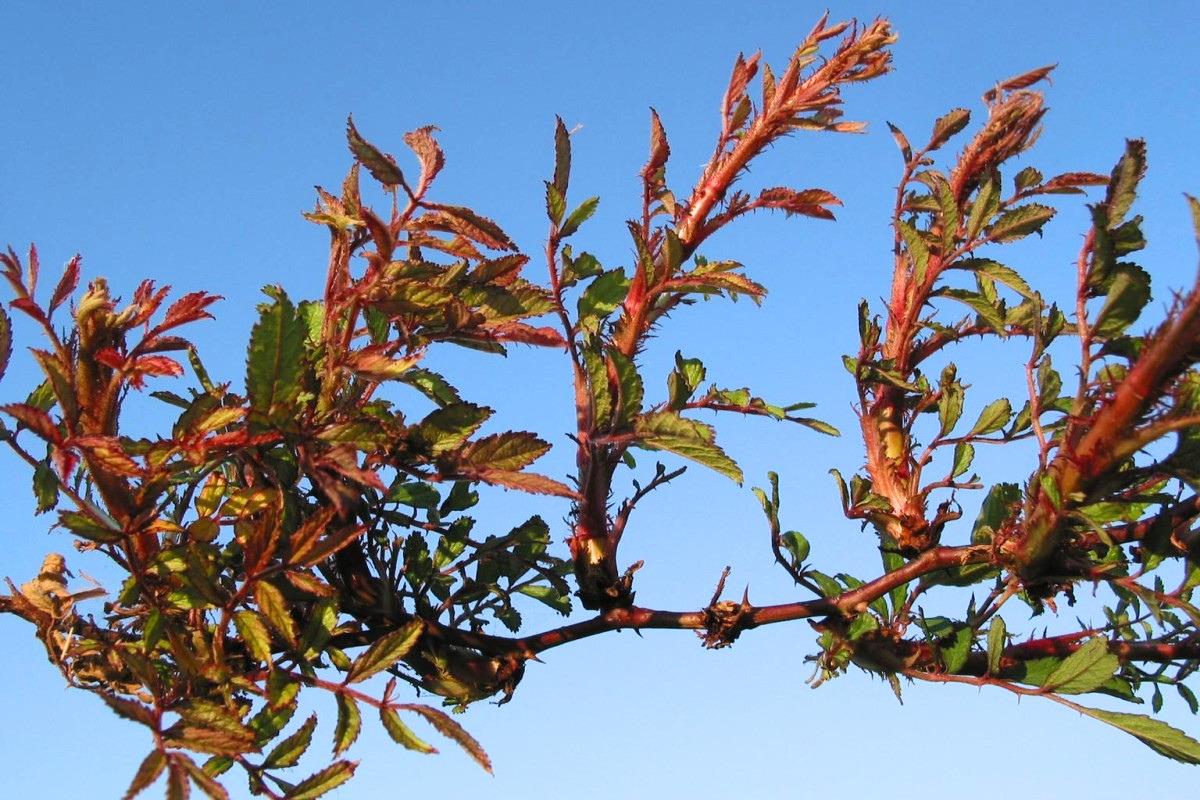
Photo: Dawn Dailey O'Brien, Cornell University, Bugwood.org
How does rose rosette spread?
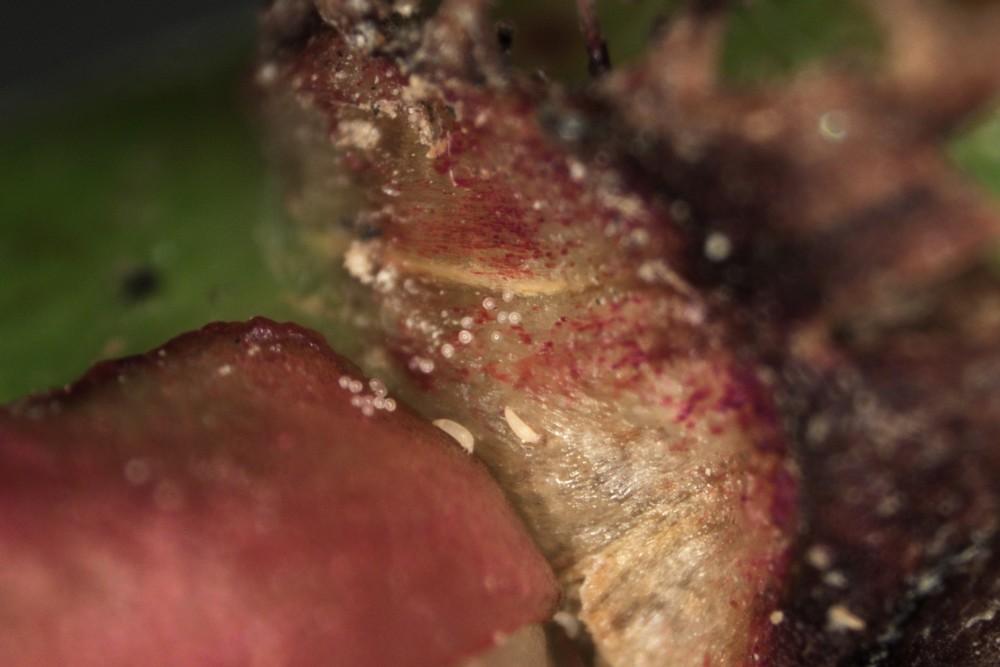
The virus is primarily transmitted by an eriophyid mite. They are microscopic in size, elongate in shape, and cream-colored. They tend to congregate in nooks and crannies of the plant where pesticide sprays will not effectively reach them. These mites can be blown around on wind currents to reach new plants, and when they feed on an infected plant, they can vector the virus when they later feed on healthy roses.
Actions that bring virus-contaminated sap into contact with a healthy plant's sap can also transmit the disease. Infections can begin by grafting cuttings (to propagate the rose) and using pruning tools on an infected plant that are not disinfected before being used on another rose.
The widespread invasive species multiflora rose (Rosa multiflora) serves as the main source of infection in ornamental plantings.