Photos are very helpful for Ask Extension diagnostics and recommendations, if they are taken well.
Updated: September 15, 2026
The following are tips on how to take good photos and send detailed information that will help us understand your question and respond quickly with a confident answer.
General photography tips
Make sure your photos are clear and in focus.
Wipe off your cell phone camera lens before taking the photos as it is common for skin oil to accumulate and fog up the picture.
Take multiple photos and choose the clearest and sharpest image.
Avoid taking photos with the sun or major light sources in front of you, as your camera will adjust and make your subject dark. Move your camera or the subject so that the light is behind you.
Take photos from multiple angles.
In harsh sunlight conditions, shading your subject may provide better lighting and clarity.
Disable any artistic cell phone camera filters that change the image's colors or appearance.
Closeup photos
Closeups of details can be important. With cell phone cameras, move your phone as close to the subject as possible rather than relying heavily on the digital zoom. However, once within a foot or so of a small subject, your camera may not be able to focus that close. Consider backing up a bit and enlarging with a small amount of digital zoom if you are having trouble getting focus.
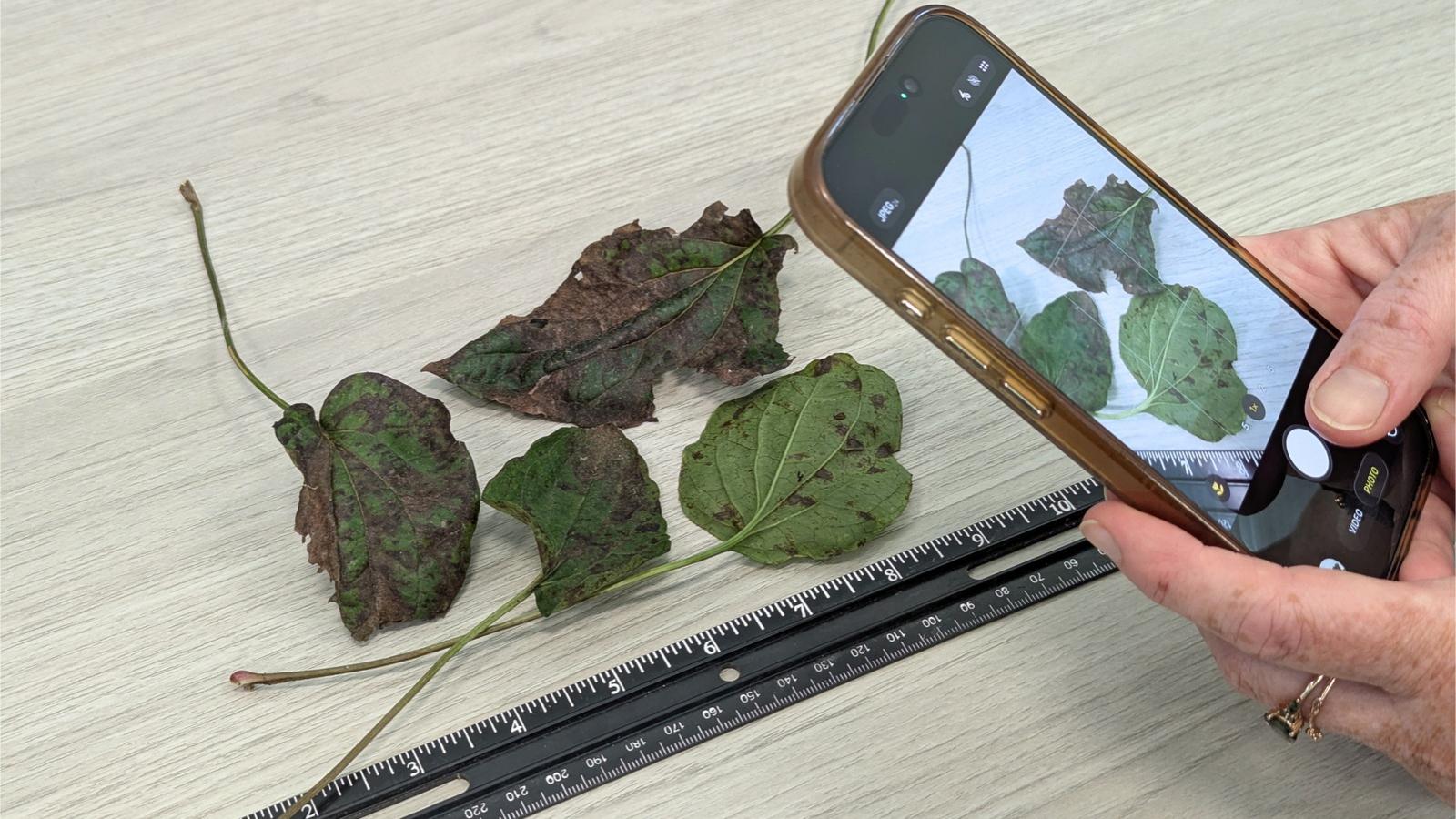
When possible, include an object in the photo with your subject to provide sizing context, such as a ruler (the best option), coin, pen or pencil, battery, or a finger.
Although a ruler may be ideal, common objects can provide a good sense of scale and specimen size.
Provide context for your question
In the text area of the Ask Extension submission form, submit information beyond “what is this?” and your photos. Details that can help us hone-in on your problem or identify your subject include:
Did something change in the plant's environment before you noticed symptoms? For example, was herbicide applied nearby? Was a sidewalk installed or was there digging nearby for utility or construction work?
How long has the issue been going on? Was there a notable weather event, such as heavy rain, lightning, or extended drought?
Where in the landscape did you find the issue? Is the area lower (downhill) or higher (uphill) in relative elevation, near a water source, or in a very sunny or very shady area?
Plant problems and plant identification
Plant problems
Take photos of all symptomatic parts of the plant. Inspect all aspects of the plant, not just the area with the first issue you noticed. Inspect the stems, trunk, the ground/soil, and the leaves. Take and send a photo even if you are not sure if it is relevant.
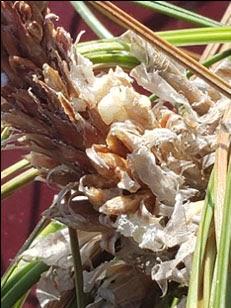
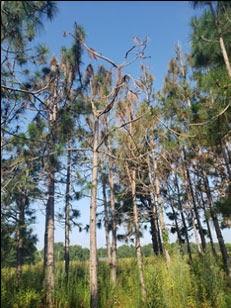
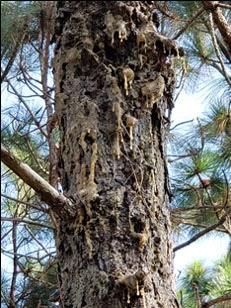
In the following photo examples: These longleaf pine trees are infected with pitch canker. Different photos from different distances provide their own clues.
Take photos of both the top and bottom of leaves. Some insects cause damage only visible on the leaf undersides.
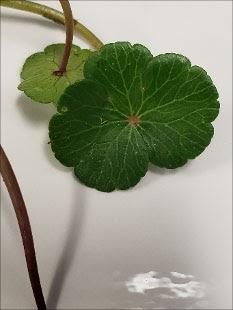
In the following images: Whether for the purpose of identifying a plant species or a disease infecting the plant, both the top and bottom surfaces may provide clues.
Plant identification
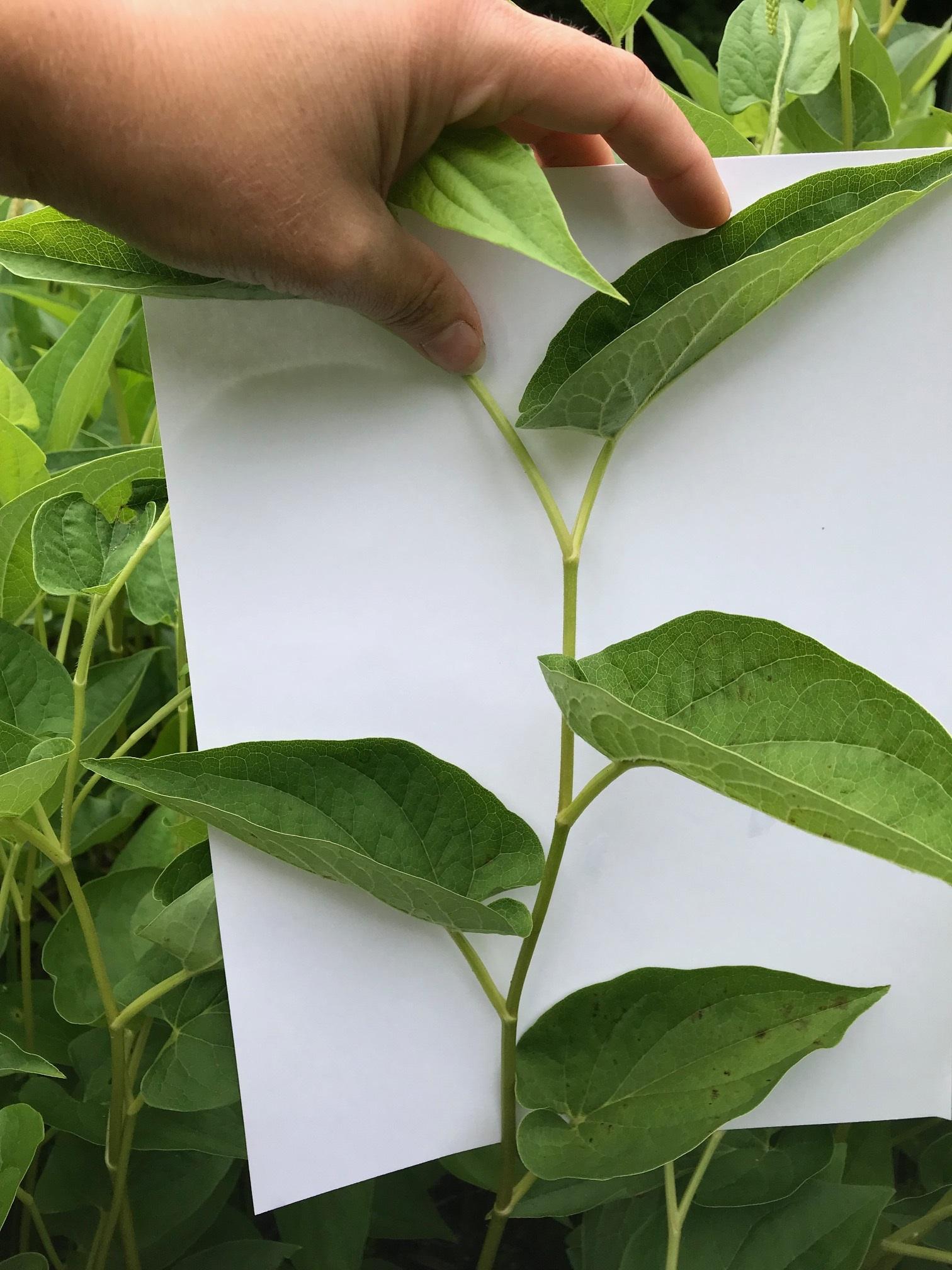
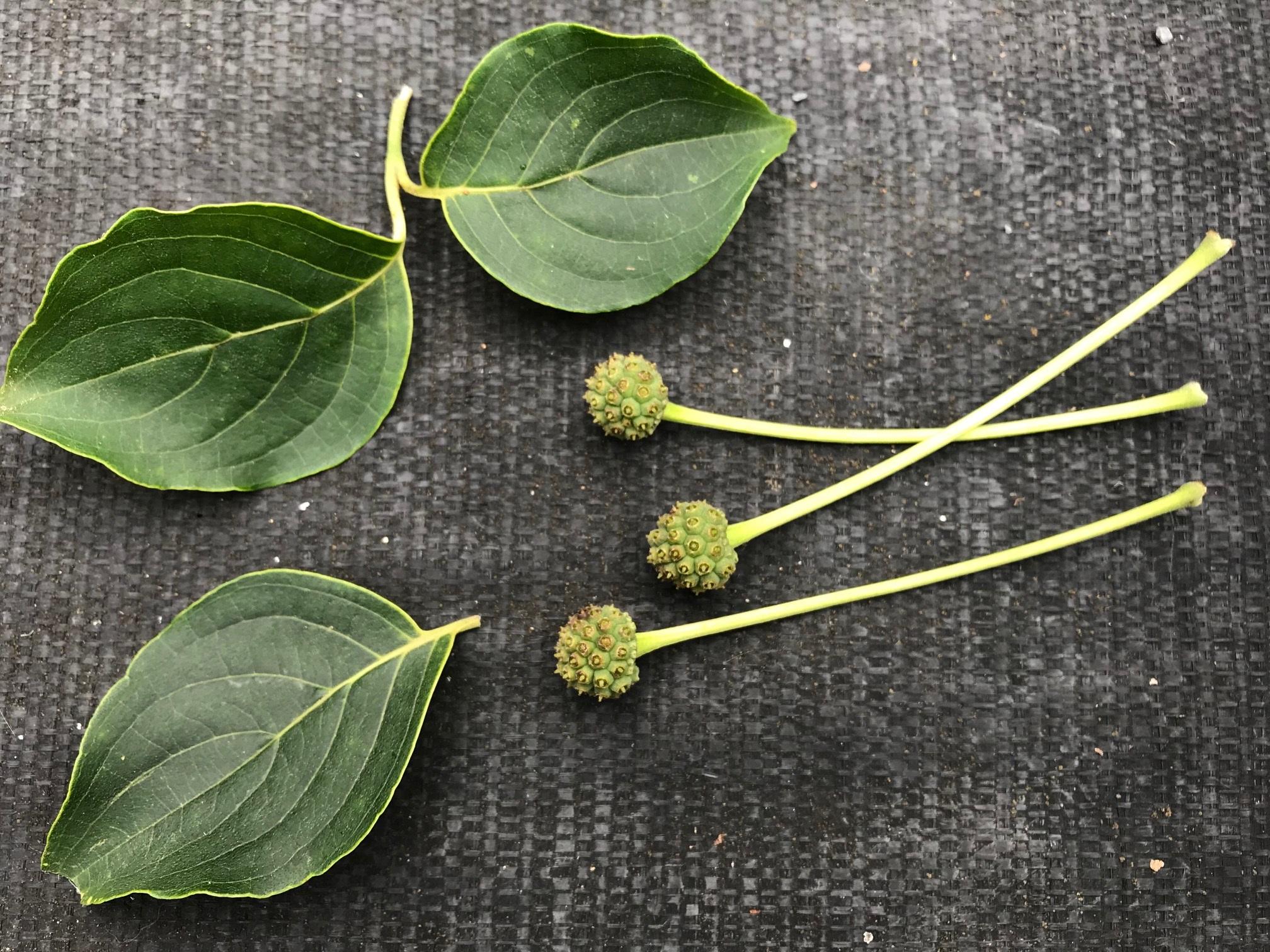
We need to see as many features of the plant as possible: the reproductive parts of the plant (flowers, fruits, seedheads), the leaf arrangement (alternate, opposite, or whorled), leaf margin details, and the buds. Show us both the whole plant and close-up views.
Take a photo of the full plant
Take a closeup of the leaf
Photo of both leaves and buds help us ID the plant.
Taking and submitting photos to Ask Extension for plant identification
Grasses and grass-like plant identification
These are challenging to identify, especially if plants have been mowed. Characteristics that help with ID include:
Flowers or seedheads
Growth habit of the plants (clumping or creeping/spreading)
Stem shape (flat, round, or angular in cross section)
Abundance or absence of hairs on the leaves or stems
Leaf arrangement and emergence (unfurling leaves were rolled or folded in the bud)
Root system structure (fibrous; with or without runners (rhizomes or stolons); presence or absence of bulbs)
Insect identification
Crumpled insects without an indicator of size makes ID very difficult. Key body parts used in identification may be missing if the insect is squished or broken into pieces.
Photos need to be in focus and taken in good, natural light. Take top-down, underside, and side views of the insect if possible.
Capture flying or crawling insects in a container and put them in the freezer for 15 minutes to stop their activity and hold them still for a photo.
Put an object next to the insect (like a ruler or coin) for size.
Snake, lizard, frog, and toad identification
If possible, take photos of the top and bottom of the whole animal, because color patterns help with identification.
Dorsal (back) and ventral (belly) coloration and patterns aid in the identification of snake species.
Send us your questions!
Send your questions and photos to us by using the Ask Extension submission form.
Content inspired by "How to Take Photos for Your Extension Agent" by Clemson Cooperative Extension. Photo credits: T.J. Savereno, Forestry and Wildlife Extension Agent, Clemson University, unless otherwise specified.