
Tomato Spotted Wilt Virus Found in Field Tomato’s
Emily Zobel, UME AgFS Agent
Tomatoes with tomato spotted wilt virus (TSWV) have been reported through the Mid-Atlantic, including in Maryland, this growing season. TSWV is an important pathogen that causes disease in numerous crops (170 plant species), but it is commonly found on pepper, eggplant, potato, lettuce, spinach, cucurbits, beans, and ornamental plants.
TSVW is primarily spread by thrips, especially the western flower thrips (Frankliniella occidentalis) in our area. Thrips acquire TSWV during their larval stage by feeding on infected plants, where the virus circulates and replicates inside of the thrip allowing it to be transmitted throughout the entire insect's life. The virus does not pass onto the eggs limiting some of the viral load carry over.
Ornamental and weed plants can act as a virus reservoir for inflection and overwintering around greenhouses, high tunnels or fields. Common host weeds include prickly lettuce, chickweed, spiny amaranth, lambs quarters, black nightshade, shepherd’s purse, and burdock.
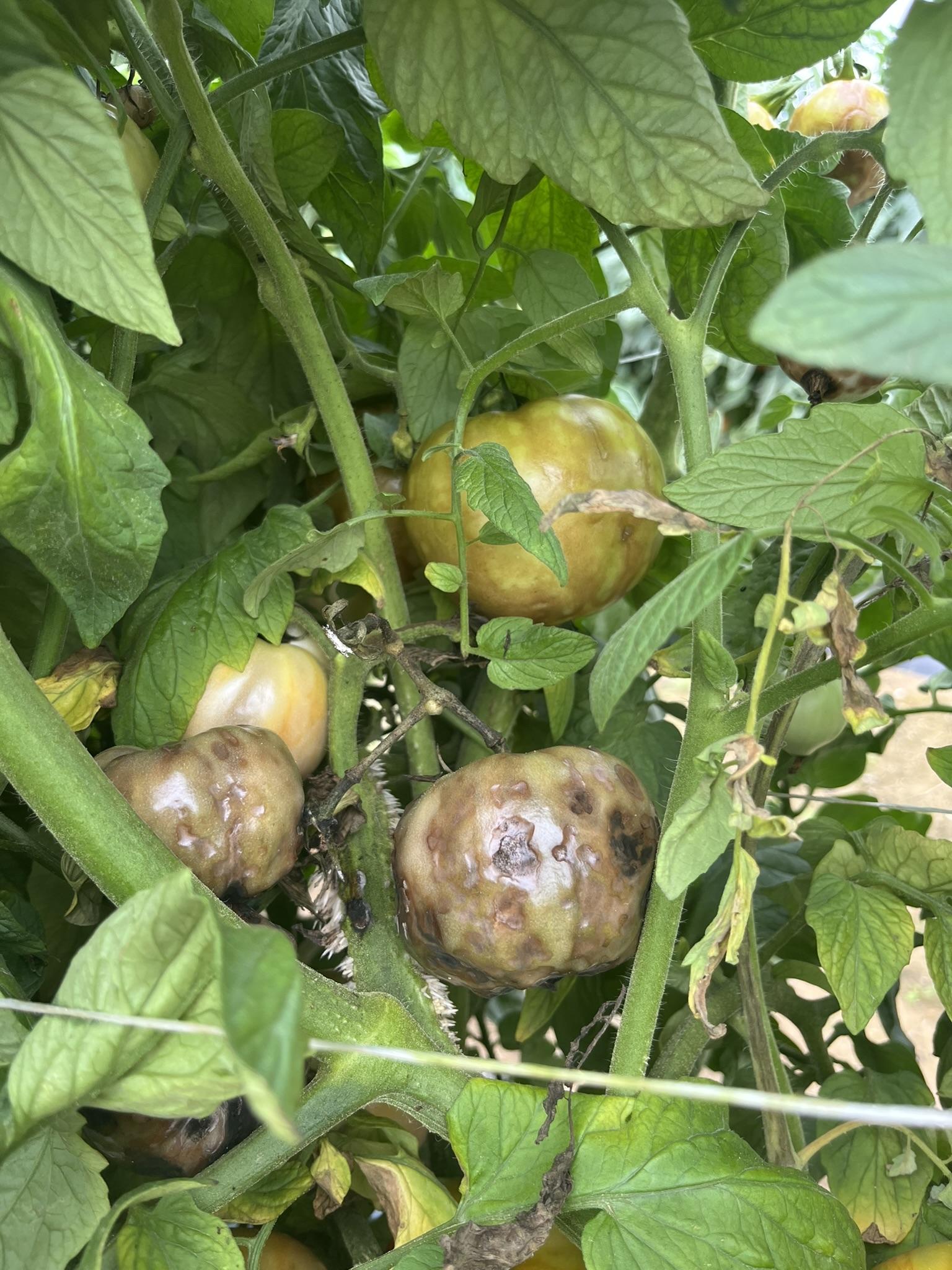
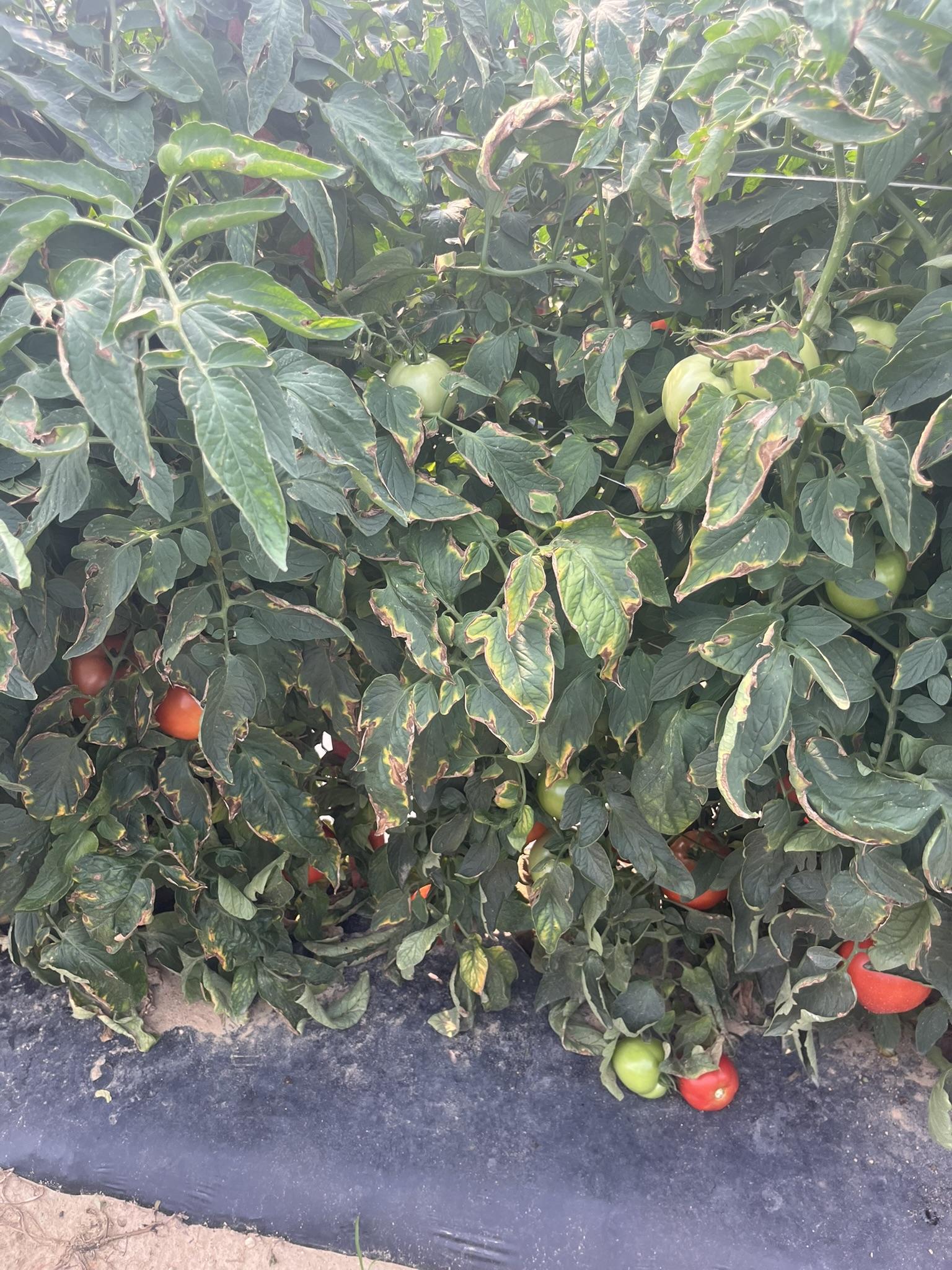
Symptoms of the virus differ depending on the plant species, variety, growth stage of plant at inflection and environmental conditions. In tomatoes and peppers bull’s eye necrotic rings and spots on fruit and leaves is one of the most noticeable symptoms of this pathogen (Figure 1). Other symptoms include: stunting, dark necrotic spots on the leaves, stems and petioles; leaf discoloration such as chlorosis (yellowing) or bronzing of the top of leaves (Figure 2).
Due to the wide range of symptoms, this disease can be mistaken for other pathogens, or chemical injury. Lesions caused by TSWV tended to have blurred margins, while the margins of lesions caused by other diseases are more definite. Agdia INC ImmunoStrip® is a test strip that can be used in the field to confirm the presence of TSWV within minutes. If you are unsure if the plant has TSWV contact your local extension office for assistance with submitting samples to the UMD Plant Plant Diagnostic Laboratory.
Growing TSWV resistant tomato and pepper varieties has been the main way producers manage TSWV. There have been reports of resistance-breaking strains of the TSWV in tomatoes, so other management strategies should be used along with resistant varieties to help minimize potential loss due to TSWV.
Thrips are difficult to manage with insecticides because they tend to hide in hard to reach parts of the plant or in the soil. They also have a rapid ability to develop resistance, so rotate modes of action as much as possible. The use of contact insecticides alone is usually not effective because they often do not reach the areas where thrips are feeding. The addition of a surfactant has been shown to increase the effectiveness of some insecticides. See the newest version of the Mid-Atlantic Commercial Vegetable Production Recommendations guide for recommendations for both greenhouse and field management of the thrips that vector TSWV. Having a multi-pronged approach for managing thrips and TSWV will give you the best chance of protecting your crop and avoiding losses. Below are some key practices that can help keep thrips populations as low as possible:
- Avoid producing and storing vegetable transplants in greenhouses where ornamentals are imported or propagated that may have thrips. Segregate and monitor any incoming transplants to ensure that they are not bringing in thrips.
- Farms with a history of TSWV might want to enclose greenhouse windows with fine-meshed screening that can help limit thrips movement. Scouting for thrips, thrip feeding damage and TSWV symptoms, in the greenhouse house with yellow stick cards and with visual inspection in high tunnels or field settings. Immediately remove symptomatic plants to avoid secondary spread within the field.
- Scout ~50 plants at least once a week. On tomatoes check 2 leaves per plant. On peppers check 2 flowers per plant.
- Threshold: Action should be taken if counts are increasing towards an average of 5 thrips per 10 leaves, or >6 thrips per pepper flower.
- Monitor thrips populations after insecticide treatments to assess efficacy. Some systemic products, such as Beleaf and Verimark may take several days to ~a week to impact thrips populations.
- Controlling weeds throughout the farm, especially in and around high tunnels. Common refuge plants for thrips include dandelion, sow thistle, chickweed, buttercup, and plantain.
- Separating field plantings from greenhouses/tunnels, strawberry fields, and small grains.
- If possible, plant at times that do not coincide with major thrips migration periods. Separating successive field plantings as much as possible. This way, if thrips and/or TSWV get out of control in one planting, they will not move directly into the next planting.
- Planting on metallized or reflective mulches can help reduce early season thrips populations in field plantings. Covering transplants with fine-mesh nets to act as a physical barrier may prevent early inflections.
- Biological and cultural controls are organically acceptable management methods. For high tunnel and greenhouse grows see our past article “ Using Augmentative Biological Control for Managing Thrips and Mites in Maryland High Tunnels (FS-2025-0749) “ for suggestions and tips about using natural enemies. Certain formulations of the botanicals azadirachtin (Azatin), neem oil, and pyrethrins without piperonyl butoxide (PyGanic), the microbial Beauveria bassiana and spinosad (Entrust Naturalyte, Entrust SC), certain narrow-range oils (Organic JMS Stylet-Oil), and potassium salts of fatty acids (insecticidal soap) are acceptable for organic production.
This article appears in August 2026, Volume 17, Issue 7 of the Vegetable and Fruit News