
Updated: September 8, 2026
Measuring, Modeling, and Managing Soil Organic Carbon in Maryland Agriculture (EB-2026-0828)
This publication explains how Maryland farmers can measure and model soil organic carbon, use COMET-Farm to compare management scenarios, and apply soil-health information to conservation decisions. Authors: Gurpal S. Toor and Suzanne Dorsey; Title: Measuring, Modeling, and Managing Soil Organic Carbon in Maryland Agriculture (EB-2026-0828).
Updated: July 28, 2026
Cultivating Conservation for Maryland and Delaware’s Historically Underserved Farmers (EM-2025-0752)
Authors:
Sarah Hirsh
- Shannon Dill
- Caroline Kuchta
- Neith Little
- Kelly Nichols
- Margaret Todd
This guidebook aims to increase knowledge of conservation practices and resources available to help farmers and land managers plan for and incorporate conservation onto their land. The guidebook discusses how conservation can fit into whole farm planning, conservation plans, the Web Soil Survey resource, an overview of agencies and conservation programs, and Natural Resource Conservation Service program eligibility and contract requirements. Authors: Sarah Hirsh, Shannon Dill, Caroline Kuchta, Neith Little, Kelly Nichols, and Margaret Todd; Title: Cultivating Conservation for Maryland and Delaware’s Historically Underserved Farmers (EM-2025-0752).
Updated: September 15, 2025
The Power of Pollinators (EC-2023-0675)
Authors:
Amy Lang
The Power of Pollinators lessons provide engaging, interactive activities for youth audiences to explore the role pollinators play in our food supply, providing opportunities to explore pollinator species and habitats and engage in environmental stewardship practices to support these vital organisms. As youth explore these concepts they will develop an increased affinity for the natural world and the science that can be used to explore and understand it. Author: Amy Lang; Title: The Power of Pollinators (EC-2023-0675).
Updated: August 22, 2025
Soil Health (FS-2025-0754)
Authors:
Sarah Hirsh
Soil health is the status of soil in terms of its ability to function and sustain life. It involves physical, chemical, and biological factors that are all interrelated. Soil organisms are critical for building good soil structure, ensuring air and water movements through the soil, decomposing organic materials, and cycling nutrients. A soil with good physical structure and with sufficient nutrient cycling will encourage increased numbers and diversity of soil organisms. When we manage soil with practices that minimize disturbance, maximize soil cover, maximize biodiversity, and maximize the presence of living roots, we can increase soil health, increasing the sustainability and profitability of agriculture. Author: Sarah Hirsh; Title: Soil Health (FS-2025-0754).
Updated: May 20, 2025
Environmental Justice in Agricultural Waste Management (EBR-2023-0690)
This fact sheet introduces environmental justice and describes how vulnerable communities, including racial and ethnic minorities, are impacted by the introduction of new waste management technology across Maryland's Eastern Shore. Author's: Eric Burnstein, Mimi Sanford, Priscilla Alves, Higor Costa, and Marccus Hendricks; Title: Environmental Justice in Agricultural Waste Management (EBR-2023-0690).
Updated: May 19, 2025
Maryland’s Nutrient, Animal Waste, and Technology Landscape (FS-2024-0737)
A culmination of recent research on Maryland’s livestock sector assesses nutrient production, management practices, and treatment technologies, highlighting areas where nutrient outputs exceed processing capacity to support informed policymaking, strategic investments, and public awareness. Authors: Lillian Masson, Elizabeth Thilmany, Stephanie Landsing, and Derek Wietelman; Title: Maryland’s Nutrient, Animal Waste, and Technology Landscape (FS-2024-0737).
Updated: February 3, 2021
Basic Principles of Watershed Restoration and Stormwater Management in the Chesapeake Bay Region
Authors:
Jennifer Dindinger
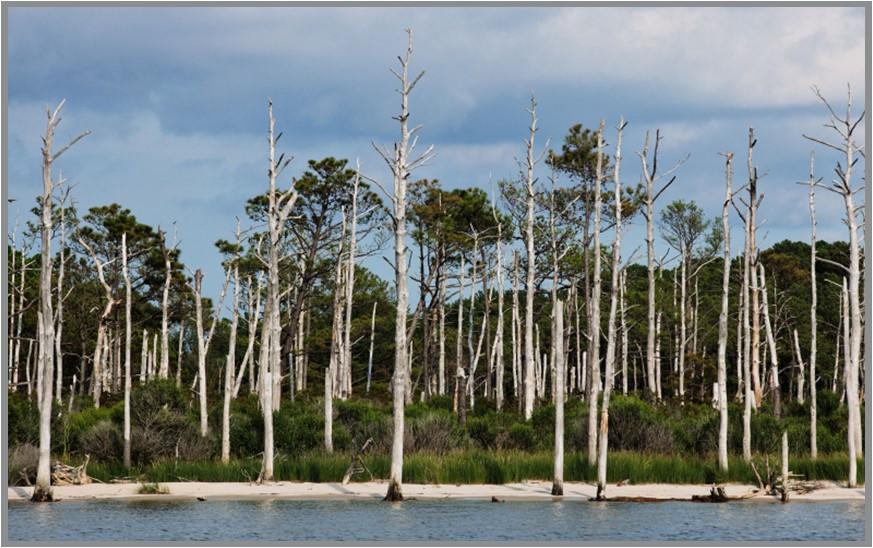
The objective of this document is to provide an overview of the most relevant urban stormwater management and watershed restoration issues, common mitigating practices, and regulations relevant to the Chesapeake Bay Watershed. Land use and landscaping practices can drastically change how water flows on the landscape and ultimately impacts the health of our streams, rivers, and bays.