This page is under construction, please be patient with us as we add additional content. Thank you.
Resources
Our Publications and Resources include fact sheets on pollinators, garden activities for children, instructions on building an herb spiral and a rain garden, and much more.
Get the latest information from one of these Frederick County Master Gardener (FCMG) resources.
The goal of Bay-Wise gardening is to ensure better water quality through smart gardening practices. Members of the Bay-Wise Committee educate the public about how to create a sustainable landscape that supports all types of wildlife including birds and pollinators – using native plants, reducing/eliminating use of chemicals, mowing and fertilizing wisely, controlling stormwater runoff, and composting yard waste.
Distribute 1 glove and 5 moistened cotton balls to each student. Ask them to place a cotton ball in each finger of their glove.
Have students select their 5 seed labels and instruct them to place a label on each glove finger.
Give each student 2 seeds for each vegetable/fruit, distributing one type at a time. Make sure the labels and seeds match for each glove finger.
Using masking tape, the students can tape the gardens on a sunny window.
Every few days, check to see that the cotton balls are moist. If needed, add a few drops of water using a misting bottle or a trickle of water.
Check the seeds daily and ask students to record their observations of how the seeds swell as well as when roots and shoots begin to grow.
When the new plants, called ‘seedlings’, are approximately 2 inches tall, cut the bottom of each finger from the glove to remove the cotton ball and seedlings.
Transplant the seedlings to a container filled with potting soil or to a garden.
Continue to care for the plants until they are ready to harvest.
This project can be kept in the classroom for observation or sent home for the students to share with others. Estimated Times for Completion: prep work- 20 min.; lesson-45 min.; reinforcement activity-30 min.
Herbs
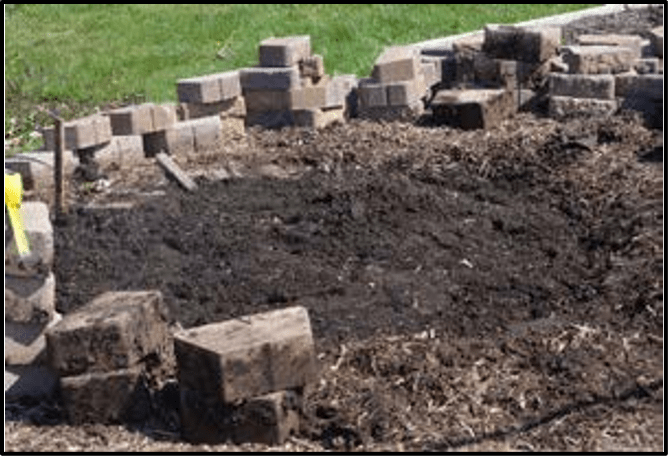
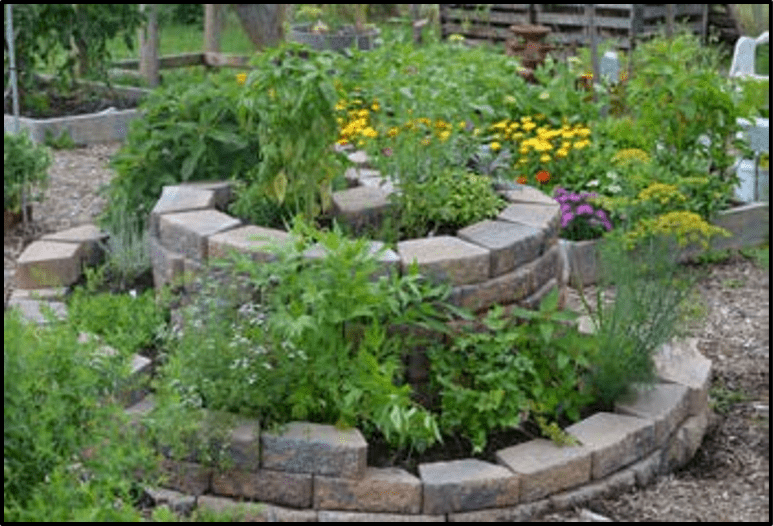
Herb Spirals - Ten Simple Steps
Herb Spirals fit into small spaces –even hard surfaces, like driveways or patios. They attract pollinators, are relatively inexpensive, and are semi-permanent. Use your imagination and follow the ten simple steps outlined below. Check the internet and gardening books for ideas and inspiration.
Step 1: Select & Prepare Site–Select an area that is mostly sunny, level, with a 6-foot diameter. If possible, located it in an area that is convenient for harvesting and close to a water source. Remove existing grass or cover area with non-glossy cardboard or weed fabric.
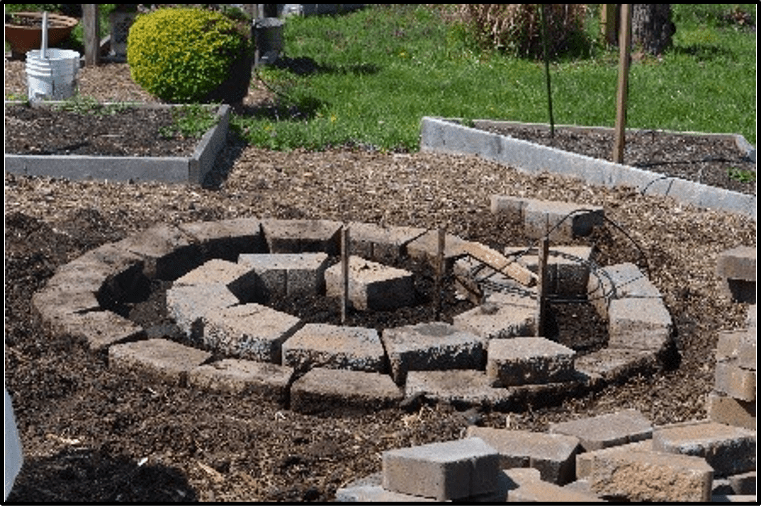
Step 2: Measure & Orientation–Determine North, South, East, and West. If possible, orient your spiral so that lowest point has a northern exposure. Ideally, spirals are laid clockwise (from outside/low point to inside/high point) in the northern hemisphere, and counter clockwise in the southern hemisphere. Six feet wide is ideal –you want to be able to reach into the middle to harvest.
Step 3: Gather Tools & Materials–For tools, a shovel, string, stakes, and measuring tape will come in handy. Materials list includes: cardboard/weed fabric, wall material/block, scrap material, gravel, 50/50 garden soil & compost mix, herbs, and an irrigation/drip line (optional). Consider expense, color, availability, shape/size when selecting wall material. If using scrap material in the center of spiral, be sure it is the same height as the outside wall material.
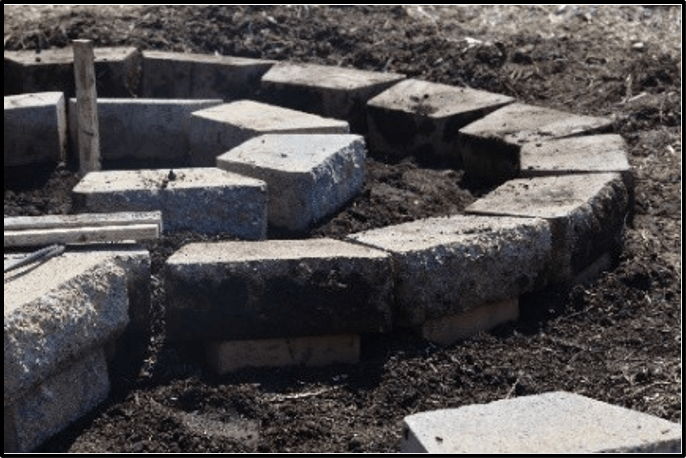
Step 4: Lay Wall’s Base Course –Take time setting the first course to get it as level as possible. Leave 8 –12 inches of planting space between the walls of the spiral. Use string and stakes to mark out your spiral ahead of time. To save money, consider using less expensive material on the inner, lower portions of the spiral.
Step 5: Add Courses to the Spiral–Start a new course every 2 ½ blocks, depending on size. Put the less expensive material on the inside. Overlap blocks to increase the stability of the spiral. Ideally, your spiral will have at least 4 courses.
Step 6: Add Gravel to Base of Center of Spiral–Adding gravel or small rocks to the center of the spiral will increase stability, improve drainage, and help prevent frost heaving in colder climates. Leave plenty of room for the soil mix.
Step 7: Fill Spiral–Use a 50/50 mix of compost and garden soil –estimate 1 cubic yard for a 6-foot diameter spiral. The soil mix should gradually slope down to the bottom of the spiral. Water well. If possible, let the soil mix settle for a few days, and then add more as needed.
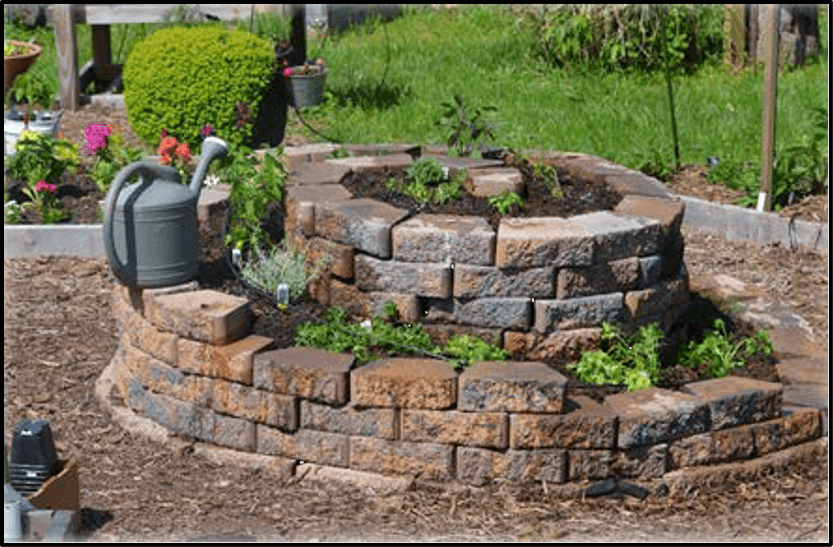
Step 8: Plant Herbs–Plant herbs according to water, sunlight needs, and growth habits. Place drought-tolerant plants at the top, and water-loving at the base. Consider variations or color and texture, companion planting for pest management, grouping perennials together, and plants for pollinators. Label herbs for future harvesting. Water well –water from the top will flow downwards.
Step 9: Irrigation–Install an irrigation or drip line if using. Otherwise, water as needed starting from the top/center
Step 10: Enjoy & Harvest! Watch your spiral transform as the herbs grow. Share with others. Dry and freeze.
'This spiral was created by Patti Kettlestrings in our demonstration garden as a 2016 intern project.'
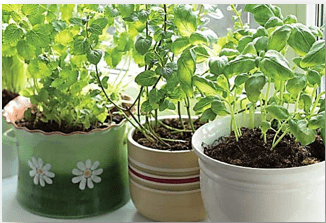
Light: Grow best in a southern window with 5-6 hours of sun per day. Herbs that are not exposed to proper light conditions will become thin and spindly, produce smaller leaves, and have a reduced aroma.
Water: Most herbs prefer “dry feet” or to stay on the dry side. Thoroughly water when the surface to approximately 1 inch below is dry. Oregano, Sage and Thyme should dry out slightly between watering. When growing Rosemary, do not allow the potting mix to dry out completely. Basil, Chives, Mint prefer moist soil.
Mist: Most herbs need additional humidity growing indoors. Mist every few days or group containers in a shallow tray filled with pebbles and a small amount of water. Remember to continue to mist when you move them outside in the spring until they have acclimated!
Temperatures: Prefer 65-75 degrees F day; 55-65 degrees F night. Good air circulation will help to control pest and disease.
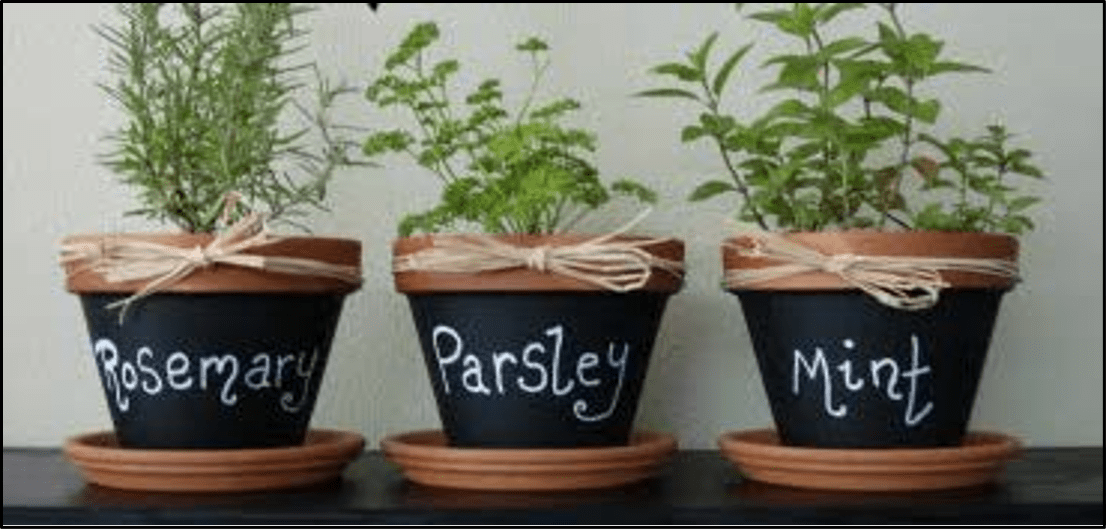
Containers: Be creative but avoid over sizing the container. Containers should be 2-4” larger than old one when transplanting.
Soil: Use a good potting soil mixture. Mints, chives and parsley need more moisture-holding materials in the mix, add compost and vermiculite to improve moisture retention. Rosemary, thyme and oregano prefer fast -draining. Add some extra sand, perlite or fine gravel for extra drainage.
Fertilize: Use a diluted solution (1/2 recommended rate) weekly.
Maintenance: Repot when roots grow through the drainage hole! The best time to repot is in the early spring so that herbs can grow into the new medium during the growing season. Perennial herbs can be repotted several times to accommodate new growth.
Harvesting: Most herbs are ready to be harvested just as the flower buds first appear. The leaves contain the maximum amount of volatile oils at this stage of growth, giving the greatest flavor and fragrance to the finished product.
Annual herbs, e.g. Basil, can be heavily cut back during harvest. Cut just above a leaf or a pair of leaves, leaving 4 to 6 inches of the stem for later growth. If an annual herb, e.g. Cilantro, is grown for its seed, allow the plants to mature fully and then harvest them. Collect the seed heads when they are turning brown by cutting them from the plants and drying them on a tray made of very fine wire mesh.
Perennial herbs, e.g. Rosemary, should not be cut back as heavily as annuals. Remove only about one-third of the top growth at a time, in some cases only the leafy tips should be removed. Careful pruning insures that new growth will be produced and a compact habit of growth maintained
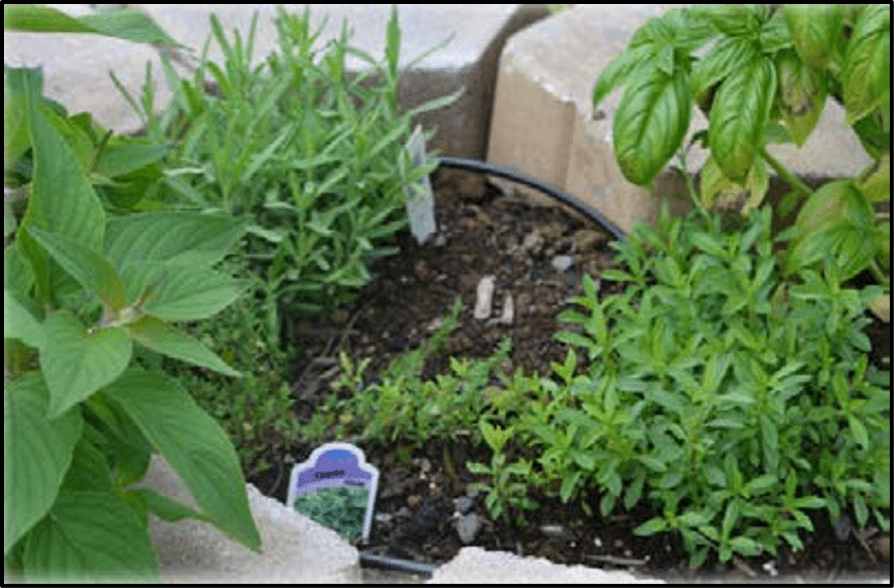
Grow Herbs outdoors - in ground or in containers.
Outdoor Herbs can be Annual (ex: Basil) to be planted each Spring, Biennial (ex: Parsley) planted every 2 yrs. or Perennial (ex: Thyme) planted once to return year after year.
Grow Herbs among your vegetables, flowers and/or shrubs.
Be sure to confine/contain invasive Herbs, i.e. Mints & Lemon Balm.
Enjoy Herb flowers & scents – echinacea, pineapple sage, lavender and many more.
Enjoy Herb seasonings & flavors, i.e. onion or garlic chives & lovage (celery).
Enjoy Herb infused vinegars and oils.
Find your favorite flavors & scents to start growing your own HERB Garden!
Integrated Pest Management
IPM is a research-based holistic approach to pest and disease management utilized by farmers, the Extension service, and the landscape/gardening industry for decades.
The Home and Garden Information Center has gathered useful resources to help manage stormwater, ponding, poor drainage, sinkhole, water run-off, soil erosion, and basement flooding issues.
Pollination is needed for 1 out of 3 foods we eat each day. Honeybees are not the only food crop pollinators . . . Maryland has more than 400 Native Bees! Blueberries are pollinated by over 115 Native Bees.
How can you help the pollinators for our food crops?
Plant to welcome bees, butterflies, moths, birds, bats, and other pollinators.
Offer nectar and pollen with a variety of flowering plants, shrubs, and trees.
Aim for blooms from early Spring, through Summer, and into late Fall.
Include perennial plants that are native to the Maryland region.
Invite pollinators to a “puddler” water station using a shallow container lined with stones and/or sand.
Native bees take shelter in bare ground patches, dead wood, or even nest boxes.
Wait until Spring to clear landscape and flower beds to provide Winter shelter.
Stop using poisonous pesticides & herbicides!
Remember that only about 10% of insects cause plant/crop damage; the other 90% are “Good Bugs”.
By collecting the water and storing it in the barrel, it is kept from flowing over land &paved surfaces where it would pick up pollutants, such as fertilizers, pet waste and oils, and eventually be discharged into local waterways.
A Rain Garden is a shallow landscaped depression that receives runoff from surrounding rooftops, driveways, or yard areas. Compared with traditional landscaping, which is usually raised a few inches above the surrounding landscape, Rain Gardens are graded as shallow depressions that accumulate runoff from surrounding areas. A Rain Garden simulates the runoff treatment provided by natural areas, such as forests or meadows (but of course, should not replace existing wooded areas). The primary component of a Rain Garden is the filter bed, which can consist of the existing soil (if it percolates well) or an assembled mixture of sand, soil, and organic material, topped with a surface mulch layer and plants.
Row Covers and Cold Frames: Extend the Growing Season
add text
Other Publications
Garden and Lawn Guide, What To Do and When
add text
Articles
A collection of newspaper columns, (below) are written by Master Gardeners and touch on topics ranging from indoor gardening, to personal reflections on gardening, to seasonal gardening activities.
Bay-Wise Gardening
Your Gardening Practices Affect the Water Quality of the Chesapeake Bay
Add text
Into Each Life Some Rain Must Fall
add text
Summer Gardening
Succulents: from huge and tall to short and sprawling
By Maritta Perry Grau Frederick County Master Gardener
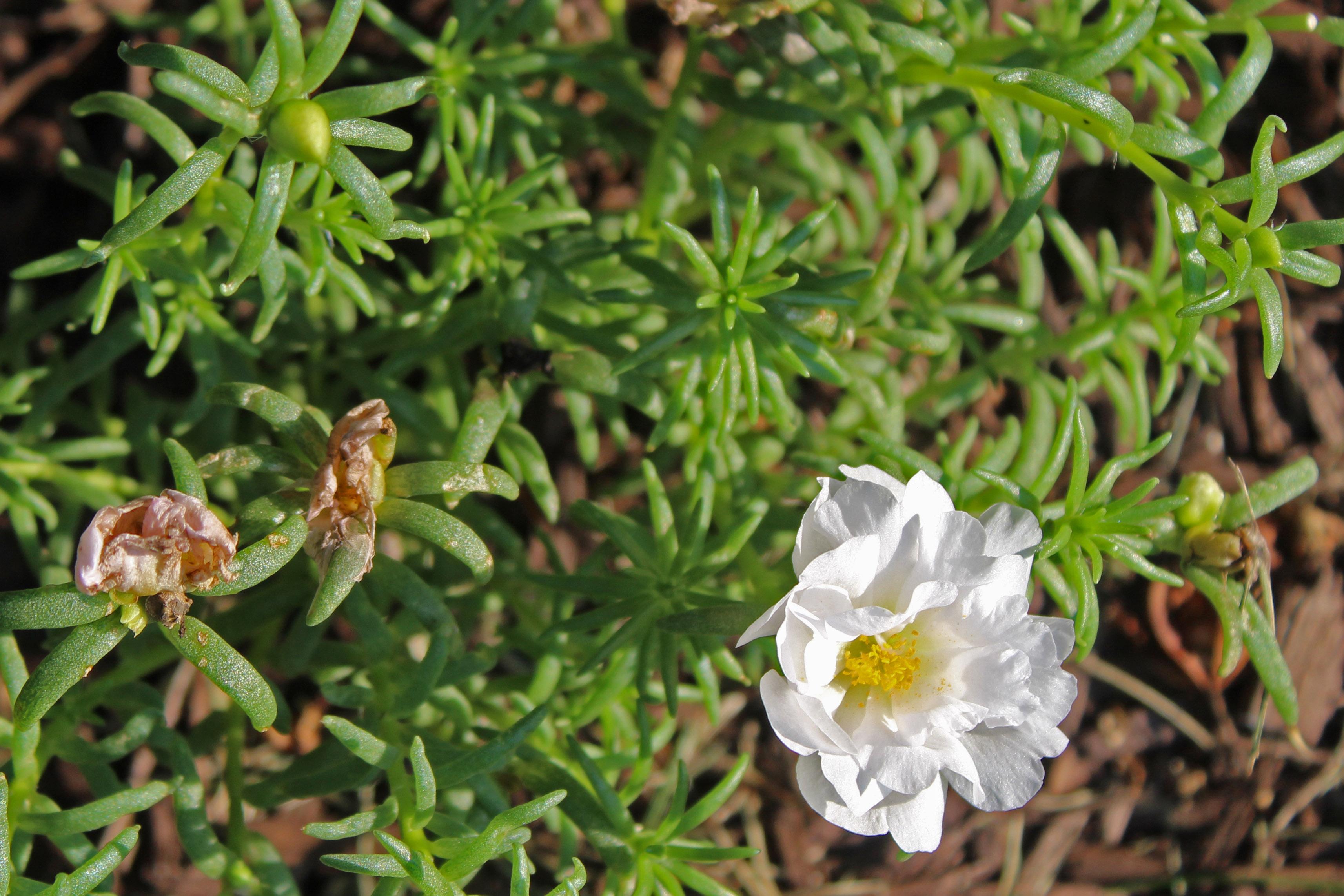
Portulaca (Portulaca grandiflora) or moss rose is a common, popular annual succulent with flowers in many shades of red, pink, yellow, and white. It is not native to North America. Like many of the other 100 or so species of the Portulaca family, moss rose readily reseeds and adapts well to hot, dry or humid summers of Maryland. (Photo courtesy of the author)
What do Saguaro, String of Pearls, Aloe Vera, Echeveria have in common? They are all succulents, even the huge Saguaro cactus, a protected native species in the West. In fact, all cacti, whether small, spiny, golf ball-shaped and -sized plants or that huge Saguaro cactus seen so frequently in Western films, are succulents.
The Eastern Prickly Pear (Opuntia humifusa) is Maryland’s only native cactus and can be outdoors year-round; it is low-growing and sports bright yellow flowers in early spring. Its upright “leaves,” or pads, are flat but thick, and in the wild, it is most often found in dry, sandy, or rocky areas.
Another outdoor succulent, not a cactus, but still native to Maryland, is Allegheny Stonecrop (Hylotelephium telephioides); a tall succulent, it thrives on sunny, rocky ledges.
Fairly well known as a landscape or garden feature is the native Adam's Needle or Yucca plant (Yucca filamentosa). Very drought-tolerant and cold-hardy even here in Maryland, one of its attractions is its tall stalks of white, bell-shaped flowers. However, be cautious around this plant—there’s a reason it’s also nicknamed “Spanish Bayonets” or “Spanish Daggers”: Its long, sword-shaped leaves are thick, stiff, and have quite sharp tips that can easily cut or puncture your skin.
Surprisingly, not all succulents need sunny, dry areas. For example, the native Woodland Stonecrop (Sedum ternatum) prefers shade; it has beautiful, white, star-shaped flowers that bloom from April through June. Other succulents may be growing in sun or shade among the weeds and wild plants in your own back yard.
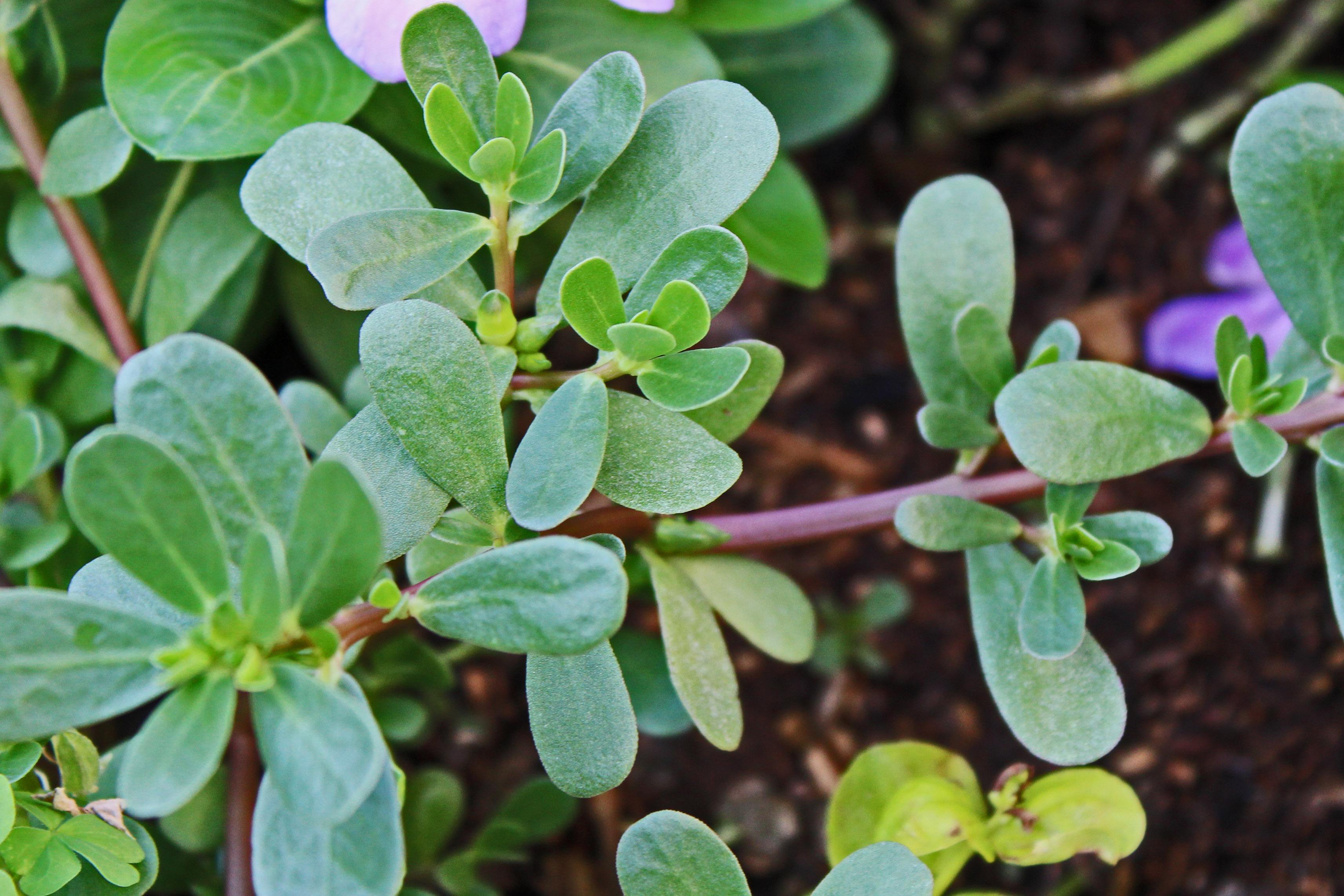
No doubt you often find yourself weeding out purslane (Portulaca oleracea), a common nonnative weed and succulent—it’s the one that sprawls on the ground or in a pot with your favorite annuals. It has thick, rounded leaves, pinkish stems, and small, five-petaled yellow flowers, according to the Maryland Department of Natural Resources (MDNR).
Purslane (Portulaca oleracea) is a common Maryland succulent in the same family as moss rose (Portulaca grandiflora). It may or may not be native; some researchers have found fossil evidence of purslane in North America from pre-Columbian times. Perhaps because purslane reseeds itself so easily and prolifically and will pop up in almost any sidewalk crack, it’s usually considered a weed. It’s the one that spreads out flat and features thick, rounded leaves, pinkish stems, and pretty, small, five-petaled yellow flowers. (Photo courtesy of the author)
And while Saguaros may be tall and spiny, purslane may sprawl anywhere and everywhere, you will see in many plant nurseries and big box stores, wide, shallow bowls or pots sporting arrangements of several small, fleshy plants (including small cacti of various kinds), sometimes even blooming. Some are native to North America; some are not. Some do well outdoors; some do not. But they are all called succulents because of their ability to survive like camels in dry environments, absorbing and retaining water in their leaves, stems, or roots.
Also, some succulents, while not technically native to North America, have been here for hundreds of years or longer and are well adapted to our varied climates. One example of that is Dragon's Blood Sedum (Sedum spurium), a cold-hardy succulent known for its small, rounded, fleshy leaves, drought tolerance, and slow, trailing growth habit. A second, very sturdy non-native succulent that does well outside is Hens and Chicks (Sempervivum tectorum), which grow in rounded rosettes, rather than sprawling
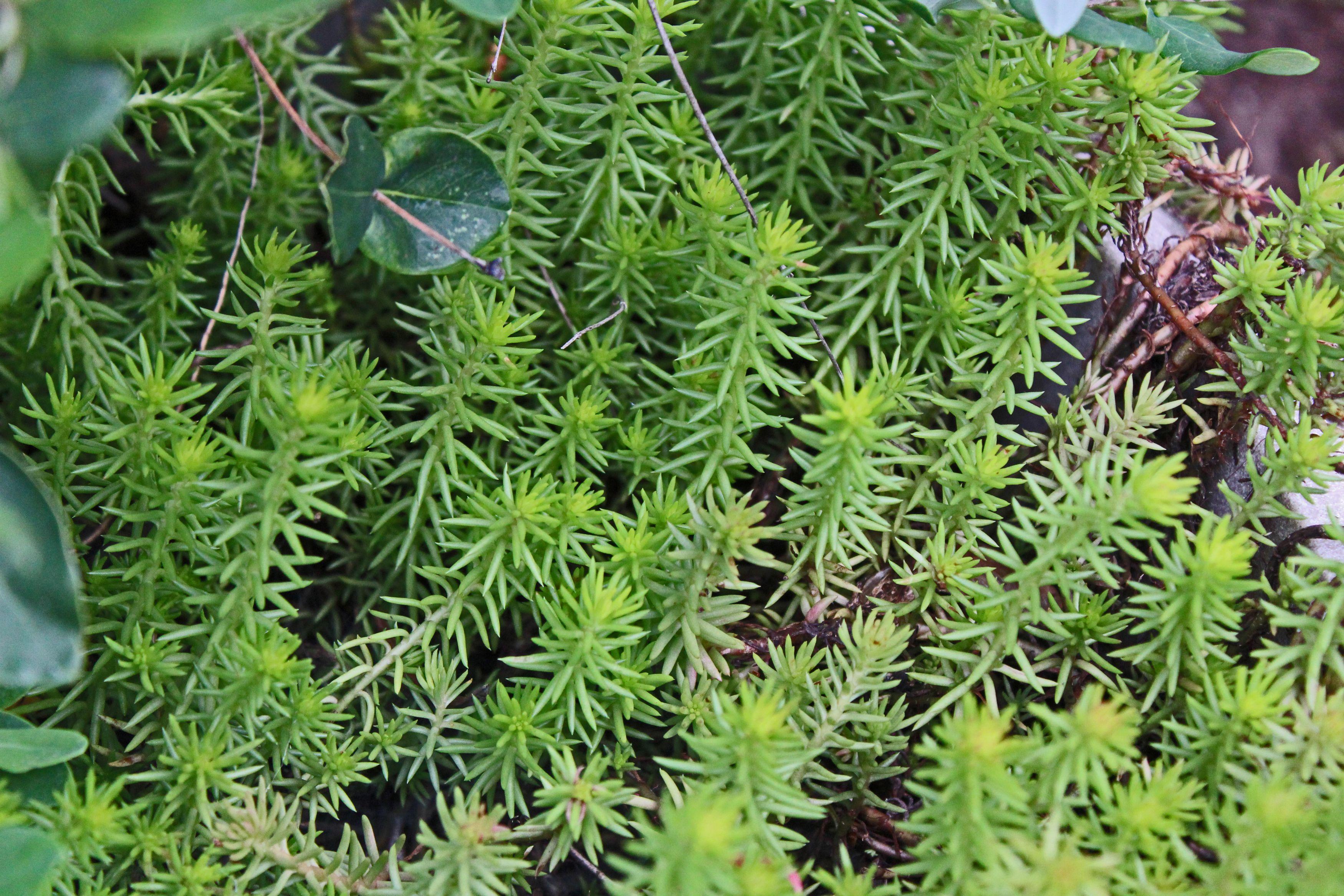
Angelina sedum (Sedum reflexum), or reflexed stonecrop, can be an outdoor, slow-growing groundcover or a pot spiller. It stays chartreuse year-round or may turn slightly orange or reddish in the winter months. Here, it is shown covering the surface of a pot of native honeysuckle. (Photo courtesy of the author)
To be indoors or not? According to the University of Maryland Extension Service (UMDE) and other experts, most succulents can live indoors year-round. Indoors, they need at least six hours of bright sunlight, such as in a southwest window, or natural light augmented with LED grow lights. UMD has an excellent website article, UMD Lighting for Indoor Plants Guide (https://extension.umd.edu/resource/lighting-indoor-plants/) to help you determine the best lighting for many kinds of indoor plants.
Some popular, non-hardy, indoor succulents include Dwarf Gasteria (Gasteria bilcolor), String of Bananas (Senecio radicans), and Star Window (Haworthia cuspidata), all discussed by James Monroe in a Fine Gardening article (issue 204), as well as Aloe Vera (Aloe), Echeveria (Echeveria), and the Jade plant (Crassula ovata). Echeveria is sometimes mistakenly called Hens and Chicks. However, the true Hens and Chicks belongs to the Sempervivum tectorum species noted above.
For more gardening information, sign up for our free quarterly e-newsletter, Garden Smart, at gardenersnews@gmail.com. In addition, visit our website or Facebook (see below) for information on upcoming free seminars (we just presented one on succulents a few months ago!), Master Gardener certification classes, and publications, as well as other announcements, or call us at 301-600-1596: