
Agricultural Heat Safety
By Sara Kidd, University of Maryland Extension Educator - Frederick County
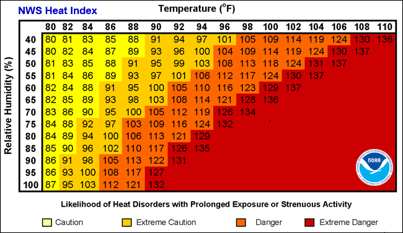
With August bringing both high temperatures and humidity, Maryland will be experiencing some elevated heat indexes. The heat index, or "real feel" temperature, is calculated by combining air temperature and relative humidity (see Figure 1 for a helpful heat index chart).
During these hot summer months protecting new and vulnerable agricultural workers is particularly crucial. One statistic that has always stuck with me is that according to OSHA, almost 50% of heat-related deaths occur on a worker's very first day on the job, and over 70% occur within their first week (Tustin 2018). This underscores the vital importance of acclimatization to working in the heat. You can help workers acclimatize by slowly increasing workloads, scheduling frequent rest breaks, avoiding strenuous labor during peak heat hours, providing shaded or well-ventilated rest areas, and closely monitoring everyone on site. Hydration also remains key, so make sure to drink plenty of water and replenish electrolytes!
It is also essential to recognize the signs of heat stress, which include dizziness, headache, high body temperature, disorientation, chills, profuse sweating (but no sweating at all can also be a symptom), or hallucinations. If you or someone else displays these symptoms, take immediate action by calling 911, then move the individual to a cool shaded area, and apply cool water to help lower their body temperature quickly.
As farmers, keeping an eye on the weather is second nature, but preparing for heat emergencies is just as critical. Hosting a quick, informal safety meeting with workers to review prevention, symptom identification, and emergency response can save lives. Ensure that emergency response crews can find and access your workers locations (have a numbered field/farm map, know how to provide GPS coordinates, etc.). Provide Spanish or other language translations if necessary.
This article appears in August 2026, Volume 17, Issue 5 of the Agronomy News.