
Alliance for the Chesapeake Bay
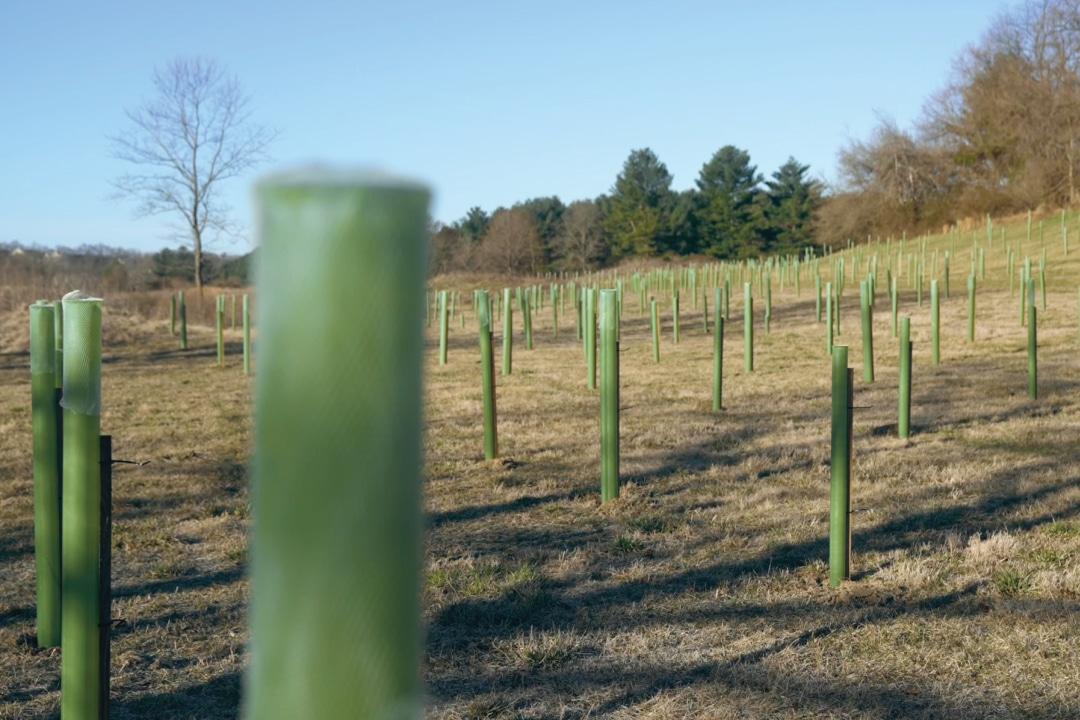
The Healthy Forests Healthy Waters program (HFHW) has planted its 2,000th acre of forest in Maryland! HFHW is a collaborative reforestation initiative between the Alliance, the Maryland Forest Service, the Maryland Forestry Foundation, and landowners throughout Maryland.
Over 389 projects have been completed under the program since its founding in 2015. HFHW provides participating landowners with a free, turnkey tree reforestation project of an acre or more on open land that they want to convert into a forest. Landowners agree to maintain this new forest for at least fifteen years.
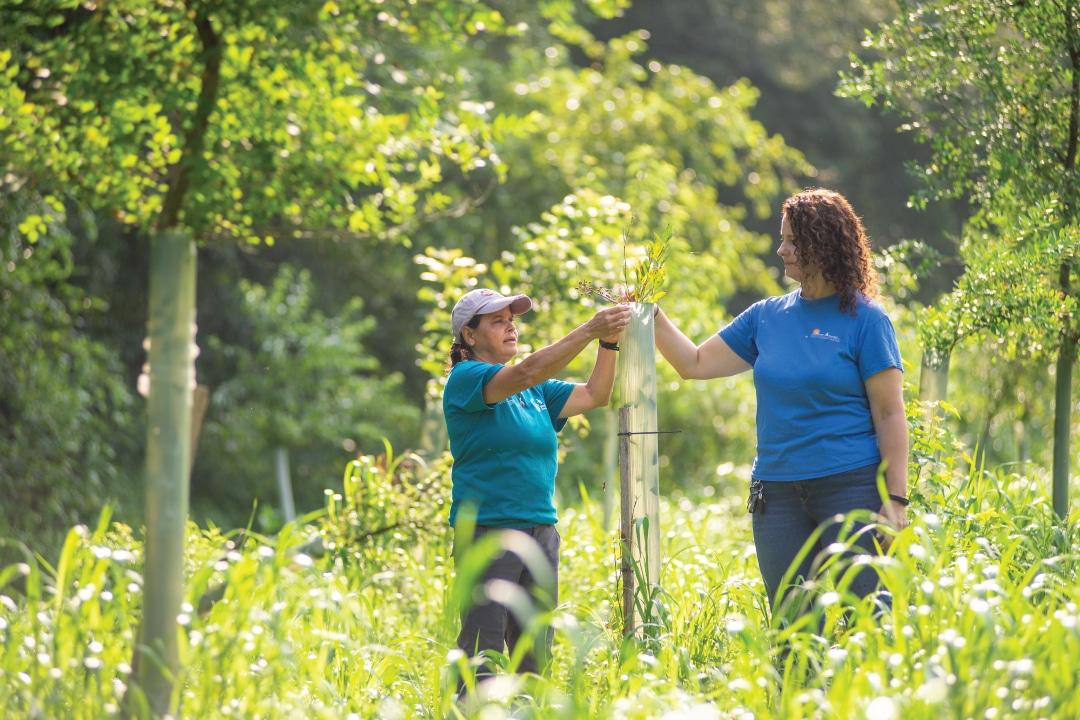
The Alliance recently visited Jug Bay Wetlands Sanctuary, a planting project as part of HFHW. Located in Lothian, Maryland, Jug Bay Wetlands Sanctuary (JBWS) lies along the tidal reaches of the Patuxent River. The sanctuary protects roughly 1,700 acres of freshwater marshes, forested wetlands, and riparian forest.
Unique ecosystems like JBWS provide habitat for diverse plants and animals, both aquatic and terrestrial. Additionally, the sanctuary was also designated an Important Bird Area in 2016, and is home to over 80 archaeological sites, giving researchers a glimpse into human activity up to 11,000 years ago.
The Alliance worked with JBWS staff to reforest 36 acres of former agricultural field and plant meadow on an additional 17 acres. By establishing new forests and a meadow, the project provides a myriad of benefits to the park, but also, to water quality. After all, the Patuxent River flows directly into the Chesapeake Bay, so this project is very important for keeping pollution out.
The tree planting method chosen for JBWS was hand planting, as it was most appropriate. Species planted included 1,000 white oaks, 600 red maples, and 600 American Sycamore. In total Jug Bay received 9,125 tree and shrub saplings.
Another project completed under the program was 50 acres of new forest on a property in the outskirts of Westminster, Maryland, the Wakefield Valley Golf Course. Opened in the late 1970s, interest in golf waned over the years and the course, like many others, fell on hard times. Since then, the community has used the site as a passive park focused on the cart paths. The city’s master plan indicated that “the property should be maintained as a park in a manner that is safe and inviting to all members of the public”.
These plans included reforestation of some of the open and mowed fairways and the riparian area along Copps Branch that flows through the park. An appropriate 35 tree and shrub species were selected for the 50 acres planted, which reflect the city’s goals to improve the park’s wildlife habitat and aesthetics, and improve nearby water quality. Learn more about the Wakefield project via a YouTube video here.
The HFHW program is supported by a grant through the Maryland Department of Natural Resources’ Chesapeake and Coastal Bays Trust Fund as an innovative approach to reduce the amounts of nutrients and sediments entering our waterways.