
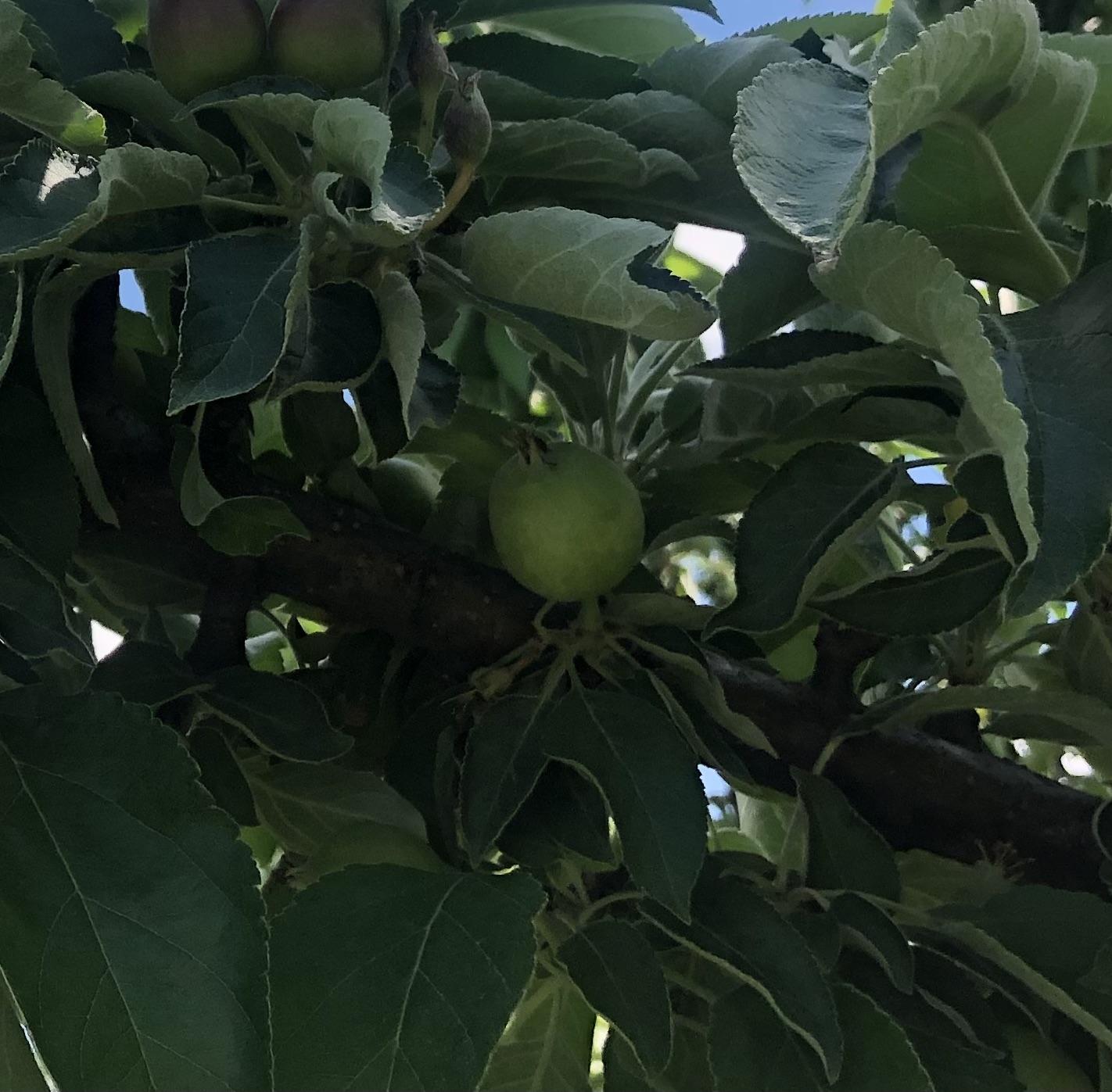
Figure 2. Apple fruit set on the underside of apple branches in 2025.
Climate Change and the Orchard: It's Been a Difficult Spring for Fruit Growers
By Christopher S. Walsh, Professor Emeritus Department of Plant Science and Landscape Architecture
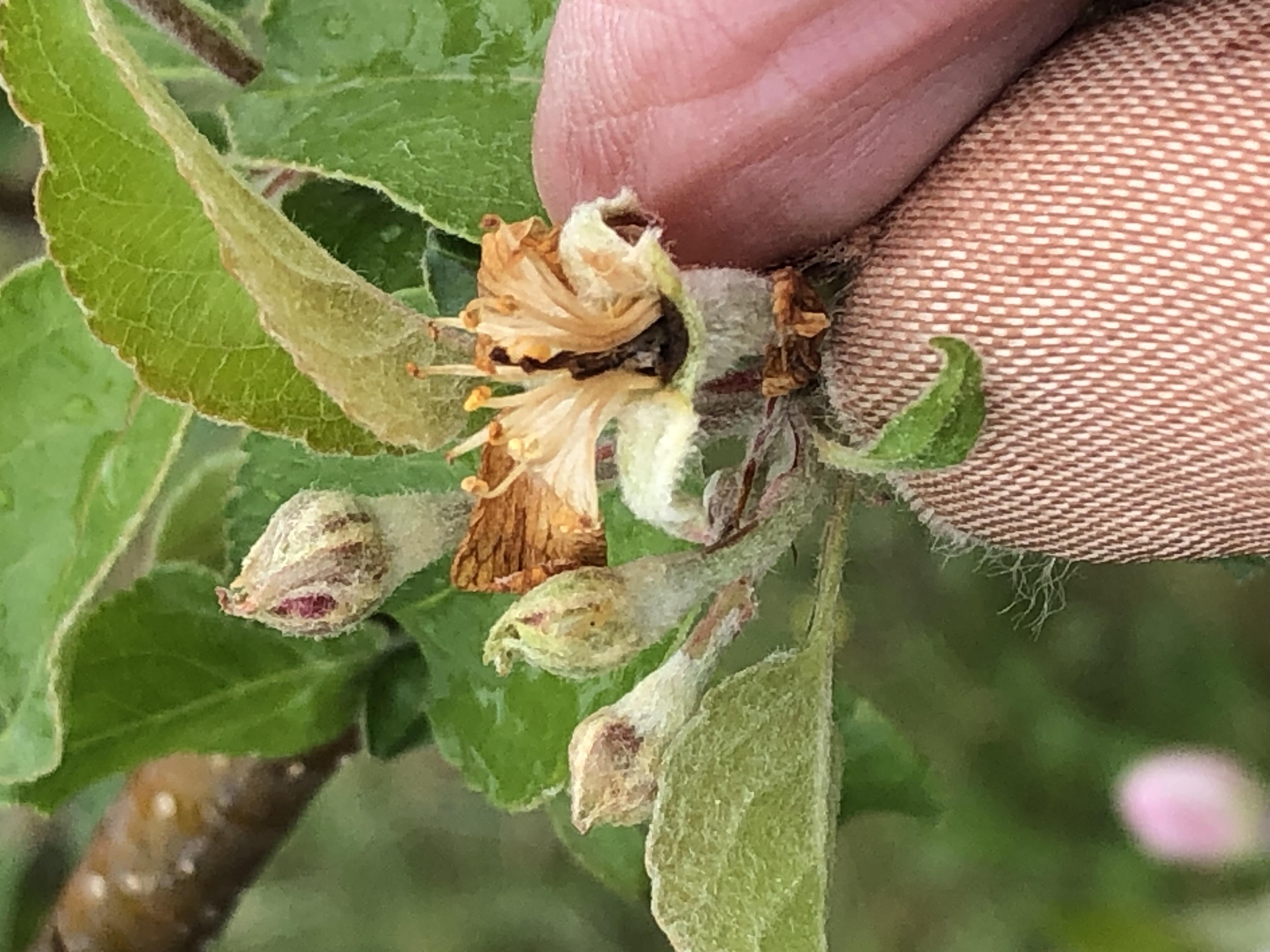
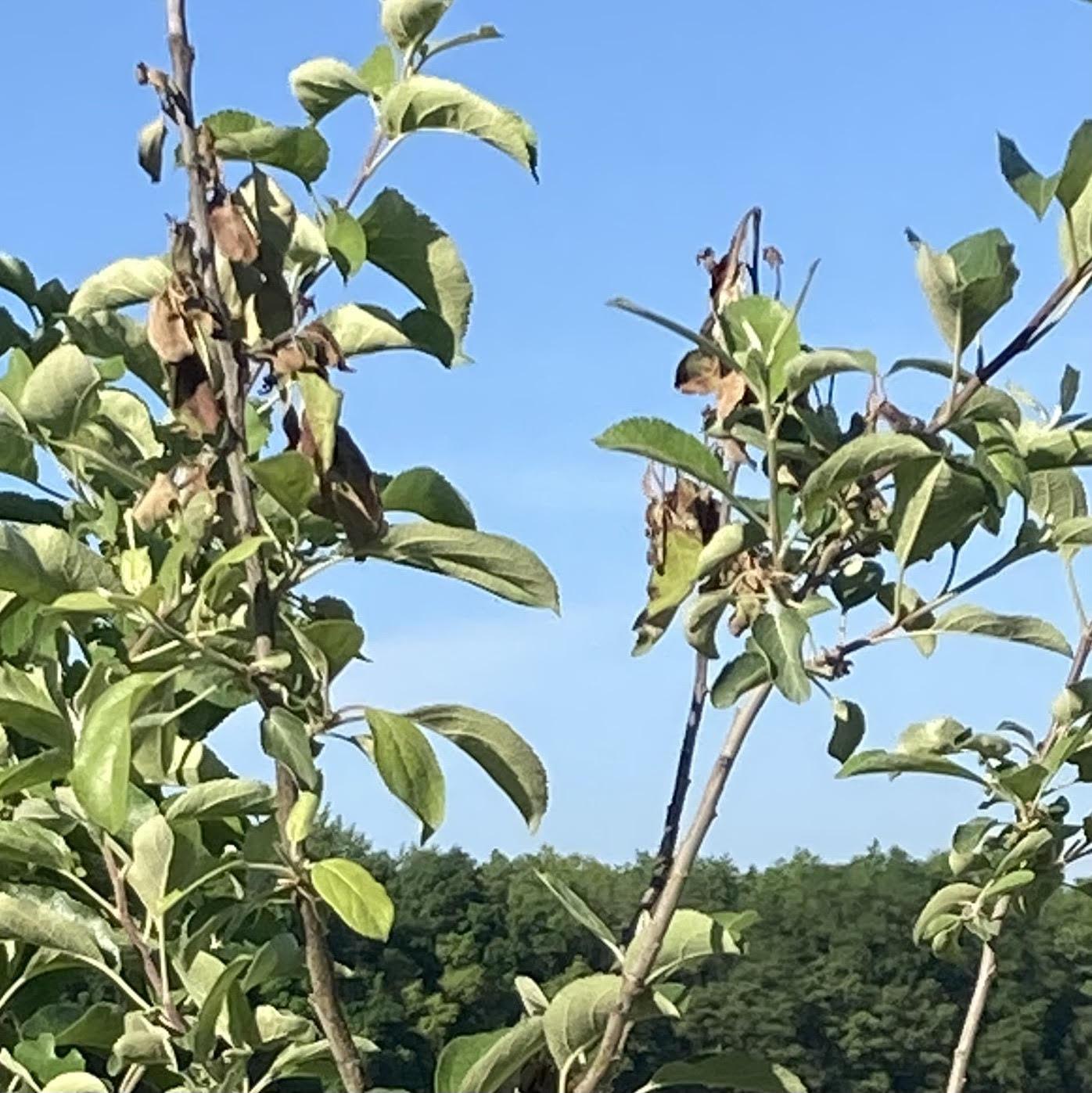
This spring's weather was unkind to Maryland fruit growers. Whether you believe in climate change or not, you know that an early bloom, an advective April freeze, and one of the wettest months of May on record has hurt fruit production.
On April 9, many apple and peach trees were in bloom. At the University orchard in Washington County, 20F was recorded during an advective freeze. As this was caused by a cold, windy air mass from Canada, the usual frost protection measures used during radiational freezes were ineffective. Years ago, apple bloom at this orchard began on about April 20 and ended in early May. An early bloom in 2025 resulting from warmer winter weather, coupled with a late-spring freeze lead to major crop losses. We have grown Gala at Keedysville for more than 40 years. This is the first I can recall of a near-total loss of fruit on that variety. Oddly enough, Granny Smith trees at the same site still appear to be carrying a full crop.
Then the spring weather got wet and windy. Rainfall in May 2025 was well above average. Weathermen in Washington DC noted it was one of the top ten May rainfalls ever recorded. This was particularly hard on our early-season strawberry growers. Multiple rains in early May were particularly difficult to manage on early-season plasticulture plantings in Southern Maryland and on the Eastern Shore.
In a typical year, heavy May rains would trigger a severe fire blight outbreak. Thankfully, growers report less-than-average fire blight despite the rainy weather. Strikes appear to have been primarily to susceptible varieties such as Cripps Pink, CrimsonCrisp and hard-cider varieties like Dabinett. Did the early-April freeze greatly reduce the fire blight inoculum? Or did the freeze-damaged flowers reduce the chances for Erwinia colonization and shoot blight?
With the uneven effects on crop, growers did not choose to chemically thin. Growers who did thin used a light dose to - hopefully - break up clusters. Either way, we can expect a heavy return bloom in 2026. I’ve never favored adding a light application of summer growth regulators to enhance return bloom. This year, I doubt anyone will find that necessary, unless they were lucky enough to set a bumper crop. While we are looking at a light apple crop, the low set counts and heavy May rains should lead to excellent fruit size. Here’s hoping for ‘normal’ summer and fall weather and a good-quality apple crop.
This article is featured in the Vegetable and Fruit News, Vol. 16, Issue 3.
Vegetable & Fruit News is a research-based publication for the commercial vegetable and fruit industry available electronically from April through October. Published by the University of Maryland Extension Agriculture and Food Systems team.
Subscribe