

FS-2024-0741 | July 2025
Engaging Stakeholders in Extension Program Planning and Evaluation Efforts
By Brilliant Asamoah and Colby Silvert
Introduction
Extension professionals can engage and use input from their stakeholders in all stages of their program planning and evaluation— from needs assessments to design and logic model development, to collecting, analyzing, and using data. Participatory approaches such as interactive community and asset mapping and problem analysis exercises (e.g., fishbone causal analysis) can pave the way for clients and communities to adopt science-based behaviors and improved technologies, most commonly employed at the needs assessment stage. However, stakeholders can also be engaged later in the program and outcome evaluation process, using expert-recommended techniques such as journey mapping to examine behavior changes and pinpoint barriers or opportunities (Newcomer, et al., 2015; Silvert & Warner, 2022). According to Haddaway, et al. (2017), the Extension professional’s ability to interact with and involve stakeholders also increases the effectiveness of evaluation practices and the likelihood that findings will actually be used. This publication provides a rationale for Extension and outreach professionals to engage stakeholders in their planning and evaluation of Extension education programs and provides best practices for them to identify and engage different types of stakeholders.
What is Stakeholder Engagement?
Freeman (1984) defines stakeholders as “any group or individual who can affect or is affected by the achievement of the organization’s objectives.” Applying this definition to Extension program contexts, this publication considers “the organization” an education program or project and considers stakeholders anyone connected to the problems the program/project addresses. By this definition, stakeholders may include:
- Farmers, producers, foresters
- Outreach and extension educators
- Community members and leaders
- Non-governmental professionals
- Governmental agencies
- Researchers
- Funders and donors
- Home gardeners
- Food processors
- Nutritionists
- Environmental conservation specialists
- Youth development volunteers
- Landowners and land managers
- And many others, depending on the program
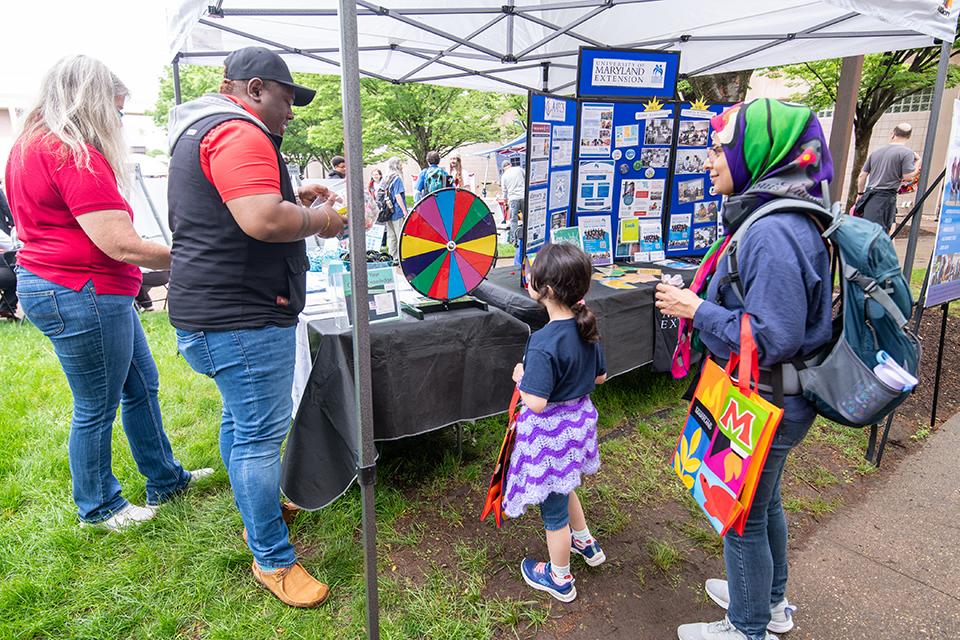
The extent and level of resources (e.g., time, money, etc.) needed for stakeholder engagement often range based on who the stakeholders are and their levels of interest and influence in the extension activities. Nonetheless, across such efforts, it is important to adhere to a change from a mentality of “communicating to toward a mentality of communicating with stakeholders” (Stofer, 2022). Moreover, Extension professionals should do more than present information to stakeholders; they should facilitate a platform for stakeholders to also share their thoughts, knowledge, and ideas as evaluation data and insights to guide program plans, revisions, and reporting. Extension professionals can leverage existing interactive opportunities, including Maryland Day for University of Maryland Extension (see Figure 1), to share information, answer questions about programs, and solicit valuable feedback from stakeholders.
Evaluation in Extension is all about asking and answering questions about programs and processes designed to produce education and positive change (Jones & Preskil, 2009). Evaluations are commonly used to assess the effectiveness of an ongoing or concluded program in achieving its objectives and provide justification for program improvements based on findings. However, assessment and data collection can also strengthen program planning and performance monitoring at much earlier stages and throughout the delivery of educational activities. If stakeholder engagement in planning and evaluation efforts is carefully designed and facilitated, significant benefits can result:
- Creating a responsive evaluation process. Involving stakeholders ensures that evaluation questions are thoroughly vetted and representative. Stakeholders share ideas, opinions, and information about the evaluation design, thereby helping the Extension professional design an effective and higher-quality evaluation program. Notably, involving stakeholders in question development (e.g., for surveys, focus groups, etc.) brings out perspectives that may be new or forgotten by the Extension professional and/or their team.
- Improving relevance. Stakeholder engagement helps Extension professionals develop relevant programs tailored to the needs of their participants. For instance, a needs assessment is a crucial stage at the start of planning or every three to five years to measure gaps in stakeholders’ current versus desired conditions in order for educators to provide opportunities to address those needs (Suvedi & Kaplowitz, 2016).
- Acquiring and sustaining funds. Stakeholder engagement makes it possible to acquire and sustain Extension funding for programs and projects as public resources for Extension decline (French & Morse, 2015). Through engagement in the needs assessment stage, stakeholders-asfunders become aware of the value of programs and the need for resources to deliver them successfully.
- Establishing credibility. Involving stakeholders from the start of program planning builds credibility and gains buy-in/acceptance from the stakeholder community and among powerholding institutions and groups such as local business associations, churches, and volunteer clubs. This has also been shown to increase the chances of changing behaviors via the programming (Jones, 2014).
- Sustaining programs and projects. An increased sense of ownership by stakeholders who feel the program is taking into account their views and motivates them to continue supporting it in diverse ways (e.g., as direct participants, collaborators, funders, etc.), which can reduce dropout and decreased participation rates later.
- Improving future programs. Engaging stakeholders in both contributing data and analyzing data for program evaluations allows participants to provide honest feedback to inform extension professionals and funders in the planning and implementation of new programs.
How Can Extension Professionals Engage Stakeholders?
Involving stakeholders requires strategic facilitation and applied research methods that allow Extension professionals and stakeholders to engage in dialogue from the planning phase all the way to the point when recommendations are finalized and implemented. Below are practical methods Extension professionals can employ to engage stakeholders in evaluation and program planning:
Define and identify the relevant stakeholders. Extension professionals should first consider who qualifies to be a relevant stakeholder in a particular program evaluation and propose their purpose or roles at different stages in the program/project (e.g., planning, design, data collection, analysis, decision-making, and action planning). They should consider individuals or groups who have vested (economic or resource) interest in the evaluation and its outcomes. However, Extension professionals need to avoid ruling out individuals or groups because of perceived lack of power or vested interest on the part of potential stakeholders not yet engaged in the process. Instead, professionals should develop strategies to build their interest and more equitably engage more stakeholders. Figure 2 provides an example of a participatory exercise to identify stakeholders for planning and evaluation. To do this, create flipcharts to label different stakeholder groups and brainstorm those stakeholders’ interests in the program versus in the evaluation. The brainstorming session should result in multiple flipchart papers identifying each type of stakeholder to engage. Conduct this exercise with the program team as well as a small core group (usually 3-10 people) of “advisory stakeholders” who are consulted before you officially engage a larger audience of stakeholders (Bryson & Patton, 2015). An advisory stakeholder group can be established by asking colleagues, program leaders, and Extension Advisory Council members to help identify key players or gatekeepers who have expertise in program topics.
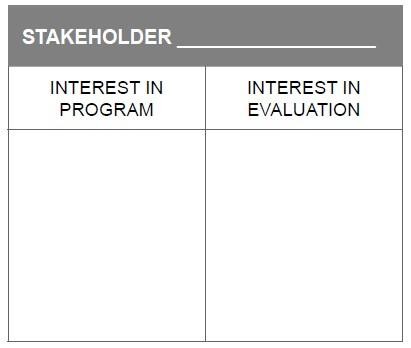
Figure 2. Stakeholder Identification Exercise - Use a Power Versus Interest Stakeholder Analysis Grid (Figure 3). It is also crucial to recognize the varying levels of power and interest in/over a program or project that different stakeholders could have. These can influence participation rates, turnover, political or funded support, and overall community buy-in for education and other efforts. A power versus interest stakeholders analysis grid can help to analyze these factors and determine where to invest resources and time towards targeting and engaging stakeholders (Figure 3). This may be completed together with the program team, following the initial stakeholder identification, using flipcharts or a virtual blackboard. Introduced by Eden & Ackerman (1998), the four quadrants classify stakeholders as:
- Key players (high power/high interest): These stakeholders are extremely important to engage closely and keep informed due to their influence and vested interest in the program/ project.
- Context setters (high power/low interest): Although these stakeholders have power and influence, they usually are not directly invested in program/project outcomes. However, maintaining their approval and satisfaction without over-involving them is important.
- Subjects (low power/high interest): These stakeholders may lack power but have lots of interest in the program/project. Engaging them can increase equity and may even increase their influence and power. The subjects are often the direct program participants.
Crowd (low power/low interest): This stakeholder group lacks both influence and interest. You should not heavily invest in these stakeholders, but professionals should ensure that they can access information to keep them informed.
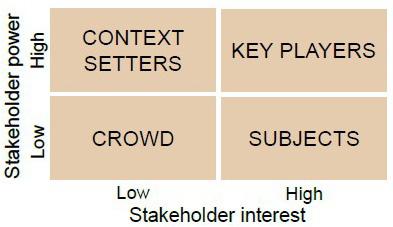
Figure 3. Power Versus Interest Stakeholder
Analysis Grid (Eden & Ackerman, 1998)
- Ask for inputs to obtain adequate background knowledge of the situation. Extension professionals should seek insights from stakeholders to collectively identify the problem to be addressed by a potential Extension program before program planning design begins. Stakeholders have deep knowledge about the needs, opportunities, and challenges that are important for problem and solution identification; engaging them right from the beginning to assess needs and as activities are implemented and any challenges arise is crucial. Moreover, many community problems are deepened by the ripple effects of underlying problems — without seeking input from stakeholders in the needs assessment stage, especially by using qualitative methods like a focus group discussion, the root problems may not be revealed.
- Use a variety of assessment and facilitation methods. Extension professionals should know and understand the differences in their stakeholder groups in order to decide which facilitation or communication method will work. For example, if stakeholders are geographically scattered and there are limited time and resources to engage them through face-to-face focus group discussions, online interviews, surveys (e.g., via Qualtrics), or virtual mapping (e.g., using Lucidchart) are potential alternatives.
- Ensure regular flow of information to stakeholders and feedback to Extension professionals. Stakeholders should receive timely information about the program (e.g., coordinating scheduling of activities and what is expected of them). For example, if there is going to be an activity that will request or need local resources from the stakeholders, they should be given adequate information in advance to agree and mobilize.
- Nurture and establish relationships that are built on trust. Before deciding to participate in evaluation processes, stakeholders should buy into the reasons behind evaluation and program planning. This rests on trust fostered between Extension professionals and stakeholders. For example, stakeholders must feel that the Extension professional has their best interests at heart and is committed to helping to solve their problem. From the very beginning, before a program is developed or an evaluation is conducted, Extension professionals should nurture and establish relationships with the stakeholders by encouraging open conversations, keeping to their words, and providing timely information and feedback. If new to a stakeholder group, finding a gatekeeper who is already trusted and known to the group to help with introductions and connections can be invaluable.
- Employ participatory evaluation models. Be sure to consider measures to evaluate the program in the program planning stage. Involve stakeholders in the program planning to seek their ideas, perspectives, and opinions about evaluation questions, the data collection instrument (survey, focus group, etc.) and how data should be analyzed and reported. For participatory and interactive evaluation based on the needs of the stakeholders, Extension professionals may use methods such as responsive evaluation (Stake, 1975), empowerment evaluation (Fetterman, 1996), collaborative evaluation (Cousins & Earl,1992) and participatory rural appraisal (Chambers, 1994). An effective participatory approach can help to strengthen the evaluation process (Nichols, 2002) and result in evaluation findings that are accepted and used by all stakeholders. (Jones, 2014; Suvedi & Kaplowitz, 2016).
Conclusion
Engagement with stakeholders should be integral to Extension program planning, implementation, monitoring, and evaluation. These efforts should be carefully planned and implemented — using proven approaches and facilitation techniques — to yield mutual benefits for the program and stakeholders.
For more information
Extension and outreach professionals interested in more information and guidance on stakeholder engagement in program planning and evaluation should check out these key resources used for this factsheet:
- Jones, N., & Preskill, H. (2009). A practical guide for engaging stakeholders in developing evaluation questions. Robert Wood Johnson Foundation. https://www.semanticscholar.org/paper/A-Practical-Guide-for-Engaging-Stakeholders-in-Preskill-Jones/f9d4a288ccfc5ad3861de1d64483dc982b331e2d
- Newcomer, K. E., Hatry, H. P., & Wholey, J. S. (Eds.). (2015). Handbook of practical program evaluation, 4th edition. Jossey-Bass & Pfeiffer Imprints, Wiley. https://onlinelibrary.wiley.com/doi/book/10.1002/9781119171386
- Suvedi, M., & Kaplowitz, M. (2016). What every extension worker should know: Core competency handbook. U.S. Agency for International Development (USAID) / Modernizing Extension and Advisory Services (MEAS). https://meas.illinois.edu/wp-content/uploads/2015/04/MEAS-2016-Extension-Handbook-Suvedi-Kaplowitz-2016_02_15.pdf
- Silvert, C. & Warner, S. A. L. (2022). Using journey mapping with Extension: A tool for supporting behavior-change programs. UF/IFAS Extension, Department of Agricultural Education and Communication. https://doi.org/10.32473/edis-wc333-2019
- Stofer, K. (2022). Getting Engaged: “Public”, stakeholder and community engagement practices for researchers. UF/IFAS Extension, Department of Agricultural Education and Communication. https://edis.ifas.ufl.edu/publication/WC272
References
- Bruce-Iri, P., & Shelley, R. (2010). Assessing stakeholder engagement. Communication Journal of New Zealand, 11(2), 30-48. https://www.researchgate.net/profile/Peter-Bruce-Iri/publication/285151789_Assessing_stakeholder_engagement/links/6333eee65f6370520d015d5f/Assessing-stakeholder-engagement.pdf
- Bryson, J. M., & Quinn Patton, M. (2015). Analyzing and engaging stakeholders. Handbook of Practical Program Evaluation, 36-61. https://doi.org/10.1002/9781119171386.ch2
- Cousins, J. B., & Earl, L. M. (1992). The case for participatory evaluation. Educational Evaluation and Policy Analysis, 14(4), 397-418. https://doi.org/10.3102/01623737014004397
- Chambers, R. (1994). Participatory rural appraisal (PRA): Analysis of experience. World Development, 22(9), 1253-1268. https://doi.org/10.1016/0305-750X(94)90003-5
- Eden, C., & Ackermann, F. (1998). Making Strategy: The Journey of Strategic Management, 113–135. Sage.
- Elliott-Engel, J., Westfall-Rudd, D., & Corkins, C. (2021). Engaging stakeholders in Extension strategic planning. The Journal of Extension, 59(4), Article 3. https://doi.org/10.34068/joe.59.04.03
- Fetterman, D. M., Kaftarian, S. J., & Wandersman, A. (1996). Empowerment evaluation: Knowledge and tools for assessment, evaluation capacity and accountability. Sage. https://doi.org/10.4135/9781483387079.n3
- Franke-Dvorak, T. C., Kelsey, K. D., & Royer, T. A. (2010). Is Extension still reaching stakeholders? An assessment of minor crop producers’ educational needs and use of Cooperative Extension Services. Journal of Agricultural Education, 51(1), 55–63. https://doi.org/10.5032/jae.2010.01055
- French, C., & Morse, G. (2015). Extension stakeholder engagement: An exploration of two cases exemplifying 21st century adaptations. Journal of Human Sciences and Extension, 3(2), 8. https://doi.org/10.54718/CKPY5638
- Freeman, R. E. (1984). Strategic management: A stakeholder approach. Cambridge University Press.
- Haddaway, N. R., Kohl, C., Rebelo da Silva, N., Schiemann, J., Spök, A., Stewart, R., Sweet, J. B. & Wilhelm, R. (2017). A framework for stakeholder engagement during systematic reviews and maps in environmental management. Environmental Evidence, 6, 1-14. https://doi.org/10.1186/s13750-017-0089-8
- Jeffery, N. (2009). Stakeholder engagement: A road map to meaningful engagement. Vol. 2, Cranfield University School of Management, Doughty Centre, Bedford, 19-48. https://core.ac.uk/download/pdf/139119.pdf
- Jones, N., & Preskill, H. (2009). A practical guide for engaging stakeholders in developing evaluation questions. https://www.semanticscholar.org/paper/A-Practical-Guide-for-Engaging-Stakeholders-in-Preskill-Jones/f9d4a288ccfc5ad3861de1d64483dc982b331e2d
- Jones, K. (2014) Participatory evaluation: Engaging stakeholders in the process. Community and Leadership Development. 31. https://uknowledge.uky.edu/leadership_development/31
- Kivits, R. & Sawang, S. (2021). Stakeholder theory. In The dynamism of stakeholder engagement. Contributions to Management Science. Springer 1-8. https://link.springer.com/chapter/10.1007/978-3-030-70428-5_1
- Kröger, C. (1998). Evaluating drug prevention in the European union. In Baker, O., Mounteney, J. & Neaman, R. (Eds), Scientific Monograph Series, (2), 61-66. https://core.ac.uk/download/pdf/158281288.pdf#page=58
- Newcomer, K. E., Hatry, H. P., & Wholey, J. S. (Eds.). (2015). Handbook of practical program evaluation, 4th edition. Jossey-Bass & Pfeiffer Imprints, Wiley. https://onlinelibrary.wiley.com/doi/book/10.1002/9781119171386
- Nichols, L. (2002). Participatory program planning: Including program participants and evaluators. Evaluation and Program Planning, 25(1), 1-14. https://doi.org/10.1016/S0149-7189(01)00044-1
- Silvert, C. & Warner, S. A. L. (2022). Using journey mapping with Extension: A tool for supporting behavior-change programs. UF/IFAS Extension, Department of Agricultural Education and Communication. https://doi.org/10.32473/edis-wc333-2019
- Stake, R. E. (1975). Program evaluation: Particularly responsive evaluation. Center for instructional research and curriculum evaluation. University of Illinois at Urbana-Champaign. https://people.bath.ac.uk/edspd/Weblinks/MA_CS/PDFs/Session%205/Stake%201975%20UoI.pdf
- Stevahn, L., & King, J. A. (2016). Facilitating interactive evaluation practice: Engaging stakeholders constructively. New directions for evaluation, 2016(149), 67-80. https://doi.org/10.1002/ev.20180
- Stofer, K. (2022). Getting Engaged: “Public”, stakeholder and community engagement practices for researchers. UF/IFAS Extension, Department of Agricultural Education and Communication. https://edis.ifas.ufl.edu/publication/WC272
- Suvedi, M., & Kaplowitz, M. (2016). What every extension worker should know: Core Competency Handbook. U.S. Agency for International Development (USAID) / Modernizing Extension and Advisory Services (MEAS). https://meas.illinois.edu/wp-content/uploads/2015/04/MEAS-2016-Extension-Handbook-Suvedi-Kaplowitz-2016_02_15.pdf
BRILLIANT ASAMOAH
basamoa1@umd.edu
COLBY SILVERT
csilvert@umd.edu
This publication, Engaging Stakeholders in Extension Program Planning and Evaluation Efforts (FS-2024-0741), is a part of a collection produced by the University of Maryland Extension within the College of Agriculture and Natural Resources.
The information presented has met UME peer-review standards, including internal and external technical review. For help accessing this or any UME publication contact: itaccessibility@umd.edu
For more information on this and other topics, visit the University of Maryland Extension website at extension.umd.edu
University programs, activities, and facilities are available to all without regard to race, color, sex, gender identity or expression, sexual orientation, marital status, age, national origin, political affiliation, physical or mental disability, religion, protected veteran status, genetic information, personal appearance, or any other legally protected class.
When citing this publication, please use the suggested format:
Asamoah, B., & Silvert, C., (2025). Engaging Stakeholders in Extension Program Planning and Evaluation Efforts (FS-2024-0741). University of Maryland Extension. go.umd.edu/FS-2024-0741.