
From Spring 2025 issue of Branching Out. Subscribe to Branching Out here. Read more Invasives in Your Woodland articles here. This article contains information current as of date of publication.
Within the scientific community are specialists who work to understand how and why invasive plant species not only survive but thrive when introduced to new environments. One theory suggests that genetic diversity may play a role, in that new species introduced from diverse original locations to geographically-separated areas will succeed more rapidly than those from a single source area.
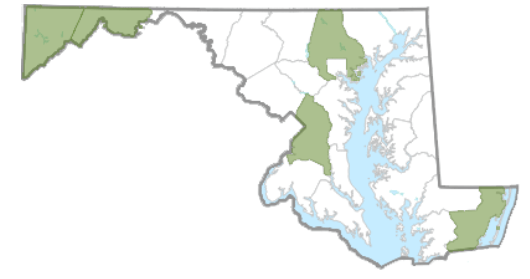
A team of Belgian researchers believe this has led to the success of this issue’s spotlight, glossy buckthorn. They found historical horticultural records that document the species’ importation from its native Europe and its cultivation at herbariums in the US as early as 1806, and note that it was a popular planting in parks and gardens. Additionally, they found records of glossy buckthorn for sale from nurseries including the Biltmore Estate in North Carolina in 1907; New England Nurseries in Massachusetts (1910); and Storrs and Harrison in Ohio (1925). Similar records from London, Ontario in 1898 document the introduction of the species to Canada. The researchers suggest that these widely-separated populations have contributed to glossy buckthorn’s spread across North America. It is now found in 29 states and several Canadian provinces from Nova Scotia to Idaho and from Québec to Tennessee. Currently, it is reported in five Maryland counties, but given that it is observed as far west as Garrett Co. and as far east as Worcester Co., it may exist in other as yet unreported areas. See the map below.
What is it?
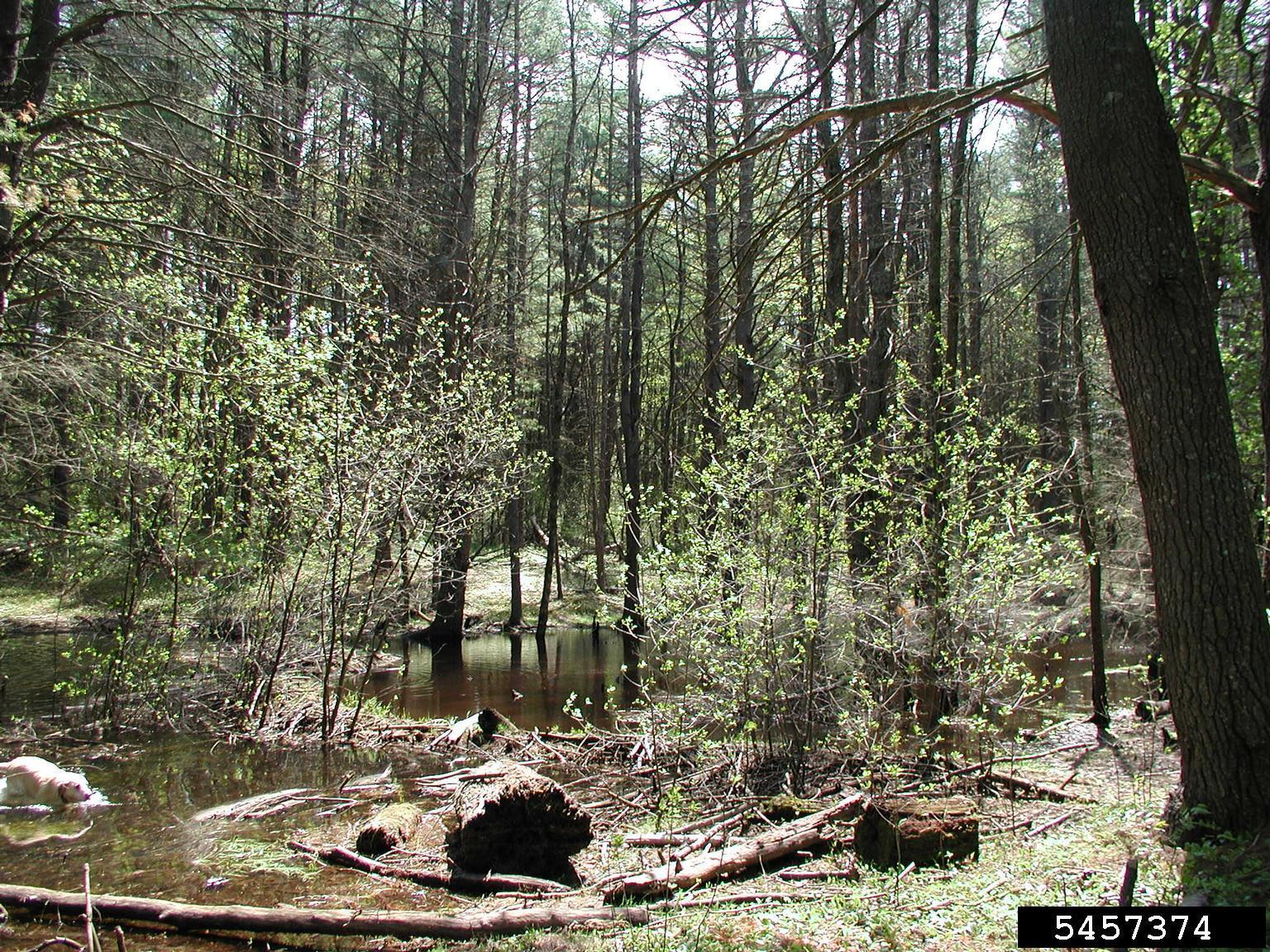
Glossy buckthorn (Frangula alnus; some sources use Rhamnus frangula) is an invasive shrub that can grow up to 20 feet tall. It is found in a variety of habitats, particularly in open and disturbed areas, wetlands, and forest understories, creating dense thickets that crowd out native species. It thrives in wetter, more acidic soils and is tolerant of both shaded and sunny conditions, allowing it to invade forest edges, bogs, swamps, and even upland woodlands. However, unlike other invasive species, it appears to be able to colonize undisturbed areas, allowing it to establish populations almost anywhere that has enough moisture.
How does it spread?
Glossy buckthorn reproduces primarily by seed, with a single shrub capable of producing over a thousand berries per season. Birds and small mammals eat the berries and disperse the seeds over wide areas. The plant also resprouts vigorously after cutting or damage, making it difficult to eradicate once established. Its seeds can remain viable in the soil for several years. Seeds may also spread via streams or rivers, as both fresh and dried seeds float in water.
How can I identify it?
One of glossy buckthorn’s distinguishing features is its glossy, smooth-edged leaves that area arranged alternately on the stem. Early growth stems are green but turn greyish-brown at maturity. The plant grows multiple stems before developing a single trunk at maturity. The flowers are very small, with five white petals that bloom from May to September. The ripe fleshy berries are dark purple. See the photo gallery below.
How can I control it?
The most effective method of controlling glossy buckthorn may be to target seedlings and to stop new invasions from occurring. Established growths can be managed by cutting, mowing, girdling, excavating, and underplanting. Foliar herbicides can be effective, but regardless of methods, the area requires repeated monitoring to ensure resprouting does not occur.
For more information:
Learn more about glossy buckthorn:
Glossy Buckthorn (Maryland Biodiversity Project)
Invasive Plant Profile: Glossy Buckthorn (National Park Service)
NAME OF SPECIES: Rhamnus frangula (Wisconsin DNR)