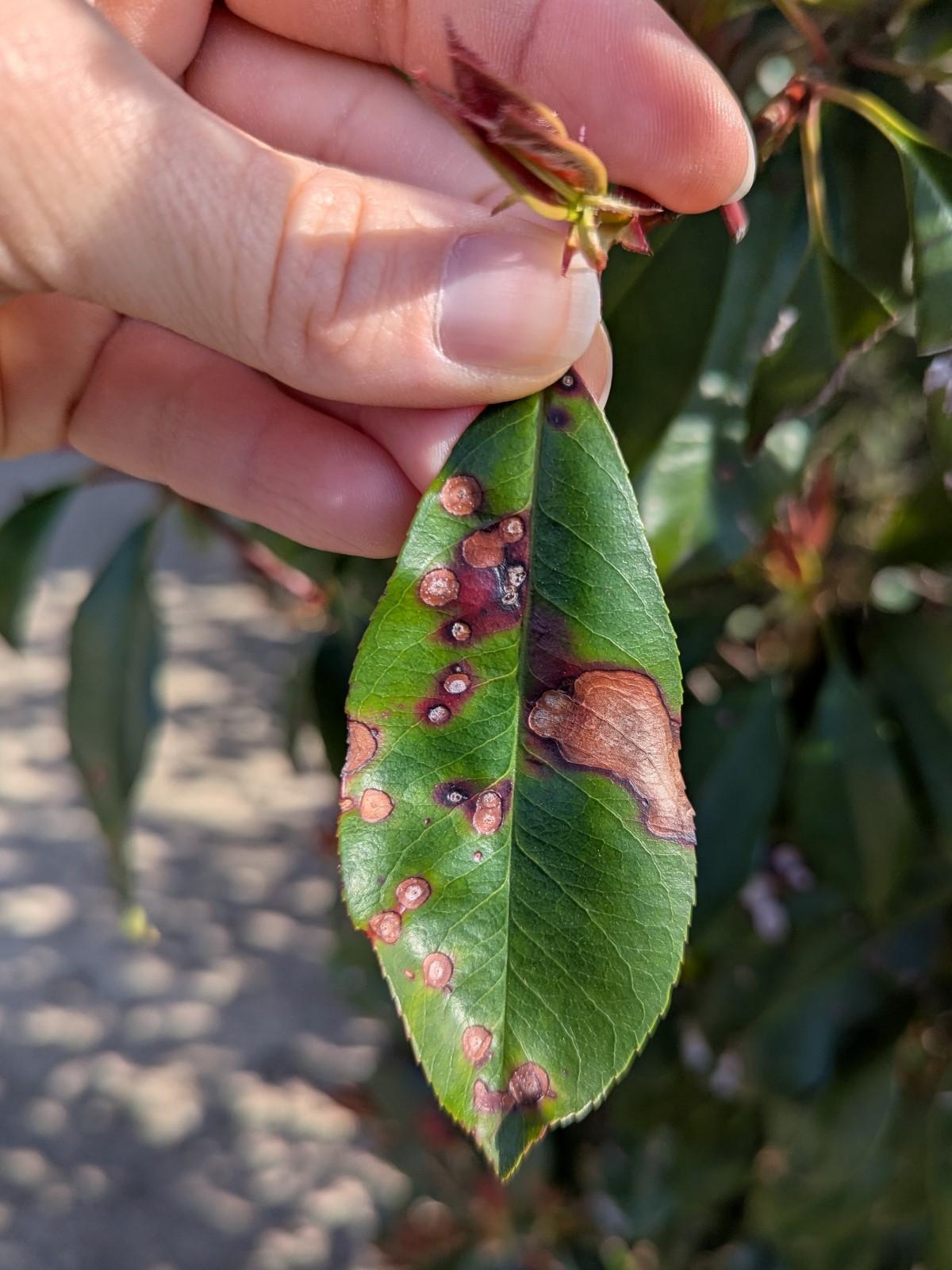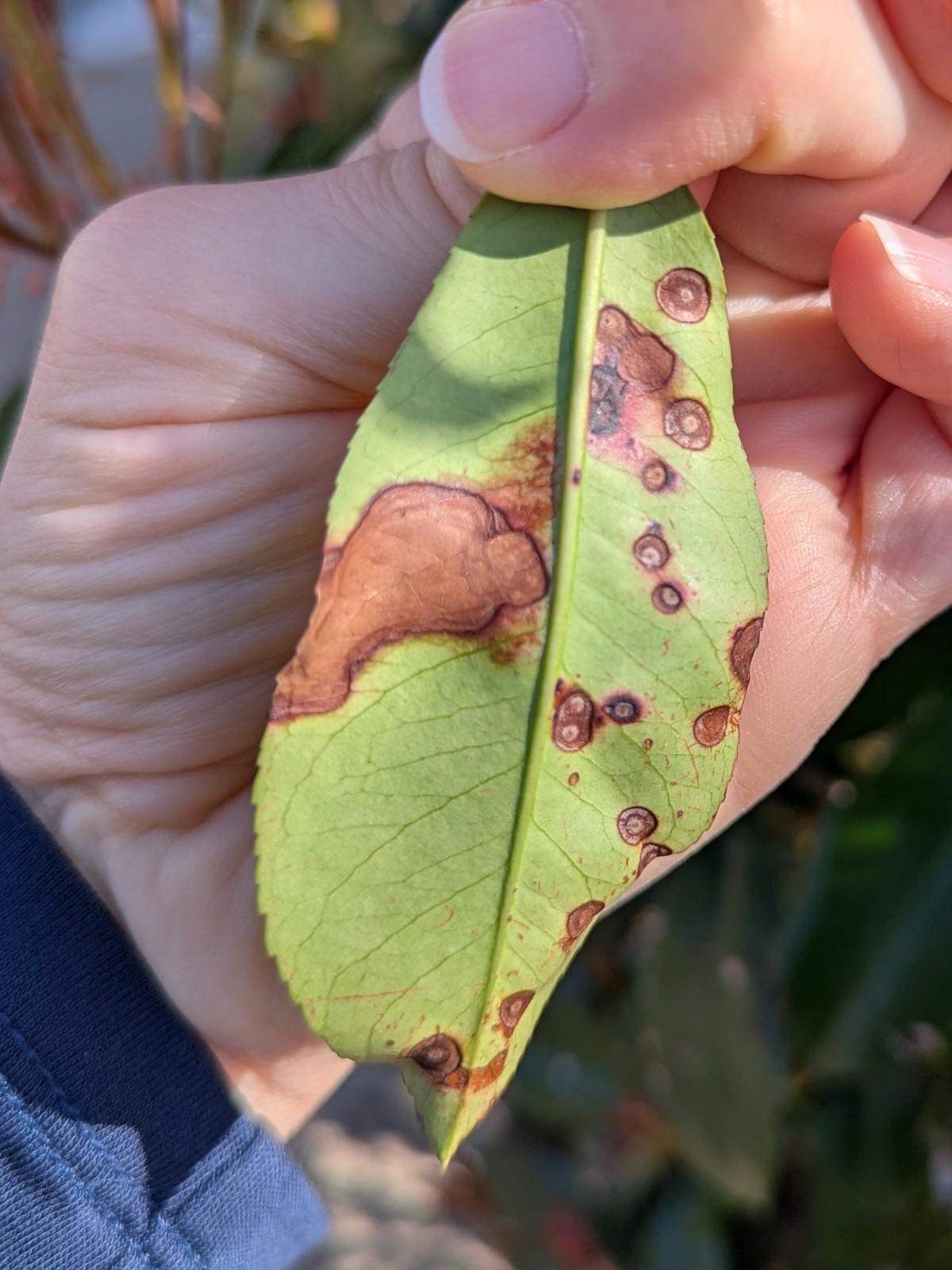
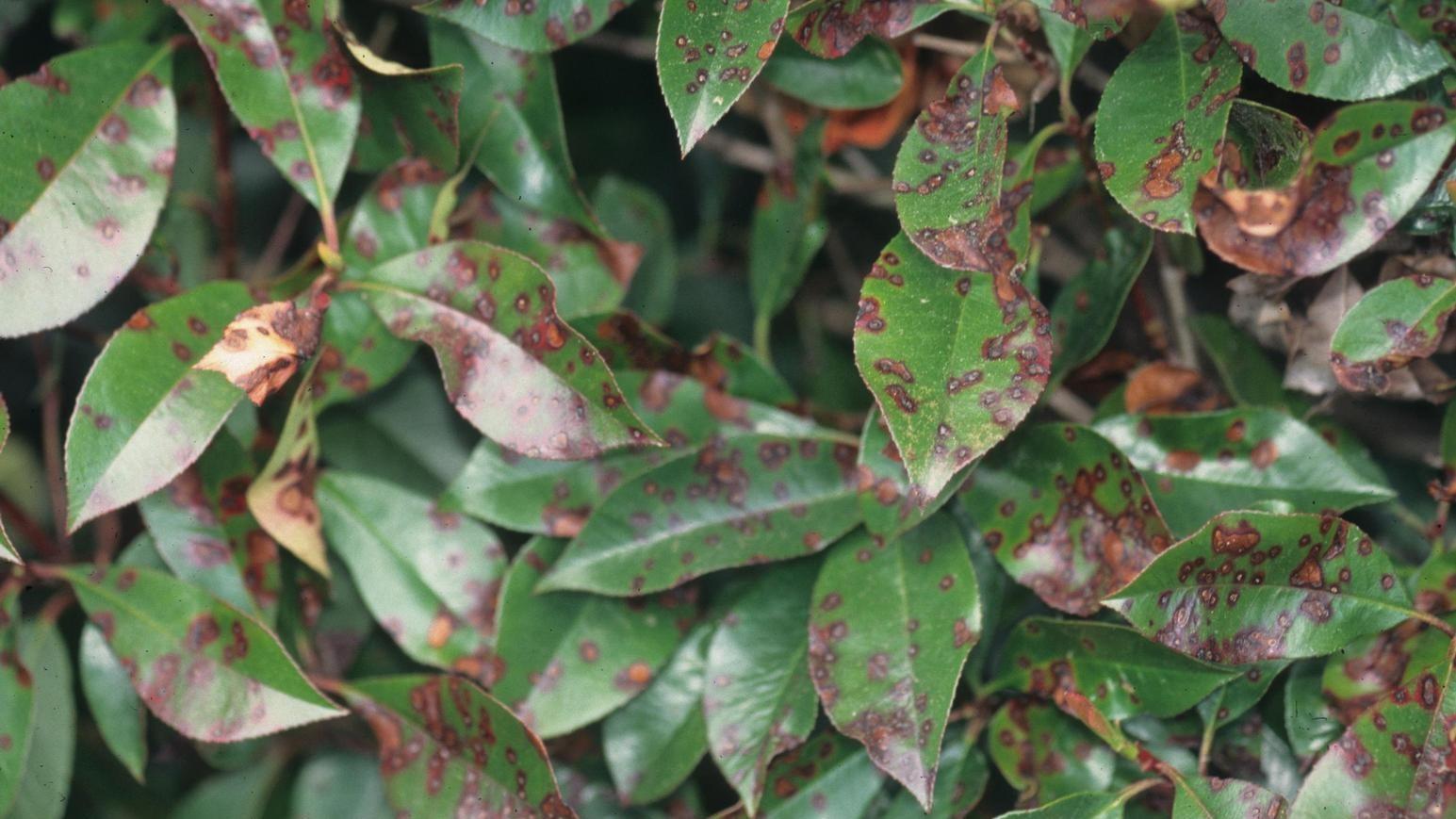
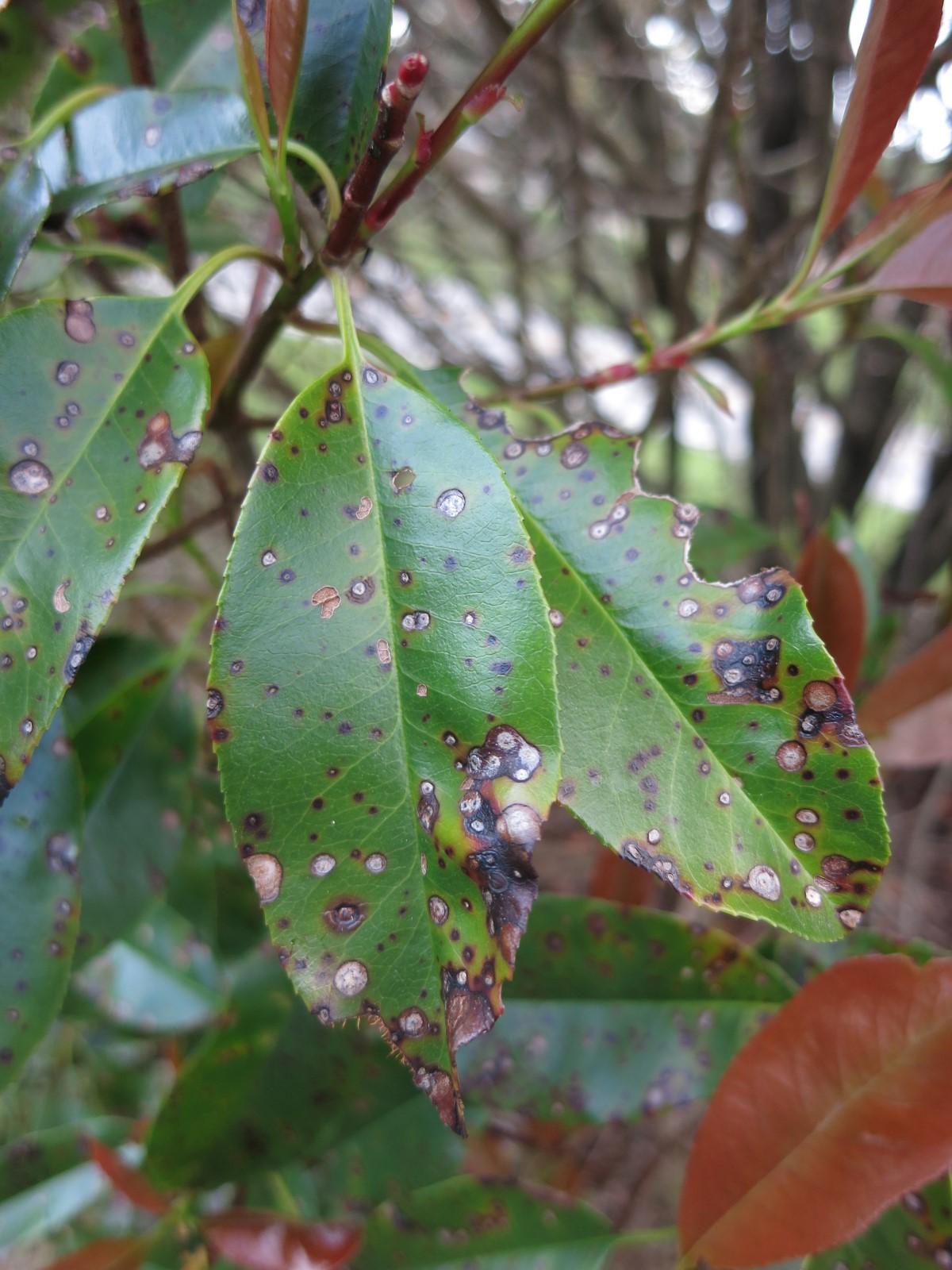
Entomosporium leaf spot (also called photinia leaf spot) is one of the most common and significant diseases of photinia (Photonia x fraseri, also called red-tip photinia) in the landscape. Other names of this disease include Diplocarpon or Fabrea leaf blight. This fungal pathogen will also infect more than 60 species of landscape plants in the rose family (Rosaceae). Susceptible genera in that family include:
- serviceberry (Amelanchier)
- chokeberry (Aronia)
- flowering quince (Chaenomeles)
- cotoneaster (Cotoneaster)
- hawthorn (Crataegus)
- fruiting quince (Cydonia)
- apple and crabapple (Malus)
- red-tip photinia (Photinia)
- firethorn (Pyracantha)
- flowering and fruiting pear (Pyrus)
- mountain-ash or rowan (Sorbus)
Symptoms of infection begin as small spots that usually coalesce into large dead areas on the leaves. Leaf lesions on plants such as photinia frequently have reddish-brown halos/margins with gray centers. Infected plants will defoliate before mid summer and secondary infections frequently cause extensive disease on new foliage. Once this fungal disease gets into an established planting, it is difficult to control and tends to take constant management.