
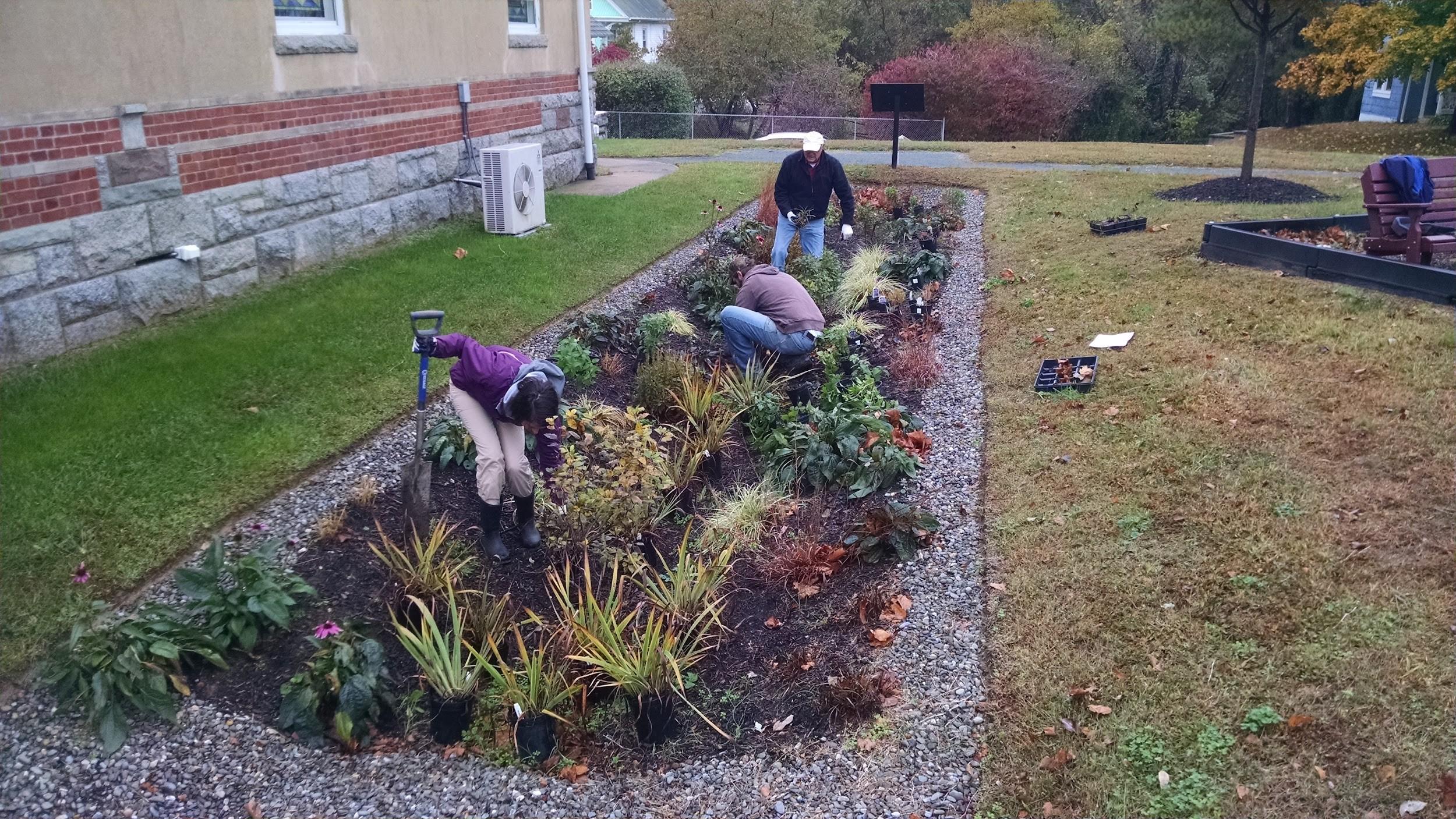
Rain Gardens
Definition A rain garden is a planted depression in the landscape designed to collect and temporarily store stormwater runoff, allowing it to be absorbed into the soil, taken up by plants, or evaporated. These gardens typically treat runoff from rooftops or impervious surfaces such as parking areas or patios. Rain gardens can address both water quantity and quality issues by reducing the volume of stormwater runoff. By decreasing runoff, they minimize the risk of flooding and erosion while aiding in groundwater recharge. Rain gardens also filter the collected stormwater, removing pollutants. Rain gardens are planted with native plants that can tolerate both wet and dry conditions. The soil media can be amended to increase the garden’s water holding and infiltration capacity. A well-designed rain garden should drain within 24 to 48 hours and typically does not require engineered underdrains.