
Shade Options for Pasture
By Amanda Grev, Forage and Pasture Management Extension Specialist
Shade is often an important yet difficult to provide component for pasture-based grazing systems. Providing some form of shade to livestock is important to help mitigate against heat stress, which is based on a temperature humidity index (THI) score but can occur at temperatures above 77° F for livestock, particularly if coupled with high humidity.
Although animals may reduce feed intake some when they congregate under shade, there are benefits to providing shade in pasture-based grazing systems. Past research has found that providing shade can lead to significant improvements in weight gain, milk production, and conception rates when shade was available to livestock during potential heat stress periods. Incorporating shade throughout pastures has also been shown to lead to more even pasture utilization as it minimizes livestock congregating near water sources and encourages more uniform grazing throughout the pasture.
A variety of different shade options can be utilized in pasture-based livestock systems. Shade options can include natural shade sources, permanent structures, or portable structures.
Natural Shade Options
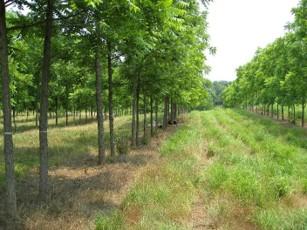
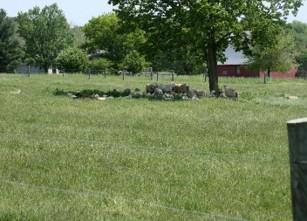
If given a choice, livestock typically prefer shade from natural sources like trees over constructed shade structures. Trees are very effective at blocking incoming solar radiation, and the moisture evaporating from their leaves can also help cool the surrounding air. Trees can be found either within pastures or along pasture edges or fence lines and can be a long-term, low-cost source of shade, especially if already established. However, tree placement is permanent and often trees are not located where they are needed or there are not enough trees present to provide shade for the whole herd or flock. If too few trees are present, livestock may congregate under trees (Figure 1) and can cause soil erosion and ultimately damage or kill trees. Rotating livestock through different pastures and limiting or alternating access to trees using temporary fencing can help reduce this and keep trees healthy. Strategic plantings of trees to create silvopasture systems is also an option and can be used to provide dappled shade throughout the pasture (Figure 2).
Permanent Shade Options
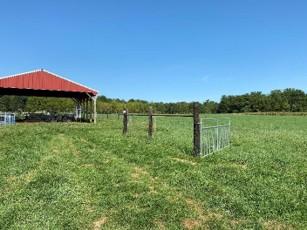
Permanent sources of shade can be provided by constructing barns, sheds, multi-sided shelters, or open-sided shelters. Although these structures can be a good source of shade, they are often more expensive to build or install and they don’t allow for movement from pasture to pasture. For smaller operations, it may work to provide these more permanent shade sources in a central area like a dry lot or sacrifice area that is connected to one or more pastures directly or through a central laneway (Figure 3).
Portable Shade Options
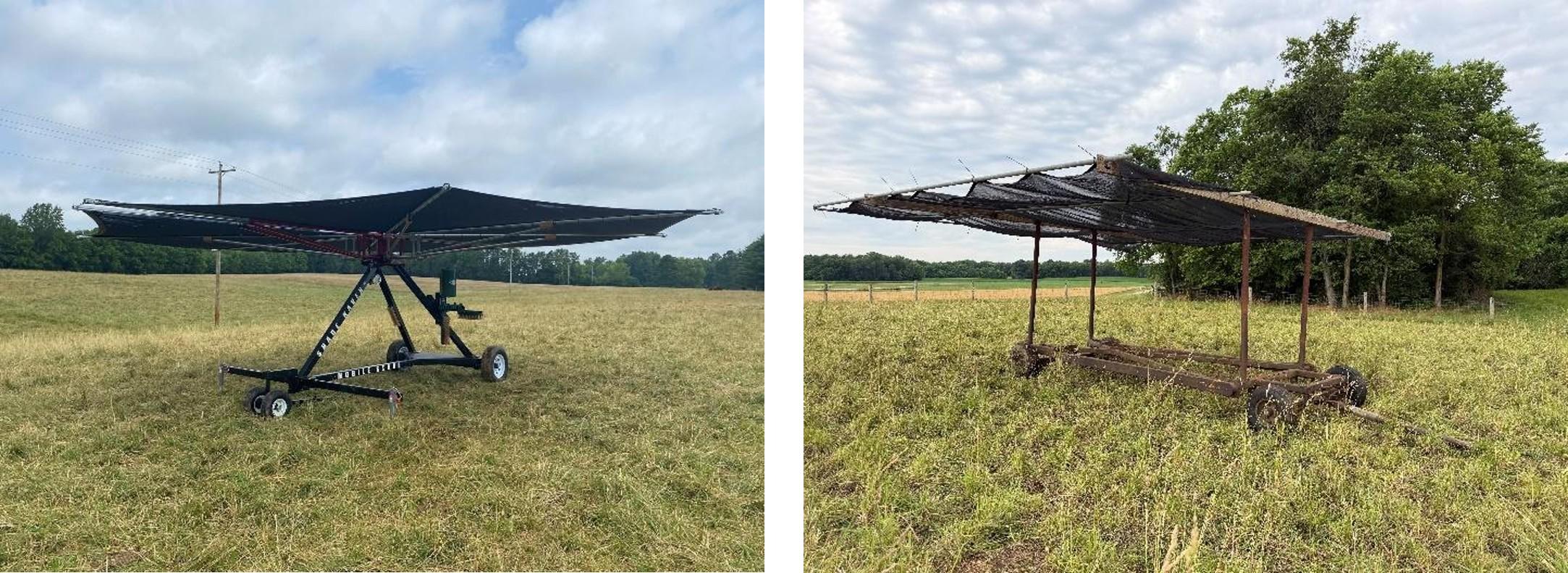
Portable shade options are growing in popularity as they offer flexibility to move shade from pasture to pasture as animals are moved. A wide variety of portable shade structures can be purchased from a number of different companies in varying sizes, potentially with attachments to help provide water, minerals, fly spray, etc. (Figure 4). Alternatively, if you are a do-it-yourselfer, you can build your own low-cost portable shade structure using metal pipes and a shade cloth covering mounted on either a skid-type bottom or something like an old running gear (Figure 5). A shade cloth that reduces light by 80% is typically considered adequate for shade and will allow for some air movement. Regardless of the style, one of the biggest advantages with portable shade structures is the ability to move shade from pasture to pasture as animals are moved for rotational grazing. This can help promote more even grazing, increase pasture utilization, and minimize manure build up and soil erosion in any given area.
Other Considerations
Regardless of the type of shade you use, it is important to have enough space for all animals to have shade access. The amount of shade needed will depend on the type and age of livestock, but it is typically recommended to provide at least 20-40 square feet per animal for cattle and 10-15 square feet per animal for small ruminants. Along with shade access, other strategies to minimize heat stress include minimizing unnecessary animal work or movement during the heat of the day and ensuring consistent access to clean, cool water.
This article appears in July 2026, Volume 17, Issue 4 of the Agronomy News.