
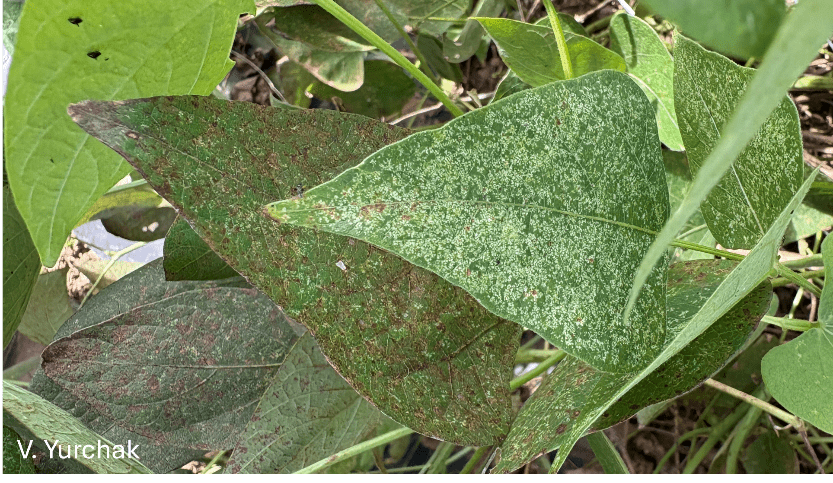
Figure 2. Fleahopper damaged snap bean leaves with fleahoppers visible in the upper left corner.
An Unusual Vegetable Pest Observed This Season: Fleahoppers
By Veronica Yurchak, Vegetable Specialist, University of Maryland Extension
Earlier this season I encountered what I initially believed to be thrips damage in a tomato study at UMD’s Wye Research and Education Center in Queenstown, MD. Upon further investigation, I discovered that no thrips were present. Instead, I had a growing infestation of garden fleahoppers. Typically not considered a major pest in commercial vegetable production, they were causing noticeable damage to the tomato foliage and developing fruit (Fig.1A, B). This week, I encountered several vegetables in St. Mary’s County, MD with fleahopper infestations, some which were fairly severe (Fig. 2). In all cases, thrips or mites were the assumed culprits.
Identification and Life Cycle
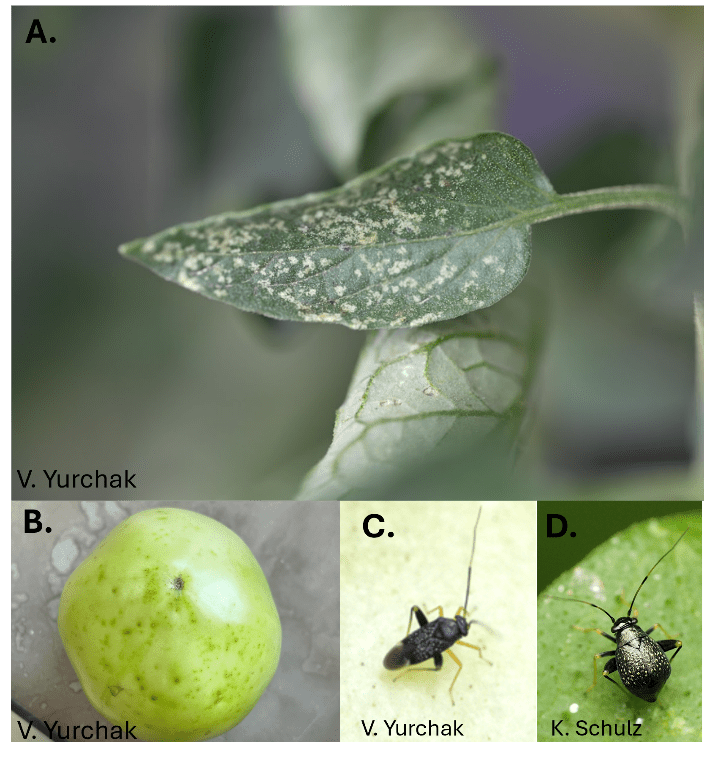
Because of their small size, dark coloration, and jumping behavior, garden fleahoppers are often mistaken for flea beetles. However, they are true bugs, more closely related to aphids, stink bugs, and leafhoppers with piercing/sucking mouthparts.
Males and female adults differ slightly in appearance; however, both are small, black, and active, with long antennae. (Fig. 1C, 1D). Females insert their eggs into stems or leaves, and the resulting nymphs are green and easily mistaken for aphids. Both nymphs and adults feed by sucking plant juices from leaves and fruits, leaving behind stippling, distorted, or chlorotic patches.
Host Range and Impact
Known vegetable hosts include beans, beets, cabbage, celery, corn, cucumber, eggplant, lettuce, peas, peppers, potatoes, pumpkins, squash, sweet potatoes, and tomatoes. Plants can generally tolerate a large amount of feeding damage, however very heavy infestations can weaken plants and reduce yield, and direct feeding on fruits reduces the appearance and overall fruit quality. This pest is not known to transmit any plant diseases.
Overall, fleahoppers are an infrequent and minor vegetable pest. Still, it is important to confirm the actual presence of the insect causing the observed damage, as effective products for thrips/mite control may not adequately control fleahoppers. In our tomato trial, Radiant did not effectively reduce fleahopper populations, and most miticides would not be expected to have any control efficacy.
This article is featured in the Vegetable and Fruit News, Vol. 16, Issue 7.
Vegetable & Fruit News is a research-based publication for the commercial vegetable and fruit industry available electronically from April through October. Published by the University of Maryland Extension Agriculture and Food Systems team.
Subscribe