Menu
Get Involved
Give
Contact
Ask Extension
About
Leadership
UMD Extension Impact
Careers
Directory
Civil Rights Compliance
Extension Advisory Council and Committees
Program and Organizational Development
Resources
Animal Agriculture
Plant Agriculture
Yard & Garden
Pests
Natural Resources
Environment & Energy
Agribusiness Management
Food & Nutrition
Health & Well-Being
4-H & Youth Education
Programs
4-H Youth Development
Family & Consumer Sciences
Agriculture & Food Systems
Environment & Natural Resources
Home & Garden Information Center
Locations
Publications
News & Events
All News
Events
Insect Pest - True Bugs, Thrips and Mites
Home
Resources
Insect Pest - True Bugs, Thrips and Mites
For full functionality of this site it is necessary to enable JavaScript. Here are
instructions for how to enable JavaScript in your web browser
.
Sort by:
Date
Title
Updated: October 22, 2024
Sulfur Deficiency in Sweet Corn
I have seen several sweet corn fields lately that have sulfur deficiencies (fig 1). One of the possible reasons we are seeing more S deficiency is because less sulfur is being deposited into the soil from the atmosphere due to reductions in acid rain. In 1986 about 24 lbs/a of sulfate were deposited in Maryland soils per year, however in 2011 it was closer to just 8 lbs/a each year. Organic matter supplies most of the sulfur to the crop, but sulfur must be mineralized to sulfate-S to be taken up by crop plants.
Updated: October 22, 2024
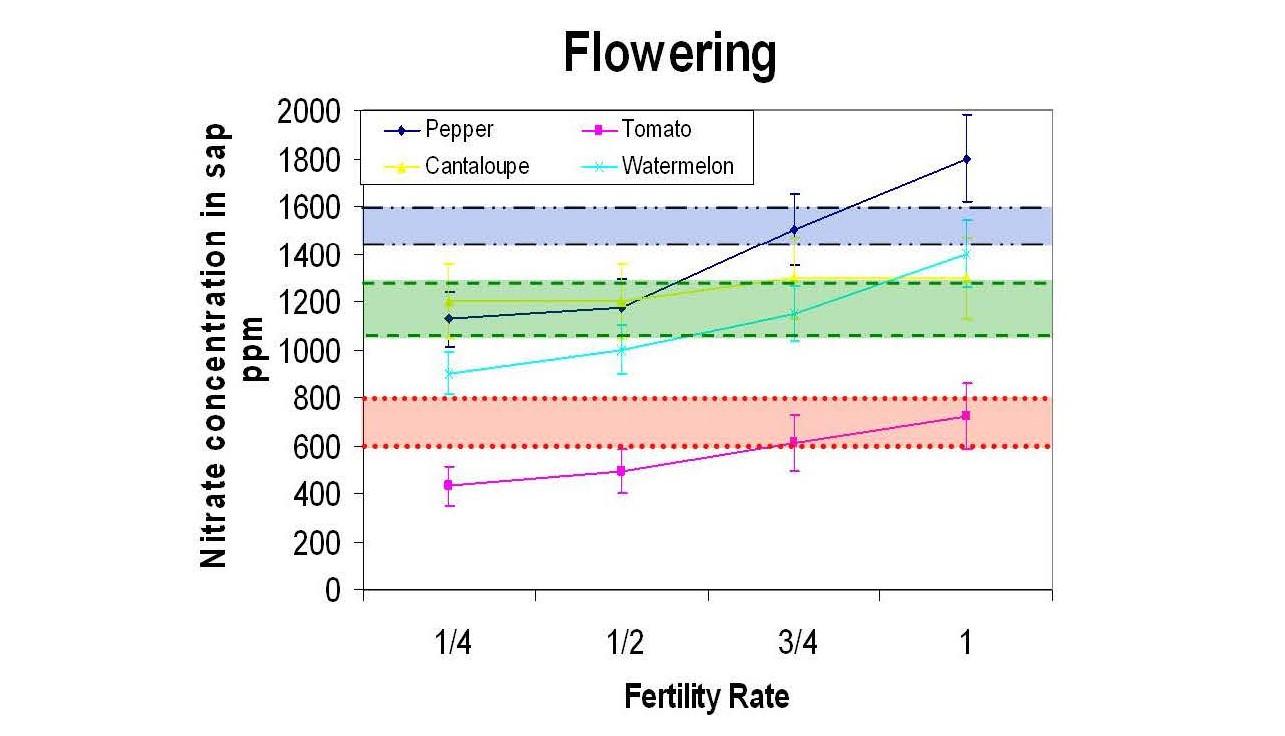
Using Nitrate-N Petiole Sap-Testing for Better Nitrogen Management in Vegetable Crops
Vegetables have a relatively high nitrogen requirement and at times growers apply too much fertilizer-N that contributes to ground and surface water pollution. Fertilization can be made more efficient by plant analysis. Plant tissue (petiole) nitrate testing is a way of monitoring the nitrogen condition of the crop during the growing season. This is an especially useful method as the petiole is a very good indicator of current N supply and management practices such as fertigation allow for corrective measures when deficiencies are found.
Updated: October 21, 2024
Sanitation Important in Transplant Production Houses
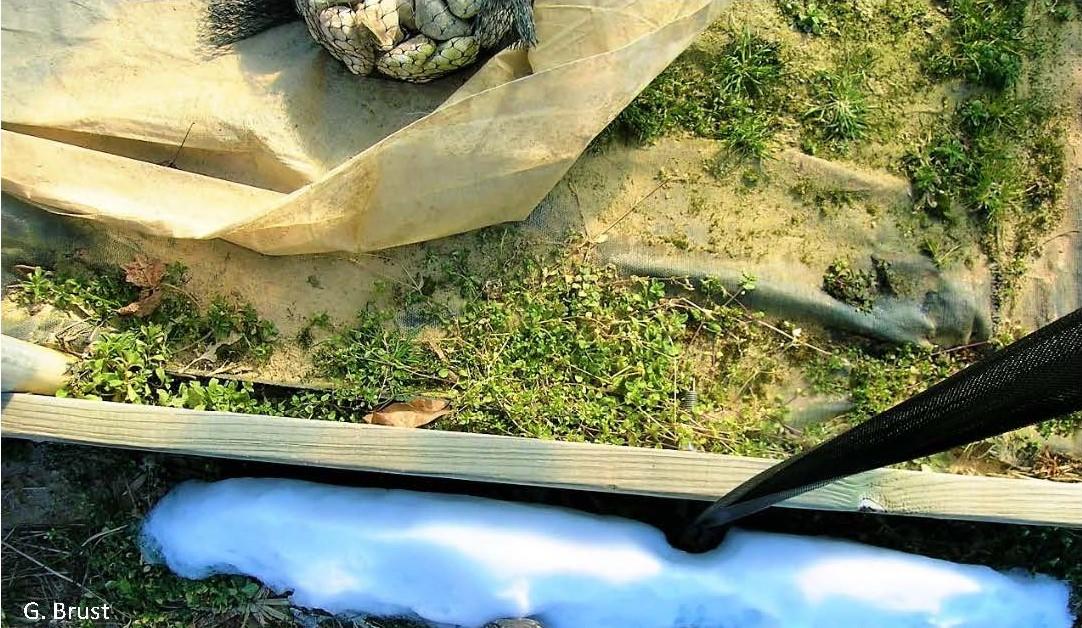
By now almost all growers have started transplant production or have hired someone else to grow their transplants. With all of the important things that go into transplant production one of the sanitation factors that is somewhat neglected is weed control. Figure 1 shows the outside edge of a high tunnel production house in February. The grower was getting ready to drop seed in just a few days after they cleaned up the house from the fall growing season. This particular grower had been having intermittent problems with thrips (and consequently tomato spotted wilt virus) and two spotted spider mites in their production house.
Updated: October 16, 2024
Physiological Tomato Fruit Disorders
First
Previous
Page
1
Page
2
Page
3
Page
4
Page
5
Current page
6