Menu
Get Involved
Give
Contact
Ask Extension
About
Leadership
UMD Extension Impact
Careers
Directory
Civil Rights Compliance
Extension Advisory Council and Committees
Program and Organizational Development
Resources
Animal Agriculture
Plant Agriculture
Yard & Garden
Pests
Natural Resources
Environment & Energy
Agribusiness Management
Food & Nutrition
Health & Well-Being
4-H & Youth Education
Programs
4-H Youth Development
Family & Consumer Sciences
Agriculture & Food Systems
Environment & Natural Resources
Home & Garden Information Center
Locations
Publications
News & Events
All News
Events
Nematodes
Home
Resources
Nematodes
For full functionality of this site it is necessary to enable JavaScript. Here are
instructions for how to enable JavaScript in your web browser
.
Sort by:
Date
Title
Updated: October 22, 2024
Grafting Watermelon for Managing Fusarium Wilt in Southern Maryland
Fusarium Wilt, caused by the soil borne pathogen Fusarium oxysporum f. sp. niveum is becoming more problematic in seedless watermelon production in Southern Maryland. Unfortunately, there are few effective management options for this soil borne disease. New races of Fusarium Wilt are now present in the area that can overcome traditional cultivar resistance. Effective fungicides are limited and do not provide season-long control at labeled rates. In many cases, once a field is infested with Fusarium Wilt, watermelon production is no longer a viable option. One option that has been effective in other areas is grafting of susceptible cultivars onto fusarium resistant rootstocks of interspecific hybrid squash or citron species. Watermelon grafting is more difficult than tomato grafting and is normally done by outside companies who specialize in the technique.
Updated: October 21, 2024
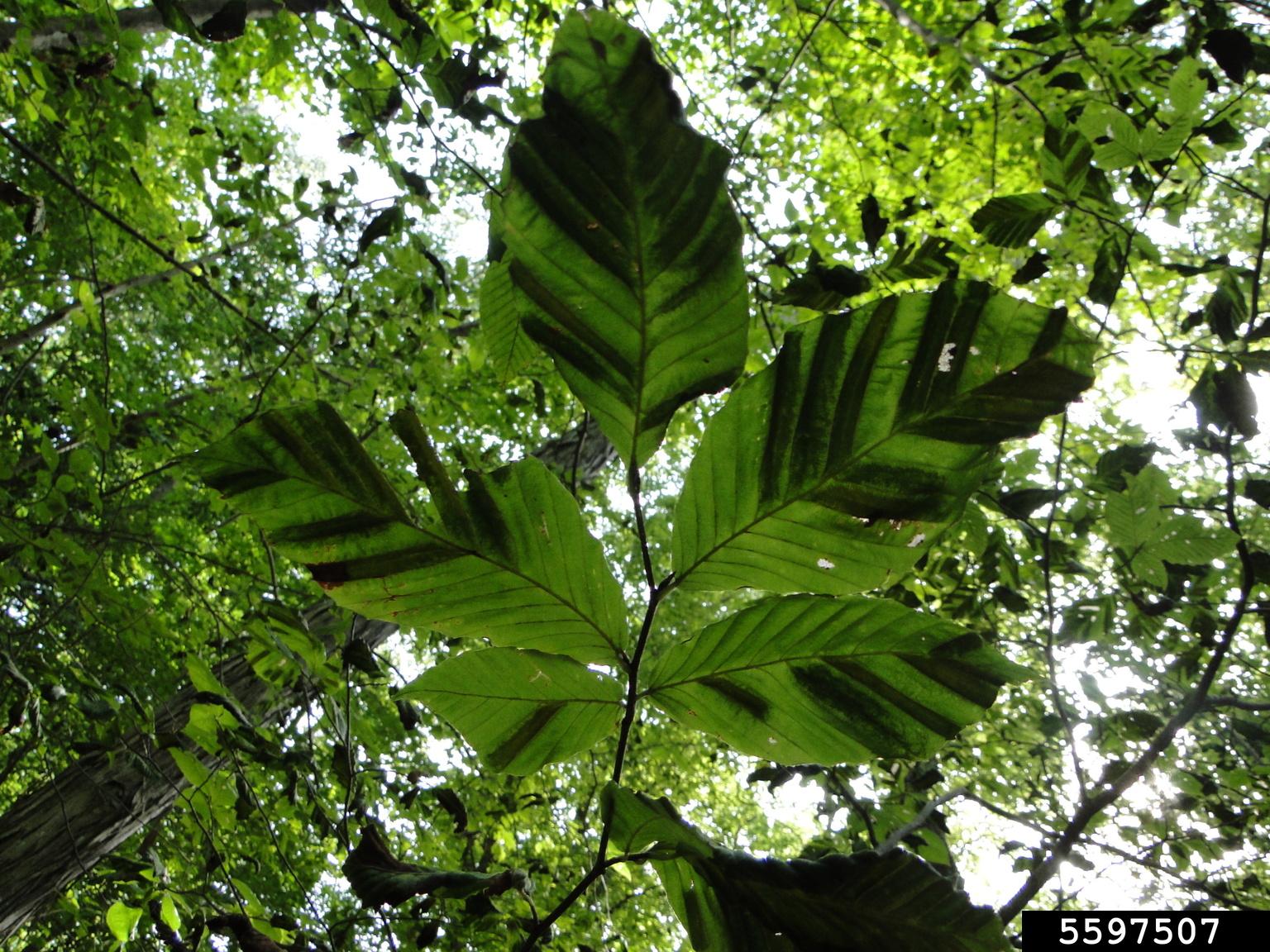
Beech Leaf Disease
A novel non-native microbe is locally impacting beech tree health and mortality throughout the northeastern United States and southern Canada. The microbe, Litylenchus crenatae mccannii, a subspecies of a nematode found in Japan, is causing beech leaf disease (BLD).
Updated: October 16, 2024
Southern Bacterial Wilt of Tomato Found
Southern bacterial wilt of tomato, which is caused by the soil-borne bacterium Ralstonia solanacearum Race 1, has been found in several tomato fields just recently. This pathogen affects many solanaceous crops and is found throughout the southern United States.
First
Previous
Page
1
Current page
2