Diagnose Your Land

Mapping & Monitoring


Historical and present day imagery can visualize the progression and impact of salinization across landscapes throughout the Mid-Atlantic. In addition to mapping, farmers, landowners and researchers can measure salinity levels in soils and waterways (e.g., standing water, ditches, drains, tidal channels). On this page you can learn more about how these measurements are taken, interpreted, as well as interact with salinity maps to understand how to diagnose your own land. 
How to diagnose your land?  

Measuring Salinity

Salinity is defined as the amount of total dissolved salts in water; ratio of salt to water. 

Salinity can be measured in several ways, depending on the tool used. Common approaches include:

  1. Light refraction
  2. Density
  3. Electrical conductivity 

The most common units for salinity is parts are per trillion (ppt), parts per million (ppm), Practical Salinity Units (PSU), and grams per kilogram (g/kg). 

For reference, the average salinity of sea water is 35 ppt2  


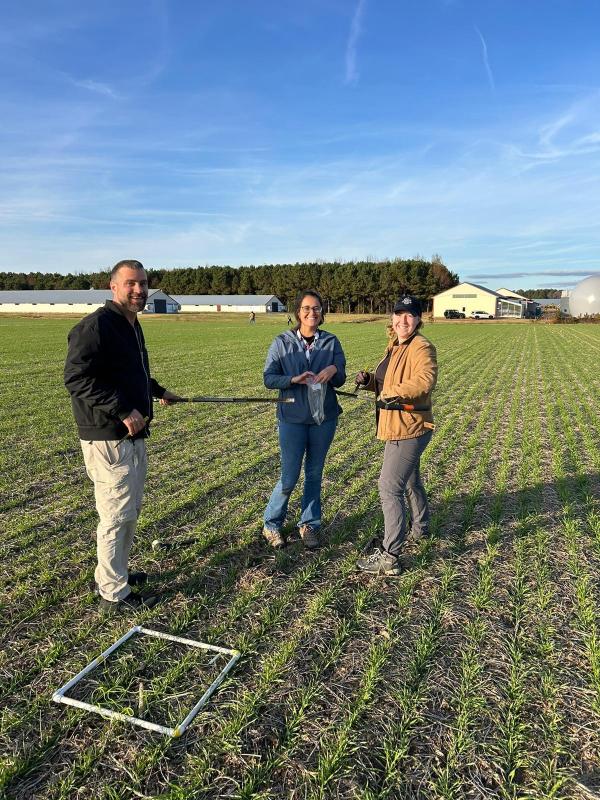
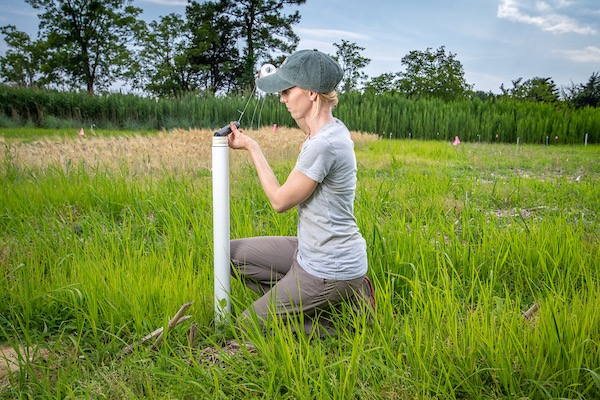
Electrical conductivity can be measured several ways in the field. On the left, a researcher uses a HOBO water logger to continuously monitor conductivity inside the well system. On the right, researchers collect soil samples to later analyze in the lab to determine their electrical conductivity.

Interactive Mapping

 Salt Patch Mapper

Salt Patch Mapper is an interactive tool designed to visualize saltwater intruded land in Delaware, Maryland, and Virginia. The Salt Patch Mapper relies on citizen science to capture saltwater intrusion impacts.

Community members can help build the Salt Patch Mapper database by reporting a salt patch. The tool was developed by the University of Delaware, and can be accessed through clicking the icon below.


SLR interactive tool 

The U.S. is projected to undergo approximately 1 foot of sea level rise by 2050 and between 2.3 and 4 feet of sea level rise by 2100.

Use the National Oceanographic and Atmospheric Administration (NOAA) Sea Level Rise Viewer to visualize local scenarios of sea level rise and coastal flooding by clicking the icon below. 


 Satellite Imagery: 2005 vs. 2025

2005

2025