Farm-Level Practices
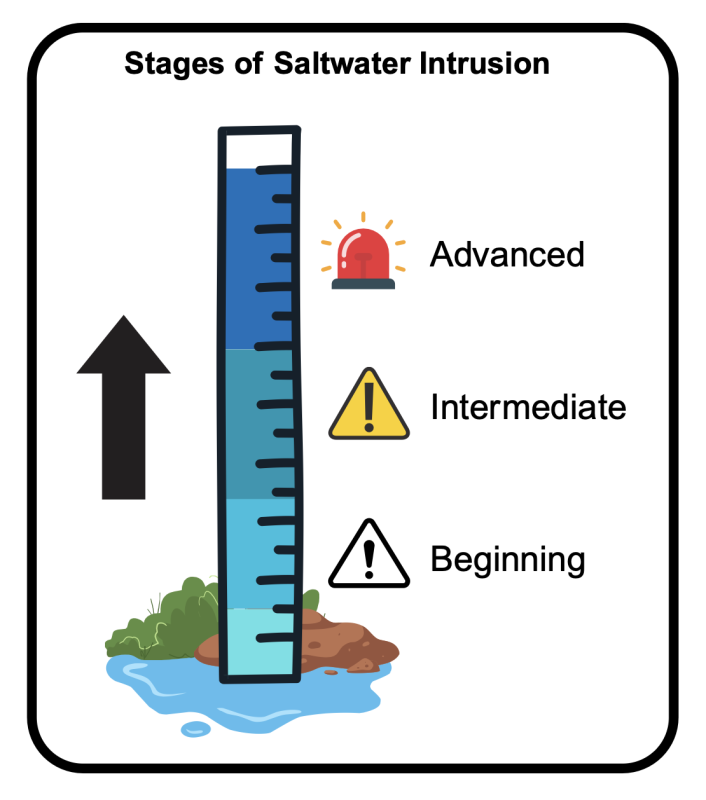
In early stages of salinization, producers may:
- Continue conventional rotations (e.g., corn–soybean systems).
- Shift to more salt-tolerant crops such as chloride-excluding soybean (Glycine max), sorghum (Sorghum bicolor), or barley (Hordeum vulgare) when yields decline.
At intermediate stages of saltwater intrusion, medium-term hydrologic fixes become important, including:
- Installing salinity control structures and backflow prevention devices.
- Improving drainage infrastructure.
- Converting ditches to regenerative stormwater conveyance systems.
- Stabilizing shorelines and streambanks.
- Monitoring water levels to track intrusion dynamics.
Soils can be stabilized and partially remediated by:
- Planting highly productive, salt- and drought-tolerant perennial grasses such as switchgrass (Panicum virgatum).
- Using large above- and belowground biomass to reduce excess nutrients and sodium while maintaining economic value.
In more advanced stages of salinity, long-term adaptation can include:
- Transitioning fields to salt-tolerant perennial systems such as switchgrass.
- Establishing halophytic vegetation like saltmarsh hay (Spartina patens).
- Supporting coastal protection, improved water quality, and enhanced ecosystem services through purposeful land management.
- Land may be abandoned and allowed to convert naturally to marsh.