

Cultivating Conservation for Maryland and Delaware’s Historically Underserved Farmers
By Sarah Hirsh, Extension Educator, University of Maryland Extension; Shannon Dill, Extension Educator, University of Maryland Extension; Caroline Kuchta, Agriculture Worker, University of Maryland Extension; Neith Little, Extension Educator, University of Maryland Extension; Kelly Nichols, Extension Educator, University of Maryland Extension; and Margaret Todd, Senior Legal Specialist, University of Maryland Agriculture Law Education Initiative.
Foreword
The Cultivating Conservation for Maryland and Delaware’s Historically Underserved Farmers guidebook was developed to be a resource for farmers and land managers to learn about conservation and to increase their comfort in accessing conservation-related technical and financial assistance. Project partners University of Maryland Extension, University of Maryland Agriculture Law Education Initiative, University of Delaware Cooperative Extension, Maryland and Delaware Natural Resources Conservation Service, and Soil Conservation District field offices aided in developing the curriculum. The guidebook’s aim is to provide farmers who do not yet have a relationship with conservation program sponsoring agencies with information about available conservation resources. The guidebook emphasizes the special provisions that are available for historically underserved farmers.
-
Section 1: Introduction
Section 1: Introduction -
Section 2: Conservation practices
Section 2: Conservation practices -
Section 3: Whole farm planning
Section 3: Whole farm planning -
Section 4: Conservation plans
Section 4: Conservation plans -
Section 5: Web Soil Survey
Section 5: Web Soil Survey -
Section 6: Overview of agencies and conservation programs
Section 6: Overview of agencies and conservation programs -
Section 7: NRCS Program eligibility and contract requirements
Section 7: NRCS Program eligibility and contract requirements -
Conclusion
Conclusion -
Glossary
Glossary -
Answer Key
Answer Key -
For More Information
For More Information -
Summary of agencies
Summary of agencies
Section 1: Introduction
The goal of this guidebook is to help make conservation readily accessible to all landowners and farmers while addressing the existing knowledge gaps. This guidebook offers information about different agencies that provide technical and financial assistance.
The United States Department of Agriculture (USDA) has a long history of emphasizing conservation and its benefits. In 1935 Congress passed Public Law 74-76, in which it recognized that “the wastage of soil and moisture resources on farm, grazing, and forest lands... is a menace to the national welfare,” and it directed the Secretary of Agriculture to establish the Soil Conservation Service (SCS) as a permanent agency in the USDA.
In 1994, Congress changed SCS’s name to the National Resources Conservation Service (NRCS) to better reflect the broadened scope of the agency’s concerns.
Today the USDA NRCS goals are to:
- Improve the quality of our air, water, soil and habitat
- Keep working lands working
- Boost rural economies
- Increase the competitiveness of US agriculture
Conservation programs may be offered at federal, state and local levels, and provide technical and/or financial support. The USDA policy identifies four groups of farmers or ranchers as “Historically Underserved,” which are hereafter referred to as “HU farmers.”
- Beginning
- Socially Disadvantaged
- Veterans
- Limited Resource
To help ensure inclusivity and equitable access to services, the USDA provides special provisions, such as incentives, waivers, priorities and set asides to HU farmers. However, despite these efforts and earmarked provisions, HU farmers’ involvement with Federal agencies and enrollment in Federal conservation programs is lower than desired by the USDA (Jones, 1994; USDA, 2022). Among some groups of HU farmers, there is a history of mistreatment and discrimination by the USDA, and there may be a lasting mistrust of the agency and hesitation to be involved in agency programs and services (Benson et al., 2022; Carpenter, 2012; Hinson & Robinson, 2008; Jones, 1994).
In Maryland new and beginning farmers account for 4,391 farms (35% of the total farms) and 428,320 acres (22% of the total acres).
In Delaware new and beginning farmers account for 586 farms (27% of the total farms) and 114,465 acres (22% of the total acres).(2022 USDA Census of Ag)
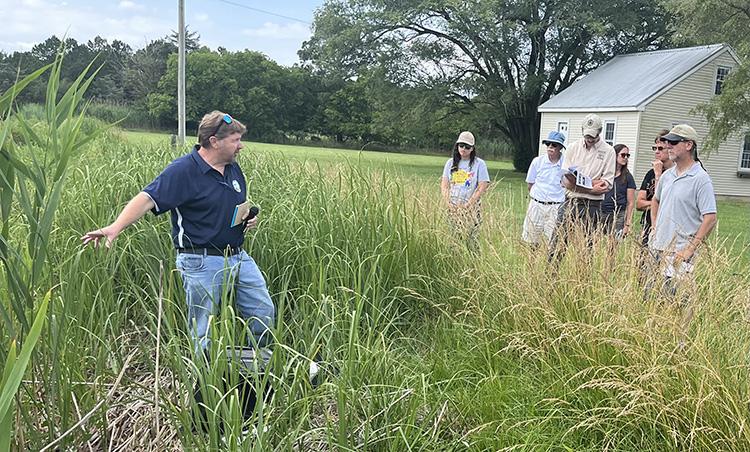
Beginning farmers simply may not know about the USDA and NRCS resources available to them. Furthermore, for conservation practice adoption, it is important for farmers to not only access information, but to also build relationships and trust with those who provide information. Researchers demonstrated that such interactions with local conservation personnel correlated with practice adoption (Liu et al., 2018)
With that in mind, this guidebook is designed to:
- Provide information and resources for the audience of HU farmers, marginalized farmers, and farmers who are not yet customers of the NRCS
- Introduce farmers to conservation, to various conservation practices, and to how conservation fits into whole farm planning
- Introduce farmers to conservation agencies and programs
- Increase farmers’ understanding of conservation contractual agreements and expectations
- Reduce farmers’ apprehension and increase comfort level when engaging with conservation partners such as NRCS
References
Benson, L., Croft, G., Monke, J., & Rosch, S. (2022). Racial and ethnic equity in U.S. agriculture: Selected current issues. Congressional Research Service. R47066. https://sgp.fas.org/crs/misc/R47066.pdf
Carpenter, S. (2012). The USDA discrimination cases: Pigford, in re Black Farmers, Keepseagle, Garcia, and Love. Drake Journal of Agricultural Law, 17, 1-34. https://aglawjournal.wp.drake.edu/wp-content/uploads/sites/66/2016/09/agVol17No1-Carpenter.pdf
Hinson, W., & Robinson, E. (2008). “We didn’t get nothing:” The plight of black farmers. Journal of African American Studies, 12, 283-302.
Jones, H. (1994). Federal agricultural policies: Do black farm operators benefit? The Review of Black Political Economy, 22(4), 25–50. https://link.springer.com/article/10.1007/BF02689978
Liu, T., Bruins, R., & Heberling, M. (2018). Factors influencing farmers’ adoption of best management practices: A review and synthesis. Sustainability, 10(2), 432.
USDA. (2022). Get Started! A Guide to USDA Resources for Historically Underserved Farmers and Ranchers. US Department of Agriculture (USDA) Farm Production and Conservation. PA-2276. https://www.nrcs.usda.gov/resources/guides-and-instructions/get-started-a-guide-to-usda-resources-for-historically.
Section 1 Review
- The United States Department of Agriculture has only recently become concerned with conservation.
- True
- False
- Which of the following will not be covered in this curriculum?
- How to stay compliant with NRCS regulations
- Tips and tricks for proper animal feed organization
- Familiarization with different NRCS programs
- An introduction to applicable conservation practices
- Which state has a higher percentage of new and beginning farmers?
- Delaware
- Maryland
- They have equal amounts
Answers can be found in the Answer Key.
Section 2: Conservation practices
Contents:
- Cover crops (NRCS practice standard 340)
- High tunnels (NRCS 325)
- Tree plantings (NRCS 612)
- Roof runoff structures (NRCS 558) and rain barrels
- Habitat
- Buffer and pollinator strips
- Animals and manure
- Silvopasture (NRCS 381) and watering facilities (NRCS 614)
- Agrichemical handling facility (NRCS 309)
- Precision agriculture
- Soil testing and nutrient management planning (NRCS 590)
- Organic transitioning
Conservation practices encompass many areas and have various benefits for both the environment and a farming operation. This section will introduce some examples of conservation practices and strategies you can employ on your farm. The list of strategies below is by no means exhaustive. There are hundreds of types and varieties of conservation practices. For many conservation practices, NRCS provides standards which include information to consider when installing and managing a specific practice. NRCS also assigns a numerical code for each practice standard; where applicable, those codes are listed in the descriptions below. See Section 6 for instructions to view NRCS’ technical guides. When reading the examples below, be sure to think about how these techniques and/or others could be beneficial to you and your land.
Cover crops (NRCS practice standard 340)
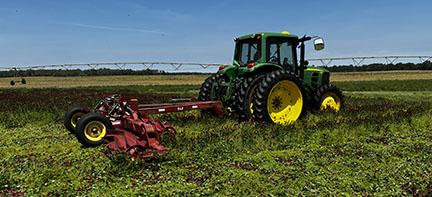
Cover crops are a particularly popular conservation practice due to their wide array of versatility and benefits. In general, a cover crop is any crop that is grown to protect and cover the soil, and in the Delmarva region, typically planted in the fall, particularly in grain systems. However, vegetable systems have a wider range of available planting windows. Cover crops may winter-kill naturally or be terminated through methods such as spraying with herbicides, tillage, roller crimping or tarping. Cover crops can help with weed control, improve rainfall infiltration, increase soil nitrogen, prevent soil erosion and encourage pollinators and beneficial insects to thrive. Proper management of cover crops is necessary to maintain optimum cash crop yields. In some cases, cover crops also increase yields and bring about economic returns.
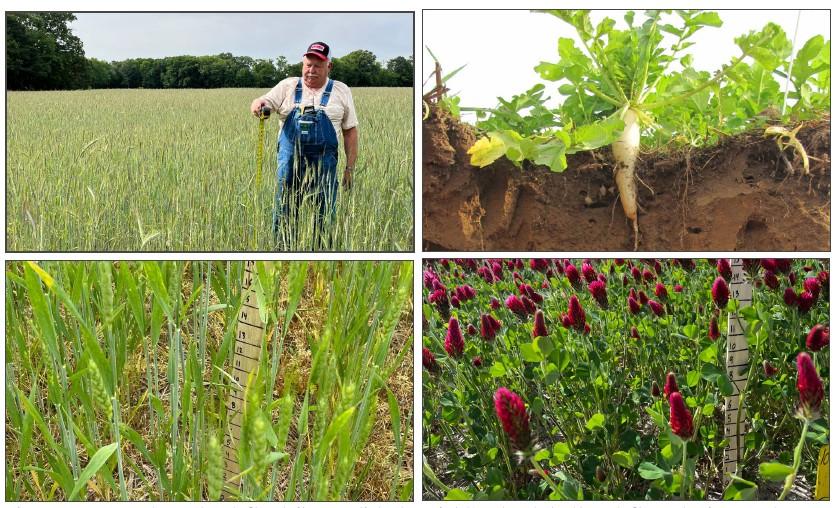
Popular cover crops:
Cereal rye is excellent at scavenging nitrogen and other nutrients from the soil through its extensive root system, preventing environmental losses. Cereal rye is known to add high amounts of organic matter, decrease soil erosion and suppress weeds, especially if the terminated rye biomass is left on the soil surface as a mulch.
Crimson clover is a legume, meaning it forms a symbiotic relationship with beneficial bacteria that fix nitrogen from the air, converting it into a form that can be used by plants. The flowers of crimson clover attract pollinators and the roots prevent erosion.
Daikon radish can form a large taproot and be very effective at scavenging soil nutrients. It can also reduce soil compaction and be used as an alternative to deep mechanical tillage.
Wheat has similar benefits to cereal rye. In addition, the grain can be harvested for another source of income.
High tunnels (NRCS 325)
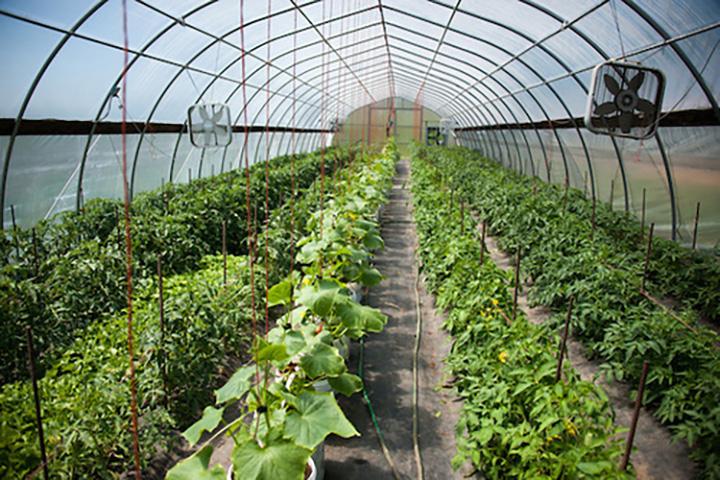
High tunnels, which are also known as “hoop houses,” allow farmers to extend the growing season due to the increased temperature inside them relative to the outside. The top and sides of the hoop house are made from polyethylene plastic, which can harness solar energy to heat up the interior of the tunnel.
Tree plantings (NRCS 612)
Planting trees has many benefits. Deep root systems prevent erosion and filter water before it enters rivers, lakes, or other bodies of water. This filtering can capture sediments and nutrients that could be harmful for the local and regional watershed. Trees also provide habitat for native birds and animals, which increases biodiversity.
Roof runoff structures (NRCS 558) and rain barrels
The use of roof runoff structures (e.g., gutters) saves fresh rainwater from dripping directly into the farm lot and becoming dirty or contaminated. Instead, the gutters can send the clean water elsewhere, such as to a grassed area. Gutters could also send the rainwater into collection units like rain barrels. The water can then be given to livestock or used in irrigation systems instead of being dumped into the farmyard and potentially creating problems. NRCS does not have a technical guide for rain barrels.
Habitat
Areas on your farm can be used to house, or provide habitat for, many important species and increase biodiversity, whether that be in marshes or open fields. These habitats can also support pollinators, beneficial insects, and wildlife, contributing to a healthier and more resilient ecosystem. Choosing native plant species suited to your soil and climate can enhance habitat quality, providing food and shelter for a diverse range of wildlife. NRCS has a few conservation practice standards for habitat: Upland Wildlife Habitat Management (645), Wetland Wildlife Habitat Management (644), and Wildlife Habitat Planting (420).
Buffer and pollinator strips
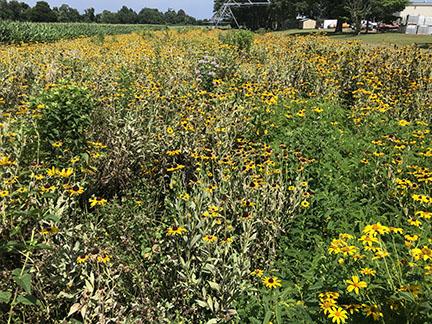
Buffer strips are vegetated areas, typically including plants with extensive root systems, that prevent soil erosion and help filter out sediments and nutrients in runoff before they can enter bodies of water. Buffer strips are planted strategically on the landscape, such as on steep terrain, at the edge of fields, or along streams or other surface water sources. Pollinator strips are made up of specific plant species meant to attract and feed pollinators. NRCS has a few conservation practice standards for buffers: Contour Buffer Strips (332), Riparian Forest Buffer (391), and Vegetative Barrier (601). The Wildlife Habitat Planting standard (420) includes pollinator strips.
Animals and manure
Many types of conservation practices can be used on operations with animals. Finding a place to store manure can be tricky, which is why you may want to think about building a manure storage structure (NRCS Waste Storage Facility, 313). The structure would create an assigned space to house the manure while cutting down on mud in other heavy use areas. Heavy use areas (NRCS 561) are places where there is a lot of traffic by livestock or equipment, which is why it could also be helpful to pave these areas with concrete or surround them with grass to prevent runoff. Using composting techniques for animal mortality disposal (NRCS 316) is also ideal, since it is more time efficient and has a lower cost than other methods. For more information, see University of Maryland Extension’s animal waste technologies resource at https://go.umd.edu/AWTF.
Silvopasture (NRCS 381) and watering facilities (NRCS 614)
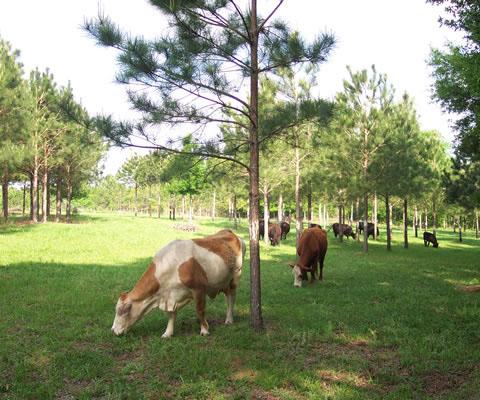
Silvopasture is the practice of raising livestock in a forested area, which allows for more efficient use of farm space. Having livestock in wooded areas frees up open fields that could be used for crops and provides the livestock with shade. Creating watering facilities also ensures that livestock are not congregating around streams or other bodies of water, therein reducing nutrient runoff.
Agrichemical handling facility (NRCS 309)
An agrichemical handling facility is a shed with a concrete floor and roof used to store, handle, and mix pesticides and fertilizers (agrichemicals). The floor is sloped, allowing any spills to drain to a watertight collection area. This conservation practice helps prevent leaks to the property’s groundwater.
Precision agriculture
Precision agriculture technology can be used to apply pesticides and nutrients at rates that match yield potential. This can mean reducing nutrients where yields may be lower, reducing environmental impact. Yield monitors display high and low yield areas of the field, which provide information about the amount of nutrients needed. NRCS does not have a specific conservation practice standard for precision agriculture; it can fall under various standards such as Pest Management Conservation System (595) and Nutrient Management (590).
Soil testing and nutrient management planning (NRCS 590)
Performing soil tests can tell you which nutrients are in your fields and at what levels. Nutrient management plans provide you with guidance about which nutrients to add to provide optimal nutrition to your crops. Reach out to your local Extension office and NRCS office for help with soil testing and nutrient management planning.
Organic transitioning
Shifting practices to align with USDA organic standards after practicing conventional standards takes a period of three years. The USDA defines organic produce and grains by being planted with natural fertilizers, eco-friendly pest control, and grown with practices that protect the soil and water.
Key Take-Away Points
- Conservation practices reduce soil erosion and water pollution.
- There are a variety of conservation practices that can be tailored to a farm or field’s specific needs.
- NRCS has standards to assist farmers in installing and maintaining many conservation practices.
Section 2 Review
- A cover crop only has one benefit.
- True
- False
- Which of the following is an example of a conservation practice?
- Silvopasture
- Buffer strips
- Watering facilities
- All of the above
- Which conservation practice enables the growing season to be extended?
- Precision agriculture
- High tunnels
- Tree plantings
- Habitat
Answers can be found in the Answer Key.
Section 3: Whole farm planning
- Step One – Assessing resources
- Step Two – Setting goals
- Step Three – Monitoring progress
- Step Four – Evaluating/Re-planning
A Whole Farm Plan is essential before enrolling in a conservation contract because it provides a strategic framework for making informed decisions that align conservation efforts with overall farm goals. Without a comprehensive plan, farmers risk implementing conservation practices that may not be the most effective or sustainable for their specific operation.
For example, a Whole Farm Plan helps identify the most suitable conservation practices based on soil type, crop rotation, water availability, and long-term business objectives. This targeted approach ensures that conservation efforts enhance productivity, improve soil health, and optimize resource use rather than create unintended financial or operational challenges.
Most conservation programs require a long-term commitment, and a Whole Farm Plan can help farmers assess the economic and logistical impacts before signing a contract. By evaluating how conservation practices integrate with the entire farming system, farmers can avoid costly mistakes and maximize the benefits of their conservation investments.
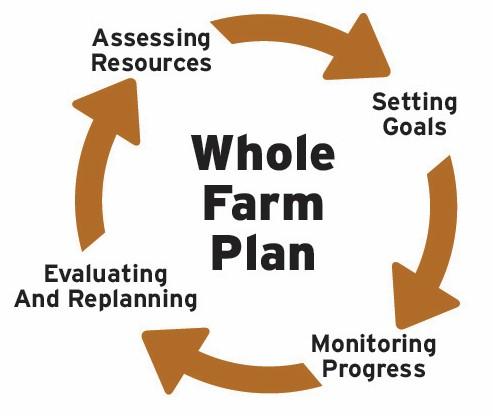
A Whole Farm Plan is a comprehensive approach to decision-making that considers the entire farm and all available resources in it. The plan helps farmers achieve their goals while strengthening natural resources, the surrounding environment and quality of life.
Developing a whole farm plan consists of four cyclical steps:
- Assessing resources - What resources do you have access to?
- Setting goals - Write a plan with specific goals
- Monitoring progress - How do you measure progress? What tools can you use?
- Evaluating/Re-planning - Has your farm changed? Is it necessary to adjust?
Step One – Assessing resources
When taking an inventory of the resources available for your farm, include physical tools and the expertise/skills that can be used. Resources can include livestock, equipment, facilities, land, transportation as well as staff knowledge and specialties.
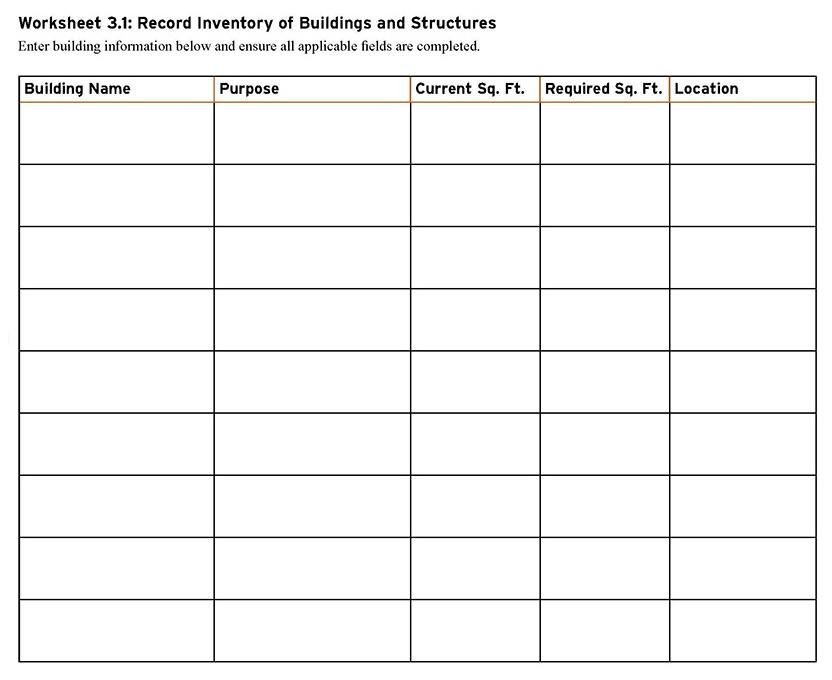
When taking inventory of buildings and structures, include the square footage, the location, any required features, and the overall purpose of having the building in the first place. Worksheet 3.1, Record Inventory of Buildings and Structures, provided below, offers one way to record the inventory.
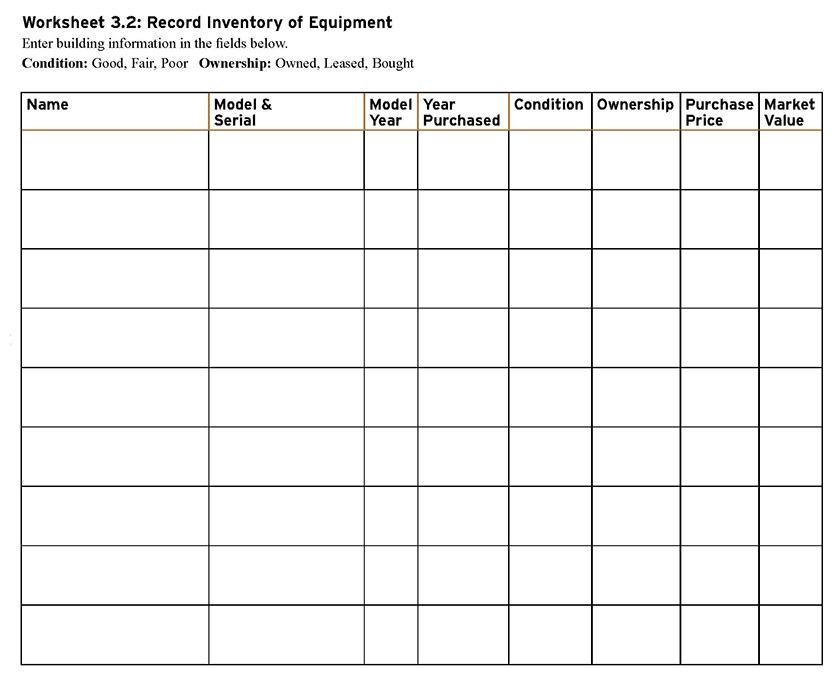
The inventory of equipment can be complicated, but it is best to document anything that could be important for financial statements or insurance. This could include the equipment name, model, size, year purchased, age, condition, ownership, book value and the market value. Worksheet 3.2, Record inventory of Equipment, provided below, offers one method of recordkeeping.
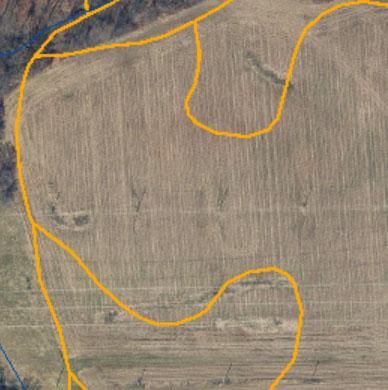
A map of your farm is also an important document. You can get maps from the NRCS, or you could create a simple sketch. Another option for Maryland residents is MERLIN Online, which can be found at https://dnr.maryland.gov/pages/Merlin.aspx. The website allows you to create and save a map of your property based on aerial photographs.
On the map, make sure to draw:
- Buildings/shelters
- Fences
- Lanes
- Water points
- Low/high point areas
- Wooded areas
- Anything that would be helpful in record-keeping. This could include well heads, electric lines, and septic reserve areas.
It would also be advantageous to get soil maps, on which you can number each field/space for future use. Read Section 5 in this Guidebook to learn about how to use the NRCS Web Soil Survey.
Step Two – Setting goals

Goals are statements of what an individual, family or business wants to achieve. Business goals come in six categories, and can be long or short term. Goals provide focus and direction for management, serve as reference points, and can aid in decision making.
Six categories of business goals include:
- Production (product, yields, quality, efficiency, conservation)
- Marketing (sales, distribution, advertising)
- Financial (profit, net worth, cash flow, cost per unit of output)
- Legal (estate, land preservation)
- Personnel (management, employee retainment, hiring, skills)
- Personal (family, assets, quality of life)
There are also some goal pitfalls to avoid, including:
- Making goals too lofty
- Having too many goals at once
- Overemphasizing number estimates
- Leaving yourself vulnerable to unexpected events
- Failing to use all information
- Making goals without including all decision makers
Create an accountability system for yourself to ensure that you continue to work towards your goals so they are not ignored once they are set.
Steps to setting goals:
- Assess past activities - What have you done in the past? What has worked in the past? What do you know you can accomplish, and in what time frames?
- Assess family and farm resources - Look at the inventories. What do you have access to?
- Develop a general management plan - What skills are needed, and who will be responsible for the activities
- Identify and establish specific goals and objectives - Examples could be “Increase website traffic by 20% in the next year” or “Add two new varieties of tomatoes in a new high tunnel in two years.”
- Prioritize goals - Which goals are most important to family well-being? Which of these are short term and which are long term? Which short term goals impede long term ones? Which goals are so important that they should be attained even if it prevents reaching other goals?
- Develop a plan of action to implement goals - Include a timeline and steps needed to accomplish desired goals.
- Measure the progress and reassess goals on a regular schedule, such as annually or after each harvest season, to ensure goals remain realistic and aligned with current farm conditions.
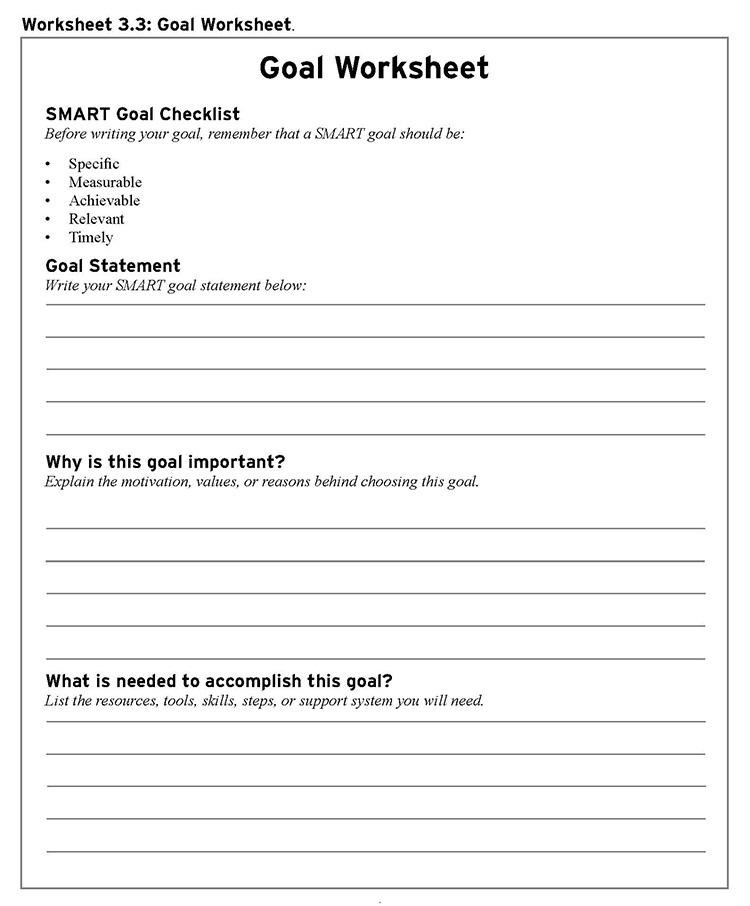
Worksheet 3.3 is an example of a Goal Worksheet, which is a helpful tool to break down any potential goals and how they can be accomplished.
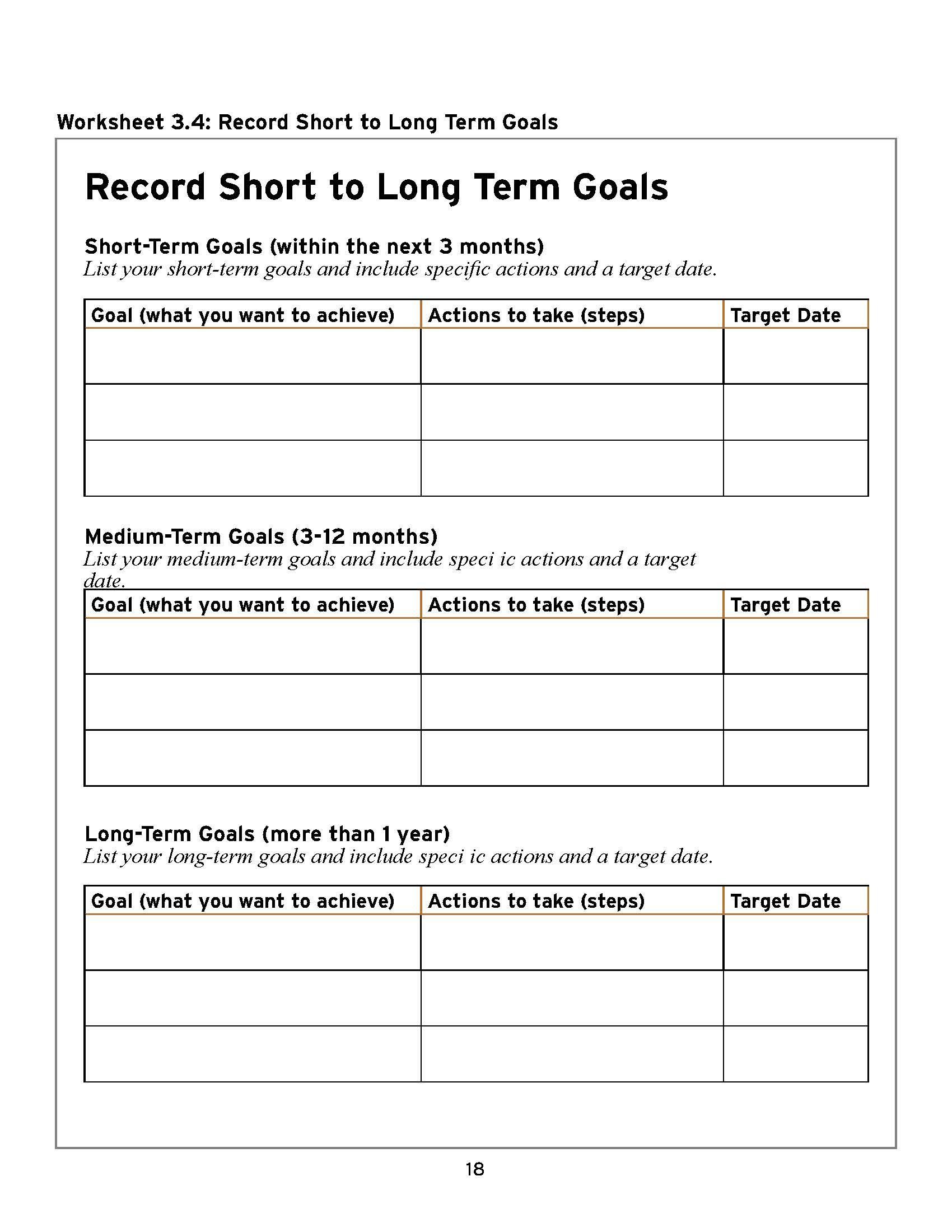
Additionally, Worksheet 3.4 has sections to indicate short to long term goals.
Another crucial part of whole farm planning is a “S.W.O.T. analysis,” which is a planning tool used to collect information and guide the decision-making process in order to obtain strategic advantages.
S.W.O.T. is an acronym for:
- Strengths
- Weaknesses
- Opportunities
- Threats
Make sure all goals are SMART!
Specific
What do you want to do? Add action items, which describe what steps you have to take to reach your goals. For example, “Add 3 buffer strips with native species around Fields 2 and 8” instead of broad ones like “Increase habitat for pollinators.”
Measurable
Can you measure progress to see if the goals were met? This can include numbers and targets.
Achievable
Is it something you can accomplish?
Relevant
Does it make sense to you, and does it improve the business in some way?
Timely
Is there a specific date or time frame this needs to be done by? When do you want to accomplish your goals?
Strengths and Weaknesses: evaluation of the internal environment
The strengths and weaknesses section is internal to your business and provides insight into what components are available to provide competitive advantages. When developing a strategic plan, the competitive advantages will be a key determinant of profitability.
Identifying weaknesses helps you develop improvement strategies and set priorities based on your organization’s future direction. Examples of weaknesses include: internal operating problems, inexperience, lack of infrastructure, low worker productivity, old or obsolete technology, worn equipment and facilities, poor financial situation, bad community reputation, or inadequate leadership capacity.
The characteristics above also may be sources of organizational strengths. Examples of strengths include: excellent operating efficiency, high worker productivity, leading-edge technology, good financial standing, high industry reputation, excellent brand image and effective leadership capacity.
The internal strengths and weaknesses allow business owners to acknowledge the factors needed to develop or to exploit to gain a competitive edge in the external environment. Be open and honest with yourself about your operation.
Areas for exploration include:
- Financial resources
- Management capability
- Infrastructure
- Land capacity
- Location
List the internal strengths of the business:
List the internal weaknesses of the business:
Download strengths and weaknesses: evaluation of the internal environment (fillable PDF)
Hint:
Ask for advice. Have you ever looked at a fellow business owner and wondered why they purchased a piece of equipment or made a particularly poor decision? Why didn’t someone advise them? It can be beneficial to have a third-party view of your operation to assess your strengths and weaknesses. You may not recognize the most obvious strengths or weaknesses due to denial, modesty, or some other reason. Finding someone you can trust to give you an honest evaluation can be critical to an accurate assessment.
Opportunities and Threats: evaluation of the external environment
This part of the S.W.O.T. analysis focuses on current existing external opportunities and threats, and helps the organization to develop strategies that take advantage of opportunities for growth while avoiding potential threats.
Opportunities and threats are external to the organization. The business owner cannot alter these events but instead must change with and react to them.
Hint:
An important step before starting your business and formulating your goals is to thoroughly research your state, county and town regulations on building construction, signage, animal numbers, processing and other laws that may affect the production of sales of your goods and services. You should call your County Extension Office, Zoning Office and Health Department for assistance and information.
List the external opportunities of the business:
List the external threats of the business:
Download opportunities and threats: evaluation of the external environment (fillable pdf)
Step Three – Monitoring progress
It is beneficial to set specific times to review the Whole Farm Plan, be it monthly, quarterly, or annually. Think about how the plan is working, how you are working towards it, and how you have been overcoming setbacks. Create monitoring tools to measure how the plan is working in practice. For example, if your goal is financial or marketing focused, look at sales.
Step Four - Evaluating/Re-planning
Situations may change, so make sure to do what is in the best interest for the health of your farm. It is important to keep in mind that your plans are created based on the best available information and are not set in stone.
Key Take-Away Points
- A Whole Farm Plan is the foundation for strategic decision-making, ensuring that conservation efforts are not only beneficial but also fully integrated into a farm’s overall goals.
- A Whole Farm Plan provides a structured process—assessing resources, setting goals, monitoring progress, and adapting as needed—to help farmers make informed choices.
- This proactive approach maximizes conservation benefits, strengthens farm resilience, and enhances both environmental and economic sustainability.
- Without a comprehensive plan, there is a risk of adopting conservation measures that may not suit the farm’s unique needs, leading to wasted resources or unintended challenges.
Section 3 Review
- A resource inventory is NOT part of the Whole Farm Plan.
- True
- False
- What are SMART goals?
- Simple, Marketing, Activities, Reasonable, Timely
- Specific, Measurable, Achievable, Relevant, Timely
- Specific, Marketing, Activities, Relevant, To-Do’s
- Specific, Measurable, Actions, Reasonable, To-Do’s
- What is not a benefit of goal setting?
- Goal-directed management improves farm efficiency
- Revisiting goals annually provides a forum for discussion
- Goals are not helpful in planning the future of the business
- Reaching goals gives a feeling of accomplishment and pride
Answers can be found in the Answer Key.
Section 4: Conservation plans
There are two conservation questions to think about surrounding your farm. Do you have a problem that needs to be addressed? Do you need something on your property enhanced? If you answered “yes” to either of these questions, then the NRCS can help. They can assess and analyze soil, water, plant, animal, air, energy and human interaction issues.
A Soil Conservation and Water Quality Plan (SCWQP) (also referred to as a “conservation plan”) is a free tool that helps you better manage your farm’s resources. Conservation plans may be required by some programs in the NRCS, Farm Service Agency (FSA), or by the Soil Conservation District.
There are four main components of a conservation plan:
- Management practices
- Timeline for implementing the practices
- Aerial farm maps
- Soil maps
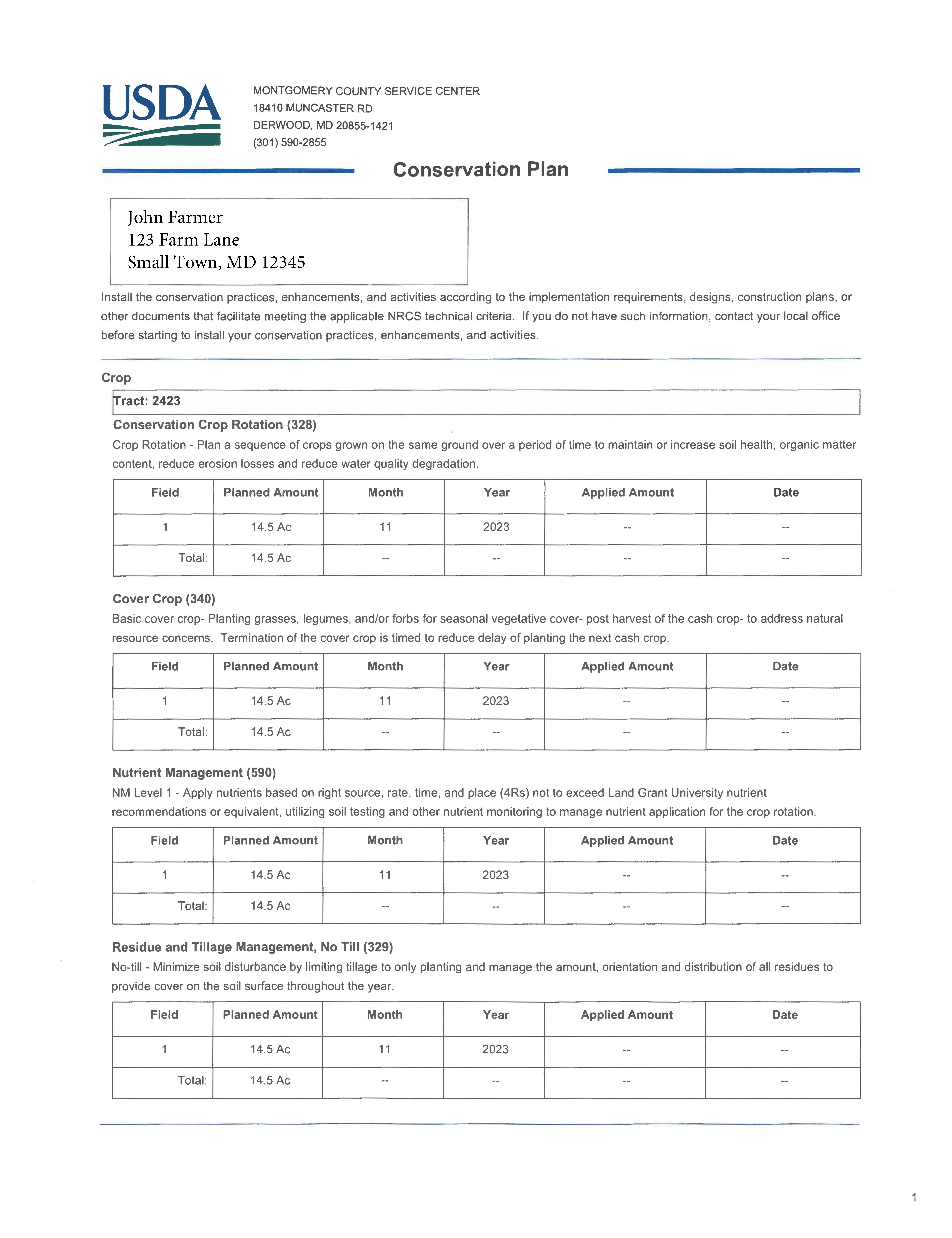
Below is an example of the first page of a conservation plan. The top of the form includes the address, farmer’s name and tract number. It is important to note that the tract number is what the NRCS uses to label fields, and will not necessarily be the same field numbering system that you use. Let’s look at the plan in more depth.
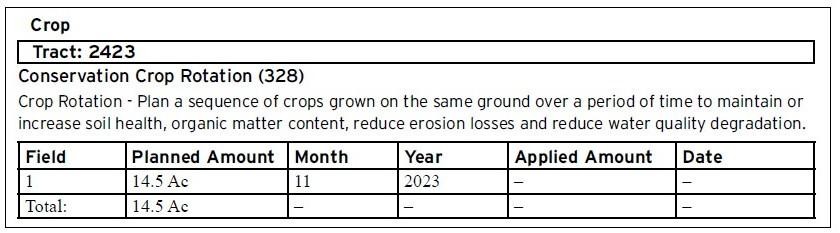
In this example, “Conservation Crop Rotation” is the first of four different conservation practices listed. The table lists the fields where the rotation occurs, the acreage, the months out of the year the practice will be used, and the year implemented.
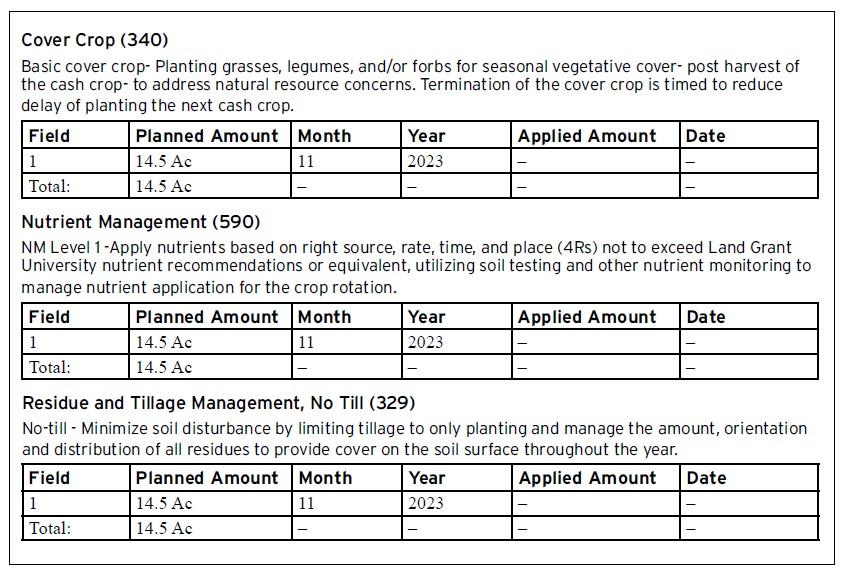
The Cover Crop, Nutrient Management, and No Till sections of the plan are similar to the Conservation Crop Rotation section. The plan includes a brief explanation of the conservation practice and why it is being implemented, along with the fields where it is being used, the planned amount, and the year.
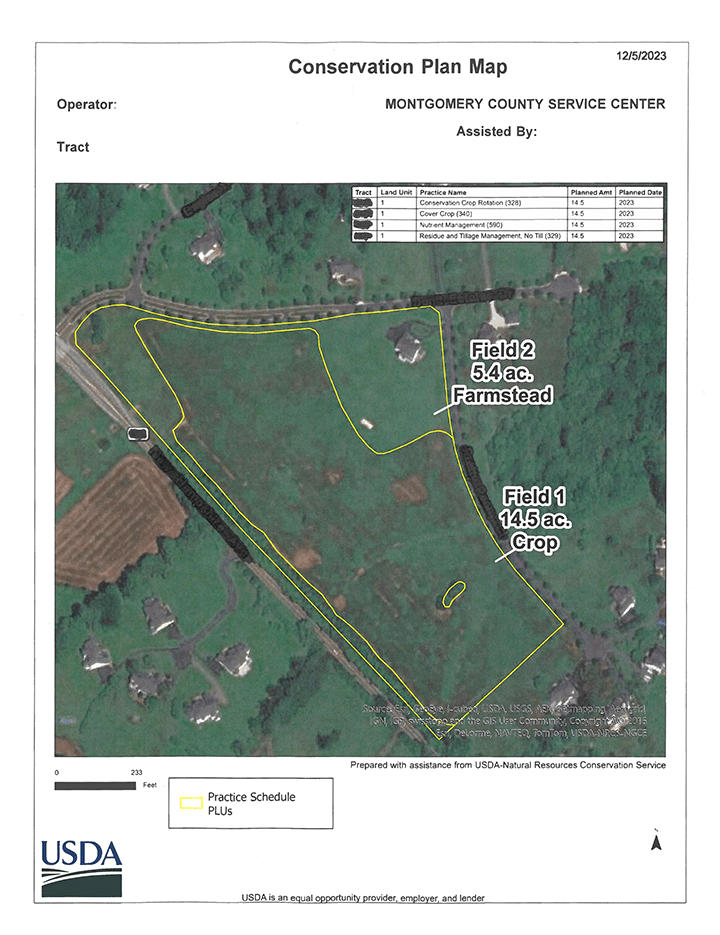
The conservation plan also includes an aerial farm map. Your map will have a highlighted perimeter, labels for the different fields/facilities, and the acreage.
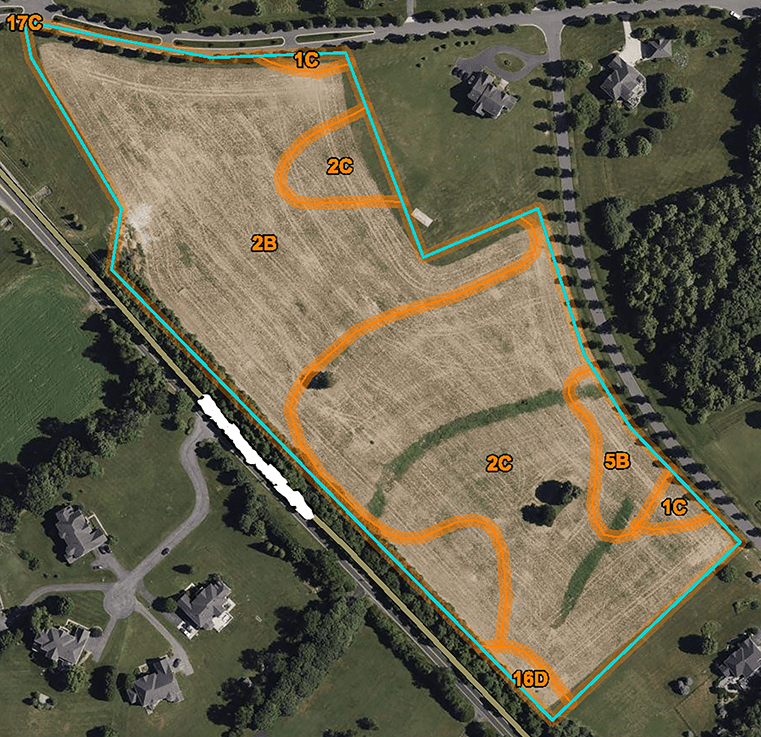
The plan’s Soil Map will look a bit more complicated because of the additional boundary lines; some maps may also have a coloring system. The lines and colors represent different soil series. Soil series is the lowest category of the national soil classification system (think of it like genus and species for soils). Soil series can be used to look up estimated erosion, texture, drainage class, depth to bedrock, and other information that may be helpful for farming practices.
Below is a list of questions to ask before getting started with your plan:
- What are the natural resources on my farm?
- What crops do I plan to grow?
- Have I minimized runoff?
- What types of wildlife do I want to encourage?
- Am I rotating crops to reduce disease and pest problems?
- Can I improve my management of forest resources?
The conservation plan writing process is a conversation between you and NRCS staff. The nine-step process is outlined below.
- Identify problems and opportunities on the farm.
- Determine objectives.
- Inventory resources and collect information for the area(s) of the farm that will be included in the conservation plan.
- Analyze the resource data and determine existing conditions, limitations and desired use for the farm.
- Formulate alternatives (solutions) to achieve objectives and address problems.
- Evaluate alternatives to determine their effectiveness in addressing the problems and objectives.
- Make decisions.
- Implement the plan.
- Evaluate the plan.
Visit your local NRCS office to get your plan written for free!
Key Take-Away Points
- A conservation plan is a free tool to help better manage the resources on the farm.
- Conservation plans include farm map, soils map, and details on conservation practices to be implemented.
- During the conservation planning process, problems, objectives, and solutions are identified.
Section 4 Review
- A conservation plan can help you better manage what?
- Soil
- Water quality
- Air quality
- Wildlife
- All of the above
- Which of the following is NOT a component of a conservation plan?
- Farm map
- Soil map
- List of conservation practices
- Nitrogen recommendations
- Which agency should you contact to get a conservation plan?
- Maryland Department of Agriculture (MDA)
- U.S. Department of Agriculture Natural Resources Conservation Service (NRCS)
- University Extension
- Local planning and zoning department
Answers can be found in the Answer Key.
Section 5: Web Soil Survey

In this section, you will learn about an important and effective farming tool called the Web Soil Survey, developed by the USDA and the US Geological Survey. For best results, access the Web Soil Survey in your internet browser at https://websoilsurvey.nrcs.usda.gov and follow the steps below to become familiar with the website.
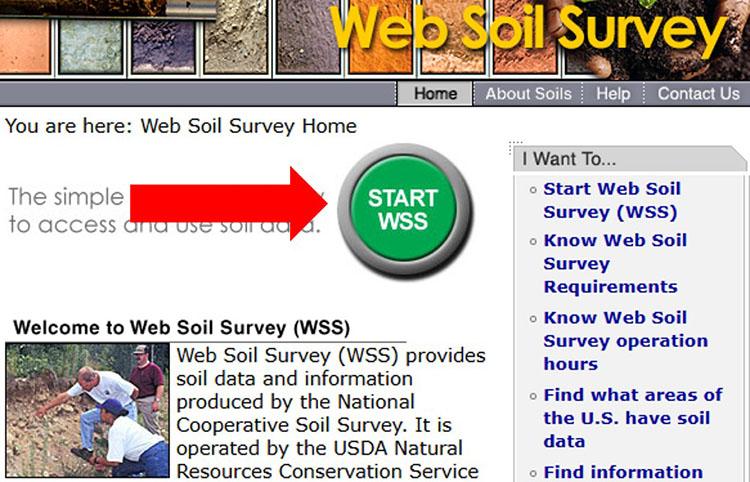
The official Web Soil Survey site has some instructions on how to use the tools and a basic introduction of the mapping system. To launch the map, click the green button which says, “START WSS” (Figure 5.1).
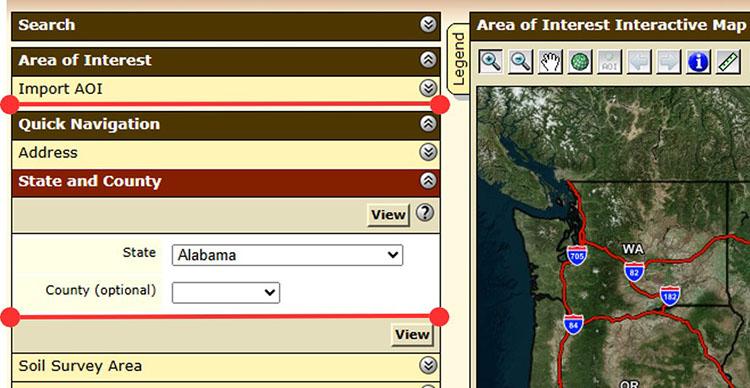
The next screen is a map of the United States. Navigate to the “State and County” dropdown (Figure 5.2). Select your state and, if you choose, your county and select “View.” Alternatively, click the drop-down arrow next to “Address” and type in your address. This will bring you to a more exact location.
Next, use the icons above the map to navigate to your area of interest using the Zoom Tool, which is the square box at the left end of the icons (with a picture of a magnifying glass) (Figure 5.3). When the zoom tool is selected, your cursor will turn into a plus sign. To zoom out, use the magnifying glass with a minus (the second square from the left). To move around the map without zooming in or out, use the glove tool (third square).
Using these three tools, find the area you want to investigate. Once you have found it, use either of the “Area of Interest” (AOI) buttons (last two squares) to enclose your land. The square tool automatically gives you a rectangle to stretch over the perimeter of your land, and the triangle tool allows you to be more precise and create a polygon with more than four corners.
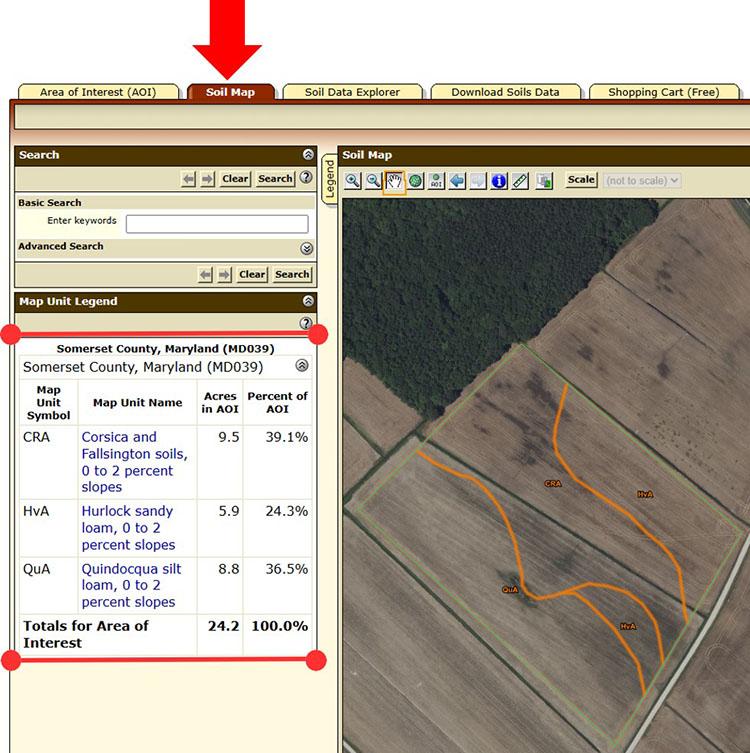
Once you have your area of interest surrounded, click on the tab that says, “Soil Map” (Figure 5.4). It is important to remember that the full range of data may not be available for all Areas of Interest, so your maps may look a little different from the following screenshots.
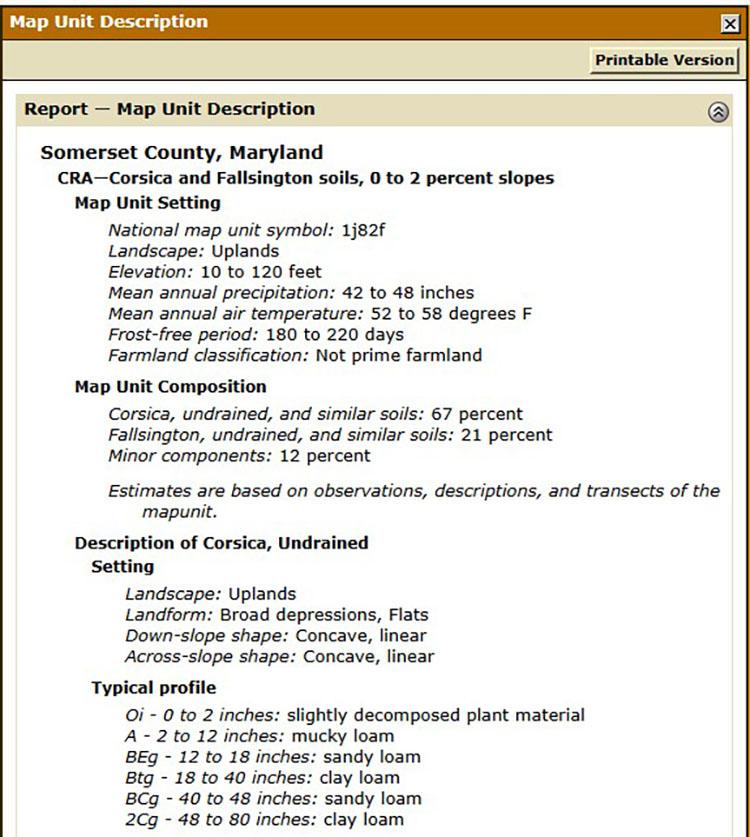
Your selection will create a white spreadsheet on the left of the screen next to the map. This is the “Map Unit Legend.” The orange lines you see on the map with letters in the middle differentiate the types of soils in your area. Match the letters on your map to the Spreadsheet to get more information. When you click on the blue text, the website will tell you more about the type of soil such as the layers it has, the texture (percent of sand and silt and clay), the slope and steepness of the soil, and whether it is considered prime farmland or not (Figure 5.5).
To learn more, look at the mean annual precipitation, which is the fourth line down under the heading “Map Unit Setting.” Also note the “Typical Profile” heading, which will provide information on the soil textures at varying depths.
The heading “Properties and Qualities” also includes such important information as the land’s slope. If it is between 0 and 2%, the land is very flat and will not have too many erosion problems. The same heading also includes information related to drainage, ponding, and flooding.
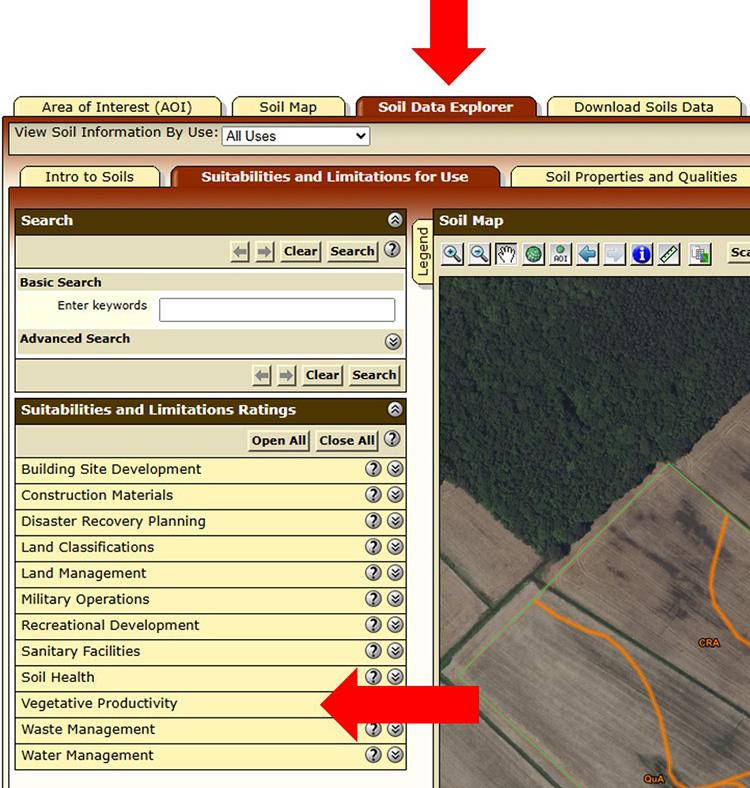
Next, select the “Soil Data Explorer” tab (Figure 5.6). There is a lot of information to be found under this tab, but an important option is “Vegetative Productivity.” The category contains a wide array of data, such as irrigated and non-irrigated yields.
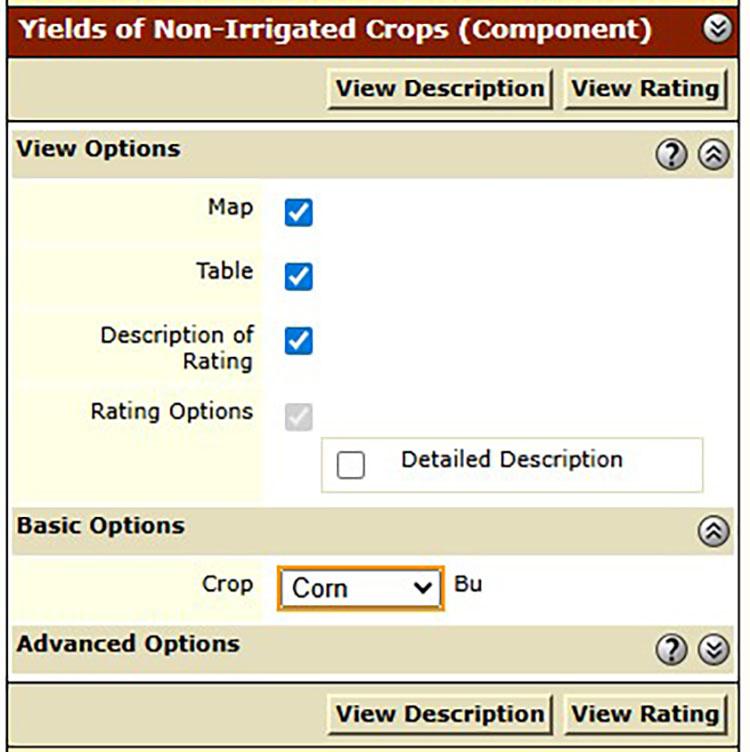
Select the crop you are interested in from the dropdown menu and select “View Rating.” A multi-colored map will appear on top of your area of interest.
Using the legend that appears below the map, you can see the estimated yields on different parts of your farm, which can be very useful for developing business and marketing plans (Figure 5.7). Select “printable version” in the top right corner to print for record keeping or to share with your bank or business partners.
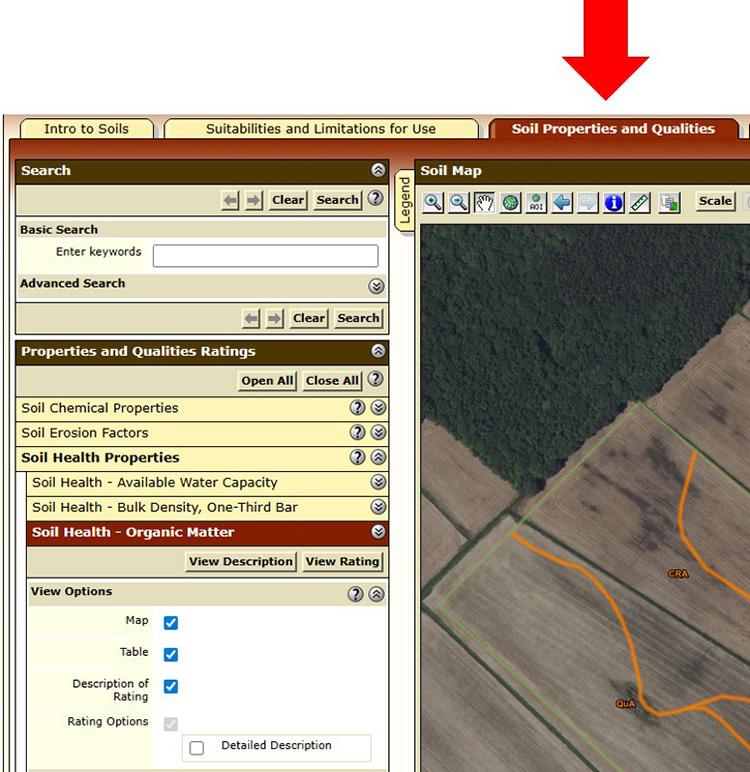
Additional valuable information can be found under the “Soil Properties and Qualities” tab. Selecting “Soil Health - Organic Matter” in this tab provides an estimate of organic matter for different parts of the land via a color-coded map and key (Figure 5.8). You can explore similar data, such as percent clay, percent sand, percent silt, and other soil data properties.
These maps are a useful tool to get started learning about your soil, but the Web Soil Survey shares a disclaimer that they are not at a scale designed for precision agriculture since the data that underlies these maps is meant for a larger landscape scale. Another caveat is that if you are farming in a location that has been disturbed by construction, conditions may have changed since the soil maps were created.
The Web Soil Survey can be used to find a wide variety of information, beyond what this section has covered. If you would like help navigating the website, reach out to your local agriculture extension agent.
Key Take-Away Points
- The Web Soil Survey is a useful tool for learning about your land. You can also use it to investigate land that you are considering renting or purchasing.
- Information available may include soil texture, slope, potential yield, available water capacity, and drainage.
- Not all data layers are available for all locations.
Section 5 Review
- Mean Annual Precipitation can be found under Map Unit Setting.
- True
- False
- Which of these cannot be found under Suitabilities and Limitations for use?
- Disaster Recovery Planning
- Military Operations
- Native Species Management
- Vegetative Productivity
- What can the Web Soil Survey help with?
- Precision agriculture
- Farm Re-sale value
- Slope of the farmland
- Local businesses in the area
Answers can be found in the Answer Key.
Section 6: Overview of agencies and conservation programs
- Conservation agencies
- Natural Resources Conservation Service (NRCS)
- Introduction to Federal programs
- Non-federal conservation programs
Conservation agencies
There are several different agencies and groups, both at the state and the national level, that were created to help farmers thrive. Their overall mission is to make farms profitable and environmentally sustainable. Below is a list of agencies that may assist your farming operation.
The United States Department of Agriculture (USDA)’s Farm Service Agency (FSA) is a federal agency that provides implementation and funding to qualified farmers. They support federal programs, provide farm loans, and offer other farm support.
The USDA Natural Resources Conservation Service (NRCS) provides technical assistance for Federal programs. They work closely with the Farm Service Agency and provide conservation planning, soil surveys and financial assistance.
Each state has a Department of Agriculture. These agencies provide leadership and support in terms of regulatory, marketing, and conservation efforts.
The Soil Conservation District provides technical planning and support of state programs. They are often located on a county-wide scale and provide support in conservation planning, erosion and sediment control, and land stewardship.
Extension or Cooperative Extension is a branch or department of public land grant universities. Cooperative Extension provides research and education, with the goal of bringing science-based knowledge from the university to the community. They often work with 4-H Youth Development, Agriculture and Natural Resources, and Horticulture and Nutrition.
The Farm Bureau is an organization that provides representation and lobbying support. As a private non-profit group, they provide a legislative voice for agriculture.
Natural Resources Conservation Service (NRCS)
The goal of the NRCS is to help you care for and manage the soil, water, air, plants, animals and energy on your farmland and forestland. The NRCS’s natural resources conservation programs help reduce soil erosion, enhance water supplies, improve water quality, increase wildlife habitat, and reduce damage caused by floods and other natural disasters. The service works with producers in three main areas:
Technical support: The NRCS Conservation Technical Assistance Program (CTA) offers knowledge and tools to farmers, ranchers and forestland owners to conserve, maintain and restore the natural resources on their lands while enhancing the long-term health of their operations. The support is provided at no cost to producers. The goal is to give personalized advice and information. NRCS personnel will meet with the producer one-on-one to talk about individual circumstances and operations, and then will help the producer make informed decisions based on the latest science and research.
Conservation planning: If a producer chooses to take the next step forward towards improving their operations, NRCS can work with them to develop a free formal conservation plan, which includes suggested conservation practices. These practices will help the farmers reach both production and conservation goals (see Sections 2 and 4). Conservation technical assistance and conservation planning can go together. Conservation technical assistance can come in the form of a conservation plan.
Financial support: Producers can choose to apply for financial support, which would help provide financial assistance to help install the conservation practices outlined in their conservation plan. The financial assistance will be outlined in a contract between the funding agency and the producer. Contract term length and conditions differ for different programs and practices (see Section 7).
One important thing to note is that no matter the size of the farm, conservation can fit the operation.
The NRCS website lists more than 150 different conservation practices (https://www.nrcs.usda.gov/resources/guides-and-instructions/conservation-practice-standards). Browse the practices and consider which ones could benefit your operation. However, the website should not be used to plan, design, or install a practice, because standards are developed state-by-state. Practices criteria can be more restrictive at the state or local level than indicated by the national criteria, so farmers should consult with their local NRCS office personnel who will ensure that state and local criteria are being met.
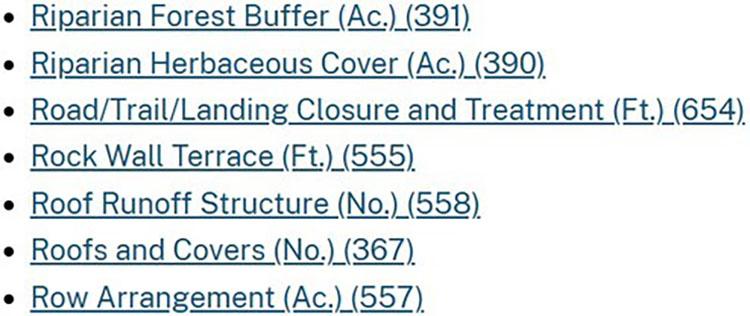
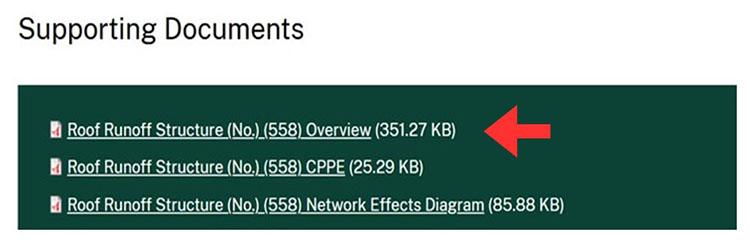
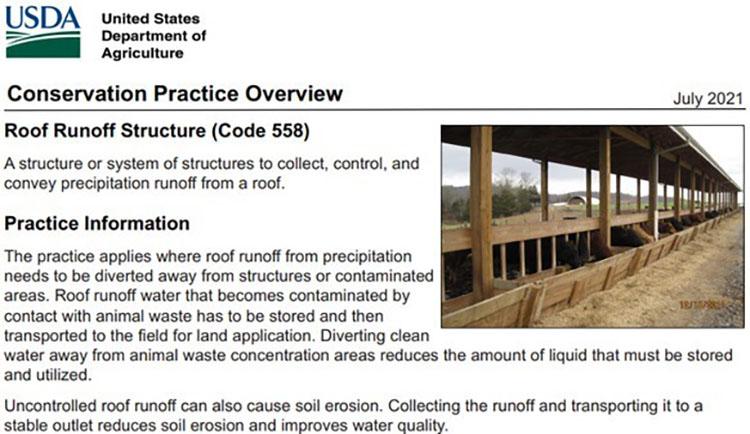
Figure 6.1 is a portion of the practices list on the NRCS website. Each item includes one or more supporting documents available to read. For example, you could click on the “Roof Runoff Structure Overview” to get more detailed information and a fact sheet (Figures 6.1, 6.2, and 6.3).
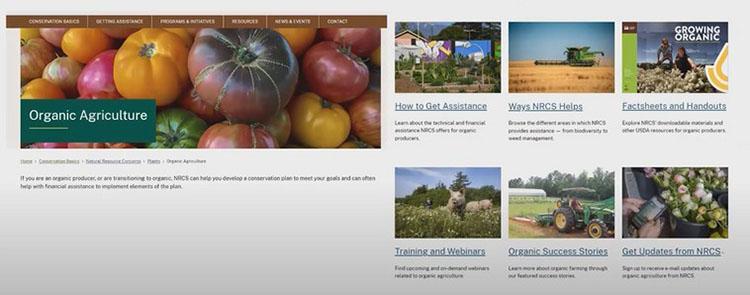
The NRCS website also contains information geared specifically for organic agriculture with available resources and finances to help if you are interested in switching over to organic farming practices (Figure 6.4).
Introduction to Federal programs
There are multiple federal programs to help with conservation available under the USDA NRCS and the USDA FSA.
Programs in USDA - NRCS:
- Environmental Quality Incentives Program (EQIP)
- Agricultural Management Assistance (AMA)
- Conservation Stewardship Program (CSP)
Programs in USDA - FSA:
- Conservation Reserve Program (CRP)
- Conservation Reserve Enhancement Program (CREP)
The Environmental Quality Incentives Program (EQIP) is the NRCS flagship conservation program that helps farmers, ranchers, and forest landowners integrate conservation into working lands. EQIP provides financial and technical assistance to agricultural producers and non-industrial forest managers to address natural resource concerns on your property, and deliver environmental benefits such as:
- Improved water and air quality
- Conserved ground and surface water
- Increased soil health and reduced soil erosion and sedimentation
- Improved or created wildlife habitat
- Mitigation against drought and increasing weather volatility
EQIP funds will not pay to start up a farming operation. Rather, they are used to fund conservation efforts on existing farms. For example, EQIP will not pay for animals, but if you have animals, EQIP can provide financial support for addressing natural resource concerns present on the animal operation. It is important to note that EQIP funds do not cover the cost of production.
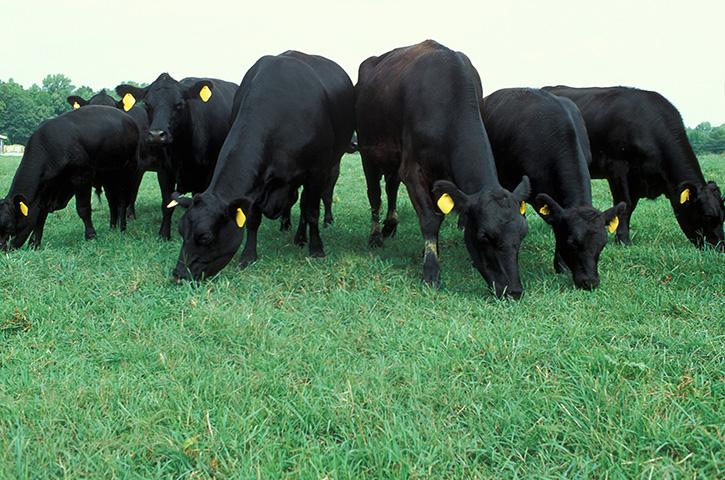
Some examples of practices that may be offered under programs like EQIP or CSP include (varies by region):
- Programs to help with organic farming and transitioning to organic farming
- Seasonal high tunnels
- Grazing programs
- Converting cropland to pasture
Again, it is important to talk to your local NRCS personnel about program details. Programs like EQIP and CSP will not pay for practices that are already happening but rather improvements that enhance the level of conservation. Therefore, cost-share opportunities are very case specific and change frequently.
Historically Underserved participants may be eligible for additional benefits, such as advance payments to help offset costs related to purchasing materials or contracting services through EQIP.
In addition to programs like EQIP, the NRCS offers initiatives within these programs. For example, the Organic Initiative, funded through EQIP, provides comtechnical and financial assistance for organic farmers and ranchers, or to those interested in transitioning to organic. Organic producers can apply to either EQIP or EQIP’s Organic Initiative. The EQIP Organic Initiative has a smaller ranking pool, and a cap on funding. Another example is the High Tunnel Initiative which is also through EQIP. It is important to note that these initiatives may change each fiscal year. Talk to your local NRCS personnel about current opportunities.
The NRCS’s Agricultural Management Assistance (AMA) program helps agricultural producers manage financial risk through diversification, marketing, or natural resource conservation practices. NRCS administers the conservation provisions, while the USDA’s Agricultural Marketing Service and the Risk Management Agency implement the product diversification and marketing provisions.
For example, producers may construct or improve water management structures or irrigation structures; plant trees for windbreaks or to improve water quality; and mitigate risk through production diversification or resource conservation practices, including soil erosion control, integrated pest management, or transition to organic farming.
The AMA program provides financial assistance for up to 75% of the cost of installing conservation practices and total payments shall not exceed $50,000 per participant for any fiscal year. They offer additional higher cost share amounts for Historically Underserved producers. Talk to your local office about what may apply to you in the AMA program.
The third NRCS program is the Conservation Stewardship Program (CSP), which builds on existing conservation efforts while strengthening operations. If you are already taking steps to improve the condition of the land, CSP can help you find new ways to meet your goals or take conservation to the next level. For example, if you’re already using cover crops, you might choose to enhance your practice by incorporating multi-species cover crops to further improve soil health. CSP is a five-year program that enrolls all land controlled by the producer. Producers receive an annual payment rewarding them for their level of conservation. In 2025, the minimum annual payment is $4,000 which means the producer would receive a minimum total contract of $20,000 over five years. The NRCS works one-on-one with producers to develop a conservation plan that outlines and enhances existing efforts, using new conservation practices or activities, based on management objectives for your operation.

The Conservation Reserve Program (CRP) is administered by the FSA and the NRCS, which assist with technical assistance through conservation planning. The CRP provides a yearly rental payment to farmers who remove environmentally sensitive land from agricultural production and plant species that will improve environmental health and quality. The CRP has a longer contract than is usual for other conservation programs; the land enrolled is in contract for 10 to 15 years. The long-term goal is to re-establish valuable land cover to help improve water quality, prevent soil erosion and reduce loss of wildlife habitat.
The Conservation Reserve Enhancement Program (CREP) is a part of the Conservation Reserve Program. The CREP focuses on high priority conservation goals identified by the state; these are federally funded and supplemented with non-federal funds. An example of this is the Chesapeake Bay’s Conservation Reserve Enhancement Program. This program provides incentives to encourage landowners to implement practices that will help reduce sediment and nutrients in the Chesapeake Bay and will improve wildlife habitat. The program goal is to enroll up to 100,000 acres of agricultural land in Maryland. The NRCS and cooperating agencies provide technical assistance to help landowners plan and implement CREP practices.
CRP, EQIP and other NRCS programs have similar contractual expectations. The contracts are legally binding, even if land changes owners. The contracts can be terminated for non-compliance if producers are not meeting standards. If the contract is terminated, producers will be expected to pay back rental payments, cost share money to install practices, and liquidated damages. A major difference between programs is the length of time of commitment. The table below shows differences between the CRP and EQIP programs.
| CRP | EQIP |
|---|---|
| 10-year commitment | Need to fully implement one practice within 12 months, and other practices should follow agreed upon implementation timeline |
| Legally binding contract, even if land changes hands | Legally binding contract, even if land changes hands (shorter term) |
| Good choice for well-established farmers | Good choice for well-established farmers or beginning farmers |
Payments
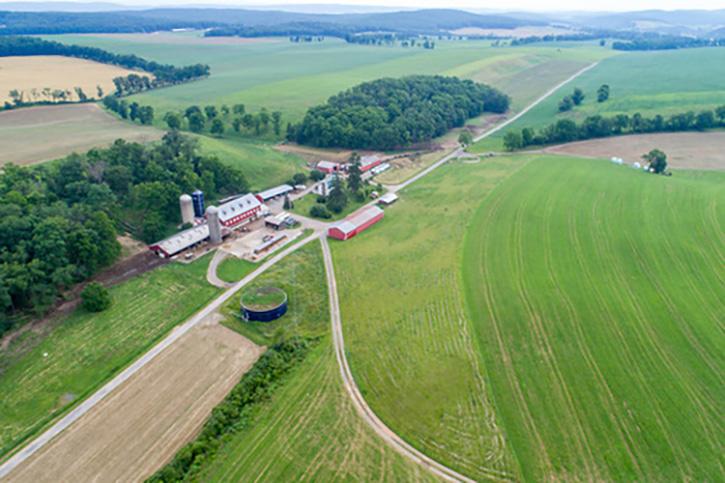
Farmers must implement practice(s) to agency standards to receive reimbursement from the NRCS and FSA. An NRCS technician or planner will verify that the practices meet standards, and farmers need to submit supporting paperwork that shows inputs such as invoices for implementing the practice.
The Low Interest Loans for Agricultural Conservation (LILAC) program has loans available to help farmers install best management practices on their farms, purchase conservation equipment, and adopt new technologies that help protect natural resources and safeguard water quality. LILAC can help bridge the gap prior to reimbursement from conservation programs.
Next steps
- Prior to applying for any contracts, visit your local NRCS or Soil Conservation District office to review your operations, get a conservation plan, and see what programs are available in your area.
- Check your eligibility with the help of the NRCS. Then consider applying for financial assistance programs.
- Begin implementing the standards and specifications at your farm.
Non-federal conservation programs
There are also non-federal sources of conservation technical and financial support, such as programs available at the state and regional level.
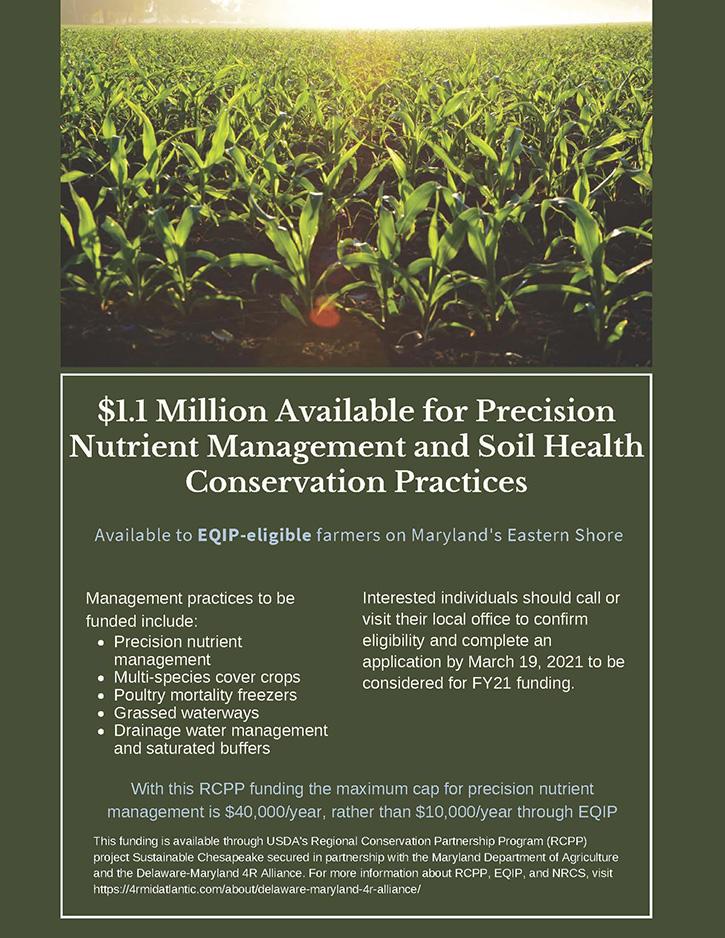
For example, the Maryland Department of Agriculture (MDA) administers several conservation programs. In addition to more traditional programs, the MDA also administers programs directed specifically for small farms and urban agricultural operations. Funds may also be available at the local level. For example, the program in Figure 6.9 was specific for Maryland’s Eastern Shore.
Your local Soil Conservation District Office is a great place to start to learn about both federal and state or local programs. A list of Maryland Soil Conservation District offices and their phone numbers is found at https://mda.maryland.gov/resource_conservation/pages/technical_assistance.aspx. A list of Delaware Soil Conservation District offices and phone numbers is found at https://dnrec.delaware.gov/watershed-stewardship/conservation/districts/.
Key Take-Away Points
- Conservation programs are available through various government agencies at the federal, state and local levels.
- There are conservation programs that fit and could improve all types and sizes of operations.
- Visit your local Soil Conservation District or NRCS office to learn more about opportunities to enroll in conservation programs in your area.
Section 6 Review
- Conservation Reserve Programs and NRCS EQIP programs have the same time commitment.
- True
- False
- You should first apply for NRCS financial assistance and then visit your local Soil Conservation District office.
- True
- False
- Which of these are conservation programs that can be found on the NRCS website?
- Roof Runoff Structure
- Row Arrangement
- Rock Wall Terrace
- All of the above
Answers can be found in the Answer Key.
Section 7: NRCS Program eligibility and contract requirements
The Agriculture Law Education Initiative (ALEI) is a partnership of the Francis King Carey School of Law at the University of Maryland, Baltimore (UMB); the college of Agriculture and Natural Resources at the University of Maryland (UMCP); and the School of Agriculture and Natural Sciences at the University of Maryland Eastern Shore. ALEI is an initiative of the University of Maryland: MPowering the State, a strategic alliance between UMB and UMCP created in 2012 to significantly expand research collaboration, business development, and student opportunities at both universities.
This lesson is intended to provide general information and should not be construed as providing legal advice. It should not be cited or relied upon as legal authority. State laws vary and any attempt made to discuss laws of states other than Maryland is for general information to help the viewer better understand Maryland Law. For advice about how these issues might apply to your individual situation, consult an attorney.
Contents:
- Eligibility requirements for conservation program enrollment
- What you are signing: understanding the fine print
- Contract non-compliance
In this section, we will review who is eligible for different programs (and who you need to consult), what conservation services you will be agreeing to take on (what is in the fine print and what the process will be like), and how to maintain compliance.
Eligibility requirements for conservation program enrollment
In order to be eligible for enrollment in the conservation programs mentioned above, you must meet several criteria.
1) You must be an actively engaged farmer.
The primary eligibility criterion is that the applicant must be an operator, owner, or other tenant of an agricultural or nonindustrial forestland who is actively engaged in farming or forest management (or who has an interest in such an operation).
The USDA also includes four provisions that address the unique circumstances and concerns of the socially disadvantaged, beginning, limited resources, and veteran farmers/ranchers.
- Socially disadvantaged means an individual or identity who is a member of a socially disadvantaged group whose members have been subject to racial or ethnic prejudice because of their identity rather than individual qualities. Groups can include American Indians, Alaskan Natives, Asians, African Americans, Native Hawaiians or Pacific Islanders, and Hispanic or Latinx people.
- Beginning farmer means participants who have not operated a farm/ranch, or who have not operated a farm/ranch for more than ten consecutive years. These farmers must materially and substantially participate (provide day-to-day labor) in the operation of the farm/ranch. In the case of a contract with an entity or joint operation, all members must materially and substantially participate in the operation of the farm or ranch. Material and substantial participation requires that each of the members provide some amount of the management or labor and management necessary for day-to-day activities, such that if each of the members did not provide these inputs, operation of the farm or ranch would be seriously impaired.
- A limited resource farmer or rancher means a participant with direct or indirect gross farm sales not more than the current indexed value in each of the previous two years and who has (one of the following two conditions) a total household income at or below the national poverty level for a family of four, or less than 50% of county median household income in each of the previous two years.
- An online tool from the USDA can help growers quickly discern whether they qualify as a limited resource farmer based on the location of the operation. Visit https://lrftool.sc.egov.usda.gov/Default.aspx (click on the left-hand column with the current year online tool) and enter information about the state and county. The online tool will generate the applicable gross sales amount and household income limits that are the current indexed values applicable to the entered state and county.
- A veteran farmer means someone who served in the United States Army, Navy, Marine Corps, Air Force, or Coast Guard, including the reserve component thereof; was released from service under conditions other than dishonorable; and (one of the following):
- Has not operated a farm/ranch, or has not operated a farm/ranch for more than 10 consecutive years; or
- Who first obtained status as a veteran during the most recent 10-year period.
Collectively, these categories of farmers are referred to as “Historically Underserved Producers,” or HUPs. The USDA offers HUPs incentives through program enhancements, which include higher payment rates and at least 50% of the cost-share grant amount paid in advance. Eligibility for advance payment is contingent upon the participant obtaining an NRCS-approved practice design prior to approval of the advance payment.
All participants in programs who are subject to payment eligibility must submit two USDA forms to assert and explain their active engagement with farming or forestry. The first form (CCC901a) collects the members’ information. The second form (CCC902) is the farm operating plan and identifies each individual’s or entity’s ownership interest in the farm operation, which could include capital land equipment, active personal labor, or active personal management that has contributed to the operation.
2) You must have a farm number.
Obtaining a farm number is a necessary step when applying for USDA funding. The farm number is a unique number assigned by the USDA that specifies where your farm is located. Farm numbers run with the land, not the farmer, so if you are on a parcel of land that was previously used for agriculture there is a good chance a farm number exists.
To get your farm number, make an appointment at your local FSA. You can find your local county office online at https://offices.usda.gov. Farm Service Agency staff can locate your farm parcel through the county mapping system to check if the property you are farming already has an assigned farm number. If they do not find one, FSA can issue you a farm number for free after the required paperwork is completed. Bring the following required documents to your appointment:
- Proof of your identity (driver’s license, social security card, etc.) and your farm’s federal tax identification number (EIN)
- Proof of control of the land (deed, a lease or rental agreement, etc.)
- Entity identification status (articles of incorporation, trust & estate documents, partnership agreement)
- A map and legal description of the parcels being enrolled in a USDA program
3) You must have a conservation plan.
A Soil Conservation and Water Quality Plan (SCWQP) is another eligibility requirement (see Section 4). A SCWQP is a comprehensive plan that addresses natural resource management on agricultural lands and utilizes best management practices (BMPs) to control erosion and sediment loss and manage runoff. You can work with your local Soil Conservation District office agents to create a custom SCWQP that is designed around the specific qualities, features, and crop plans on your land. It must include photos and/or maps of the farm, a list of management decisions and BMPs (e.g., crop rotations and structural practices like sediment basins), explanations of how you intend to carry out those decisions, and a plan for the operation and maintenance of practices. A SCWQP can typically be used for up to 10 years without revision if substantial changes in management do not occur.
A Comprehensive Nutrient Management Plan (CNMP) is a conservation plan that is specifically for an animal feeding operation (AFO). It identifies conservation practices and management activities that, when implemented as part of a conservation system, will effectively manage manure, wastewater, or organic by-products associated with a waste management facility. A CNMP incorporates practices to use animal manure and organic by-products as a beneficial resource while protecting all applicable natural resources including water and air quality associated with an AFO. A CNMP is developed to assist an AFO owner or operator in meeting all applicable local, Tribal, State and Federal water quality goals or regulations. For nutrient-impaired stream segments or water bodies, additional management activities or conservation practices may be required by local water quality goals or regulations.
Another potential conservation plan that might be required is a forest management plan. A forest management plan is a site-specific plan that is prepared according to NRCS criteria by a professional resource manager, in consultation with the participant, and is approved by NRCS. Forest management plans may include a forest stewardship plan, as specified in section 5 of the Cooperative Forestry Assistance Act of 1978 (16 U.S.C.2103a); another plan approved by the State forester or Indian Tribe; or another plan determined appropriate by NRCS.
4) You must demonstrate adjusted gross income and payment limitations.
Eligibility is also subject to Adjusted Gross Income (AGI) limits established in the Farm Bill for most NRCS programs. As of June 2024, the AGI limit established in the 2018 Farm Bill, is $900,000 per year. All individuals and legal entities requesting certain FSA or NRCS program payments, either directly or indirectly, are subject to the AGI limitation provisions.
Participants in programs subject to AGI rules must certify their eligibility annually to receive program benefits. The annual certification is made possible by completing the CCC-941 form, “Average Adjusted Gross Income Certification and Consent to Disclosure of Tax Information.” The form provides the IRS written consent from the individual or legal entity to provide USDA verification of compliance with AGI limitation provisions. The AGI limitation takes into consideration the three taxable years preceding the immediately preceding tax year for which payments/benefits are being requested. If a participant exceeds the AGI limit, they can still participate in a program but will not be eligible for federal payments.
Each member of an entity or beneficiaries of trusts will have to complete the AGI form and meet the limitation. If any individual owner exceeds the limit, the entity can still qualify but the member’s share would be deducted from the payment. Each member of a joint operation—where members need not have a common family relation or lineage— may be treated separately and individually for purposes of determining eligibility and payment limits.
4) Your operation includes no controlled substances.
Because NRCS programs are federal, a farmer is ineligible for program benefits if they are engaged in controlled substance activities. For example, this could be illegally growing marijuana or unauthorized hemp production. A person convicted of growing, cultivating and storing a controlled substance will be ineligible for up to five years from the date of conviction. Additionally, a person who was convicted of possession or trafficking of a controlled substance may be ineligible depending upon the court decision and history of past violations.
What you are signing: understanding the fine print

Participants should fully understand to what they are committing before signing any contract. An NRCS contract is a legal document that specifies the rights and obligations of any participant accepted into the program. A conservation program contract will have multiple parts, depending on the specific program applied for. For example, an EQIP contract is a binding agreement for the transfer of assistance from USDA to the participant to share in the costs of implementing conservation practices and would include several documents: Application, Conservation Program Contract, Appendix, Operation & Maintenance (O&M) Plans, as applicable, and the appropriate conservation plan.
The majority of pertinent information regarding implementation timelines, length of contract term, and payment limitations and procedures will be in the appendix of the contract. Read it very thoroughly and be sure to ask questions.
Pay close attention to the documents referenced in the Appendix, such as the conservation or O&M plans. “Operation and maintenance” (O&M) refers to the work performed by the participant to keep the applied conservation practice functioning for the intended purpose during the conservation practice lifespan. Operation includes the administration, management, and performance of non-maintenance actions needed to keep the completed practice functioning as intended. Maintenance includes work to prevent deterioration of the practice, repairing damage, or replacement of the practice to its original condition if one or more components fail.
The contract appendix will also include several standard provisions related to required protections for highly erodible land and wetlands, and participants must agree:
- To not produce an agricultural commodity on highly erodible land without a conservation system.
- To not plant an agricultural commodity on a converted wetland; and
- To not convert a wetland to make possible the production of an agricultural commodity.
By signing, you agree to comply with all the referenced documents. Retain a copy of all contract documents and review them annually or as management implementation progresses. Multiple people can sign for different percentages of the share of program payments. While agents will answer questions and do their best to explain the forms and payments to the land users, it is ultimately up to the participants themselves to read the terms and understand all provisions before signing the agreement.
Questions to ask before signing anything:
- Who will be responsible for the operation and maintenance work, if applicable, and in what share?
- How often will verification visits or audits take place?
- Do you understand when and how to get funding?
- What will you have to show (certification of installation, receipts, etc.) to be reimbursed?
- How long will it take to get the funding (weeks, months, etc.)?

Signing the agreement does not mean that you will receive funding immediately. The contract must first be approved by NRCS, and the approval will be sent in a letter by the NRCS. Each NRCS program has its own payment limit, or maximum benefit amount, and payment reimbursement and/or rental terms. Each cost share program payment amount is to be determined by either 1) Average cost; 2) Actual cost but not more than the average cost; or 3) A specified maximum cost. The division of the total maximum payment allowed under the applicable program will be divided proportionally to eligible farmers as agreed upon in the contract agreement.
Contract non-compliance
Contract violations, also known as non-compliance, occur when a participant fails to adhere to the terms and conditions of the contract. The NRCS may terminate a contract 1) without the consent of the participant when NRCS determines that the participant violated the contract; or 2) with the consent of the participant if NRCS determines that the termination is in the public interest. If NRCS terminates a contract due to violation (called breach of contract), the participant forfeits all rights to future payments under the contract, may have to pay liquidated damages, and possibly refund all or part of the payments received, plus interest.
Non-compliance can take several forms:
- Under the contract, the participant needs to complete at least one practice within 12 months of the contract being obligated but fails to complete conservation practices as scheduled (according to the implementation timeline) in the contract.
- The landowner decides to sell the farm, and the participant loses control of the land under contract.
- Despite best efforts, a conservation practice or activity fails within its lifespan and prior to contract expiration.
- The participant fails to meet any other contract provisions outlined in the contract.
If non-compliance arises or is anticipated, farmers can work with their local NRCS office to modify their contract (when applicable) before a violation occurs. If the property where the conservation practice is installed is set to change ownership before the contract term expires, the participants should make sure during the selling and land transfer process that the new owner understands the NRCS contract and the work that goes into it. The NRCS may approve a contract transfer, thereby allowing the original participants to avoid contract termination (refunding payments and payments of liquidated damages). However, unless NRCS receives timely notice of a loss of control and approves a transfer of contract rights, a participant losing control of any acreage will be in violation of the contract and NRCS may terminate the contract and require a participant to refund all or a portion of any financial assistance provided.
If NRCS determines that a participant is in violation of the terms of a contract, O&M agreement, or documents incorporated by reference into the contract, NRCS may give the participant a reasonable period of time, as determined by NRCS (not to exceed 12 months), to correct the violation and comply with the terms of the contract and attachments included.
In the event a conservation practice fails through no fault of the participant, NRCS may issue payments to reestablish the practice, provided such payments do not exceed the program payment limitation requirements. Talk to NRCS about example situations that would be specific to each conservation practice.
Equitable relief from ineligibility
The NRCS may grant equitable relief to a program participant that NRCS determines to be out of compliance with the requirements, terms and conditions of the program, and therefore ineligible for a payment or other benefit, if one of the following situations apply.
- The participant relied in good faith on incorrect information from an NRCS employee or representative of USDA to their detriment. Acting in reliance on their own misunderstanding or misinterpretation of the program provisions, notices, or information is not included as a reason to provide equitable relief.
- The participant failed to fully comply with practice implementation despite good faith efforts and substantial performance.
Equitable relief is relief offered to participants in five different forms:
- Retain payments or other benefits received under the covered program;
- Continue to receive payments and other benefits under the covered program;
- Continue to participate, in whole or in part, under any contract executed under the covered program;
- Re-enroll all or part of the land covered by the program; and
- Receive such other equitable relief as determined to be appropriate.
Requests by a participant for equitable relief must be made in writing with information necessary to determine eligibility, no later than 30 calendar days from the date of receipt of the notification of non-compliance with the requirements of the covered conservation program.
Key Take-Away Points
- It is important to know the different conservation plans available and which one will best suit your farm.
- Understand the fine print, the limitations and qualifications to any agreements before signing.
- Make sure to look into what contract violations would apply to your agreement and how to avoid non-compliance.
Section 7 Review
- Besides proof of identity, what else would you need to bring to your local FSA office to apply for a USDA program?
- A map of the land parcels being enrolled
- Proof of Control of the Land
- The Farms Federal Tax ID Number
- Entity Identification Status
- All of the above
- Deciding to sell the farm and losing control of the land under contract does not fall into non-compliance.
- True
- False
- Which of these situations would be considered a Limited Resource Farmer?
- A total household income at or below the State Poverty Level
- Having less than 50% of county median household income for the past two years
- Loans totaling more than $10,000
Answers can be found in the Answer Key.
Conclusion
The Cultivating Conservation for Maryland and Delaware’s Historically Underserved Farmers guidebook was developed to serve as an accessible, comprehensive resource for farmers and landowners seeking to better understand and engage in conservation efforts across Maryland and Delaware. Whether new to conservation or looking to strengthen existing practices, this guide offers clear, actionable information on a range of tools, programs, and agencies that support the sustainable management of agricultural land.
At the core of the guidebook is the belief that conservation is both an environmental responsibility and a sound business strategy. Implementing conservation practices—such as cover crops, buffer strips, nutrient management, and habitat restoration—can significantly improve soil health, water quality, and biodiversity, while also enhancing the productivity and resilience of farming operations. Developing whole farm and conservation plans helps farmers make informed decisions that reflect both the unique characteristics of their land and their long-term operational goals.
Equally important is a thorough understanding of the administrative side of conservation programs. Many programs offered have technical standards, implementation timelines, and legal contracts. Farmers are encouraged to review eligibility criteria carefully, ask questions, and seek professional guidance when needed to fully understand what participation entails. Being well-informed about contract expectations and timelines helps prevent noncompliance and ensures a positive experience with conservation programs.
While this guide addresses the needs of all farmers, it also recognizes that accessing conservation programs can be particularly challenging for those who are new to farming or who have historically lacked strong connections to resource agencies. By outlining the specific provisions and opportunities available to beginning, socially disadvantaged, veteran, and limited resource producers, the guide helps bridge the knowledge gap and promotes broader participation in conservation efforts.
With the information and tools provided in this guidebook and the support of experienced agency partners, farmers and landowners are well-positioned to take meaningful steps toward conserving their land, protecting natural resources, and building a thriving, sustainable future for their farms and communities.
Glossary
AFO – Animal feeding operation
AGI – Adjusted Gross Income
AMA – Agricultural Management Assistance
Beginning farmer – Participants who have not operated a farm/ranch, or who have not operated a farm/ranch for more than ten consecutive years.
BMP – Best management practices
CNMP – Comprehensive Nutrient Management Plan
Conservation Plan – Plan written by NRCS that helps you better manage your farm’s resources. Components include management practices, timeline for practice implementation, aerial farm maps, and soil maps. Can also be called Soil Conservation and Water Quality Plan (SCWQP)
Cooperative Extension – See Extension
Cover crop – Any crop that is grown to protect and cover the soil
CREP – Conservation Reserve Enhancement Program
CRP – Conservation Reserve Program
CSP – Conservation Stewardship Program
EQIP – Environmental Quality Incentives Program
Extension – A branch or department of public land grant universities. Extension provides research and education, with the goal of bringing science-based knowledge from the university to the community. They often work with 4-H Youth Development, Agriculture and Natural Resources, and Horticulture and Nutrition.
Farm Bureau – An organization that provides representation and lobbying support. As a private non-profit group, they provide a legislative voice for agriculture.
Farm number – A unique number assigned by the USDA that specifies where your farm is located.
FSA – Farm Service Agency
High tunnel – Tunnel with top and sides made from polyethylene plastic, which can harness solar energy to heat up the interior of the tunnel and allow farmers to extend the growing season due to the increased temperature inside them relative to the outside.
Hoop house – See “High tunnel”
HU – Historically underserved
HUP – Historically underserved producer
Land Capacity – The capability of the land to sustain a given land use without causing damage.
Legume – Plant that forms symbiotic relationship with beneficial bacteria that fix nitrogen from the air, converting it into a form that can be used by plants.
Limited resource farmer/rancher – A participant with direct or indirect gross farm sales not more than the current indexed value in each of the previous two years and who has (one of the following two conditions) a total household income at or below the national poverty level for a family of four, or less than 50% of county median household income in each of the previous two years.
Low Interest Loans for Agricultural Conservation (LILAC) program – has loans available to help farmers install best management practices on their farms, purchase conservation equipment, and adopt new technologies that help protect natural resources and safeguard water quality. LILAC can help bridge the gap prior to reimbursement from conservation programs.
Nitrogen – An important nutrient for all living matter, which assists in photosynthesis and is crucial for plant growth. Excess nitrogen can cause air and water pollution.
NRCS – Natural Resources Conservation Service
Nutrient Management – The process of testing and tracking nutrients such as carbon or nitrogen in soil to maximize field yield and health.
O&M – Operation and Maintenance
Operation and maintenance (O&M) – The work performed by the participant to keep the applied conservation practice functioning for the intended purpose during the conservation practice lifespan. Operation includes the administration, management, and performance of non-maintenance actions needed to keep the completed practice functioning as intended. Maintenance includes work to prevent deterioration of the practice, repairing damage, or replacement of the practice to its original condition if one or more components fail.
Roller crimper – A piece of agricultural equipment that is attached to a tractor and pulled through a crop, where it systematically damages, or “crimps”, plant stems. A roller crimper can allow for termination of cover crops without chemicals.
SCWQP – Soil Conservation and Water Quality Plan
Silvopasture – The practice of raising livestock in a forested area, which allows for more efficient use of farm space.
SMART goals – Specific, Measurable, Achievable, Relevant, Timely goals
Socially disadvantaged – An individual or identity who is a member of a socially disadvantaged group whose members have been subject to racial or ethnic prejudice because of their identity rather than individual qualities. Groups can include American Indians, Alaskan Natives, Asians, African Americans, Native Hawaiians or Pacific Islanders, and Hispanic or Latinx people.
Soil Conservation and Water Quality Plan (SCWQP) – See Conservation Plan
Soil Conservation District – Provides technical planning and support of state programs. They are often located on a county-wide scale and provide support in conservation planning, erosion and sediment control, and land stewardship.
Soil series – Lowest category of the national soil classification system. Can be used to look up estimated erosion, texture, drainage class, depth to bedrock, and other information that may be helpful for farming.
S.W.O.T. – Strengths, Weaknesses, Opportunities, Threats
Tarping – A method of crop termination, sometimes after use of a roller crimper. A tarp is applied over an area of a field, where heat is trapped.
USDA – United States Department of Agriculture
Veteran farmer – Someone who served in the United States Army, Navy, Marine Corps, Air Force, or Coast Guard, including the reserve component thereof; was released from service under conditions other than dishonorable; and (one of the following): has not operated a farm/ranch, or has not operated a farm/ranch for more than 10 consecutive years; or who first obtained status as a veteran during the most recent 10-year period.
Whole Farm Plan – A comprehensive approach to decision-making that considers the entire farm and all available resources in it. The plan helps farmers achieve their goals while strengthening natural resources, the surrounding environment and quality of life.
Winterkill – Term used when plants die due to exposure to winter elements such as extreme temperatures, ice, or snow.
Answer Key
- b
- b
- b
Section 2 review answers
- b
- d
- b
Section 3 review answers
- b
- b
- c
Section 4 review answers
- e
- d
- b
Section 5 review answers
- a
- c
- c
Section 6 review answers
- b
- b
- d
Section 7 review answers
- e
- b
- b
For More Information
- University of Maryland Extension Cultivating Conservation information, upcoming programs, and online course: https://go.umd.edu/cultivatingconservation
- Maryland extension office locator and contact info: https://extension.umd.edu/locations/
- Maryland Soil Conservation District office locator and contact info:
https://mda.maryland.gov/resource_conservation/pages/technical_assistance.aspx. - Delaware Soil Conservation District office locator and contact info:
https://dnrec.delaware.gov/watershed-stewardship/conservation/districts/ - USDA Service Center locator and contact info: https://offices.usda.gov
- USDA’s Get Started! A Guide to USDA Resources for Historically Underserved Farmers and Ranchers:
https://www.nrcs.usda.gov/resources/guides-and-instructions/get-started-a-guide-to-usda-resources-for-historically. - NRCS practice list:
https://www.nrcs.usda.gov/resources/guides-and-instructions/conservation-practice-standards - USDA Limited Resources Farmer/Rancher Self Determination Tool: https://lrftool.sc.egov.usda.gov/
- Web Soil Survey: https://websoilsurvey.nrcs.usda.gov
- Maryland Department of Natural Resources custom mapping program MERLIN Online:
https://dnr.maryland.gov/pages/merlin.aspx - University of Maryland Extension’s animal waste technologies resource: https://go.umd.edu/AWTF
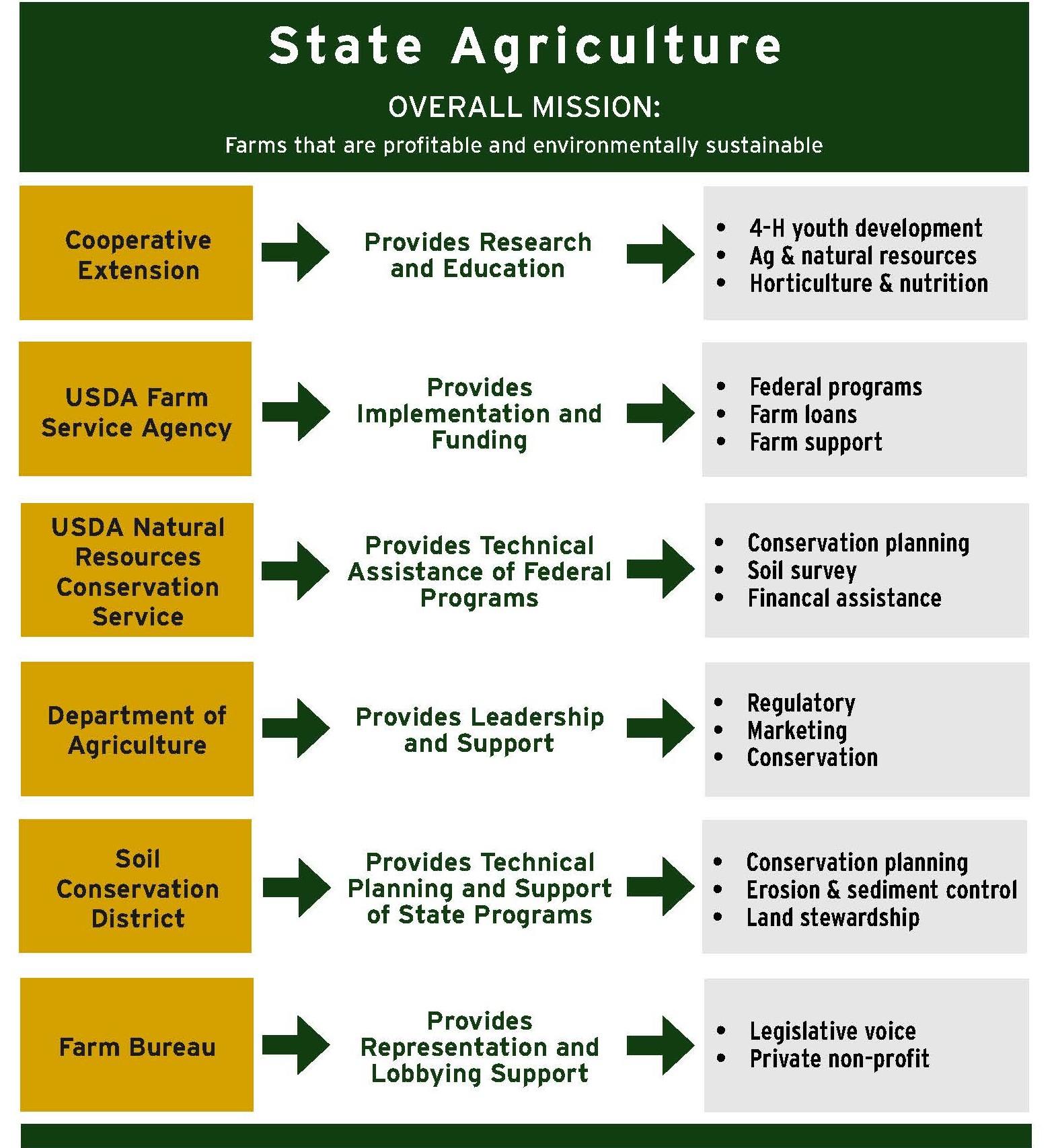
Worksheets
-
Worksheet 3.1: : Record inventory of buildings and structures (fillable PDF)
Worksheet 3.1: : Record inventory of buildings and structures (fillable PDF) -
Worksheet 3.2: Record Inventory of Equipment (fillable PDF)
Worksheet 3.2: Record Inventory of Equipment (fillable PDF) -
-
Worksheet 3.4: Record Short to Long Term Goals (fillable PDF)
Worksheet 3.4: Record Short to Long Term Goals (fillable PDF)
SARAH HIRSH
shirsh@umd.edu
Extension Educator, University of Maryland Extension
SHANNON DILL
sdill@umd.edu
Extension Educator, University of Maryland Extension
CAROLINE KUCHTA
ckuchta@umd.edu
Agriculture Worker, University of Maryland Extension
NEITH LITTLE
nglittle@umd.edu
Extension Educator, University of Maryland Extension
KELLY NICHOLS
kellyn@umd.edu
Extension Educator, University of Maryland Extension
MARGARET TODD
motodd@law.umaryland.edu
Senior Legal Specialist, University of Maryland Agriculture Law Education Initiative
This publication, Cultivating Conservation for Maryland and Delaware’s Historically Underserved Farmers (EM-2025-0752), is a part of a collection produced by the University of Maryland Extension within the College of Agriculture and Natural Resources.
The information presented has met UME peer-review standards, including internal and external technical review. For help accessing this or any UME publication contact: itaccessibility@umd.edu
For more information on this and other topics, visit the University of Maryland Extension website at extension.umd.edu
University programs, activities, and facilities are available to all without regard to race, color, sex, gender identity or expression, sexual orientation, marital status, age, national origin, political affiliation, physical or mental disability, religion, protected veteran status, genetic information, personal appearance, or any other legally protected class.
This material is based upon work that is supported by the USDA-NRCS Conservation Collaboration Grant no. NR203A750001C013.
When citing this publication, please use the suggested format:
Hirsh, S., Dill, S., Kuchta, C., Little, N., Nichols, K., & Todd, M. (2026). Cultivating Conservation for Maryland and Delaware’s Historically Underserved Farmers (EM-2025-0752). University of Maryland Extension. go.umd.edu/EM-2025-0752.