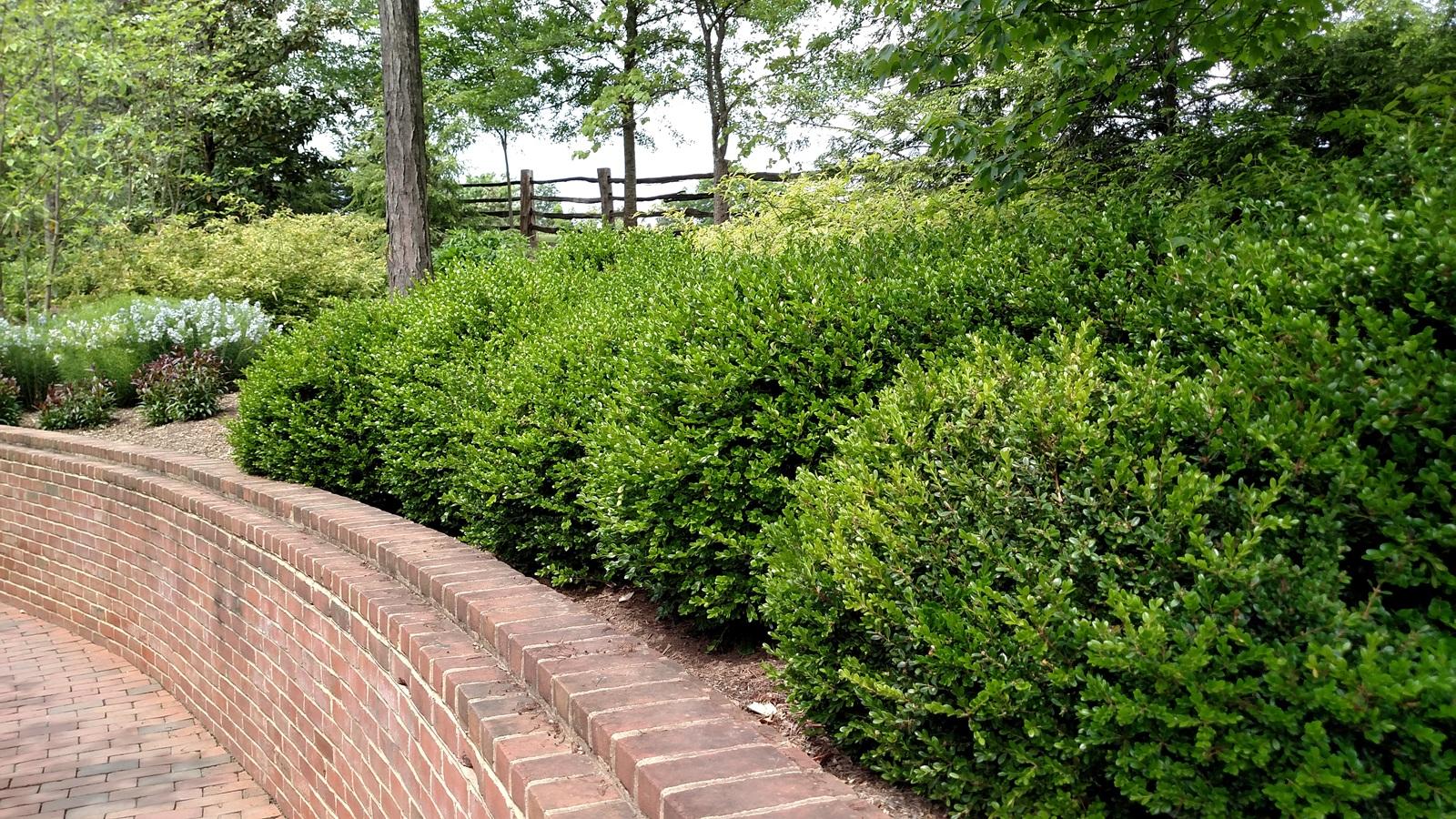
Boxwood shrubs are very common in Maryland landscaping. Photo: Miri Talabac, University of Maryland Extension
Updated: August 26, 2026
Key points
Boxwood (Buxus spp.) are broad-leaved evergreen, deer-resistant shrubs that are typically used as foundation plantings and backdrops for planting beds, topiaries, and formal gardens. Many species and cultivars are available.
Be on the lookout for a new invasive insect, box tree moth(Cydalima perspectalis), which feeds on boxwoods in its caterpillar stage. If you notice chewing damage on boxwood leaves, this could indicate the presence of box tree moth caterpillars. This insect has been found in several Maryland counties as of August 2026.
Growing boxwood in Maryland
Site
Proper site selection and plant care are essential for maintaining the health of boxwood. In general, boxwood needs well-drained soil and will not tolerate sites that are constantly moist or wet. Amend heavy soils with organic matter (like compost) where the boxwood will be planted (not just in the planting hole, but in a larger area that the shrub's roots will eventually reach).
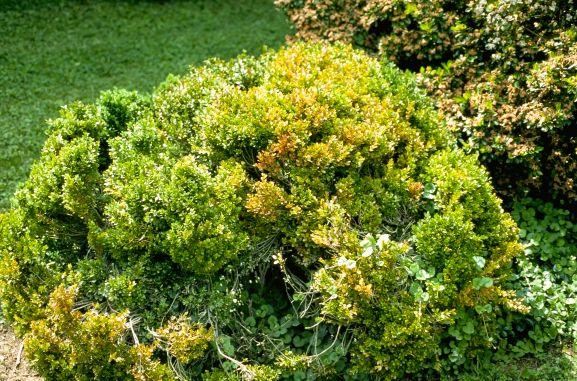
Boxwood prefers a soil pH (acidity level) of 6.5 to 7.2, and a location with some afternoon shade. Although tolerant of full sun, that exposure can stress the plant; in particular, a planting site exposed to full sun in winter can cause foliage to turn orange or develop "winterburn." Boxwoods planted with a south or southwest exposure suffer winterburn more than plants with an east or north exposure due to increased sun exposure.
Spacing and mature size
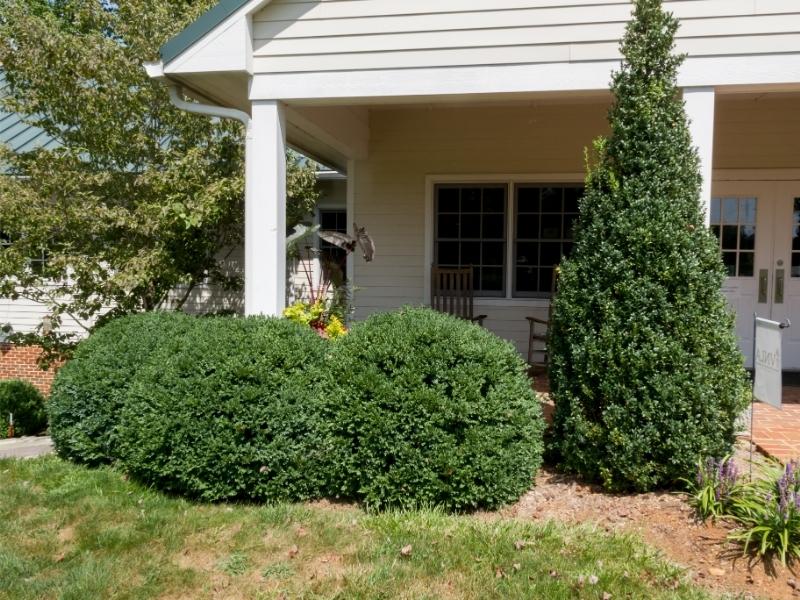
A conical boxwood cultivar ('Fastigiata', at right) compared to a more compact, rounded cultivar. Photo: Miri Talabac, University of Maryland Extension
There are numerous species and cultivars of boxwood that range in size, growth habit, and width. Their growth rate is tied to their mature size, with short-growing varieties having a very slow growth rate (potentially just a couple inches a year) and larger-growing varieties being faster (although still fairly slow compared to other large-maturing evergreen shrubs).
Disease- and insect-resistant varieties
To reduce the risk of boxwood blight, plant disease-resistant cultivars. Some cultivars are also less affected by boxwood leafminers. Resistance trails are ongoing, so a pest- or disease-resistant cultivar list may change over time. (Examples of varieties resistant to boxwood blight include the New Gen™ cultivar series, ‘Green Beauty’, and ‘Nana’.) Ask suppliers or landscape installers if they receive their boxwood inventory from producers that participate in the Boxwood Blight Cleanliness Program.
The most appropriate pruning method for boxwood is thinning, which is the removal of entire stems or branches at their point of attachment. Thinning allows the center of the plant to receive adequate sunlight and air circulation. Properly-pruned boxwood will have leaves along the entire branch length, not a completely bare interior. Dense foliage from regular shearing encourages fungal diseases such as Macrophoma leaf spot and Volutella canker. Shearing stresses plants and should only be used in boxwood topiaries to maintain heavily-manicured, well-defined shapes. The best time to thin boxwood is in winter (December through February).
Watering and mulch
If there is less than 1 inch of rainfall per week, especially during prolonged drought, water newly-planted boxwood to maintain even soil moisture. Water at the base of the plants rather than overhead to minimize leaf wetness as much as possible. Find monitoring and watering tips in the Watering Trees and Shrubs page.
Boxwood roots are fairly shallow and require light applications of mulch to avoid being smothered. Do not apply more than 1 inch of mulch over the root zone, and keep it clear of the main stem (don't pile it into a mound). Excessive mulch may encourage vole activity and the production of adventitious roots in the mulch layer, which are very prone to dieback from desiccation. Do not dig in the soil (cultivate) deeply near boxwoods or their shallow roots will be damaged. (For example, avoid growing annuals or short-lived bulbs like tulips, both of which need yearly replanting, near the roots of boxwoods, as the digging would repeatedly damage them.)
Fertilizing
Foliage nutrient deficiency symptoms don't necessarily indicate a lack of nutrients in the soil itself. Instead, it might point to a root health problem or an issue with soil acidity being outside of the ideal range for boxwood. (Soil pH affects the availability of nutrients to plants.) Fertilize boxwood if a laboratory soil test indicates a nutrient deficiency; otherwise, they do not need routine fertilization. Adjust the soil pH with lime or sulfur only if recommended by the soil testing lab.
Miscellaneous
As with all evergreens, some normal leaf drop occurs each year. For boxwoods, the leaves remain functional for about three years, and then they are dropped by the plant once they have outlived their usefulness. Younger leaves that stay on the branches help to cover-up most of the shedding. Leaf drop can be more prominent when plants are pruned too heavily or are affected by pests, diseases, or stress from their growing conditions.
Blotch mines, the underside of leaves appear blistered from late summer through the following spring
Boxwood Leafminer (see below)
Leaves Chewed
Damage begins on the undersides of leaves; older caterpillars eat entire leaves or leave just the midvein; silk webbing and frass (excrement) may be visible
The majority of plant problems are not caused by a disease or an insect, especially if the plant has been in your landscape for less than two years. Learn what factors can contribute to dieback in the page: What causes trees and shrubs to die?
The presence of an insect or disease may not be the cause of the problem or the symptoms. Sometimes pests will take advantage of damaged or declining plants, or the damage may have occurred long before you noticed it.
Poor growing conditions or plant care, weather extremes, and soggy soil are the major causes of plant decline.
Become familiar with normal plant characteristics throughout the year.
There are numerous parasitoids and predators that keep pests under control. It is okay to tolerate some plant damage instead of resorting to applying a pesticide, especially for minor issues that do not significantly impact long-term plant health. Use a pesticide only as a last resort, identifying the pest or disease first, and selecting low-toxicity products.
Abiotic problems and disorders of boxwood
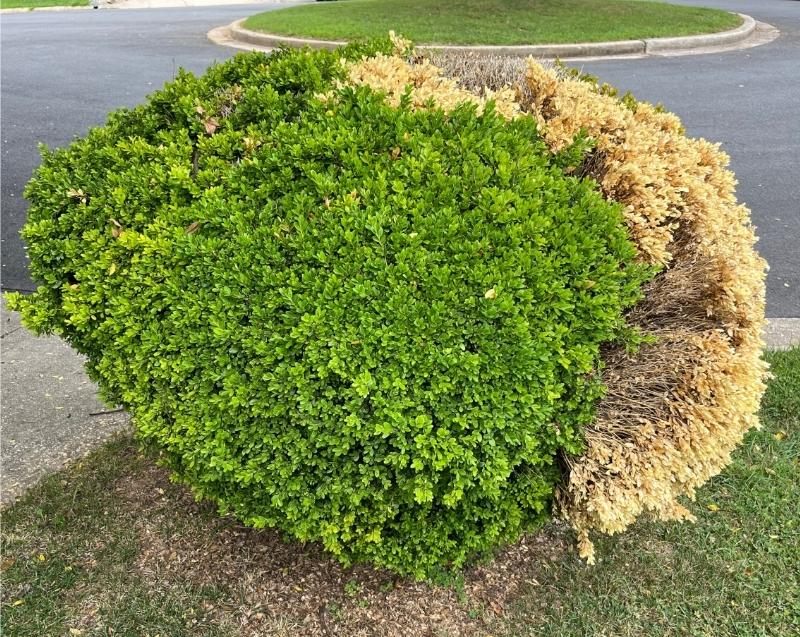
Winter damage
Boxwood with golden-orange leaf discoloration due to winter stress. Photo: HGIC
Winter injury may be confused with the early stages of the fungal diseases Phytophthora root rot or Volutella blight.
Tissue death is caused by the removal of water in the leaves faster than the plant can replace it through root uptake from frozen water in the soil.
Bark splitting can be caused by a rapid temperature drop caused by a mid-winter thaw.
Dead twigs and branches in the spring may be the result of ice and snow damage from the winter.
Management
Winter damage can be reduced by locating plants in partially-shaded areas protected from winter winds. Physical barriers made from materials such as burlap or plastic, placed about 18 inches from the plants on the windward side, can also lessen winter wind damage by reducing wind velocity.
Maintain adequate soil moisture in the fall to prevent winter desiccation.
Do not plant boxwoods under roof eaves to avoid damage from falling snow and ice.
For established boxwoods with an upright growth habit, support the branches in the event of heavy snow or ice load by tying twine at the base of the plant and spiraling it up the plant to prevent branches from splaying apart. Gently brush accumulating snow off of plants. Inspect plants for winter damage in the spring and prune out affected areas.
Boxwood decline
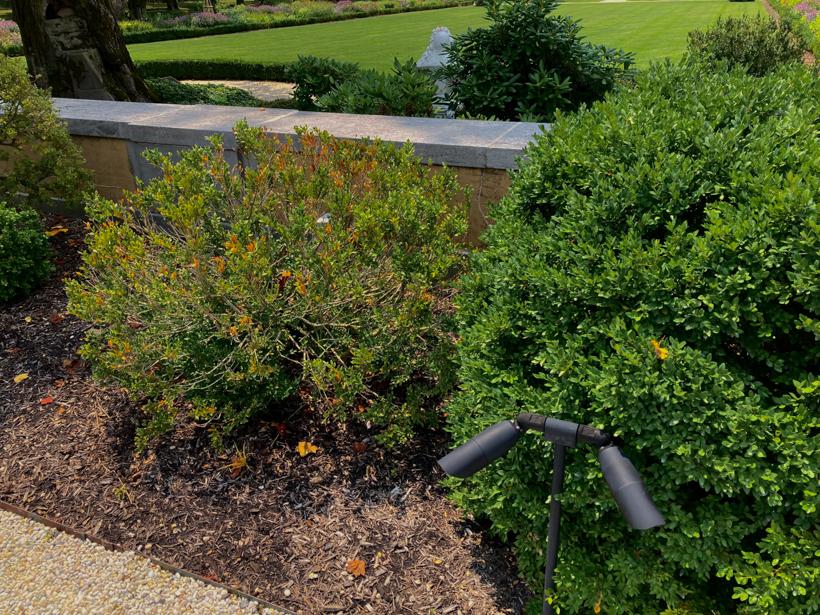
A boxwood shrub in decline, with leaf loss, discoloration, and poor growth compared to a healthy specimen to the right. Photo: David Clement, University of Maryland Extension
Often the term "decline" is used as a catch-all phrase for poor growth, which is caused by a combination of factors. Most often, decline occurs on older, well-established shrubs.
Symptoms and causes
Symptoms include smaller, discolored leaves (usually yellow-orange instead of deep green), poor growth and branch dieback, and premature leaf drop with a yellowing and shedding of the interior foliage. These commonly occur without any single underlying cause evident and can mimic common boxwood problems.
Stresses from drought or excess root moisture, excessive mulch, soil compaction, planting too deeply, the addition of soil over the root zone, and root injury from construction all can lead to poor growth of boxwoods.
Multiple insects (primarily leafminers and psyllids), mites, and diseases (Volutella, Macrophoma leaf spot) can also contribute to the overall decline of plants though cumulative feeding damage or infections.
Voles
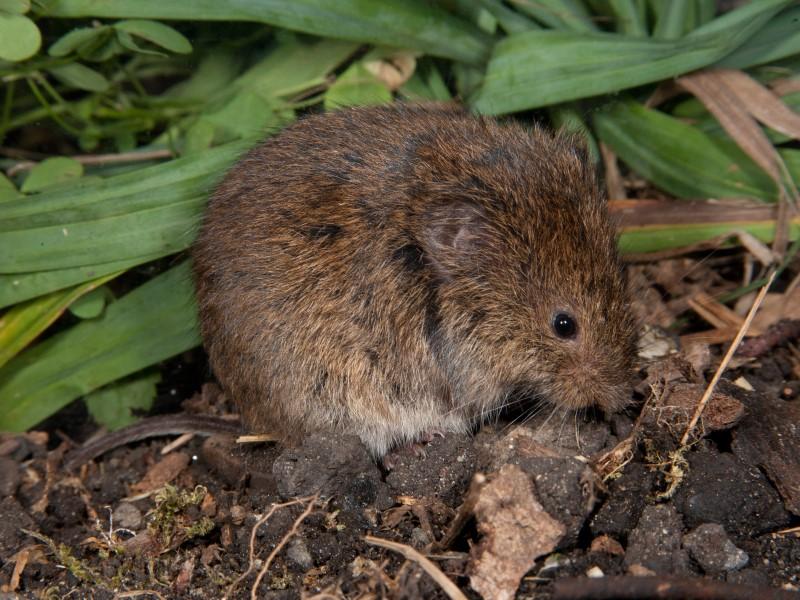
Meadow vole. Photo via Adobe Stock.
Older boxwood plantings that are neglected and overgrown with weeds are prime candidates for vole damage. Voles damage boxwoods by girdling the base of the plant, feeding on roots, and tunneling through the root system. They cause plant damage primarily in fall and winter.
Voles or meadow mice are found throughout Maryland. A vole is the same size as a house mouse, with small eyes and ears and a short tail. The fur color may vary between gray and brown.
Voles are often confused with moles, but they are not related and are very different in their feeding habits. Moles live underground and feed on soil insects and earthworms. Voles are plant feeders and usually live on the surface but may travel in mole tunnels.
Management
Voles can be controlled by habitat modification and trapping. Use no more than one inch of mulch around boxwood, both for root health and to discourage vole activity. (Deep mulch provides a good habitat for voles.) Keep boxwood plantings free of weeds, which can also provide protection for the voles from predators.
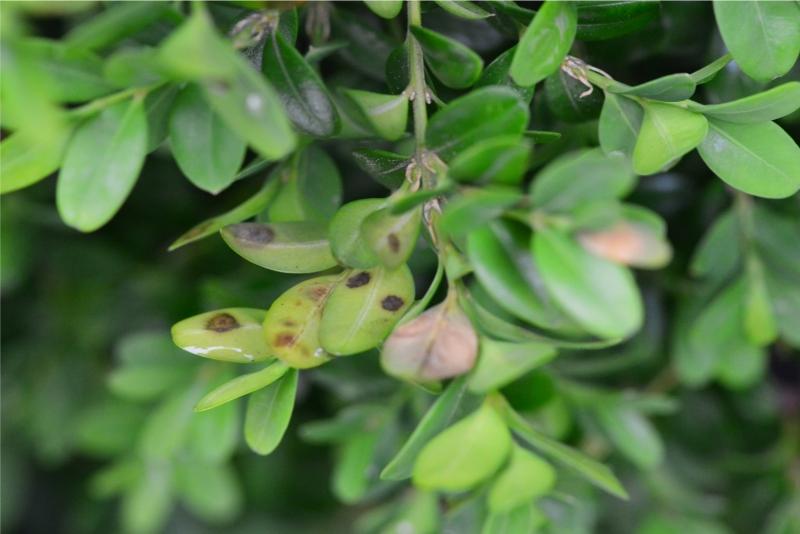
Early boxwood blight leaf-spotting symptoms on the underside of boxwood leaves. Photo: David Clement, University of Maryland Extension
Boxwood blight is caused by the fungus Cylindrocladium pseudonaviculatum (synonym Cylindrocladium buxicola). The first symptoms begin as leaf spots followed by rapid browning and leaf drop starting on the lower branches and moving upward in the canopy.
A key symptom that differentiates boxwood blight from other boxwood diseases (such as volutella blight and macrophoma leaf spot) are numerous narrow cankers (black streaks) that develop on the green stems.
This pathogen does not attack the roots, so established boxwoods may initially recover to some extent by producing new leaves during the growing season. However, the shrubs will lose aesthetic value as defoliation becomes severe. Repeated defoliation and dieback from stem cankers will kill eventually the plant. The fungus can remain viable in fallen leaves, which can then serve as the source of infection for subsequent years.
Management
Plant disease-resistant cultivars (examples include the New Gen™ series, ‘Green Beauty’, and ‘Nana’) from reputable nurseries. Ask if nurseries receive plants from producers that participate in the Boxwood Blight Cleanliness Program.
Work with landscapers and lawn care professionals who are educated about this disease and use best management practices for preventing its spread.
Send clear photos of suspicious boxwood symptoms to Ask Extension for help with a diagnosis.
If disease symptoms are confirmed, immediately bag and remove infected plants along with fallen leaves. Mulch the area to bury any remaining debris.
Do not compost infected boxwood material. Launder all clothing, gloves, and shoes, and sanitize gardening tools to avoid carrying inoculum (fungal structures capable of starting new infections) to other sites.
The removal of an infected plant will not guarantee eradication of the boxwood blight pathogen since it can survive in "resting structures" in the soil for many years.
Fungicide sprays have shown some disease suppression in limited situations. However, fungicide treatments do not eradicate boxwood blight and must be repeated throughout the growing season.
Consider replacing boxwoods with non-susceptible species such as hollies and conifers.
Root rot
Several species of Phytophthora, a group of fungus-like pathogens, cause root rots in boxwoods. Symptoms of root loss include poor growth, the loss of healthy foliage color (leaves eventually turn from green to yellow-green to purplish-brown or straw-brown), upward-turning and inward-rolling of the leaf margins, dark brown discolored wood at the base of the stem for 2 or 3 inches above the soil line, and loosening and separation of the dead lower bark. As a result of the fungal infection, the root system is reduced and turns dark brown. Root diseases on older established plants can result from changes in water drainage patterns.
Management
Although there are no chemical cures for this disease, it can be prevented by proper planting. Avoid planting boxwoods in poorly-drained, compacted soil, or in low areas where water collects (such as near a roof downspout outlet). The construction of raised beds or adjusting the soil grade may be needed to ensure proper drainage.
Volutella stem blight or canker
Branch dieback symptoms consistent with a volutella blight infection on a mature boxwood shrub. Photo: Ask Extension
Many boxwoods are susceptible to this disease, caused by the fungi Pseudonectria buxi (formerly Volutella buxi) and Pseudonectria foliicola. Before new growth appears in the spring, leaves on the tips of infected branches lose their green color and then fade to a light straw color. The infected branches retain most of their leaves for many months.
Examination of affected branches reveals loose bark and girdling at varying distances from the tips and discoloration of the wood. In moist weather, the fungus produces salmon-pink fruiting bodies on leaves and stems.
Management
Diseased branches should be pruned out when the foliage is dry.
Plants should be thinned to improve air circulation and so more sunlight can reach the inner branches. Prolonged leaf wetness can support infection, so the improved airflow and exposure to the sun can speed-up the drying of leaves after rain, dew, or irrigation.
Old, fallen leaves and diseased leaves that have accumulated in the crotches of branches in the interior of the plant should be shaken out and removed (rake or leaf-blow them out). Discard the debris; do not compost.
Improve growing conditions for the shrub, especially to alleviate drought stress. Volutella is an opportunistic fungus but a weak pathogen, and it generally relies on weakened plants and injuries (like from winter tissue damage) to begin infections.
Macrophoma leaf spot (Dothiorella candollei)
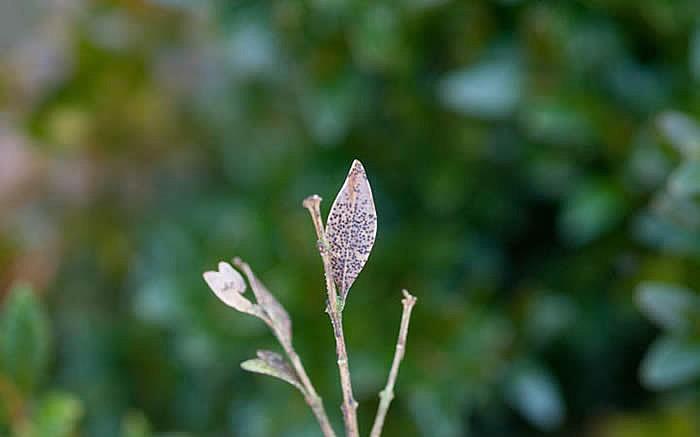
Dark spots from the reproductive structures of Macrophoma in an infected boxwood leaf. Photo: David Clement, University of Maryland Extension
Many boxwood plants are susceptible to infection by the weakly-parasitic fungus, Dothiorella candollei. The most obvious symptoms are the many tiny black raised fruiting bodies found on dying or dead straw-colored leaves. In comparison, the fruity body specks on the back of leaves infected with volutella will be orange-pink in color.
Management
Pruning infected branches is sufficient management for this fungus. Pruning to thin-out crowded stems is recommended to increase air circulation helping to reduce moisture (the longer the leaves stay wet, the easier it can be for them to get infected).
Insect pests of boxwood
Boxwood leafminer
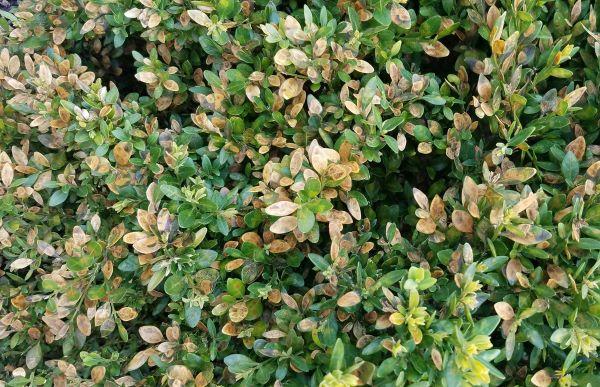
Foliage damage from a high population of boxwood leafminers. Photo: HGIC
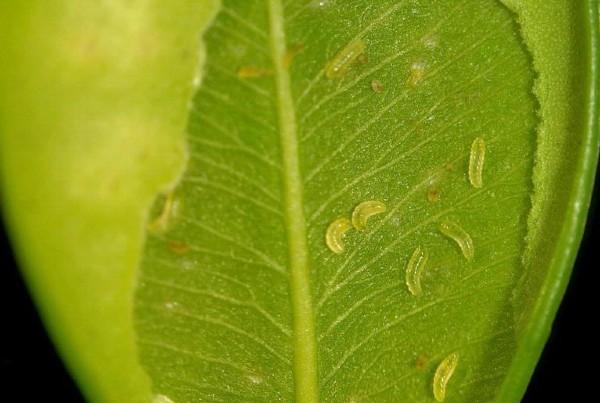
Boxwood leafminer (Monarthropalpus flavus) is the most significant insect pest of boxwood in Maryland. The larvae of this fly feed on the tissue between the upper and lower surfaces of the leaves. This feeding results in blotch-shaped mines in the boxwood leaves. The infested leaves appear blistered from late summer through the following spring.
Boxwood leaf torn open to show leafminer larvae. Photo: Brian Kunkel, University of Delaware, Bugwood.org
New leaves do not show signs of mining until late summer, when the larvae are larger. By fall, or in early spring, premature leaf drop may result from a heavy infestation.
Life cycle
In Maryland, adult leafminers emerge in late April or early May, depending on the weather.
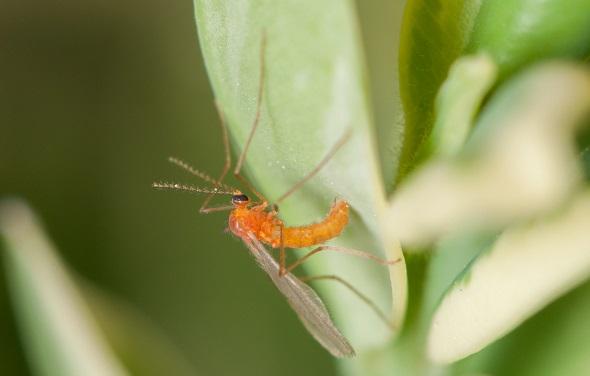
The adults are small (3mm long), orange, gnat-like flies.
The adult flies emerge over a period of 10 to 14 days, but individual flies only live about 24 hours.
After mating, each female inserts about 30 eggs into the surface of new boxwood leaves.
The larvae hatch in about 3 weeks and feed within the leaves from June through early fall. Feeding may slow or pause during hot summer periods.
Larvae spend the winter in the leaves and pupate the following April.
There is one generation each year.
Adult boxwood leafminer. Photo: Matt Bertone, NC State University
Management
Prevention
Many cultivars of Buxus sempervirens and Buxus microphylla variety japonica are relatively resistant to this pest.
Mechanical control
Pruning an infested boxwood back by about one-third to remove the bulk of the larvae in the leaves will help reduce leafminer populations. Dispose of the clippings. This should eliminate the need to use an insecticide. [Watch our boxwood pruning demonstration video.]
Chemical control
Pesticides are hazardous and may harm organisms that are not the target pest. If you choose to use a pesticide, read and follow the directions and safety precautions on the label.
It is difficult to control adult boxwood leafminers because of their short adult lifespan. Beginning in late April, shake the branches of boxwoods to detect flying adults. When they are present, thoroughly spray the plants with a registered insecticide containing the active ingredient spinosad.
If developing larval feeding mines are observed in the leaves, the larvae can be controlled from late June through the summer by applying a registered systemic insecticide. (Systemic products are absorbed into the plant's tissues by either roots or leaves.) It is best to control larvae in June before serious damage has occurred. Some systemic insecticide ingredients may only be applied by certified pesticide applicators, as per Maryland’s Pollinator Protection Act of 2016.
Boxwood psyllid
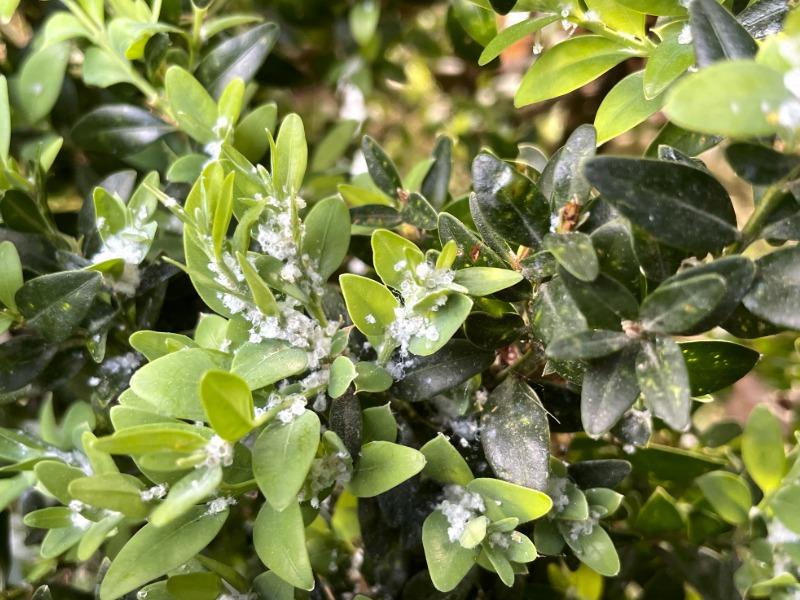
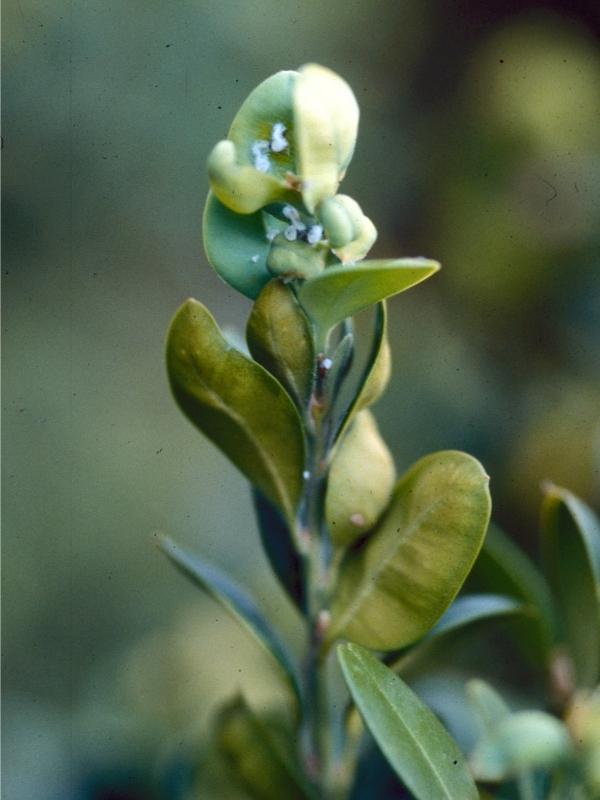
Abundant boxwood psyllid wax on boxwood foliage. Not all psyllid feeding causes prominent leaf cupping. Photo: Christa CarignanCupped leaves on a branch tip, indicative of boxwood psyllid feeding activity. White waxy pellets are also present. Photo: Daniel Herms, The Ohio State University, Bugwood.org
The boxwood psyllid (Psylla buxi) causes cupping of the leaves on the terminal and lateral branches of boxwood. This insect can overwinter as an egg or as a first-instar nymph under the bud scales (the protective covers of dormant leaf buds). As new growth begins in spring, the eggs hatch and nymphs start feeding on sap in the leaves, resulting in distortion of the expanding leaf. The nymphs also produce a white, waxy body coating that is visible as pellets of wax residue around and within the cupped leaves.
Despite the prominent symptoms they can create when populations are high, these insects do not cause serious or long-lasting harm to the plant and can usually be ignored or sprayed off of the plant with a strong jet of plain water from a garden hose.
Boxwood mite
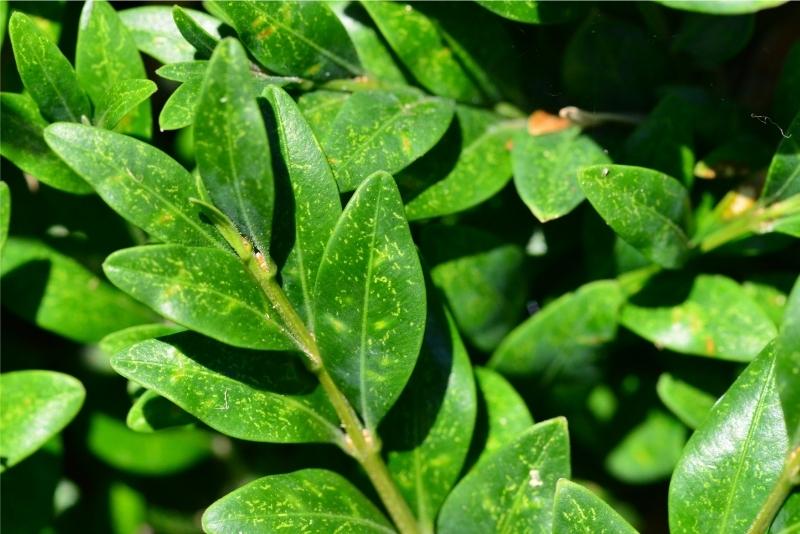
Boxwood spider mite damage. Photo: David Clement, University of Maryland Extension
Boxwood mite
Boxwood mites (Eurytetranychus buxi) are yellowish-green or reddish in color and nearly microscopic at 0.5mm long.
The yellow eggs overwinter on the leaves and hatch in April.
These spider mites breed rapidly and have 5 or 6 generations each summer. They are most active in hot, dry summers.
Feeding injury manifests as a fine stippling of the leaves early in the season, followed by a general dull or dingy, unhealthy appearance.
This is a common pest wherever boxwoods are grown. Some Buxus microphylla cultivars appear to be more resistant.
Management
Damage is primarily superficial and aesthetic, and usually does not significantly impact the plant's long-term health.
For light infestations, use a strong spray of plain water from a garden hose to dislodge the mites.
For large infestations, use a horticultural oil or insecticidal soap spray in the summer (following label instructions). Avoid making applications while temperatures are above 85°F or leaf "burn" may occur, especially when leaves are already heavily mite-damaged.
A biological control option for heavy mite infestations may be the release of predatory mites that can be purchased from mail-order sources. They work best while pest populations are low, and cannot eradicate a heavy outbreak by themselves (but may bring spider mite populations down to levels that do not cause noticeable damage).
Some insecticides used to treat boxwood leafminers may exacerbate spider mite problems because they can kill the natural predators of mites.
Oystershell scale
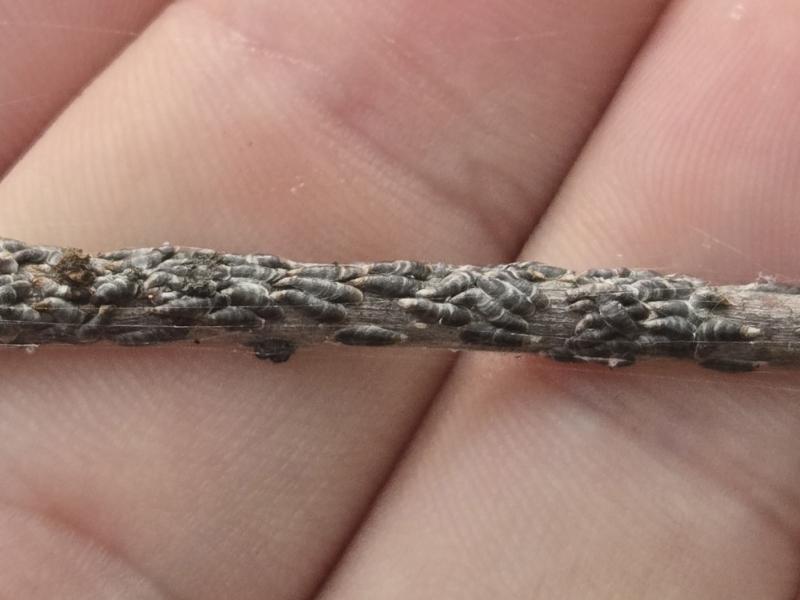
High population of oystershell scale (pictured on an ash twig). Photo: Mitchell Lannan, Bugwood.org
Oystershell scale
Heavy infestations of this armored scale (Lepidosaphes ulmi) will initially cause a yellowing and wilting of leaves, then the dieback of branches. Infested plants develop an unhealthy appearance overall.
To monitor for this pest, look for tiny (3mm), hard-shelled insects attached to the bark with a body covering that is brown to gray and oyster shell-shaped. Check any branches with wilted leaves or dieback first.
There may be one or two generations each year.
Crawlers (newly-hatched juveniles) are about the size of a pinhead and light-colored. Look for crawlers near the old scale covers in May.
Management
Prune out heavily-infested branches.
A dormant oil (3 to 4% concentration of horticultural oil) spray can be applied in late winter to smother overwintering scale. Be sure to thoroughly cover all of the branches, as the spray has to coat the insects in order to work well. Note any temperature restrictions for application on the product label.
A summer spray (2%) of horticultural oil can be applied in late May to smother the early-season generation of crawlers.
Box tree moth
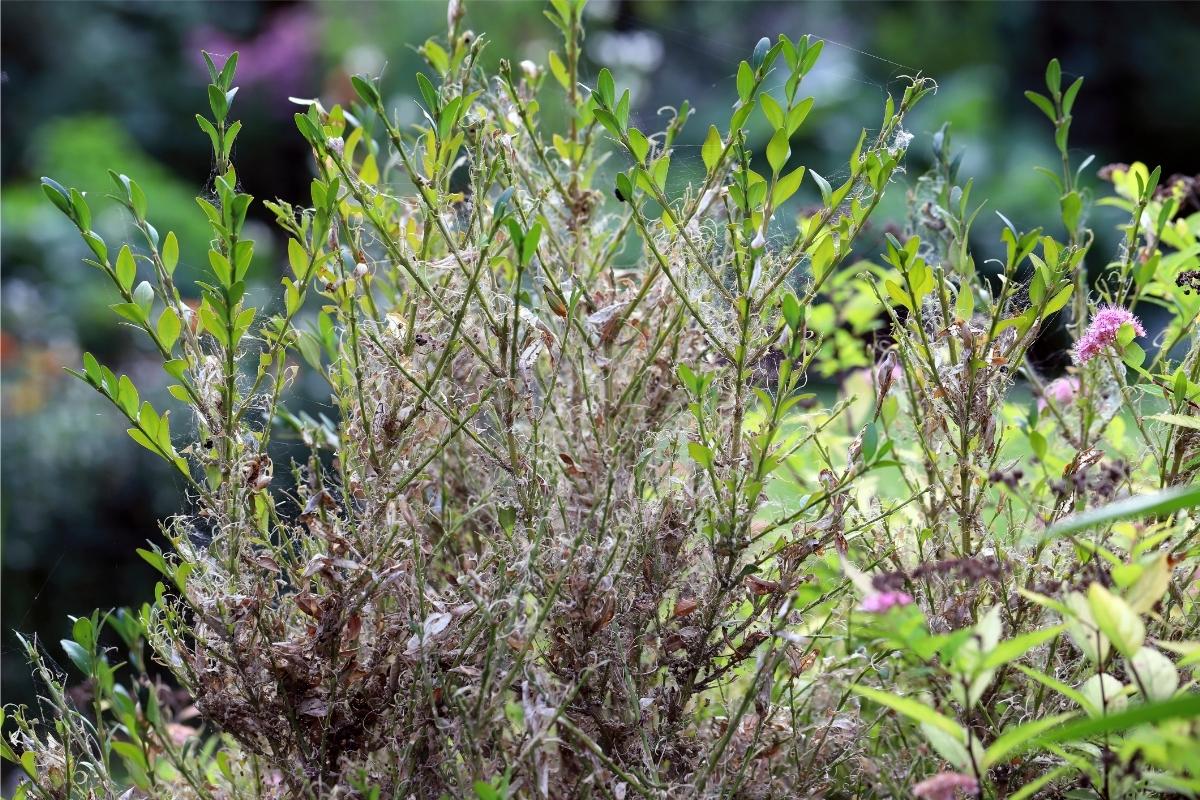
Extensive damage from box tree moth caterpillar feeding. The leaf midribs left behind as the rest of the leaves are defoliated gives the shrub a prominently ragged appearance. Photo via Adobe Stock.
Box tree moth
Box tree moth (Cydalima perspectalis) is an invasive insect (moth) native to eastern Asia. The Maryland Department of Agriculture and the USDA Animal and Plant Health Inspection Service (USDA-APHIS) has documented populations of box tree moth in several Maryland counties as of August 2026. USDA-APHIS also confirmed that box tree moth has also been found in Virginia, West Virginia, Pennsylvania, Delaware, Ohio, New York, Michigan, and Massachusetts.
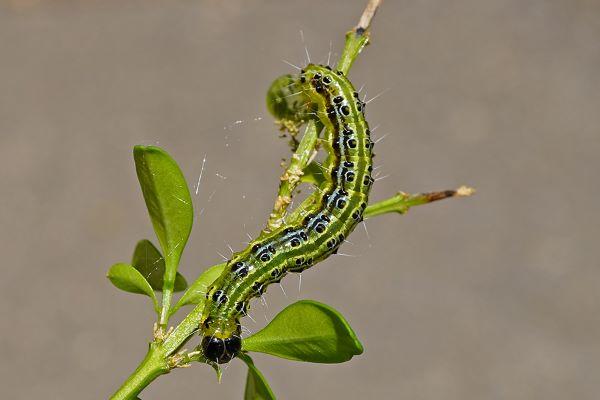
The larvae (caterpillars) are green and yellow with white, yellow, and black stripes and black spots. Plant injury begins as chewing on the undersides of leaves. Older larvae can defoliate leaves either by consuming the entire leaf or by just leaving behind the leaf edges and/or leaf midvein (creating a "curlicue" leaf appearance). Extensive feeding results in "see-through," brown boxwoods, eventually leading to plant death. So far, this insect has only been found feeding on boxwoods (Buxus species) in the United States.
Authors: Mary Kay Malinoski (entomology; retired), David L. Clement (plant pathology), and Raymond Bosmans (horticulture; retired), University of Maryland Extension. Revised March 2020. Box tree moth information revised by Madeline Potter and Miri Talabac, University of Maryland Extension August 2026.