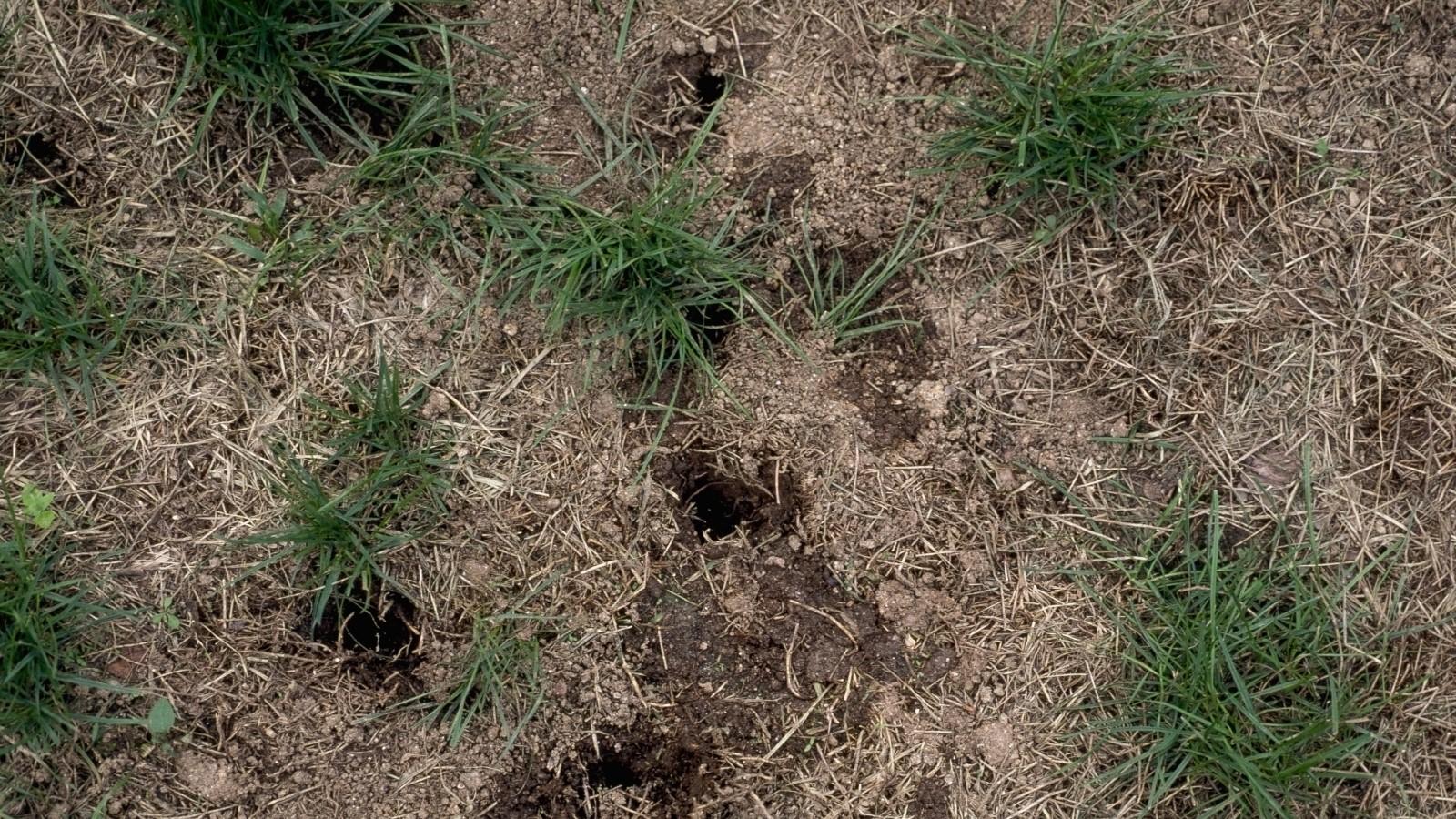
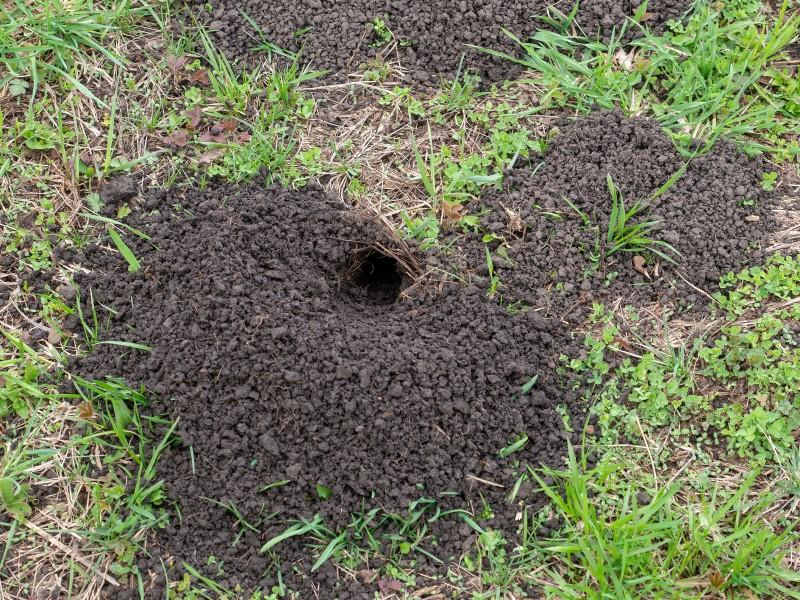
Cone-shaped holes dug in a lawn by a skunk. Photo: HGIC
Updated: March 16, 2026
Key points about lawn damage from animals
Identifying the culprit can be difficult, since a variety of animals can dig in a lawn, often overnight or out of sight.
Damage is temporary – focus on repairing the lawn rather than trying to discourage more digging. Do not assume that abundant grubs in the soil are the reason animals are digging. Verify that the lawn has a high grub population before using any grub control products. Grubs might be numerous in one location but largely absent in another, so check several areas.
If necessary, address persistent problems with exclusion (fencing), habitat modification, or animal trapping. Permits are required to trap certain species. Refer to the Maryland Department of Natural Resources (DNR) Wildlife Damage Control page for more information.
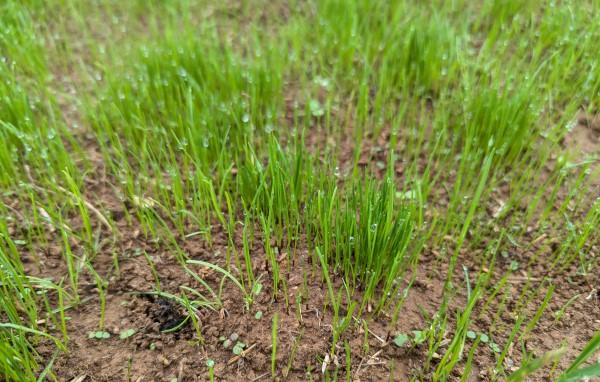
Learn how to repair bare spots and patch damaged areas.
Mammals in lawns
Several common mammal species can dig holes and create tunnels in a lawn as they search for food.
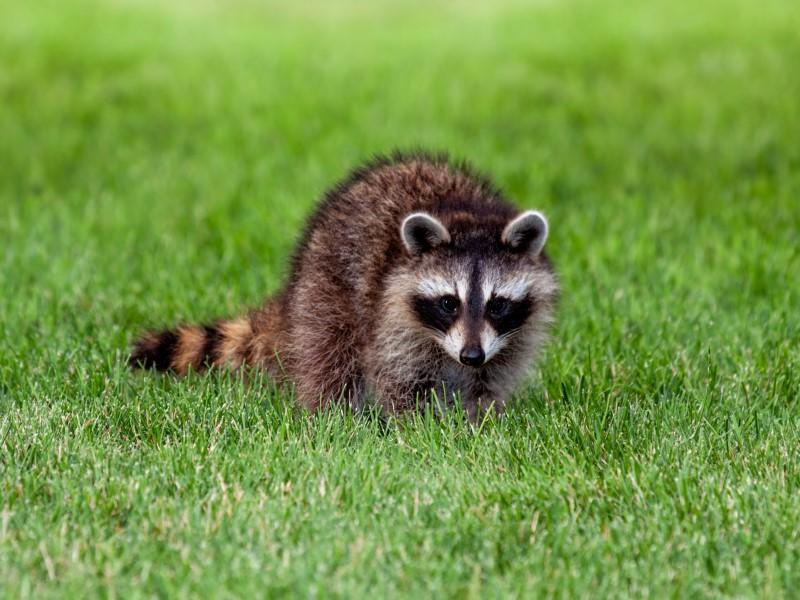
Skunks and raccoons
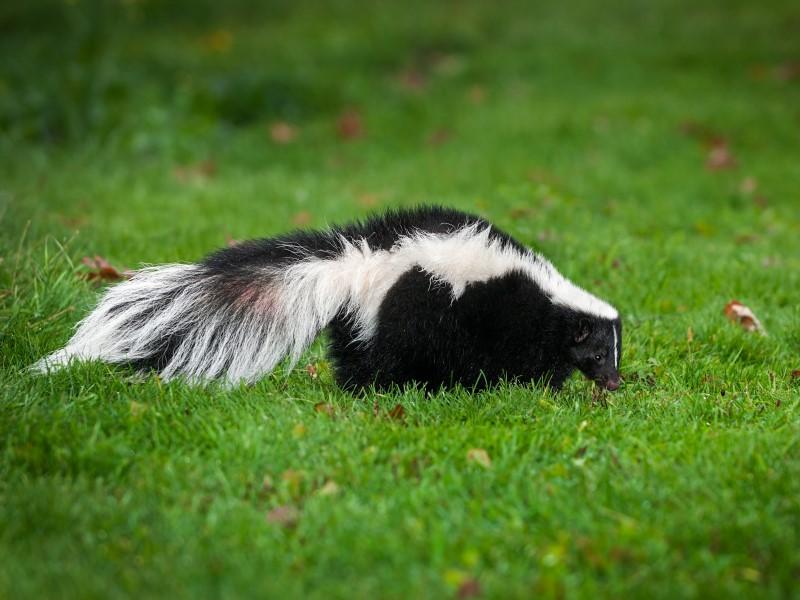
Striped skunk. Photo by Adobe Stock
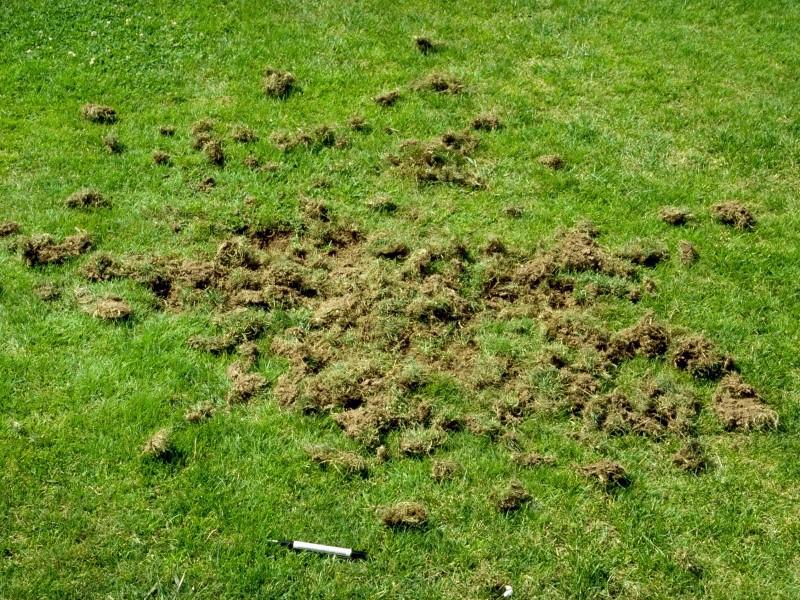
Skunk and raccoon lawn damage looks similar. Photo: University of Maryland
Raccoon. Photo by Adobe Stock
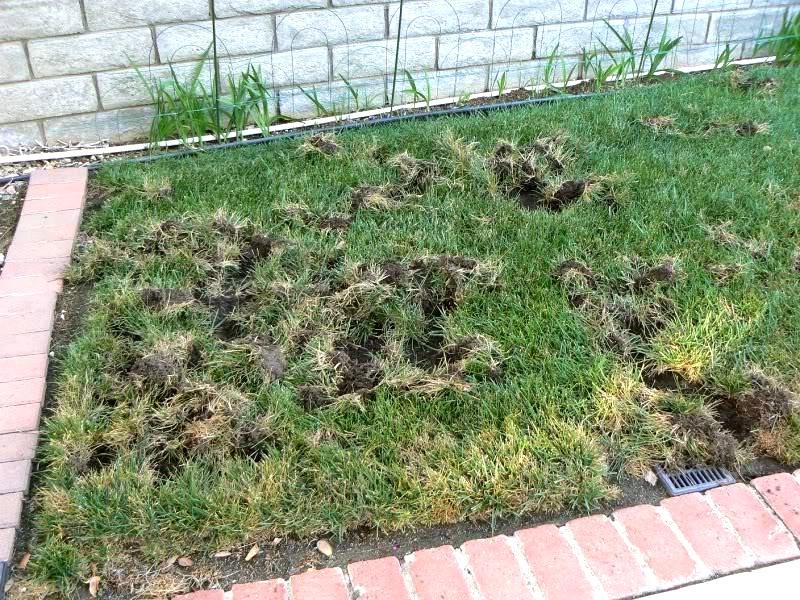
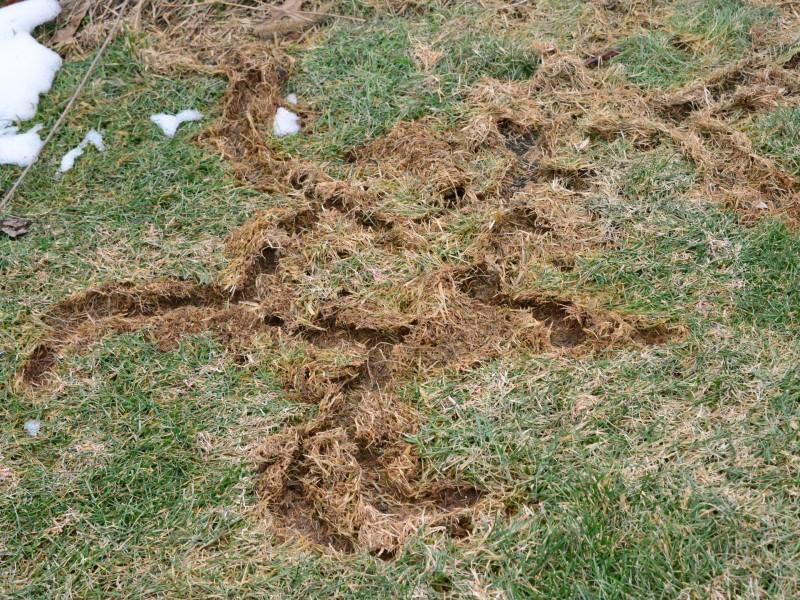
Torn-up sod caused by a foraging skunk or raccoon. Photo: Lou M. Vasvary, Rutgers University
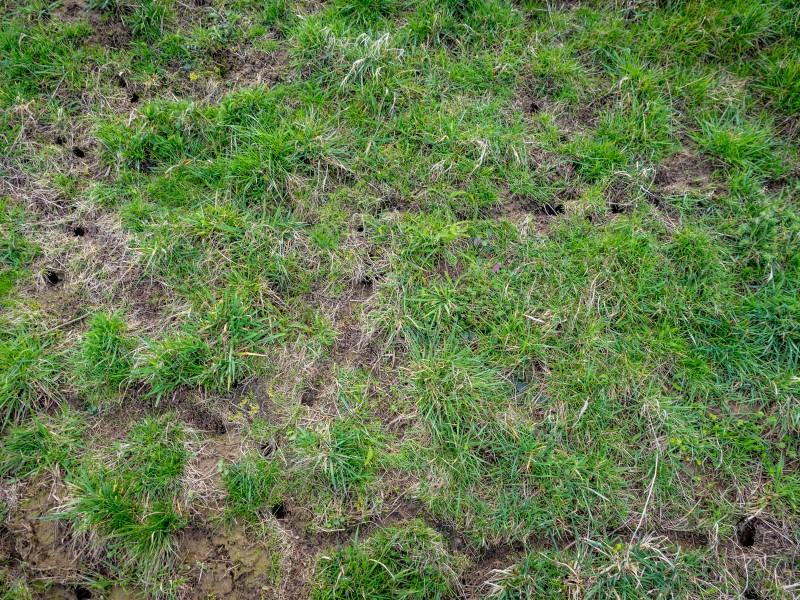
Skunks and raccoons are omnivores, eating plants and animals, but insects (particularly larvae like beetle grubs) are some of their favorite food. Other food sources found in lawns include earthworms and small rodents. When foraging for grubs, skunks and raccoons can tear up sod. Skunks also dig cone-shaped holes, about 3 inches wide and deep, in lawns and gardens.
Active at night, skunks and raccoons are rarely caught in the act of digging, and their lawn damage can look very similar. Generally, skunks dig an array of individual holes, often clustered close together. Raccoons tend to roll or lift up pieces of sod, leaving the removed grass in more discrete chunks. Skunks may revisit a foraging site repeatedly until the food source is gone.
Learn more about their life cycles and behavior:
Striped Skunk | Maryland Department of Natural Resources
Raccoon | Maryland Department of Natural Resources
Avoid skunk and raccoon issues by managing high grub populations in lawns, when grubs are confirmed to be present and abundant. Remove other food sources, such as pet food left outside and unsecured garbage cans. The MD DNR encourages people that are experiencing problems with wildlife like raccoons to call the nuisance wildlife hotline, or work with a licensed Wildlife Damage Control Operator when removal is necessary. Visit the DNR’s Wildlife Problems page for more information.
Moles and voles
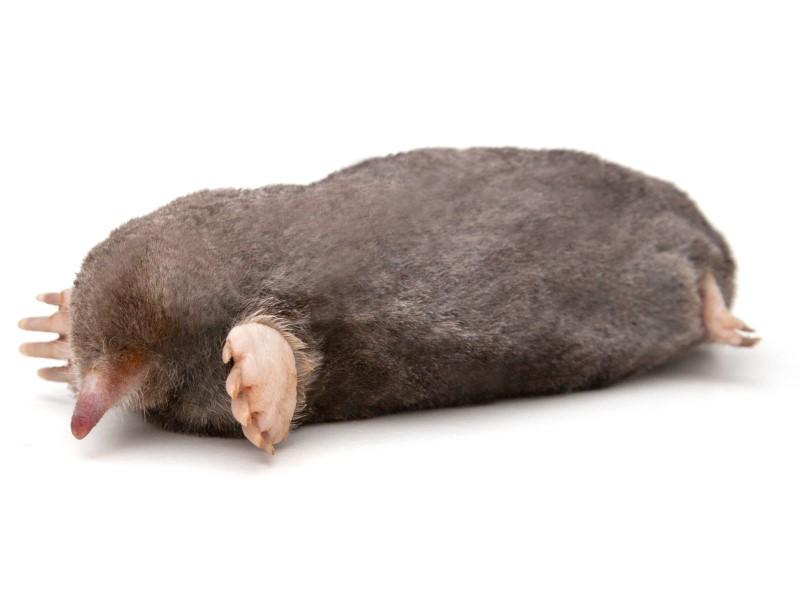
Eastern mole (Scalopus aquaticus) Photo by Adobe Stock
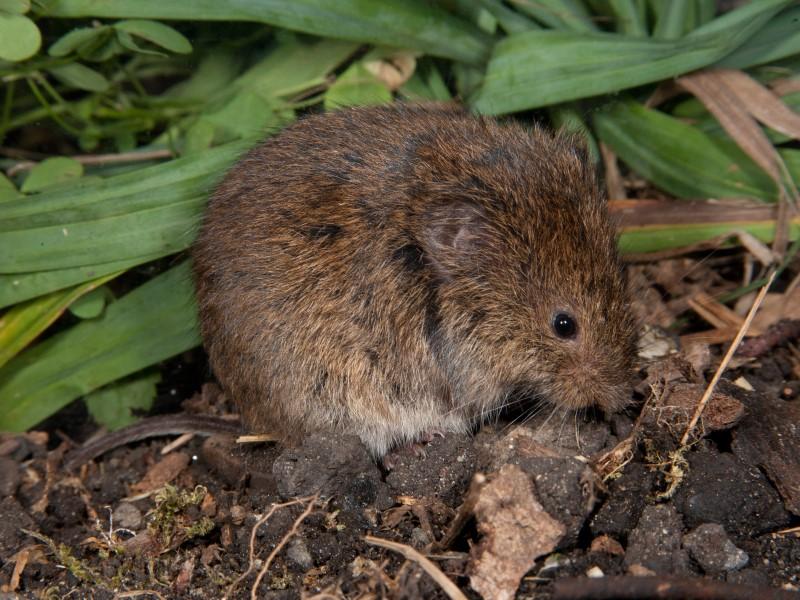
Meadow vole (Microtus pennsylvanicus) Photo by Adobe Stock
Although they look superficially similar, moles and voles are not closely related. Voles are rodents, while moles are related to shrews, a group more closely related to bats than rodents. Four species of voles occur in Maryland, though the most widespread are the Meadow Vole and Pine Vole. Three species of moles occur in Maryland, with the most widespread being the Eastern Mole.
Although tunnels can be an eyesore and inconvenience when mowing, they aerate soil and help to incorporate organic matter, both of which benefit roots. A mole’s consumption of grubs and worms can also reduce pests (which might include invasive jumping worms).
Lawn damage is generally limited to turfgrass removed in the narrow surface runways created by voles, grass drying out where it is partially uprooted by mole digging, and raised areas being scalped (cut too short) by a mower.
Identifying moles and voles
Although moles and voles are not often seen, several physical traits set them apart. Moles have large, outward-facing, webbed front feet, with large claws for digging. Their small eyes and ear openings are hidden under fur, and they have a long, pointed nose. In comparison, voles have short legs, small but noticeable eyes, a blunt nose, and small ears. Both moles and voles have short tails.
Overall, voles are smaller and breed much more rapidly than moles. Moles and voles are active year-round. Mole activity peaks around dusk and dawn, but they can also be active on overcast days.
Soil mounds created by moles. Photo by Adobe Stock
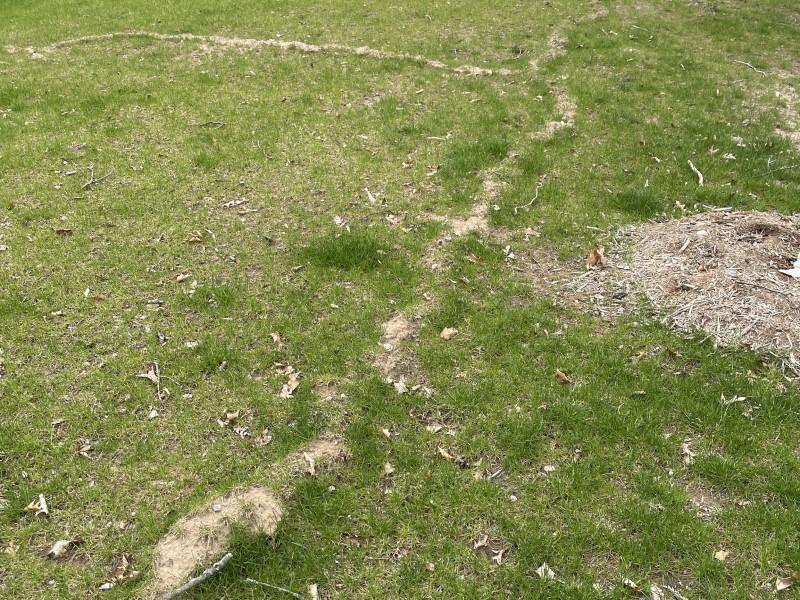
Vole tunnels and runways in a lawn. Photo: HGIC
Mole runways in a lawn. Photo: Caitlin Splawski, MSU Extension
Vole lawn runways revealed by melting snow. Photo: David Clement, University of Maryland Extension
Moles and voles use tunnels in the soil to forage and travel through the landscape, hidden from predators. Other animals, such as voles, shrews, and mice, sometimes take advantage of unused mole tunnels.
Mole and vole digging and feeding behavior
Voles eat plant bulbs, roots, and stems. Moles prey on invertebrates (mainly insects and earthworms). One way to remember the difference is to use the first letter of their names: voles are vegetarian, moles eat meat. Although voles might occasionally take advantage of an easy insect meal, they are not a major part of a vole’s diet.
Moles rarely come to the surface, while voles spend some time aboveground.
Foraging “runway” tunnels are the signs of activity noticed most by gardeners. Mole runways used for finding prey lie just beneath the surface of the soil. Vole runways are cut into the grass at the surface, and are especially visible after snowmelt. Clipped grass and piles of rice-sized greenish or brown scat (droppings) may be visible where runways are still in use.
Moles burrow in deeper dens, usually about 8 inches or more below the surface. At the burrow entrance, they push soil up into a pile or mound several inches high on the surface. Voles do not create large soil mounds.
The location of tunnels changes over time based on environmental factors like soil moisture and the availability of food.
Mole and vole management in lawns
Repair the lawn if needed by overseeding or laying new sod, and tamp down tunnels to collapse air voids that can dry out roots. Further intervention might not be needed, since populations of these animals fluctuate naturally, and their numbers tend to decrease on their own.
Mow lawns regularly and manage weeds. Voles avoid open areas with no cover; tall grass and weedy areas provide shelter for voles foraging on the surface.
Control of lawn grubs generally isn’t necessary. Although moles eat grubs, they also consume lots of earthworms and other soil-dwelling insects. Applying a grub control product might not have much impact on moles living in the area.
Let natural predators reduce the population where possible. The numerous predators of moles and voles include snakes, foxes, coyotes, bobcats, weasels, minks, skunks, raccoons, hawks, falcons, and owls.
Repellent scents and sounds, as well as scare devices, are not reliably effective.
As a last resort, reduce persistent and damaging mole or vole populations by using lethal or live trapping. Avoid poison baits that can harm predators and risk exposing other wildlife, children, and outdoor pets to the poison. Work with a licensed pest control professional who can select an appropriate bait, place and monitor traps, and handle any captured animals.
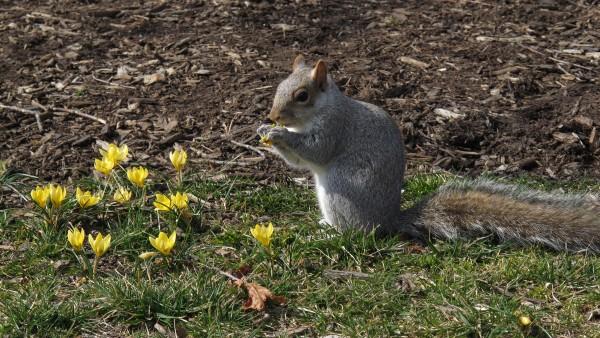
Squirrel eating a flower from crocus bulbs naturalized in a lawn. Photo: Miri Talabac, University of Maryland Extension
Chipmunks and squirrels can dig small depressions in the soil to find or store (cache) food to be eaten later. Depressions are about two inches in diameter, a few inches deep, and not associated with a distinct pile of soil. Chipmunk burrow entrances tend not to be located in the middle of a lawn.
Groundhogs (Woodchucks)
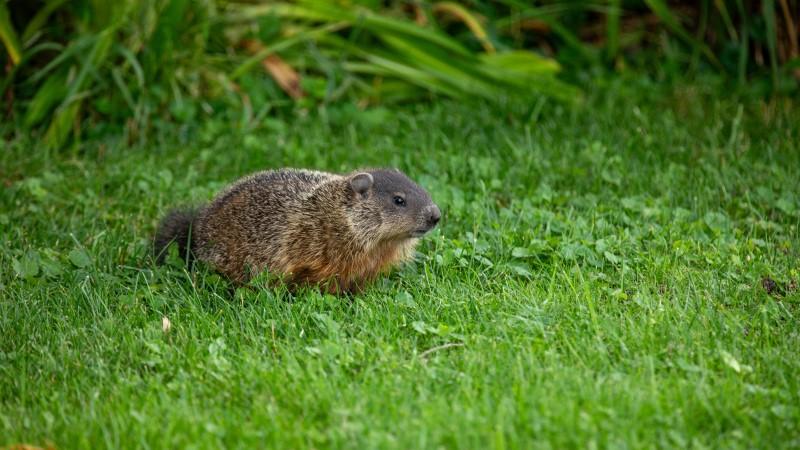
Groundhog wandering into a lawn from an area of taller vegetation. Photo by Adobe Stock
Although they do not commonly dig holes in turfgrass, groundhog burrow entrances are large (about 8 to 12 inches wide) and unlikely to be mistaken for holes created by other mammals. While they can eat grass, their varied diet and habitat preference for agricultural fields or open fields next to woodlands mean they are not typically a problem in home lawns that are mown regularly.
Birds in lawns
Some species of birds cache food (like acorns or bird feeder peanuts) in the ground, hiding it from other birds and saving it for later. Some probe or scrape the ground as they forage for insects or earthworms to eat. Either activity can create depressions or shallow holes in the lawn.
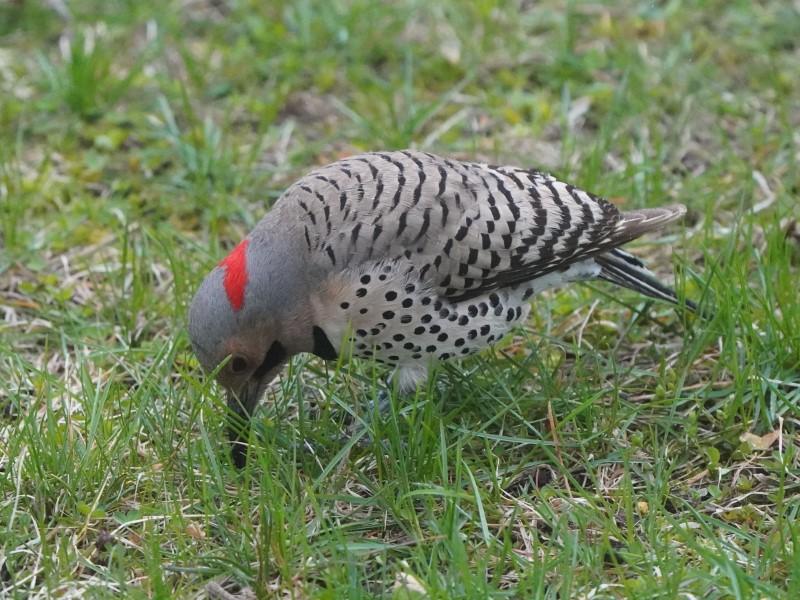
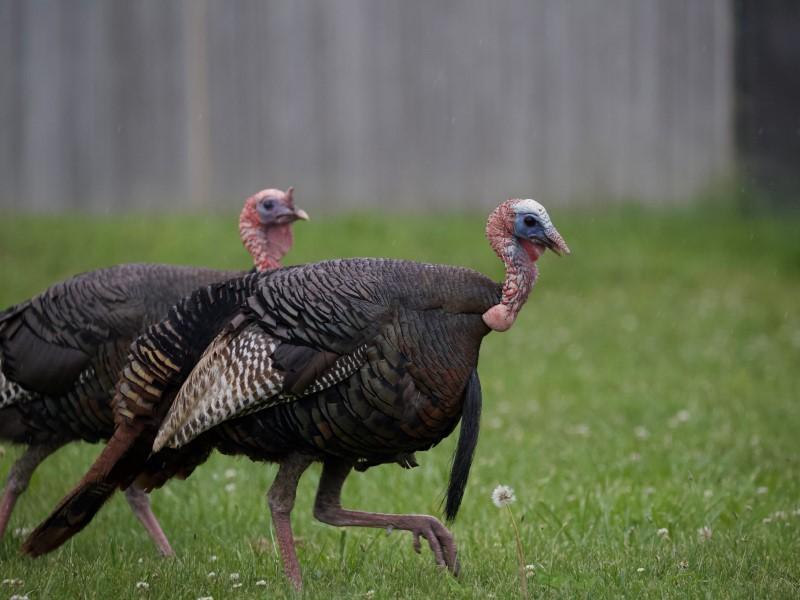
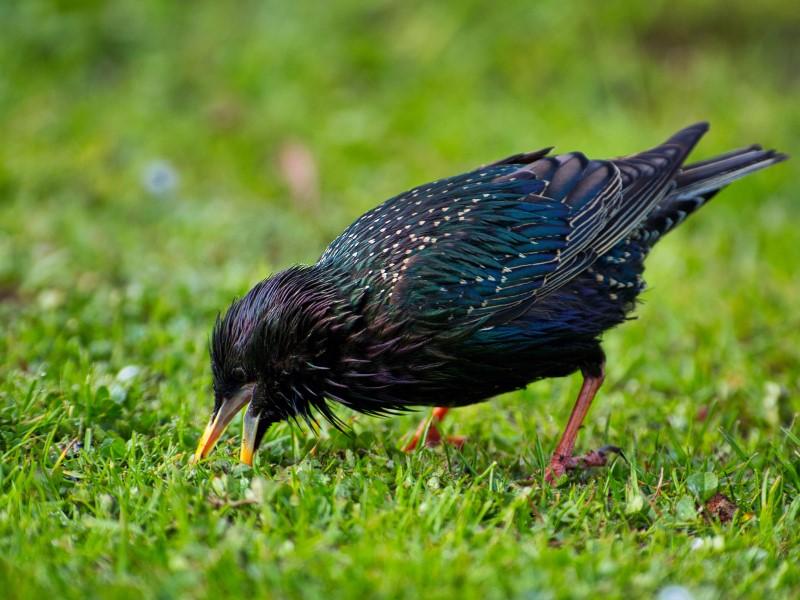
Birds that might dig into a lawn to expose insects include Northern flickers, crows, blue jays, European starlings, grackles, cowbirds, red-winged blackbirds, and wild turkeys. Northern flickers, for example, forage for ants to eat. Flocks of starlings or other birds may forage for caterpillars in the summer or grubs in the autumn.
Ducks and geese can eat grass, and their droppings introduce weed seeds. However, since they are tearing grass up with their bills, they are not digging holes in the lawn.
Most bird species are protected by Federal law, and no management is needed since they are consuming lawn insects that can be pests (like beetle grubs and armyworm caterpillars). Overseed or patch any areas that were uprooted or scraped bare by foraging birds.
A Northern flicker woodpecker foraging for insects in a lawn. Photo by Adobe Stock
Wild turkeys visiting a lawn. Photo by Adobe Stock
A European starling probing a lawn with its bill as it forages. Photo by Adobe Stock
Other animals that may affect lawns
Several animals can impact the appearance of the lawn without causing any significant damage. Mounds of soil can dull mower blades and interfere with mowing, but they soon weather away.
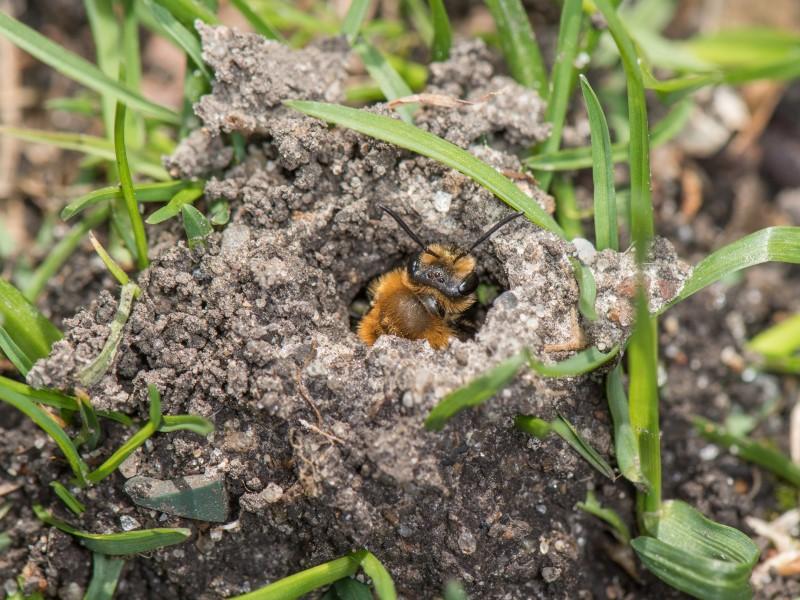
A soil mound surrounding a ground-nesting bee burrow. Photo by Adobe Stock
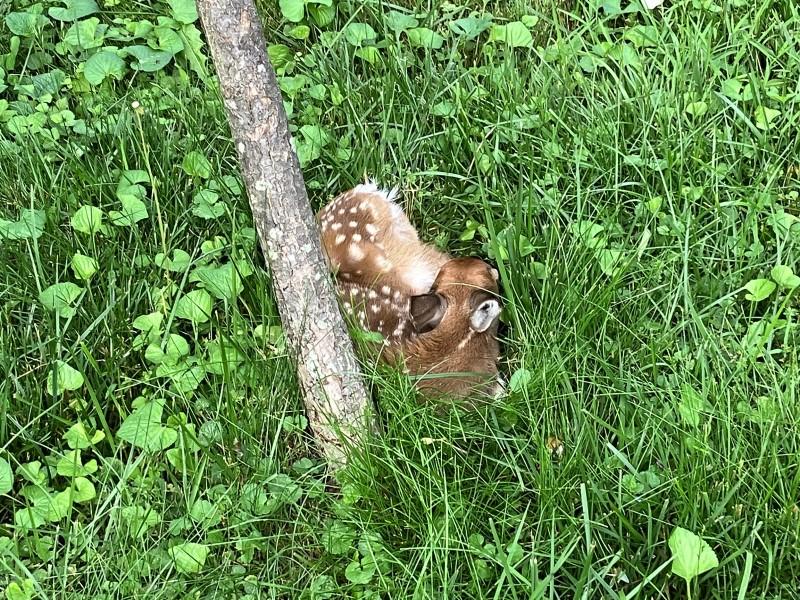
A white-tailed deer fawn hiding in a tall lawn while its mother browses nearby. Photo: Jon Traunfeld, University of Maryland Extension
Deer can rest (bed-down) in lawns, and fawns may be left alone while their mother browses nearby, especially in areas with taller grass or weeds. Turfgrass flattened by bedding-down will recover. Deer generally do not eat much turfgrass; instead, they browse on other landscape plants.
Ground-nesting bees and wasps can create mounds of soil as they excavate a burrow for their young. Solitary bees and wasps will not bother people, and they are important pollinators. The adults are active for a limited period, and their activity will not harm the grass. No control is necessary, but if you must discourage them from nesting in a future year, maintain a dense lawn to make the soil surface less accessible.
Rabbits may nibble on grass and clover. The female’s nest is a depression several inches wide and deep, lined with grass. Avoid mowing near nests in a lawn until they are no longer in use. Concerns about abandoned or injured baby rabbits should be addressed by a licensed wildlife rehabilitator.
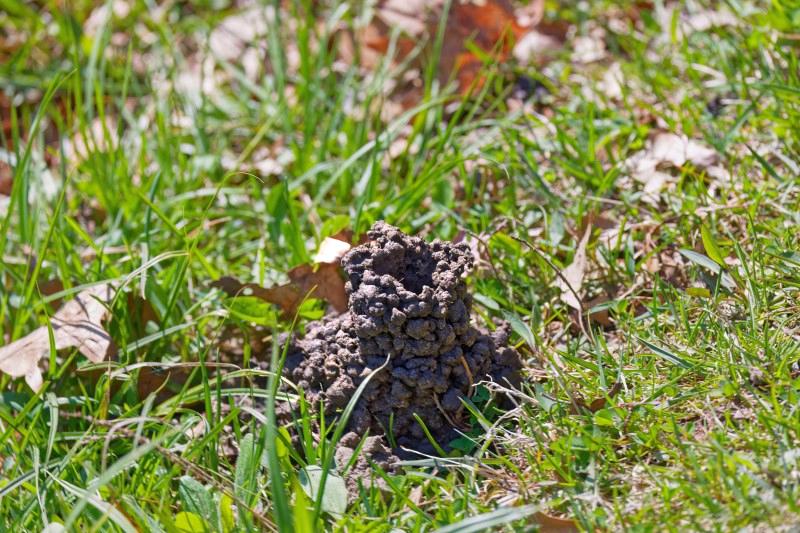
Crayfish are not typical lawn pests, but they can create mounds of soil (“chimneys”) in areas near wetland habitat or with a high water table. Over a dozen species of crayfish inhabit Maryland, with several being invasive. Replant lawn areas having damp soil with other groundcovers or species that tolerate periodic flooding. Crayfish are important prey for various animals, including herons and queen snakes.
Crayfish create "chimneys" of muddy soil globs that may rise just above the height of a lawn. Photo by Adobe Stock
Nuisance Wildlife | Maryland Department of Natural Resources - Wildlife & Heritage Service
The DNR can issue landowner permits for trapping wildlife. It also provides an online search tool to find individuals or companies who are licensed to handle wildlife complaints. Note that rabies vector species, such as raccoons and skunks, cannot be relocated if trapped. As per Maryland law, these particular animals must be released on-site after capture or euthanized. Refer to the Code of Maryland Regulations for Wildlife Damage Control Permits for more details.