Key points about common lawn problems
- Diagnosing lawn problems can be challenging, as symptoms from multiple factors (environmental stress, pests, diseases, or physical damage) can overlap.
- Many lawn problems cause temporary cosmetic damage to the grass, but are not serious threats to long-term lawn health. Not every condition requires (or responds to) treatment, and often the grass eventually outgrows the damage.
- If the same issue keeps arising, consider converting problem areas of the lawn into alternative plantings that are less susceptible to the pest, disease, or site condition responsible for turfgrass stress or dieback.
Diagnostic tables of lawn symptoms
Table abbreviations for lawn type: W (warm-season – zoysia, bermudagrass) and C (cool-season – fescues, bluegrass).
Changes in overall lawn appearance
| Symptom | Lawn Type | Possible Cause | Time of Year | Notes | Management |
|---|---|---|---|---|---|
| Grass becomes paler or turns bluish-green or brown | C | Drought stress | Summer and autumn | Footprints do not disappear after a few minutes. | The grass will usually recover with sufficient rain or irrigation. |
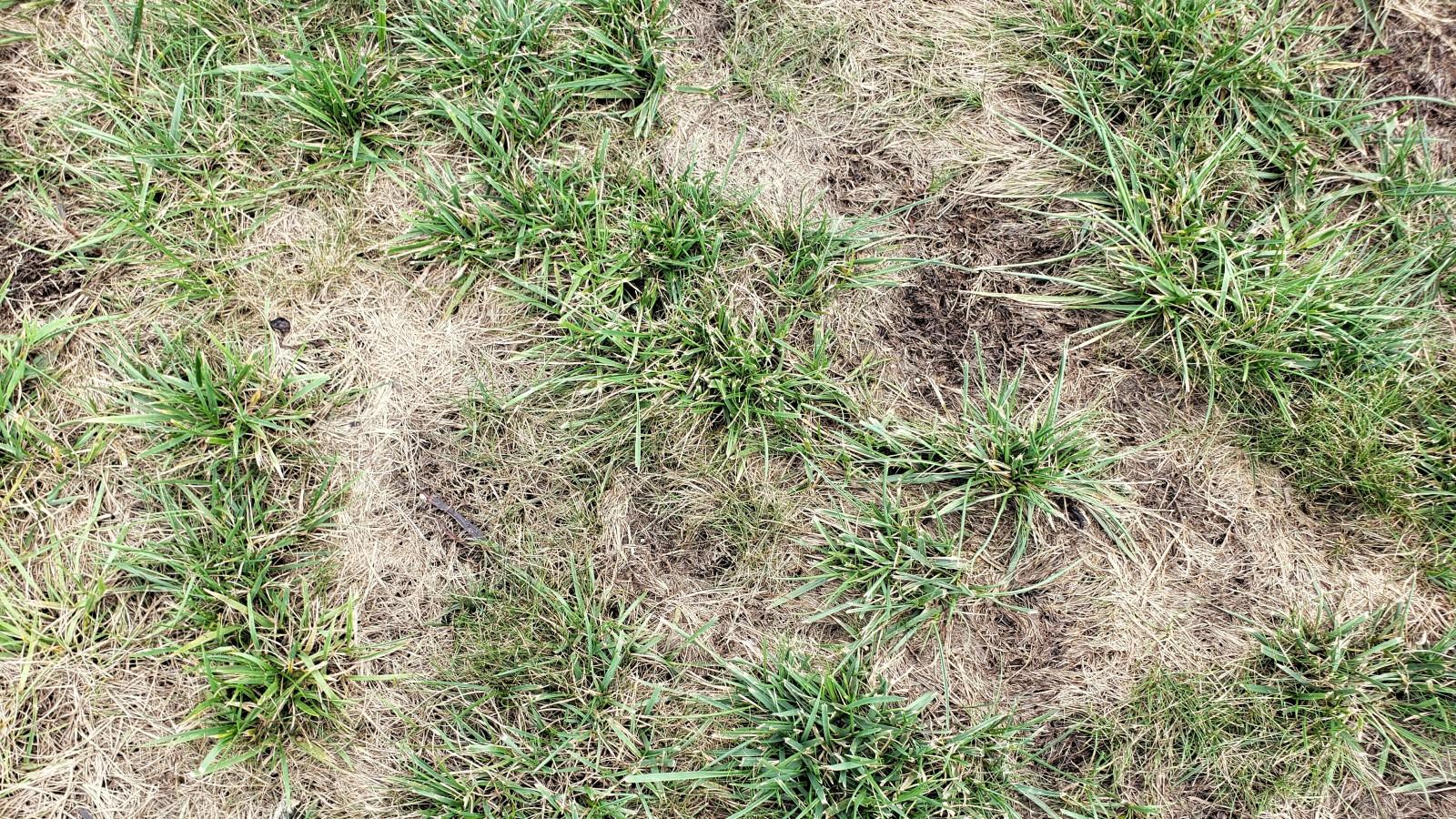
| Circular patches of straw-brown grass about 3 to 12 inches across | C | Summer patch | Summer | Primarily affects Kentucky bluegrass and fine fescue lawns at least 2 years old. | Avoid excessive nitrogen, especially in spring, and use slow-release sources. Increase mowing height, avoid frequent light waterings, and reduce thatch build-up. |
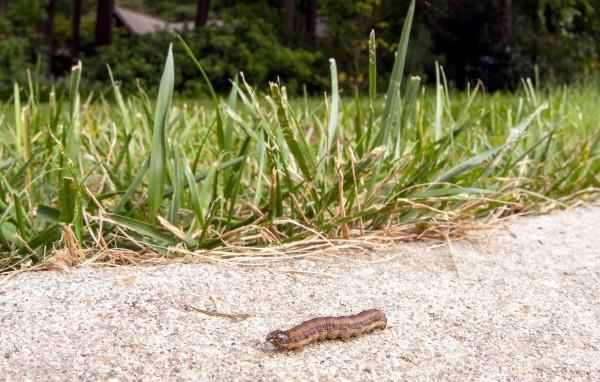
| Irregularly-shaped brown patches with small moths flying over the lawn | C and W | Sod webworms | Late spring through early autumn | Brown caterpillars hide at the base of grass blades or in thatch and feed on the grass at night. | Reseed areas of damaged grass or apply an insecticide targets the caterpillars. |
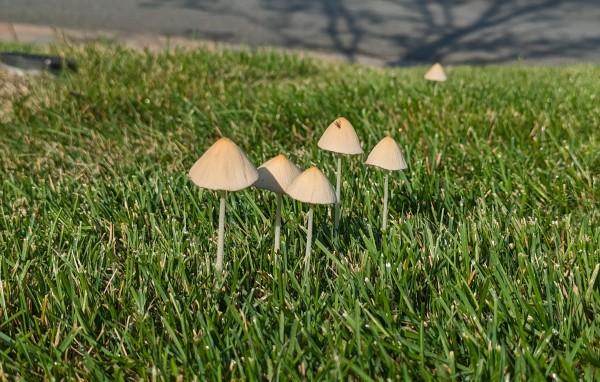
| Rings or arcs of dead or green grass; mushrooms may be present | C and W | Fairy rings | Year-round | Patterns bordered by zones of darker green grass; more common on droughty sites and poorly-nourished turf. | Aerate the lawn, maintain adequate nitrogen fertility, and irrigate during dry spells. |
| Bleached-looking patches surrounded by a ring of dark green grass | C and W | Dog urine | Year-round | Can resemble some diseases; may kill the grass. | Prompt irrigation can dilute urine to reduce damage. Replant to fill-in dead spots. |
| Banded streaks or irregular patterns across large areas of lawn | C and W | Uneven application of fertilizer or sensitivity to a pesticide (including herbicide) | Year-round | Over-fertilized grass may die from root damage; grass bordering areas of over-application may be greener. Grass injured by herbicide may become pale or die out. | Calibrate spreaders and sprayers for uniform and accurate application of fertilizer and pesticide. |
| Large yellow patch near a swimming pool | C and W | Chlorine toxicity | Year-round | Usually due to repeated splashing or drainage/leaks from the pool. | Leach chlorine through the soil with irrigation. Replant if too much dieback occurred. |
Problems on individual leaf blades
| Symptom | Lawn Type | Possible Cause | Time of Year | Notes | Management |
|---|---|---|---|---|---|
| Pale green to yellow leaves | C and W | Chlorosis | Summer and autumn | Nutrient deficiency (usually nitrogen or iron). Low iron may cause yellow striping down the length of the leaf. | Perform a soil test to check pH; soil too acidic can interfere with nutrient absorption. Fertilize as needed to supplement any deficiencies, and apply lime as needed to maintain a pH around 6.0 or above. |
| Grass over mounds looks ragged or scalped | C and W | Mower injury | Spring, summer, and autumn | Short mowing causes stress by removing too much growth at one time, and allows weeds to thrive. | Renovate that area of lawn to regrade (level the soil), or raise the mowing height to compensate. |
| Shredded leaf tips | C and W | Mower injury | Spring, summer, and autumn | Leaf tips appear duller in color, then dry out and turn pale brown. | Sharpen or replace the mower blade. |
| Reddish-pink color on leaf blades | C | Red thread | Spring and autumn | Rosy thread-like fungal growth extending beyond the leaf blades. Infections appear in patches. | Maintain adequate nitrogen fertility levels. |
| Orange or rusty-brown color on leaf blades | C and W | Rust | Spring, summer, and autumn | Spores easily rub off on hands or shoes. Affected turf may appear yellow or reddish from a distance. | Maintain adequate nitrogen fertility levels and reseed infected areas that have thinned-out if necessary. Avoid evening irrigation. |
| White coating on leaf blades | C and W | Powdery mildew | Spring and autumn | Typically occurs in shady sites or areas of poor air circulation. | Improve air movement and plant alternatives in areas too shady for turf. Avoid drought stress that can kill mildew-weakened grass. |
| Leaf blades covered with extremely tiny mushroom-shaped growths or a powdery residue | C and W | Slime mold | Spring, summer, and autumn | Not harmful to the grass, so the blades remain green under the coating once it’s wiped off. Occurs primarily after wet conditions. Spore coating can be white, gray, brown, purplish, or black. | Slime mold will dry out fairly soon after appearing and will go away on its own. Otherwise, rinse off residue with a hose or remove it by mowing. Avoid over-irrigation. |
| Pale leaf lesions with dark brown edges or entirely-brown leaves | C | Brown patch | Summer | Infections may thin the lawn. Can occur in distinct patches, but usually appears as scattered browning. White threadlike fungal growth may be visible in the early morning or with dew. Thrives in hot weather with high humidity. | Mow at the recommended height and avoid over-fertilizing. Affected turf usually recovers in autumn. Reseeding may be necessary to fill-in bare areas. |
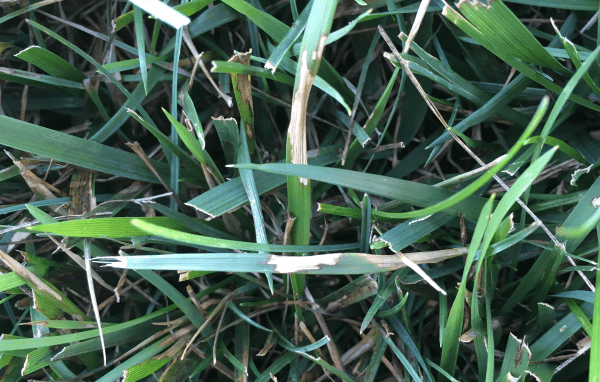
| Leaf lesions with an hourglass shape with pale centers and dark edges | C and W | Dollar spot | Spring, summer, and autumn | Infections create numerous dead spots in the lawn about 2 to 6 inches across. | Drought, thatch buildup, inadequate nitrogen, and compacted soil increase disease susceptibility. Reseeding may be necessary to fill-in bare areas. |
Miscellaneous issues
| Symptom | Lawn Type | Possible Cause | Time of Year | Notes | Management |
|---|---|---|---|---|---|
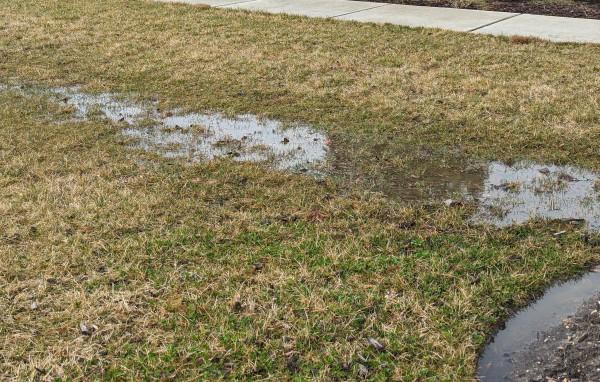
| Greenish-black crust on the soil surface | C and W | Algae or nostoc | Year-round | Occurs in poorly-drained or compacted areas. Usually more severe in shade. | Regrade or aerate to improve drainage, avoid over-irrigation, and overseed to improve the density of the turf. Plant alternatives in areas too shady or damp for turf to thrive. |
| Low green mounds or carpets on the soil surface | C and W | Moss | Year-round | Occurs in poorly-drained or compacted areas. Usually more severe in shade. | Regrade or aerate to improve drainage, avoid over-irrigation, and overseed to improve the density of the turf. Check soil pH and apply lime if needed. Plant alternatives in areas too shady or damp for turf to thrive. |
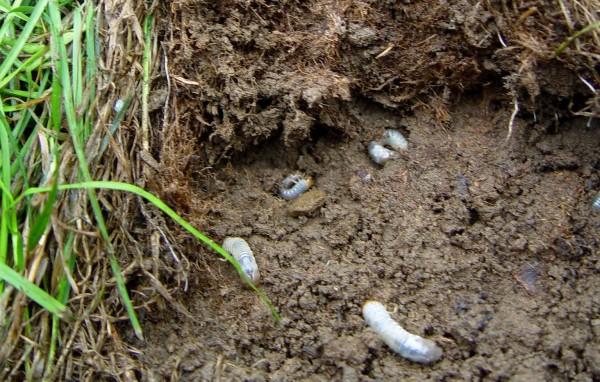
| Turf pulls up easily, lacking roots; C-shaped grubs in the soil | C | White grubs | Year-round (mainly summer) | In severe cases, turf can be rolled-up like a carpet. Grubs need to be abundant to cause damage; scattered individuals are not harmful. | Reseed the lawn in the fall with a tolerant turf species such as tall fescue or zoysia. Reduce lawn irrigation when beetles are flying in mid-summer. Adult beetles prefer to lay eggs in moist soil. |
| Small fuzzy bees flying low over the lawn | C and W | Ground-nesting bees | Spring and summer | Not aggressive and highly unlikely to sting. Bare, sandy or loose soil is ideal nesting habitat. | No control needed. Males cannot sting and may patrol the lawn for mates and rivals. Females dig burrows and gather pollen. Adult bees are only active for a few weeks. For nutrient-poor sandy soils that dry quickly, renovate the area and amend with compost or reseed to cover the soil with dense turf. |
| Large wasps with red-brown, yellow, and black markings flying low over the lawn; mounds of soil next to a burrow | C and W | Cicada killer wasps | Summer | Not aggressive and highly unlikely to sting. Bare, sandy or loose soil is ideal nesting habitat. | No control needed. Males cannot sting and may patrol the lawn for mates and rivals. Females dig burrows and hunt for cicada prey. Adult wasps are only active for a few weeks. For nutrient-poor sandy soils that dry quickly, renovate the area and amend with compost or reseed to cover the soil with dense turf. |
| Medium to large-sized blue-black wasps flying low over the lawn | C and W | Scoliid wasps | Summer | Not aggressive and unlikely to sting. Preys on grubs in the soil. | No control needed. Females visit flowers and search for grubs under the lawn, helping to control their numbers. |
| Trails of raised soil running along surface of the lawn | C and W | Moles | Year-round | Does not feed on plants; helps to aerate the soil and feed on grubs and other invertebrates. Rodent-like in general appearance, but with a hairless pointed snout, small eyes, and no visible ears. Front feet are large and webbed for digging. | Flatten tunnels. Populations usually subside on their own as moles are prey to many wild animals. Use snap traps (no poison baits) to dispatch moles if absolutely necessary. |
| Holes in the ground 1 to 2 inches in diameter; 1- to 2-inch wide pathways through the lawn | C and W | Voles | Year-round | Feeds on plant material like roots and woody stems. Small rodents with short tails and small ears. Meadow voles create surface paths; pine voles use underground tunnels. | Mow the lawn regularly and flatten tunnels. Do not over-apply mulch, and clear mulch away from the base of tree trunks and shrub stems. Populations usually subside on their own as voles are prey to many wild animals. Use snap traps (no poison baits) to dispatch voles if absolutely necessary. |
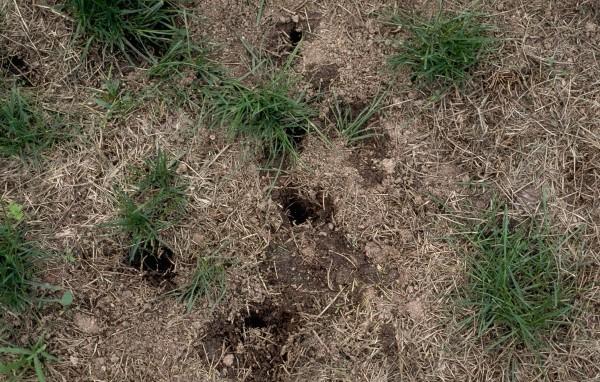
| Tapered holes in the ground; turf may be pulled up in patches | C and W | Skunks or raccoons | Year-round | Digs to find grubs or other insects to eat under the turf. | Rake damaged spots level and reseed to repair the lawn. |