Updated: July 14, 2026
By Drew Schiavone
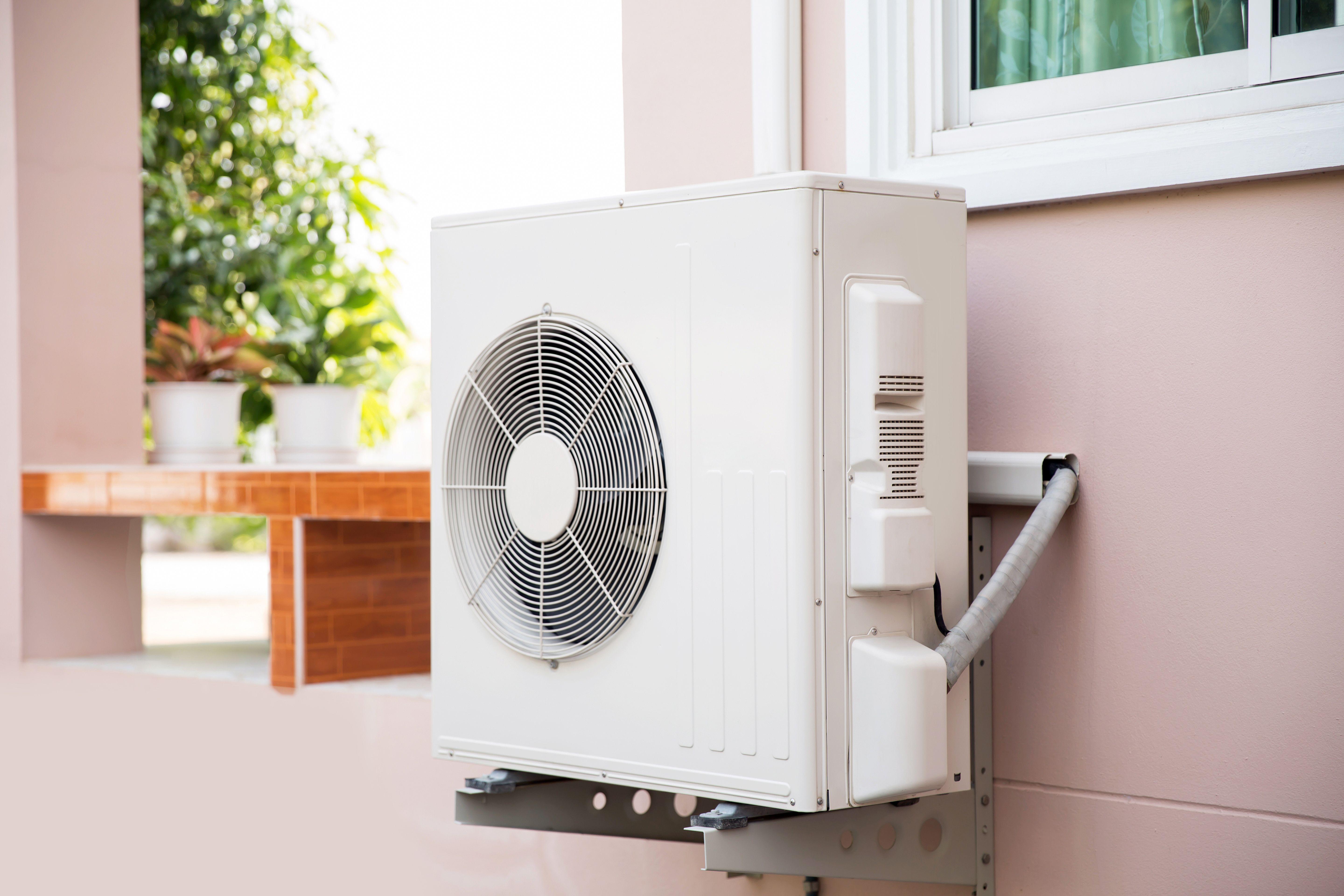
outdoor air‑source heat pump unit mounted on a residential wall, showing fan grille and refrigerant lines connected to the home
Photo: Adobe Stock

Heat pumps have become one of the most popular home energy upgrades in the United States. Unlike furnaces or boilers that generate heat, a heat pump moves heat from one place to another. In winter, it extracts heat from outdoor air and transfers it indoors. In summer, it reverses direction and works like an air conditioner, removing heat from your home.

Because heat pumps move heat rather than create it, they can deliver two to four times more heating energy than the electricity they consume. This makes them one of the most efficient heating and cooling technologies available today.

Modern cold-climate heat pumps perform well in Maryland's winters and can often replace or substantially reduce the use of propane, fuel oil, electric resistance heating, and older HVAC equipment.
Heat Pump Basics

How Heat Pumps Work

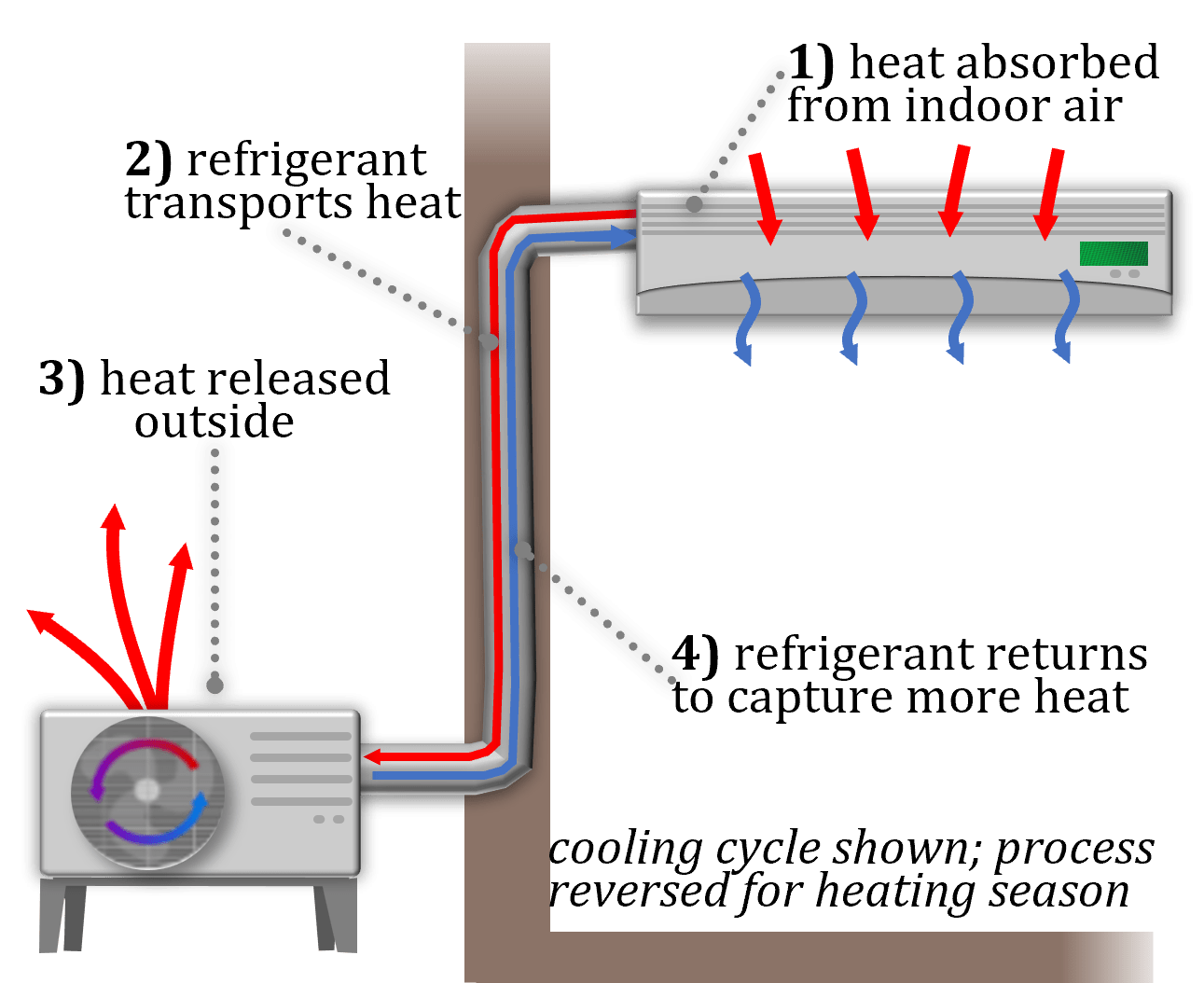
A heat pump operates using the same basic refrigeration cycle found in refrigerators and air conditioners. The system consists of:

  • Outdoor unit
  • Indoor unit (air handler or ductless head)
  • Compressor
  • Refrigerant lines

In heating mode:

  • Refrigerant absorbs heat from outdoor air.
  • The compressor increases refrigerant temperature.
  • Heat is transferred indoors.
  • The cycle repeats continuously.

In cooling mode, the process reverses and heat is removed from the house. Unlike combustion-based systems, heat pumps do not burn fuel inside the home.

Diagram of a ductless mini-split heat pump system showing an outdoor unit connected by refrigerant lines to an indoor wall-mounted unit, with arrows indicating heat transfer: warm air delivered inside and heat exchanged with outdoor air through the system.

Common Heat Pump Types

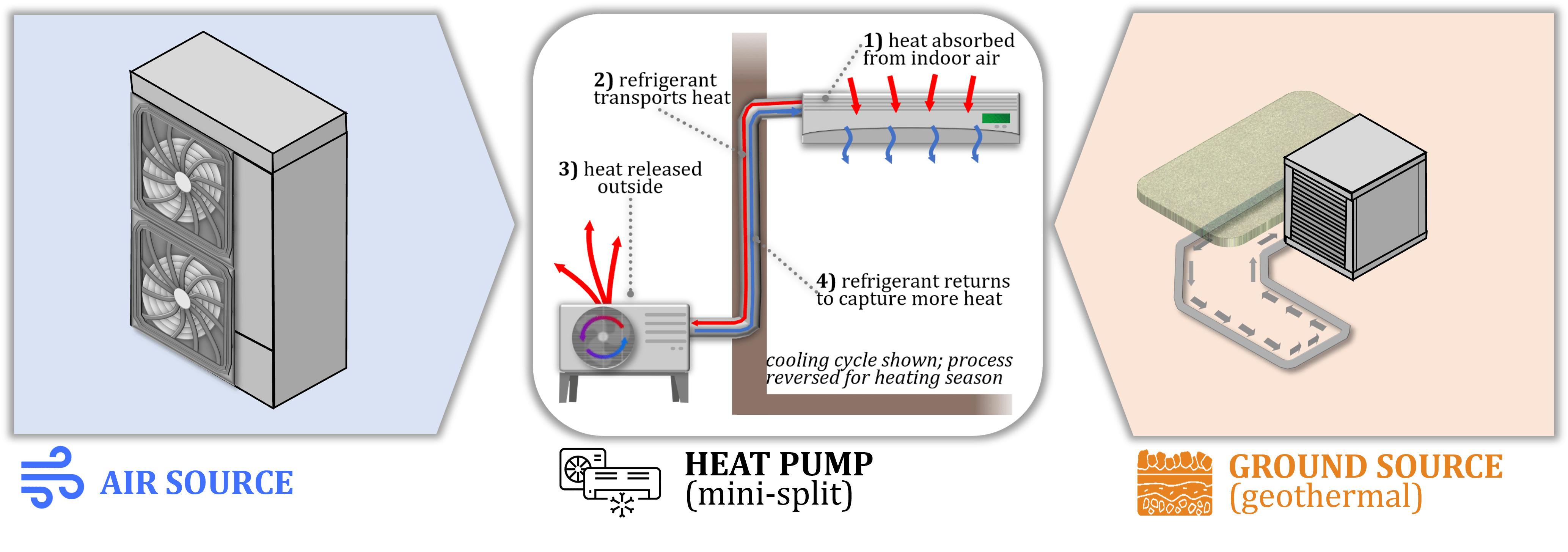
Air-Source Heat Pumps: The most common type in Maryland.

  • Lowest installation cost
  • Provides heating and cooling
  • Suitable for most homes

Ductless Mini-Split Heat Pumps: Ideal for:

  • Home additions
  • Older homes without ductwork
  • Finished basements
  • Bonus rooms

Ground-Source (Geothermal) Heat Pumps: Use underground temperatures for heating and cooling.

  • Highest efficiency
  • Highest installation cost
  • Long equipment life
A diagram illustrating three types of heat pump configurations: "Air-Source Heat Pump" showing heat exchange with outdoor air; "Ground-Source (Geothermal) Heat Pump" showing fluid circulating through underground pipe loops; and "Water-Source Heat Pump" showing fluid circulating through a submerged pipe loop in a nearby body of water. Each configuration displays a central house connected to its respective external thermal source.

Are Heat Pumps Effective?

Do they work in Maryland?

One of the most common misconceptions is that heat pumps only work in warm climates. Older systems often struggled during cold weather, but today's cold-climate heat pumps are designed to operate efficiently well below freezing. Many modern systems continue providing heat at temperatures below 0°F. Maryland's winter temperatures fall well within the operating range of most modern heat pumps. Heat pumps generally perform best when:

  • The home is reasonably air-sealed
  • Insulation levels are adequate
  • Equipment is properly sized
  • Duct systems are in good condition

Benefits:

  • Heating and cooling from one system
  • Lower energy use
  • Reduced emissions
  • Improved indoor comfort
  • No on-site combustion

Potential Challenges:

  • Higher upfront cost
  • Possible electrical upgrades
  • Reduced efficiency in extreme cold
  • Professional sizing is essential

Heat Pump Efficiency Ratings

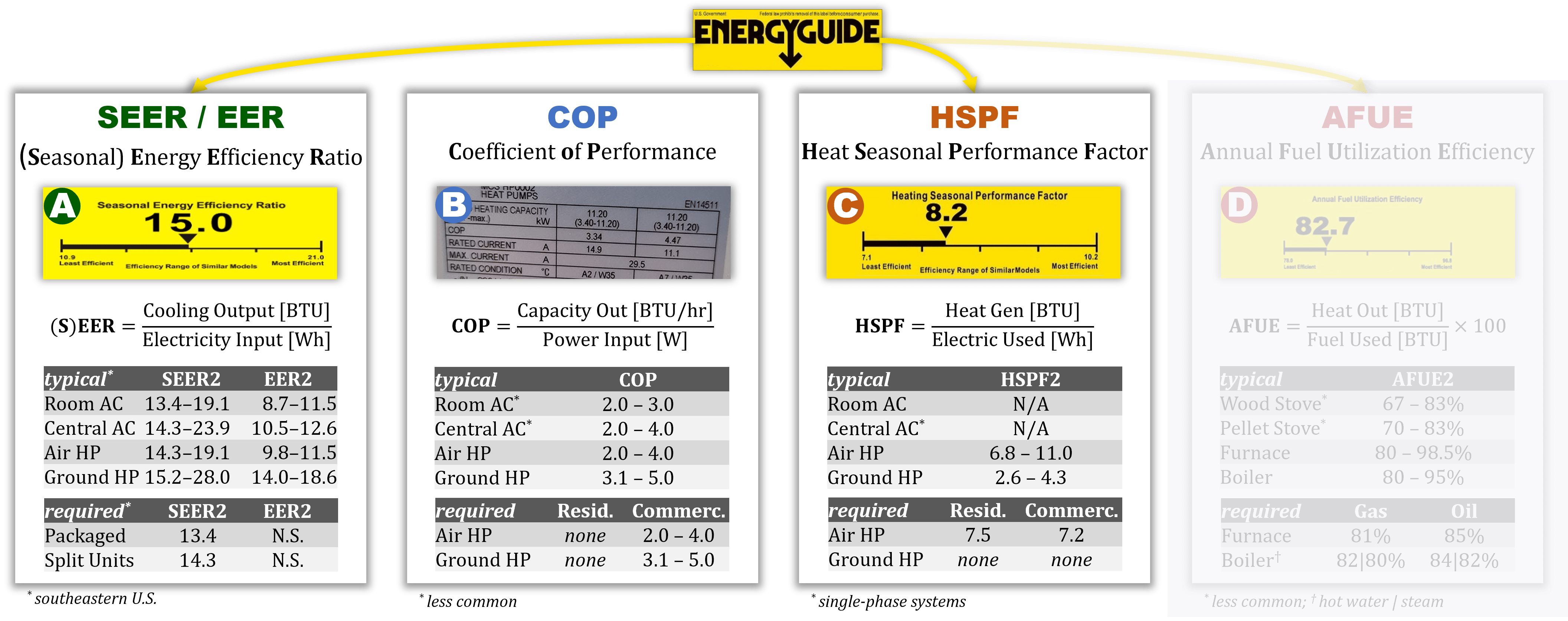
Several ratings appear on heat pump labels.

Seasonal Energy Efficiency Ratio (SEER2): Measures cooling efficiency. Higher SEER2 ratings typically indicate lower cooling costs.

Heating Seasonal Performance Factor (HSPF2): Measures heating efficiency. Higher HSPF2 ratings indicate better winter performance.

Coefficient of Performance (COP): Represents the ratio of heat delivered compared to electricity consumed. Example: COP = 3.0, means the system delivers approximately three units of heat for every unit of electricity used.

An infographic comparing four common HVAC efficiency ratings: SEER2, COP, HSPF2, and AFUE. The AFUE rating, typically for furnaces, is shown as irrelevant to heat pumps and is greyed out. For each relevant rating, the graphic shows common efficiency labels, the formulas used for calculation, and tables with typical and minimum efficiency requirements. A note indicates that the provided efficiency values are for reference only and are subject to change.

When comparing equipment, consider:

  • Efficiency ratings
  • Cold-weather performance
  • Noise levels
  • Warranty coverage
  • Contractor qualifications

Owning a Heat Pump

Before you buy

Consider:

  • Home insulation levels
  • Air sealing improvements
  • Existing HVAC equipment
  • Ductwork condition
  • Electric service capacity

A qualified contractor should perform a load calculation before recommending equipment. Avoid selecting systems based solely on square footage.

Heat pumps may also qualify for:

  • Federal tax credits
  • Maryland Energy Administration programs
  • Utility rebates
  • Low-interest financing programs

Check current incentive availability before making purchasing decisions.

Maintenance Tips

Consider:

  • Replace filters regularly
  • Keep outdoor units free of debris
  • Maintain clearance around equipment
  • Schedule periodic professional inspections
  • Keep supply and return vents unobstructed

Proper maintenance improves comfort, efficiency, and equipment lifespan.

Explore Additional Resources:

  • outdoor air‑source heat pump unit mounted on a residential wall, showing fan grille and refrigerant lines connected to the home

    -- Heat Pumps --

    Learn all about heat pumps for your home.

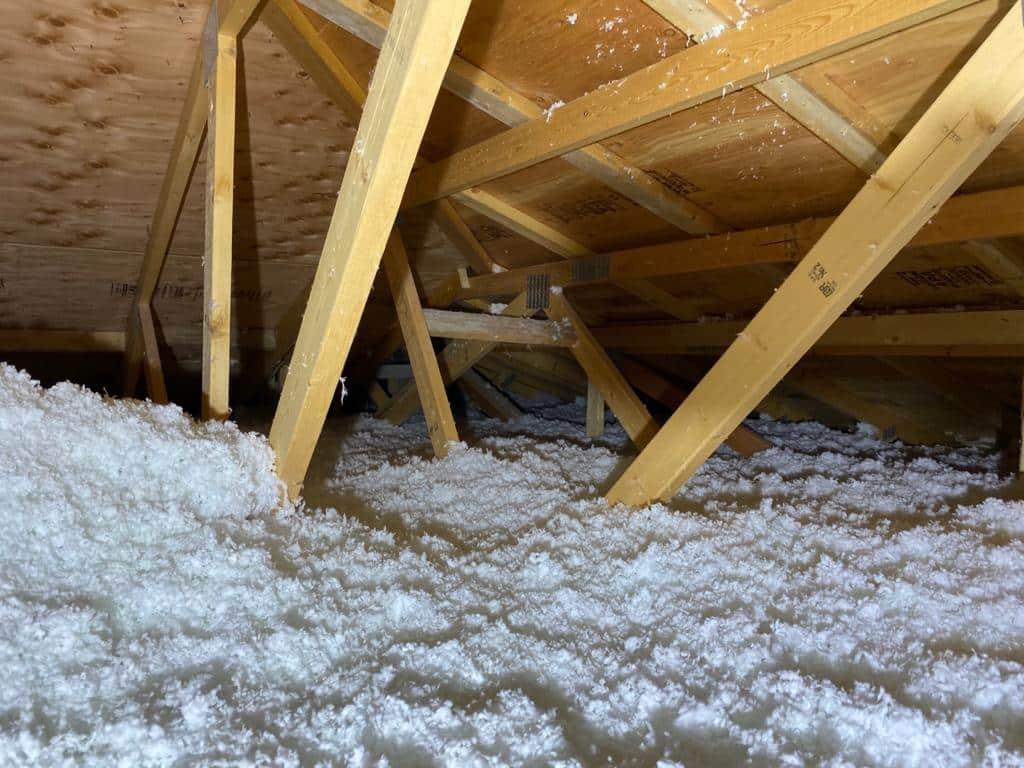
  • Blown-in insulation in attic

    Insulation

    Insulation

    Explore insulation options and strategies for your home.

  • light bulbs laying on yellow surface

    Lighting

    Lighting

    Explore energy-efficient lighting for your home.

  • Solar energy PV cells and panel held with mounting bracket

    Simplifying Solar

    Simplifying Solar

    Basic understanding of residential solar installation.

  • window film application

    Storm Windows

    Storm Windows

    Explore storm window options for your home.

  • Sustainable home graphic with green electrical plug

    Understand Home Energy

    Understand Home Energy

    Explore the whole-house (or systems) approach to energy efficiency.

  • a basement utility area featuring a tall, gray water heater storage tank on the left and a three-stage blue whole-house water filtration system mounted on the wall to the right

    Water Heating

    Water Heating

    Explore water heating efficiency for your home.