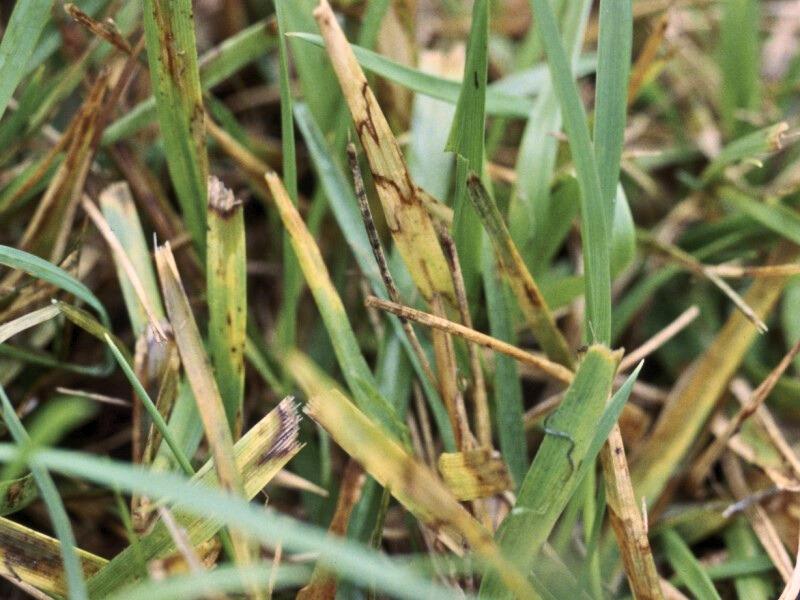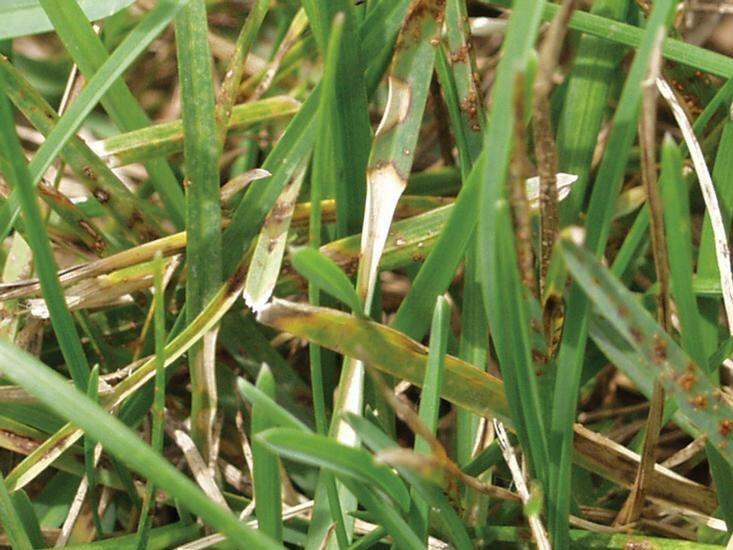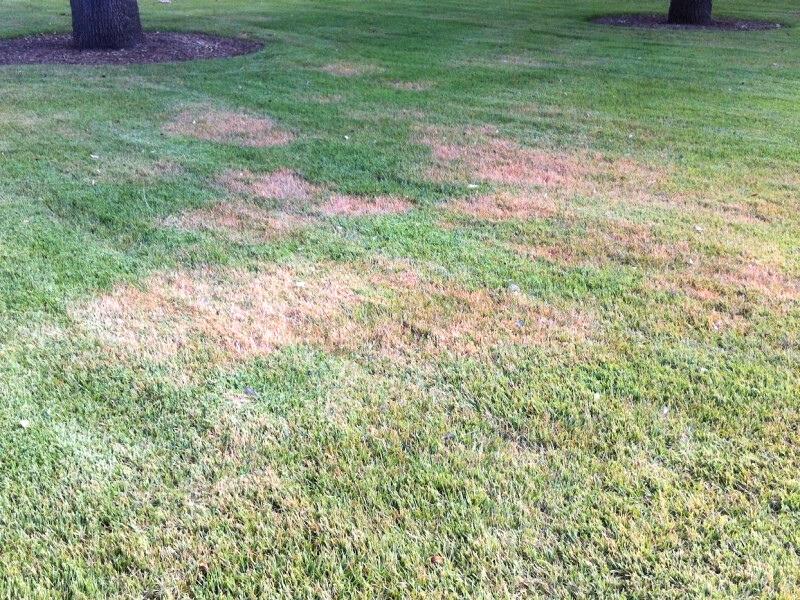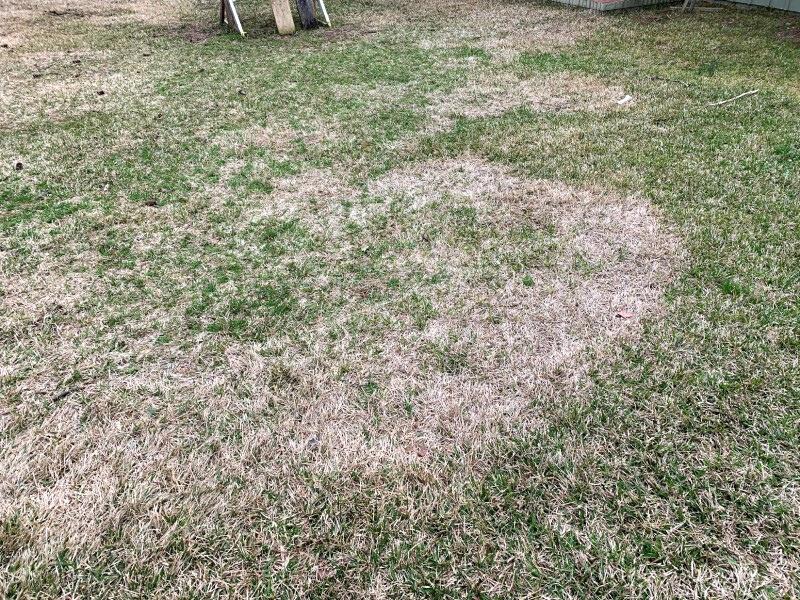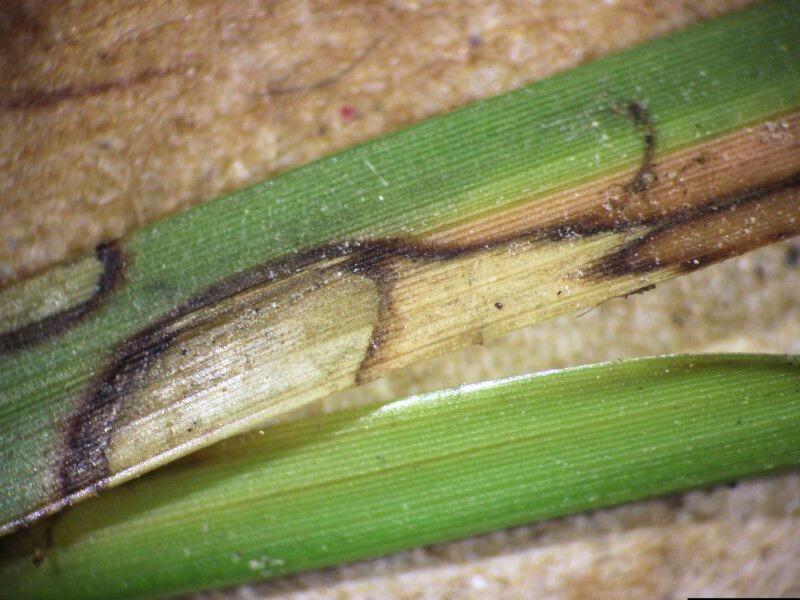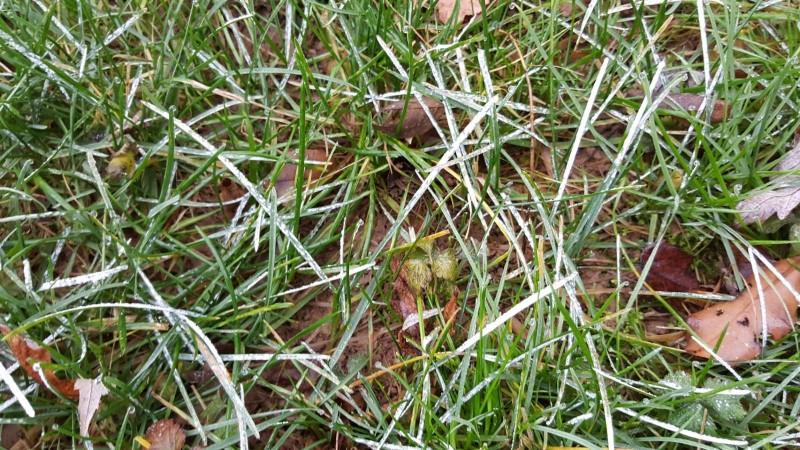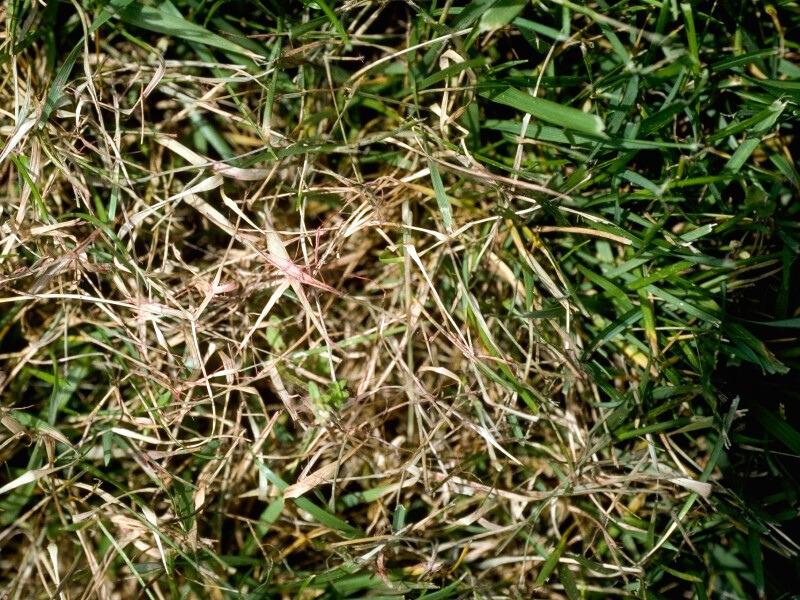
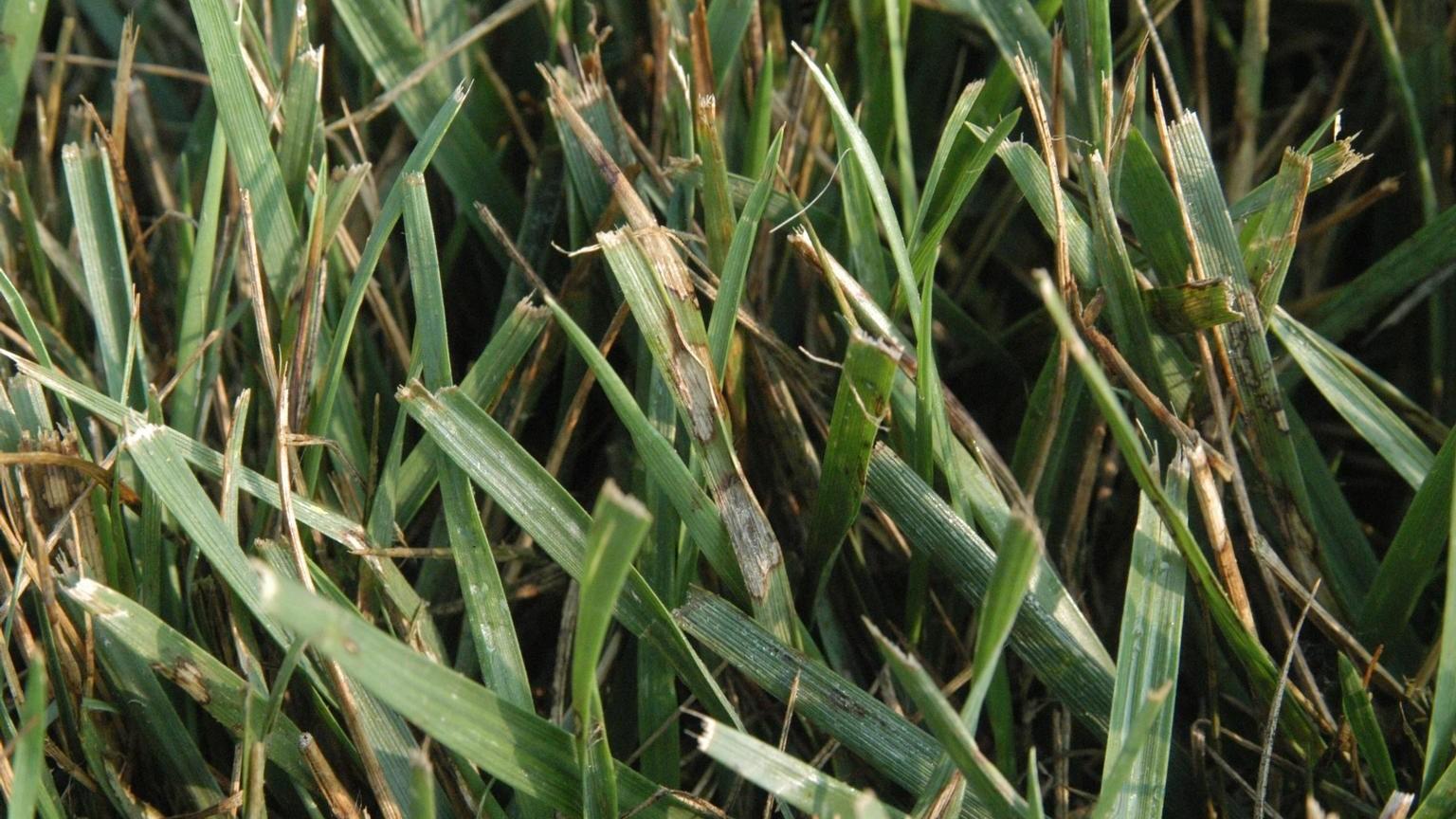
Close-up of pale brown, blotchy disease lesions on turfgrass leaf blades.

Brown patch symptoms on the blades of tall fescue.
Photo: Ward Upham, Kansas State University, Bugwood.org

Updated: March 16, 2026

Key points about lawn infections

  • Diagnosing lawn problems can be challenging, as symptoms from multiple factors (environmental stress, pests, diseases, or physical damage) can overlap.
  • Not all lawn diseases kill the turf; some merely discolor it, and the grass regrows once seasonal conditions change. Where possible, tolerate temporary blemishes to avoid the use of fungicides that can harm other organisms or cause the fungus to become resistant to treatment.
  • Avoiding conditions that promote disease (like watering late in the day) helps reduce the frequency and severity of outbreaks. Infections take place before disease symptoms appear.
  • No single management approach (like fungicide) is likely to work well by itself. Focus on proper turfgrass maintenance to support the grass’s ability to resist disease on its own.
  • Growing recommended turfgrass varieties helps lawns better resist or recover from disease. Not all turf types are equally susceptible to each disease, and even disease-resistant grasses can be infected when environmental conditions favor fungal growth.

Disease vulnerability by turfgrass type

The following chart provides a guide for comparing the most notable disease vulnerabilities for each turfgrass type. It is not an exhaustive list, nor is it ranked by disease prevalence. Grass variety resistance and weather conditions can influence how extensive any disease becomes.

Common diseases within each turf type
Turfgrass typeMost common diseases
Tall fescueBrown patch, red thread, gray leaf spot, rust
Kentucky bluegrassSummer patch, dollar spot, rust, powdery mildew, brown patch
Fine fescue (primarily creeping red)Red thread, Drechslera leaf spot, net blotch, dollar spot, summer patch, powdery mildew
Perennial ryegrassGray leaf spot, brown patch, dollar spot, red thread, rust
ZoysiaLarge patch, dollar spot, rust
BermudagrassSpring dead spot, leaf spot

Lawn disease terms

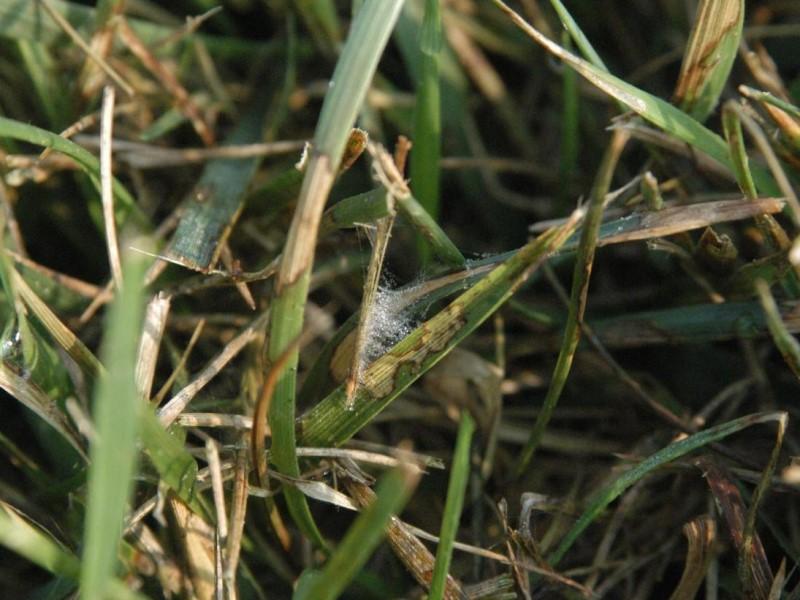
Mycelium (plural mycelia) forms the bulk of the fungal body. It is a network of filaments (hyphae) that spreads through and around their food source as the fungus consumes dead organic matter or infects living organisms. Fungal mycelia are not usually visible, though they can sometimes be seen on the soil or plant surface during periods of high humidity or wetness. When visible, mycelia often appear thready, cobwebby, or fuzzy.

Fungi can survive periods of harsh weather (like winter or a drought) as resting structures called sclerotia. These tough, dormant capsules can persist in the soil or within infected plant parts. They may survive in the soil for many years when suitable host plants are not available. This can be one reason why a relatively new or refreshed lawn that has not had disease issues in the past may develop an infection once weather conditions favor the regrowth of the fungus.

Inoculum is any part of a fungus capable of starting an infection. This could be spores, sclerotia, or fragments of mycelium.

The crown of a grass plant is the area at the soil level where the roots and shoots (above-ground growth) meet. New growth originates from the crown when turfgrass has to regrow foliage, whether from mowing, damage (such as drying out from drought or loss from insect chewing), or fungal leaf infections.
Management of lawn diseases

Lawn fungal infections, especially those limited to leaves, do not always kill the grass or require treatment. Most of those diseases will cause temporary browning that the grass will grow out of on its own with routine care. As a result, disease management focuses on keeping infection risk low rather than applying fungicides preventively.

Jump to the following sections to learn about typical symptoms, when they tend to appear, and which turf types are affected for common lawn diseases:

What makes the lawn susceptible to disease?

Disease-causing fungal spores are ubiquitous in the environment, and weather can heavily influence the spread and severity of plant diseases. Disease transmission can occur when fragments of fungal mycelium are moved around in infected leaf debris on equipment, people, and animals, and in flowing or splashing water, and by wind.

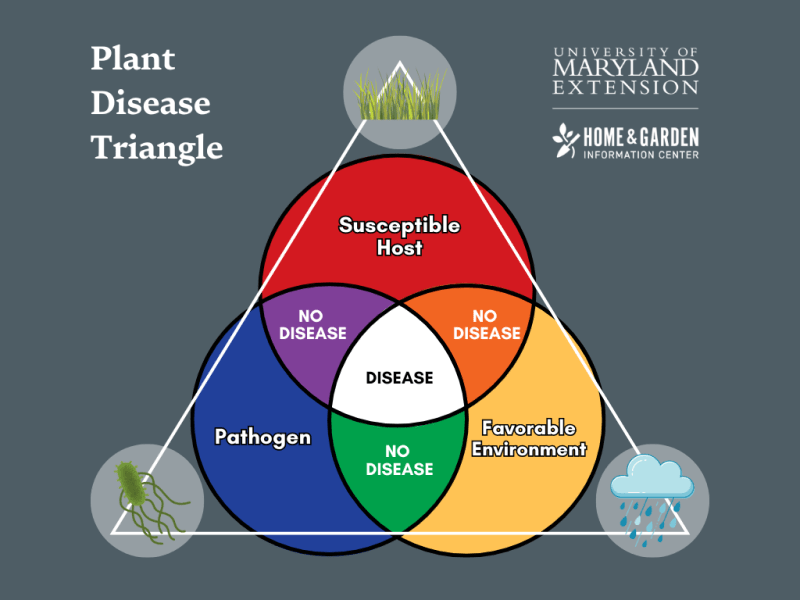
Disease triangle

Plant diseases require three components to align. If any one of these aspects isn’t favorable, significant disease will not develop:

Diagram of three overlapping circles arranged in a triangular layout. The circles represent the host plant, pathogen, and environment; where all three overlap is the potential for disease.
Disease triangle diagram. Created by Emily Clark Waterson
  • The pathogen must be present and infectious.
  • The host plant must be susceptible to infection.
  • The environmental conditions must be favorable for infection to take place.

Conditions which make the grass more susceptible to infection, or which make the environment more favorable for fungal spread, include:

  • Compacted soil and poor drainage
  • Drought stress
  • Excess moisture from high humidity, dew, periods of rain, or frequent irrigation
  • Thatch buildup
  • Herbicide exposure damage (phytotoxicity)

How to discourage infection

In addition to weather, lawn care has a big impact on the likelihood or severity of a fungal outbreak. Follow recommended practices specific to your grass type to minimize the risk of disease and to keep turfgrass vigorous enough to recover from infection: Maintaining an Established Lawn. Management tactics specific to particular diseases are noted in the fungus profiles.

Soil nutrients

  • Apply nutrients with moderation. Grass growth rate and vigor weakens when roots don’t have enough nutrients. (Since standard soil testing doesn’t measure the nitrogen level, refer to the recommended nitrogen application rates.) Fertilizer can help the grass outgrow damage from disease, because fresh growth has more uninfected leaf area. Insufficient nitrogen can make grass more vulnerable to infection by dollar spot, red thread, and rust fungi.
  • Do not overfertilize. Applying too much nitrogen (especially in water-soluble quick-release form) stimulates more succulent growth than the turfgrass can defend from infection. Applications made too early in the season can force more of an overlap of this increased plant vulnerability with environmental conditions that are more conducive to fungal spread. Excess nitrogen can make grass more vulnerable to infection by brown patch, gray leaf spot, and large patch fungi.

Mowing

  • Mow at the recommended height. Avoid long pauses in mowing: cutting off too much of the grass at once weakens the plants by reducing photosynthesis and, in turn, root growth. By forcing the grass to use more energy reserves to regrow, this limits its ability to recover from damage.
    • To support foraging pollinators, there are more effective and sustainable alternatives to leaving a lawn unmown so dandelions or other plants can bloom. To transition a tall lawn back to typical mowing height, keep the first trim high, with the goal of removing no more than a third of the grass’s height. Gradually lower the height with each trim until the lawn is back to its typical height. A challenge to this approach is that home mowers may not be adjustable enough to accommodate tall grass. A string trimmer may work; if not, the only recourse is to mow overgrown grass at the typical height and wait for it to recover.
    • Protect colonies of ground-nesting bees, which are valuable pollinators, by adjusting mowing patterns as needed to avoid disturbing them. Adult bees tend to fly to and from soil burrows during the morning or afternoon, so mowing could be temporarily shifted to earlier or later in the day when they are inactive.
  • Keep mower blades sharp. Dull mower blades tear and bruise grass leaves, giving fungi an opportunity to start infections. A good rule of thumb is to sharpen mower blades after about 10 cumulative hours of use.
Moisture

  • Do not water too often or late in the day. Leaves generally dry off more slowly overnight. The longer leaves remain wet (or exposed to very high humidity), the easier it can be for fungal inoculum to start infections. In mild temperatures, when inoculum is abundant, leaf disease outbreaks can occur when leaves remain wet for 12 to 24 hours. When inoculum levels are low, two or three recurring rain or irrigation events that keep the grass wet for 2 to 3 days at a time contribute to outbreaks.
    • Programmable lawn sprinkler systems should include a rain sensor that prevents automatic irrigation if enough rain has recently fallen.
    • An exception for watering after dark can be made if the only time the grass is expected to be damp is during overnight fog or dew. Irrigation that overlaps with that period of leaf wetness keeps the grass dry during the day, reducing the vulnerability window to less than 12 hours. With this approach, a programmed sprinkler system can begin its cycle three or more hours after sunset and finish before sunrise.
  • Core-aerate compacted areas. Improved drainage and well-aerated soil not only keep grass roots healthier but also help remove excess moisture that can keep humidity high, hindering spore or sclerotia germination.

Lawn composition

  • Grow resistant turfgrass cultivars. Locally tested and proven varieties are more resistant to disease and/or are more tolerant of stressful growing conditions. Keep disease-prone turfgrass types like perennial ryegrass and Kentucky bluegrass to a minimum in fescue grass seed mixes.
  • Keep grassy weeds to a minimum. Infected weeds may allow inoculum to build up to levels more likely to cause widespread lawn symptoms. For example, annual bluegrass, roughstalk bluegrass, and bermudagrass are susceptible to several lawn diseases.

Sanitation

  • Remove thatch when the layer exceeds half an inch. Thatch can harbor inoculum and retain moisture (due to reduced air circulation) which can encourage infection. Too thick a layer also hampers irrigation and fertilization efforts, and can encourage rooting into the thatch layer which will predispose the grass to drought stress. Kentucky bluegrass, zoysia, and bermudagrass build up thatch over time.
  • Use clean equipment and do not mow wet grass. Inoculum in the soil or on infected grass pieces can be spread around a lawn or moved from one yard to another, especially in damp conditions when the material sticks to surfaces. Lawn care companies should remove soil and debris from their equipment between clients. Core-aerate diseased areas of the lawn last so the plugs and machine tires do not spread an infection.

Avoid using fungicides

Lawn fungicide products containing active ingredients such as propiconazole, tebuconazole, azoxystrobin, mancozeb, myclobutanil, and chlorothalonil are often readily available. However, fungicides are not recommended for managing diseases in home lawns.

Brown patch

Outbreaks of this very common disease tend to be worse in rainy summers, but drier summers can have brown patch disease pressure due to evening dew. Although tall fescue is the recommended turf type for Maryland lawns (and several cultivars have improved disease resistance), most cultivars remain highly susceptible to brown patch. This disease does not kill the crown of the turf, and most tall fescue lawns will recover with autumn rains and fertilization.

Fungus responsible: Rhizoctonia solani

Season for symptoms: summer

Favorable environment: Daytime temperatures of 70 to 90°F, with overnight temperatures above 68°F; relative humidity 95% or higher, or leaf wetness for more than 10 hours

Grass types affected: all cool-season turfgrasses, especially tall fescue and perennial ryegrass

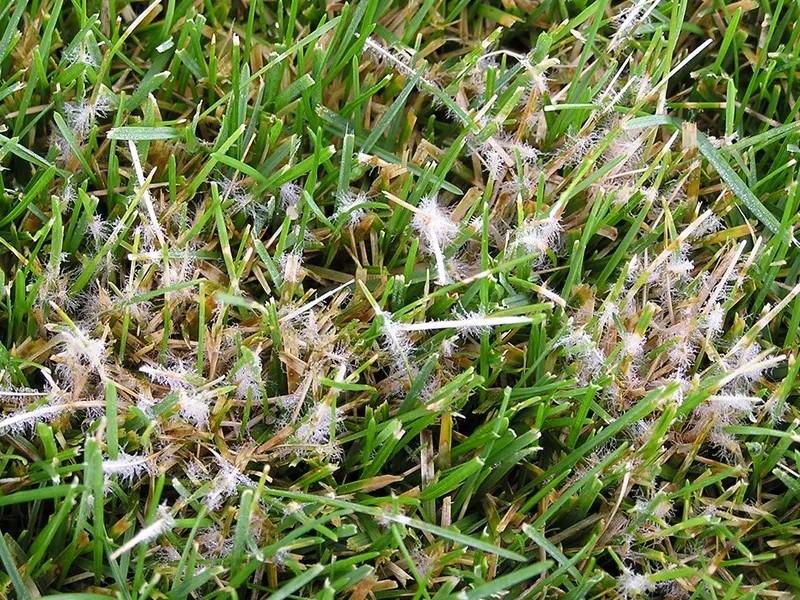
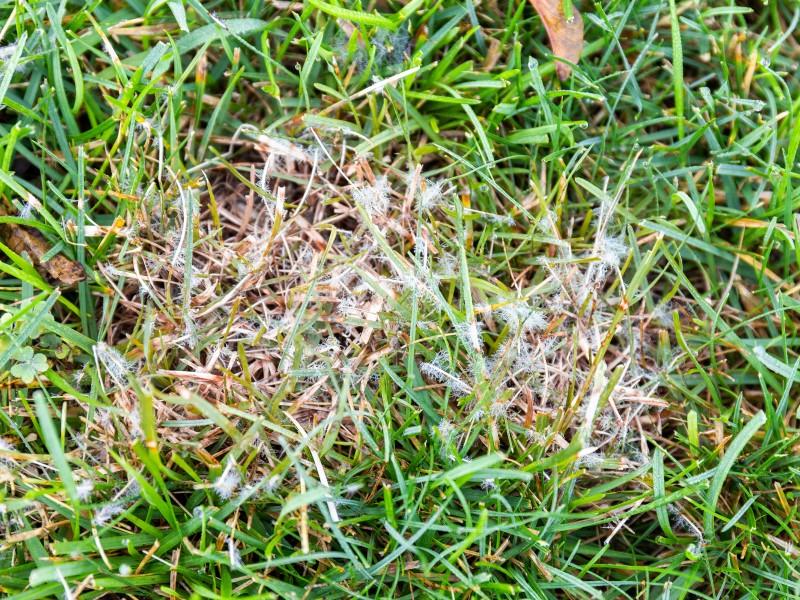
Spider web-like white mycelium growing between grass blades infected with brown patch. The blades show blotchy pale brown lesions.
Brown patch leaf spot symptoms and mycelium on tall fescue foliage.
Photo: Ward Upham, Kansas State University, Bugwood.org
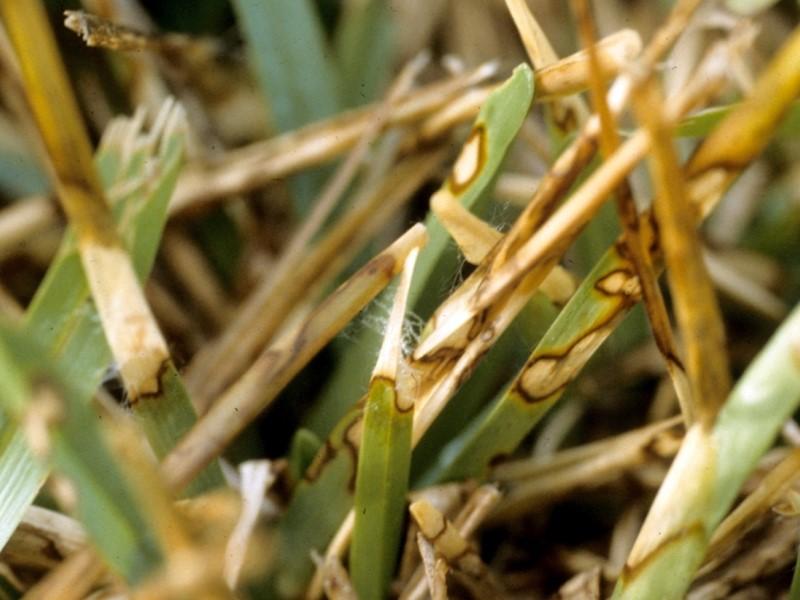
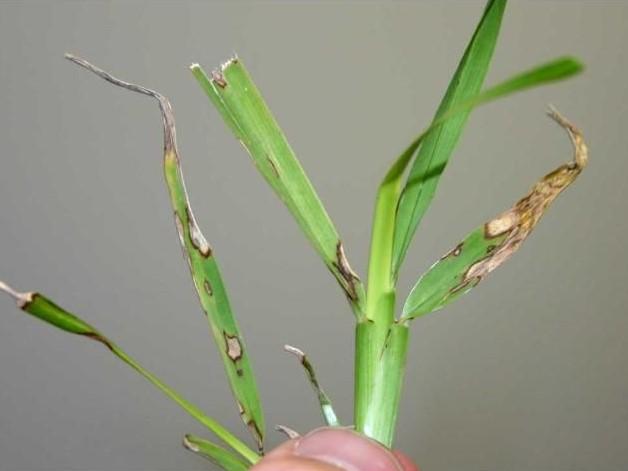
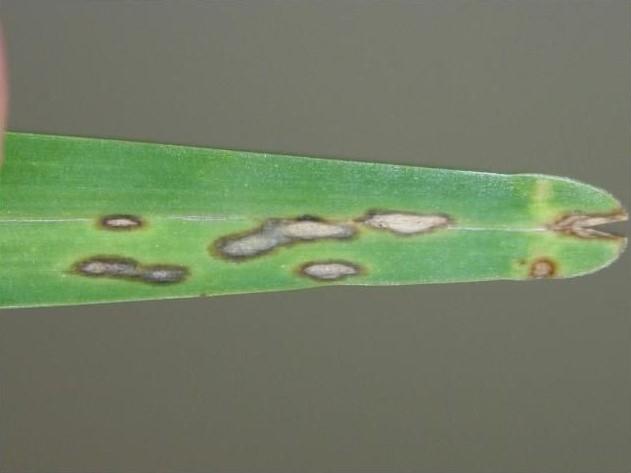
Pale brown lesions with dark brown edges on tall fescue grass blades infected with brown patch..
Brown patch lesions on tall fescue blades.
Photo: Mary Ann Hansen, Virginia Polytech. Institute and State Univ., Bugwood.org

Signs and symptoms of brown patch

  • Individual grass blades: Elongated, irregularly-shaped tan-brown lesions have darker brown borders. Threadlike tufts of white mycelium may be visible during periods of very high humidity, such as in early morning when dew has settled on the lawn.
  • Whole lawn: Circular yellow-brown patches develop in thinning turf, ranging from a few inches to a foot or more across. Distinct patches are not always evident in home lawns, especially with tall fescue. Instead, diseased grass blades are scattered throughout the lawn and cause thinning and browning of the turf.

Management of brown patch

Preventative lawn fungicides available to the general public are not very effective against brown patch. Professional lawn care companies have more effective product options, but they must be applied before an outbreak begins. Several follow-up applications of fungicide may also be needed, increasing the cost of treatment and potential for environmental harm. Fungicide is not recommended for medium- to low-maintenance lawns.

Dollar spot

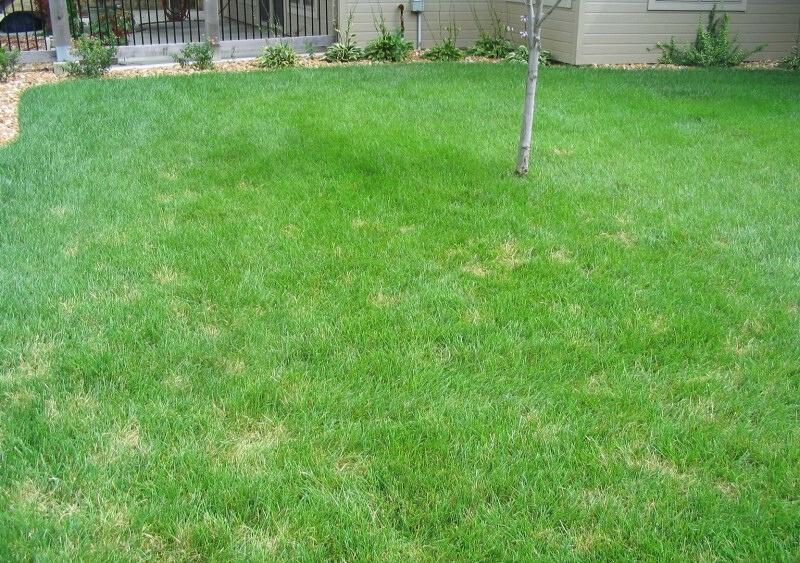
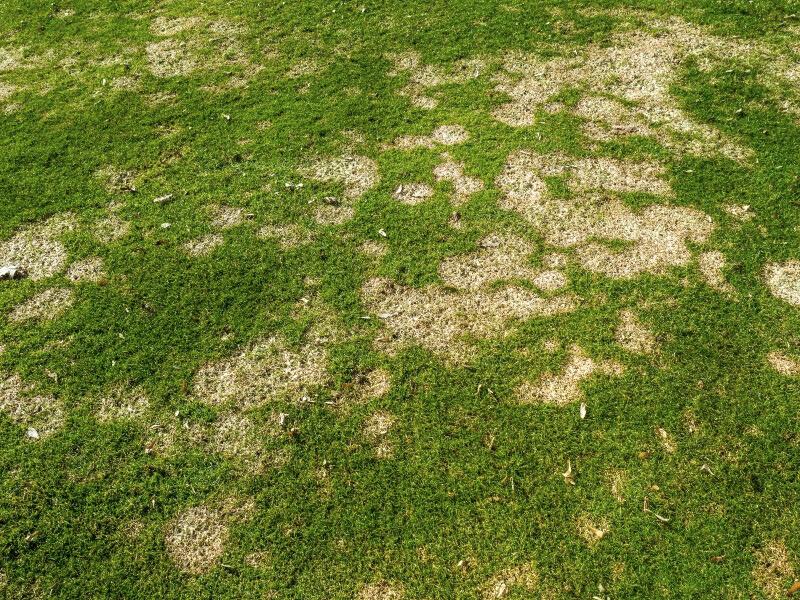
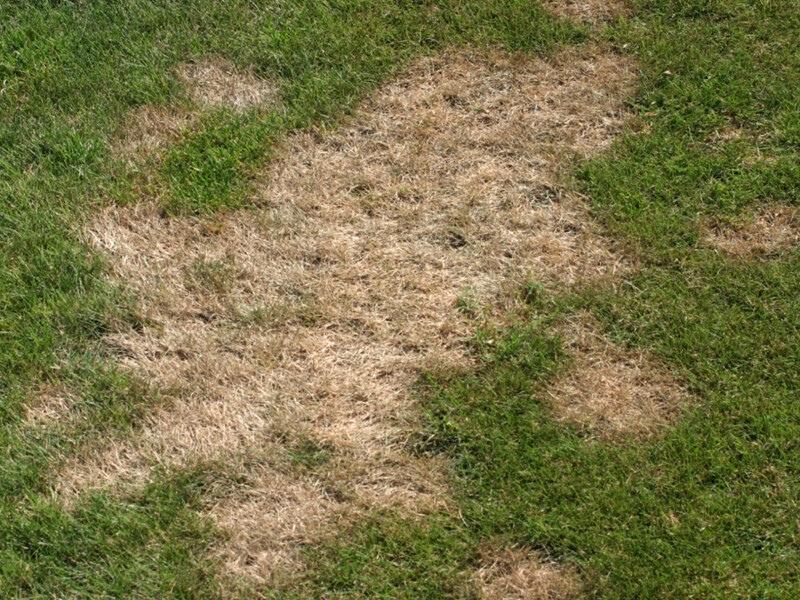
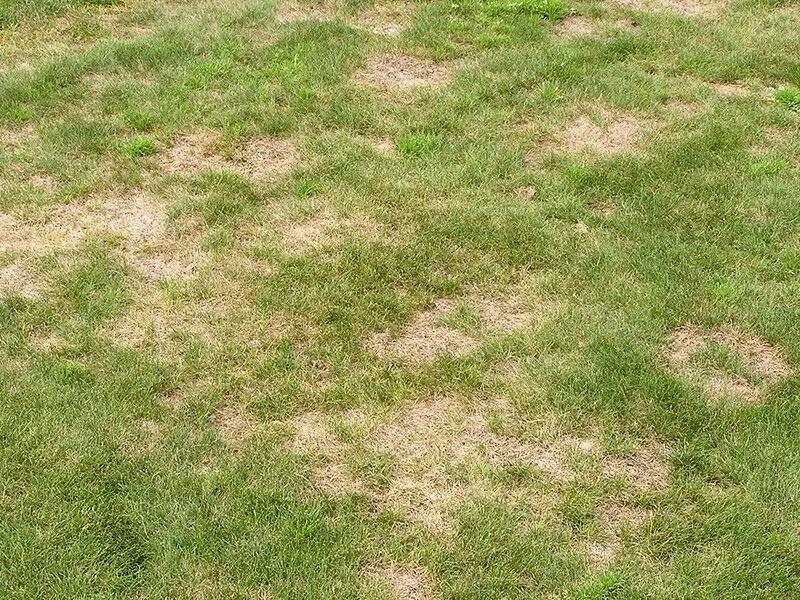
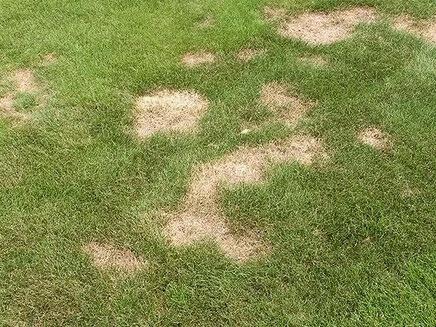
Lush green home lawn with scattered patches of pale brown turf.
Dollar spot symptoms in a lawn.
Photo: Ward Upham, Kansas State University, Bugwood.org

Fungus responsible: Clarireedia jacksonii (formerly named Sclerotinia homoeocarpa)

Season for symptoms: throughout the growing season (about May through September), though less prevalent in July and August. Symptoms may peak in late spring and early summer and again from late summer to early fall due to cooler overnight temperatures. With mild weather, the disease can appear for most of the year in Maryland.

Favorable environment: Daytime temperatures between 60 and 90°F, with cool nights; relative humidity 90% or higher

Grass types affected: all species of turfgrass grown in Maryland, but is most often found on higher-maintenance species like Kentucky bluegrass and perennial ryegrass. Tall fescue is more resistant, and the disease is less damaging if it develops. Zoysia and bermudagrass also have low susceptibility.

Signs and symptoms of dollar spot

The name of this disease reflects the typical appearance of dead spots the size of a silver dollar coin in short-mown grass like golf course greens. In home lawns, dead spots tend to be larger and coalesce into patches of dead or dying turfgrass.

  • Individual grass blades: White fungal mycelium may be visible after prolonged leaf wetness. Leaf lesions develop that have an hourglass shape (unique to this disease) and a straw-brown color with darker brown borders. Dollar spot and brown patch lesions look similar, but a key feature of dollar spot is the pinched shape of the leaf within the lesion.
  • Whole lawn: Numerous bleached-looking spots can appear, initially about the size of a silver dollar. Spots can range from 1 to 3 inches across in short-cut grass and 2 to 6 inches across in taller grass (like tall fescue).
Pale brown lesions with dark borders on grass blades infected with dollar spot. Fine white fungal threads emerge from some of the lesions.
Dollar spot leaf lesions and fungal threads.
Photo: Florida Division of Plant Industry , Florida Dept. of Agriculture and Consumer Services, Bugwood.org
Fine white fungal thready tufts emerging from brown grass blades infected with dollar spot.
Dollar spot fungal mycelium emerging from infected grass blades.
Photo: Pete Landschoot, Professor Emeritus, Penn State
Pale brown dollar spot lesions on turfgrass blades. One large lesion is pinched in the middle like an hourglass shape.
Dollar spot symptoms on Kentucky bluegrass. Note the constricted center of the pale lesion.
Photo: Barb Corwin, Turfgrass Diagnostics, Bugwood.org
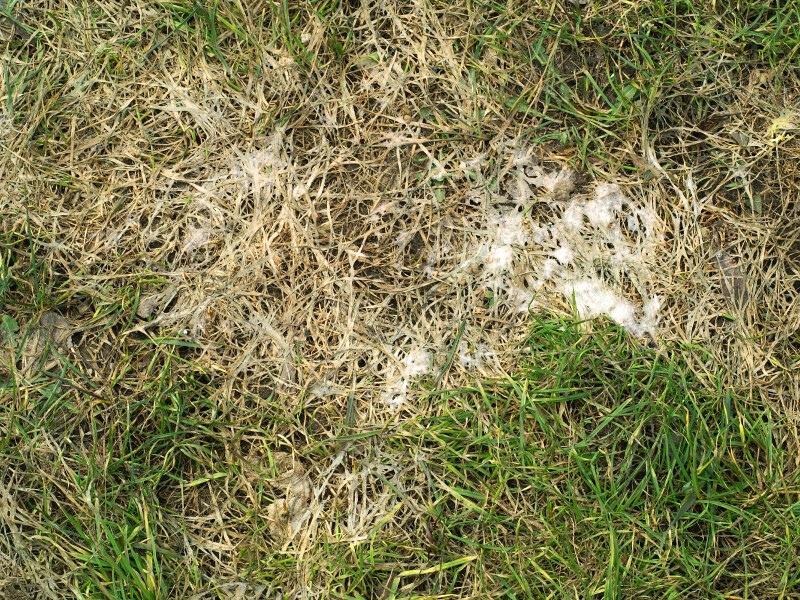
Tufts of white fungal threads emerging from turfgrass blades infected with dollar spot. The infected grass forms a pale patch in the surrounding green grass.
Mycelium in a patch of turf infected with dollar spot.
Photo by Adobe Stock

Management of dollar spot

  • A late spring or early summer application of nitrogen can mask symptoms and reduce the severity of dollar spot by helping grass grow faster than the rate of infection.
  • Biopesticide products containing live beneficial bacteria and fungi (like strains of Bacillus and Trichoderma) may suppress dollar spot fungi. However, these do not eradicate the pathogen on their own.

Gray leaf spot

Tall fescue lawns tend to recover from outbreaks of this disease better than lawns containing a high percentage of perennial ryegrass. Both grasses are much more susceptible when less than 1 year old. While the fungus might survive the winter in infected turfgrass debris, it typically recolonizes Maryland lawns via airborne spores carried up from storms in the south.

Fungus responsible: Pyricularia grisea (Magnaporthe grisea)

Season for symptoms: late summer

Favorable environment: Daytime temperatures 80 to 90°F; humid; cooler temperatures 68 to 75°F can support infection if the leaf wetness period is long (spanning about 1 to 1½ days)

Grass types affected: primarily perennial ryegrass; potentially also tall fescue (currently not widespread in Maryland)

Individual turfgrass plant with lesions from gray leaf spot infection. The lesions are scattered small pale spots with dark edges.
Gray leaf spot symptoms.
Photo: P.F. Harmon, University of Florida IFAS
Close-up of a grass blade tip infected with gray leaf spot. The centers of the small dark-bordered lesions are gray.
Gray lesion centers due to spore production.
Photo: P.F. Harmon, University of Florida Institute of Food and Agricultural Sciences

Signs and symptoms of gray leaf spot

Symptoms develop about 1 week after infection. Lesions may look similar to damage caused by brown patch and dollar spot. Put a sample of infected grass in a closed bag where the trapped moisture will encourage spores to form. Gray leaf spot will produce gray mold, unlike the cottony mycelium of the other two infections.
  • Individual grass blades: Tiny dark-colored spots become oval in shape and develop a lighter-colored center with a dark brown or purplish border, surrounded by a yellow halo. The center of the leaf spot is velvety gray when spores are produced in warm, humid weather, and dried and tan when the fungus isn’t sporulating. Merging spots can blight (kill) the leaf blade from the tip down, giving it a distinctive twisted or fishhook shape. Lesions can also form on the stem.
  • Whole lawn: Small patches may appear to be damaged from dollar spot or drought stress, but mycelium will not be visible. As they enlarge, affected areas may look like brown patch. Severe outbreaks can kill most of the lawn, and dying patches of turf can become matted and greasy-looking.

Gray snow mold (Typhula blight)

Despite the disease’s name, this fungus does not require snow cover to infect the grass, though the prolonged moisture from melting snow can create ideal conditions for infection. The fungus initially consumes dead organic matter, but under suitable conditions, it can infect live tissues such as grass blades. Crown infection is possible but unlikely, so affected turf often outgrows the damage on its own in spring.

Fungus responsible: Typhula incarnata and T. ishikariensis

Season for symptoms: late fall, winter, and early spring, while the turf is dormant

Favorable environment: Near-freezing to cool temperatures (32 to 55°F), though sclerotia can germinate around 50 to 65°F in late autumn; high moisture or humidity, such as from recent rains, heavy snow on unfrozen ground, melting snow or frost, and areas with persistent snow cover from driveway or sidewalk clearing

Grass types affected: all species of cool-season turfgrass grown in Maryland, though tall fescue and perennial ryegrass may be more susceptible than Kentucky bluegrass and fine fescue

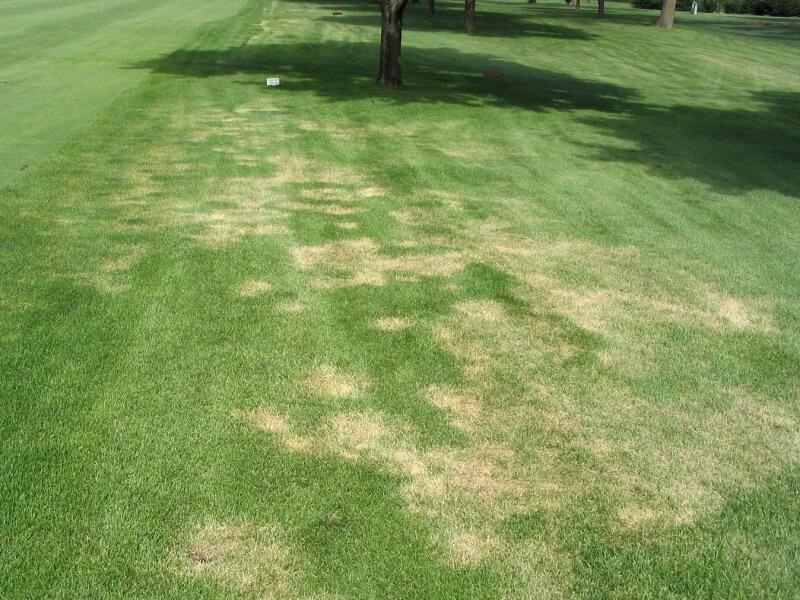
Lawn with many scattered pale circular patches of dead grass.
Gray snow mold symptoms on short-mown turf.
Photo by Adobe Stock
A patch of pale, dead turf in a lawn that has fine white fungal growth emerging from some of the debris.
White mycelium in a patch of dead grass killed by snow mold infection.
Photo by Adobe Stock
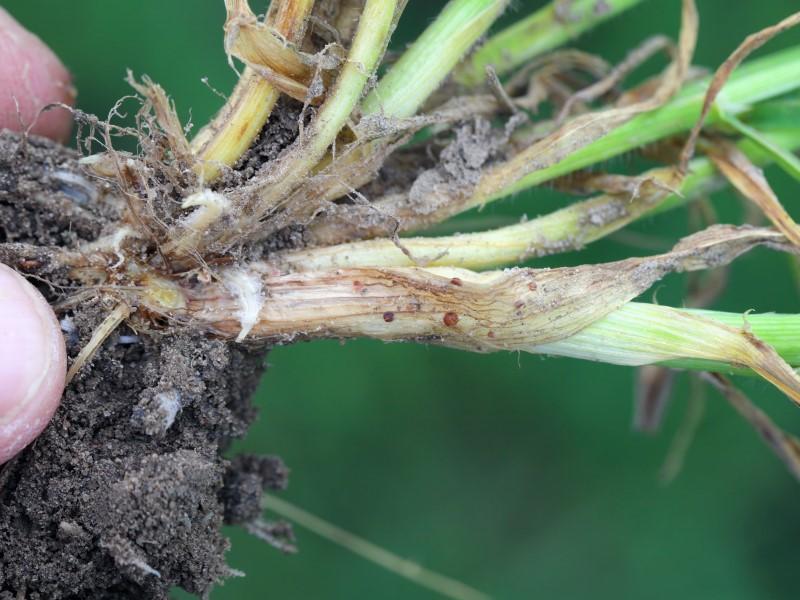
Close-up of the base of an individual turfgrass plant that has several small round reddish-brown fungal sclerotia stuck to it.
Gray snow mold sclerotia (small dark brown spheres) on a dead leaf at the base of a barley plant. Photo by Adobe Stock
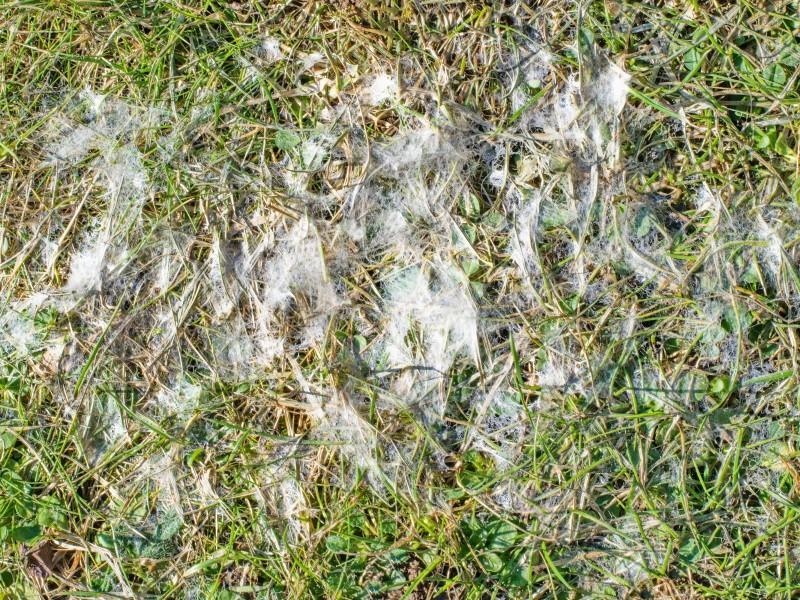
Fuzzy white mycelium growth in a patch of flattened, dead grass killed by snow mold.
Signs (white mycelium) and symptoms (dead, flattened brown grass) of snow mold in a lawn. Photo by Adobe Stock

Signs and symptoms of gray snow mold

  • Individual grass blades: Matted-down, blighted, dead leaves that have become pale in color and which may be covered in white or gray mycelium. As the affected leaves dry out, they will become brittle. Mature sclerotia are dark amber- or reddish-brown to black spheres up to ⅕-inch across. They are embedded in or attached to dead grass tissue, and later fall into a thatch layer or onto the soil surface as the grass decays.
  • Whole lawn: Pale yellowish, straw-brown, or grayish patches ranging from a few inches to a couple of feet in diameter. After snowmelt, blighted patches may look bleached due to the light color of the dead grass blades.

Management of gray snow mold

  • Encourage the rapid drying of turf after rain or snow in cold weather. Avoid walking on a snow-covered lawn so the snow doesn’t compact, which will slow melting and extend conditions in which snow mold can thrive.
  • Do not apply lime to soils that do not need a pH adjustment, as alkaline soils can favor the development of snow mold.
  • Do not over-fertilize cool-season lawns in autumn (especially with nitrogen), which encourages too much lush growth that is more easily infected.
  • As long as turf is actively growing, keep mowing in autumn so the grass blades don’t get too long. Tall blades can mat-down under snow or a thick layer of fallen leaves and be slow to dry.
  • Remove fallen leaves from the lawn if the layer is thick so they don’t mat down turf and trap moisture. When possible, keep fallen leaves intact and shift them onto garden beds (where they provide valuable resources for wildlife) or compost them. Another option is to shred them in place with a mower, so the finer pieces won't smother the grass. However, shredding leaves can greatly reduce their wildlife value and harm animals that shelter in them.

Large patch

This is the same pathogen that causes brown patch disease in cool-season turf. When it infects warm-season turf, the disease is instead called large patch (sometimes zoysia patch). Seed-sown cultivars of zoysia may be more susceptible to infection than zoysia cultivars planted as plugs.

Fungus responsible: Rhizoctonia solani (a different strain from brown patch)

Season for symptoms: spring and autumn, around the time warm-season grass growth begins and ends for the season

Favorable environment: Daytime temperatures of 68 to 77°F; high humidity or rainy periods

Grass types affected: zoysia and bermudagrass

Large brown patches of infected turf in a zoysia lawn.
Large patch symptoms in a zoysia lawn.
Photo: Matthew Zidek, Texas A&M Agrilife Extension Service, Bugwood.org
Large diffuse patch of brown dying turf in a zoysia lawn.
Large patch damage to a zoysia lawn in spring.
Photo: Joseph A. Roberts, Clemson Extension

Signs and symptoms of large patch

Zoysia lawns generally mask symptoms or outpace infection during periods of vigorous summer growth.

Close-up of a large patch lesion on a zoysia grass blade. The pale brown lesion has dark edges.
Large patch lesion on a zoysia leaf blade.
Photo: Clarissa Balbalian, Mississippi State University, Bugwood.org
  • Individual grass blades: Lesions on the leaves are less common than with brown patch, but they may be present on leaf sheaths closer to the crown and have a reddish-brown or black color. The grass blades can die from the tip down, or they may develop basal rot rather than leaf blight.
  • Whole lawn: Patches may be several feet in diameter. Symptoms typically appear 2 weeks to 2 months after growth begins in the spring, and may recur in the same area for several years. By autumn, patches might be mixed with live regrowth. Occasionally, dying grass in a patch may turn yellow-orange, starting with the oldest leaves

Management of large patch

  • Knock dew drops off the lawn by dragging a garden hose (not turned on) across the grass. Mowing can also remove dew, but the wet grass can clump and interfere with mulching mowers.
  • Fungicides available to the general public are not very effective against large patch. Professional lawn care companies may offer more effective products, but they must be applied before an outbreak becomes severe. Several follow-up applications of fungicide may also be needed, increasing the cost of treatment and potential for environmental harm. Fungicide is not recommended for medium- to low-maintenance lawns.

Powdery mildew

White-coated blades of turfgrass infected with powdery mildew.
Powdery mildew on turfgrass. Photo: N. Gregory, University of Delaware

This is a common fungal disease of grasses grown in too much shade. The infection is named for the white powdery coating on the foliage. Grasses infected with powdery mildew often succumb to other problems, like drought or cold overnight temperatures.

Although a wide variety of other plants can contract powdery mildew, those infections are caused by different species. (For example, a powdery mildew outbreak on the leaves of a rose or cucumber growing near a lawn is not the source of an outbreak on the grass.)

Fungus responsible: Blumeria graminis (formerly named Erysiphe graminis)

Season for symptoms: primarily spring and early autumn because the infection is favored by cool, humid conditions

Favorable environment: Cloudy, with cool temperatures in the 55 to 70°F range; moderate to high humidity; poor air circulation; too much shade

Grass types affected: primarily Kentucky bluegrass

Signs and symptoms of powdery mildew

  • Individual grass blades: Small white patches develop on the leaves and sheaths; the coating may look like flour or powdered limestone. Older leaves tend to be more severely affected than younger leaves, and infected grass blades gradually turn straw-colored and brown as they die.
  • Whole lawn: Patches of white mildew-coated grasses can quickly enlarge and spread in shaded lawn areas.

Management of powdery mildew

  • For sites that don’t receive enough direct sun, select shade-tolerant grass cultivars or use lawn alternatives.
  • Mow turf at the recommended height and avoid other stressors, such as drought and low soil fertility (under-fertilization).
  • Improve air circulation where possible, such as by trimming shrub branches that arch over the lawn. Even though powdery mildew spores are wind-dispersed, good air movement helps to lower humidity levels around leaves, which discourages infection. Monitor lawn areas with reduced airflow near walls and solid fences for the early signs of an outbreak. Consider replanting these areas with lawn alternatives if mildew outbreaks become common.

Red thread

This is a common fungal disease on cool-season turfgrass.

Fungus responsible: Laetisaria fuciformis

Season for symptoms: most frequently in early spring and autumn, and occasionally during the summer under prolonged cooler rainy periods

Favorable environment: Cooler temperatures (in the 65 to 75°F range, often in April), though fungal growth is possible between near-freezing temperatures and 86°F

Grass types affected: tall fescue, fine fescue, perennial ryegrass, Kentucky bluegrass

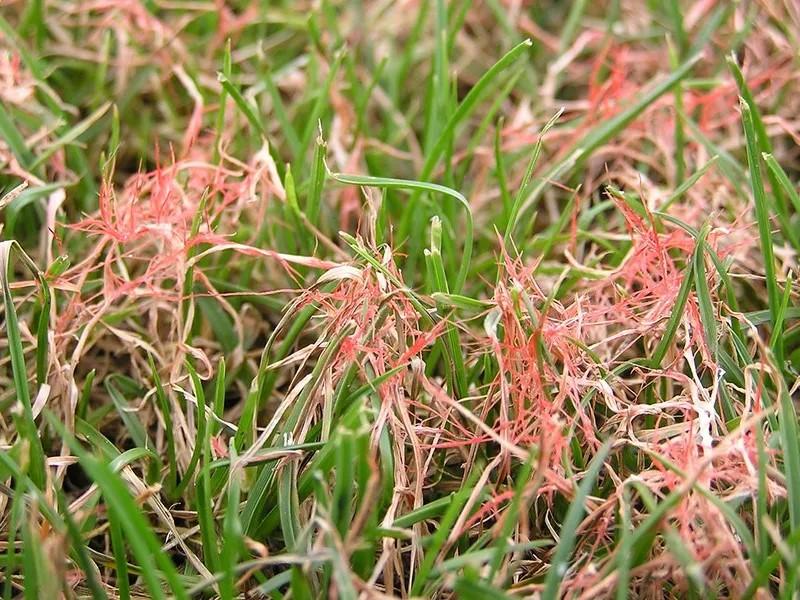
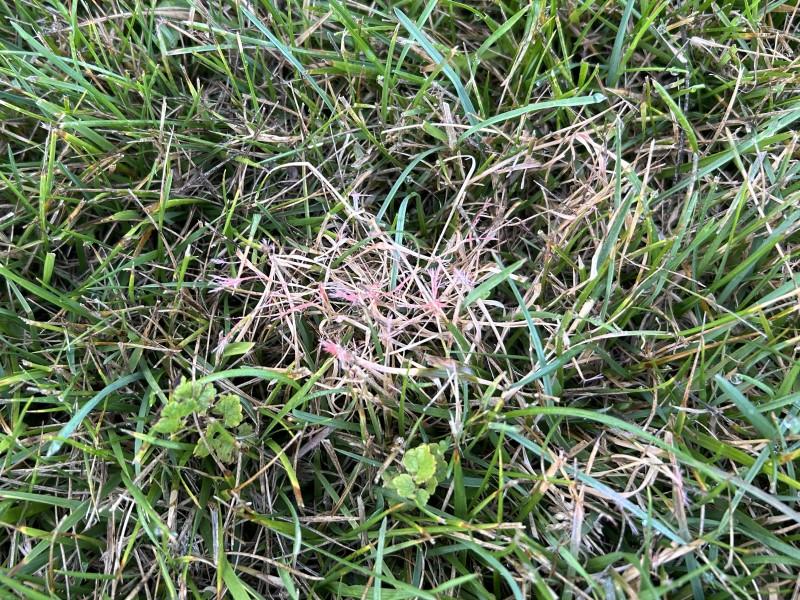
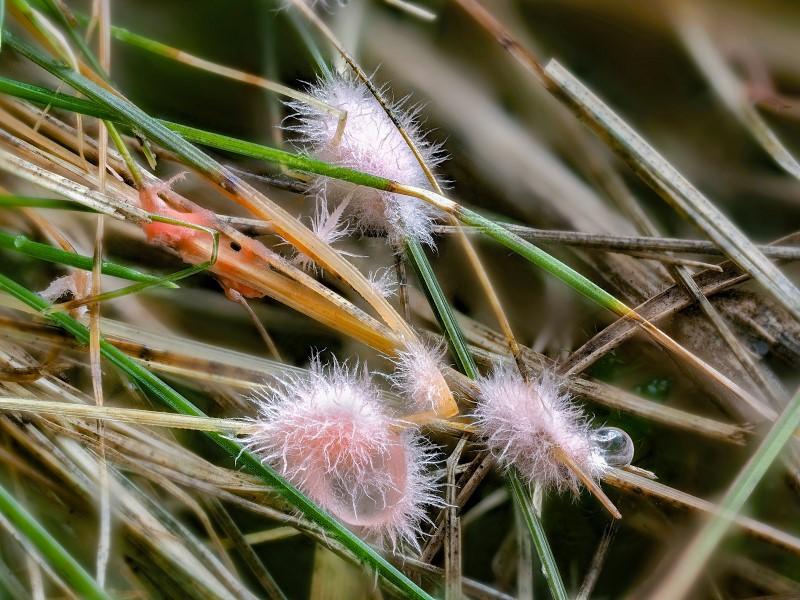
Patch of brown dying grass with thready pink fungal growth due to a red thread infection.
Turfgrass dieback from red thread infection. Fine pink filaments emerge from some of the brown blades. Photo: HGIC
Reddish-pink stringy growths emerging from the tips of brown, dead turfgrass blades killed by red thread infection.
Pinkish-red fungal mycelium of a red thread infection..
Photo: Pete Landschoot, Professor Emeritus, Penn State
Patch of lawn infected by red thread fungus, with fine pink fungal filaments attached to the grass blades.
Signs of red thread mycelia in a tall fescue lawn.
Photo: David Clement, University of Maryland Extension
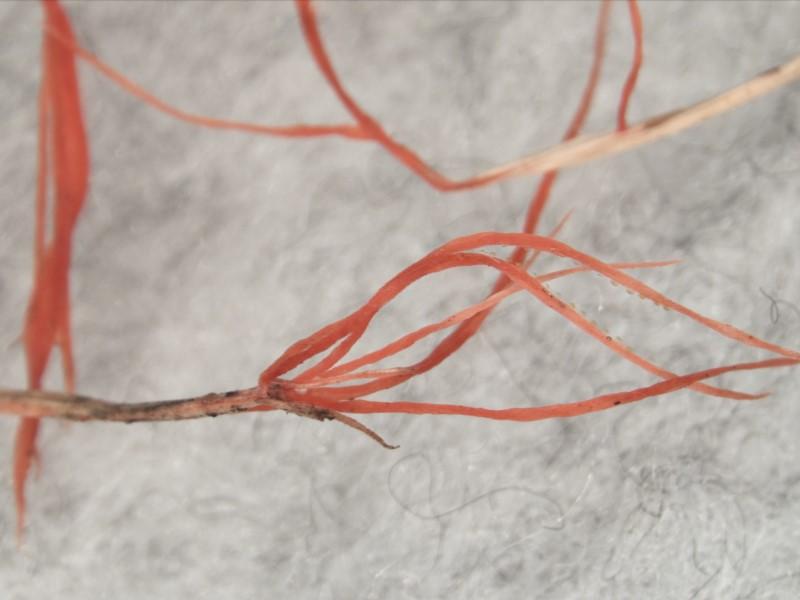
Microscopic view of reddish thready fungal growth emerging from a dead grass blade.
The namesake reddish thread-like sclerotia emerging from dead grass blades. Photo: David Clement, University of Maryland Extension

Signs and symptoms of red thread

Under optimum conditions of wet, cool weather, the fungus will produce characteristic reddish strands that fall off onto the soil or thatch layer. These serve as resting structures (sclerotia) awaiting the next infection period.

Close-up of pink threadlike tufts of fungal growth emerging from dead turfgrass blades infected by red thread.
Pinkish mycelium of a red thread infection.
Photo by Adobe Stock
  • Individual grass blades: Initially, small areas of blight (dying tissue) expand rapidly from the leaf tip downwards. As the infection progresses, short, reddish, gelatinous growths can be seen on the outer surfaces of leaf blades and sheaths. When the leaves dry as they die back, the fungal growth becomes a paler pink or red, and extends outward from the leaf tips as hard, brittle, threadlike strands.
  • Whole lawn: Infected turf has circular to irregularly-shaped patches, ranging from about 12 to 18 inches in diameter, with a straw-brown or pinkish-tan color.

Management of red thread

This disease is more damaging to under-fertilized turf. Often, applying fertilizer can reduce disease severity, especially with water-soluble nitrogen sources. However, excessive fertilizer use can cause increased disease susceptibility.

Video: Red Thread Disease in Lawns

Rust

Rust infections usually do not kill the grass, but they can weaken it to the point where other environmental stresses or secondary infections can cause dieback.

Fungus responsible: Several species of Puccinia and Uromyces

Season for symptoms: Primarily late summer and early autumn, though possible throughout the growing season

Favorable environment: Air temperatures between 65 and 80°F; too much shade

Grass types affected: Given the right conditions, rust infections can affect most of the turfgrass types grown in Maryland.

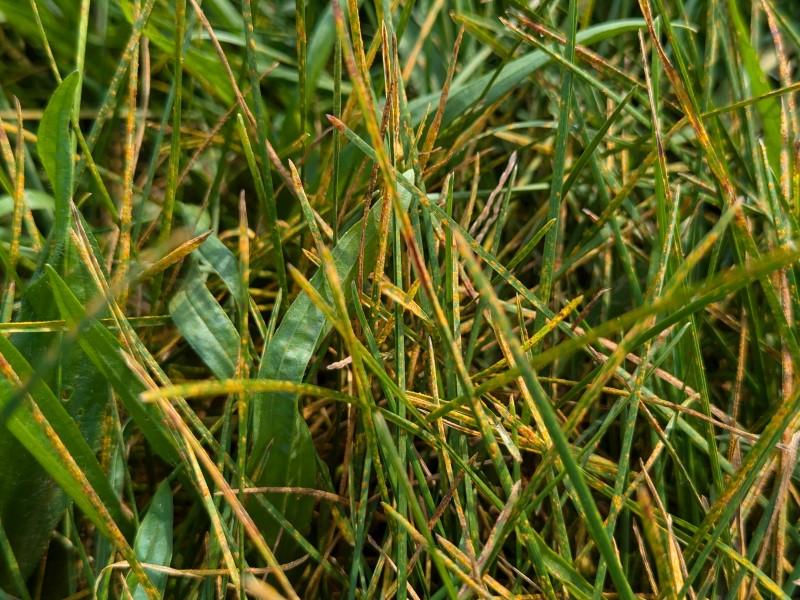
Powdery orange specks coating the foliage of turfgrass infected with rust.
Prominent rust spores on turfgrass.
Photo: Miri Talabac, University of Maryland Extension
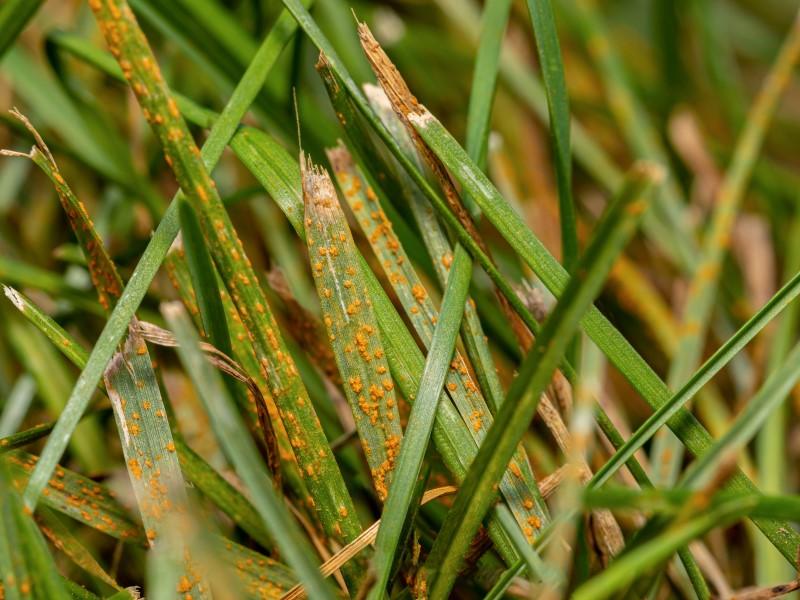
Close-up of orange spore clusters emerging from the leaf blades of rust-infected turfgrass.
Orange rust spores on grass blades.
Photo by Adobe Stock

Signs and symptoms of rust

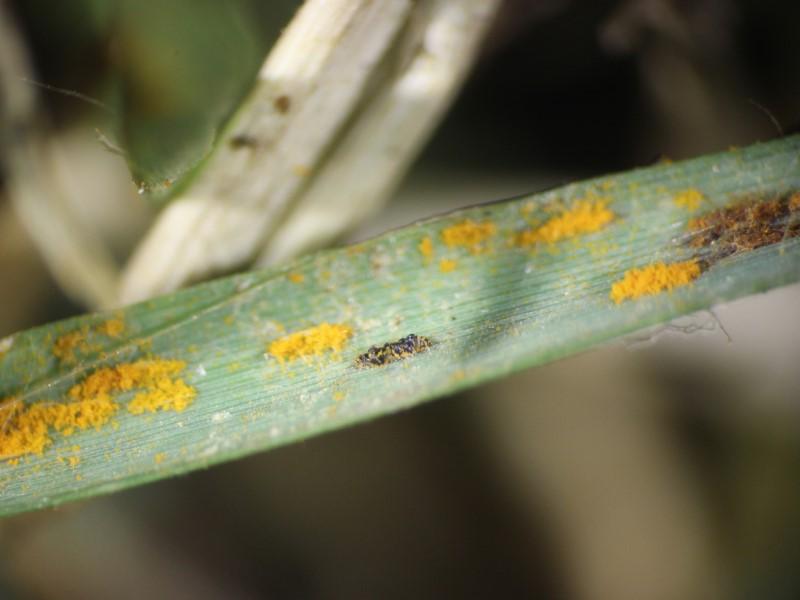
Magnified view of clusters of orange rust spores emerging from an infected grass blade.
Rust spores on a grass leaf blade.
Photo: Clarissa Balbalian, Mississippi State University, Bugwood.org
  • Individual grass blades: The first symptoms appear as yellow to orange spots on leaves and stems. These spots enlarge and cause elongated lesions that produce powdery orange, reddish, or brownish spores. These spores rub off easily on hands, shoes, and clothing.
  • Whole lawn: Severely infected areas of the lawn will have a yellowish or orange appearance and become sparse due to low grass vigor.

Summer patch

Summer patch disease infects the crown and roots of the grass. While the fungus may grow around turfgrass roots at any point in the growing season, disease tends to develop only after heat and drought stress the grass, so symptoms usually appear once the weather becomes hot. At that point, enough fungal growth has damaged or clogged the vessels supplying the grass blades with water that the plant dies.

As a soil-borne disease, infectious fragments of the fungus can be moved to new areas with dethatchers and digging equipment like core aerator and verticutter machines if they are not cleaned between uses.

Tall fescue lawns rarely have problems with summer patch disease.

Fungus responsible: Magnaporthiopsis poae (formerly named Magnaporthe poae)

Season for symptoms: summer (late June through September)

Favorable environment: Daytime air temperatures 85 to 95°F, with soil temperatures (at a 3-inch depth) of around 65 to 70°F or higher; high heat increases the fungus’s growth rate and stresses the grass roots, making them more vulnerable to infection; soil pH above 6.5; poor air circulation

Grass types affected: Kentucky bluegrass is the most commonly infected grass. Tall fescue and perennial ryegrass are highly resistant. Fine fescue can be vulnerable, especially creeping red fescue. Lawns about 2 years old or older are more vulnerable, though less-severe outbreaks in a lawn seeded the prior autumn is possible.

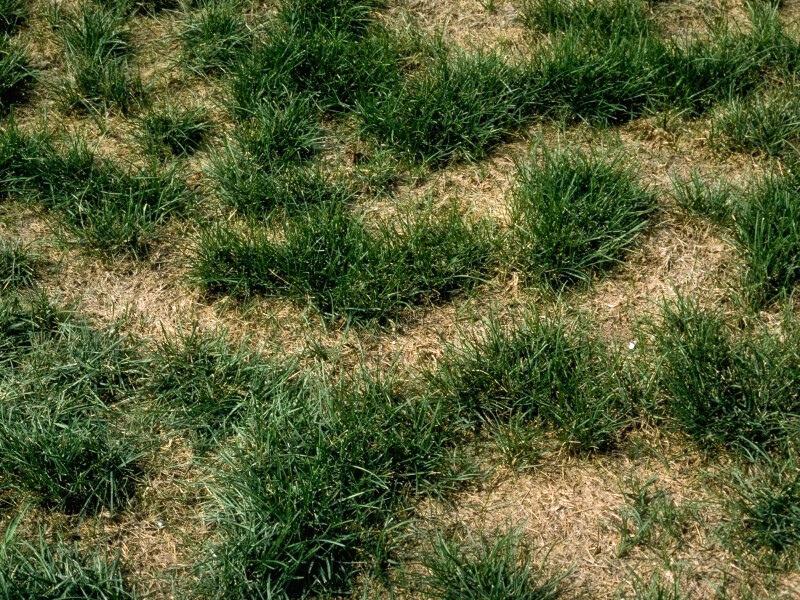
Tufts of dark green healthy grass amid patches of nearly-bare, brown areas of lawn.
Summer patch causes vulnerable turf types to die out in a mixed lawn. Tall fescue clumps remain due to resistance. Photo: Kevin Mathias, UMD
Scattered, irregular patches of brown, sparse dead turf in a green lawn.
Severe summer patch damage to a fine fescue lawn.
Photo: Pete Landschoot, Professor Emeritus, Penn State
Scattered, roughly circular, overlapping patches of pale brown, sparse turf amid a short-cut green lawn.
Summer patch symptoms on Kentucky bluegrass.
Photo: Lee Miller, University of Missouri, Bugwood.org
Irregularly-shaped patches of nearly-bare, pale brown, dead turf within a green lawn.
Summer patch damage in a lawn.
Photo: Pete Landschoot, Professor Emeritus, Penn State

Signs and symptoms of summer patch

Initial symptoms on Kentucky bluegrass are somewhat circular straw-colored patches of dead grass blades. Symptoms resemble those of dollar spot disease, as well as heat and drought stress. The patches continue to enlarge, with the outer edges yellowing or turning bronze. Fine fescue develops orange or bronze-colored patches before becoming straw-colored.

  • Individual grass blades: No distinctive lesions appear. Instead, individual leaf blades turn straw-brown, starting at the tip and progressing downwards, as would happen with drought damage.
  • Whole lawn: Patches of browning, wilting grass can range from several inches to well over a foot across. Healthy turf or weeds may survive in the middle of the patches, giving them a doughnut or bullseye appearance. Crater pits (circular depressions within the patches) may also be present. Examining dead plants by digging them out of the patch reveals blackened, rotting roots and crowns.

Management of summer patch

  • Encourage vigorous root growth to discourage summer patch disease. Deeper-growing turfgrass roots will be more resistant to heat and drought stress. Conditions that force roots to stay shallow include soil compaction and poor drainage, low mowing, and light, frequent irrigation.
  • Maintain soil pH between 5.5 and 6.0. Fertilizer formulations using ammonium forms of nitrogen can acidify the soil over time and reduce the severity of summer patch.
  • Preventative fungicide is not practical for home lawns. It is expensive (especially given the need for reapplications) and doesn’t tend to provide full control. Fungicide will not cure established infections.
Additional turfgrass diseases

Several species of fungus cause leaf spot infections or “melting out” (whole plant collapse and death) in lawn grasses, mainly among cool-season turf types. Cultivars with good disease resistance to leaf spot will probably not develop significant damage, but cultivars used in low-cost seed mixes might be more susceptible to infection.

Germinating grass seed can be vulnerable to damping-off disease in hot, wet weather, or when seed is over-irrigated, sown too densely, or over-fertilized. The pathogen blights the grass (causing rapid dieback), collapsing blades into a slimy or dried-out mat on the soil surface. Several similar fungus-like organisms can cause damping-off, such as certain species of Pythium, Fusarium, and Rhizoctonia.

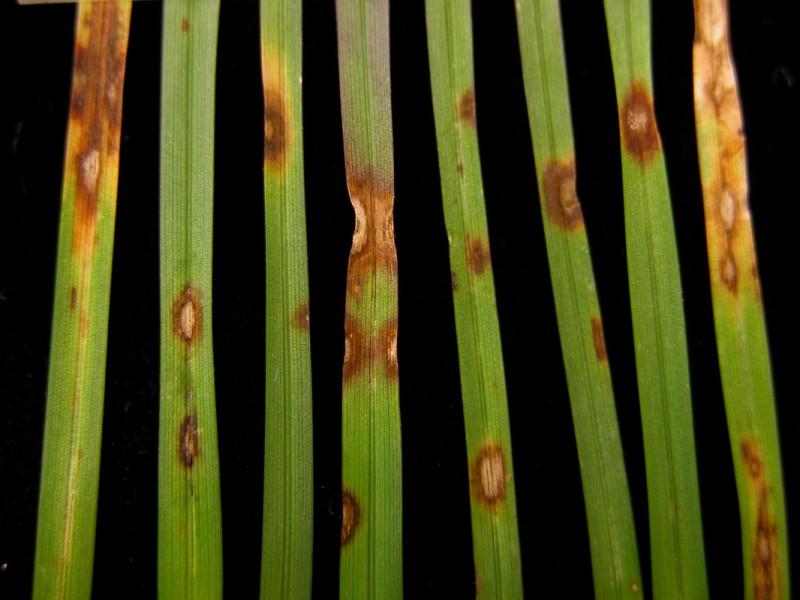
Samples of infected grass blades displaying reddish-brown, pale-centered leaf spot infection lesions.
Fungal (Drechslera) lesions on Kentucky bluegrass leaf blades.
Photo: Sabrina Tirpak, Rutgers Plant Diagnostic Laboratory
Large irregularly-shaped patch of pale brown turfgrass that died due to a root rot infection.
Pythium dieback symptoms, mainly a threat to grass seedlings in hot, wet weather.
Photo: Robert Wick, University of Massachusetts

Learn about symptoms and disease cycles in the following resources. Avoid using fungicides to reduce the risk of harm to wildlife and the environment. Preventative fungicide treatment may also be too expensive to be practical, and wet weather can interrupt repeat applications, rendering treatments ineffective. If recurring turfgrass diseases are a problem, consider replacing turf with other plantings: Lawn Alternatives

Spring (and Summer) Leaf Spot Diseases in Lawns and Sports Turf | Rutgers Cooperative Extension

Leaf Spot in Turf | NC State Extension

Net Blotch in Turf | NC State Extension

Turfgrass Diseases: Leaf Spot and Melting-Out Diseases (Causal Fungi: Bipolaris and Drechslera spp.) | Penn State Extension

Pythium Diseases of Turf | University of Massachusetts Extension

Additional resources

Links will open in a new web browser tab.

How to choose a lawn care service (PDF) | Maryland Department of Agriculture

Turfgrass Disease Profiles: Rust Diseases (PDF) | Purdue Extension

Turfgrass Disease Profiles: Summer Patch (PDF) | Purdue Extension

Gray Leaf Spot in Turf | NC State Extension

Turfgrass Disease Profiles: Gray Leaf Spot (PDF) | Purdue Extension

References

Couch, H. B. (1995). Diseases of turfgrass: Third edition. Krieger Publishing.

Smiley, R. W., Dernoeden, Peter H., & Clarke, Bruce B. (2005). Compendium of turfgrass diseases: Third edition. American Phytopathological Society Press.

Watschke, T. L., Dernoeden, Peter H., & Shetlar, David J. (1995). Managing turfgrass pests. CRC Press.

Author: Miri Talabac, Lead Horticulture Coordinator, HGIC. March 2026.

Content reviewed by:
Geoff Rinehart, Lecturer and Turfgrass Management Advisor, Institute of Applied Agriculture, August 2025.
David Clement, Ph.D., Extension Specialist in Plant Pathology, December 2025.

Copy editing by Nancy Klein, Maryland Master Gardener, December 2025.

Still have a question? Contact us at Ask Extension.