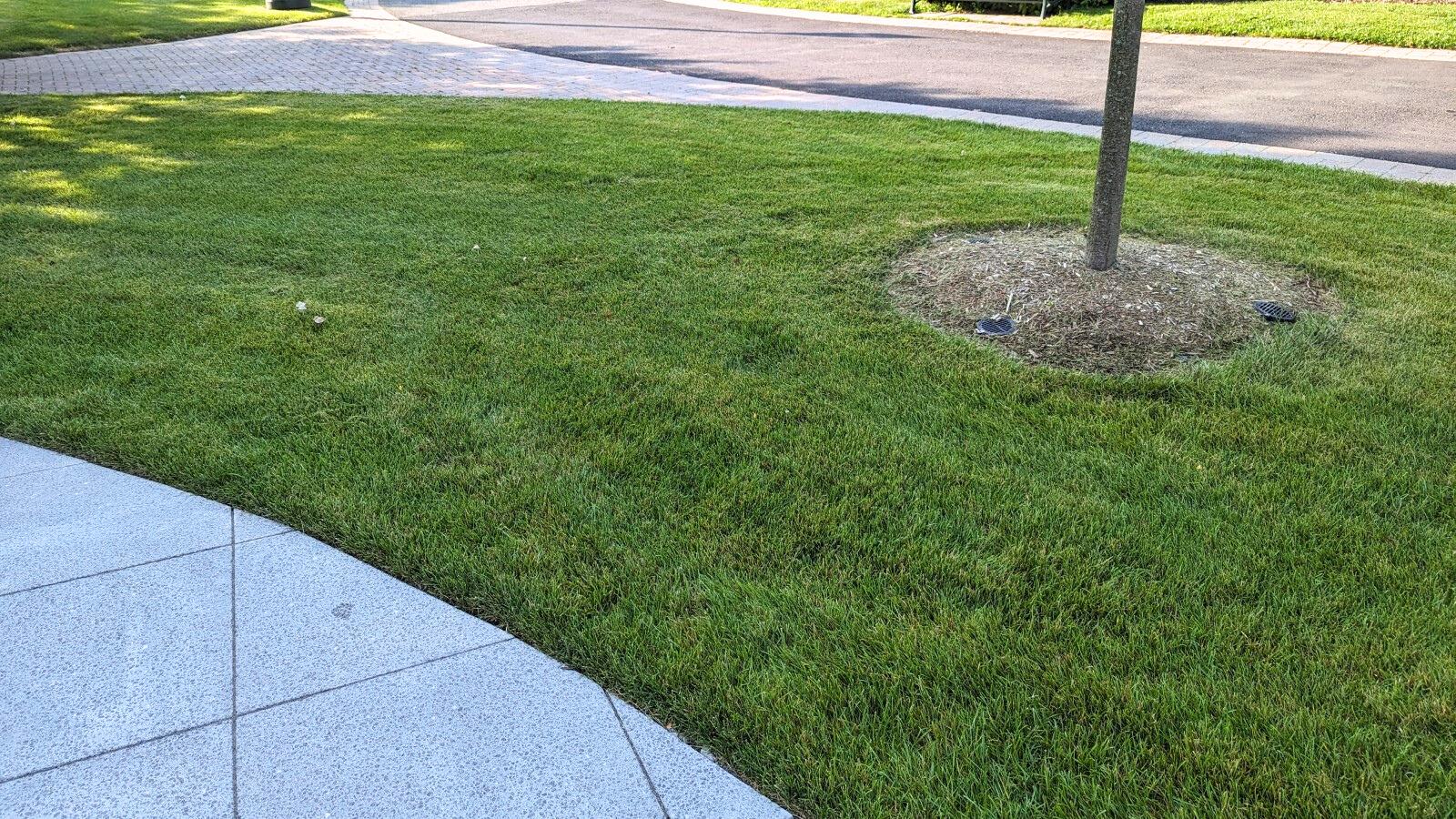
Lush, evenly-mown lawn bordered by a walkway, driveway, and neighborhood road.

Photo: Miri Talabac, University of Maryland Extension

Updated: March 16, 2026

Key points about lawn grasses (turfgrass)

  • Which type of turfgrass you grow will impact the lawn’s care and appearance over the course of the year. Turfgrass categories are based on when the plants are in active growth: cool-season and warm-season. Growth slows or plants go dormant outside of those seasons.
  • A home lawn that remains uniformly deep green and weed-free year-round is not an attainable goal in Maryland. Learn the basic traits of different lawn types to manage your expectations. The mid-Atlantic region’s transition zone climate stresses lawn grasses or triggers dormancy for part of the year, resulting in periods of slowed growth or browning.
  • Use local research to guide your choices and purchases. Trials in Maryland and Virginia test varieties of turfgrass to determine which grow best in spite of weather stress and common diseases. Recommended variety lists are updated yearly.
  • Tall fescue is the recommended lawn type for most Maryland residences, and is the most widely-grown cool-season grass in the region.
How lawn grasses grow and spread

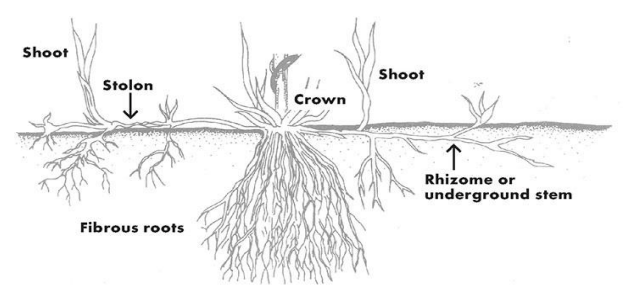
Perennial grasses live for several years and can spread as they mature. Some generate additional clumps of growth from runners, which are specialized stems that grow outwards from the parent clump. Rhizomes are runners growing below the soil surface; stolons are runners growing on top of the soil surface. Grasses that do not produce runners are sometimes called bunchgrasses, because they remain separate clumps.

The crown of individual grass plants lies at the soil surface, the location at the base of the plant where stems and foliage emerge from the roots. Shoots emerge from the crown and bear leaves (grass blades). As runners spread, they develop new crowns along their length that grow their own roots and shoots.

Turfgrass can spread by seed, but regular mowing denies plants the opportunity to self-sow.

an illustration of how groundcovers spread by stolons - rhizomes and other structures
Diagram courtesy of Dan Undersander

Cool-season turfgrasses

Grasses in this group actively grow in the mild temperatures of spring and fall and go dormant in hot summers. Summer dormancy may result in some leaves turning brown. Growth also pauses in winter due to short days and freezing temperatures.

In Maryland, home lawns typically feature four species of cool-season grasses, used either alone or in mixtures. Among them, tall fescue is most often recommended due to its adaptability and resilience.

Cool-season turfgrass comparisons

Tall Fescue

Also referred to as turf-type tall fescue (TTTF) to distinguish it from forage-type tall fescue, such as the old cultivar ‘Kentucky 31’ (K-31) that is coarser-looking, less dense-growing, and not as deep green.

Botanical name: Lolium arundinaceum (formerly named Festuca arundinacea and Schedonorus arundinaceus)

Traits:

  • Sunlight: Grows best in full sun, but tolerant of moderate shade (dappled light, not full shade)
  • Growth habit: Clumping (bunching); sometimes forms short rhizomes
  • Pros and cons: Greater overall drought tolerance and pest- and disease-resistance compared to Kentucky bluegrass, fine fescue, and perennial ryegrass. Vulnerable to brown patch disease.
  • Started as: seed or sod; seed germinates in 7 to 14 days

Kentucky Bluegrass

Botanical name: Poa pratensis

Traits:

  • Sunlight: Best growth in full sun; low tolerance for shade
  • Growth habit: Spreading, developing new clumps along rhizomes
  • Pros and cons: Spreading nature helps to keep sod rolls from falling apart and helps lawns self-repair damage by filling in small gaps. Higher-maintenance than tall fescue, with a greater vulnerability to drought, summer patch disease, and root damage from beetle grubs. Requires periodic thatch removal and more nitrogen fertilization to thrive.
  • Started as: seed or sod; seed germinates in 14 to 21 days

Fine Fescue

A group of related species with fine (slender) leaves. Botanical names:

Creeping red fescue – Festuca rubra subspecies rubra and littoralis
Hard fescue – Festuca trachyphylla or Festuca ovina variety duriuscula
Chewings fescue – Festuca rubra subspecies commutata
Sheep fescue – Festuca ovina

Traits:

  • Sunlight: Overall, good growth in both full sun and partial shade. Creeping red fescue performs better in partial shade; it will struggle in full sun (in central Maryland), developing poorer color and a clumpy appearance. Chewings fescue is the most shade-tolerant of the group; sheep fescue is the least shade-tolerant.
  • Growth habit: Chewings, hard, and sheep fescues have bunching growth habits. Chewings fescue may occasionally produce rhizomes and spread. Creeping red fescue spreads by rhizomes.
  • Pros and cons: Low-maintenance compared to tall fescue, Kentucky bluegrass, and perennial ryegrass, requiring less mowing and fertilizing (lower nitrogen requirements). More tolerance to acidic soils than most varieties of tall fescue. Low tolerance for regular foot traffic, mowing during drought or heat stress, and high rates of nitrogen fertilization. Requires periodic thatch removal to thrive.
  • Started as: seed; germinates in 7 to 14 days

Perennial Ryegrass

Botanical name: Lolium perenne

Traits:

  • Sunlight: Best growth in full sun.
  • Growth habit: Clumping (bunching)
  • Pros and cons: Quick germination and establishment reduces erosion risk when mixed with Kentucky bluegrass seed. Too disease-prone (particularly to gray leaf spot; brown patch can kill it) and not long-lived enough to be used by itself in Maryland.
  • Started as: seed; germinates in 5 to 10 days

Warm-season turfgrasses

Grasses in this group actively grow in the warm temperatures of summer and go dormant in winter. All foliage turns brown during dormancy.

In Maryland home lawns, two warm-season grasses are used. Between them, zoysia is recommended due to its vigor, low vulnerability to disease, and lower overall maintenance.

Warm-season turfgrass comparisons

Zoysia

Botanical name: Zoysia japonica

Traits:

  • Sunlight: Best growth in full sun.
  • Growth habit: Spreads by both rhizomes and stolons (above-ground runners).
  • Pros and cons: Good drought tolerance. Well-adapted to Southern Maryland, much of Central Maryland, and the Eastern Shore, but not reliably cold-hardy enough for Western Maryland. Can be damaged by heavy foot traffic during dormancy, and is slow to establish after planting.
  • Started as: plugs (rooted young plants); occasionally seed or sod

Bermudagrass

Botanical name: Cynodon dactylon

Note: This is the same species that is considered a lawn weed. Only particular cultivars of bermudagrass are grown for lawn use, bred specifically for sports fields or golf courses.

Traits:

  • Sunlight: Requires full sun.
  • Growth habit: Spreads by both rhizomes and stolons (above-ground runners).
  • Pros and cons: Not reliably winter-hardy in most of Maryland. Deep roots tolerate high foot traffic well (such as in athletic fields). May invade garden beds and neighboring lawns where it can be difficult to control.
  • Started as: sprigs (cuttings from stolons or rhizomes removed from the soil) or sod; occasionally seed

Choosing a turfgrass

Comparison guide to the primary traits of each turfgrass type
Turfgrass typeHigh Foot Traffic ToleranceDrought ToleranceFull Sun ToleranceShade TolerancePest and Disease ResistanceRelative Maintenance Level
Tall fescueGoodExcellentExcellentFairGoodLow
Kentucky bluegrassExcellentGoodExcellentPoor to fairPoorHigh
Fine fescuePoorFair to goodFair to poorGood to excellentGoodModerate
Perennial ryegrassGoodPoorExcellentPoor to fairFairModerate
ZoysiaGoodExcellentExcellentPoorGoodModerate
BermudagrassExcellentExcellentExcellentPoorGoodModerate

Some turfgrasses are sold already inoculated with endophytes – beneficial fungi that live inside their tissues. Endophytes can enhance a grass’s resistance to insect feeding and environmental stresses, such as drought. For example, high endophyte levels in perennial ryegrass, tall fescue, and fine fescue improve their resistance to sod webworm and chinch bug damage.

Lawn challenges in the transition zone

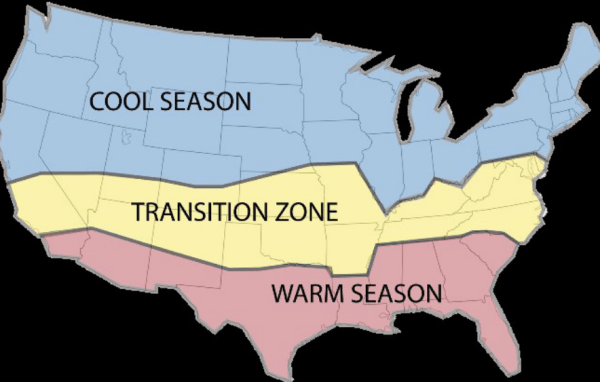
Maryland is located in a climate transition zone, where temperate and subtropical climates meet. Cool-season turfgrasses are adapted to temperate climates, while warm-season grasses grow best in subtropical regions. Both cool- and warm-season turfgrasses can grow in Maryland, but our climate is not favorable for either group of grasses throughout the entire year.

Periods of stressful conditions for the grasses present a constant challenge to maintaining a healthy and vigorous lawn. Climate change is shifting patterns of precipitation and temperature trends, but Maryland will remain in this zone of less-than-ideal turfgrass conditions.

Learn more about managing expectations and changing perspectives on lawn performance: The Challenge of Growing a Lawn in Maryland

Map of the continental U.S. overlaid with three zones denoting areas for cool-season lawns in the northern states, warm-season lawns in the southern states, and transition zone between them.
Zones of best turfgrass growth for each main turf type, cool-season and warm-season. Maryland lies in the transition zone between the two. Graphic: Marketing and Agricultural Communications, UK Martin-Gatton College of Agriculture, Food and Environment

Recommended turfgrass cultivars for Maryland lawns

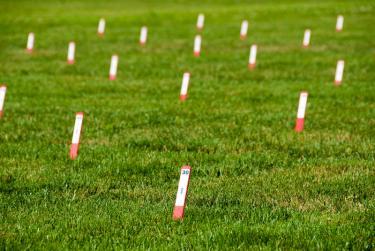
Expanse of turfgrass with rows of variety labels on stakes.
Turf variety test plots. Photo: University of Maryland

As with ornamental and edible plants, new varieties (cultivars) of turfgrasses are continually being developed and introduced by turfgrass breeders. Major producers of turfgrass seed for the lawn industry are often located far from Maryland. Their conditions do not match our local climate or unique mix of pest and disease challenges.

University testing is conducted in Maryland and Virginia to determine which cultivars are the most suitable for local conditions. Test plots are evaluated over multiple years, with assessment results released annually.

Explore the most recent edition of this publication (PDF): Recommended Turfgrass Cultivars

Buying recommended turfgrass cultivars

For the most resilient lawn, choose a product that incorporates one or more of the recommended cultivars, where possible. Stores and suppliers based in the Chesapeake region will likely provide more locally suitable options based on those trial results than nationwide chain stores or websites. (Check garden centers, turf supply stores, specialty seed suppliers, or farm supply stores.)

Seed

Grass seed packages have a label or tag listing the seed type(s), including any specific cultivars. Packages labeled “Maryland Certified Seed” are tested for germination and purity by the Maryland Department of Agriculture (MDA). Buy high-quality seed; poor-quality seed is lower in viability and can contain weed seeds or undesirable grass species.

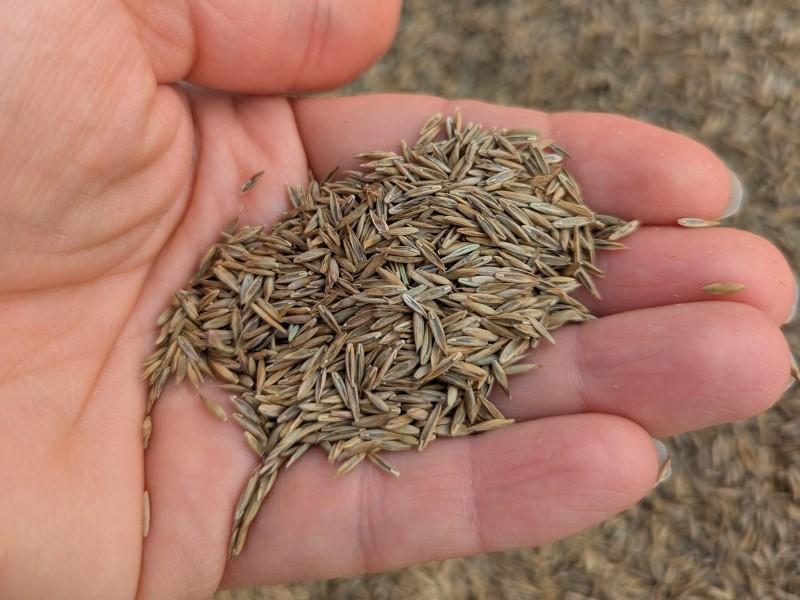
A person's hand holding a small pile of turfgrass seed.
Turfgrass seed. Photo: Miri Talabac, University of Maryland Extension
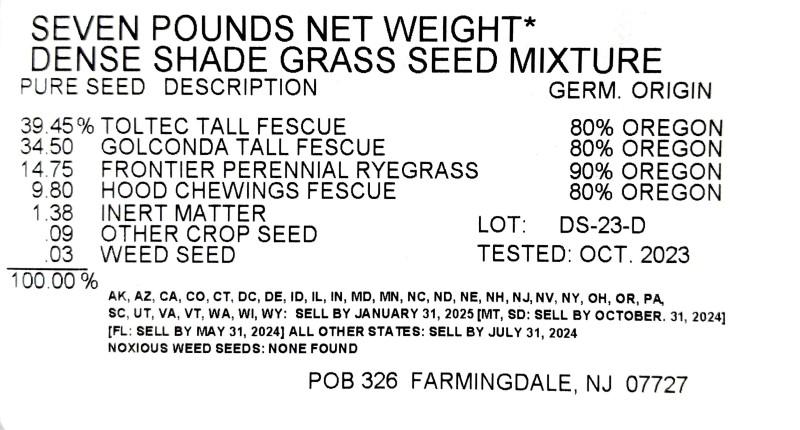
Label from a bag of turfgrass seed listing the ingredients and origin of the varieties.
Sample label from a bag of grass seed.
Photo: Miri Talabac, University of Maryland Extension

Interpreting the seed label

Label information should include:

  • Seed blend or mixture name created by the seed supplier
  • Lot number used to track seed information back to the original site of production
  • Purity is the percentage by weight of each type of grass in the mix
  • Type of grass and cultivar name
  • Germination rate is the percentage of pure seed that is viable and expected to grow; should be at least 70%
  • Germination test date (month and year) to determine seed freshness. Use seed within one year of purchase (or 18 months of the harvest date, if given) for a high germination rate. The percentage of viable seeds decreases as they age. Fine fescue seed in particular ages rapidly, and seed two or more years old may not germinate.
  • Origin of the seed (where it was grown and harvested). Oregon's ideal weather conditions for cool-season grass seed production make it a large producer of high quality turfgrass seed.
  • Name and address of seller or supplier
  • Other ingredients that should be as close to zero as possible
    • Inert matter is part of the mix but will not grow, and includes chaff (seed husks), soil, and debris.
    • Percentage by weight of other agriculture crop seeds or undesirable grass seed. This number should be no higher than 0.5%. Avoid purchasing seed that contains annual ryegrass (Lolium multiforum), also called Italian ryegrass. Used in inexpensive grass seed, it only lives for one year and makes it difficult for the desired grass to establish.
    • Percentage by weight of weed seed. Avoid purchasing seed that lists any amount of noxious weeds.

Certified seed is available at select locations, including garden centers, turf supply stores, specialty seed suppliers, and farm supply stores. They typically contain one or more cultivars from the recommended list. If Maryland Certified Seed cannot be located, inspect labels for the type of grass, variety, percentage of weed seeds, and percentage of noxious weeds.

Bags of cool-season grass seed often contain a mix of grass types. Mixes are combinations of at least two grass species (such as tall fescue with fine fescue), and blends are combinations of three or more cultivars within one species. Combinations take advantage of genetic diversity to make the lawn more vigorous and stress-resistant. Seed mixtures are a good option if growing conditions vary throughout the yard.

  • Tall fescue should be the largest portion of a mix. For high-traffic areas, aim for 90 to 95% tall fescue with 5 to 10% Kentucky bluegrass. Spreading bluegrass roots help the turf recover from injury.
  • Fine fescue (especially hard fescue) may be included for some shade tolerance.
  • Both perennial ryegrass and Kentucky bluegrass should each consist of no more than 5 to 10% of the mixture, since their susceptibility to problems outweighs their benefits above that amount.

Sod

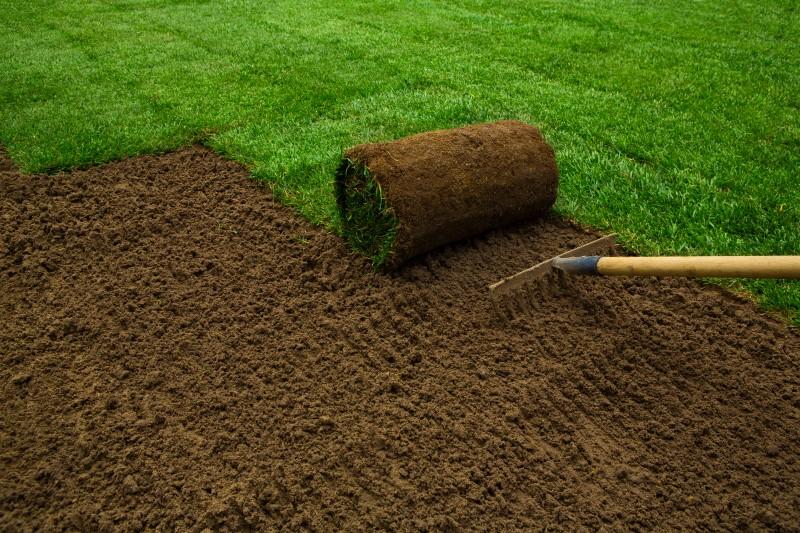
Piece of turfgrass sod being unrolled onto bare soil that has been raked level.
Photo by Adobe Stock

Certified sod is free from weeds and undesirable grasses, and is produced under the supervision of the MDA. Sod fields are inspected before being seeded as well as during sod production.

The majority of sod produced locally is a mixture of tall fescue and Kentucky bluegrass. The spreading growth habit of the Kentucky bluegrass knits the sod together, and comprises about 5-10% of the mix. Sod containing only Kentucky bluegrass, zoysia, or bermudagrass can also be found. Farms producing certified sod are listed in the MDA’s Maryland Certified Sod Directory (PDF).

Additional resources

How to choose a lawn care service (PDF) | Maryland Department of Agriculture

Author: Miri Talabac, Lead Horticulture Coordinator, HGIC. January 2026.

Content reviewed by:
Geoff Rinehart, Lecturer and Turfgrass Management Advisor, Institute of Applied Agriculture, August 2025.
David Clement, Ph.D., Extension Specialist in Plant Pathology, December 2025.

Copy editing by Nancy Klein, Maryland Master Gardener, December 2025.

Still have a question? Contact us at Ask Extension.