Grass needs routine care to remain healthy, compete with weeds, and recuperate from damage caused by drought, diseases, pests, and foot traffic.
The ideal season for each task depends on the grass type being grown (cool-season or warm-season). Base care on whatever grass is dominant in a mixed-species lawn. For most Maryland lawns, this will be either tall fescue or zoysia.
Laboratory soil testing to measure the lawn’s nutrient content, acidity (pH), and organic matter content can be done any time of year. Ideally, have the results before beginning a new project or lawn care season.
Lawn weed categories and their seasonal management
A weed is any plant growing where it is not wanted. The plants typically considered weeds in a home lawn fall into categories defined by their life cycle (annual versus perennial) and their main season of growth (warm versus cool). Annuals live for only one year, while perennials live for several years, usually going dormant in winter.
Winter annuals complete their life cycle in cool weather: they germinate in autumn, overwinter, and mature, flower, and produce seed in spring before dying by summer. Examples of lawn weeds in this group include annual bluegrass and hairy bittercress.
Summer annuals complete their life cycle in warm weather: they germinate in spring as soil temperatures rise, reach maturity by the end of summer, and finish producing seed before dying by winter. Examples of lawn weeds in this group include crabgrass and common lespedeza.
Realistic expectations for lawns
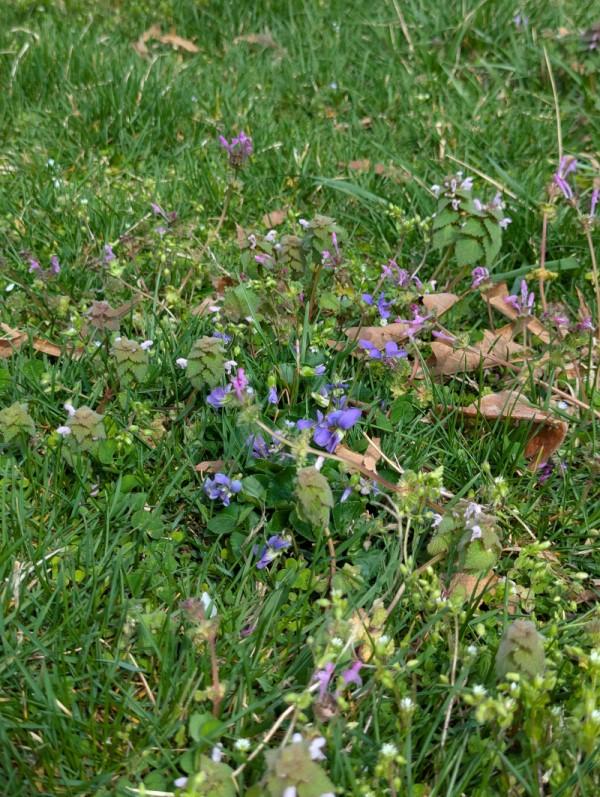
Violets (native), henbit, purple deadnettle, and chickweed flowering in a healthy lawn. All except the violets will die off on their own by summer, and the violets feed several butterfly species. Photo: Miri Talabac, University of Maryland Extension
Accept that there will be weeds: having some weeds in a lawn is normal and to be expected, and home lawns can have a low population of weeds and still be healthy, functional, and attractive. Even when existing weeds are successfully controlled, a new generation of weeds can arise from seeds introduced by wind and wildlife, or from contaminated, poor-quality grass seed.
With only one year to grow and reproduce, annual weeds produce large amounts of seed, often over an extended period. Focus on reducing seed production when managing annual lawn weeds. In some cases, mowing may be enough to remove developing seed heads. Manually pulling or digging annual and perennial weeds from the lawn before they go to seed is also effective, but may not be feasible for a large lawn or when weeds are abundant.
Avoid or minimize herbicide use
Ignoring and mowing weeds with the rest of the lawn is an acceptable strategy. Many spring-flowering weeds such as winter annuals, clover, and dandelions provide resources for some pollinators. (However, planting native species outside of the lawn instead would better support native, specialist pollinators.)
If removal attempts and efforts to suppress weeds by improving lawn health and vigor fail, herbicide can be a last resort. Information about chemical management in the following seasonal calendars is intended for situations where persistent weeds are not adequately controlled by other means and are contributing to lawn decline. To avoid environmental pollution and harm to wildlife (like pollinators) and beneficial soil microbes, herbicide applications should not be routine. This includes pre-emergent applications that target weeds before their seeds germinate.
Tall fescue lawn care
Late summer into early autumn is the prime season for starting a new tall fescue lawn and for aerating, liming, and fertilizing an established lawn.
Tall fescue maintenance by season
Early to mid-spring (March to April)
Prevent a resurgence of summer annual weeds like crabgrass and Japanese stiltgrass by applying pre-emergent herbicide according to label directions and management tips for the specific weed type. More than one application may be necessary to cover a long germination window.
Take note from the product label if using a pre-emergent herbicide will interfere with seeding new grass. Often, a preemergent herbicide cannot be applied if you plan on reseeding in the same season. Either the chemical will kill the turf seedlings, or the waiting period before seeding will be too long for the new grass to establish before being affected by summer stress.
Avoid weed-and-feed products that combine herbicide with fertilizer. If used, the fertilizer component needs to be included in the yearly maximum amount of nitrogen applied to the lawn.
Sow seed or lay sod if a lawn renovation or repair project cannot wait until late summer or early autumn, when establishment will be easier. If planting can be postponed, bare soil can be temporarily covered with mulch or erosion control fabric to protect it from weeds and erosion. Patch small bare spots that are easy to water and weed now. Wait until about mid-April (in central Maryland) when soil temperatures are warm enough to promote germination.
Skip fertilizing if one or two fertilizer applications were made the prior autumn. One spring fertilization is warranted for lawns that are weak, sparse, heavily-used, or have a history of crabgrass infestations or red thread disease outbreaks. The spring fertilization window is April into about mid-May (or Memorial Day if the temperatures have been mild).
Mow regularly while grass is in active growth.
Summer
Skip irrigating if a lawn is established, or water just often enough to keep the roots alive during prolonged drought. Tall fescue goes dormant (stops growing) during hot, dry weather, when it is normal for the grass to turn brown. It will green-up again when cooler temperatures arrive and rainfall increases.
Do not mow lawns that are dormant.
Do not fertilize; dormant and stressed grass does not need, and may be damaged by, extra nutrients.
Assess the lawn for areas that could be converted to alternative plantings to achieve greater sustainability and to reduce yearly lawn maintenance. Examples include areas of turf with too much shade or root competition from trees, chronic erosion or dieback problems, steep slopes, and drought-prone soils.
Late summer to mid-autumn (mid-August to mid-October)
Address weeds, especially hard-to-manage perennials. Winter annuals start germinating this time of year. Remove weeds before they compete with new grass and deprive the lawn of nutrients. Manual weed removal is the best approach, but where needed, targeted systemic herbicide applications can kill weed roots to prevent regrowth. Pre-emergent applications can prevent germination.
Apply fertilizer and lime as needed based on soil test results. Lime will not be needed every year.
Core-aerate areas with compacted soil to improve drainage. Aeration before overseeding improves germination and overall lawn growth.
Sow seed or lay sod no later than mid-October. It takes about 2 weeks for the seed to germinate, and killing frosts in November can damage young seedlings. Sod is a bit more forgiving, but should still be established before freezes occur.
Irrigate established grass as needed if the weather is dry. New grass will need careful monitoring for water.
Mow regularly while grass is in active growth.
Late autumn (late October to mid-November)
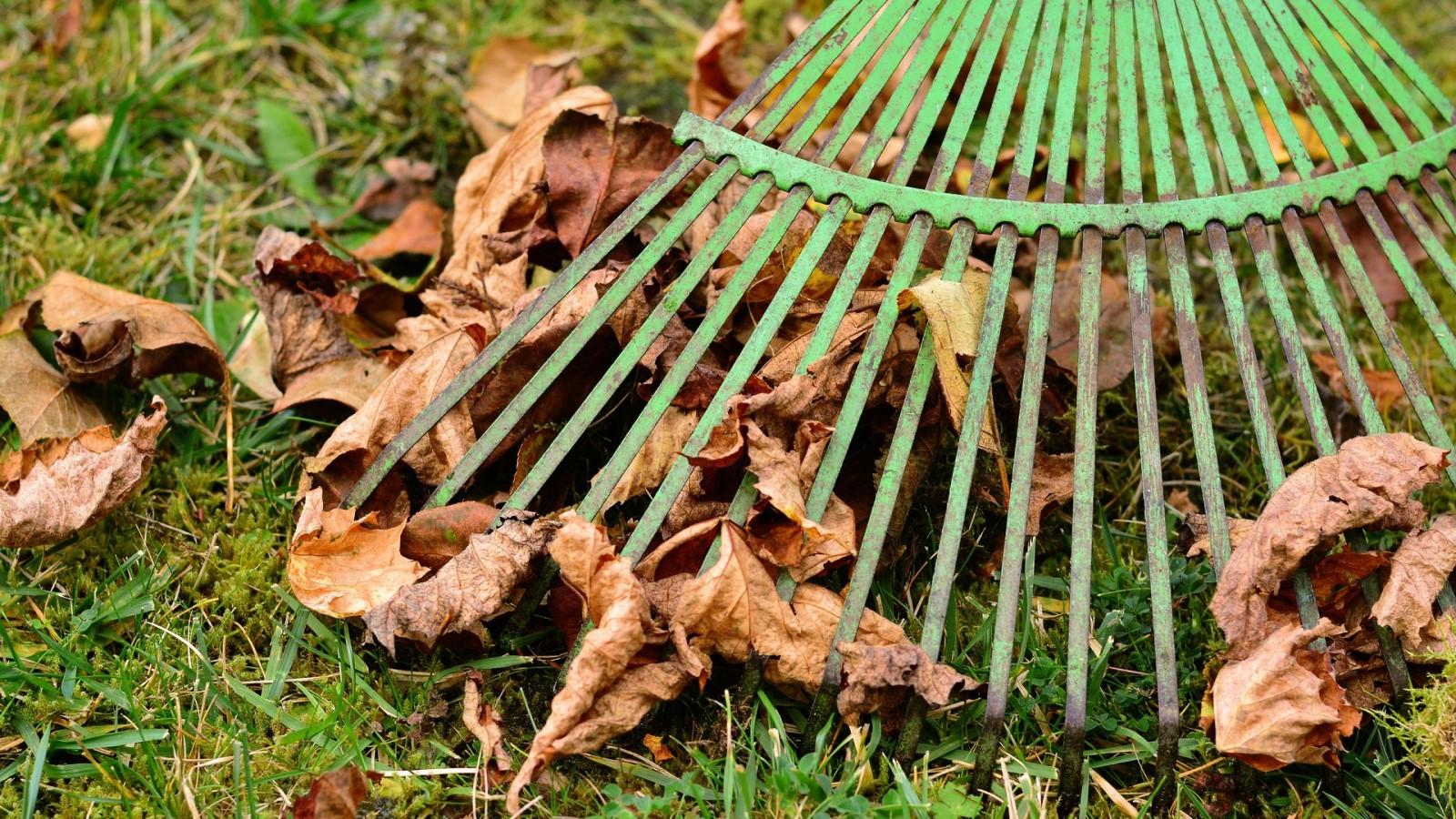
Remove fallen leaves if they thickly cover the lawn. Move them onto planting beds (the best approach to support wildlife) or shred them in place with a mower so the pieces filter down into the lawn for decomposition. Alternatively, if you have too many to handle, share bagged leaves with neighbors for use on their beds (to keep beneficial insects in the area) or put them in a compost pile.
Apply fertilizer before Maryland’s lawn fertilizer law cutoff date of November 15.
Irrigate established grass as needed if the weather is dry.
Mow as needed if the grass continues to grow in mild weather, or if you had to delay earlier mowings. The final mow of the season may be in late November. Mowing the lawn ½ inch shorter than usual for the final cut can improve air circulation so fungal snow mold outbreaks are less likely.
Winter
Maintain your mower, especially sharpening or replacing worn mower blades.
Do not use fertilizer to melt ice, which violates Maryland’s lawn fertilizer law.
Avoid walking on frozen or snow-covered turf which can injure the crowns (main growth points).
Fine fescue lawn care
Late summer into early autumn is the prime season for starting a new fine fescue lawn as well as for aerating, liming, and fertilizing an established lawn.
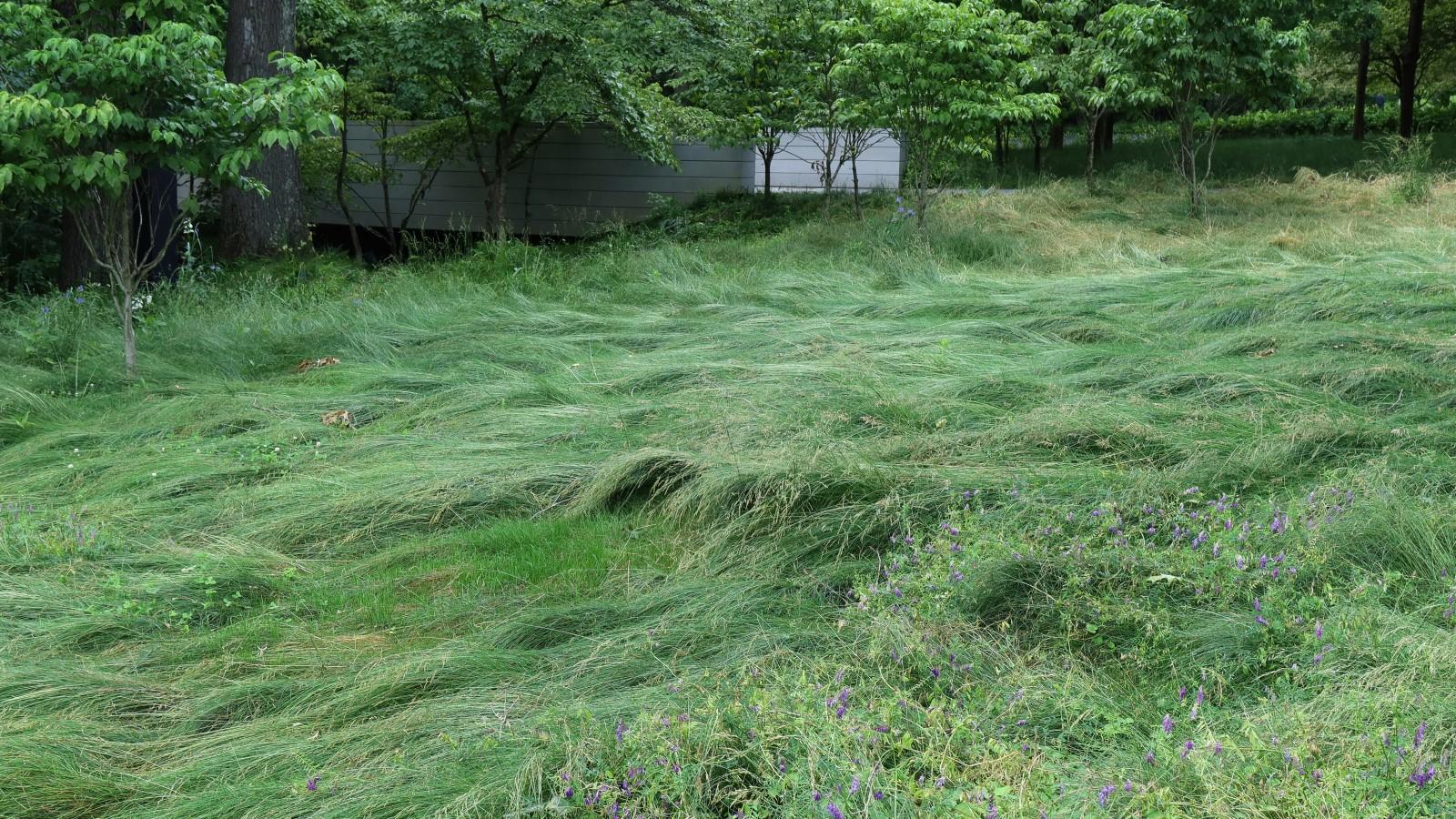
Fine fescue lawns are not frequently mown and develop a flowing, soft appearance. Photo: Miri Talabac, University of Maryland Extension
Fine fescue maintenance by season
Early to mid-spring (March to April)
Prevent and remove weeds without herbicide, where possible. Broadleaf herbicides tend to cause temporary yellowing in fine fescue. Summer annual weeds like crabgrass and Japanese stiltgrass can be suppressed by applying pre-emergent herbicide according to label directions and management tips for the specific weed type. More than one application may be necessary to cover a long germination window.
Note from the product label if using a pre-emergent herbicide will interfere with seeding new grass. Often, a preemergent herbicide cannot be applied if you plan on reseeding in the same season. Either the chemical will kill the turf seedlings, or the waiting period before seeding will be too long for the new grass to establish before being affected by summer stresses.
Avoid weed-and-feed products that combine herbicide with fertilizer. If used, the fertilizer component needs to be included in the yearly maximum amount of nitrogen applied to the lawn. Fine fescue grows best with less nitrogen overall than tall fescue.
Sow seed if a lawn renovation or repair project cannot wait until late summer or early autumn, when establishment will be easier. If planting can be postponed, temporarily cover bare soil with mulch or erosion control fabric to protect it from weeds and erosion. Patch small bare spots that are easy to water and weed now.
Skip fertilizing if an application was made the prior autumn. An exception would be for a lawn struggling with poor vigor.
Mow young first-year lawns about two or three times a month during spring growth. Mow more established lawns only one or two times a month in spring. If desired, mowing can wait until spring seed heads are produced without harm; mow at a 4- to 5-inch height once the seed heads turn brown.
Summer
Skip irrigating if a lawn is established, or water just often enough to keep the roots alive during prolonged drought. Fine fescue may go dormant (stop growing) during hot, dry weather, when it is normal for the grass to turn somewhat brown. It will green-up again when cooler temperatures arrive and rainfall increases.
Do not mow lawns that are dormant. If the lawn doesn’t go dormant, mowing once a month is enough, but only mow after rain or irrigation has rehydrated the grass.
Do not fertilize; dormant and stressed grass will not need extra nutrients.
Assess the lawn for areas that could be converted to alternative plantings to achieve greater sustainability and to reduce yearly lawn maintenance. Examples include areas of turf with too much shade or root competition from trees, chronic erosion or dieback problems, steep slopes, and dry soils.
Late summer to mid-autumn (August to mid-October)
Apply fertilizer and lime as needed based on soil test results. Lime will not be needed every year.
Core-aerate areas with soil compaction to improve drainage, or before overseeding to improve germination and growth.
Sow seed no later than mid-October. It takes about 2 weeks for the seed to germinate, and killing frosts are possible in November that can damage young seedlings.
Irrigate established grass as needed if the weather is dry. New grass will need careful monitoring for water.
Mow only if needed. Autumn-sown fine fescue might not need any mowing until the following May. Otherwise, mow young fine fescue lawns about two or three times a month during autumn growth. Mow established lawns only one or two times a month in autumn.
Late autumn (late October to mid-November)
Remove fallen leaves if they thickly cover the lawn. Move them onto planting beds (the best approach to support wildlife) or shred them in place with a mower so the pieces filter down into the lawn for decomposition. Alternatively, if you have too many to handle, share bagged leaves with neighbors for use on their beds (to keep beneficial insects in the area) or put them in a compost pile.
Apply a second dose of fertilizer if needed before Maryland’s lawn fertilizer law cutoff date of November 15. Stunted seedlings that are yellowish or purplish in color can indicate a need for more nutrients.
Winter
Maintain the mower, especially sharpening or replacing worn mower blades.
Do not use fertilizer to melt ice, which violates Maryland’s lawn fertilizer law.
Avoid walking on frozen or snow-covered turf which can injure the crowns (main growth points).
Zoysia and bermudagrass lawn care
Late spring into early summer is the prime season for starting a new zoysia lawn, as well as for aerating, dethatching, liming, and fertilizing an established lawn. Generally, zoysia is dormant from mid-October to mid-May in Maryland.
Zoysia maintenance by season
Early spring (March to April)
Remove weeds that began growth earlier than the grass, such as wild onions. Pull weeds out by hand while the soil is moist from spring rains. Annual grassy weeds (such as crabgrass and goosegrass) might be an issue in zoysia lawns that are still establishing; an established zoysia lawn generally has few weed problems. Remove weeds manually where possible: zoysia lawns less than 1 year old typically don't tolerate post-emergent herbicide applications.
Late spring into early summer (mid-May to June)
Dethatch in early summer if the thatch layer is over ½-inch thick.
Core-aerate areas with soil compaction to improve drainage, or before planting to improve establishment and growth (if sowing seed).
Apply fertilizer as needed based on soil test results once the lawn greens-up after emerging from dormancy. Make an application before planting if you are putting in new grass.
Plant plugs, sow seed, or lay sod for a new lawn or to repair a damaged established lawn. Plugs are the most widely available option, though sod may be the easiest (but more expensive) option. In central Maryland, the best time to plant is late May.
Mow regularly while grass is in active growth. To remove brown, overwintered foliage before new spring growth appears, mow low (about 1 inch high).
Summer (June to August)
Mow regularly while grass is in active growth.
Irrigate established grass as needed if the weather is dry. Zoysia is generally very drought-tolerant, but symptoms of stress (turning paler/duller in color, not recovering after being stepped on) indicate a need to water.
Apply fertilizer a second time only after a new lawn has been planted at least 1 month before (otherwise, nitrogen may suppress stolon spread), or if an established lawn has poor vigor. Make this application no later than mid-August to reduce the risk of winter injury.
Autumn (September to November)
Do not fertilize; the grass will go dormant after the first frost of the season and will not need extra nutrients.
Apply lime as needed based on soil test results (best done around mid-November to mid-December). Lime will not be needed every year.
Remove fallen leaves if they thickly cover the lawn. Move them onto planting beds (the best approach to support wildlife) or shred them in place with a mower so the pieces filter down into the lawn for decomposition. Alternatively, if you have too many to handle, share bagged leaves with neighbors for use on their beds (to keep beneficial insects in the area) or put them in a compost pile.
Winter (December to February)
Maintain the mower, especially sharpening or replacing worn mower blades.
Do not use fertilizer to melt ice, which violates Maryland’s lawn fertilizer law.
Avoid walking on frozen or snow-covered turf which can injure the crowns (main growth points).
Author: Miri Talabac, Lead Horticulture Coordinator, HGIC. March 2026.
Reviewed by: Geoff Rinehart, Lecturer and Turfgrass Management Advisor, Institute of Applied Agriculture, September 2025. Charles Schuster, Senior Agent, Extension Educator, Commercial Horticulture (retired), August 2025. David Clement, Ph.D., Extension Specialist in Plant Pathology, December 2025.
Copy editing by Nancy Klein, Maryland Master Gardener, December 2025.