Skip to main content
Menu
Get Involved
Give
Contact
Ask Extension
About
Leadership
UMD Extension Impact
Careers
Directory
Civil Rights Compliance
Extension Advisory Council and Committees
Program and Organizational Development
Resources
Animal Agriculture
Plant Agriculture
Yard & Garden
Pests
Natural Resources
Environment & Energy
Agribusiness Management
Food & Nutrition
Health & Well-Being
4-H & Youth Education
Programs
4-H Youth Development
Family & Consumer Sciences
Agriculture & Food Systems
Environment & Natural Resources
Home & Garden Information Center
Locations
Publications
News & Events
All News
Events
Forest Health
Home
Resources
Forest Health
For full functionality of this site it is necessary to enable JavaScript. Here are
instructions for how to enable JavaScript in your web browser
.
Sort by:
Date
Title
Updated: June 3, 2026
Beware of “Treewashing”
A story in one of my Google Alerts sent me down a rabbit hole, resulting in learning about a new term I hadn't heard before: "treewashing."
Updated: May 21, 2026
Branching Out Spring 2026 News and Notes
In the News and Notes roundup for this issue: Smithsonian researchers are building a 22-acre forest from scratch. The Maryland Forest Service has launched a contest to find the largest white oak on Maryland public lands. Scientists are developing a new type of sunscreen based on wood-derived products. And a National Forest Foundation article documents the untold story of Black American forestry.
Updated: May 21, 2026
Invasives in Your Woodland: Bee-Bee Tree
The bee-bee tree came to the United States when seeds were sent from Asia for horticultural collections and trial plantings. From these early arboretum and research sites, scattered landscape use and intentional planting by beekeepers led to escapes into nearby forests in states such as Ohio, Pennsylvania, Virginia, and Maryland.
Updated: May 21, 2026
AI Found Ghosts in our Forests: The Truth of Ghost Forests in Maryland and Beyond
While the impacts of ghost forests are clearly visible on the ground, artificial intelligence (AI) is giving scientists a bird's-eye view of these tree graveyards. AI provides maps and insights to synthesize the causes.
Updated: May 21, 2026
The Short Life of Cherry Blossoms: Beauty in Bloom
While cherry blossoms are seen as a natural symbol of spring in the wider Washington, D.C. area, their consistent beauty is actually the result of careful scientific management and human intervention.
Updated: May 21, 2026
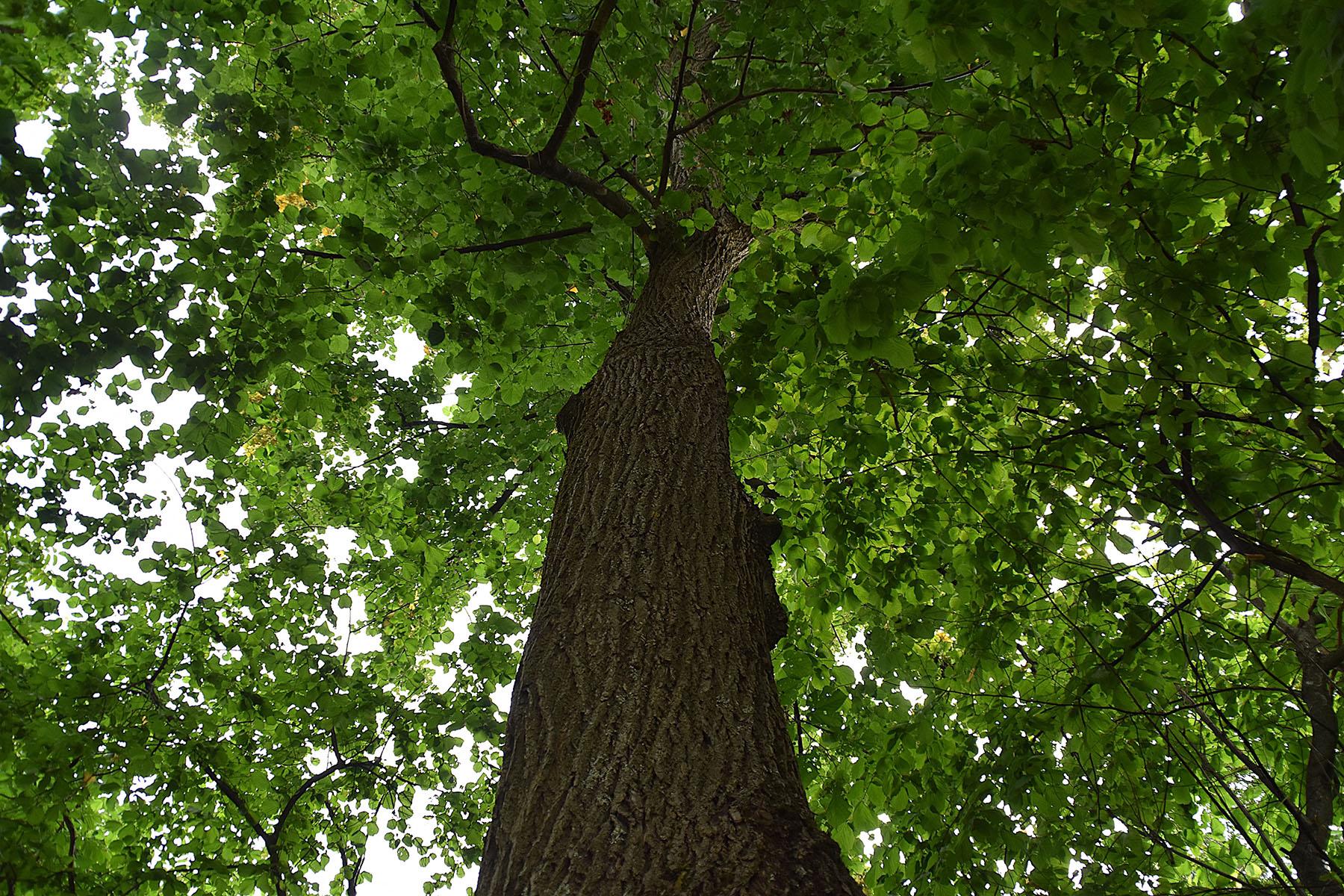
Native Trees of Maryland - The Tree That Sings: American Basswood (Tilia americana)
Tilia americana, known as American basswood, basswood, or linden, is a versatile tree, making it ideal for many landscape applications. Growing 60-80’ tall and 30-50’ wide, basswood is often planted as a specimen or shade tree in parks and residential areas. It’s also naturally occurring in Maryland’s mountain and Piedmont ecoregions.
Updated: April 30, 2026
"Call Before You Cut" Program
Your woodlands are important. They are a valuable resource for your family’s enjoyment and their future, and for the environment. The University of Maryland Extension now participates in the “Call Before You Cut” program. The program provides Maryland woodland owners with free information to ensure that they harvest their timber in the most efficient, cost-effective, and ecologically-sound manner possible.
Updated: March 2, 2026
Native Trees of Maryland: American Holly, Ilex opaca
American holly, Ilex opaca, is a real show stopper of a tree especially during the winter holidays. Among other benefits, it is extremely valuable to wildlife, particularly, birds and migratory birds overwintering in the region.
Updated: March 2, 2026
Branching Out - Winter 2026
In this issue: Read about the benefits of using phenology in your woodlands, and how you can join us for our online course, "The Woods in Your Backyard." Learn about a new group seeking to expand the knowledge and practice of prescribed fire in Maryland. Our "Native Trees of Maryland" looks at the Common Hackberry, and "Invasives in Your Woodlands" looks at the Japanese Angelica Tree. And don't forget the events calendar and the Brain Tickler challenge.
Updated: February 24, 2026
New Group Seeks to Spread Knowledge of Prescribed Fire Benefits
Many landowners in the Mid-Atlantic region are learning that prescribed fires can help them achieve their management goals for their property. The Maryland Prescribed Fire Council aims to protect, promote, and expand the safe and responsible use of prescribed fire in Maryland.
First
Previous
Page
1
Current page
2
Page
3
Page
4
Page
5
Page
6
Page
7
Page
8
Page
9
…
Next
Last