
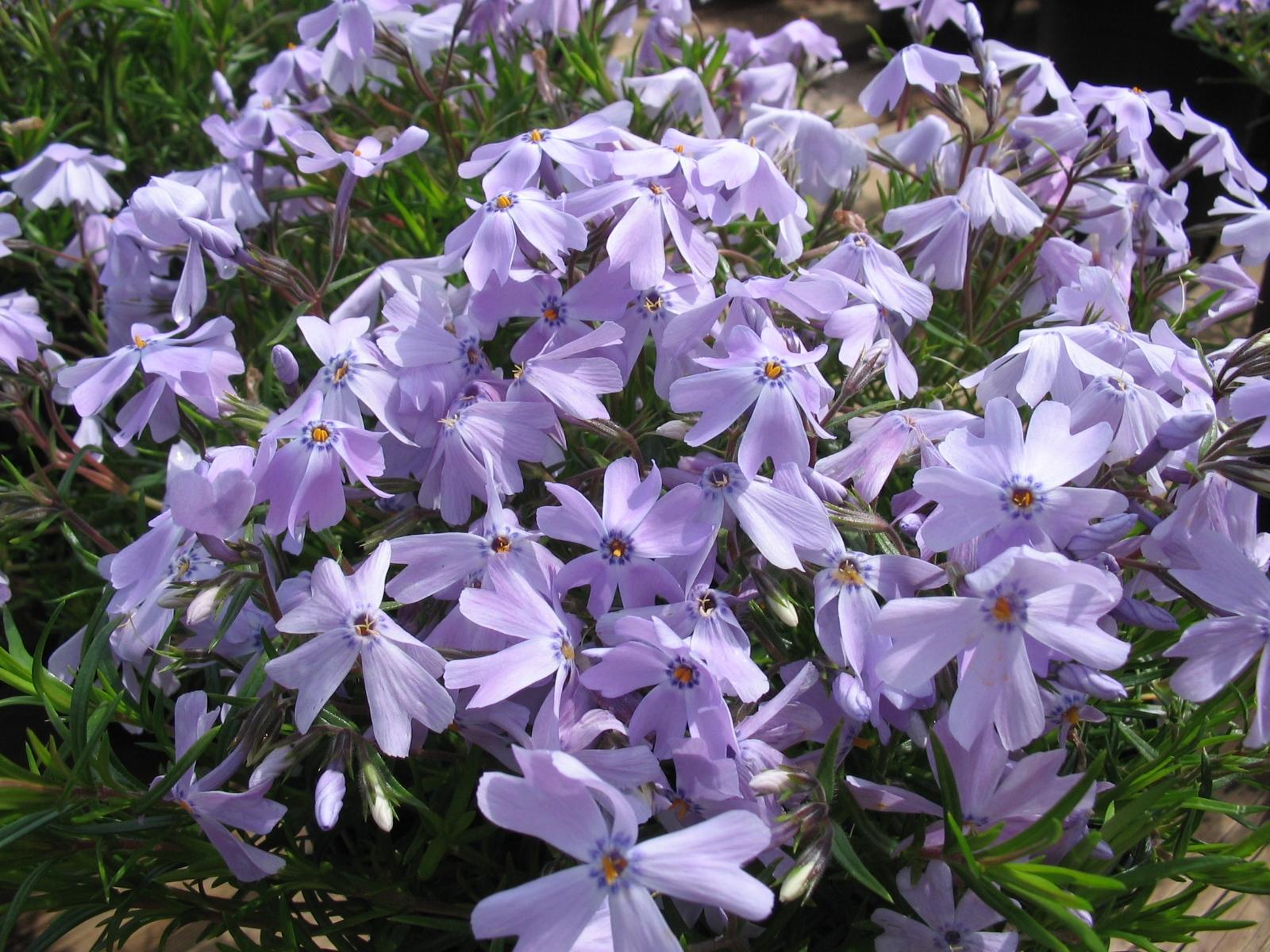
Moss phlox (Phlox subulata) is a spring-flowering, native perennial plant. Photo: Miri Talabac, University of Maryland Extension
Sustainable gardening
- It's National Garden Month! It's a great time of year to start a garden or incorporate new plantings. Consider adding more native plant species and plant diversity to support a more sustainable, resilient environment, and buy locally-sourced plants from local sellers if you can.
- Don't be too quick to do spring "clean-up" in the garden. Fallen leaves provide overwintering habitats for pollinators. Old leaves will decompose and add valuable nutrients to your soil.
- If you are purchasing a new mower or other gardening tools, choose manual or electric equipment instead of gasoline-powered. This will cut down on emissions that contribute to climate change.
- April showers bring May flowers: capture the rain for your garden. Direct downspouts and gutters to drain water into a lawn or rain garden where it will soak into the soil rather than run off onto walkways and roads. Direct water at least 10 feet away from the house to avoid a wet basement and foundation problems.
Trees & shrubs
- Planting or transplanting trees and shrubs can be done now and until the end of June.
- Do not prune spring-blooming species like azalea, forsythia, and lilac until after they finish flowering.
- Symptoms of winter injury, boxwood leafminer, and Volutella blight are common problems of boxwoods that may be observed at this time of year.
Edible plants
- Put warm-season crops like tomatoes and eggplant outside after the danger of spring frosts. Cool night temperatures in April can cause the first tomato fruits to become deformed or “catfaced”. Be prepared to cover tender transplants with paper bags, blankets, or other materials like row cover if frosts are anticipated.
- “Harden-off” seedlings one week prior to transplanting to toughen the plants and ready them for outdoor conditions. Move them outdoors during the day to a part-sun location. Bring them indoors at night if temperatures are forecast to be lower than 45°F.
- Cut fall-planted cover crops (rye, wheat, hairy vetch, crimson clover) at ground level, and cover with a tarp or weed barrier fabric for 2 to 3 weeks to kill the cover crops and prevent regrowth. The residues create a mulch you can plant into (no-till gardening) to help suppress weeds.
- Plant fruits when weather and soil conditions are favorable (thawed and not too wet). Fruits that require little or no pesticide use include figs, Asian persimmon, Asian pear, blueberry, blackberry, raspberry, strawberry, and currant.
- Test your soil before planting blueberries. The ideal soil acidity level (pH) for blueberry shrubs is 4.3 to 5.3. If soil testing measures a pH too high for blueberry preferences, use iron sulfate or elemental sulfur to lower the soil pH (make the soil more acidic), a process that can take 6 to 12 months. Blueberries establish more quickly when a generous amount of compost is incorporated into the soil.
Flowers
- Plant a butterfly garden -- butterflies help pollinate flowering plants. A variety of nectar plants for adult butterflies and host plants (food) for the caterpillars will attract them. Milkweed species like butterfly weed (Asclepias tuberosa) is a popular nectar as well as host plant for the Monarch butterfly.
- Many spring bulbs, like daffodils and tulips, have fully emerged and are flowering. Remove spent flowers, but leave the foliage alone until it yellows, withers, and dies back naturally.
Lawns
- Lawns growing well that were fertilized in the fall should not need additional fertilizer in the spring. The best time to fertilize cool-season turfgrass (tall fescue) is in the autumn.
- Lawn mowing season for cool-season lawns begins in April. The height and frequency of mowing are important to turf quality and weed management. Tall fescue should be maintained between 3 and 4 inches high for most of the growing season, and no more than one-third of the leaf blade should be removed at each mowing.
- "No-Mow April" or "No-Mow May" movements are popular and have a goal of support pollinators. However, there are pros and cons to avoiding lawn mowing for a month, and if providing pollinator habitat is your goal, we recommend devoting an area to a native plant garden instead.
- Red thread is a disease that may become active in lawns after cool, wet weather.
Wildlife
- Eastern box turtles and various species of snakes are coming out of hibernation and may visit your yard. Box turtles are becoming scarce through much of Maryland because of road mortality and habitat destruction. Observe visitors but leave them in the wild, and watch for wildlife when mowing.
- More than one-quarter (28%) of North American bumble bee species are at risk of extinction. Learn how you can host bees in your garden by providing the habitat and nesting places they need.
- Join a hike with the Maryland Native Plant Society or a local park to see some of Maryland's wildflowers in bloom and learn about the natural habitats in which they grow.
Insects
Beneficial insects
- Assassin bug overwintering eggs are hatching and overwintering adults are emerging. These predators feed on a wide variety of garden pests. Learn what their egg masses look like, especially wheel bug egg masses, in case you see them in your landscape. Leave these insects alone so they can help with sustainable pest control.
- Lady beetles are emerging as adults from their overwintering sites and will begin laying eggs: tiny, bright yellow-orange, spindle-shaped and laid upright in clusters of 5 to 30 eggs. Both the larvae and adults are predators that feed on a wide range of garden pests. Ensure you know what their eggs and larvae look like so you can leave them in your landscape for their sustainable pest control services.
- Flower flies (also known as hover flies or syrphid flies) overwinter as larvae or pupae in soil or leaf litter and begin emerging this time of year. The larvae are predators that feed on a wide range of garden pests. Learn what their larvae look like so you do not mistake them for a pest.
- Mason bee adults (also known as orchard bees) typically become active mid- to late April. These native bees are important pollinators, carrying pollen between fruit trees and other flowering plants. Mason bee adults will begin looking for nesting sites this time of year, so consider adding a mason bee nest to your outdoor space.
- Carpenter bee adults become active between April and May. Carpenter bees are important pollinators, moving pollen between many vegetable plants and a variety of different flowers. Carpenter bee adults will begin looking for nesting sites this time of year. Consider providing carpenter bee nesting sites by including unwanted pieces of soft wood (like cedar and redwood) in the yard, or by adding plants with hollow reeds or stems (like stiff goldenrod, Solidago rigida, or raspberry/blackberry, Rubus species).
Pests
- Spotted lanternfly (SLF) eggs will start hatching in April or May, depending on the weather. Report any SLF egg hatch / early nymph sightings to the Maryland Department of Agriculture. If SLF eggs or nymphs are found in high numbers, the recommended control approach is to physically kill any spotted lanternflies that are safely within reach. Egg masses can be crushed or scraped off into a container of rubbing alcohol or hand sanitizer. SLF does not harm landscape or garden plants enough to justify the risks of using insecticidal sprays that could harm beneficial insects or other wildlife.
- Aphids may begin showing up on certain plants, particularly on new growth. Allow local predators like ladybug larvae and parasitic wasps to control these early, smaller populations of aphids. For signs of parasitic wasps, look for aphid "mummies" (bloated-looking, tan-colored dead aphids). To attract and support parasitic wasps, ensure you have floral resources in the area. Most adult parasitic wasps need sources of nectar to support their nutrition.
- Eastern tent caterpillars will begin to hatch and form silken tents in tree “crotches” (where tree branches fork or join the trunk). Many predators and parasitoids, like birds and wasps, feed on them and reduce their numbers. You can leave the tents for wildlife, tear them open with a stick (making it easier for predators to access the caterpillars), or prune out and dispose of the tent.
- Scale insects are best controlled during their vulnerable "crawler" stage (newly-hatched juveniles). Some species of scale will begin hatching this time of year. Monitor for crawlers, particularly on plants with a history of scale infestation. Specific control methods and their timing depend on the scale species.
- Viburnum leaf beetle is a serious pest of native viburnum species, including arrowwood (Viburnum dentatum) and cranberrybush (Viburnum trilobum). Look for feeding damage on viburnums and the beetle larvae on the undersides of the leaves. Control them promptly since they can defoliate plants as they grow. Repeated defoliation can result in the death of the shrubs.
- Ticks are active when the temperature is above freezing. Wear light-colored clothing and/or repellent, and get in the habit of thoroughly checking people and pets for ticks after spending time outdoors.
Diseases
Cedar-apple rust disease forms galls on Eastern redcedar (Juniperus virginiana) in April. The odd-looking galls are at first bright-orange gelatinous balls with long “horns” or projections; they later turn brown and become hard. They are the alternate host structure for a disease that does very little harm to the junipers, but which can be more damaging to apple, hawthorn, serviceberry, crabapple, and quince.
Indoor plant and insect tips
Indoor plants
- Groom indoor plants by removing dead and diseased foliage and spent flowers, and dusting leaves with a soft or damp cloth. In addition to improving their appearance, this reduces potential pest and disease problems. If possible, periodically place your plants in the shower to help remove dust, mites, and to give the plant a good drenching. This can revive a tired-looking houseplant and helps to leach soluble salts (from excess fertilizer residues) out of the potting mix.
- Fungus gnats are small black flies that hover around (and breed in) moist potting mix and other organic materials. The adult flies are a harmless nuisance, but the larvae might feed on and damage plant roots. Be careful not to overwater houseplants, which creates conditions ideal for the gnats; potting mix should get somewhat dry to the touch an inch or more deep into the pot before most plants would need to be watered.
Indoor pests
- Several species of insects are waking up from their winter dormancy inside homes. The earliest ones are multicolored Asian lady beetle, brown marmorated stink bug, cluster flies, and boxelder bugs. After emergence, these insects may re-enter homes and structures during cooler days. They can also be found resting on the sunnier sides of buildings or other structures. No chemical controls are recommended. These insects are harmless and can be swept up, released outdoors, vacuumed, or scooped into a container of soapy water.
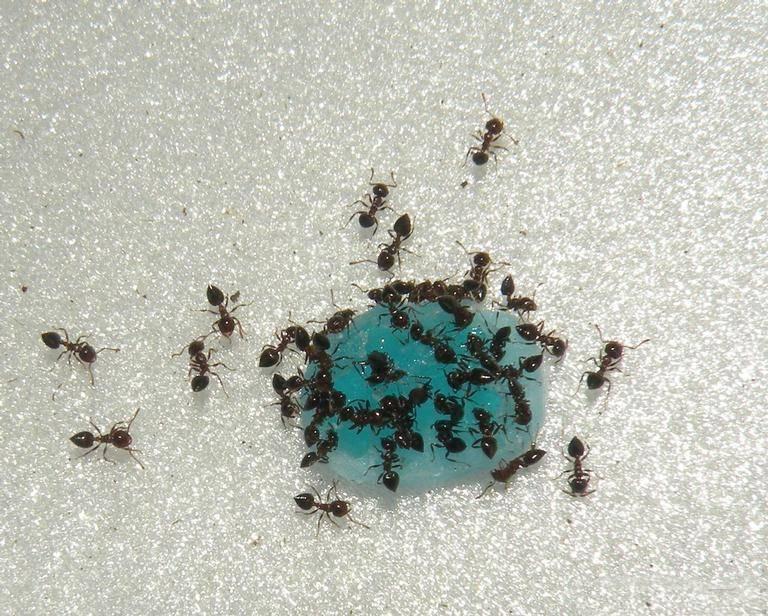
- Different types of foraging ants may appear in your home. Bait stations may control minor infestations without the need for a pest control professional. Liquid and gel bait formulations are usually quite effective.
Have a gardening question? Ask Extension!